OMD 50km Race Report – Julie Urbanski

OMD 50km Race Report – Julie Urbanski

Race: OMD 50k by UTMB

Race Date: May 1, 2026

Runner: Julie Urbanski

Location: Seia, Portugal (Serra da Estrela)

Results: 8:19, ~top 1/3 overall

Strava Link: https://www.strava.com/activities/18334578998

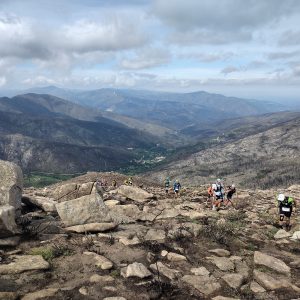
The relentless climb up Torre, we still had about another 30-45 minutes after this point!

3 Bests – What aspects of the race did you like the most?

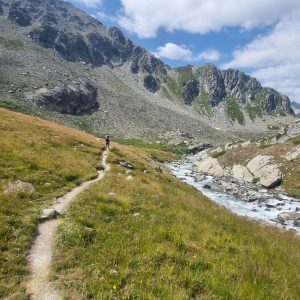
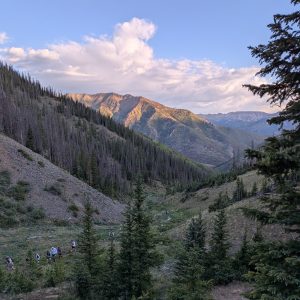
  1. Scenery – I’ve run several races around Portugal and this was pretty epic (I haven’t run on Madeira or the Azores yet, just mainland Portugal). It goes to the highest point on mainland Portugal (Torre at 1,993 meters (6,539) feet), has epic views on the climb and descent of Torre, and goes through a sort of high alpine area on the descent.
  2. Organization – I ran the Nice 50k in its first year and there were definitely hiccups and with this being the first year of the OMD 50k by UTMB, I was a little worried about that, but it was super smooth from packet pickup to the shuttle to the start, course markings, aid stations, finish line, etc.
  3. Competition – So many great runners in this race from start to finish, lots of different nationalities, and several different race differences. I was never alone but it also never felt crowded, thank goodness for the 4 wave start, that made all the difference!

Not so much – Aspects of the race that didn’t do it for you

Pre-race bathrooms, this always seems to be an issue for UTMB races, including OCC! There were 2 bathrooms near the start and a cafe that was bombarded from the moment everyone got off the shuttle. Because there were two shuttle times, 6am and 7am, that made it slightly better, but there were something like 800-900 runners, about 200 of them women.

Weird factor – What’s the weirdest thing about this race?

OMD stands for Oh Meu Deus = Oh My God, ha!

The race t-shirt could have used the help of a native English speaker. Serra da Estrela is in the center of Portugal, geographically, so the slogan was, “You in the center,” but on the shirt, it had a * (star) in the center, because estrela means star in English, and it’s like you’re the center of the race as well, but the shirt just looks weird with, “You in the C*nter.” When I ran into two South African women in the race, the first thing they asked me was, “So what do you think of the race shirt?”

Highlights of your race – What did you do well and enjoy about your race in particular?

  • I didn’t quit, ha! I didn’t realize that out of the ~9000 feet of gain, about half of that was in the one climb up to Torre, so I was feeling very down on myself on that never-ending climb.
  • Fueling – I managed to eat 10 gels, 3 tailwinds, 1 naak drink, and lots of water. I historically struggle with nausea and I did later in the race but was able to cool off in any water sources that I could find, and I continued to sip tailwind/naak and ate 1 gel an hour in the second half and my stomach held it together.
  • I saved my music until 28k so I had it for the last 24k and it was such a boost!
  • My legs were there for the climbing until the bitter end and it ended with an uphill to the finish, so I was happy that my training had me ready for all the climbing, descending, and runnable stuff in the second half.

Lessons for others – Share your pro-tips on the race to help the next runner

  • The first 8-10km is fast and “easy” compared to the next ~20km. Then the last 20km is much faster than the previous 20km if you still have your legs under you for climbing and running.
  • The climb up Torre has many false summits and takes forever. Just find a good rhythm, ignore all those around you busting their asses, and once you reach that massive rock cairn, the majority of the climbing is over but you’re still not at the top.
  • Cool off in any water source available after the halfway point if it’s a sunny day, as the second climb is exposed and hot. Torre is exposed too but it’s so early that it’s a little chilly and less likely to be an issue. If the weather is bad, be ready for wind/rain/cold on the climb up Torre.
  • The descent from Torre starts on the road but the trail eventually becomes quite technical, rocky, slick, and full of bogs to hop over. I’m terrible at this stuff so it took immense patience and focus for me.
  • Be ready to have wet feet for much of the race. I always put aquafor on my feet and toes ahead of time and had zero blisters.
Looking up at one of the many false summits up Torre.

Lessons you learned that will help you next time around

  • I would mentally prepare myself for that climb up Torre. I texted a few friends that I was quitting, ha! Then I finally started running again after the super tough descent and it got better, I put on music, chatted with other runners, and saw the light of day after 28km.
  • Maybe use poles? I didn’t use them and I loved not having them for the second half and I’m just as fast or faster on the climbs than others with poles. I debate if they’d help me even more on the climbs and/or give me more confidence on the descents, but I doubt it.

Most important course specific knowledge to know about the race

  • That first climb up Torre is the hardest and longest one and all the rest pales in comparison to it.
  • The descent is equally hard if you’re not great at descending (me).
  • The second half is faster, save your legs for it.
  • Very exposed so cool down in random water sources when you can once the day starts warming up, which was near the last kms of the descent from Torre. Lots of people puking and cramping up!
  • The second climb has some steep bits but it’s nothing in length compared to Torre, just find a good rhythm and don’t get defeated.
  • Same goes for the rest of the climbing, little pop ups with steep bits.

Aesthetics – Is it a pretty course?

Absolutely, some of the prettiest stuff I’ve seen in Portugal, I’ve always wanted to run in this area and I’m so glad I finally got to!

Difficulty – Is it a tough course?

Yes. 52km and they say it’s 9500 feet, my watched showed 9100, but still, that’s a lot. OCC has more. I finished in 8:19 and I’m not sure I had anything much faster in me given some of the technical terrain and climbing. Maybe if I’d had an absolutely perfect day, I could have been up to 30 minutes faster, if that. I finished in OCC in ~11.5 hours but had to walk the last 12km with nausea, so it’s not quite as difficult as OCC, especially with how runnable the second half is in OMD, but it would be really hard for someone’s first 50km!

Organized and well run – Did it feel like a well-oiled machine or were they flying by the seat of their pants?

Very well organized, it’s a UTMB race, which means it’s a high likelihood that it’s done well. The pictures they took were all kind of terrible, it was the automatic pictures that are set up throughout the course, and they needed more bathrooms at the start, but those are very minor details.

The descent from Torre, absolutely beautiful.

Competition – Is there a strong field?

Super strong with it being a UTMB race.

Logistics – Does it require a special handshake, registration a year in advance, hotels all booked? Give us the low down on the nuts and bolts of making the race happen.

  • Register as early as you can, the 50km sold out (not sure about other races)
  • Hotels and airbnbs in Seia went fast, we booked off Booking.com in a town about 20 minutes from the start, which was totally fine.
  • Limited parking near the start, which stressed me out, so I got to the parking lot at 5:20am for my 6am shuttle, then my car was right there after the finish. Pure bliss.
  • Several grocery stores in town near the finish and packet pickup.
  • Fly into Lisbon or Porto and it’s 2-4 hours drive, depending on where you flew into, so you’ll need a rental car + lodging

Aid Stations – Standard fare or anything special to know about the aid stations in terms of what’s available or when?

  • Naak products and I only had the drink, I had 14 gels on me and 3 tailwinds (started with 1 mixed already and had 2 bottles with just the powder inside).
  • Standard fare, nothing super special but lots of volunteers to help with water.
  • Sunscreen at the last aid station with 10km to go, which I totally used. I stood there as they sprayed me down with it.
  • Flushing toilets at the Torre aid station around 18km, huzzah!

Weather and typical race conditions

  • Big swings in temperature, cold at night and warm during the day
  • High chance of rain
  • Bring all kinds of clothes to the race and make a game day decision based on weather.

Gear – Did you need anything special or is there anything you’d recommend for the next runner?

  • If you use poles, this is a good race for them.
  • Minimum required gear list, just a rain jacket, no headlamp, woo hoo!

Spectators – Is this a friendly course for your friends?

I don’t think so, I saw spectators randomly, a few of which were the same. People can drive to the top of Torre, so that’s kind of cool! If someone sees you at the start in Loiriga, they can see you again at 28km there.

How’s the Swag?

Typical technical tee and a medal. I was hoping for cooler swag, my favorite thus far has been the waterproof backpack from the Nice 50k.

The Overall Score – How many stars do you give this race and do you recommend that others run it?

4.5 out of 5. It’s beautiful, challenging, well-organized and a really fun way to see this part of Portugal, amidst a fantastic field of runners.

That slogan…

Honolulu Marathon Race Report – Jonathan Cheng

Race: Honolulu Marathon

Runner: Coach Jonathan Cheng

Race Date: 12/14/2025

Location: Honolulu, HI

Results: 3:51:29

Strava Activity Link: https://www.strava.com/activities/16744761343

3 Bests – What aspects of the race did you like the most?

  • The scenery! Running 26.2 miles in paradise is an unbeatable experience, with sweeping ocean views, friendly neighborhood vibes, and a run past Diamond Head. It’s arguably one of the most beautiful races I’ve ever run.
  • The spectators are so friendly! The back half of the race is through neighborhoods, so a lot of people come out to cheer, hand out snacks, or spray their hoses on runners who are overheating.
  • I loved that the race didn’t have a time limit. Although it does pose as a hindrance by blocking roads, the organizers do a good job about slowly opening up the roads based on the last runner. It gives a lot of opportunities for people who just want to accomplish 26.2 while enjoying the beauty of Honolulu.

Not so much – Aspects of the race that didn’t do it for you

Not necessarily anything to do with the race, but the weather is very unpredictable in Hawaii around this time of year. An hour before the race, heavy rain caused the start to be at 92% humidity. I was sweating bullets by mile 3! 😭

  • The start is pretty chaotic. Even though there were corrals, they let everyone go at once instead of spacing each corral out (if that makes sense). That caused a ton of crowding at the start and for the first 3-5 miles of the race.
  • Having one of the biggest hills at mile 24. It’s just brutal at that stage of the race.Weird factor – What’s the weirdest thing about this race?
  • I wouldn’t say there’s anything weird about the race, but one thing that stood out was the fireworks at the start! It’s not every day that you get to start a marathon with a celebration.

Highlights of your race – What did you do well and enjoy about your race in particular?

I really liked that I stayed hydrated throughout the race! With the weather being humid and hot, having electrolyte and refillable water stations throughout the course was needed.

This is also one of the biggest marathons in the U.S., so there’s a ton of people to run with, regardless of what pace you’re at. I knocked off a solid 10 miles with a group of runners before they dropped me, but it’s nice to have people to run with a lot of the time.

Lessons for others – Share your pro-tips on the race to help the next runner

Even though it’s an early start at 5:00 AM, make sure you get to the start line even earlier! With virtually everybody taking shuttles and long lines to the portapotties, it can get really hectic. We started lining up for shuttles around 3:30 AM and ended up almost missing our start!

Lessons you learned that will help you next time around

Don’t underestimate the heat and run off of effort. Although the heat isn’t blistering, it’ll sneak up on you if you don’t hydrate early and try to run your usual pace.

There are two fairly long climbs – at mile 7 and 24. Take your time working through these, and be mentally prepared to run a long hill towards the end of the race. If you don’t, the hill can feel brutally long.

Most important course specific knowledge to know about the race

You will be running with 10K runners at the start of the race, so just know that not everybody is running at marathon pace. Also, don’t forget about the hills!

Aesthetics – Is it a pretty course?

100% the most beautiful course I’ve run!

Difficulty – Is it a tough course?

The course itself isn’t tough, but it’s the combination of heat and humidity with two long climbs that can feel challenging. Because the weather’s average has been hotter than ideal, I’d say this isn’t a PR course.

Organized and well run – Did it feel like a well-oiled machine or were they flying by the seat of their pants?

Yes, besides the lack of shuttles and start line chaos, everything else is well run! The expo and finish line festival are very well organized.

Competition – Is there a strong field?

I feel that a majority of people are targeting this race for the aesthetics or the no-limit on time rule, so it’s not a super competitive field. However, there are still plenty of people that I saw at the front of the race!

Logistics – Does it require a special handshake, registration a year in advance, hotels all booked? Give us the low down on the nuts and bolts of making the race happen.

Based on my experience, the hotels and race registration weren’t competitive just due to the size of the race. Flights can be expensive, so make sure to look early or fly in a day or two earlier/later!

Aid Stations – Standard fare or anything special to know about the aid stations in terms of what’s available or when?

Aid stations are pretty frequent at the start of the race, but they are more spread out during the Kamehameha Highway portion of the course. Make sure to get your hydration early and often before you reach the highway!

Weather and typical race conditions

Not blistering hot temperature-wise (average 72 F°/22 C°), but humidity is something to watch out for (92% humidity at the start).

Gear – Did you need anything special or is there anything you’d recommend for the next runner?

Carrying a water bottle is nice, as there are refillable water stations!

Spectators – Is this a friendly course for your friends?

The first half is a little difficult because of how early the start time is. Additionally, there are just so many people at the start, it can be hard to find your runner. However, the finish line is very nice for spectators!

How’s the Swag?

Very cool medal, but other than that, swag is pretty standard, with a finisher t-shirt and a free masalada at the end of the race.

The Overall Score – How many stars do you give this race and do you recommend that others run it?

8/10! I love this race because of how friendly everybody is and the scenery, but running in the heat is pretty tough. If you’re already visiting Honolulu, or you just want to enjoy the course, I’d highly recommend running it!

Jonathan is a coach with Team RunRun. To learn more about him or to work with him, check out his coach profile.

2025 Eugene Marathon Race Report

TRR coach Chris Poole shares tips and insights in his 2025 Eugene Marathon race report to help you be your best on race day. Let’s go!

Race: 2025 Eugene Marathon

Runner: Coach Chris Poole

Race Date: 04/27/2025

Location: Eugene, OR

Results: 2:57:11

TRR coach Chris Poole shares tips in his Eugene Marathon race report.
Photo: Eugene Marathon

3 Bests – What aspects of the race did you like the most?

  • I loved the Race Atmosphere! Tracktown USA is such a vibe- and you have people cheering you on throughout the entire course!
  • I loved also that the course is designed for you to run fast. Only small little bit of elevation at mile 8/9 which runs right past South Eugene High School, before going by Hayward Field and the start line again. Lots of groups who work together to help you chase your times
  • The finish is one of the best in marathoning! Finishing with 200 meters on the track, stands full of people cheering for their loved ones, but also for you! Eugene is such a knowledgeable running community- they recognize what you are doing is so cool!

Not so much – Aspects of the race that didn’t do it for you

The only thing I didn’t like was that there was Gatorade on the course. I don’t do well with sugary sports drinks and was hoping there would be some more specialty electrolyte drinks like Skratch.

Weird factor – What’s the weirdest thing about this race?

Not the weirdest, but definitely the coolest part is that there is a good part of the course that goes through Pre’s Trail, which was dedicated to the late Steve Prefontaine, American Distance running legend!

Highlights of your race – What did you do well and enjoy about your race in particular?

I loved that I was able to settle into a pace right away and not go out too hard at the start. It is very easy to get out quicker than anticipated and then lose gas by the time you hit the bigger hill of the course between 8 and 9. I stayed consistent and focused on my fueling to feel strong!

Lessons for others – Share your pro-tips on the race to help the next runner

This is for those who are able to – If you buy the VIP upgrade, you get access to store your gear and warmup on the Hayward field track, along with private bathrooms. This was perfect for me as I didn’t want to have to worry about stashing my gear at my car, timing my warmup around others at the port o potties, and also with gear check. Very private gear check area. Don’t have to worry about lines!

Lessons you learned that will help you next time around

  • Make sure to pace yourself as you make your way into Springfield, and then turn around towards Pres Trail. I felt great with my pack I was running with and tried to push the pace at Mile 14 which bit me in the butt. Make sure you stay pretty well engaged.
  • The last few miles will feel long, but just know that you are near the finish!

Most important course specific knowledge to know about the race

Nothing to call out in particular, just know that miles 15-25 will be on more narrow paths.

Aesthetics – Is it a pretty course?

Very very pretty especially as you get into Pre’s Trail!

Difficulty – Is it a tough course?

Not a tough course!

Organized and well run – Did it feel like a well-oiled machine or were they flying by the seat of their pants?

Very well run, The course organizers put on a very great event

Competition – Is there a strong field?

Strong field! Lots of runners under 3, and big packs at each major checkpoint!

Logistics – Does it require a special handshake, registration a year in advance, hotels all booked? Give us the low down on the nuts and bolts of making the race happen.

Definitely register in advance. This year (2026) sold out by Christmas 2025. Hotels will get booked quickly as well, so would recommend checking those out as soon as you sign up for the race

Aid Stations – Standard fare or anything special to know about the aid stations in terms of what’s available or when?

Standard fare!

Weather and typical race conditions

Usually a little chilly, but no rain the past few years

Gear – Did you need anything special or is there anything you’d recommend for the next runner?

Nothing special needed! Just what you normally would have for a race

Spectators – Is this a friendly course for your friends?

Super spectator friendly! Multiple accessible points that make it super fun to cheer ! Especially where the course runs by Autzen Stadium (Home of the Oregon Ducks football team!)

How’s the Swag?

Nike running shirt! Medal is super cool, and then they have Nike gear available for purchase at the Apparel sales at the convention center and post race

The Overall Score for this 2025 Eugene Marathon race report – How many stars do you give this race and do you recommend that others run it?

10/10! nothing beats this! Eugene is a dream of a city to run in, has a small town feel with big city race vibes and the organization is top tier. Will not regret!

Female Hormones and Distance Running

Being a woman in sport is challenging to say the least, yet the reward of accomplishing your goal while also battling hormonal changes throughout every month is so worth it. To be successful and have longevity as a female in distance running, you must understand how such an endurance-heavy sport affects various hormones in the body. You must work with your hormones, not against them. With the right fueling and training, your hormones can become your biggest performance advantage. Read on to learn more about female hormones and distance running with TRR coach Stormy Wallace

Key female hormones affected by distance running

The human body consists of thousands of hormones, from those that allow you to maintain a healthy circadian rhythm to those that help regulate the menstrual cycle. Running in particular has a major effect on female hormones such as estrogen, progesterone, and cortisol. Estrogen and progesterone are key hormones in the menstrual cycle, while cortisol is a key hormone in regulating stress and mood. 

Estrogen and progesterone tend to drop as a result of heavy training in the field of distance running. This decrease may cause menstrual cycle irregularities, but proper nutrition is critical to prevent these irregularities. Additionally, you can strategically time your fueling around your cycle to enhance energy, recovery, and performance. 

Cortisol is raised as a result of endurance activity, releasing endorphins and giving you the “runner’s high” that we all crave. However, having chronically high levels of cortisol for too long can have negative effects. Yet, like anything, there are a plethora of preventative measures one can take to combat these negativities. 

How to Support Hormonal Balance as a Runner 

Due to the endurance-heavy nature of distance running, it is extremely important to understand how to maintain healthy levels of estrogen and progesterone, which tend to drop not only as a result of distance running, but also at certain points in the menstrual cycle. Intentional fueling is critical in order to mitigate menstrual irregularities, enhance recovery, and improve performance. Although fueling as a female endurance athlete can be complex, here are a few core principles to help you do it effectively: 

  1. Don’t fear fat. Fat is one of the most essential macronutrients for female athletes as cholesterol acts as a primary building block and precursor of the creation of hormones like estrogen and progesterone. Consuming healthy fats such as avocado, fatty fish, olive oil, and nuts can regulate hormone levels in female athletes. 
  2. Time your fueling. Avoid training fasted as this can negatively affect your hormonal interactions around exercise. Be sure to consume simple carbohydrates before training, and a full meal consisting of carbohydrates, protein, and fats within 30-60 minutes following a workout. The best ‘pre-run’ snack is not one size fits all; you should eat whatever works for you! Experiment with different foods and determine your best fit. 
  3. Intentional supplementation. Unfortunately, most supplements on the market are actually unnecessary, and with proper fueling, you can get your vitamins from the food you eat. Therefore, don’t waste your money on excess supplements that you don’t truly need. There is, however, a lot of research on creatine monohydrate and its ability to help women maintain stable estrogen levels throughout their cycle. The up and coming research on creatine’s effects in endurance sport makes it a great candidate to add to your supplementation routine! 
  4. Fuel around your cycle. Often referred to as “cycle-syncing”, there are specific foods that correlate to different phases of the menstrual cycle in order to maintain hormonal balance throughout menstruation. 
    • During menstruation (days 1-5), iron-rich foods become crucial to combat the drop in estrogen during this stage. 
    • During the follicular phase (days 1-13), healthy fats become critical to support hormonal balance as estrogen levels begin to rise again. 
    • In the ovulatory phase (day 14), estrogen levels are at their peak, and therefore performance, mood, and energy are peaking as well. Fueling the body with complex carbohydrates is essential to support an elevated mood, physical performance, and higher energy levels during this stage. 
    • Finally, the luteal phase (days 15-28) requires extra hydration and lean protein in order to mitigate effects of bloating during this stage. Ultimately, cycle syncing is extremely complex, but if done correctly can allow you to use your cycle as a performance enhancer and not be held back! 

Cortisol and training

Raised cortisol levels as a result of exercise can be both good and bad. The issue comes when cortisol levels become too high and the body stays in a state of ‘fight or flight’ for far too long. This can hinder recovery time, sleep, mood, and overall performance. Fortunately, proper fueling with carbohydrates before exercise, and carbohydrates as well as protein following exercise have been shown to lower cortisol levels. Additionally, overall stress reducing activities such as meditation and deep breathing can bring the body back to homeostasis after training. Finally, supplementation with magnesium and/or ashwagandha before bed has been shown to reduce cortisol levels after a long day, ultimately improving sleep.

TRR coach Stormy Wallace shares insights on training specifically as a female distance runner.

Key Takeaways

Being a female in the sport of distance running can be challenging, but should not be feared. If proper fueling and simple lifestyle modifications can be adopted, your hormones become your superpower in the sport of distance running! Food should not be feared, but instead used as a tool in your toolbox to enhance your performance, mood, and life! 

Sources: 

https://pubmed.ncbi.nlm.nih.gov/8584849

https://pubmed.ncbi.nlm.nih.gov/15831061

https://pubmed.ncbi.nlm.nih.gov/18787373

https://www.womensrunning.com/health/hormone-balancing-foods-nutrition/

https://www.womensrunning.com/health/food/a-female-runners-guide-to-eating-for-energy/ https://pmc.ncbi.nlm.nih.gov/articles/PMC7998865/ 

https://www.bswhealth.com/blog/cycle-syncing-choosing-food-and-diet-for-hormonal-balance

Asheville Marathon & Half Race Report – Tanner Amrhien

TRR coach Tanner Amrhien shares insight on how to be your best in his Asheville Marathon Race Report.
Photo: iDaph

Race: Asheville Marathon & Half

Runner: Coach Tanner Amrhien

Race Date: 03/21/2026

Location: Asheville, North Carolina

Results: 3:24:04

3 Bests – What aspects of the race did you like the most?

  • People always! The Asheville community is resilient after Hurricane Helene. The community rallies around events like this and they show their support for those that support their community through running.
  • The views. Anywhere you look, you can pick out the Blue Ridge Mountains in the distance. Through the grit of a marathon, it helps to have stunning sights to look at and remind yourself to be grateful.
  • The race coordination. iDaph hosts incredible races. Their team is thoughtful, hardworking, and cares about the small details. I was able to meet several iDaph staff members, and they could not be anymore down to earth. I am appreciative of their incredible planning to make events like the AVL Marathon and Half work.

Not so much – Aspects of the race that didn’t do it for you

It was my own fault, but the hills. Racers planning to complete either the full or the half should place special emphasis on hill training. If you lack the endurance and strength on hills, it can really cost you in the first part of this event.

Weird factor – What’s the weirdest thing about this race?

Nothing too weird about this course! It’s becoming a more popular event. It’s no Boston Marathon, but it’s also no small town race either.

Highlights of your race – What did you do well and enjoy about your race in particular?

  • PR’s my last year’s Asheville Marathon time!
  • Speed running the downhill sections of this course
  • Seeing all of the spectator signs – they are getting more creative as the years go on!
  • Seeing the pure joy and excitement on finisher’s faces.

Lessons for others – Share your pro-tips on the race to help the next runner

The Asheville Marathon rewards runners who race it with a smart, patient strategy rather than going out aggressively. One of the biggest lessons is to respect the early hills through North Asheville and Montford. Going out too fast here can wreck your legs for the later miles, even though the course flattens out along the river. It’s also important to be prepared for variability, both in weather and terrain, since you may deal with anything from cold starts to warmer finishes, and from smooth roads to tighter greenway sections. Staying mentally engaged in the back half is key, as the flatter river stretch can feel repetitive and less supported, making it easy to lose focus. Fueling and hydration should be consistent, especially since the effort from the hills can sneak up on you early. Overall, runners who pace conservatively, adapt to conditions, and stay mentally locked in tend to perform much better on this course than those who treat it like a standard flat marathon.

Aesthetics – Is it a pretty course?

Very pretty! You get to run through many different neighborhoods of Asheville. Racer’s start in Downtown Asheville and head to the North Asheville/Grove Park area then through Montford, then down into the River Arts District (RAD). Each area of the course boats something unique to Asheville and its history.

Difficulty – Is it a tough course?

It’s a tough course for new racers especially. Being that Asheville sits in the Blue Ridge Mountains, one can expect to encounter hills. The ending of this course can be difficult for those whose legs fatigue earlier than expected. Being that the last half of the race is mostly in the River Arts District which is flat, runners may encounter a difficult time try to pick their legs and feet up to finish the last six miles (give or take). The last half of the course along the French Broad River can be a challenge mentally as there is not as many spectators around that area.

Organized and well run – Did it feel like a well-oiled machine or were they flying by the seat of their pants?

The Asheville Marathon is generally considered a fun and worthwhile race. It has a great overall vibe, strong community support, solid aid stations, and a really enjoyable finish at New Belgium Brewing, which many runners highlight as a standout experience. Pre-race logistics like packet pickup and communication are usually smooth as well. However, the race can feel a bit inconsistent from an execution standpoint. Common complaints include crowded sections on narrow greenways, merging traffic between full and half marathon runners. Because of this, it’s often seen as more of an “experience race” than a perfectly polished, PR-friendly event. Overall, most runners would say it’s a good race with a lot of character.

Competition – Is there a strong field?

Year after year, the competition field grows stronger than the previous year. Several 2026 full marathon runners ran a sub-3 hour race where as there were only two 2025 finishers than ran a sub-3 hour race.

Logistics – Does it require a special handshake, registration a year in advance, hotels all booked? Give us the low down on the nuts and bolts of making the race happen.

Race logistics:

  • Asheville Regional Airport offers many flights in/out of the city so it’s easy to get to.
  • Hotel accommodations are abundant throughout the city, and other surrounding areas. The race website will offer discounted booking links for racers and their families.
  • The race team puts together a shuttle schedule for racers and spectators for a small fee. This takes the stress out of planning how to transport yourself, family and friends throughout the city on race day. The shuttles were constantly running from New Belgium Brewing back to the start line which was awesome.
  • I would suggest making a weekend adventure around the race. Asheville has so many incredible things to do and see, including stunning hiking views, the Biltmore House/Grounds, and walking trails to shake out those sore running legs.

Aid Stations – Standard fare or anything special to know about the aid stations in terms of what’s available or when?

It’s pretty standard. All aid stations were packed with water and Gatorade. Sporadic stations had snacks, gels, and Coca Cola.

Weather and typical race conditions

The Asheville Marathon typically offers cool and fairly ideal running conditions, though it can vary quite a bit year to year. Most races start in the mid-30s to mid-40s, which can feel chilly on the start line, but temperatures usually warm into the 50s and sometimes low 60s by late morning. Skies are often a mix of clouds and occasional sun, and while it’s not uncommon to have a dry day, March in the mountains does bring a moderate chance of rain, so damp or drizzly conditions are always possible. The biggest thing to keep in mind is variability. Asheville weather that time of year can swing from cold and wet to surprisingly warm, sometimes within just a few hours. For runners, it usually means a cold start, a comfortable middle stretch, and a slightly warmer finish, especially along the more exposed river sections later in the course.

Gear – Did you need anything special or is there anything you’d recommend for the next runner?

No special gear! Just an open mind and good heart.

Spectators – Is this a friendly course for your friends?

Extremely friendly! All sections of this race are easily accessible to spectators.

How’s the Swag?

The swag is decent. The race bag included a high quality t-shirt and some local advertisements.

The Overall Score – How many stars do you give this race and do you recommend that others run it?

9/10. I would recommend it to anyone, but I would recommend it most to those that have already ran a marathon or half or a runner that trains quite a bit on hills.

Tanner Amrhien is a coach with Team RunRun. To learn more about him or to work with him, check out his coach profile.

eugene marathon race report

Eugene Marathon Info

Get all the Eugene Marathon info you need to be your best on race day. Race reports, a pre-race zoom call, and more!

eugene running coach
Eugene Marathon 2018

1. Pre-Race Zoom Call 

With the Eugene Marathon coming up soon, we’re bringing veterans and first-timers together to ask questions, share insights and build some excitement heading into race weekend!

Date: Thursday, April 16, 2026
Time: 8pm PST
Location: Call Recording

Coaches joining us: Chris Poole

If you think you can make it, or want to submit a question in advance, email your host TRR coach Elaina Raponi at [email protected].

2. Shakeout Run 

Date: Saturday, April 25
Time: 1:30 p.m.
Location: 1580 E 15th Ave, just outside of Hayward Field

Coach leading the run: Amanda Hamilton

3. Eugene Marathon Race Intel

Date: April 26, 2026

Start: Agate Street, near Hayward Field at the University of Oregon

Finish: Inside Hayward Field

Course type: Loop

Boston Qualifier: Yes

Elevation gain: 496 feet (151m)

Elevation loss: 502 feet (153m)

Course Map and Elevation Map:
https://www.eugenemarathon.com/marathon 

Course video:
https://www.youtube.com/watch?v=zP8zx0sh43M

Temperature

Average high: 66°F (19°C)

Average low: 44° F (7°C)

Tips from Coaches:

  • After you split up with the half marathoners, around mile 12, the crowd dwindles, which is a pro for some, a con for others, so be prepared either way
  • Likely that it will get fairly warm if it’s a clear, spring day
  • Lots of sun in a lot of the race pictures, so be ready for sun exposure for a lot of the miles
  • Bridges in the race can seem like quite difficult uphills, especially later in the race
  • If you’re used to hills, the hills won’t seem big, but if you’re expecting a completely flat course, it will seem hilly
  • Very well-organized race
  • Not tons of spectators out on the course, so be ready for some quiet miles, especially after mile 12, which again, is a pro for some, con for others
  • Miles along the bike path on the river can be really pretty, but also can last forever if you’re struggling, and because you can see others on the other side of the river, ahead of you. Have a strong mental game for the second half given that.
  • Last water is at mile 24 – keep that in mind if you drink a lot in the final miles
Photo: Eugene Marathon

4. Race Reports:

London Marathon Race Report – Nicole Thome

TRR coach Nicole Thome at the London Marathon. Learn tips for being your best on race day in her London Marathon Race Report.

Race: London Marathon

Runner: Coach Nicole Thome

Race Date: 04/27/2025

Location: London, UK

Results: 4:18:42

Strava Activity Link: https://www.strava.com/activities/14302991450/

3 Bests – What aspects of the race did you like the most?

  1. The Energy
  2. Spectators
  3. The city itself!

Not so much – Aspects of the race that didn’t do it for you

Not really. It’s a crowded course but that’s normal for World Majors.

Weird factor – What’s the weirdest thing about this race?

London is unique in that apparently it’s the “go to” marathon for setting Guinness World Records. Many people going for “Fastest Person Dressed as a (fill in blank!”)Don’t be surprised if you see some very interesting get-ups and costumes!

Highlights of your race – What did you do well and enjoy about your race in particular?

I went into London Marathon just wanting to enjoy the spectacle of it all! Definitely feel like I accomplished that. It was my slowest marathon in several years but despite the heat, one of my most fun! (more on the heat below….)

Lessons for others – Share your pro-tips on the race to help the next runner

  • I can’t speak to transportation to the start (as I went with a tour group and we had a private bus); however, it is well-advised to arrive early. The staging area is GIANT!
  • It’s a very large, grassy field — if you’re concerned about your race shoes/socks getting wet, recommend wearing an old pair and tossing them.
  • Speaking of, also recommend wearing some throw-away clothes to stay warm. London, like most of the Majors, has a late start. It can be a long wait.
  • Bring SNACKS! Again, long wait. You don’t want to start hungry.
  • I found the gear check to be easy and smooth — both drop off and pick up.

Lessons you learned that will help you next time around

Living in a wintry climate, I had no opportunity to heat train. Frankly, didn’t think I’d need it. It’s London! As the British weather folks said, it was “unseasonably warm.” Low-70s by halfway point. Lesson I learned is to plan for anything! Knowing that it was going to be quite warm, I pivoted on my race plan in the first 5k or so and essentially ran it as an easy-effort run. That would be my advice — adapt and be ready for anything!

Most important course specific knowledge to know about the race

  • Like all World Majors, it’s a crowded course. It actually begins in three different start areas and the course merges around the 5k point. Prepare for that because it really bottlenecks and there are random barriers in the middle of the road that seem to come out of nowhere (due to the crowd density).
  • Relax. Settle into a steady effort. It’s a very flat course, which on a good day can lead to a fast time; however, you have to be patient.

Aesthetics – Is it a pretty course?

I wouldn’t say it’s pretty but it is chock full of iconic landmarks. Running over Tower Bridge is definitely a highlight!

Difficulty – Is it a tough course?

The course itself is easy. It’s a flat course but, as mentioned, very crowded and a lot of turns. I ran a 26.55 — as someone who can typical run tangents pretty well, it was one of my ‘longest’ marathons.

Organized and well run – Did it feel like a well-oiled machine or were they flying by the seat of their pants?

As well-oiled as they come!

Competition – Is there a strong field?

It draws some of the world’s most elite runners so yes, very strong!

Logistics – Does it require a special handshake, registration a year in advance, hotels all booked? Give us the low down on the nuts and bolts of making the race happen.

As a World Major Marathon, it’s London is one of the harder ones to get into. Lottery is less than 1%. Charity and Tour Operators (which is what I did — Sports Tours International, highly recommend!) offer guaranteed entry. Qualifying is only available for UK-residents (aka, “Good for Age”).

Aid Stations – Standard fare or anything special to know about the aid stations in terms of what’s available or when?

I carry my own so I didn’t notice what they offer. Water is available in tiny bottles vs cups — which I really appreciated cause it was easier to carry than a cup. Since it was warm, they did a great job of offering ice and spraying runners down.

Weather and typical race conditions

Typically, it’s cool, comfortable and/or overcast — pretty ideal. Ave temp is 60°F (15°C).

Gear – Did you need anything special or is there anything you’d recommend for the next runner?

Not necessarily; as mentioned, bring throw-away clothes and dress in layers in case of cooler start with increasing temps.

Spectators – Is this a friendly course for your friends?

VERY much so! I’d recommend spectators use an Uber boat — you can easily spectate the course by using the river instead of the “Tube.”

How’s the Swag?

Finisher’s shirt and medal were both beautiful! It was a 45th anniversary edition, though, so many have been extra special. New Balance does the jackets and they’re really nice, too — recommend pre-ordering so you don’t have to wait in the messy line at Expo.

The Overall Score – How many stars do you give this race and do you recommend that others run it?

5/5! It’s a World Major — definitely an iconic race! Aside from NYC, London has the best crowds. And definitely ‘wins’ for landmark sights!

Nicole is a coach with Team RunRun. To learn more about her or to work with her, check out her coach profile.

London Marathon Race Report – Kylie Cardoso

A London Marathon Race Report from TRR coach Kylie Cardoso. Tips on how to run your best race at this iconic WMM!

Race: London Marathon

Runner: Coach Kylie Cardoso

Race Date: 04/27/2025

Location: London, UK

Results: 2:58:22

3 Bests – What aspects of the race did you like the most?

  1. The crowds!
  2. All of the iconic sights you run by
  3. Very well organized throughout

Not so much – Aspects of the race that didn’t do it for you

Very crowded at sections due to narrow roads and a lot of tight turns throughout the course.

Weird factor – What’s the weirdest thing about this race?

The amount of people dressed in costumes! Not necessarily weird, but different from other world majors.

Lessons for others – Share your pro-tips on the race to help the next runner

Find your pace early and don’t go out too hard. It’s a pretty flat course so a good one to try to negative split on, save some energy for the finish stretch!

Most important course specific knowledge to know about the race

There are barriers that will pop up in the middle of the road randomly throughout the course, ie. traffic signs or sidewalks. Pay attention so you don’t trip!

Aesthetics – Is it a pretty course?

So many sights and iconic landmarks!

Difficulty – Is it a tough course?

Not difficult, overall flat but with some sharp turns. Typical London weather in April is cool and rainy, however the year I did it it was sunny and 70s, so be prepared for anything!

Organized and well run – Did it feel like a well-oiled machine or were they flying by the seat of their pants?

Very well organized and well run, especially the start area and the finish.

Competition – Is there a strong field?

Very strong field. There’s an out and back section that’s cool because you can see the elites coming back as you’re heading out!

Logistics – Does it require a special handshake, registration a year in advance, hotels all booked? Give us the low down on the nuts and bolts of making the race happen.

Very tough to get in through lottery, however charity is very doable. Definitely book hotels in advance, although there are lots of options to choose from. I recommend booking a hotel near the finish that’s also near a tube station so you can easily get to the start.

Aid Stations – Standard fare or anything special to know about the aid stations in terms of what’s available or when?

London uses water bottles instead of cups, which is nice because it’s easier to actually get down! They have leukozade which is similar to Gatorade but a lot more sugary tasting in my opinion.

Spectators – Is this a friendly course for your friends?

Very spectator friendly. Loops around different sections so easy to see your runner a couple of times.

How’s the Swag?

Definitely recommend the finisher jacket, nice for these winter runs!

The Overall Score – How many stars do you give this race and do you recommend that others run it?

5/5 stars, definitely a must run!

Kylie is a coach with Team RunRun. To learn more about her or to work with her, check out her coach profile.

Run the River Marathon Info

This is the Team RunRun hub for everything Run the River Marathon race info! Course information, racing tips, coaching advice, and more, so that you can be your best on race day at this awesome PNW event!

1. Pre-Race Zoom Call 

With the Run the River Marathon coming up soon, we’re bringing veterans and first-timers together to ask questions, share insights and build some excitement heading into race weekend!

Date: Monday, March 30, 2026

Time: 7 p.m. EST

Recorded Call: https://youtu.be/ZhHkAbdPAPI

If you think you can make it, or want to submit a question in advance, email your host TRR coach Elaina Raponi at [email protected].

Can’t make the call? We’ll record the call and share the link in the following week’s newsletter. 

2. Shakeout Run 

Date: April 17, 2026

Time: 6 p.m. local time 

Location: Meet at the start/finish line for an easy 3 mile/5k shakeout run. Bib pickup will be available at the same time.

Sign up for the shakeout run:

Name
Newsletter

3. Run the River Marathon Race Intel

Date: April 18, 2026

Course type: Looped course with two out and back sections 

Boston Qualifier: Yes

Elevation gain: 410 feet (125m)

Elevation loss: 410 feet (125m)

Course Map and Elevation Map: https://www.plotaroute.com/route/3133355?units=km

Temperature:

Average high: 67°F (19°C)

Average low: 42°F (5°C)

HALF MARATHON 

Elevation gain: 314 feet (96m)

Elevation loss: 314 feet (96m) 

Course Map and Elevation Map: https://www.plotaroute.com/route/2314959?units=km

5k 

Elevation gain: 29 feet (9m)

Elevation loss: 29 feet (9m)

Course Map and Elevation map: https://www.plotaroute.com/route/2314966?units=km

4. Race Reports

Want even more intel on the Run the River Marathon? Read this race report from Team RunRun coach, Annika Brubaker.

5. Run the River Marathon Coaching Info

At Team RunRun, we have 100s of wonderful, experienced coaches ready to help you crush your goals, regardless of your ability, budget, or lifestyle. Specifically, for Run the River race advice, here are some coaches to start with:

In addition, see the official race website here for even more information.

Above all, good luck!

Boston Marathon Race Info

In this post, find all the Boston Marathon race info you could possibly want to know. Read on for our runners’ reviews of the course, the wait before the race, the gear for bad weather, and more!

1. Pre-Race Zoom Call 

Date: Wednesday, April 8, 2026

Time: 7 p.m. EST

Call Recording: https://youtu.be/rJKXxiov_k8

2. Pre-Race Shakeout Run

Date: Sunday, April 19, 2026

Time: 10 a.m. local time

Location: Meet at Boston Commons, specifically at the Soldiers and Sailors Monument

Sign up for the Shakeout Run:

Name
Newsletter

3. Boston Marathon Race Info

Date: April 20, 2026

Start: Hopkinton, MA, on Main Street

Finish: Boston, MA, on Boylston Street

Course type: Point-to-Point

Course Preview with Coach Scott Fauble (video): https://youtu.be/5gOtDTunGsQ

Elevation gain: 815 feet (248m)

Elevation loss: 1275 feet (388m)

Course Map and Elevation Map:
https://www.baa.org/races/boston-marathon/the-course/

Course video:
https://www.youtube.com/watch?v=TEoWRSIZB4Q 

Temperature

Average high: 62°F (17°C)

Average low: 41° F (5°C)

Tips from Coaches:

  • “The first few miles of the race can feel cramped and narrow. I would avoid wasting extra energy by trying to weave around people. Things will open up!” – Coach Elaina Raponi
  • “I’d avoid deliberately pushing the pace early on the downhills in an attempt to “make up time” for the Newton Hills and Heartbreak Hill. You want to listen to your effort and make sure you’re not ruining your quads before the hard part even starts.” – Coach Elaina Raponi
  • “If you’re in wave 1 corral 1, you may want to consider running with wave 1 corral 2. The reason being that they keep everyone in corral 1 off to the side while the elite and professional fields start which makes it more cramped than the corrals themselves. It could be more comfortable to sit in one corral later.” – Coach Tavo
  • Once you get off the bus in the Athletes’ Village, try to find a covered spot to sit and rest as much as possible. Don’t feel like you need to rush to the corrals unless you’d like to do a warmup jog. I typically recommend walking comfortably and taking advantage of the free sunscreen provided there as well!” – Coach Tavo
  • “Your legs can take a lot of pounding from the first 5km with a significant downhill and going out quick. I always suggest taking that first 5km almost mind-numbingly easy, navigating the crowds as best you can. The Newton hills aren’t all that scary if you’ve been conservative up to that point, and if you’re feeling good at the top of Heartbreak, that last 10km downhill is something incredibly special to be able to race to your fullest.” – Coach Tavo
  • “The absolute best part of the race is the crowd and the atmosphere. There are almost no silent parts of the race. You have support the entire way!” – Coach Dakotah Popehn
  • “When you’re training you have a lot of time to think about your race. It is super fun to think about all of the ways the race could go well and imagine all the great possibilities that could unfold. And I encourage you to visualize those situations and enjoy that time. Also take time to imagine the weather being too warm, too cold, and too wet. Think about how you will feel and how you will adjust not only your race, but also your mindset. With all of the training you put into longer races you have time to think through thousands of scenarios.” – Coach Dakotah Popehn
  • “If you have a ride to Hopkinton in the morning, and don’t need gear check, getting dropped off at the Hopkinton shuttles is super easy and lets you sleep in a little longer.” – Coach Brandon Tower

4. Boston Marathon Race Reports

From CJ Albertson: https://teamrunrun.com/boston-marathon-race-report-cj-albertson/

From Dakotah Popehn: https://teamrunrun.com/boston-marathon-race-report-dakotah-lindwurm/

From Brandon Tower: https://teamrunrun.com/boston-marathon-race-report-brandon-tower/

From Matthew Bigman: https://teamrunrun.com/2022-boston-marathon-matthew-bigman/

From Matt Urbanski: https://teamrunrun.com/boston-marathon-matt-u/

Arches Ultra 50k Race Report – Shelby Fox

Race: Arches Ultra 50K

Runner: Coach Shelby Fox

Race Date: 01/31/2026

Location: Moab, Utah

Results: https://ultrasignup.com/results_event.aspx?did=124108#id2683039

3 Bests – What aspects of the race did you like the most?

  1. Sweeping views near Arches National Park
  2. Great aid station volunteers
  3. Comfortable cutoff time for 50K

Not so much – Aspects of the race that didn’t do it for you

  • Only two photographers, both in the first 8 miles of the race.
  • Finish line didn’t have much going on for later finishes like the 50k or 50 miler.

Weird factor – What’s the weirdest thing about this race?

You don’t actually run in Arches National Park. The website very clearly states this when you’re registering, but just something to be aware of. It is adjacent to Arches.

Highlights of your race – What did you do well and enjoy about your race in particular?

Felt comfortable and confident all the way through. The 50k course helps to break up the distance mentally since it’s essentially two different loops.

Lessons for others – Share your pro-tips on the race to help the next runner

While this is a trail race, there’s a lot of slick rock so training on some pavement to get used to the harder surface is helpful. Train with some elevation and some hills. There are several climbs on this route.

Lessons you learned that will help you next time around

Walking uphill always takes longer than you think. So do aid station refills, especially when it’s a cupless race.

Most important course specific knowledge to know about the race

Pay attention to course marker flags and paint stripes on rocks. Sometimes it’s easy to lose the course.

Aesthetics – Is it a pretty course?

If you like wide open views and red rock, this is a lovely course! Snow covered mountains in the background too 🙂

Difficulty – Is it a tough is the Arches Ultra 50k course?

I’d say it’s moderate. Lots of slick rock, several technical climbs. My watch clocked about 3000 feet of elevation gain vs the 2200 feet advertised.

Organized and well run – Did it feel like a well-oiled machine or were they flying by the seat of their pants?

It’s pretty organized. If you’re back of the pack, there’s not much fanfare at the finish line.

Competition – Is there a strong field?

There’s always a few really fast runners at the front of the longer distances. Decent variety of pace though.

Logistics – Does it require a special handshake, registration a year in advance, hotels all booked? Give us the low down on the nuts and bolts of making the race happen.

Registration is straightforward, although some races do sell out. You have options for a 9k, half marathon, 50k, and 50 miler. Make sure you get to the start line early to get decent parking.

Aid Stations – Standard fare or anything special to know about the aid stations in terms of what’s available or when?

There are a total of 5 aid stations on the 50k course. Two of them you go through twice with the course loops. Pretty standard race snacks. Make sure you have fillable cups/water bottles.

Weather and typical race conditions

The course can be windy in sections. Plan for low 30s at the start of the race. It was about 50 degrees by the afternoon so wear layers. Usually pretty sunny.

Gear – Did you need anything special or is there anything you’d recommend for the next runner?

Poles could be helpful but not necessary. I just had a hydration vest.

Spectators – Is this a friendly course for your friends?

Start/finish line is spectator friendly and the Bar M aid station is as well. It’s across the highway from the start/finish line.

How’s the Swag?

Registration includes a shirt, hat, and a finisher medal. This year it had dinosaurs!

The Overall Score – How many stars do you give the Arches Ultra 50k and do you recommend that others run it?

4/5. This was my first ultra and one I would do again. I found it manageable and at no time did I absolutely hate myself for signing up for it. If you train, it’s completely attainable and I’d definitely recommend if you’re looking to get out to the Moab area. Most of it is flat-ish which makes it a beginner friendly 50k.

Shelby Fox is a coach with Team RunRun. To learn more about her or to work with her, check out her coach profile.

TRR coach Shelby Fox at the finish of the Arches Ultra 50k.

Tempe Burrito League

Team RunRun Coach Kelsey McGill shares her experience going all in on the Tempe Burrito League 2026!! What the heck is it? What did she learn? and what did she win?!

TRR Coach Kelsey McGill after winning the Tempe Burrito League 2026!
PC: Andy Bottiglieri. 2026 Tempe Burrito League Winners Troy Croxdale and Kelsey McGill

What the heck is Tempe Burrito League?

Jamil Coury, founder of Aravaipa Running, teamed up with Connor Dyer and created Burrito League in January 2026 as a result of Chipotle not announcing the continuation of the Chipotle Challenge which occurred in January 2024 and 2025. Burrito League is a challenge where anyone can complete a specific segment by walking or running, typically from 0.2 to 0.4 miles in length, as many times as they can for the duration of the event. The Burrito League in Tempe, Arizona, was 26 days long. This particular segment is recorded as a one-way segment, which is 0.2 miles. Participants can start and stop at any time that they choose, day or night. There is no aid station as runners are encouraged to supply all their own food, hydration, etc. On January 31 at 11:59pm, the top female and male with the most completed segments would be declared the winners. 

The biggest personal challenges 

Some of the challenges I faced during Burrito League were both expected and unexpected. I often felt like I was simultaneously playing the game whack-a-mole (to address physical/injury needs) and chess (for strategizing against competitors). Early on, there was a big adjustment period of running entirely on bricks and concrete. As a sole trail runner for the past 15 years, this was something I’ve steered so far from. I crave the intricacies of trail running, specifically more technical trails, because of how engaging it can be and the solitude. Not only was the flat, hard surface something I strongly avoided, but I also wasn’t used to running 30-45 miles every single day (aside from 1 rest day mid-way through). I have a thru-hiking background and 8 years of running ultras, but to stack big days of running back-to-back for 26 days in a row was uncharted territory for me. There’s a lot to be said for using a run–walk interval strategy on flat courses—it reduces impact and helps preserve the legs. It still amazes me how much mileage can be covered, even just by walking alone.

On day one, I made a silly, albeit stubborn, mistake by wearing trail shoes for a 30-mile day, which led to a bout of ankle tendinitis that lingered for the next 12 days. I had to quickly pivot and buy a pair of road shoes the 2nd day with far more cushioning. Along with getting road-specific shoes, I had to manage the pain from the tendinitis and alter my form.

Another issue arose on day 6 at the end of a 45-mile day. When I squatted to pee, I felt a small twinge in my quad, which turned out to be a strained quadriceps. As a result, I was forced to walk for the next three days. Even so, I was still able to cover between 38 to 45 miles per day. Oftentimes, I would find myself catastrophizing injuries meaning the thought of “is this a stress fracture?” or “did I rupture a tendon?” or “is my quad going to heal properly?” were all circuitous thoughts that would come and go throughout the month. My goal was to stay curious about the pain and do something about it to keep moving (i.e. apply Tiger Balm pain patches, heat/ice compresses, muscle scraping, strength/mobility work, etc.). The benefit of having your vehicle as an aid station .2 miles away meant there was something you could do in real-time to address issues that arose. The action itself was powerful to refocus attention and get back on track.

Another area that proved especially challenging was keeping up with simple, everyday chores. Most days, I woke up around 3:30 or 4:00 a.m. to work for a couple of hours—writing training plans and responding to emails—before getting on segment around 5:30 or 6:00 a.m. From there, I was on segment until about 8:00 p.m. while also taking coaching calls throughout the day when walking on the segment. I took short breaks throughout the day to raise my feet (to reduce swelling and aching) and get more calories in, but the demand of getting the most time on segment each day made basic tasks like grocery shopping, doing laundry, or any other life responsibilities incredibly difficult. Thankfully, Jamil rented a studio, which gave us access to a shower and a bathroom and they also rented porta potties. That support made a huge difference. I genuinely can’t imagine attempting something like this without consistent access to a bathroom. There was also a CVS right on the segment: the most perfect aid station you could ever imagine! And yes, they had ice cream which became a 5pm daily tradition for “ice cream laps”!

The mental load required to sustain this effort was also fascinating. Each day fell into the same rhythm: waking up, checking Strava to see how many segments others had completed, doing the math to calculate the mileage gaps between us, and then getting on with the day. I felt myself constantly oscillating between the urge to push harder and the need to hold back—aware that pushing too hard could jeopardize the rest of my year and the larger goals I had set for myself prior to this quirky event. Numerous times I thought I’d found my limit as a means to preserve myself from further injury, but after giving some further thought to modify and adapt, I was able to press on.

About halfway through the event, I woke up feeling run down with a cold, sore throat, and stuffy nose. On top of that, I realized I had completely maxed out the mileage on the shoes I’d purchased just 10 days earlier. Instead of buying a new pair, I borrowed shoes, which I’d never run in before and, unfortunately, they led to shin splints. I’d never dealt with shin splints in my 20 years of running, but I knew this was something that could become serious if I didn’t properly modify my approach.

I realized early on that the friends I came to Burrito League with weren’t people I could share strategy with, as they needed to remain unbiased in order to support all participants. Because of that, I became very guarded in my planning and intentional about not disclosing my strategy to anyone. This secrecy made building friendships difficult because people would bluff about their plans to each other, but I also understood that almost everyone there wanted the same thing I did: a Cocodona 250 entry. Knowing that, I kept silent about any plans I was forming. When I decided to take a rest day halfway through the event, I didn’t tell anyone—not when I was resting, and not when I planned to return. The reason for this is you don’t want your competitors to gain a huge gap on you knowing you won’t be there at all. Keeping people in the dark as much as I could was key. After taking a rest day and some dry needling from a local PT (shoutout to Dr. Matthew Brown in Scottsdale), I felt dramatically better and incredibly grateful that the shin splints, quad strain, and tendinitis had all cleared up. I felt like a million bucks. My sinuses never fully cleared up during the rest of Burrito League and I finished the last 2 weeks with a sinus infection, but physically I felt strong and durable, and I didn’t deal with any additional injuries after that mid-way point.

By the third week, it was obvious that people were beginning to adapt to the massive mileage we had accumulated over the first two weeks. We were going against everything traditional training theory teaches—throwing out the rules just to see what we were made of and stay on the leaderboard. These were very gritty people on the segment. At the same time, the fatigue was really starting to sink in. There was a shared sense of dread heading into the final week, as many of us anticipated that big moves were coming but we were already pouring in so much from the beginning.

The Tempe Burrito League is also unique in how performative it feels. You pass your competitors hundreds of times a day, and there was far more media attention than I ever expected. Because of that, you have to work hard to maintain your composure when things feel tough—to avoid letting your competitors, as the saying goes, “smell blood in the water.” The upside of this performative aspect is how much information you gain. You’re constantly observing body language—how durable someone looks after a big day or an overnight push, how smoothly they’re moving throughout the day—and you can roughly calculate what they’re doing in relation to your own effort. It’s very different from being out on a trail race for hours with no real sense of how your competitors are feeling other than when you’re passing or being passed. That constant visibility can be very taxing, especially on hard days, like early on when I strained my quad. In those moments, I chose to stay positive, knowing there was still a lot of time left. I focused on walking, trusting that my body would recover and adapt—and thankfully, after three days, it did.

Another notable challenge was navigating the political events and tragedies unfolding in Minneapolis during Burrito League. As the final week approached, I felt deeply conflicted about continuing to participate while so much pain and injustice were happening. I wrestled with the feeling that I should be doing more to help, even though I wasn’t sure what that should look like. In the end, I chose to wear a shirt with a political message as a form of protest and committed to wearing it for the remaining days on the segment. I knew it wasn’t a grand gesture or a solution, but if I could spend hours each day running back and forth on that segment while visibly expressing my outrage and solidarity, then that was something I could do.

Expectations going into Tempe Burrito League

If someone had told me ahead of time that staying at the top of the leaderboard would require maintaining 30 to 45 miles a day, I would have passed on the opportunity without a doubt. I never expected to run at that magnitude every single day for 26 days, aside from one rest day. Before Burrito League began, I was very clear with the friends I came with that I planned to run trails at least two days a week to preserve my sanity as well as squeeze in a weekend backpacking trip on the Arizona Trail—but that plan quickly fell to the wayside. I wasn’t prepared for how fierce the competition would be. From the very beginning, it was obvious that everyone was hungry for the Cocodona ticket—and I was no exception. I felt confident at the beginning saying 10-20 miles a day would give me a comfortable spot in 1st especially with the event being shared just hours before it started, and I was very wrong about how low the mileage would be to earn that Cocodona ticket.

Burrito League was not only a showcase of gritty, determined competitors, but also a ground-breaking space for rethinking training theory. There were countless times during Burrito League that I forgot there was a Cocodona entry at stake. There was something more than that that I was curious about – “How bad do I want to go to the depths of the unknown to see what I’m really made of?” Not every day (or month) do I get the chance to visit that space within myself and what a gift it is that I get to do this.

Will run for burritos - Tempe Burrito League 2026
PC: Andy Bottiglieri. Burrito Relay on last day of Burrito League

Lessons learned

As I mentioned earlier, the first two weeks served as a heavy adaptation period on the segment. I logged 212 miles the first week and 207 miles the second—both personal record weeks, and notably back-to-back. The third week climbed to 291 miles, followed by 230 miles in the fourth. In total, I ran 941 miles over the course of 26 days, a volume I had never come close to before. Again, I would not have signed up to do this if I knew I would have to put in that mileage.

What’s most surprising is that I finished the Tempe Burrito League without any lingering injuries or aches. This experience forced me to reconsider aspects of traditional training theory. High volumes of low-impact running—whether through run–walk intervals or sustained recovery and conversational pace efforts—may be able to scale far beyond what is typically prescribed, provided the athlete has the time and durability to support it. Speed work still matters, but it needs to be integrated carefully; strides and VO₂ max workouts, in particular, are not well suited for periods of extreme volume like this.

Another big takeaway from Burrito League, which I think is the most profound piece for me, is that we can still move while experiencing any emotion. Anger, sadness, outrage, fear, etc. we can still put one foot in front of the other, because why not? Sometimes emotions can be big, the storylines can feel overpowering, but what if we just take another step forward? To me, that is quite liberating to be with emotion while also still moving.

We can learn a lot about ourselves when we put ourselves in an environment that we typically avoid. We find our grit, we dig deeper than we thought we could, and that’s why I run.

How does this impact/change my thinking on big challenges looking ahead?

Once the stage was set at Tempe Burrito League for sustained, high mileage, I began to reframe the challenge as preparation for an FKT I’m planning in 2027. It became an invaluable testing ground for managing the day-to-day physical and mental demands of continuous movement—learning how to address my body’s and mental needs, problem-solving in real time, and taking care of myself independently. Not only did this opportunity allow me to test the uncharted waters I didn’t think were within reach yet, but it is making me think I’m much more capable of completing this big project than I previously thought.

Prizes won

I’m over the moon that I’ll be heading to Cocodona 250 in May this year – huge thanks to Jamil for making this possible! I’ve also received 4 pairs of shoes from Mount To Coast, some apparel from East Peak, and free Chipotle for a year!

Let's celebrate - Tempe Burrito League 2026
PC: Andy Bottiglieri. Burrito League finish 12am on February 1, 2026.

Kelsey is a coach with Team RunRun. To learn more about her or to work with her, check out her coach profile.

Tokyo Marathon Info

Welcome! Here we share all kinds of Tokyo Marathon Info to help you have your best race on race day, and to help you prepare for the big challenge ahead. We also provide events to provide you with some firsthand knowledge as well some TRR camaraderie! Let’s go!

1. Pre-Race Zoom Call 

With the Tokyo Marathon coming up soon, we’re bringing veterans and first-timers together to ask questions, share insights and build some excitement heading into race weekend!

Date: Monday, Feb. 16, 2026
Time: 7pm EST
Call Recording

RunRunners Derek Siebert and Sean Celli always rockin’ the TRR swag together!

2. Shakeout Run

Date: Saturday, Feb. 28

Time: 9 a.m. local time 

Location: Meet us at the Sakurada-mon Gate for a 3 mile/5km jog around the Imperial Palace. Segment on Strava: https://www.strava.com/segments/13344047

Sign up for the shakeout run below so we know who is attending and we’ll email you any updates about the shakeout run.

Name
Newsletter
Coach Heather Gutekunst running strong!

3. Tokyo Marathon Race Intel

Date: March 1, 2026

Location: Tokyo, Japan

Start: Tokyo Metropolitan Government Building in Shinjuku

Finish: Gyoko-dori Avenue, near Tokyo Station and the Imperial Palace

Course type: Mostly out and back

Boston Qualifier: Yes

Elevation gain: 198 feet (260m)

Elevation loss: 322 feet (98m)

Course Map and Elevation Map:
https://www.marathon.tokyo/en/about/course/ 

Course video:
https://www.youtube.com/watch?v=tVXOnhjjGWo 

TemperatureAverage high: 56°F (13°C)
Average low: 42° F (6°C)

Tips from Coaches

  • “My biggest tip is to enter yourself with a very reasonable goal time. I ran almost the exact same splits for the first two 5Ks because the crowd just swept me along and I didn’t have a choice! It can really mess with your race if you start in a corral that’s too fast or too slow and get stuck with whatever pace the pack is running for the first 10K. Luckily for me it was slightly faster than I planned but I found I could maintain it and I liked getting pulled along for that far without thinking too hard about it.” Coach Janelle Branch
  • “READ the race packet/information sent electronically completely. You may think you can skip this information if you have run many marathons, but the Tokyo marathon has very strict guidelines that are strictly enforced. Please READ the pre race materials completely!” – Coach Heather Gutekunst
  • “Recommended that you train with Pocari Sweat (you can purchase on Amazon) which is the on course electrolyte support as you will not be able to bring your own fluids.” – Coach Heather Gutekunst
  • ”I recommend staying near the start line if you are at all anxious about getting to the start line on time. The train system is very reliable but VERY intimidating if you are not familiar with it. If it is going to cause extra stress on race morning, better to stay close by.” – Coach Heather Gutekunst
  • ”Hotels in Tokyo rarely bend the rules on late checkout. If you plan to fly home after the marathon like I did, you may find yourself looking for a shower-they do offer day passes to local gyms/locker rooms and apparently there are showers at the airport as well, but I cannot speak to these.” –  Coach Heather Gutekunst
  • ”Please respect the no trash on the course policy-there are plenty of volunteers and bins along the route to throw gels and other garbage-do not litter.” – Coach Heather Gutekunst
  • ”The restrooms on the course are not as easy to access as other major marathon events – they are out of view for privacy, plan accordingly, follow signs!” – Coach Heather Gutekunst

4. Race Reports

Want even more intel on the Tokyo Marathon? Read some of the race reports from Team RunRun coaches: 

Coach Matt Levine pushing towards the finish line.

5. Tokyo Marathon Coaching Info

At Team RunRun, we have 100s of wonderful, experienced coaches ready to help you crush your goals, regardless of your ability, budget, or lifestyle. Specifically, for Tokyo Marathon race advice, here are some coaches to start with:

In addition, see the official race website here for even more information.

Above all, good luck!

Getting accustomed to Pocari Sweat!

Spike Camp 12 Hour Race Report – Emily Keddie

TRR coach Emily Keddie shares her tips for success in her Spike Camp 12 hour race report.
Photo: Jake-Southard-Visuals-@jakesouthardvisuals

TRR Coach Emily Keddie shares insight, fun, and tips for success in her Spike Camp 12 hour race report – Enjoy!

Race: Spike Camp 12 Hour

Runner: Coach Emily Keddie

Race Date: 01/24/2026

Location: Mt. Pisgah, Eugene, Oregon

Results: 12 Hours of Mt. Pisgah laps! (1100’/ 3 miles per lap)

3 Bests – What aspects of the race did you like the most?

  1. The community: both the intersection of people from different backgrounds and experience in running, as well as the camaraderie as you pass back and forth and cheer each other on all day. It is a unique and uplifting experience watching people get PRs in distance and elevation all throughout the day, and learning the reasons people are there.
  2. I got to not only participate myself but also alongside some of the runners I coach, and that was very special. Having helped them prepare for this event and also be there in real life to witness and support them was awesome.
  3. A friend and former running client brought his son (11 years old) to the event to participate. His son continued even when his dad paused his laps, on his own. He was so proud to be out there crushing it on his own. That was inspiring to see and gave me so much hope to see a kiddo out there experiencing what we all hope to experience at races.

Not so much – Aspects of the race that didn’t do it for you

Not a thing. Beautiful day.

Weird factor – What’s the weirdest thing about this race?

Up and down the same hill over and over and over? It’s become more popular and normalized to do such a thing. It’s no longer weird. A cool thing though? After 10 laps (11,000′, 31 miles) you got a bolo tie with a buckle. That was new this year and very cool. It motivated a LOT of people!

TRR coach Emily Keddie
Sporting the bolo tie!

Highlights of your race – What did you do well and enjoy about your race in particular?

My throat is so sore from cheering all day long- all the whoops and whewwws and YEAHs! Being overwhelmingly positive and supportive of my fellow racers made the day even better, and I received it right back. I went in this year less competitive than last year- not competitive in fact. My goals were to get a lot of vert, be aware of my hip (I injured it last year and have been rehabbing it), and enjoy doing laps with others. Success on all goals!

Lessons for others – Share your pro-tips on the race to help the next runner

Set multiple goals for the day, that are not only related to performance but also experience! Also, make sure you eat and hydrate consistently. Pace yourself. Don’t sit down for too long!

Lessons you learned that will help you next time around

I did not stay on top of hydration during the first couple of laps- it was cold, which it usually is to start, and I struggle to hydrate enough in the cold. I could have done better at this!

Most important course specific knowledge to know about the race

The course is mostly on a packed dirt/gravel road, with sections of looser gravel and dirt trail near the top. The downhill can be hard on your joints, so be aware of that. At the summit is a bin of ducks – you grab one to bring down to the bottom with you as proof of your lap! Also, the course starts/ends at the bottom of the hill where everyone parks- so you can have your car pretty close by to use as an aid station, so you don’t need to carry too much.

Proving you did your lap at the Spike Camp 12 hour!
Gotta prove you did the lap!

Aesthetics – Is it a pretty course?

Though on repeat all day, the views from the top are beautiful! On a clear day, snow-capped peaks are visible, and sunrise is a total moment- people hang out on top to watch it.

Difficulty – Is it a tough course?

1100′ in 1.5 miles is stout both up and down!

Organized and well run – Did it feel like a well-oiled machine or were they flying by the seat of their pants?

Very well run the two years it has taken place. Everything was dialed.

Competition – Is there a strong field?

There are always some heavy hitters who go for huge numbers- 45+ miles, over 16,000′ of vert for the podium positions. There is no winning or losing in this event though – it is what you make of it, and every lap is meaningful.

TRR coach Emily Keddie is all smiles
Photo: Jake-Southard-Visuals-@jakesouthardvisuals

Logistics – Does it require a special handshake, registration a year in advance, hotels all booked? Give us the low down on the nuts and bolts of making the race happen.

Registration is in advance and capped to a limited amount, and it sold out this year! Keep an eye on the Recovery Strong social media handle for information on future events; they are the main sponsor of the event.

Aid Stations – Standard fare or anything special to know about the aid stations in terms of what’s available or when?

There is a limited aid station at the start/finish, but bringing your own fuel and hydration and operating out of your car makes it really easy for this event.

Night time at the Spike Camp 12 hour
Photo: Jake-Southard-Visuals-@jakesouthardvisuals

Weather and typical race conditions

The weather is typically chilly to start (20’s and 30’s), warming up throughout the day into the 40’s.

Gear – Did you need anything special or is there anything you’d recommend for the next runner?

Although I never busted mine out, poles are helpful. Don’t forget a headlamp like I did for the first 90 minutes!

Spectators – Is this a friendly course for your friends?

It’s a great course for family or friends to come out and join for a lap or two, or they can hike the numerous other trails in the park.

How’s the Swag?

Amazing. T-shirts and stickers for participants, a bolo tie and buckle for 10 laps, and winner plaques.

The Overall Score – How many stars do you give this race and do you recommend that others run it?

5 stars.

TRR coach Emily Keddie
Photo: Jake-Southard-Visuals-@jakesouthardvisuals

Emily Keddie is a coach at Team RunRun. To learn more about her or to work with her, check out her coach profile.

Cascade Half Marathon Race Report – Coach Chris Poole

TRR Coach Chris Poole shares his insights about this awesome Oregon road race in his Cascade Half Marathon Race Report.

Race: Cascade Half Marathon

Runner: Coach Chris Poole

Race Date: 01/18/2026

Location: Turner, OR

Results: https://eclecticedgeracing.overallraceresults.com/event-summary/1088

TRR Coach Chris Poole shares knowledge about the course and how to run it in his Cascade Half Marathon Race Report.
Photo: GCC Photography

3 Bests – What aspects of the race did you like the most?

  1. I absolutely love the small town vibes and the scenery of the race. The race is set out in farming country in Turner, OR, just south of Salem. Often times in January it is either raining, sunny, or at times even snowy. This year, it was 30 degrees and sunny at the start!
  2. Each race is very flat. The course is a very simple out and back, and the lack of turns makes it very easy to maintain your pace without having to exert additional effort.
  3. Competition! This race is usually very competitive for the faster runners, but still has runners competing of all abilities so that you are not alone during the event.

Not so much – Aspects of the race that didn’t do it for you

My one pain point- lack of porto potties on the course. They have 2 porto potties set up approximately 2 miles in, and then at the turn around point at 6.5 miles. You hit the porto potty again at 11 miles. I had an incident where nature called, and I had to hobble a couple miles until I reached the 11 mile porto potty. That was the only part of the race that did not do it for me!

Weird factor – What’s the weirdest thing about this race?

The “Weird” factor (But in a great way!)- They serve post race baked potatoes, chili, and tortilla chips! After spending a lot of time in the cold for the half marathon, it made for an enjoyable way to refuel.

Highlights of your race – What did you do well and enjoy about your race in particular?

My personal goal was to go under 1:16. My first 5K was in 17:53, and first 10K in 36:05 which had me on pace comfortably to be able to achieve my goal time. Even after I took my nature break after 11 miles , I was able to get back and run 5:51 miles for the last 2 miles as comfortably as I could. Although I didn’t hit my goal time due to those circumstances, I came out of the race knowing that I have the capabilities to dip under 1:16 in the half marathon this year. To be in this level of fitness in January , with goal races taking place later on this year I was very happy!

Lessons for others – Share your pro-tips on the race to help the next runner

Make sure to consciously back off the first mile effort wise. It is pancake flat, and very easy to get sucked into the race day atmosphere and go out harder than you intended!

If you tend to need the bathroom frequently, and sometimes nature calls during the race no matter what, keep in mind that their are only 3 locations (2 mile, 6.5 mile, and 11 mile) for porto’s. Do what you need to do before hand to prepare!

Lessons you learned that will help you next time around

I usually have a supplement I take before races to help with my nature movements. Will make sure I don’t forget that!

Most important course specific knowledge to know about the race

No ground breaking knowledge to have for the race. Just look at the map and take mental note of where you are at in the race when you make your turns.

That can help mentally break the race down into segments, and not feel like a certain stretch goes on for ages!

Aesthetics – Is it a pretty course?

It is a GORGEOUS course! Usually sunlight is out for the race, very cold temps make the farm fields glisten with frost in the morning which was such a welcome sight while taking part of the course.

Difficulty – Is it a tough course?

Not a tough course at all, very flat and runner friendly! Wide country roads and excellent traffic control

Organized and well run – Did it feel like a well-oiled machine or were they flying by the seat of their pants?

The race is very well run! The race director this year also runs the Salem 70.3 Ironman competition each summer, so is very well organized.This is one of the oldest Half Marathons in the state of Oregon, and have kept their modest race setup over the years. Makes for a very great participant experience.

Competition – Is there a strong field?

Strong field (Albeit a couple strong runners for faster people to run with). I ran with an ON pro trail runner in the half. There are usually local run clubs that bring their elite race teams to this event. There are also plenty of people at multiple paces which help the race feel not lonely and have people to run with.

Logistics – Does it require a special handshake, registration a year in advance, hotels all booked? Give us the low down on the nuts and bolts of making the race happen.

Very easy for me to get to the race. 50 minute drive down. The race had it’s largest turnout this year (550 total participants), so if you are coming from out of town, hotels are very easy to find and usually inexpensive for this time of year

Aid Stations – Standard fare or anything special to know about the aid stations in terms of what’s available or when?

Very basic aid stations. Water, gatorade, and bananas

Weather and typical race conditions

Usually between 25-32 degrees at the start, and warms up slightly to the end.

Gear – Did you need anything special or is there anything you’d recommend for the next runner?

I would just recommend gloves, and any cold weather gear you usually would run in! I run super hot, so just wear gloves for the race. Others were bundled in tights, long sleeves, arm sleeves, and beanies. To each their own!

Spectators – Is this a friendly course for your friends?

VERY SPECTATOR FRIENDLY for those who are willing to drive to certain points to cheer. Otherwise, the course is just out and back.

How’s the Swag?

A basic dry-fit long sleeve tee. However, the artwork on it is very cool, retro looking and plays into the low cost vibe of the race

The Overall Score – How many stars do you give this race and do you recommend that others run it?

I give this a 9/10! Docking 1 point only for the lack of porto potties. Highly recommend to anyone in the area who is interested!

Chris Poole is a coach with Team RunRun. To learn more about him or to work with him, check out his coach profile.

The start line of the Cascade Half Marathon.
Photo: GCC Photography

Run the River Marathon Race Report

A glimpse of the fast and flat course in TRR Coach Annika Brubaker's Run the River Marathon Race Report.
Photo: foto ruby

TRR Coach Annika Brubaker shares her intel about this fast and growing race in WA in her Run the River Marathon Race Report.

Race: Run the River

Runner: Coach Annika Brubaker

Race Date: 04/18/2026

Location: Columbia Park – Kennewick, WA

Results: https://runsignup.com/Race/Results/139459#resultSetId-542720

3 Bests – What aspects of the race did you like the most?

  1. FOOD- free cheese or chicken quesadilla and these amazing, giant brownies after you finish! there’s also a lot of snacks & fresh fruit you can garb. You do not leave feeling hungry after the race!
  2. Recovery Zone – There’s an area where you can use compression boots, get a 5min massage or chat with a physical therapist while you stretch & foam roll. they also have coconut water to sip while you recover. This is all free to race participants
  3. Swag – this race does not that any cuts when it comes to swag. marathon and half marathon registration includes a free Rabbit shirt. the really & 5k can purchase one. Each distance has a custom medal only for the race. An artist designs the race bibs to coordinate with the medals. there are age groups awards, custom made top finisher awards, swag bags and lots of race goodies!

Not so much – Aspects of the race that didn’t do it for you

A section of the marathon and half marathon course goes along a highway. It’s noisy and not very pretty.

Weird factor – What’s the weirdest thing about this race?

You run over two different bridges; there’s several turns to get on/off them. There are not steep but can feel like a climb and the turns can slow down your time. There is also a very short out & back on an island around a lighthouse. The lighthouse is cool but the out & back seem pointless.

Highlights of your race – What did you do well and enjoy about your race in particular?

The vibe! from the start of the race, through the aid-stations and once you finish. A lot of energy and support.

Lessons for others – Share your pro-tips on the race to help the next runner

  • Plan ahead with time for parking. there are several parking lots in the park but several are a farther way(or consider this a warmup & cooldown)
  • Bib pickup can get backed up so lots of people picking up at the same time. use this time to do some more stretching 🙂

Lessons you learned that will help you next time around

Weather can be all over the place! cold, rain or warmup sunshine. stock the weather!! pack lots of options especially if you traveling from a distance

Most important course specific knowledge to know about the race

  • 90% of the race is on a paved trail, there are a couple sections that are along the road (the should is wide or you have a bike path). There are several turns for the marathoners(bridges), this is where people can(and have) taken wrong turns. If you running the marathon be sure to really study the course. the relay follows the same route as the marathon with 3 transition spots. This can be more crowded for the participants running through.
  • The half marathon is an out & back course. There is only one turn to get up on a bike path along the highway.
  • The 5k course is an easy out & back
  • The marathon is USATF certified and a Boston qualifier

Aesthetics – Is it a pretty course?

  • Tes, 95% of the marathon & relay course you can view the river! you run through 3 different towns(kennewick, Richland & Pasco). The course also takes you turn several pretty parks(although the can be a tad crowed).
  • The half marathon course is part way along the river and part way along a highway. 50/50 on the beauty of that course
  • The 5k is along a riverfront park

Difficulty – Is it a tough course?

There are several turns in the marathon & relay course, that you need to pay attention for. The course is very well marked with signs, lots of cones, mileage markers and markings on the pavement. If you follow the signs and course markings you shouldn’t have any problem!

Organized and well run – Did it feel like a well-oiled machine or were they flying by the seat of their pants?

YES! This race got started with a group of runners from the Tri-Cities meeting for coffee. They area not a running club just a group of people who love to run. There goal is to put on a high quality event for everyone to enjoy. The event has a race committee with over a dozen members with a variety of experiences, including Boston marathon runners, 100 miler finishers, mountain climbers, trail & road runners. Together they bring years of experience & knowledge with running and racing that is then fed into putting on an event that offers everyone a great experience. The success of this event is 100% due to there being so many talented and passionate people working year around.

Competition – Is there a strong field?

There a few semi pro runners that some to run the marathon or half marathon. No elite runners yet! There is a strong competitive flied for local runners

Logistics – Does it require a special handshake, registration a year in advance, hotels all booked? Give us the low down on the nuts and bolts of making the race happen.

Aid Stations – Standard fare or anything special to know about the aid stations in terms of what’s available or when?

  • Aid Stations will be spaced 1.5 – 2.5 miles apart. They have all have water, sports drink and energy gels. The liquids are offered in pre-filled cups and then pitchers will also be available to refill bottles or bladders. Stations will have a fun theme to inspired you along the way!
  • Restrooms or port-a-potties are spaced no more than 4 miles apart. If they are not at an aid station, a sign will be on the side of the course pointing to their location. At every port-a-potties there are female hygiene kits.

Weather and typical race conditions

Mid-April in Kennewick, WA, generally brings pleasant, warming weather with average highs in the low 60s to low 70sF. Lows in the high 30s – 40s (it can be chilly at the start). The day usually brings warm sunshine and minimal rain, though it can still be breezy. It has been now to rain or be windy! check the weather 🙂

Gear – Did you need anything special or is there anything you’d recommend for the next runner?

Nothing too special; a good pair of road running shoes. A light jacket to start but you will want to ditch it a couple miles in.

Spectators – Is this a friendly course for your friends?

Yep, lots of places for friends, family and the cheer squad to come out!! great places are that the aid-station locals. the course is easy to access by car on the road.

How’s the Swag?

You won’t find better swag for the price you pay! Rabbit T-shirts, cozy hoodies(for sell), custom medals & awards, cool race bibs to coordinate with the medals and swag bags and with goodies!

The Overall Score – How many stars do you give this race and do you recommend that others run it?

10/10 see what people are saying at: https://raceraves.com/races/run-the-river/

The start line of the Run the River Marathon in WA.
Photo: foto ruby

Big River Half Marathon Race Report

TRR coach Annika Brubaker shares course and race insight in her Big River Half Marathon Race Report so you can be prepared on race day!

Race: Big River Race

Runner: Coach Annika Brubaker

Race Date: 05/30/2026

Location: Pasco, WA

Results: https://www.itsyourrace.com/results.aspx?id=16348

Photos from the course on race in the Big River Half Marathon Race Report.
Photo: ben wentz photography

3 Bests – What aspects of the race did you like the most?

  1. Finish line vibe – live marimba band playing as you finish! great family atmosphere and makes you want to hang out and chat with running friends
  2. FREE Recovery zone – where you can get a quick massage, stretch or foam roll with a PT or use compression boots. Leave the race feeling fully recovered!
  3. Themed aid-stations – the volunteers bring the hype! Each aid-station is themed with blowup costumes and music playing

Not so much – Aspects of the race that didn’t do it for you

The course is in full sun. late May in eastern Washington can be hot!

Weird factor – What’s the weirdest thing about this race?

The race starts & finishes in a beautiful grassy park. The half marathon turns around at an industrial part of town by a railroad track. Not the prettiest area to run in but turning around gives you gorgeous views of the Columbia river and the view of two different bridges.

Highlights of your race – What did you do well and enjoy about your race in particular?

This race has a half marathon, 10k, 5k, and free 1 mile. A lot of families do this race varying from each distance. If family members are back in time they can join in on the 1 mile fun run! you see a lot of grandparents, moms, dads & kids running together!!

Lessons for others – Share your pro-tips on the race to help the next runner

If you think the half marathon will take you more than 3hrs, you can do an early start(and beat some heat) at 7am. This gives you a full 4hours for the half marathon distance. you are able to walk the 10k or 5k and still finish at/or before 11am.

Lessons you learned that will help you next time around

It can be hot! Wear a hats, carry extra water & sun screen. no shade on the course. Give extra time to park and get to the start. There is lots of parking but the closest parking lots fill up first. The bigger ones are .25 mile away but this gives for a good warm-up & cool-down walk 🙂

Most important course specific knowledge to know about the race

The course is very simple out & back on a paved bike/walking path. You do cross over 2 parking lots where people access the river but it’s not busy and course marshals are present. The course is marked every mile and signage along the way. It’s very nice you do not have to worry about turns on roads or dodging cars. Several places along the course, have easy access where your family, friends or cheer time can come out and watch you run. The course is certified by USATF.

Aesthetics – Is it a pretty course?

The race starts & finishes at a big grassy park beside the river. You will go through a natural habit area where that is more sage brush and trees. There’s section of river houses along one side of the path and about a mile up on a dyke. The riverfront path has access to several parks along it. You can view the river the entire time! Going out the river is on your right hand-side and coming back its on the left. The water does provide a bit a breeze and mist at places to cool you down.

Difficulty – Is it a tough course?

Nope! out & back and flat; you could run it half asleep

Organized and well run – Did it feel like a well-oiled machine or were they flying by the seat of their pants?

The RD has put on running events since ’19. She has several running friends & family that help put this event on. It’s well organized and planned out. The race is know for a great family/friendly atmosphere. People hang around after the race to visit and cheer on other runners

Competition – Is there a strong field?

There’s a competitive group of local runners. Not so much of pro-athletes coming to the race.

Logistics – Does it require a special handshake, registration a year in advance, hotels all booked? Give us the low down on the nuts and bolts of making the race happen.

Registration is easy through https://runsignup.com/Race/WA/Pasco/BigRiverPasco
There are several hotels close by for out of town folks. The race is also close to the Tri-Cities airport. The race has sold out before so don’t wait until bib pick to walkup and register!

Aid Stations – Standard fare or anything special to know about the aid stations in terms of what’s available or when?

  • Half marathon- stations are 1.5-2 miles apart. total of 7 all with fun themes to keep you motivated
  • 10k – stations are mile at 1.55, 3.05 and 4.5.
  • 5k – station at 1.55 the halfway/turn around point.
  • All stations have electrolyte drink (in colored cups), walk (in white cups), gels & fruit snacks, salt tablets and a 1st-aid-kit (they’ve got you covered)

Weather and typical race conditions

At the end of May in eastern Washington expect warm, sunny, and dry conditions with daily highs climbing from the mid-70s to near 80°F. lows rise from the low 40s to the low 50s°F. It’s generally pleasant, with low chances of rain and increasing sunshine, making it a great time for outdoor activities as spring transitions into summer!

Gear – Did you need anything special or is there anything you’d recommend for the next runner?

If you take the early start for the half marathon; the first 1-2 aid-stations will not be opened yet. Bring a hand held water bottle or hydration vest.

Spectators – Is this a friendly course for your friends?

YES! there are several parks along the riverfront path where people can park and easily get access to the race course. all the aid-stations are a great place to view runners

How’s the Swag?

The half marathoners get a free shirt with their registration. the others distances can purchase a shirt for extra. Half marathon, 10k, 5k gets a custom finisher medal. The race bibs are custom designed by an artist to coordinate with the medals. Age group awards and custom made finisher awards for the top 3 male & female finishers of the HM, 10k & 5k

The Overall Score – How many stars do you give this race and do you recommend that others run it?

10/10 come out to the Big River Race in Pasco, Washington!

Annika is a coach with Team RunRun. To learn more about her or to work with her, check out her coach profile.

The start line of the Big River Race in WA.
Photo: ben wentz photography

Ten reasons to run Across The Years

with Coach Greg Veregin

Have you heard of the Across the Years (ATY) Ultra? If not, you’re about to learn about the coolest running place to spend New Year’s!

Across The Years is a fixed-time 6-day running event that takes place around a 1.4108 mile loop of the Peoria Sports Complex in metro Phoenix, Arizona. It’s put on by Aravaipa Running. The race is over the last week of December, spilling over into January of the following year… hence the moniker Across The Years.

There are a variety of events including fixed-time and fixed-distance including 6, 12, 24, 48 and 72 hour races, 100k, 100 mile, 200 mile races, daily marathon for each of the 6 days, and a Last Person Standing event which ran for over 48 hours (204.5 miles) in 2025-26.

There is a lot going on for 6 days.

But why is it worth attending?

  1. Easy travel access. Sky Harbor International airport is a major center and regional hub, with numerous direct daily flights. Rental cars are easy to come by, Ubers are everywhere (there are even driverless Waymo cars!), and Phoenix is a rental RV hub. The race venue is walking distance from hotels, restaurants and even Trader Joe’s!
  2. It’s easy to crew. The 1.4108 mile loop passes by both tent city and an RV parking area. You can set up your table, tent, trailer or camper van right on the course for your race, whether it’s 6 hours, 200 miles or anything in-between. There are showers available 24/7 near the aid station and you can park your vehicle right on course! Sleeping options include tent, cot and even sleeping bag rentals from Aravaipa Running, bringing your own tent, sleeping in your vehicle or RV in the parking lot, or hotels and AirBnBs. Phoenix being a major city means multiple options at a variety of price points.
  3. 24 hour aid station with hot food options. One of the highlights of the ATY event is the food. Each day, aid station staff and volunteers serve a cooked breakfast, lunch and dinner. Meals have included oatmeal bars, breakfast burritos, pancakes, soups, chili, burgers, pizza, sandwiches and more. The standard aid station fare is always available, plus there are gluten- free, vegan, vegetarian options. You can contact Aravaipa directly with questions about the different options at aid stations for this and all of their races.
  4. It’s a short loop. You are less than a mile and a half from aid at all times. You’re frequently passing your tent or the crew area for clothing or shoe swaps, naps, your own nutrition. It can get monotonous but you’re never far for support, making it a great way to ease into running overnight, trying new nutrition strategies, and more.
  5. The different events and looped course give a different vibe than other ultras. The nature of the looped course means that you will see a lot of people. Runners have the option to start many events at 9am on any of the days the race is being held; the 6-day, Last Person Standing, 100k have fixed dates and times. So, on the first day, if you choose to run a 12 hour race, you’re on the course with the 6 day competitors plus anyone in any of the other distances or times who choose to start. There is a lot of time to chat in the longer races. Many crews and competitors become friends out on course, or sharing stories in the camping areas. Many people return each year, chasing personal records, lifetime achievements such as 1,000 mile jackets, and to reconnect with old (maybe last year) friends. It’s a supportive environment, particularly with the longer events. Top competitors regularly surpass 300 miles in 6 days, but others are out to raise money for charitable endeavors, honor someone or achieve their first buckle. What’s fun is that for fixed distance races, buckles are awarded but there is no fixed cutoff: an athlete completing 100 miles in the 6-day event would get a 100 mile buckle. Completing 200 miles in the 6-day would get you a 200 mile buckle. For fixed time, running 100 miles in 48 hours would also get you a 100 mile buckle, and running it in 24 hours, a 100 mile sub-24 hour buckle.
  6. The community. There are so many events, and so many people, it’s easy to make friends and share laps with people. At the longer distances and times, many people spend a lot of time walking, making it easier to chat. Many of the competitors have been coming back for years, and enjoy the time to connect. Being at this race, whether running, walking, volunteering or crewing offers so many chances to meet people.
  7. Last Person Standing. These events are booming in popularity, with human limits being pushed seemingly more each race. This year’s final two participants both crossed 200 miles, smashing the former course record by nearly 50 miles and 12 hours. The crazy part? This format is completing one 1.4108 mile loop every 20 minutes until only one person can continue. That’s just over 100 miles in a 24 hour period, meaning they continued for more than 48 hours without stopping for more than 7 minutes! It’s inspirational to see how far people can go, and more inspirational to hear the support of other runners as those two pushed themselves.
  8. New Year’s Eve celebration. There is a sparkly apple juice toast and community celebratory lap for midnight as the clock hits midnight and the new calendar year begins. You can walk the New Year’s lap with your phone open to UltraSignup and register for some races while you’re on the course.
  9. Guest and memorial bibs. There are a number of guest bibs so that runners can have someone join them for one or a few laps during their race. There are also memorial bibs for anyone in the community that passed away in the previous year. Community members will come out to do some laps in memorial, with an informal goal of getting those bibs to 100 miles so that the family or next of kin get one more buckle from community support.
  10. Volunteer credit. Aravaipa Running has a volunteer credit program, so if you go out to volunteer you get a break on your next registration for an Aravaipa race. With the event being spread out over 6 days of race, plus setup beforehand and breakdown after, there are heaps of slots to fill. If you’re curious to see what an ultra is like it’s a great way to see what the fuss is about. It’s also a great way to make new friends, and maybe, just maybe, find crew or pacers for your future goals while you support those pacers and crew in theirs. As mentioned, lifelong friendships have been forged at this race!

So, if you’re curious to try hour hand at a race with most variables controlled, want to test your mental endurance in Last Person Standing, want to meet some Team RunRun coaches and athletes, or if you’d like to share laps with legends in the sport, come out to Peoria in December 2026 for Across the Years!

Coach Greg Veregin is a coach with Team RunRun. To learn more about him or to work with him, check out his coach profile.

The Seattle Marathon – Michael Linscott’s Race Report

TRR Coach Michael Linscott after finishing the Seattle Marathon with his finisher's medal..
TRR Coach Michael Linscott after finishing the Seattle Marathon with his finisher’s medal.

Race: The Seattle Marathon

Runner: TRR Coach Michael Linscott

Race Date: 11/30/2025

Location: Seattle, Washington

Result: 4:54:55, 1892 out of 2541

Strava Activity Link: https://www.strava.com/activities/16613752479/overview

3 Bests – What aspects of the race did you like the most?
  1. A big marathon experience without the big hassle: 8,000 runners at the start, but pretty much stress-free navigation as Seattle is easy to get around, especially on a quiet Sunday in November.
  2. Aid stations and volunteers: There are 13 aid stations along the course with lots of helpful volunteers.
  3. 26.2 miles meandering around Seattle: The course changed (again), allowing us to see Cap Hill, Interlaken Park, the Arboretum, the Montlake Bridge, University of Washington, Gas Works Park, the Burke Gilman Trail, Magnolia, and even the Olympic Sculpture Park! It felt like a long run, on a sightseeing trail, with a bunch of friends.
Not so much – Aspects of the race that didn’t do it for you

This year had to change at the last minute, and not for the better. We had to run down some odd streets and trails to get the full 26.2 miles. This included some dirt trails behind the University of Washington (UW), a strange out-and-back that was super narrow for the amount of people on the course, another out-and-back across a parking lot… Odd.

Weird factor – What’s the weirdest thing about this race?
Putting together a 26.2 mile course can’t be all amazing. However, parts of this year’s course – running behind a railroad yard, along a back bay where boats are serviced, some interesting loops on the UW campus – were super weird for me.
Highlights of your race – What did you do well and enjoy about your race in particular?

I decided to do back-to-back marathons this year: the Seattle Ghost Marathon on Saturday, and then this on the Sunday. So I was happy (and a little relieved) to get to the start line healthy and ready to go! I took my time out there, soaking in all the interesting parts of Seattle that the course meandered through.

Lessons for others – Share your pro-tips on the race to help the next runner

Seattle on a Sunday morning is pretty quiet. One benefit is that you can find quite a bit of parking very close to the start line.

The Seattle Marathon race start.
Lessons you learned that will help you next time around

The few steep hills caught me off guard. Having trained on flat ground, this left me unsure how to pace them, spiking my heart rate and making recovery tough after each one. I’d certainly recommend putting some short, steep hills into your training.

Most important course specific knowledge to know about the race

It is a pretty standard “city marathon”: enjoy the tour of Seattle and be ready for a few hills.

Aesthetics – Is it a pretty course?
The Seattle Marathon course map.

The course connects some of the best parts of Seattle: the Arboretum, UW, Gas Works Park. Those are beautiful. But some of the miles to connect those together, as you’ll find in all big cities, can be a bit more plain or even boring, like behind the rail road depot.

Difficulty – Is it a tough course?

The Seattle Marathon has almost 1,000 feet of climbing over the course of the 26.2 miles, and some of those hills are surprisingly steep. So be ready for that. Otherwise it is a pretty easy course.

Organized and well run – Did it feel like a well-oiled machine or were they flying by the seat of their pants?

Except for the changing of the course a few days before the race, everything is very well done. From pre-race emails, to the announcer at the start line getting everyone situated, tons of well stocked aid stations, mile markers every mile, and a great post-race area: all well done!

Competition – Is there a strong field?

For being a pretty small marathon, the Seattle Marathon can be pretty competitive. This year, the male winner finished in 2:17:09. That’s fast!

Logistics – Does it require a special handshake, registration a year in advance, hotels all booked? Give us the low down on the nuts and bolts of making the race happen.

There aren’t any special requirements to get in. But if you like saving money, sign up as early as possible to get the best price. Right after this year’s race, entry to the 2026 Seattle Marathon cost about $100, but closer to the race it’s over $215!

The Seattle Marathon long sleeved shirt, medal, and race bib.
Aid Stations – Standard fare or anything special to know about the aid stations in terms of what’s available or when?

Mostly just water and Gatorade at the (numerous) aid stations: a safe bet for runners. A couple of times there would be some HUMA gels being handed out, but those felt more like an after-thought.

Weather and typical race conditions

Seattle in late November can be miserable, or like this year, gorgeous, 60°F and sunny. Always bring layers you don’t mind losing to stay warm in the start corral.

Gear – Did you need anything special or is there anything you’d recommend for the next runner?

Some light-weight gloves were helpful for me. And some cushioned shoes!

Spectators – Is this a friendly course for your friends?

There are not a lot of spots for family to watch from: a few spots near the Arboretum or the UW campus. But with all the closed roads, it makes for getting to numerous spots along the course difficult.

How’s the Swag?

Pretty good. A decent long sleeved shirt and a hefty finisher medal!

The Overall Score – How many stars do you give this race and do you recommend that others run it?

4/5. If you live near Seattle, it is worth it. Or maybe if you want a November marathon and a fun tour of Seattle on foot. But is the Seattle Marathon amazing? No.

Learn more about the Seattle Marathon on the official race website here.

Michael Linscott is a coach with Team RunRun based in North Bend, Oregon. Michael works with a wide range of athletes: from new runners following a “couch to 5K” plan, to experienced ultramarathoners preparing for a gnarly 100 miler, and everyone in between.

The Seattle Ghost Marathon Race Report

Race: The Seattle Ghost Marathon

TRR Coach Michael Linscott after finishing the Seattle Ghost Marathon with his finisher's medal and race hoodie.
TRR Coach Michael Linscott after finishing the Seattle Ghost Marathon with his finisher’s medal and race hoodie.

Runner: TRR Coach Michael Linscott

Race Date: 11/29/2025

Location: Seattle, Washington

Result: 4:27:41; 43rd place overall

Strava Activity Link: https://www.strava.com/activities/16603367171/overview

3 Bests – What aspects of the race did you like the most?
  1. Low key marathon: It felt like a long run, out on the trail, with a bunch of friends.
  2. Finish line atmosphere: Warm food: chili, hot dogs, soup, vegetarian options, and beer with a few space heaters to stay warm.
  3. Easy spectator access: Family and friends can follow along for moral support and photos.
Not so much – Aspects of the race that didn’t do it for you
  • None of the streets, or driveways, are closed, so stay aware of cars and bikes.
  • Lake Washington Blvd trail needs some work. Many roots have caused the asphalt trail to buckle and crack; at times it was tough to run on.
  • Aid stations are minimal. Only water, electrolyte drinks and a few small snacks. Bring your own gels and any extra calories you would need.
Weird factor – What’s the weirdest thing about this race?
This is the course that “The” Seattle Marathon used to use. It started in 1985 when the Seattle Marathon changed courses and moved from Saturday to Sunday of Thanksgiving weekend.
Highlights of your race – What did you do well and enjoy about your race in particular?

It had been quite a while since I had run a marathon on roads; I enjoyed finding a pace that was challenging, then holding onto it for the whole 26.2 miles. I finished strong and didn’t beat myself up too much so I could run “The” Seattle Marathon the next day!

Lessons for others – Share your pro-tips on the race to help the next runner

A lot of marathons are “flat” but the Seattle Ghost Marathon is particularly so. No bridges, overpasses or any hills to speak of. So prepare your legs (and mind) for some very repetitive work.

Lessons you learned that will help you next time around

As a result of enjoying the morning and having fun out there, I forgot to stay ahead of my calories. With minimal aid stations (one at the start/finish that you pass by a few times, plus another small one) and not much to choose from at them, I didn’t eat enough. Next time, I would carry more calories on the run with me. And I would be more diligent about getting calories in.

Most important course specific knowledge to know about the race

The course is a very flat and fast certified Boston Marathon qualifier. But there is more than a mile of the Lake Washington Blvd Trail that is super bumpy from tree roots, making it tough to run on.

Aesthetics – Is it a pretty course?

The Seattle Ghost Marathon starts at sunrise with a loop of Seward Park that sticks out into Lake Washington, giving way to some spectacular sunrise views. The rest of the course follows the trail along the lake and near some beautiful homes, showcasing great vistas across the lake to Mt. Rainier and the city of Bellevue.

A spectacular view of early sunrise across Lake Washington at the start of the Seattle Ghost Marathon.
Difficulty – Is it a tough course?

No! As far as marathons go, it is a very easy course. Only some very moderate vert, I think less than 300 feet of climbing for the whole Seattle Ghost Marathon. And with not many people running it, there is no congestion along the course.

Organized and well run – Did it feel like a well-oiled machine or were they flying by the seat of their pants?

For a very small and low key event, it is run very well. From e-mails to the marking of the course, the finish line and timing, it all ran perfect.

Competition – Is there a strong field?

No. The Seattle Ghost Marathon isn’t very competitive, it’s more of a fun challenge. If you want competition, the Seattle Marathon is the next day and it can be pretty competitive.

The Seattle Ghost Marathon course map.
Logistics – Does it require a special handshake, registration a year in advance, hotels all booked? Give us the low down on the nuts and bolts of making the race happen.

While the website is pretty minimal, it is easy enough to find. And it doesn’t sell out or anything. A local couple put the race on and it’s all not-for-profit.

Aid Stations – Standard fare or anything special to know about the aid stations in terms of what’s available or when?

Very basic aid stations. The electrolyte drink was something I hadn’t ever had before, and it didn’t work for me. There are no gels at the aid stations, just some basic “real food” options like chips and gummy bears.

Weather and typical race conditions

The end of November can be pretty rough with rain and such. This year, it was just cold enough that I needed some lightweight gloves despite running in a short sleeved tee. I’d advise runners to always bring rain gear and layers just in case it gets rainy. The Seattle Ghost Marathon starts at 7 am, so it’s just getting daylight when you start, but not dark enough to need a headlamp.

Gear – Did you need anything special or is there anything you’d recommend for the next runner?

Nothing special. You pass the start/finish three times and you can have a drop bag there if you want to grab or drop extra layers or whatever.

Spectators – Is this a friendly course for your friends?

The Seattle Ghost Marathon is super friendly for family, especially because it runs alongside a very accessible road. Your friends can meet you at basically any point along the course (or at one of the many parks the course goes past). One benefit of the course not being “closed”, is that family and friends can walk along the path and meet you as you come by.

How’s the Swag?

There was a cool design on a basic hoodie, alongside a nice and unique little medal with a built in bottle opener. Not bad for the low cost of the race.

The Overall Score – How many stars do you give this race and do you recommend that others run it?

5/5! If you are looking for a low key, friendly, marathon, and you’re okay with not a ton of aid or closed streets, the Seattle Ghost Marathon is a fantastic race!

Learn more about the Seattle Ghost Marathon on the official race website here.

Michael Linscott is a coach with Team RunRun based in North Bend, Oregon. Michael works with a wide range of athletes: from new runners following a “couch to 5K” plan, to experienced ultramarathoners preparing for a gnarly 100 miler, and everyone in between.