
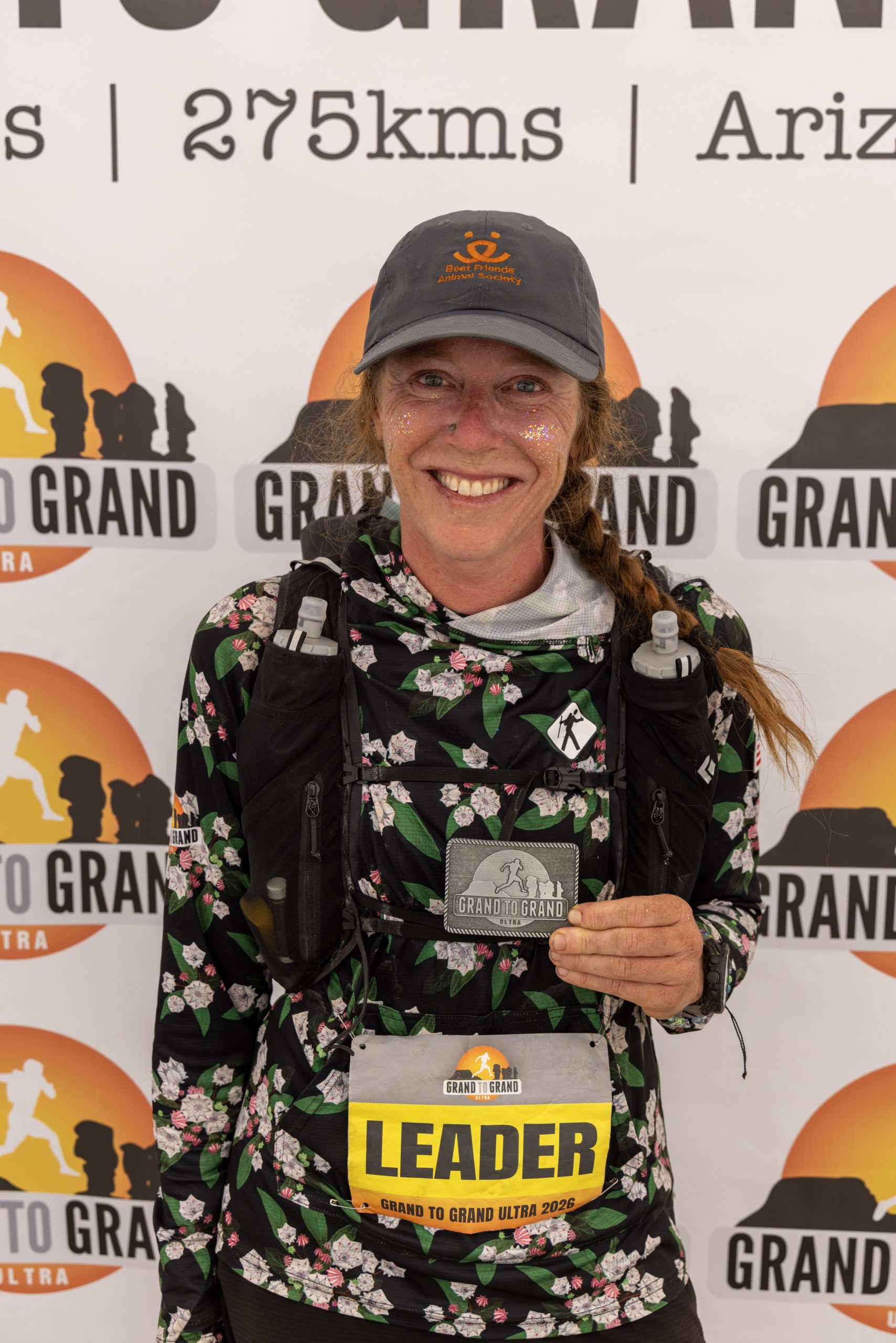
Race: Grand 2 Grand Stage Race (171 miles)
Runner: Coach Emily Keddie
Race Date: 09/20/2026
Location: Kanab, Utah
Results: 1st Place Overall (first time for a female)
3 Bests – What aspects of the race did you like the most?
This race is incredible, bottom line. It’s challenging, rugged, you have to carry all of your gear and food (self-supported), it’s remote, and it lasts for seven days. My favorite thing was the incredible support from all angles during the race. The rules, of which there are many, stipulate that you are not to use a phone or other communication device throughout the race- so we got to know our fellow racers, the race staff, camp crew (set up/took down the huge camp every day), medical staff, and volunteers very well. The amount of support and camaraderie was unmatched to every race I’ve ever done. Each day after crossing the finish line, all we had to do was sit around and focus on recovering for the next stage, so we stayed at the finish line and cheered every other racer in. Doing that day after day is so rewarding, seeing everyone and hearing about their experience on course. I love the challenge of carrying a full pack while running. When I started, my pack was around 18 pounds- it had 7 days worth of food (~2400 calories per day, the minimum was 2,000 and 1.1 pounds per day), a few extra clothing items, warm gear, sleeping bag, pad, and safety/first aid items among other things. I trained with it, and it is definitely a lot harder than running with just a vest! I also loved the scenery. From the north rim of the Grand Canyon, through the layers of Grand Staircase Escalante, each day had unforgettable features and views, from slot canyons to lush forest to wide open desert and cliffs. Incredibly unique landscape to move through.
Not so much – Aspects of the race that didn’t do it for you
The sand. I’ll never forget Stage 3- the long stage, 53 miles, was described in our race manual as “75% deep sand.” It sure was, and the following day as well. Running in deep sand, including huge sand dunes, is challenging. My stabilizing muscles, especially at my inner thighs, were so worked every day. Fueling during the race was also very challenging- in order to carry less weight, I repackaged and weighed all of my food, selecting very specific items and trying to strategize- for instance, prioritizing my recovery drink mix and bigger dinners with higher protein, as well as a handful of options for fueling each day during the run, with a smaller breakfast. By the end of the week, we were all very hungry. It’s not the way I normally train, race, or coach my athletes- it was a very different approach. I was most nervous about that, but the other athletes were in the same boat and we shared a lot of laughs over being a bit hungry at times.
Weird factor – What’s the weirdest thing about this race?
Weirdest thing about the race: maybe the penalties! This is more common in stage racing, but we had to label every food item and every single electrolyte packet with our name/bib number, so that if trash was found on the course, we would be penalized one hour! In addition, if we lost a personal item, it was a 30 minute penalty. I actually did get one of these, because I dropped my phone in the sand dunes during the long stage when I took out my headlamp and flashing red light in the evening. Another runner thankfully found it, but I had told race officials in the hopes someone might spot it, knowing it would be a penalty. Turned out, the penalty didn’t change the overall results!
Highlights of your race – What did you do well and enjoy about your race in particular?
This was the most well executed race I’ve ever had. I credit that to the immense support throughout the race, in particular some of my fellow runners whom I spent many miles with- Andy Pearson and Huge Reinhold. They were both such great teammates, we spent many miles talking and helping each other in various ways, and it was such an honor to finish a stage alongside each of them. Highlights were finishing the first stage in first overall: the race director told me right then that I was the first female in the history of the race, 13 years, to ever win a stage. I was so proud of my effort in that moment, and proud to smash that ceiling for the girls. It made me feel like the possibilities had been blown wide open. At the end of the third stage, it was later at night and dark, and I was finishing 53 miles. As I ran uphill to the finish line and camp, the whole camp- crew, staff, race directors- were standing at the finish line and the Foo Fighters’ My Hero was playing with disco lights. That moment will never be recreated. I am so thankful to them all for being part of it. I also really enjoyed getting to know the other runners and watching their races unfold, and seeing them persevere every day, seeing their approaches to each stage, seeing how much the enjoyed it, whether they were out there for part of the day or nearly the entire day. Everyone was incredible.
Lessons for others – Share your pro-tips on the race to help the next runner
I recommend reading a lot about what previous runners at G2G have used for gear and food, and practicing with everything- which means dialing things in quite a bit ahead of time. Run with the pack, even if its uncomfortable. Getting used to how it feels when you run and how easy it is to store and access food and hydration is crucial, but also important is knowing how all of your gear fits in it. Having ultralight gear is also fairly essential, but you need to know yourself and just how comfortable/uncomfortable you are willing to be for the sake of a lighter pack. It’s also helpful to practice running on sand or softer surfaces, do some heat training, and above all, go in with an open and curious mind.
Lessons you learned that will help you next time around
Believe in yourself. I think a lot of people have a mental block, which prevents them from believing what they are actually capable of. Embrace discomfort, because incredible things can happen when you allow yourself space to be uncomfortable- but also totally ok in the moment. You can be two things at once.
I wished I had an air pad. I brought an extremely ultralight, torso-length folding foam pad. I’m not sure I would change that next time, but if you want to sleep comfortably, that’s the ticket.
I also learned that I need to have a better pocket for my phone.
Most important course specific knowledge to know about the race
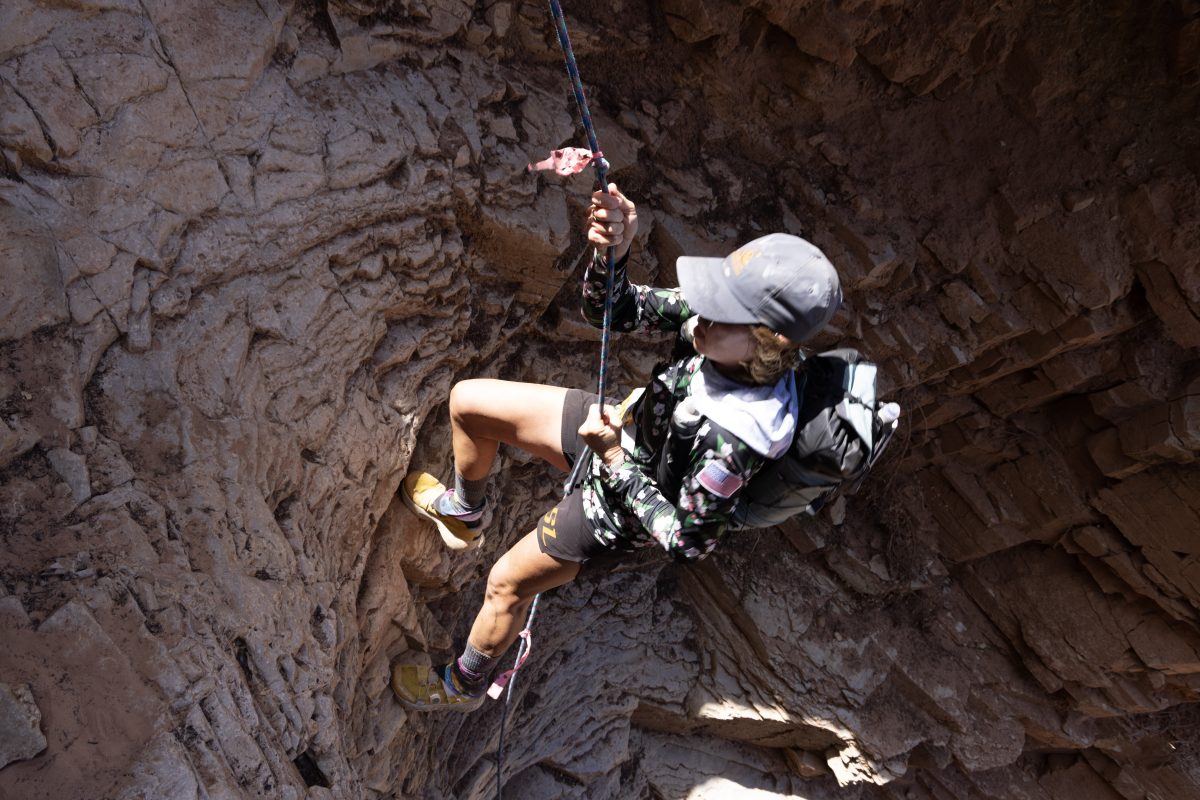
The deep sand- anticipate it! Do your research on the course, again from watching videos and reading others’ accounts of the race. Also, the first two days you’ll be dodging a lot of cacti on the ground, so you’ll be running lifting your feet higher and looking a lot at the ground. This is not the fast running you’re used to- another reason to practice with your pack on. There is also significant cross country running- off trail! The course is marked, but you need to be comfortable moving in unfamiliar terrain, with NO gpx, no map, no course downloaded on your phone (you do not have any of this). You run from one flag to the next, and if you don’t see one, you have to retrace your steps. I had to do this numerous times, as did everyone else.
Aesthetics – Is it a pretty course?
The course is gorgeous. Remote, unusual, small and large features. It’s unique, huge desert landscape.
Difficulty – Is it a tough course?
The course is very difficult. A fellow racer who has run Marathon des Sables mutliple times said that G2G is harder. Between the sand, cacti, off trail travel, and difficult footing (frequently), this is everything but your typical race. It also has the potential to be very hot, and rain would make parts of the course difficult/muddy. It requires patience and determination, more than most races.
Organized and well run – Did it feel like a well-oiled machine or were they flying by the seat of their pants?
This race is dialed. This was the 13th iteration of it, and the race directors have everything down to a science. Each day is predictable, the processes are reliable.
Competition – Is there a strong field?
There is! I was very nervous about this, mostly because it was my first self-supported stage race and I knew there were runners who were very experienced. There are elite runners as well as runners completing the route via mostly hiking. All of it is impressive, given the difficulty of each stage.
Logistics – Does it require a special handshake, registration a year in advance, hotels all booked? Give us the low down on the nuts and bolts of making the race happen.
Race registration includes hotel stays before and after the race in Kanab. You have to organize flights getting to Las Vegas, where you can take a race shuttle to Kanab, or you can travel to Kanab on your own (I drove). Registration for 2027 is already open!
Aid Stations – Standard fare or anything special to know about the aid stations in terms of what’s available or when?
There are no aid stations! Rather, there are manned water-only stations run by volunteers with a medic at each one. They are approximately 4-9 miles apart each day. You are only permitted to use water jugs to fill your flasks, and you are required to have capacity for at least 1.5 liters. There are spray bottles which the volunteers will use to spray you down to cool off! Otherwise, your food is what you’re carrying with you.
Weather and typical race conditions
I had exceptional weather- it only rained one day, and it started right after I finished that stage. It was fairly warm (80’s), but not unbearably so. It does feel very dry and the course is exposed for the most part.
Gear – Did you need anything special or is there anything you’d recommend for the next runner?
You need a running pack that is at least around 20L, that was probably a minimum with the most ultralight gear. I had a UL sleeping bag, very thin foam pad, UL down hoodie, UL rain pants, basically went as small and light as I could for the required gear. I’d recommend more significant gaitors. I used Dirty Girl, which are normally fine for keeping sand out of getting into my shoes around the ankles, but sand came in through all other parts of the mesh of my shoes. Other runners had Raidlight gaitors which covered the entire top of the shoe, and those seemed to be much better!
Spectators – Is this a friendly course for your friends?
There are no spectators permitted aside from the long stage when we run through the Best Friends Animal Society complex, and at the finish line.
How’s the Swag?
The swag is pretty cool! You can purchase it before and after the race. We all got t-shirts, and there were lots of other items available for sale. My trophy was a heavy sandstone arch!
The Overall Score – How many stars do you give this race and do you recommend that others run it?
Five stars. If you can, do it. This race was spectacular, challenging, highly rewarding, and an experience I’ll never forget.