
I am not a cook. Or a baker. A peanut butter and jelly sandwich is a pretty regular (and excellent) snack for me. And mac and cheese is a pretty regular (and excellent) dinner. I eat like a kid. Because a kid I am. It’s not laziness. It’s efficient. It’s also frugal. Eating like a kid makes sense.
But I’m also a runner. Last year I ate (ingested? Not sure ate is the right word) my first Maurten hydrogel at a trail run. It’s a tasteless biopolymer matrix of carbohydrates, and it works. It works so much better than any of the more popular products. The problem is, even with buying them in bulk, the cost breaks down to three dollars and seventy two cents per gel.
Current sports science has runners ingesting 60-120 grams of carbs per hour during a 100 miler. And with a Maurten gel holding 25 grams of carbs, some quick math has the cost of running and fueling properly breaking down to about $8.93 per hour at the 60 grams of carbs per hour minimum. An event lasting 20 plus hours suddenly becomes hundreds of dollars just in fuel. Current sports science also has runners training the way they will eat in their race. Fueling properly is an edge. And that edge costs about $9 per hour of training. This turns into over $100 a week with heavy training.
However, thanks to the interweb and this community of Team RunRun (especially Nicholas Greef), I’ve learned to make something more complicated than PB & J or mac and cheese: I’ve learned to make hydrogels. And it brings the cost of training down to about $1.72 per hour at the minimum of 60 grams of carbs per hour.
Here is how to make your own hydrogels:
Step 1:
Buy stuff.
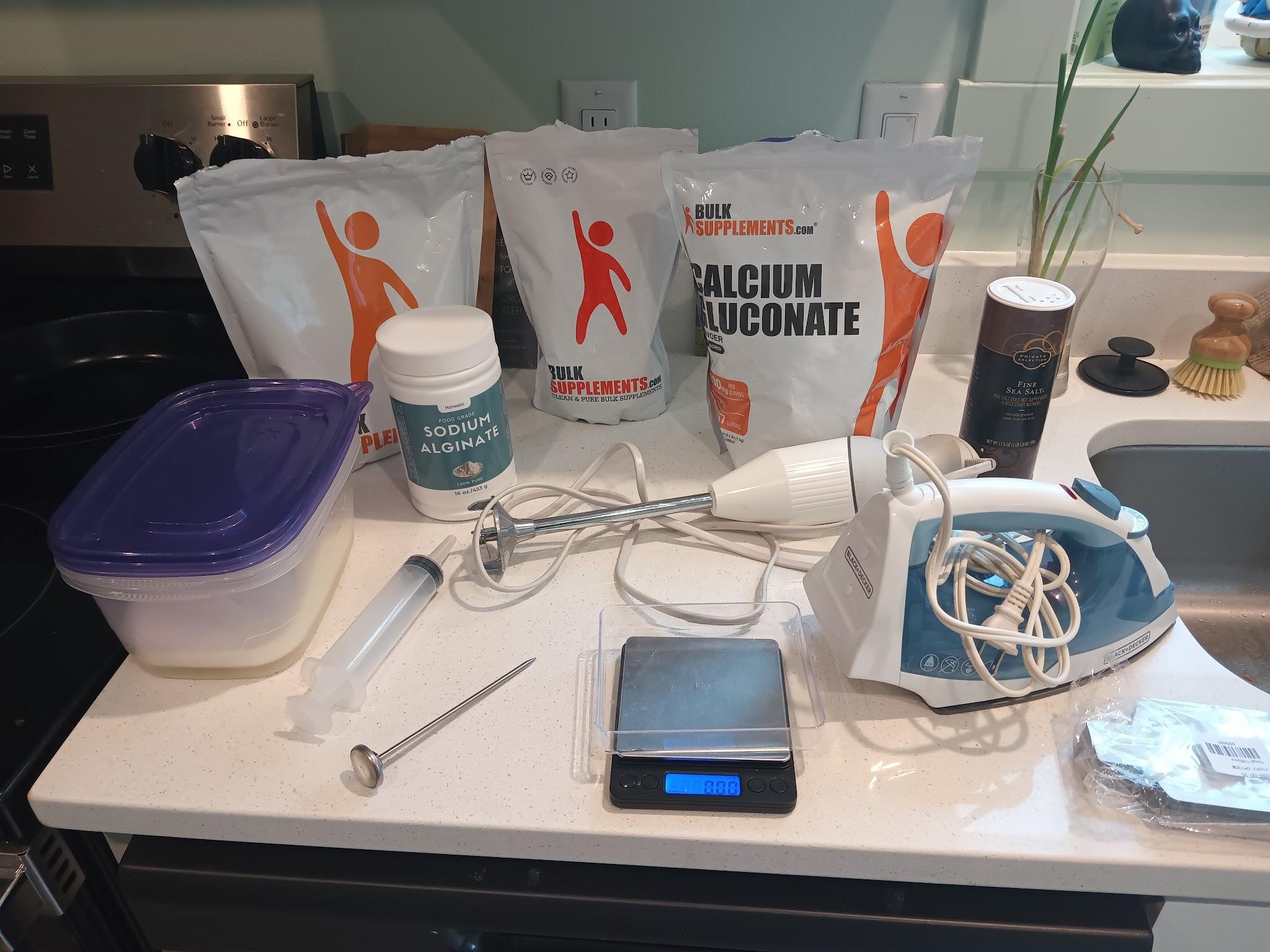
I used the following:
Maltodextrin
Fructose
Sodium Alginate
Calcium Gluconate
Fine Sea Salt
An immersion blender
An iron
A digital kitchen scale
A 60 ml syringe needle
Rip off top pouches
A thermometer
First, get your digital kitchen scale out. This is a lab. The following mix made 16 gels, each having around 30 grams of carbs:
266g maltodextrin
214g fructose
1g salt
Combine the sugars and salt and mix with 160g water
4g sodium alginate
1.3g calcium gluconate
Combine the alginate and gluconate and mix with 160g water
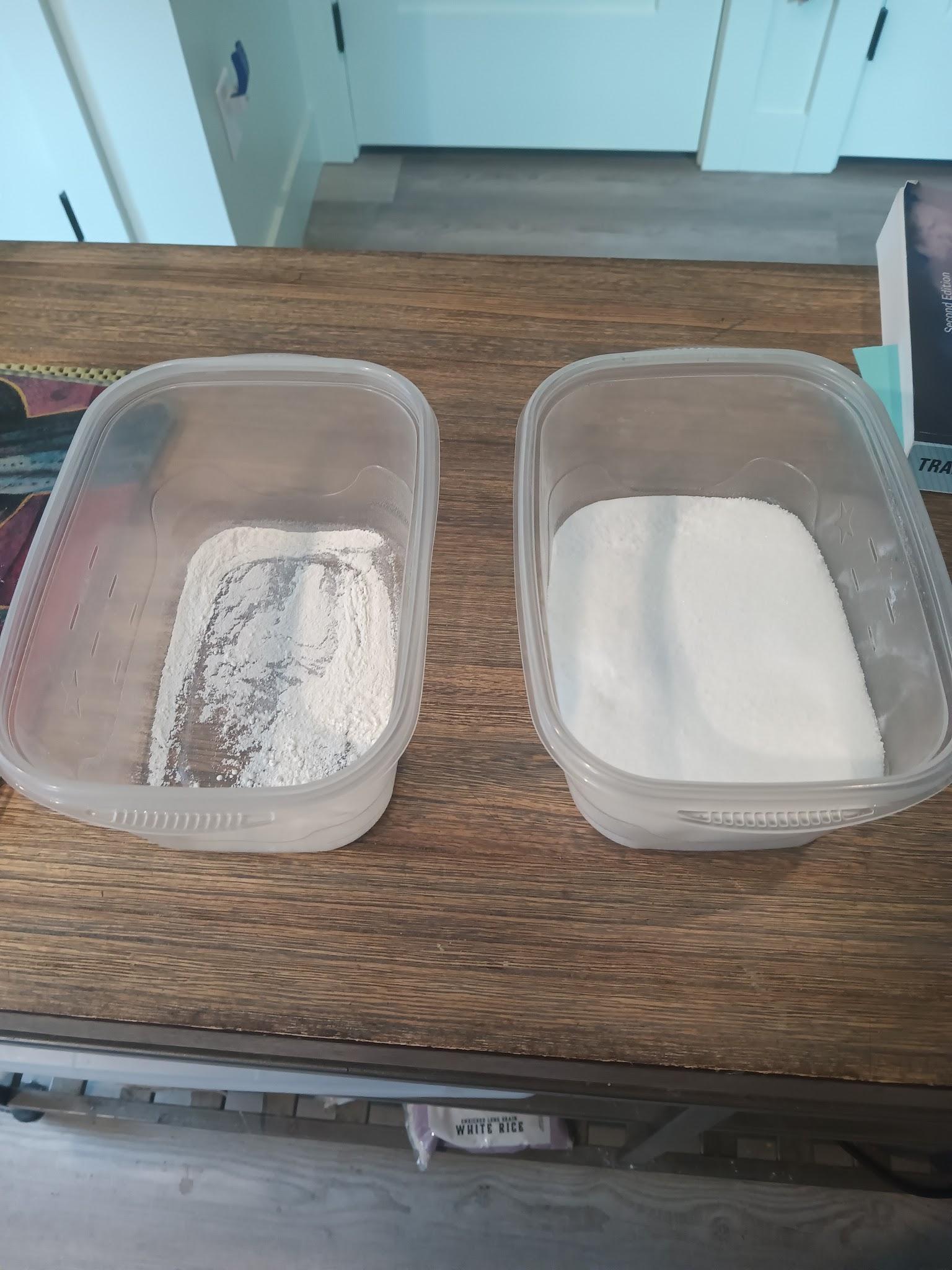
Each mixture without water added yet
Then, heat up the sugar and salt mix to around 60 degrees Celsius. It should be steaming or just starting to boil. If you live at altitude, you may have to adjust to a lower temperature (I heat mine to 50 degrees C at 9300 feet). The mix should go from milky to clear.
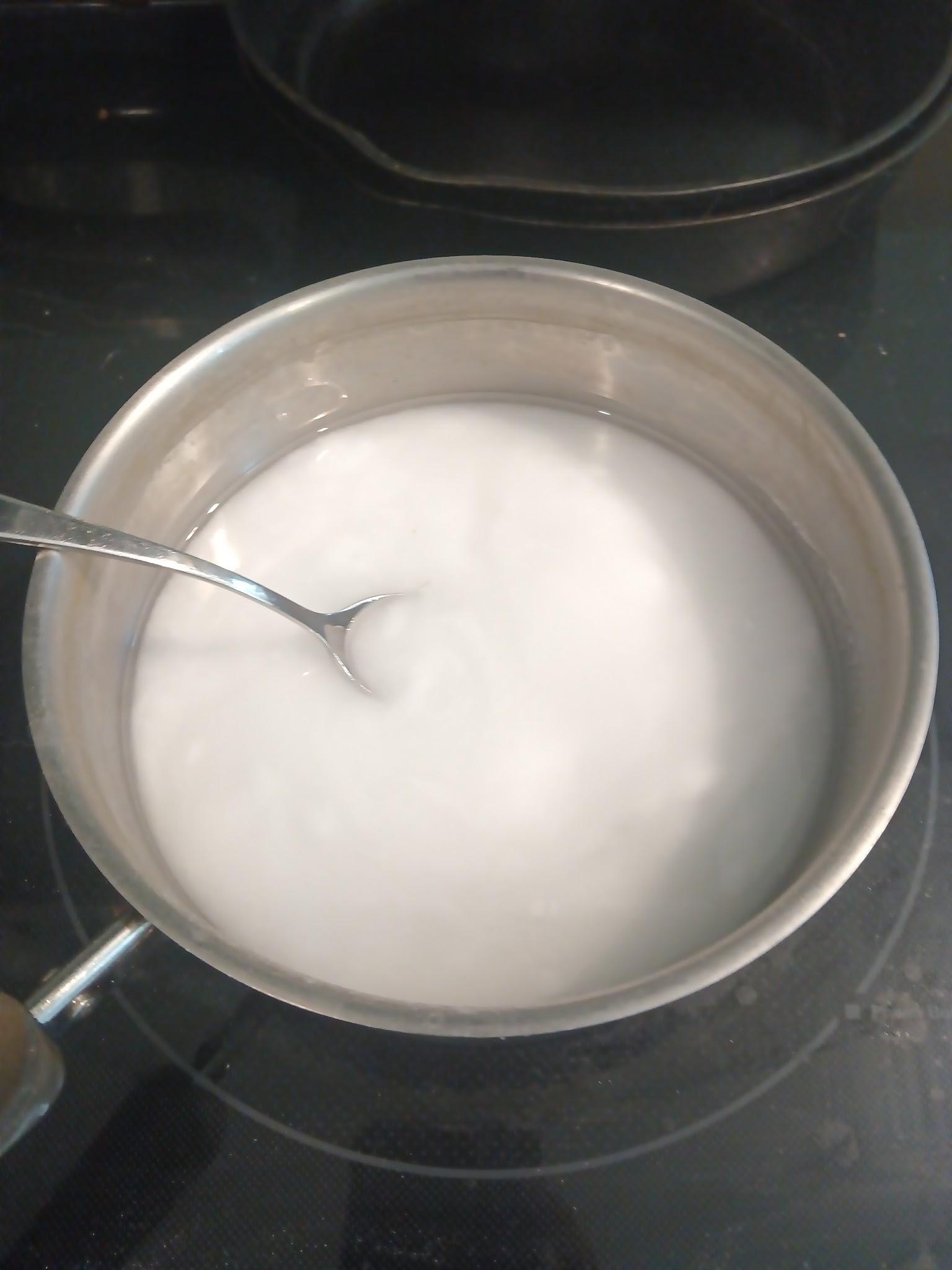
The sugar water mix before heating
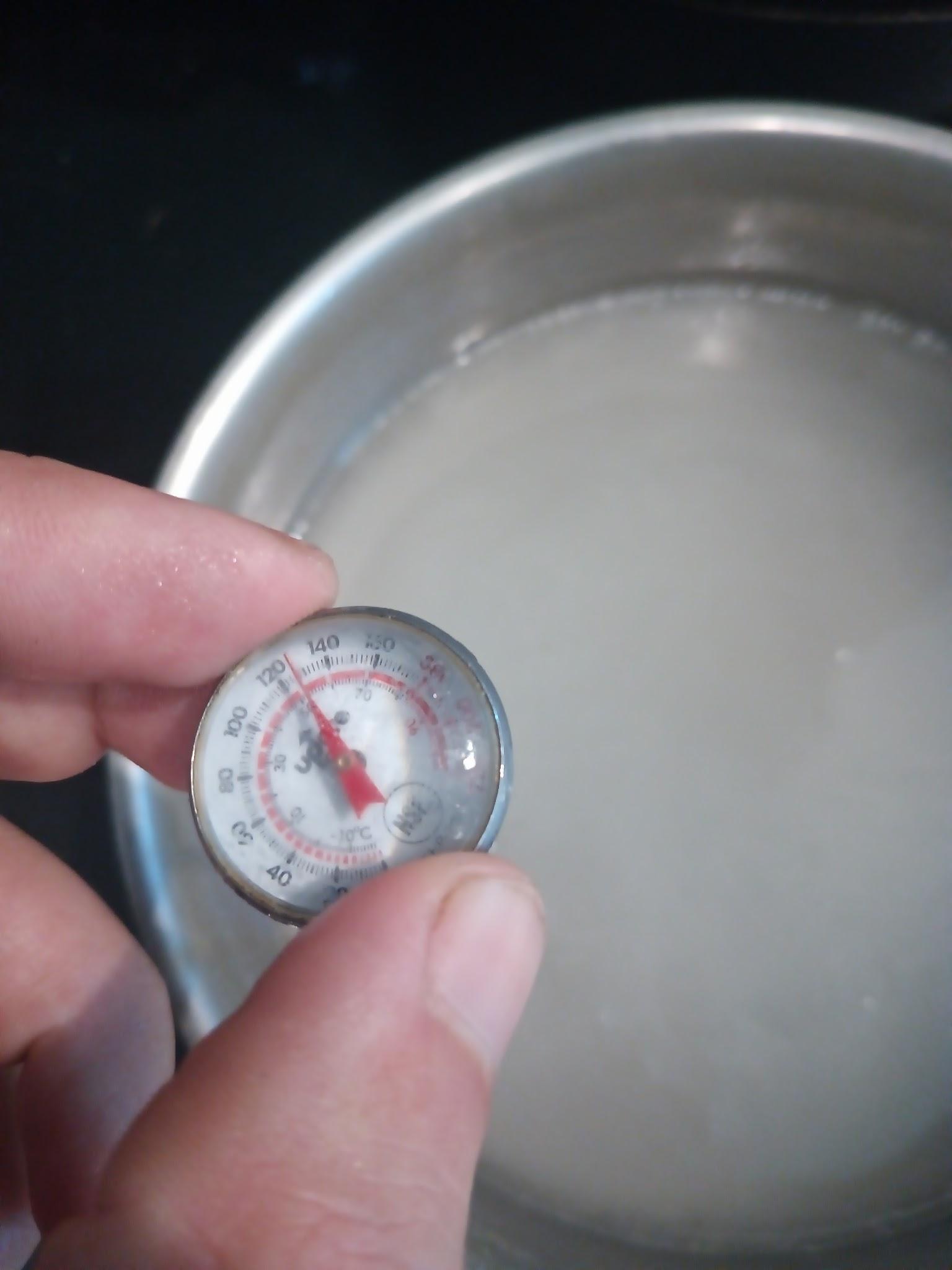
The sugar water mix just hitting steaming
Put both mixes (the sugar and water mix and the alginate-gluconate-water mix) into a mixing bowl and use an immersion blender to mix it all. It should take 30 seconds or less to have it properly blended. This is the gel! Now all that’s needed is to get it in the pouches.
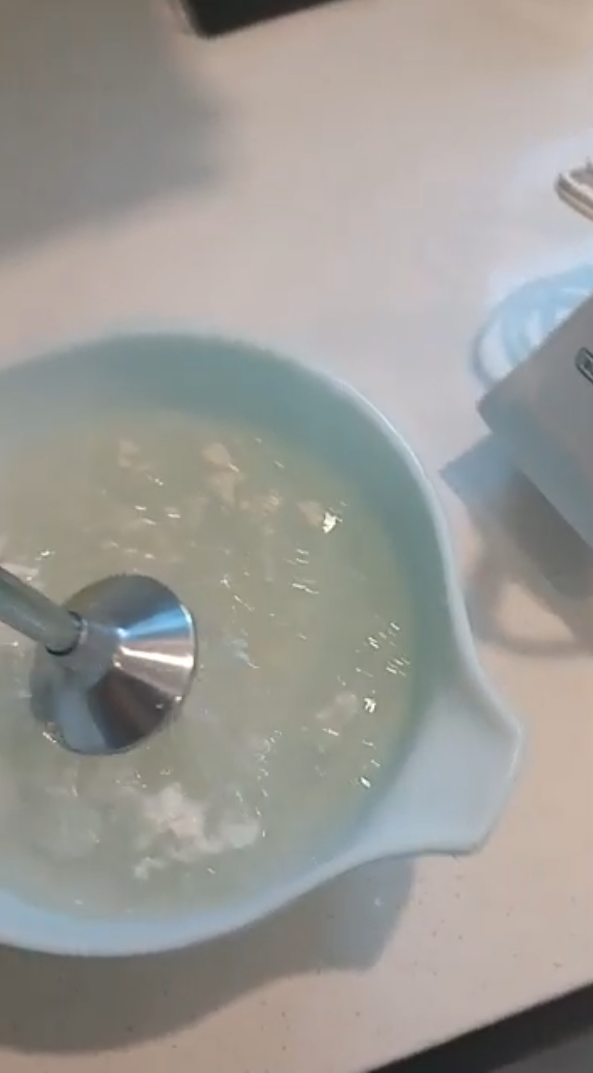
Next, use a 60 ml syringe needle to fill each pouch. With the pouches I use, they can only accept about 36-38 ml of gel and still seal properly.
https://drive.google.com/file/d/1FbNdR1TrMuMPN6NfO9J9wROCboFtyLwK/view?usp=drive_link
To seal, use an iron. Have a layer of parchment paper between the pouch and the iron to keep the iron from getting messy. I also use a cutting board propped up on one end slightly to help keep the gel in the pouch when ironing. An iron setting of 4 or 5 applied for 5-7 seconds works well. Make sure the inside of the pouch is clean and isn’t covered with gel or it will be difficult to seal.
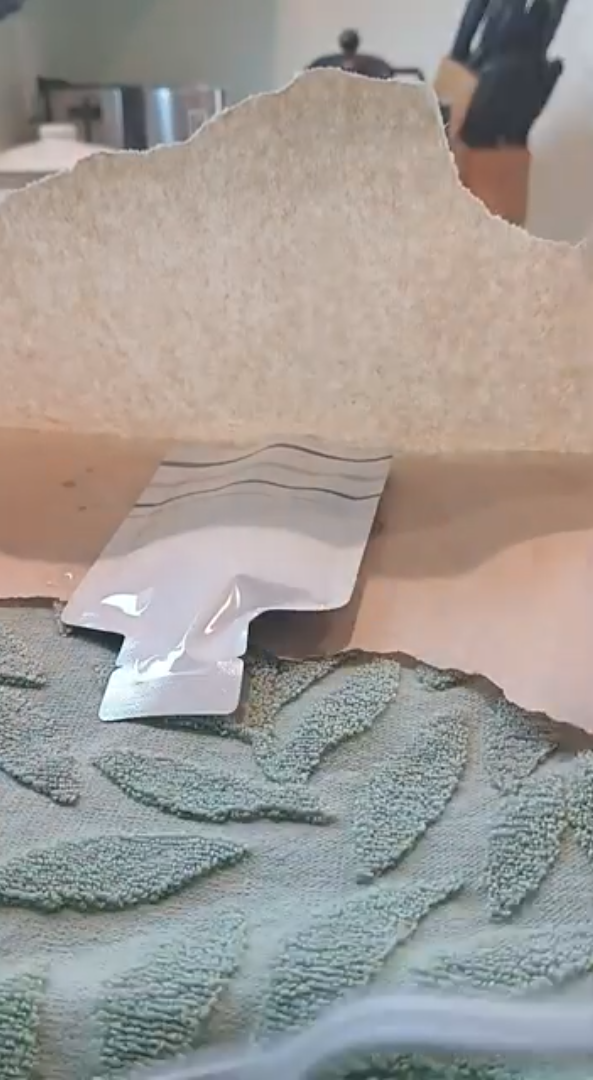
And that’s it! You now have your very own gels. The texture and taste are very similar to a Maurten gel. I refrigerate mine just in case I don’t get to them soon. Some folks use slightly different ingredients, but the idea should be the same. Mix maltodextrin and fructose in a certain ratio (this recipe follows 1:0.8) and apply a thickener and water to turn it into a gel.
A note on the science:
This formula uses a 1 to 0.8 ratio of maltodextrin to fructose. Having a ratio of 1 to 0.8 maximizes carbohydrate absorption and limits stomach stress by not overloading any one system of sugar uptake. If these gels were all fructose or all maltodextrin, your stomach would feel bloated with ingesting more than 60 grams of carbs per hour. The 1 to 0.8 ratio brings the uptake limit to 90-120 grams of carbs per hour. More fuel with less stomach stress means more energy means a better run.
Jeff Rome is a coach with Team RunRun, to learn more about him or to work with him, check out his coach profile.