
with Coach Dandelion Dilluvio-Scott
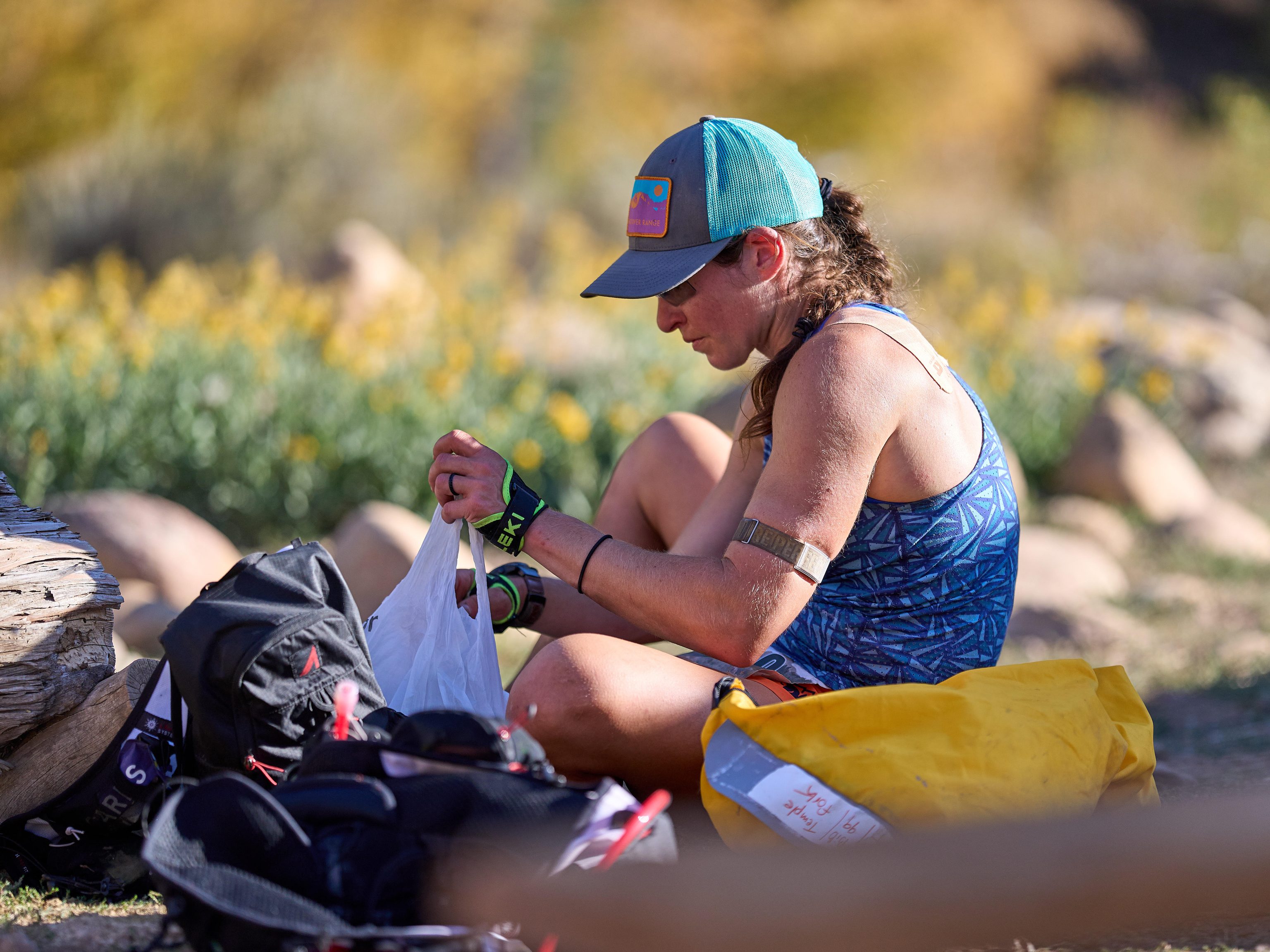
Many ultra distance events provide the optional service of delivering athlete drop bags to specific aid stations along the course. Drop bags are critical tool for ultrarunners especially when running without crew or at remote aid stations. They allow runners to access an array of personal items along their journey.
Choosing the items to place in each drop bag, the qualities and predicting when you might need specific products can be challenging. Below you will find a description on how I personally like to manage my drop bags for ultrarunning events up to 100 miles with a few additional options for specific situations. There isn’t one way to organize drop bags and their contents. Everyone has their own preferences and risk tolerance. The following information is meant to provide guidelines and ideas for ultra distance athletes so they can create their own personal system. Also, note that every race has their own guidelines for drop bags, so make sure you refer to the official rules/guidelines to make ensure you are compliant to the specific event.
Items and Placement On Course:
The Drop Bag:
I don’t like to use zip block bags unless required by the event. I prefer drop bags with a strong fabric exterior and a zipper closure if possible. Every race has different guidelines for drop bags construction and sizing though so make sure whatever you are using is approved by the Race Director. I keep everything within the main bag in a plastic bag to make it weatherproof in case of precipitation. I suggest having a separate inner bag for each category (nutrition, illumination, night clothes, shoes, headlamp, etc).
Night/Warm Clothes:
Hat, gloves, hard/softshell, hand warmers, tights, puffy, etc. The exact items I add to this part of the kit depends on the race gear requirements, weather and my personal preference/risk tolerance at the time. Some races may actually require that athletes carry all their warm clothes the whole time so these items won’t be in the drop bag at all. Other events will specify that runners must leave a certain aid station with this kit if they do not reach it by a certain time. If placement is not determined by the race rules, my night/warm clothes are placed in the drop bag I predict I will access around sunset or right after dark. If you are very sensitive to the cold then these items may be better left in the drop bag that you think you will access late afternoon (in case you end up running late…pun intended!).
Illumination with 1-2 Extra Batteries:
I personally carry a headlamp from the start and then have a waist light and batteries in a drop bag that I pick up early evening. If you have only one light source, I suggest putting it in the early-midafternoon drop bag to be safe.
Nutrition and Hydration
I am certainly over prepared here! In most races I treat aid station offerings as back up in case I miscalculate or run out of my own nutrition/hydration. When planning my fuel and sodium needs, I estimate how long I think it will take me to get from one drop bag to another. Then I add 2-3x that amount to the drop bag in the form of various different fuel options. In long distance events it’s difficult to predict what the body will accept for energy. Therefore, it is advisable to be prepared for the possibility of flavor fatigue or some fuel sources to become unappealing. Anything I don’t take with me goes back in the drop bag for training or another race.
Shoes:
In events under 50k I like to have one new pair of shoes available at the halfway point. In events greater than 50k I place shoes in drops bags right after a water crossing and/or distributed about every 25-30 miles. I don’t always end up using the new shoes, but I like having the option.
Socks:
I like to keep a pair of socks in each drop bag I have on the course. If my feet are sweaty or bothering me in some way swapping socks can help (and it’s more feasible than having new shoes in every drop bag). It’s nice to have the option, but again, just because I have socks at each drop bag doesn’t mean I change socks at each drop bag. It’s time consuming so I avoid doing swaps unless necessary.
Toiletries:
I stow extra lube, single wipes and sunscreen in a drop bag about every 25-30 miles in case I run out and need a restock.
Optional Others:
I tuck away a few snacks that I plan to consume while I’m at the aid station dealing with drop bags (bag of chips, mini muffins, protein powder in a shaker cup that just needs water, etc). I also sometimes keep a larger container of wipes in a drop bag to clean my face and dirty feet if I do a shoe/sock change. Some folks like to add a disposable tooth brush because brushing can helps wake them up and feel fresh.
Other Tips:
One Mile Rule:
About a mile out from any aid station, I recommend formulating a list of what you will need to accomplish (and in what order) when you arrive to avoid feeling overwhelmed. This allows you to get in and get out without confusion or distraction. For example, “I am going to toss my trash, find my drop bag, fill my bottles, drink my bottles while I change my shoes and socks, replace my nutrition while inhaling a bag of chips, leave my drop bag with a volunteer, refill my bottles and depart while munching on a grilled cheese sandwich.”
Ditching Gear:
Drop bags are not just for retrieving supplies. You can also leave gear inside them! For example, after you’re done with the night shift(s) you can leave your headlamps and warm clothes in a drop bag (assuming the race does not require you to carry those items throughout of course).
A Final Note
It is important to recognize that even the best drop bag plans can go awry. The reality is planning drop bags is glorified guessing based on how you think things will unfold. In fact, the only thing you can 100% plan on in any aspect of an ultra is that multiple things will not go as planned. Events are full of unknowns. The greater the distance, the more unknowns and the greater chance of more things going sideways. That is part of the fun of ultras! Expect the unexpected, be flexible and find joy in solving unexpected problems. Chances are that no matter how precise you are at preparing a drop bag you will still need to improvise at some point. If you expect that to happen it will be a lot easier to handle and you’ll be less likely to panic or fall apart then things don’t happen the way you envisioned.
Dandelion is a coach with Team RunRun. To learn more about her or to work with her, check out her coach profile.