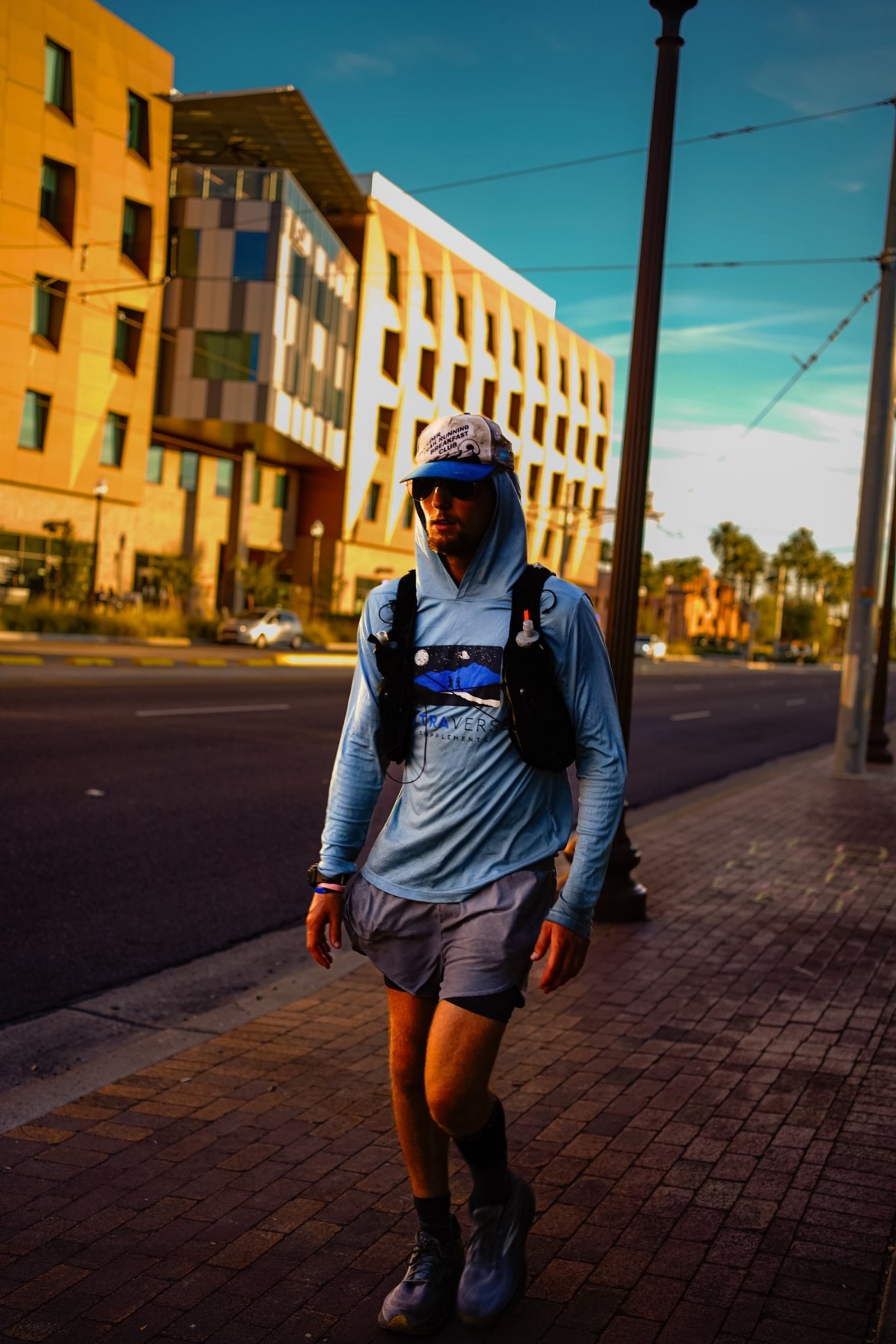
Despite the name of the sport being ultrarunning, what percent of people actually run the whole thing? Let’s not fool ourselves, walking is a huge part of the game and should not be overlooked. In this article, I will talk about the importance of walking AKA “power hiking” and why it should be a part of your training plan and race strategy if it isn’t already.
The longer the race, the more important it is
In shorter distance ultras, such as 50K’s, 50-milers and sometimes even 100K’s, depending on the course, it may be feasible for an average runner to plan on running basically the entire time. On more challenging terrain and longer distances, however, walking is a realistic expectation at certain points of the race. Whether it’s a big climb, technical section, or simply being realistic with yourself and your body, walking is often a bigger part of ultras than many of us want to admit. If you accept it’s part of the process and understand the importance of it, you can begin to prepare yourself and your body for using it as a tool to perform the best you can.
Walking can be fast
Many folks often associate walking with a slow pace. While it can be, it doesn’t have to be. Do some research on fast walkers. As silly as it sounds, competitive walking is a sport itself and those athletes are throwing down times that are hard to run, let alone walk. In ultras, professional runners such as Tom Evans have performed at a high-level while using walking to their advantage.
Even in distances such as marathons, walking can help you go faster. Oftentimes, people are too stubborn and prideful to walk even one step of a race but when they hit a steep hill, their “run” may be slower than if they were to put their ego aside and walk.
I, myself, have put in fast times while walking and have walked a marathon just under 5 ½ hours and have walked 50 miles in just over 13 hours.
If you take walking seriously during your training and understand when it can help you during a race, it can lead to faster times.
Understanding when to walk
Understanding you need to walk isn’t enough, you also need to understand when to walk. Walking during a race shouldn’t be a mindless thing you do when you feel tired of running; there should be a strategy.
One big thing that will impact walk/run strategy is your goals for a certain race. Obviously, the faster your goal, the less you will be able to walk. If your goal is to simply stay ahead of the cutoff, you will be able to walk most or possibly even the whole race. Again, it’s important to walk during training, as you have a good idea of how fast you will be able to walk.
The most obvious thing that will impact walk/run strategy is terrain. Often, the course decides for you and there are certain sections you will have to walk. A common rule of thumb in ultrarunning is to walk the uphills and run the downhills. The flats are often where you get to decide.
Another thing impacting this is how hard you’re working. The two most common metrics runners use to measure this is either heart rate (HR) or rate of perceived effort (RPE). It is common knowledge during ultras that zone 2 HR is usually the sweet spot and if you are exceeding zone 2, you probably want to slow down. If you rely on RPE like I do, you must have a good understanding of your body and the discipline to push yourself when you think you can and pull back when you think you need to. If you train this, it will feel like second-nature during a race.
Although it can be a huge blow to the ego, “walking it in” is something that happens to nearly all runners at some point. Sometimes you lose the ability to run during a race and are forced to walk for either a period of time or the rest of the race. During these situations in particular, it is crucial you’ve trained your walk enough to be able to fully rely on it in order to finish a race.
Being productive while walking
There are many things you must do during an ultra that don’t involve running or even forward motion at all. Some of these include: eating, drinking, filtering water, changing layers, etc.
These “chores”, as I like to call them, are essential but take time away from the race. Anytime I’m walking during a race, I make it a point to get at least one chore done. This is a good way to maximize efficiency as it has to get done anyways and is easier to do when you are moving at a slower pace.
When used in tandem with getting necessary things done, walking can be very productive.
Train for it
A mistake many people make when they train is to only run. If you are an elite athlete and plan on winning every race you enter, this may work for you, but for those of us mortals who may still have ambitious goals but are happy to reach the finish line, we need to practice our walk.
Walking can be incorporated into your training in a variety of different ways. If you love running and don’t want to interrupt the flow of your training runs, walk separately. Go on walks and be intentional about your speed. Don’t walk for the sake of walking, instead challenge yourself. See how fast you can get your cadence up to. See how fast you can walk. Just like running, don’t expect yourself to be able to hit the same times on fresh legs as halfway through the race but you might surprise yourself with how fast you can walk.
Walk/running is a great way to approach either easy runs or long runs as these can mimic a race. If the terrain is flat, you can find a good time-based walk/run routine you can use during a race (i.e. walk for 5 minutes, run for 5 minutes), and if it’s hilly/mountainous, you can train walking up steep hills or all uphills.
It doesn’t matter how you incorporate walking into your training, as long as it’s there and the race is not the first time you walk.
Walk your way to victory
Preparing and executing a good walking strategy is a great way to improve in longer distances. The more you understand the importance of walking and implementing it into your training and racing, the more you will begin to understand how you can use it as a tool to achieve your goals.
So, put your ego aside and accept walking is part of being a successful runner.