
with Coach Jenn Kozak
2026 has begun! For the endurance athlete, this likely means strategically building out a race schedule for the year. A traditional approach might look like selecting races that speak to you, then categorizing them as goal/priority races, training/support races, or races you’re participating in just for fun (typically labeled as A, B, or C races). Your A races, or your goal races, are the events where you’ll hope to perform well and maybe even snag that elusive personal record (PR). If this is motivating for you, that’s great! But as we know, not everyone fits the same mold.
As a running coach, I see plenty of athletes who are not motivated by time-based goals, that is to say chasing a target time or setting a new PR for a given distance. Often, time-based goals can create a sense of anxiety that bleeds into not only racing, but day-to-day training. This can sap the joy out of the process, making training stressful, and is ultimately something we want to avoid. Perhaps the athletes that feel the loss of time-based running goals most acutely are the aging athletes. If you are an athlete in your 60’s, 70’s, or beyond (and are not a complete beginner), it is likely that your fastest days are behind you. The question then arises: what should my goals be? What will motivate me to continue running?
Motivations are varied and individual. Many athletes are drawn towards achievement-based goals which can provide a sense of accomplishment. Other athletes trend towards exploration and adventure. The good news is that there are a seemingly endless number of goals that you can set for yourself that are not based on finish time.
Location/Geography Based Challenges
- Run a Half Marathon in Every State (or Province – Canada, or Country – Europe):
Love to travel? If you have the time and resources, then this one is for you! With the half marathon being an extremely popular race distance, it isn’t hard to see why this is one of the more popular geography based challenges out there. With the range of climates across the US, it is likely that you’d be able to find a race somewhere, every weekend of the year. Don’t love the half? Alter the challenge to the 10k, or the 5k! Can’t commit to that level of travel? Take part in all the local races near you. There are many ways to create your own challenge in this way.
- Race in a Dream Location:
If you don’t want to commit to hitting every state in the US, pick a race in a dream location! There is no better way to sight see than running through the streets/trails of somewhere new. The bonus? In a race scenario you’ll have the support and safety of the race organization, versus running through an unknown location on your own.

- Stay Local:
Often, it is comforting to stick to the roads you know. One way to mix things up is to try to run every road in your hometown. If you prefer trails, then every safe trail system in your area. Or, get competitive in a different way and nab that Local Legend!
Race Series
There are so many race series out there that it would be impossible to list them all. The most renowned is likely the World Marathon Majors. Athletes who run all six of the original Majors (Boston, Chicago, London, New York, Tokyo, and Berlin) will receive the coveted Abbot Six Star finishers medal. If you already have one, they will likely be introducing two more races in addition to the Sydney Marathon, and having a nine-star finishers medal as the next milestone.
The Dopey Challenge is another extremely popular event, where athletes will run a 5k, a 10k, a half marathon, and a marathon over four consecutive days, all while enjoying the magic of Disney! This experiential race series is more often than not more about the vibes, and the challenge of completing each distance, rather than worrying about the clock. The Goofy Challenge is also popular, in which runners take part in both the half marathon, and the marathon. Team RunRun coach Dafne Valle has a Dopey Challenge Guide to help you navigate this goal.
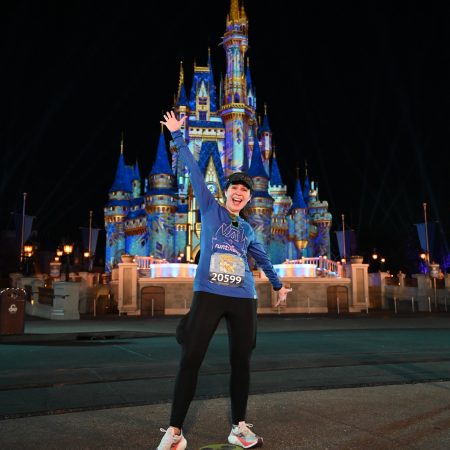
Both the World Majors and the Dopey Challenge race series are often unattainable for the average recreational athlete. The chance of getting into the majors via lottery is quite slim, and if you do get in, expect high costs for travel and lodging. The Dopey Challenge also sells out very quickly. This doesn’t mean that challenges of these types are off the table though! A grass roots example is the P.A.C.E. (Positive Attitude Changes Everything) Trail Running Series, Quadzilla held in British Columbia, Canada. If you run four of their races, you are entered into a draw for a solo entry to the Golden Ultra (BC) or the LOWA Trail Trophy (Austrian Alps).**
There are numerous race organizations that have race series. A little digging and you’ll likely be able to find one near you that will fit your budget and your travel capacity. Not only will you get to train for something with no time pressure, you’ll be supporting a local organization!
** Quadzilla to return in 2027.
Distance-Based Challenges
- Completing a “new to you” distance
As coaches, we will often encourage athletes who are aiming for their first long event to have their main goal be successful completion of the race. The same can apply to any “new” distance that you decide to tackle. This could be a half marathon if you’ve only ever completed a 10k, or a marathon if you’ve completed half marathons in the past. It can also extend to trying your running legs on trails, where time matters less. Perhaps even your first ultra!
- Fixed-time race
This style of endurance event typically takes place on a looped course. The goal is to go as far as you can within a given amount of time (often 6, 12, or 24 hours). These inclusive events are open to all fitness levels, and athletes often can set goals based on their personal fitness level. With a looped course format, over the course of the race you can build and experience a sense of community, as you’ll be seeing the other athletes multiple times over the course of the event. You can commiserate, encourage, and flex that mental fortitude muscle along with many new friends!
- Backyard style ultra marathon
We’ve all heard of Big’s Backyard Ultra (if you haven’t you should check it out). Thanks to its popularity, there are now backyard style ultras all over the world. Typically, the backyard style event will be a 4.167 mile loop (called a yard) which must be completed in 1 hour. At the start of each new hour, runners MUST begin the loop again (if you finish in 45 minutes for example, you’ll have 15 minutes to rest, recover, fuel, etc before you’re to begin again). This style of race is another example of not worrying about the finish time. The most challenging part might be getting off the lawn chair to start the next loop!
- Personal distance challenges
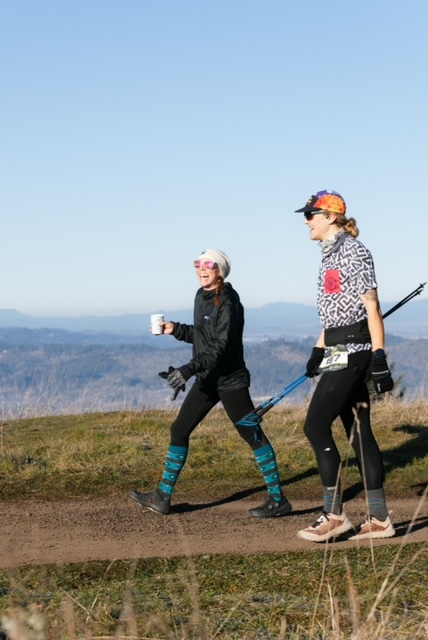
Turning 50 and looking for a fun way to celebrate the milestone? Why not run 50k?! Of course, these fun challenges can be tailored in any way you see fit based on your level of fitness. If 50 miles or 50k is too much, break it up into a multisport day including biking to help tick off some of that distance. There are an infinite number of ways you could build a challenge that is difficult yet doable, and of course, rewarding.
Branch Out to Other Events
- Triathlon
There are so many events that can be supported by continuing to run, or alternatively, support running. One of the more common forays into the multisort world might be runners moving over to endurance events such as the triathlon (swim, run, bike events). Athletes can learn or develop other aerobic sports while maintaining a focus on run fitness.
- Spartan Events
Spartan is most known for its obstacle racing courses. Athletes will choose their event (Sprint, Stadion, Beast, etc.) which includes a running distance and set number of obstacles that must be crossed. For example, a Sprint Spartan includes 5k of running, combined with 20 obstacles such as an atlas carry, box jumps, a barbed wire crawl, and a fire jump, to name only a few. Spartan is also the flagship company for the Tough Mudder races (with its own version of often muddy, challenging obstacles that will really test your mental grit) and Deka races (often indoor strength and running competitions). Spartan also puts on other endurance based races, including more traditional trail races.
- HYROX
The currently trending HYROX is an indoor race where athletes run 1 km, followed by a functional workout station, which is then repeated 8 times. With the surge in popularity of HYROX, it is likely that there will be a race available near you!
While Spartan and HYORX still demand a need for good aerobic fitness as they incorporate running into their challenges, strength becomes more of a focus (not a bad thing for aging athletes)!
Off the Cuff Adventures
- Hut-to-hut trips
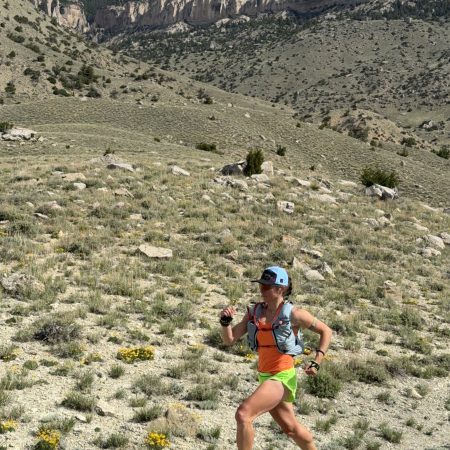
With the rise in popularity of running, and trail running in particular, there have been many different tourism based companies popping up, inviting guests on their curated running adventures all over the globe. Rogue Expeditions is a company providing multi-day running tours in unique locations such as Patagonia, Morocco, and Italy (to name a few). Runners can find packages that are tailored to their own personal fitness level, making it accessible for most recreational runners.
Runners with the know how can also build their own adventures. One popular example is completing the famous Ultra-Trail Mont Blanc (UTMB) race course of 100 miles on their own, breaking it down into a 4, or 5 day trip.
- Hiking adventures
Did your friend just invite you on a last minute backpacking trip? Have you always wanted to visit Machu Picchu? Is the Camino de Santiago a bucket list adventure? Just because you aren’t running doesn’t mean that these feats are easy!
Maintaining your base aerobic fitness will allow you to jump into any adventure at the drop of a hat!
Finally, just because you aren’t training to PR in your next race, doesn’t mean you should completely give up the sport altogether. Continuing to train consistently will help maintain cardiovascular fitness which can decrease the risk of heart disease, stroke, diabetes while helping to improve longevity and the overall quality of life.
What is your goal for 2026 going to be?
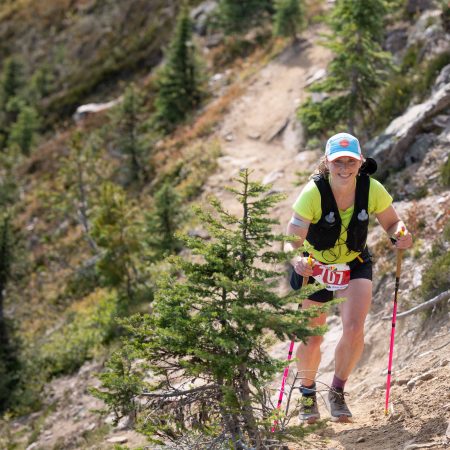
Jenn Kozak is a running coach with Team RunRun. To learn more about her or to work with her, check out her coach profile.