
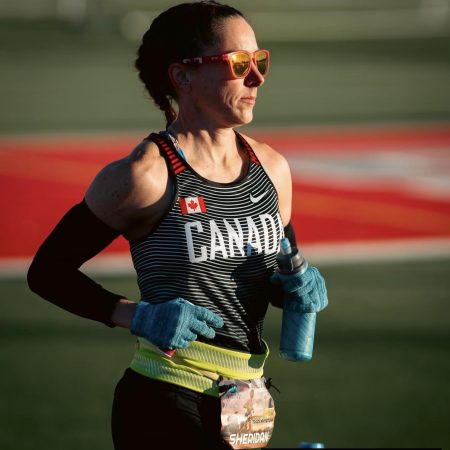
Team RunRun coach Laura Sheridan has competed in the World 24 hour Ultrarunning Championships and she has a message for all ultrarunners about training! Said simply: Should ultrarunners do speedwork? YES!
Let’s talk about why. I know many people get into ultrarunning because of the chill, run all day pace, social environment, and awesome people. One of the first things many runners assume is that speedwork isn’t necessary since your ultra race pace is much slower compared to your 5K or 10K pace. In theory, that may seem correct, however, speedwork improves your running economy. What does that mean? It means that you can run at your comfortable run pace with much less effort. As your running economy improves your easy pace will increase, thus improving your race performances!
Running Economy
Your running economy is ultimately determined by how well your body uses oxygen while running at different speeds below your maximal level. Your economy can be improved by consistently training, improving body composition, improving running mechanics, plyometric training, and some fancy running gear like carbon plated shoes! Barnes, K. R., & Kilding, A. E. (2015).
Training to improve running economy isn’t hard but most gains are made over time. With consistent training, muscle and heart rate adaptations occur to make the body operate more efficiently, the brain-body connection strengthens, and body composition will improve if fueling is adequate but not excessive. Working with a coach on form, cadence, and overall running mechanics can be a very valuable tool to improve economy for some runners. For a quick fix, runners can also turn to higher end gear like carbon plated super shoes which have shown to improve running economy by as much as 0.9%-4.2% according to the International Journal of Exercise Science. These shoes are considered “money well spent” for some, however, be warned, not all super shoes are race legal when it comes to setting records and can increase the risk for injury in many runners!
Aging Factors
While aging may not be the primary concern for many runners, most of us don’t want to imagine the day we can’t run. There is a lot of really interesting research involving aging runners. It may be hard to believe, but a study published by the Journal of Aging and Physical Activity (2017) found that sprint training is a safer and more effective way to preserve physical function in older adults compared to moderate intensity exercise training. The study showed improvements in muscle power, insulin sensitivity, and overall cardiovascular health when sprint training was performed.
These findings were echoed in a study found in Cell Metabolism, 2017 called HIIT and Aging. Researchers identified improvements in mitochondria (energy producing cells) and overall physical capacity when older participants trained with short bursts of intensity movement. In all of the studies, proper warmup before high intensity exercise was stressed as very important. The benefits of sprint training for participants was also found with shorter duration high intensity workouts compared to the longer sessions of moderate intensity exercise that produced similar benefits. In essence…more bang for your buck!
Similar findings were found in the area of bone mineral density in an article by Arch Osteoporos (2018). This study found 10% and 14% higher bone mineral density readings in the hip and spine of masters level sprinters vs masters level endurance athletes. Stronger muscles & stronger bones = stronger & longer running careers!
Training Motivation
I don’t know very many runners who enjoy going on a 5 mile run every day, on the same route, at the same speed, in the same weather, at the same time. I can just imagine the dread that would fill my mind if that’s what my training plan displayed. It is important to have those easy paced mindless runs but it is also important to have runs that challenge you and give you some variety in pace, route, and effort level!
A lot of people get intimidated by the thought of speedwork, but remember, speedwork doesn’t have to be a structured workout like repeat miles or 400s. Speedwork can be as simple as adding 6-8 short pickups into your easy paced run. After a mile or so warm-up, find a target like a tree or phone pole and gradually pick up your pace to a hard effort, then resume your easy pace until your breathing is regulated. Once recovered, search for your next target!
Risks
With increased pace and effort there are some increased risks for injury. To minimize risks, make sure you warm up appropriately prior to speedwork. Using effort based intensity goals like Rating of Perceived Exertion (RPE) ensures you are hitting your intensity targets and not over-doing it. Pay attention to your form and don’t sacrifice form for speed. Remember to have fun! Better yet, hire a coach to help you optimize your training!
Summary
Ultrarunners benefit from doing speedwork! It doesn’t have to be fancy, or require a special watch. But if you want to be your best at any running event, stressing your body with more intense training efforts will make you better.
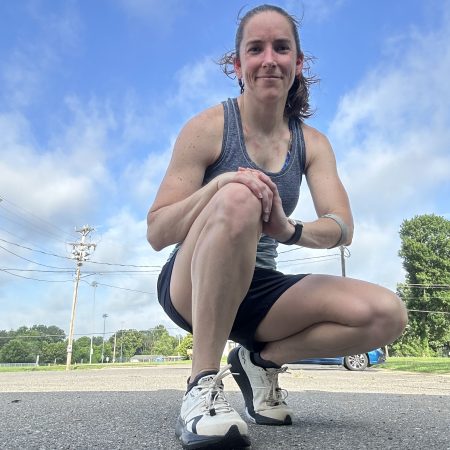
Laura Sheridan is a coach with Team RunRun. To learn more about her or to work with her, check out her coach profile.