
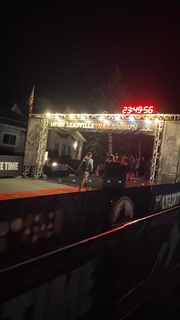
Race: Leadville 100 Miler
Runner: Coach TJ Harms-Synkiew
Race Date: 08/22/2026
Location: Leadville, Colorado
Results: 23:49:55
3 Bests – What aspects of the race did you like the most?
- I loved the Hope Pass section. I have trained on it many times and it is one of my favorite trails in Colorado. I love climbing and was eager for this part of the course.
- Because of the reroute, miles 90-97 were mostly downhill/flat on dirt road. I was able to run this section very fast and was feeling good.
- I loved the energy going through the aid stations, especially Outward Bound and Twin Lakes. Twin Lakes is my favorite aid station of any race I’ve been to
Not so much – Aspects of the race that didn’t do it for you
- The aid stations aren’t 10/10. I knew this going into it and planned around it. The very first aid station ran out of water, and many runners were unable to get any water. Thankfully, I brought enough water and nutrition for the first 20-miles of the race.
- With the reroute due to the Willow Fire, there were two crewed aid stations 3-miles from each other, which was not feasible which such a large runner field. My crew was only able to make it to the first aid station and not the second due to a crowded parking lot. Thankfully, we anticipated this as well.
Weird factor – What’s the weirdest thing about this race?
The 2026 reroute was very interesting. Out of the first 50K, we spent about a marathon of it on some sort of road. The amount of road due to the reroute made it not feel like a proper trail race.
Highlights of your race – What did you do well and enjoy about your race in particular?
- I ran the downhills very fast in this race and that allowed me to run under 24 hours. There were times when I ran a bit fast and wreckless downhill, however, I wanted to give it my all and was willing to take chances.
- I enjoyed the climb up to Hope Pass both times and did my best to take in the views.
- Coming down Hope Pass after the second climb, I took 5-minutes to chat with a friend I ran into. Even though he was going a slower pace than me at the time, it was nice to catchup, and I appreciated the brief conversation.
Lessons for others – Share your pro-tips on the race to help the next runner
- Prepare for the altitude. Many folks underestimate the altitude and it ruins their race. Train and prepare for the altitude to the best of your ability and do your research for how to manage it during the race
- It may be hotter than you think at times. There are spots in the course that are very exposed, especially on the road sections. 70 degrees feels much different at this altitude than it may where you normally run. Have a cooling strategy, even if you don’t think you’ll need it
- The race cutoffs are harsh early on. Know this, understand how it will impact your race strategy and plan around it. Once you get to Twin Lakes Inbound, the cutoffs are much more friendly but before that, they can be harsh. This mixed with other factors I’ve mentioned, are the cause for many DNF’s
Lessons you learned that will help you next time around
- The most valuable thing I did during this race was putting my ego aside and letting myself slow down when I wasn’t feeling well early in the race. This allowed my body to reset and recover to push harder later in the race. I was passed my many people during this time, but I stayed mentally steady and didn’t let it get in my head.
- I only sat down twice in this race, and both times were to go to the bathroom. My aid stops were efficient for the most part and I only took extra time when I was behind on nutrition and needed to eat. This efficiency and robust strategy allowed me to achieve my goals in this race
Most important course specific knowledge to know about the race
- The course was different in 2026, however, on normal years the road hits single track 6-miles in. It’s important to think about how you want to approach this first section. Many people go out fast to get a good spot on singletrack, so you must do the same, or go your pace, knowing you may be boxed in for periods of the singletrack section.
- Going off of the last note, the first 3-miles of the course are downhill. Be careful, as all the energy from the start coupled with an immediate downhill, can result in folks blowing their load early. Regardless of pace, have a strategy for these first few miles and don’t trust yourself to do what “feels right” at the time.
- There are a lot of road sections at the beginning at end of the race. The only time you will be on singletrack for an extended period of time is going from Twin Lakes over Hope Pass to the turnaround and back to Twin Lakes. The rest of the course, even on a normal year, has a lot of roads, whether it be paved or dirt.
Aesthetics – Is it a pretty course?
Yes! The sections around Turquoise Lake and Hope Pass are particularly pretty.
Difficulty – Is it a tough course?
I would consider it an easy mountain course. You will have a hard time finding a trail race in the mountains with less elevation gain. That said, the 30-hour cutoff is tough compared to most 100-milers and you are at high altitude for the entire race.
Organized and well run – Did it feel like a well-oiled machine or were they flying by the seat of their pants?
It is hit or miss. Some things such as the parking and certain aid station supplies are not as organized as you would think for a race that has gone for 4 1/2 decades. Other aspects, such as the course marking and road crossings are as clearly marked as a course can be. It’s nearly impossible to get lost in this race.
Logistics – Does it require a special handshake, registration a year in advance, hotels all booked? Give us the low down on the nuts and bolts of making the race happen.
You must enter the lottery in December the year before. There are lots of weird ways to get into the race. I volunteered a lot the year before to ensure my entry. I’ve heard going through the lottery without anything extra is a challenging way to get into the race. I’ve heard of people putting in the lottery for nearly a decade without getting in. Luckily, I had a friend that lived in Leadville, so I didn’t have to worry about a place to stay but that is expensive and must be booked in advance as well. I would recommend camping at the dispersed camping nearby for much cheaper lodging.
Aid Stations – Standard fare or anything special to know about the aid stations in terms of what’s available or when?
The aid stations are not as well-stocked as you might think. They lack fresh fruit and are hit or miss on hot food. They are very well-stocked with gels, drink mix, and other high carb running nutrition. As I mentioned, the mile 10 aid station ran out of water in 2026, so they don’t take pride insuring everyone has what they need. Additionally, since there are so many runners, aid stations are often crowded and it’s hard to get what you need. If you have a crew, I recommend them having everything you need ready. If not, I recommend you are stocking your drop bags with everything you could possibly need. Pretend as if the aid station won’t be there and plan on supporting yourself and using the aid station as a backup.
Weather and typical race conditions
The weather is usually nice around this time of year but can change quickly. It isn’t uncommon for some parts of the day to be uncomfortably hot. Afternoon thunderstorms are almost a guarantee, but they usually pass quick. The nights can be chilly but not freezing, depending on what your tolerance is.
Gear – Did you need anything special or is there anything you’d recommend for the next runner?
Much of the course is runnable but I would recommend at least having trekking poles at the Twin Lakes Aid Station for the Hope Pass section.
Spectators – Is this a friendly course for your friends?
The crewed aid stations are easy to access but since there are so many runners, it will take much longer to get from place to place. This race is spectator-friendly if you have 4 or less crew members. Any more than that will be less friendly, since the Twin Lakes Aid Station is only accessible via a shuttle and each runner is only allotted 4 crew spots for the shuttle. However, if you have more, ask around at packet pickup. Many runners have less than 4 crew members and can give their wristbands away.
The Overall Score – How many stars do you give this race and do you recommend that others run it?
5/10 – It is a pretty course and iconic race with a rich history; however, they do not put in the effort the make it run as well as it could, and you are left feeling like a number. There are much more scenic, tougher courses in Colorado that have much cheaper race entry fees and don’t require any sort of lottery to sign up for the race. Additionally, there is a lot of road running on this course. If you want a true Colorado race, I recommend you considering other ones and not being married to Leadville. From what I’ve heard, it’s not the race it was 20-30 years ago that we all fantasize about – it is much more commercialized now.
To read TJ’s full race report, check it out here: https://substack.com/@harmssynkiew/note/p-217120793?r=6vgeue&utm_medium=ios&utm_source=notes-share-action