
Race: Ute 100 Mile
Runner: Coach Dandelion Dilluvio-Scott
Race Date: 08/08/2026
Location: La Sal Mountains, UT
Results: DNF at mile 91
3 Bests – What aspects of the race did you like the most?
- I’ve been doing a lot of higher profile events recently. I was stoked to return to a grassroots, no frills, no fanfare event. It was all about the runners and the adventure.
- I love when a course includes a high elevation mountain ascent! Climbing Manns Peak at 12,272 feet was a major highlight.
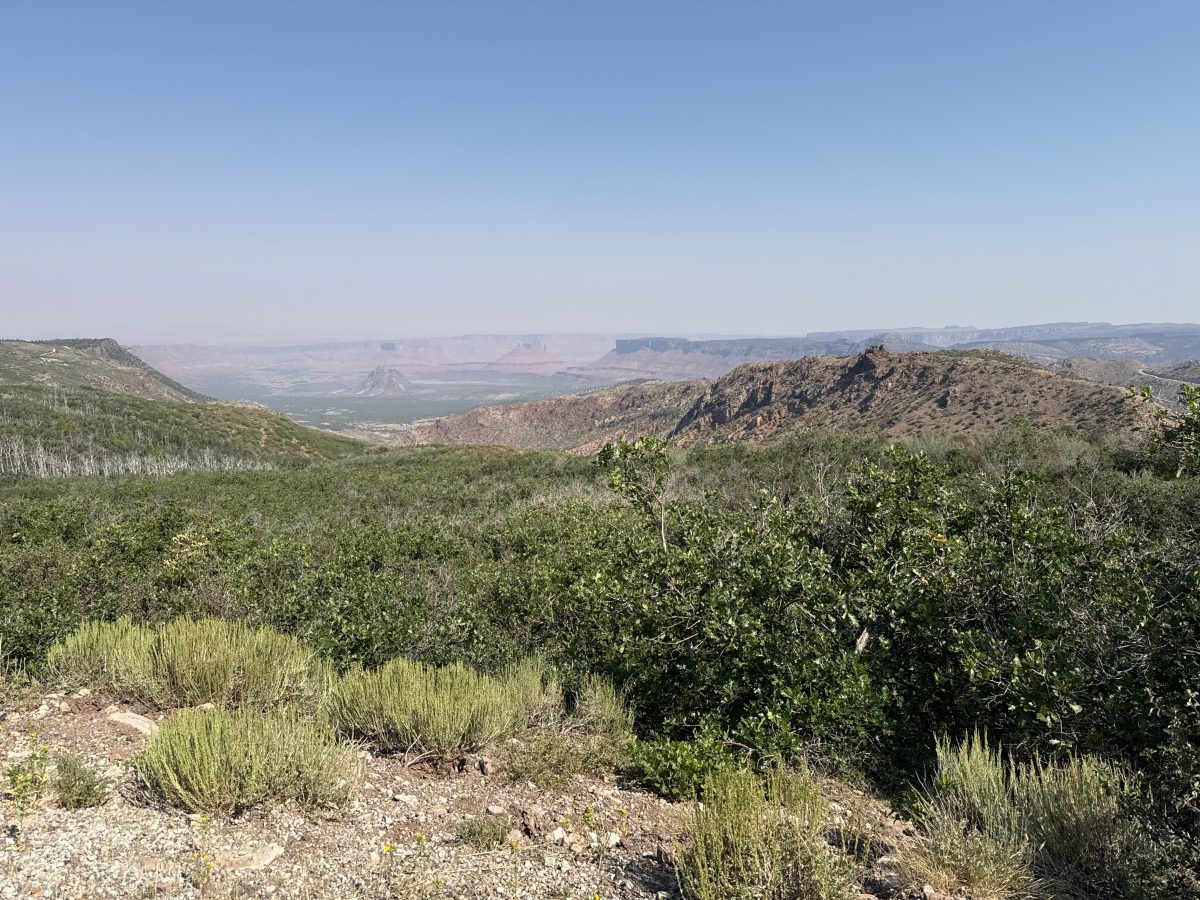
- I was drawn to this event because of the ecosystem diversity. It includes both slickrock/sandstone desert and high alpine environments. Both desert and mountain running skills are required which I found fascinating and unique.
Not so much – Aspects of the race that didn’t do it for you
I didn’t enjoy the South Mountain Loop at night. It was overgrown with some high consequence steep drop offs and pesky insects that were highly attracted to my illumination. I admit that I might have viewed this section as more of a fun challenge than a hindrance if it wasn’t for the humidity in the region and lingering heat that didn’t go away after dark. Perspective is everything!
Weird factor – What’s the weirdest thing about this race?
There are no written rules on the website or anywhere else. Guidelines were included in the pre-race video, but I don’t think everyone saw the video or they didn’t care. I saw a several violations.
Highlights of your race – What did you do well and enjoy about your race in particular?
I DNFed at mile 91 and trekked 2 miles back to the trailhead to get picked up. The Ute 100 Mile, became the Ute 93 Mile. Seems like an odd thing to consider a highlight of the event, doesn’t it? Let’s backtrack…
Leading up to Ute 100 Mile my main goals for this event were to nail fueling/hydration, use “light feet” in the slickrock/washboard portions, take more calculated risks, run hills up to ~7% grade as much as possible, embrace pain and to go out less conservatively than I usually do for 100s. As the weather forecast unfolded it became clear that this would be a record hot year for the event. In addition to my original objectives, I committed to taking advantage of any and all cooling opportunities at aid stations and creeks. I also gave myself the mental leeway and the flexibility to adjust my pacing and aid station stop times to contend with the heat. Adaptability to everything in ultras.
The first 43 miles of Ute 100 felt blissful and everything went according to plan with no modifications. We dropped to the low point of the course catching sunrise though a light haze of smoke (moderate AQI) as it illuminated the red rocks of the Moab desert. Then we began the relentless 18-mile/7,000ft climb back into the high country as the day warmed. I stuffed my hat and shirt with ice whenever possible as we transitioned through a variety of ecosystems. When the grade steepened and trail became less groomed at tree-line I focused less on speed and more on efficiency. The wind brought relief from the building heat as I picked my way through the talus in the final approach. I reached the summit of Mann Peak at 12,272ft in about 7 hours 45 minutes from the start much to my delight. By far this was my favorite part of the course with views reminiscent of the San Juans of Colorado. A technical descent followed taking us down to the 50k mark and Geyser Aid Station where we began to transition back to foothill running.
The furnace began to turn up along the washboard road following Geyser, but with some tree cover it was tolerable. The dial really shifted though after Dark Canyon Aid Station at mile 42.2. The course passed through the final stages the 18-miled (mostly) descent back into the desert foothills. At the lower elevation we were in full exposure at 100°F+ on the washboard road while a seemingly endless procession of vehicles dusted us. I could sense the “grind” portion of the race nearing and mentally prepared to dig deep. Spirits began to deteriorate when I bottomed out and then began ascending back up into the alpine toward South Mountain. The increase in internal heat with the uphill effort (even at a reduced hiking pace) was stifling. I talked myself through it and managed to stay out of the heat exhaustion zone; though I think I was on the edge for a bit. I dipped in creeks. I made conversation with the cows (because why not?). I reminded myself that night would bring relief from the heat. I even managed to be good humored after a bee string .5 miles from the aid station.
Passing through the South Mountain Aid Station I felt rejuvenated. The sun had just set. Chapter 2 of the race was beginning. Life would be good again. Or not! It took about a mile for me to realize my mind and body were not going find reprieve in the darkness. Ever since finishing Hardrock 100 last year I have been unable to fully endure suffering to the level I did prior. The ability seemingly went a vacation after reaching critical mass. During the South Mountain section this skill finally made a complete comeback. To be blunt, the South Mountain section was miserable. Overgrown, narrow and with some steep drop offs. Running was challenging in the dark so I hiked most of it and still stepped off the edge a few times. High humidity. Warm even at night. Bugs. Relentless. The switch had finally flipped though. I threw myself into it and marched on.
Things improved back on the jeep roads. Around 3:30-4am it finally felt colder and I put on layers. Life wasn’t exactly good, but it was better. Then I started hallucinating pacers just before sunrise… then my eyes started to close. I played a bit with half-sleep walking for about 20min, but eventually decided to sit down and take a 1min nap. This snapped me out of my sleep walking and I felt wide awake. I have never gotten drowsy or hallucinated during a 100 miler. It felt much more reminiscent of night two and beyond of when I ran Cocodona 250. That lightened my mood quite a bit.
I was in high spirits when the sun came up and I arrived at the Geyser Aid Station again at mile 81. However, things began to shift a few miles after I departed. Once I was on a slope in dabbled sunshine my body couldn’t seem handle a second dose of sun exposure after the getting scorched the day prior. I slowed way down to delay the internal build up of heat. Some female runners passed me. I tried to rally, but in the end I put my health first. I am all too familiar with heat illness and I didn’t want to venture into that extremely dangerous zone. My goal was to get to the next aid station safely and take extra time too cool down before continuing. I fully recognized that this plan would take me out of podium contention. I was pretty sure at the time I was top three and when I later looked at the results it does seem that like that’s accurate. However, I accepted that an attempt to keep my spot would likely end with me in a perilous condition and adapted to the new situation.
I took a long break at Hazard Aid at mile 88. The medic and volunteers worked diligently to cool me down and cooked me lots of real food. I am so grateful for how much effort they put into getting me back out on the course. I left feeling somewhat revitalized and believed I could at least trudge the final 9 miles. I was able to move satisfactory in the shade, but as soon as I was in aspen forest again with dabbled sunlight, my body began to shut down. I sat in the shade of a few pine trees a few times and called my husband to talk through the situation. Each time I got up and stubbornly pressed on climbing Gold Knob, the last mountain. I wanted desperately to continue, but I was also getting increasingly wary. I’ve had heat exhaustion before. I’ve seen folks get severe heat illness. I know how dangerous it can get. However, my mind wasn’t done. I still had fight in me. I didn’t want to accept my reality… until I got to the open meadow in direct sun. My body was done and I knew heat illness was inevitable at this point. I could hike down two miles for quick extraction, continue on and get medically evacuated by SAR or get taken to the hospital at the finish. I called my husband again. I couldn’t fully face what was happening alone and felt like I needed his “permission” to medically pull myself. Of course, I also needed him to meet me at the trailhead. In the end there was only one choice: DNF at mile 91.
I had no regrets waking up the next morning or still don’t as I write this. I indeed reached full heat exhaustion on the descent and am completely confident in the choice. Internally and physically, I feel exactly like I ran 100 miles … well 93 miles! It’s just without the buckle or finish line celebration which are ultimately external extras for me. I run to endure. To take calculated risks. To satisfy curiosity. Ute 100 Mile was meant to be my comeback 100-mile event after navigating burnout following Hardrock 100 last year. Of course, I assumed I’d need to cross the finish line to accomplish all this, but turns out I didn’t. I achieved all I wanted in this event; it just looked different than I envisioned. It’s all internal and no external validation which this feels more authentic to me. So yes, the DNF turned out to be a highlight. The most disconcerting part of my first DNF is I cannot for the life of me find a reason to be upset! I’ve been trying and can’t come up with anything.
Ironically, I think a lot of things I’ve struggled with in the past were resolved during this event. I never had issues running uphill grades. I took all the strategy risks I intended with some heat adjustments (I don’t think any cost me). Fueling was great. I was on top of hydration and salt more than ever. My willingness to fight and be in pain was extremely present. My body held up amazing aside from the heat both during the event and in the aftermath.
No official finish on the Ute 100, but I feel more accomplished in ultras than I have in over a year. The intrinsic value of running came back to me somewhere during those 93 miles and that’s all I need.
Lessons for others – Share your pro-tips on the race to help the next runner
There are long stretches without aid and the potential for harsh alpine conditions in addition to desert heat. Runners need to be well versed and confident with self-sufficiency. I would not rate this as a beginner friendly course.
Lessons you learned that will help you next time around
I’ve always had the same self-prescribed rule: if spirits are broken but the body is functioning, keep going even if it’s not the performance I hoped for. I register for ultras completely accepting that pain and suffering will be part of the package. However, if there is an injury or other occurrence that will land me in the hospital or take me out of adventures for a long duration the risk of continuing is not worth it> In this case a DNF is acceptable for me. Ute 100 was my first DNF and, therefore, the first time I was faced with living by this rule.
I’ve had many occasions during events where I fantasized about bailing in a moment of misery or had to assess if a pain was a niggle or something more serious. The choice to continue on in all of these occasions, was way easier for me than the decision to pull myself off of the Ute 100 course and DNF. I didn’t expect that. I learned that the choice to stop can be more difficult than the choice to carry on. I think a lot has to do with ego and the story we want to tell. On the surface, the story about battling through the heat for 9 miles to make it to the finish sounds more gripping than the tale of how I gave myself permission to medically drop 9 miles from the finish for safety. I think this is why it took me several stops within the same mile and a few phone calls to finally conclude that I needed to drop. I was fighting the story I wanted to tell versus the story I knew I needed to tell. I’m not sure how yet, but I think the awareness I gained of this internal conflict will somehow help me as both and athlete and human.
Most important course specific knowledge to know about the race
Runners must be prepared not only for demanding climbs, but also lengthy descents. The surface is extremely varied: slickrock, gnarly jeep roads, washboard roads, overgrown singletrack, groomed singletrack, technical alpine, pavement, etc. Having a diverse surface skillset is mandatory along this course. Take in consideration the long gaps between aid stations (many are 8-11 miles) when creating a fueling, hydration and cooling plan.
Aesthetics – Is it a pretty course?
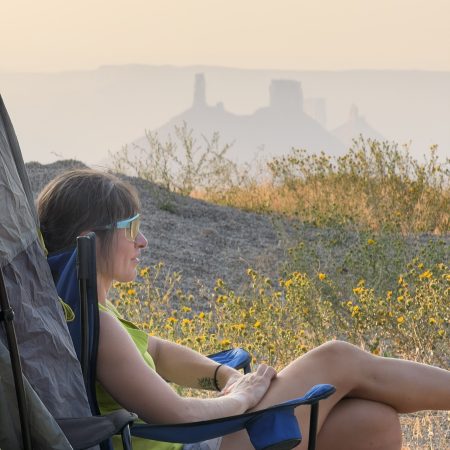
Yes! The low elevations take runners through Moab sandstone formations and slickrock with views of Castle Rock. The higher portions of the race take runners above timberline to the rocky and rugged high peaks of the La Sal Mountains. Diverse and beautiful!
Difficulty – Is it a tough course?
Absolutely. The alpine terrain is comparable to the Hardrock course, but with large sections of overgrown trail to add some spice. The desert portions feature slickrock which can easily trash your legs without careful calculation and technique. Additionally, an 18-mile descent (4 miles are more rolling) makes things interesting for the quads.
Organized and well run – Did it feel like a well-oiled machine or were they flying by the seat of their pants?
I was very impressed by Renevant Running and RD Jordan Ricks. I was prepared for the possibility of more chaos knowing that this as a lower profile event. However, even though this is a small event everything was extremely well organized, all runners were very well taken care of and there were no mishaps that I was aware of.
Competition – Is there a strong field?
I didn’t see any elite runners on the start list, but there were strong athletes in the field for sure.
Logistics – Does it require a special handshake, registration a year in advance, hotels all booked? Give us the low down on the nuts and bolts of making the race happen.
This race was still open for registration within a week of the start and, to my knowledge, it doesn’t historically fill. Camping is available at the start for athletes with no advanced booking needed. Moab is the nearest town and offers a variety of lodging, though I personally have no idea about how it books because I always camp.
Aid Stations – Standard fare or anything special to know about the aid stations in terms of what’s available or when?
The standard fruit, chips, trail mix and other snack items were available. Aid stations also offered quesadillas, grilled cheese, broth, ramen, hot chocolate, potatoes, hard boiled eggs and a variety of other hot options. The volunteers were very helpful and willing to cook custom items using the ingredients they had. NeverSecond and Tailwind provided the sports nutrition.
Weather and typical race conditions
Typically, it is warm (80-90°F) on the lower elevations of the course for short portions that are more in the Moab desert and foothills. The mountain sections are typically moderate at 50-70°F and can be blustery or even stormy (there is a lightning detour for Manns Peak). There is a great deal of exposure along the course in both environments.
This year it was just plain hot. The race started warm with a light smoke haze before sunrise and then temperatures rose to the 100s during the day. It stayed warm most of the night and didn’t cool off until about 4am. The sun came back in full force the next day with thicker smoke and climbing temperatures that were around 90°F.
Gear – Did you need anything special or is there anything you’d recommend for the next runner?
Gaiters were handy with the amount of dust and scree on the course. I also highly recommend poles for the steep ascents. Bring your sun gear for the desert (sleeves, hat, sunscreen, sunglasses, etc.) and your cold gear for the alpine (rain/wind jacket, insulation layers, gloves, etc.). Finally, calculate your water capacity carefully. There are some very large gaps between aid stations (8-11 miles).
Spectators – Is this a friendly course for your friends?
There are sections of this event that were very spectator friendly especially along the dirt roads and campgrounds. Family and friends should be careful to follow the course rules as some roads were off limits.
How’s the Swag?
Athletes received a hat and shirt at check in. Finishers received a sweet buckle!
The Overall Score – How many stars do you give this race and do you recommend that others run it?
9.5/10 stars for this well-organized wilderness adventure. The small deduction is for the lack of written rules which I think resulted in some violations.