Chianti 46k Race Report – Julie Urbanski

Chianti 46k Race Report – Julie Urbanski

Race: Chianti 46k by UTMB (CMT)

Runner: Julie Urbanski

Race Date: March 23, 2025

Location: Radda, Chianti Region, Italy

Results: 5:43:06, 25th Female, huzzah! 252 out of 918 finishers. That’s a lot of men that I beat, not that I’m counting 🙂

Strava Activity Link: https://www.strava.com/activities/12275295079

3 Bests – What aspects of the race did you like the most?

  1. The Course (without the mud) – It’s a really runnable course and definitely more along the lines of my strengths vs. tons of vert and technical trail.
  2. Different Races – I love that the races are on different days so couples with kids can each race and still have childcare covered. Matt ran the 120k on Saturday and I ran the 46k on Saturday. UTMB week is like this too but for some reason it felt more doable to both race these races since they didn’t require quite as much heavy training as the verty, more technical trails of Chamonix require. One could get away with mainly road training and some trail training and still run this race really well. I only trained on trails 1 day a week for my weekly long run.
  3. Smaller – As much as I love UTMB week in Chamonix, it’s A LOT, like too much hype, too many people, just over-the-top for the main event, and it was nice doing a smaller UTMB event that wasn’t so hyped up.

Not so much – Aspects of the race that didn’t do it for you

Starting line bathrooms – they just need more of them. They had about 16 total, 8 in one area and 8 in another, for over 1000 starters, and as a woman (and therefore only about 25% of the racing field) we were actually lucky with the gender specific bathrooms, since that meant a higher ratio of bathrooms to female runners. For once the men’s bathroom line was longer than the women’s!

The mud – not something the race can control but holy hell, it was sooooo muddy, as it had rained for the days leading up to the race, and given the 120k and 73k had already run on much of the worst sections, it was like Slip & Slide meets downhill skiing, but also out of control.

Weird factor – What’s the weirdest thing about this race?

That MUD! The picture below was one of the “lighter” mud sections. I also find it weird when runners avoid puddles, like, “Um, do you see this course? Ain’t no way those shoes are staying dry.” Just bite the bullet, run through the puddles, and embrace the wet feet and move forward as fast as possible.

Gotta smile for the camera with mud like this!

Highlights of your race – What did you do well and enjoy about your race in particular?

About 15k in my hamstrings started cramping, like balling up and everything, I never experience cramping. I figured it had to do with so much stabilizing in the mud, as it was a fight to stay upright, let alone run fast on the muddy sections. I had this feeling of doom, like, “OMG, my race is ruined if I don’t get a hold of this situation.”

Instead of getting super negative I turned to humor to get through the mud and some other jedi mind tricks and race adjustments to get through the hamstring cramping, and overall I felt like I just enjoyed the hell out of my time out there. That was such a big highlight for me.

At one point I looked up as I slid sideways, to see one guy up ahead slide on his ass, another besides me staggering forward as he dug his poles in the mud to stay upright, and another behind me yelping as he went down in the mud. I suddenly started giggling and couldn’t stop, then I was doubled over laughing, which only caused me to laugh even more. Like, hysterically. I felt like Charlie in Willy Wonka’s factory, having had some kind of laughing fizzy, and I looked over to see the guy next to me and he at least had a smile on his face, though no one else seemed to find it funny.

Like Russell Crowe in Gladiator, when no one seemed to find it as funny as me that there we were, grown adults, paying good money to slip slop around in the mud in order to get to the finish line as fast as possible, I wanted to raise my arms and ask, “Are you not entertained?!?!”

Lessons for others – Share your pro-tips on the race to help the next runner

  • Have some baby wipes on you for the pre-race bathrooms, all of them were out of toilet paper.
  • Book a room either in Radda right away or somewhere the race shuttles go. We booked at the Orlando Glamping, totally overpriced, but worth that free shuttle to/from the race.
  • Tank up on water at the aid stations, 3 within 46k is actually not much, and we had a fairly chilly day, so I can’t imagine how thirsty I would have gotten had it been hot and sunny.
  • The course is fairly exposed, so I bet it gets HOT in the sun. If you don’t carry the water, at least drink a lot at each aid station before taking off.

Lessons you learned that will help you next time around

  • I would have drank a bit more water at each aid station, as I came in empty and thirsty each time and had just two bottles.

Most important course specific knowledge to know about the race

  • A lot of the uphills are runnable – train on that grade that you’d rather walk but in reality is actually runnable. I found myself pulling away from a lot of runners that walked every single uphill, no matter the grade, when in actuality a lot of the grade was very runnable.
  • Train on bombing both technical downhills and gravel roads. The race had both and while I sucked at the technical trails, as there were at least two distinct downhill technical sections, there were a few dirt roads that I let loose on because I had trained running hard downhill on gravel roads and I loved those bits.

Aesthetics – Is it a pretty course?

  • Yes and no, it’s lots of sweeping vineyard views, though we had a lot of cloud cover until we neared the end, so I’m not the best judge of that. It’s nothing like Chamonix, but I also didn’t have to work as hard for the views, so…tradeoffs 🙂
Kind of a cruel, last uphill ascent, followed by stairs. HA!

Difficulty – Is it a tough course?

  • Light/Medium. If it hadn’t been so muddy, it would have definitely been easier, then again, I would have pushed the pace more. 1700 meters of gain in 46k, a vert/km ratio that’s totally doable to train for without having big mountains to train in. The mud was the most difficult factor, but that’s something impossible to prepare for!

Organized and well run – Did it feel like a well-oiled machine or were they flying by the seat of their pants?

  • I thought it went well, plenty of volunteers at each aid station, at each road crossing, and at the expo. For how many races they had to put on in such shit conditions, I thought they did really well.

Competition – Is there a strong field?

  • The main competition was in the 120k the day before, Killian and Jim Walmsley, for a golden ticket into Western States, so YES, but like all UTMB races, the fast runners seem to always show up. I was absolutely glowing about being 25th female and 4th in my age group.

Logistics – Does it require a special handshake, registration a year in advance, hotels all booked? Give us the low down on the nuts and bolts of making the race happen.

  • Extremely minimal lodging in Radda, so we stayed at the Orlando Glamping. Overpriced but there was stuff available within 2 weeks of the race, so not bad!
  • Use the race shuttle, parking in town is a bitch!
  • The coop grocery store in Radda was surprisingly well stocked, though we stocked up on groceries in Florence beforehand.
  • We flew in/out of Florence and rented a car, it was about an hour drive. Renting a car in Italy is a bit of a pain, and we looked at booking a shuttle, but it was ridiculously expensive. Taking a bus is maybe an option, albeit a pain in the ass one.

Aid Stations – Standard fare or anything special to know about the aid stations in terms of what’s available or when?

  • Naak products, drink mix and waffles. I only used the drink mix.
  • Standard fare for UTMB races – meat and cheeses!
  • I think they could use 1 more aid station in addition to the aid at 12k, 24k, and 39k. I was sooooo thirsty by 39k.

Weather and typical race conditions

  • I’m guessing mid/late March in Italy is unpredictable, so have your typical cold and warm weather kits for you normally would for UTMB Chamonix races.
  • Our race started out cloudy and cold, then warmed up throughout.
It was not this sunny in my memory, nor do I remember even running by this building!

Gear – Did you need anything special or is there anything you’d recommend for the next runner?

  • There’s a required gear list and it seems nearly non-existent compared to the Chamonix races and compared to what the 120k runners had to carry. In other words, it was super minimal!
  • Have some grippy shoes in case of mud.

Spectators – Is this a friendly course for your friends?

  • Not at all, only start and finish, though there were clumps of people out on the race course, cheering people on. Not having looked at a map ahead of time, I had no idea where they accessed the course!

How’s the Swag?

  • Lots of swag to purchase at the race expo
  • T-shirt included and finisher’s medal, so typical and a bit meh for me!
  • 120k runners got a bottle of chianti, so I was a little jealous we didn’t get much of a wine-themed swag.

The Overall Score – How many stars do you give this race and do you recommend that others run it?

  • 3 out of 5 – For a race that’s fairly easy to access, fairly “easy” to run when it comes to vert/technical trails, and for collecting stones in a pretty location, totally worth it! I would maaaybe do this again, only if I could guarantee there wasn’t so much mud!
Proof that I smiled all the way to the finish, even on the uphill!

Ronda Ghibellina 45km Race Report

Race: Ronda Ghibellina 45km trail race

Runner: TRR Coach Keith Laverty

Race Date: 01/26/2025

Location: Castiglion Fiorentino, Toscana, Italy

Result: 4 hours and 43 minutes; 7th overall

Strava Activity Link: https://www.strava.com/activities/13456640095/overview

3 Bests – What aspects of the race did you like the most?
  1. Europe: This was my first time racing in Europe, so just about everything about the experience was novel and new to me. We even ran through a castle during the first mile!
  2. Challenging course: The challenge of the course and everything that it threw at us — which was a lot!
  3. Community kindness: Despite language barriers, the kindness of the Italian running community was memorable and much appreciated. It also seemed like many runners had traveled to this event from all other areas of Italy: this race welcomed everyone.
Keith Laverty crossing the finish line of Ronda Ghibellina 45km. PC: ENDUpix
Not so much – Aspects of the race that didn’t do it for you

Sort of a “blooper” on my end but I forgot to look up the phrase for “on your left” or “runner behind” in Italian, as I ended up needing to pass several dozen runners from the longer 67km distance that had started a couple of hours before the 45km. The word I had thought was “left” in Italian, actually had translated to “I want”, which I’m sure got me some puzzled looks on their faces! : )

A couple of points got bottlenecked on very tight section of trail, that had forced me to walk or slow down my effort such as during a down-climb with rope assistance.

Weird factor – What’s the weirdest thing about this race?

More unique than weird, is that the Ronda Ghibellina 45km race and entire event is all Medieval vibes! This included a man with armor and shield on a horse at the start/finish area. Then the finish line amenities of bread with olive oil, and beer poured into your finisher’s mug. There were supposed to be more horses out and about, but they had to put the horses away after the thunderstorm.

Highlights of your race – What did you do well and enjoy about your race in particular?

Overall, the highlight was working through the extremely challenging terrain, especially during/after the thunderstorm that sort of shook me up a bit (including hail that pelted the right side of my body). I even fell into large puddles within the same mile. Enduring through this race has put other courses into perspective, including upcoming races on my calendar have become known as “the courses aren’t nearly as rugged as Ronda was”!
I thankfully chose the right racing shoe, the Adidas Agravic Speed Ultra, to handle the ruggedness well, but also felt fast on the runnable road sections too. Final win: NO BLISTERS or foot issues!

Lessons you learned that will help you next time around

Next time, pack a light jacket! I was moments away from pulling out my emergency blanket, and obviously was not prepared well for the thunderstorm conditions that rolled through. This led to very frozen fingers and cold legs for several miles after. The forecast had only shown a 50% chance of rain for about 2 hours and no signs of thunder, however, as I’ve learned over the years too, conditions can change *fast* in the mountains.

Ronda Ghibellina 45km course map and elevation profile.
Most important course specific knowledge to know about the race
Some of the historic Italian scenery seen throughout the race.

During the first mile, there’s a steep, relatively long hill climb of 20%+ grade of paved road running through the castle. Then, besides the first and last 2 miles, the course only has 2 to 3 0.5 mile sections of runnable road/ forest road. The majority of the race is running through a wide variety of challenging terrain: steep downs on rocks, twisty/tight/muddy turns, down-climbing with a rope, grassy and muddy stretches, and leaf-covered trails. Some of the wooded sections seemed reminiscent of what you might see on the “Beast Coast” (aka trails on America’s east).

Aesthetics – Is it a pretty course?

Oh yes! You essentially run along the outer rim/ridges of a “bowl” or valley in between, completing one big loop around Chio Valley. After the first key climb, you get treated to the beautiful valley below.
The thunderstorm likely blocked some views mid-race, but once the skies had cleared and the sunshine arrived toward the last 5 miles, I was treated to an incredible view of the grassy, farmlands and hillsides below. You also get to run through villages, older ruins and ranches, and through oak and olive trees: not your typical US race views! Bellissima!

Difficulty – Is it a tough course?

I’ve competed in a lot of tough races in the last 20+ years, and I think I’d have to rank the Ronda Ghibellina 45km race in my top 5, maybe even top 3 most difficult courses!
The course profile alone is plenty challenging with 7,500 feet of climbing in 28 miles; however, a lot of those 28 miles were very technical, especially the descents. There were lots of uneven, slanted/grooved rocks, tight/windy turns. And as if that wasn’t enough, layers of mud caked the course following the mid-race thunderstorm, hail and rain!

Organized and well run – Did it feel like a well-oiled machine or were they flying by the seat of their pants?

Overall, it was very well-organized, including the pre-race expo and race day itself. Unfortunately, there was hardly any pre-race communication. With no pre-race email on any sort of details or instructions, it was difficult to find and understand their required gear list.

Competition – Is there a strong field?
Keith Laverty racing the Ronda Ghibellina 45km. PC: ENDUpix

The competition was world-class this year! In fact, the entire Italian national team decided to show up and this run this race as part of their early-season team training camp! I’m guessing that made for a significantly more field than usual this year. The men’s winner, 4x national champion Andreas Reiterer, won in a new CR, despite the muddy conditions!

I also found out that the majority of the runners who placed in the top 10 had all run the Ronda Ghibellina 45km in recent previous years, which speaks to how event keeps drawing runners back.

Logistics – Does it require a special handshake, registration a year in advance, hotels all booked? Give us the low down on the nuts and bolts of making the race happen.

The registration alone is simple and very affordable: just 45 Euros ($47 or £37) for a 28-mile course with 5 aid stations!

However, the Italian law is very strict on international runners who want to compete. Prior to the race you need the following tests completed, then signed off by your doctor: (1) EKG stress test, (2) pulmonary function test, (3) urinalysis, and (4) a basic physical exam. So allow for at least 10 weeks before the race date to make sure all of your appointments can be scheduled and completed in time. Simply put, it’s a much more in-depth process than signing a waiver!

Weather and typical race conditions

This is the coldest time of the year for Tuscany with average temps of high 30’s to the low 50’s (Fahrenheit). This year’s edition felt comfortable in the mid to high 40’s for race morning. However, a ferocious, crackling thunderstorm around mile 13 made things interesting to say the least! I went from racing mode to survival mode pretty quickly, dealing with pelting hail and rain showers for the next 4-5 miles!

Gear – Did you need anything special or is there anything you’d recommend for the next runner?

Nothing too special, although a long-sleeve jacket is highly-recommended in the event of a storm like we had! You’re also required to run with your phone, with their live tracking app, “Whip Live” opened (fortunately, it can be opened in the background and not burn through the battery).

Spectators – Is this a friendly course for your friends?

Not so much. There were 2 or 3 aid stations with more people, so it’s potentially more accessible for spectators if you’re willing to do a lot of driving.

How’s the Swag?

Cool swag! Each finisher received a large, ceramic mug with the race logo. We also got a black/army green tech running tee from the Runnek brand. At the pre-race expo, you could also opt to buy more race-branded gear such as a sweatshirt or a collapsible soup cup.

The Overall Score – How many stars do you give this race and do you recommend that others run it?

5 out of 5 stars!

The Ronda Ghibellina 45km was an incredibly memorable experience with the epic course, weather challenges, and friendly people. It was hard to turn down the opportunity to run in Tuscany, not to mention, exploring other parts of Italy before and after!

Keith Laverty is a Seattle-based coach with Team RunRun. Whether you are heading towards your first 5k or – like Keith – in your ninth year of ultras, Keith will design a custom training plan based on your goals, lifestyle, skills, and needs.

Rome Marathon Race Report – Jim Bonner

Race: Rome Marathon

Runner: Jim Bonner

Race Date: 9/19/2021

Location: Rome, Italy

Results: 4:01

3 Bests – What aspects of the race did you like the most?

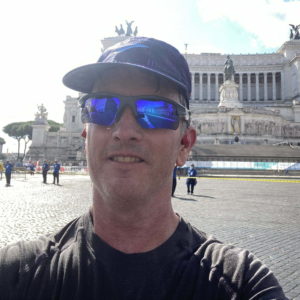
  1. Start/Finish at Colisseum, taking selfies in front of the Altare della Patria with no one in the streets.
  2. Italian national anthem and music at start.
  3. Pace groups were great. (I ran the first half with 3:20 group, legs were burned from Vienna the week before, so enjoyed the last half. Did catch a slower pace group near end which was fun, too)

Not so much – Aspects of the race that didn’t do it for you

Medal is really cool with all of the cobblestones, but running on them near the end was a bit tricky. It’s not nearly as bad as the comments that you see on web.

Weird factor – What’s the weirdest thing about this race?

Cobblestones.

Highlights of your race – What did you do well and enjoy about your race in particular?

Taking pictures and enjoying the ambiance. Hope to do this again.

Lessons you learned that will help you next time around

Running Vienna and Rome on back to back weekends is legendary, but had to promise wife no more marathon vacations 😉

Most important course specific knowledge to know about the race

Cobblestones at end, say around 20 to 26, require more attention than the miles up front, which are much smoother.

Aesthetics – Is it a pretty course?

Awesome! How can you beat running through Rome with only runners in streets?

Difficulty – Is it a tough course?

No. It’s pretty flat, just watch out for cobblestones at end.

Organized and well run – Did it feel like a well-oiled machine or were they flying by the seat of their pants?

Yes, very well organized.

Logistics – Does it require a special handshake, registration a year in advance, hotels all booked? Give us the low down on the nuts and bolts of making the race happen.

No, we stayed at airbnb and Hotel Celio, which were both gorgeous. Both had rooftop views of Coliseo and were about 100 to 200 m from start queues/corrals, restaurants, etc.

Aid Stations – Standard fare or anything special to know about the aid stations in terms of what’s available or when?

Very good.

Weather and typical race conditions

Was good with the 6:45am start.

Gear – Did you need anything special or is there anything you’d recommend for the next runner?

I can’t run with the carbon plate shoes due to ACL repair 6 years ago, but I could hear them coming behind me in the second half. Very distinctive sound. Are they worth it? The noise makes me wonder how much damage they could do to people with 2 good knees.

Spectators – Is this a friendly course for your friends?

Yes.

How’s the Swag?

Medal very nice.

The Overall Score – How many stars do you give this race and do you recommend that others run it?

5 of 5. Definitely a can’t miss destination marathon.

Tor des Glaciers 450k Race Report – Anouk B

Race: Tor des Glaciers- Aosta Valley-Italy 450km (279 miles) with 36.000m+ (118110 feet)

Runner: Anouk B

Race Date: 09/06/2019

Location: Courmayeur-Aosta-Italy

Results: 1st Lady; 25th Overall. 100 starters-40 finishers.

Strava Activity Link: https://www.strava.com/activities/2718516024

3 Bests – What aspects of the race did you like the most?

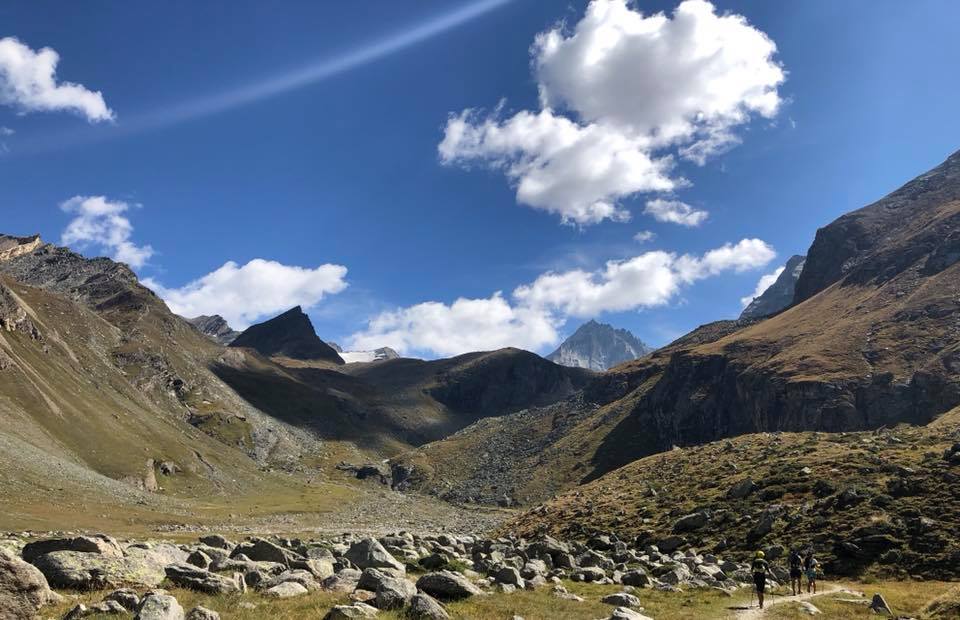
-The remoteness, and it was all in the high mountains- the scenery was beautiful. Glacier after glacier, peak after peak mostly above 3000m.
-The terrain, it was a series of different technical sky races all and stringed together.
-All the aid station were remote mountain huts-it was so special to be there. Only helicopters could get to those huts often.

Not so much – Aspects of the race that didn’t do it for you

-The first few days there was literally no food- as an inaugurated race I think they must have just given a budget to the huts and left it up to them to look after us, so they just didn’t really give us anything except for a bowl of pasta with some tomato sauce; nothing to take en route either for the next 8hrs. We literally were all hungry. After day 3, it changed -either the huts were by themselves better or organization understood it had to change.
-The amazing cheering, happy helpful volunteers you have at Tor des Geants are not en route for Tor des Glaciers. No help, practically no volunteers.

Weird factor – What’s the weirdest thing about this race?

The length of the race, after a week you still out there.

Highlights of your race – What did you do well and enjoy about your race in particular?

I just loved it all, it was like a mini holidays that was 24/7 going on. My climbing was very strong and felt the whole way so easy. I had a positive and very calm attitude towards it from the start and never even thought about either the amount of kilometers still to go or the finish line. I just took it aid station by aid station. Some I would arrive totally broken, other I was on a high.

Lessons for others – Share your pro-tips on the race to help the next runner

Understand your GPS like the back of your hand, be able to hold it, while using poles, navigate with it in the dark on no sleep for days. I had practiced a lot and made no mistakes- it will cost you a lot of time, energy and frustration if you go wrong. Then trust yourself completely with it, because you will be at times with others who will have the opposite opinion on navigation.

Lessons you learned that will help you next time around

Need to sleep earlier on in the race a bit more, so I don’t need to play catch up on sleep. It’s all about managing yourself. I will push harder the first 160 miles, cause that way the more technical sections I will hopefully be able to do during daylight instead of night.

Most important course specific knowledge to know about the race

Planaval and Mont Gele are the most hectic sections of the course. Prepare, stay calm and get out as fast as you can 🙂

Aesthetics – Is it a pretty course?

To me way more beautiful than Tor des Geants, just stunning.

Difficulty – Is it a tough course?

Insane. Sky race after sky race. We were all wondering if they are doing a practical joke on us. The cut offs are super tight and most people drop because of the cut offs unfortunately.

Organized and well run – Did it feel like a well-oiled machine or were they flying by the seat of their pants?

It wasn’t that well organized but I think I was very well meant. And I am sure they improve it for next year if they decide to host it again.

Competition – Is there a strong field?

You need to have completed the Tor des Geants in under 130hrs. so that makes the overall field already on another level. Everyone trained super hard for that.

Logistics – Does it require a special handshake, registration a year in advance, hotels all booked? Give us the low down on the nuts and bolts of making the race happen.

Finished TOR in 130hrs, then get lucky.

Aid Stations – Standard fare or anything special to know about the aid stations in terms of what’s available or when?

Bring lots of your own food- especially bars etc. also only 3 drop bags, and the last one being still 2/3 days out from finish.

Weather and typical race conditions

We started with full on snow storm for 2 days – yes 15cm snow under our feet. going down fia ferratas in snow storms was hectic, then last two days were insanely hot- heat wave.

Gear – Did you need anything special or is there anything you’d recommend for the next guy?

Poles of course, full gear.

Spectators – Is this a friendly course for your friends?

I had a crew and it was a lot of driving and hiking up to huts to be able to see me- but they loved it as they got to see a lot too.

How’s the Swag?

A medal worth gold I’d say. And cotton horrible T-shirt also worth gold.

The Overall Score – How many stars do you give this race and do you recommend that others run it?

100% but be prepared to suffer and test the limits, and not be afraid of heights of sky running/ridges/scrambles.

tor des geants race report

Tor des Geants Race Report – Joel T

Race: Tor des Geants

Runner: Joel T

Race Date: 09/08/2019

Location: Courmayeur

Results: 129h 33m

tor des geants race report

3 Bests – What aspects of the race did you like the most?

All the volunteers were absolutely amazing. There must have been thousands of them and they were all friendly and supportive. No one gets behind mountain running like the Italians. The scenery of the course is unbeatable. The level of support e.g. food, massages, medical were far beyond anything I expected.

Not so much – Aspects of the race that didn’t do it for you

None.

Weird factor – What’s the weirdest thing about this race?

Arriving at an aid station built from stone high in the mountains for a dawn breakfast of a selection of delicious cheeses, cold meats and pasta washed down with beer or coffee, and cow bells ringing. It was a weird and surreal experience.

Highlights of your race – What did you do well and enjoy about your race in particular?

After the third night, going through a period of despair over the enormity of the race I came to a new understanding that this is now life and I’m happy with that, despite the discomfort.

Lessons for others – Share your pro-tips on the race to help the next runner

Eating as much as possible is critical. Eat at every single opportunity, regardless of how you feel.

Lessons you learned that will help you next time around

Foot care needs to be about prevention, not aid. I don’t normally get blisters so I ignored the prevention and paid dearly for it. Sleep more often than you planned to. It makes you go faster and enjoy the experience more.

Most important course specific knowledge to know about the race

The first half is super hard and technical. Take time to get through this in good shape and you should be ok for the second half.

Aesthetics – Is it a pretty course?

If you like mountains, there’s probably no better course.

Difficulty – Is it a tough course?

One of the toughest races there is.

Organized and well run – Did it feel like a well-oiled machine or were they flying by the seat of their pants?

Organisation appeared perfect. The only thing they could do better is send out the informational emails sooner.

Competition – Is there a strong field?

I don’t recognise any of the elite runners, but this is a class of event I’m not used to so can’t really say.

Logistics – Does it require a special handshake, registration a year in advance, hotels all booked? Give us the low down on the nuts and bolts of making the race happen.

There is a lottery that anyone can enter.

Aid Stations – Standard fare or anything special to know about the aid stations in terms of what’s available or when?

Italian food. Almost always pasta, cheese, prosciutto and various other high energy foods. Some places they will cook from a menu. The menu items sound basic but the Italians manage to make it taste amazing.

Weather and typical race conditions

Started with snow and went through all seasons to finish in baking sunshine.

Gear – Did you need anything special or is there anything you’d recommend for the next guy?

Sleeping at Refugio’s is generally a lot more comfortable than the life bases.

Spectators – Is this a friendly course for your friends?

There are roads and trails everywhere so if you have an enthusiastic crew, it’s perfect.

The Overall Score – How many stars do you give this race and do you recommend that others run it?

5 stars

tor des geants race report

tor des geants race report

Tor Des Geants Race Report – Anouk B

Race: Tor Des Geants -Finisher 2018. 340km with 31.000m+ elev. (211 miles with 101.706 feet+).

Runner: Anouk B

Results: 900 starters. 20th Lady. 212 Overall.

Date: September 2018

Location: Aosta Valley- start/finish: Courmayeur. A loop.

tor des geants race report
Aosta Valley

To be able to say you are a ‘Geant’ is a very prestigious title in the ultra-running community and after I did this race I completely understand. To me, whether you arrived first or the last person before the cut off, you deserve this title double and square. This race is insanity on steroids. There is nothing like it out there, this is about setting your pain cave limits to another level you didn’t even know existed in your wildest dreams. A combination of physical and mental strength that have to work together.

But this too is a race, were people around you close and far play the biggest role in getting the job done. Never have I felt so much love and support and realized that a finisher result would absolutely not have been possible without their support both close and from afar. The volunteers were just amazing, nothing was too much and their enthusiasm was contagious, the support back home with the million messages and voice messages to keep spurring me on was needed in the many low moments you have to fight through, and then with the fellow runners you share the route and journey with and to feel each others respect makes you not want to quit. You want to be a Geant. You owe it to yourself and the big training but also to all those around you who have given up something for you to participate with you on this journey.

I say that but still I had some extreme dark moments.

tor des geants race report
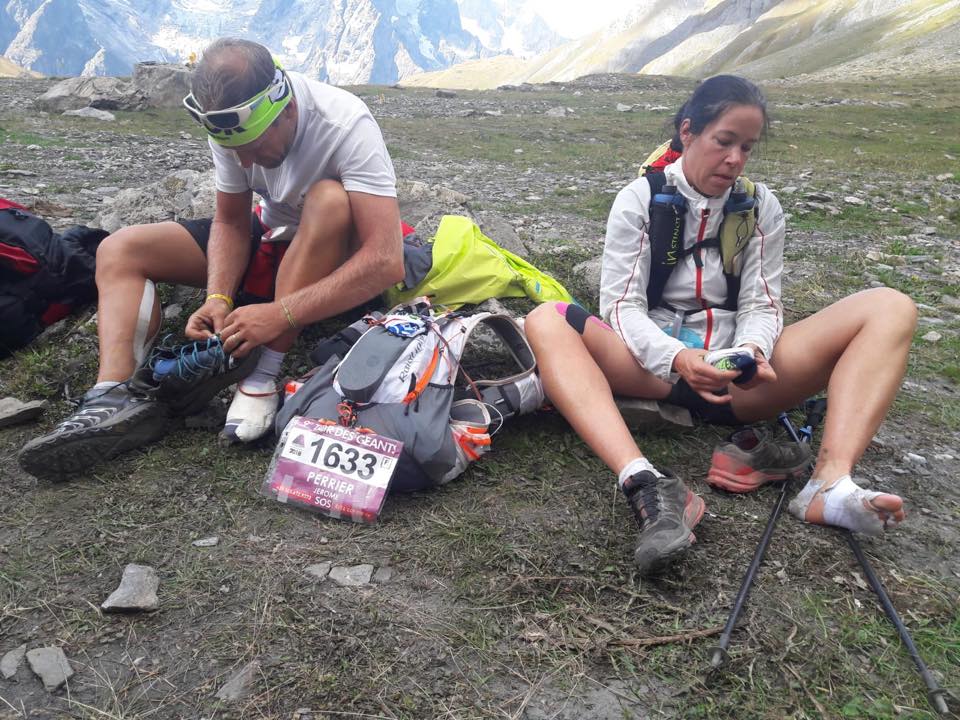
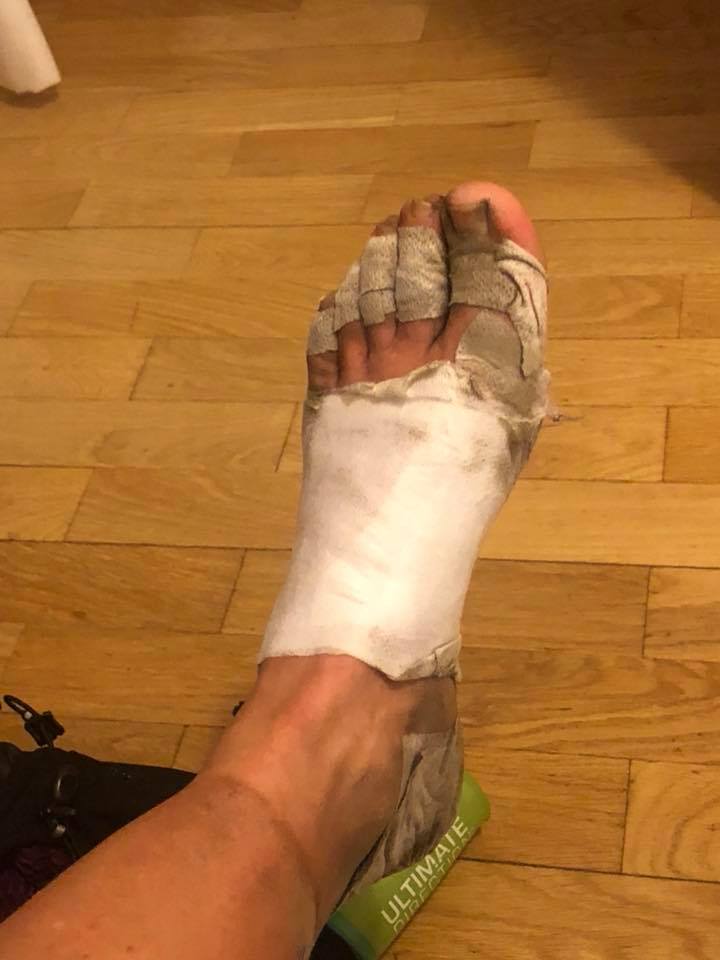
Fixing blisters

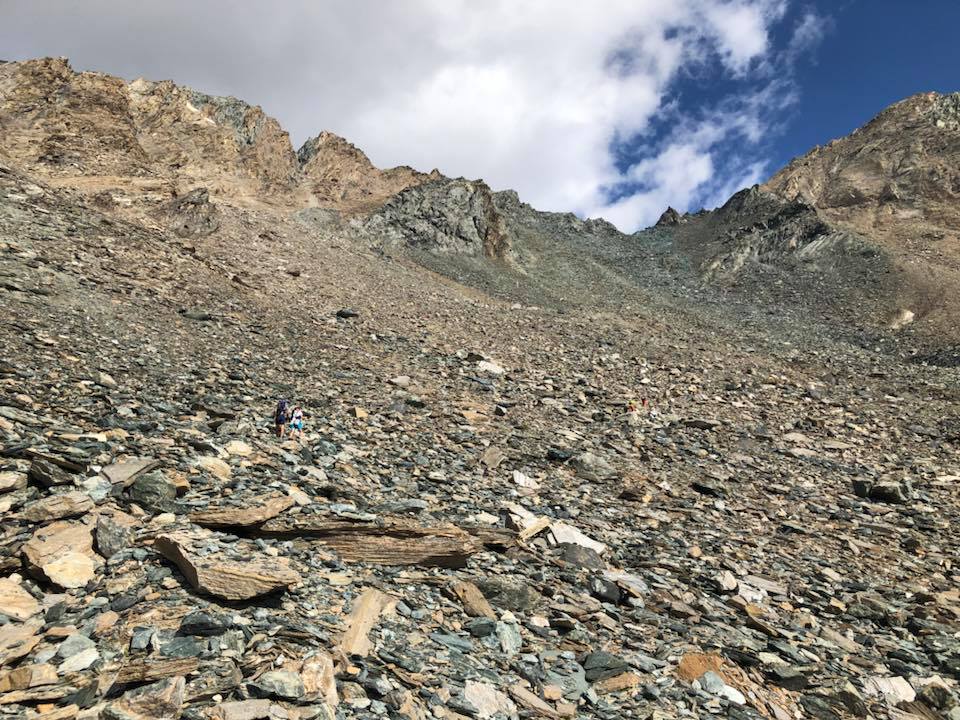
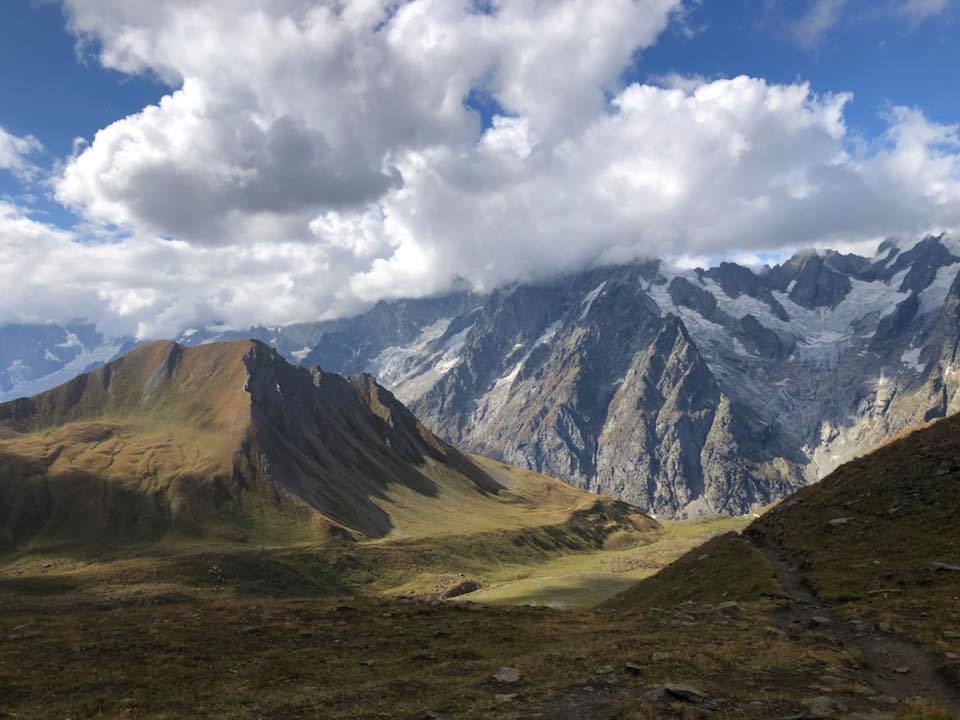
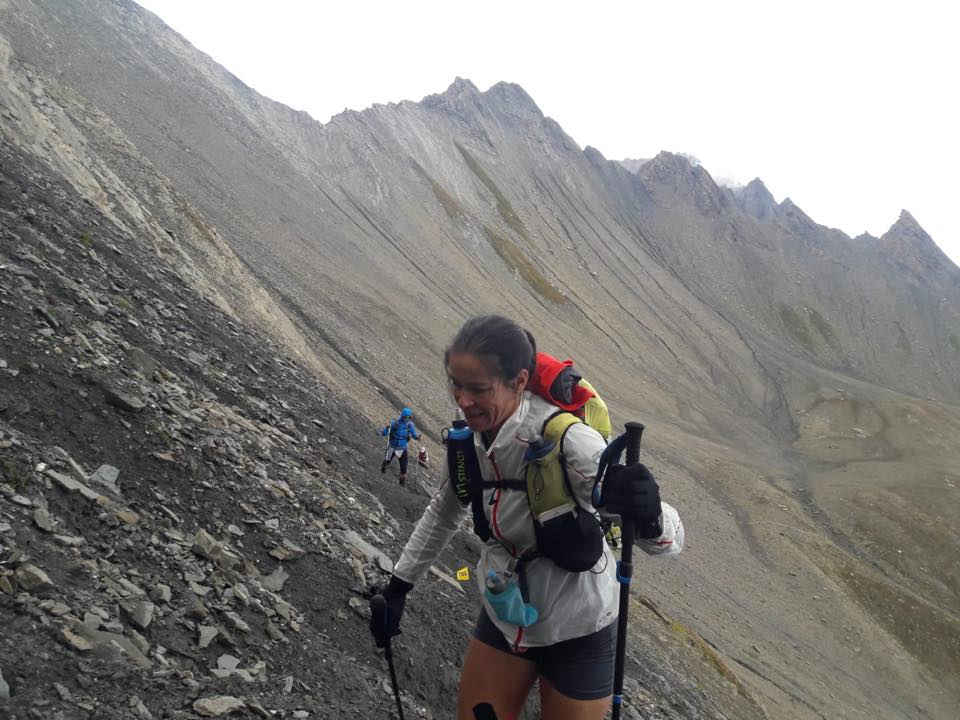
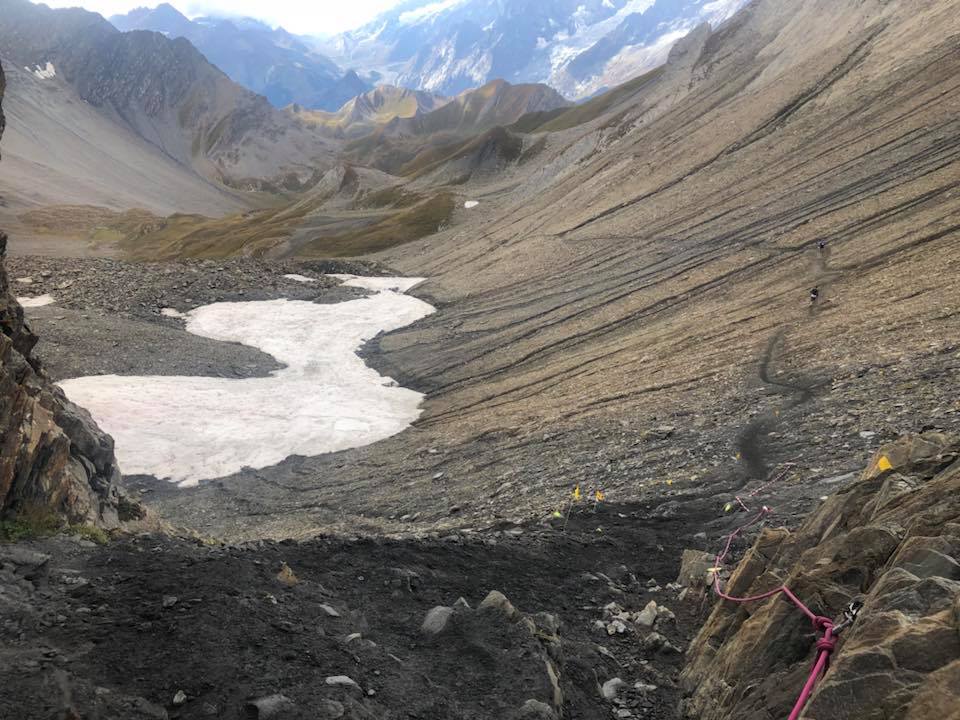
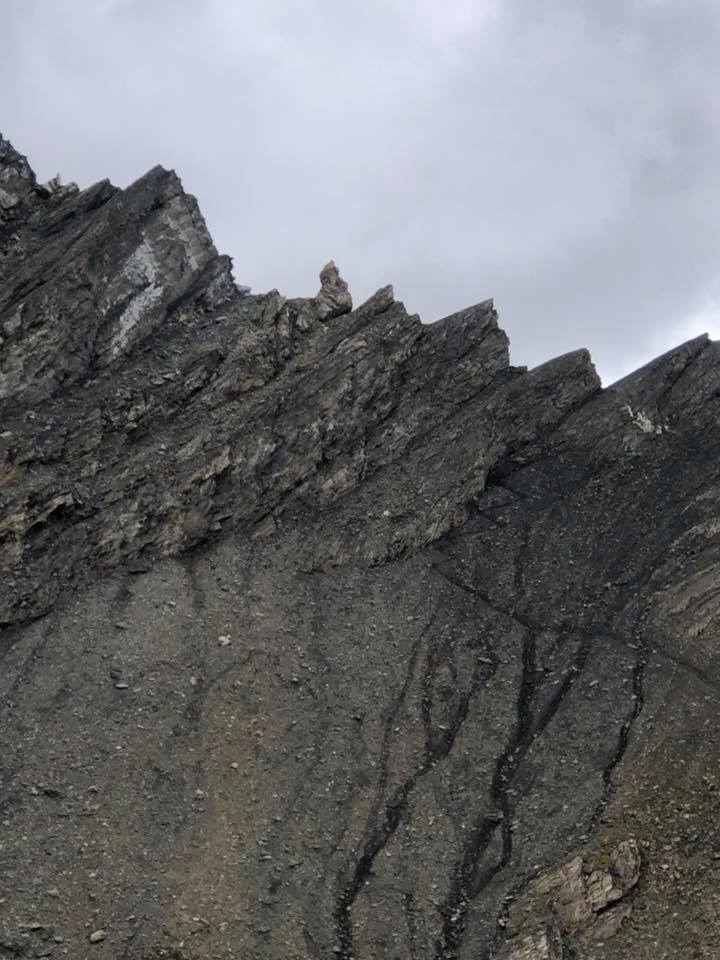
The scenery is beautiful, but also very diverse in the sense that you end up going from a village in the valley to all the way to the top, tag a couple of peaks there and then go all the way back down. so you end up passing a few villages, some farms, grasslands and then back to the peaks with relative technical, screetchy loose rocks, or boulder hopping fields.

I wouldn’t say the trails are technical, of course here and there some nasty bits, but the hard part is mainly how relentlessly steep it is both up and down. From 150km-200km there is a very difficult section- 24hrs in the average for the 50km, so go figure! and a lot of people will drop out after that but the good news is that although of course the elevation remains, the trails improve for the last 100km and that did really help – I would say this is the most important knowledge to know about this race.

What I liked:

  1. I most liked the amount of people participated: 859 starters and about 450 finishers. It made that the you always saw someone out there but it still was a very spread out field so you could feel the space of the mountains and be there on your own.
  2. The volunteers at all the aid stations, ringing cow bells and making noise every time you walked into their aid station. You can tell that each it’s year a group of friends that take over that aid station and they look forward to managing it.
  3. The high peaks scenery was just spectacular

tor des geants race report
Aosta Valley

Aspects I didn’t like as much:

  1. The tracking!!! The live tracking is rubbish and that gets very frustrating when it’s such a long race – also I wanted to know how far in front or behind my competition was and that was difficult to find out.
  2. The aid station’s food. Every aid station had the exact same – so 5/6 day non-stop the same food is very boring, plus the one hot meal they had was just plain pasta with tomato sauce. Also the drink choice was very limited to coke, tea, coffee, sparkling water and water. Anyway, at the end of the day you are so spaced out that it is just about putting in calories – who cares what it is; when looking at the table I only saw calories counting and that’s what went into my mouth.

tor des geants race report
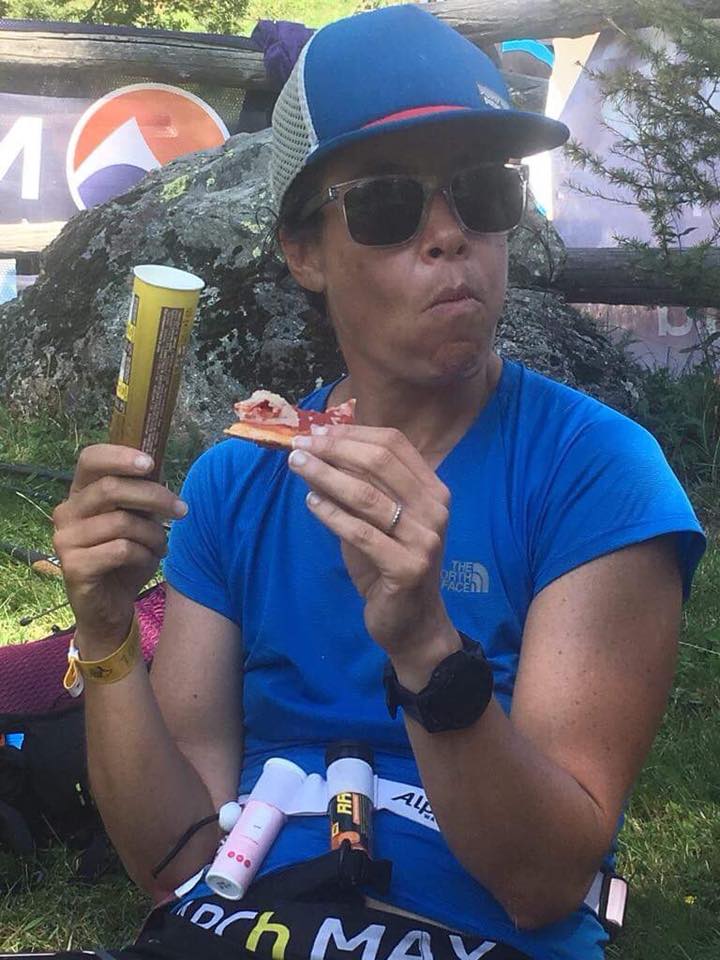
Pizza and ice cream always do the trick, especially at the same time.

Lesson I learned:

  1. The classic, I should have looked after my blisters from the very beginning. My feet became practically a case study for the medics. It gave me the most pain I ever felt those blisters, and I am sure I won’t be able to wear shoes for at least two weeks.
  2. I am so impressed by people I was with during day 2 and who finished 20 hrs in front of me – and so too I have seen a lot of people I was with and who finished 20 hrs after me. Consistency is key and it’s not about gunning it out of the start line.

The weather

It can be anything and everything. We were lucky and had good weather, almost a bit too hot, so I had to carry a lot of water, but equally in your mandatory equipment you have to carry ice crampons!

Swag

Just a nice finisher jumper- but that is worth gold ????

Recommend it?

I recommend of course doing it, but I honestly would only recommend it if you know what you are putting your name in for…. you want to be a finisher, it’s a lot of time and money commitment if you just wanna see how far you are going to get. There are plenty of other amazing races out there that are as tough but shorter.

But that feeling crossing that finish line; there is nothing, absolutely nothing like it.

Let it TOR!

tor des geants race report
Starting line

tor des geants race report
Terrain – wowza

tor des geants race report
Up high!

tor des geants race report
No fear!

tor des geants race report
Aosta Valley

tor des geants race report
Blisters galore!

tor des geants race report
Go high or go home

tor des geants race report
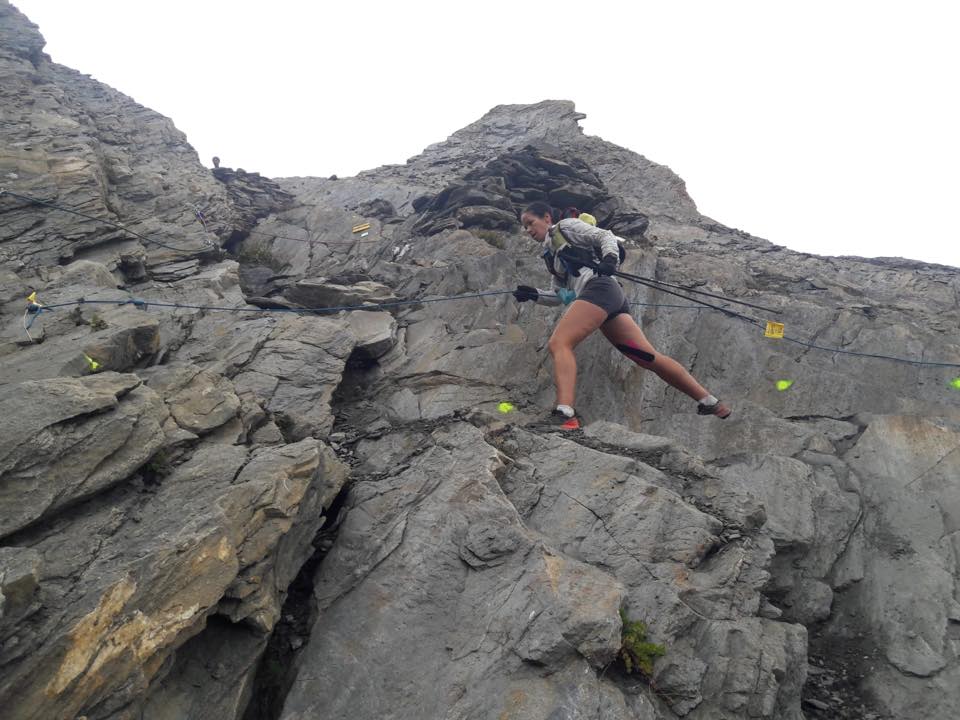
Ropes!

tor des geants race report
Aid station bonanza

tor des geants race report
Happy finishers!

tor des geants race report
Happy runner!

tor des geants race report
Last climb!

GORE-TEX Trans Alpine Run Race Info

Summary: The GORE-TEX Trans Apline Run is a 7 day stage race, comprised of 300 teams of 2 persons, running a total distance of 158.7 miles, starting in Garmisch-Partenkirchen, Germany, crossing the Alps via Austria (stops in Nassereith, Imst, Pitztal and Sölden) and Italy. The route continues from St. Leonhard, stopping next in Sarnthein, before the final day, when the runners cross the finish line in the city of Brixen, South Tyrol (Italy). Each day’s stage is a different distance, a different start time, and therefore different cutoff times throughout each day, as the teams of 2 make their way point to point from Germany to Italy, gaining nearly 54,000 feet of elevation in the process.

Stage Details

  1. Day 1: 27.1 miles, gain/loss of 8,107/7,635 ft
  2. Day 2: 17.5 miles, gain/loss of 5,512/5,653 ft
  3. Day 3: 30 miles, gain/loss of 10,230/7,303 ft
  4. Day 4: 16.9 miles, gain/loss of 7,533/8,602 ft
  5. Day 5: 24.2 miles, gain/loss of 7,375/9,573 ft
  6. Day 6: 21.1 miles, gain/loss of 8,281/7,293 ft
  7. Day 7: 22.4 miles, gain/loss of 6,949/8,307 ft

Further course details, descriptions, and cutoffs noted here.

Lessons Learned from Race Reports

  • Course specific training tips
  • Mandatory Equipment
  • Consider using poles – Steep ascents and descents, with some technical footing throughout
  • Work with partner ahead of each stage to discuss how to approach each day, especially in terms of pacing – when to take it slow and when to run harder
  • Carry a little bit of money during the run in case you have to buy something in towns along the way, or if you need to drop and get to either the next aid station or the final location of the day’s stage.
  • Day 3 is seen as the make it or break it day in the stage run – have some mental strength to get through it and beyond it, and then days 5-7 are “easier” compared to the first few days
  • Notes of sore knees and feet from the pounding of the alpine terrain
  • The course has more “road” running than you would expect, as the route links lots of mountain villages via pavement/paths and ski service roads, so you end up running more road before and after the trail portions than you would expect
  • Incorporate trail runs where you run 2-6 miles of road before and after the trail miles
  • Some of the descents are just as pounding on the legs as the ascents, so keep that in mind when choosing routes for practicing vert, both up and down
  • Practice time on your feet – in many of the race reports, people were averaging 3 miles/hour on most days!
  • Climbs are mainly straight up and straight down
  • Each day’s start tends to be a bottleneck at first, heading out of town and into the uphill single track, so position yourself accordingly if you want to be out front or if you’re a particularly strong climber
  • Be sure to have a good med kit for stuff like upset stomachs, foot care, pain meds, etc., either while you’re out on the course or for each recovery evening between stages
  • Know the cutoffs – some are harder to make than others, because they are based on 5km/hour no matter the elevation profile, so you might spend some time hurrying up and other times taking it easier because of the cutoffs and terrain combo
  • Some good training runs for Seattle locals – the White River training runs July 8th and 15th, 2018, the Squamish ones, or get on the course for the Whistler Alpine Meadows races (55k Strava route here).

Elevation

Total gain/loss: 53,799/54,209

Ft/mile gain: 339 ft/mile

Aid stations

Number of aid stations and locations varies each day, see details on Course page here.

What’s available: Including, but not guaranteed to be the same at each aid station: water, isotonic drinks, coke, tea, coffee, hot chocolate, bread, cheese, salami, vegan spread, energy bars, cake, cookies, fruits, raw vegetables, pickles, pasta, different soups, and potatoes with salt.

Crew access

Race offers a “Family & Friends” Package, with detailed directions to each aid station, as well as other perks. See details here.

Pacers

Pick your running team partner wisely, as they are your pacer!

Race reports

Course specific training tips

Amazing set of race reports from the Preface, packing and through stage 4 (author finished the race but only wrote up through stage 4):

http://brielikethecheese.com/blog/2016/09/transalpine-run-2016-preface/#.Wxn9r4gvw2w

http://brielikethecheese.com/blog/2016/09/transalpine-run-2016-packing/#.Wxn-cYgvw2w

http://brielikethecheese.com/blog/2016/09/transalpine-run-2016-before-the-race/#.Wxn-s4gvw2w

http://brielikethecheese.com/blog/2016/09/transalpine-run-2016-stage-1/#.Wxn-44gvw2w

http://brielikethecheese.com/blog/2016/09/transalpine-run-2016-stage-2/#.Wxn_fIgvw2w

http://brielikethecheese.com/blog/2016/10/transalpine-run-2016-stage-3/#.WxoANogvw2w

http://brielikethecheese.com/blog/2016/11/transalpine-run-2016-stage-4/#.WxoA9Igvw2w

Strava activities and GPX files

GPX files with course data are part of mandatory equipment – as of June 2018, couldn’t locate them on the race website.

Stage 1: https://www.strava.com/activities/700494148

Stage 2: https://www.strava.com/activities/701364866

Stage 3: https://www.strava.com/activities/702812841

Stage 4: https://www.strava.com/activities/703900874

Race Website

https://transalpine-run.com/en/

Prepping for an ultra? Check out our 7 Steps Towards Running your First Ultra!