My Return-to-Run Postpartum Program: Journal Entry #2

My Return-to-Run Postpartum Program: Journal Entry #2

Mom of 3 and TRR Coach Amanda Hamilton is documenting her return to running postpartum journey here on the Team RunRun blog. This is journal entry #2 in a multi-part series. Catch up on Returning to Running Postpartum: Journal Entry #1.

Catching Up on Weeks 6-12 Postpartum

TRR Coach Amanda Hamilton and one of her children after running a race together.

I am now almost 4 months postpartum, and I surpassed the important 12-week mark: time to begin my return-to-run program! Between weeks 6 and 12, I started seeing my pelvic floor physical therapist in person again. During visits, she evaluated my pelvic floor, as well as my whole body. The focus was on addressing any weaknesses and imbalances that could impact my return to running. Early on, I was experiencing some pain in my right Achilles tendon on walks. Ironically, my Achilles presented more of a challenge than my pelvic floor! I began a regimen of weekly PT sessions with additional at-home exercises and icing to rehab the Achilles. 

This 2022 article from the International Journal of Sports Physical Therapy titled “Maximizing Recovery in the Postpartum Period: A Timeline for Rehabilitation from Pregnancy through Return to Sport”  is frequently cited by PTs and guided my postpartum running journey. The article includes helpful tables with week-by-week benchmarks.  

Creating My Return-to-Run Postpartum Program: The Return of the Running Bug

I am currently coaching myself, and when I began to dip my toe into running, the return-to-run program I designed began with a run/walk phase. For each run/walk, I started with 5 minutes of walking to warm up. While I had some sensitivity in my Achilles, my body otherwise felt surprisingly good; the running bug had returned! 

Mentally, I found myself struggling to stick to the runs I had programmed for myself. I needed to hold myself back from going too fast or running for too long. This also involved reminding myself to trust in the prescribed training, as I had put a lot of thought and research into the return-to-run program I wrote! I worked on talking to myself as if I was talking to one of my athletes. 

Pregnancy vs Postpartum Running: Mom Strength

Amanda taking her postpartum running (and newborn) to the track.

While I’m aware that this is not everyone’s experience, for me, the postpartum runs felt easier than my last few runs during pregnancy back in April. I settled into a new easy pace that was 2-3 minutes faster than my easy pace when I was 6 months’ pregnant. I found that my cardiovascular endurance was better than I was expecting it to be, and this realization gave me a renewed sense of motivation. 

My Return-to-Run Postpartum Program Details and Postpartum Running Goals

Starting off, I began with just 1 run per week, then progressed to 2, and then to running every other day. I continued to rehab my Achilles, paying close attention to how it was feeling during and after runs. I took an extra rest day or pivoted to cross training if the Achilles didn’t feel great. Again, my pelvic floor and postpartum body felt surprisingly good: something I attribute to regular pelvic floor physical therapy sessions.

After a few weeks of run/walk intervals and very short easy runs, I progressed to slightly longer runs and some speed work on the track. I am LOVING being back out there! I’m feeling really good now, and have my training oriented around a 5K in January. While I’ll only be about 6 months postpartum by the time race day rolls around, I’m still hoping to get close to or even beat my 5K PR, set before my most recent pregnancy.   

I will be continuing to document my return to running postpartum in these journal entries. Expect more from me after my 5K in January. Thanks for following along!
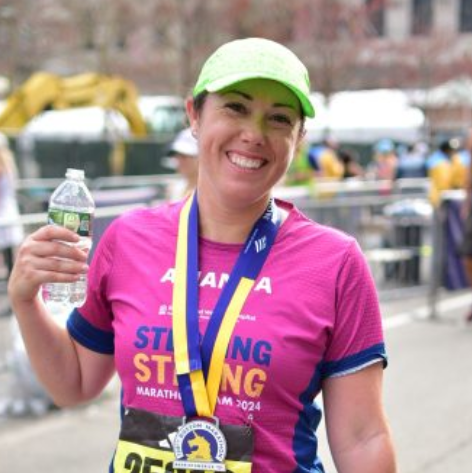
Amanda Hamilton is a coach with Team RunRun based near Los Angeles, California. She knows what it’s like balancing a family, returning to running, working and running. She’s excited to help both beginner and intermediate runners achieve their goals.

Breaking The Overuse Injury Cycle: How to Run Pain-Free Again

As runners, there’s nothing more frustrating than an injury that stops you from doing what you love every day. Injuries can come in all shapes and sizes, but they generally fall into two categories. The first—and by far the most common—are overuse injuries, which happen when we push too hard, too soon. The second type is acute injuries, like sprained ankles. Today, we’re focusing on overuse injuries. Rather than diving into rehab specifics, we’ll talk about how to tune into your body’s signals, so you can get back to running smarter and stronger, overcoming the all too common overuse injury cycle!

Runner dealing with an overuse injury
Runner dealing with a typical overuse injury.

Case Study: The chronic twinge and the pain-weakness-injury cycle

Picture this: You’re out for a run, and that tiny twinge in your calf you’ve been ignoring suddenly forces you to stop. You rest for three days, and when it feels better, you lace up again. Everything seems fine, but then the pain creeps back. You take a full week off this time, and when you return to running, you feel great—for a while. But then, the pain comes back worse than before. Sound familiar?

This is the classic pain-weakness-injury cycle that so many runners find themselves stuck in when dealing with overuse injuries. You run until something hurts, so you rest. When you finally feel better, you go back to running. But even though the pain’s gone, the tissue is now weaker than it was before, and eventually, the pain returns. Resting doesn’t mean you’re ready to run again—it just means you’ve hit pause on the problem. Breaking this cycle is the goal, and the secret lies in gradually reintroducing movement without overdoing it. The challenge is finding that sweet spot, and let’s be honest—no one knows your body better than you.

What to do next?

Let’s take a look at this “Goldilocks” dilemma with three different runs.

Runner crossing a finish line healthy and happy. PC: Ryan Thrower

In Scenario A, you head out for a one-hour run. Your calf feels a bit tight for the first ten minutes, but then it loosens up and you finish pain-free. A few hours later, though, it stiffens up, and the next day the pain is worse than ever. That’s a clear sign you pushed too hard. 

In Scenario B, you keep it super safe and only run for 20 minutes. You feel fine both during the run and the next day. But while this cautious approach keeps you pain-free, it doesn’t do much to help you move forward. 

In Scenario C, you run for 45 minutes. You feel a little soreness afterward, but it’s nothing major, and you’re not limping. The next day, you wake up feeling back to normal.

Scenario A was definitely too much, and you’re now facing more downtime to recover. Conversely, Scenario B kept you safe, but it’s not helping you make any real progress. Scenario C, though, is the sweet spot for breaking the injury cycle. You gave your calf just enough of a challenge to help it adapt, without causing more harm.

Keys to managing overuse injuries effectively 

The trick here is to introduce a little stress to the injured area. Your body needs to know that a bit of discomfort is okay—it doesn’t mean you’re about to get hurt again. After an injury, your pain response can get overly sensitive. This doesn’t mean the pain is “all in your head.” It means your body is trying to protect you, so it sends pain signals before you’ve done any actual damage. If you can learn to navigate those warning signals without triggering a full-blown injury, your body will start to trust the process again. However, if you stop running at the first sign of pain, you teach your body that’s what it’s supposed to do. By interpreting those signals correctly and easing back into running the right way, you’ll find that your pain-free running time starts getting longer and longer.

When to seek professional help

That said, if your calf is still acting up after every run, it’s a sign that something’s not quite right. Instead of just hoping the pain will go away, or resting endlessly, it’s time to add something new to help your calf handle running better. This is where a coach can be a huge help. They can suggest simple exercises that target those problem areas—muscles and tendons that need a little extra support. It doesn’t take much—just a few minutes of specific work each day can make a huge difference in how well your body handles the demands of running.

And if you’ve tried all this and the pain just won’t go away, it’s time to see a professional. A physical therapist or chiropractor who specializes in working with runners can help you get to the bottom of the issue and give you a plan that’s tailored to your body’s needs.

Don’t let overuse injuries steal your joy for running—listen to your body, trust the process, and you’ll get back on track.

Guy Love is a coach with Team RunRun based in Boulder, CO. He is a long time ultramarathon runner and physical therapist assistant here to coach the whole athlete on the roads and trails.