Leadville Silver Rush 50 Run Race Report

Leadville Silver Rush 50 Run Race Report

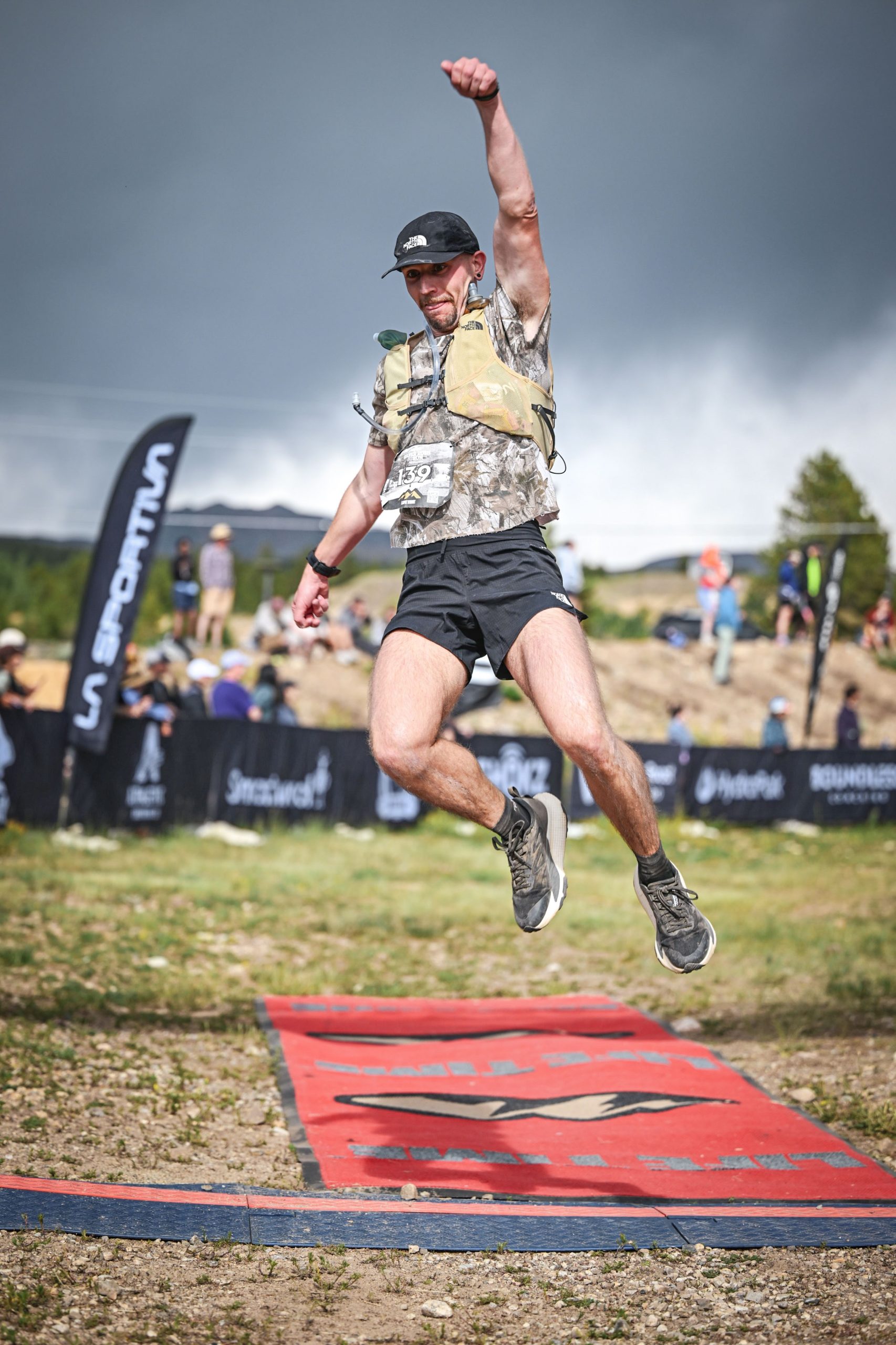
TRR Coach Tanner Amrhien finishing the Leadville Silver Rush 50 Run. PC: Marathon FOTO

Race: Leadville Silver Rush 50 Run

Runner: TRR Coach Tanner Amrhien

Race Date: 07/12/2025

Location: Leadville, Colorado

Result: 11:28:43; 259/572 overall, 202/434 male

3 Bests – What aspects of the race did you like the most?
  1. Outstanding race organization
  2. Supportive spectators and crew 
  3. Beautiful and challenging course 
Not so much – Aspects of the race that didn’t do it for you

The whole race is at an elevation above 10,000 feet, and this was definitely a factor. Coming from Charlotte, North Carolina (basically sea level), it took about 10–12 miles before my heart rate settled into a manageable rhythm. Even after a few training runs in Colorado in the days leading up to the Silver Rush 50, there were still moments where the thin air made it tough to breathe.

Fueling was also bit tricky (which is common at high altitude). It was warm, and I didn’t feel very hungry during the race. I relied mostly on liquid calories, which worked fine until around mile 40 when I started feeling a little lightheaded. Looking back, I would have worked on eating more solid foods earlier on to help keep things balanced.

The climbs were no joke. Some sections had over 4 miles of steady uphill grades that tested the legs. If I were to do it again, I’d target more specific training spots to better simulate those long, sustained climbs.

Weird factor – What’s the weirdest thing about this race?

The Leadville Silver Rush 50 Run kicks off at the base of a snow tubing hill in downtown Leadville. As the starting gun fires, runners begin with a steep uphill climb. One of the most exciting aspects of this race is that the first male and female to reach the top earn a coveted Leadville 100 Run lottery coin, gaining them entry into that race!

Highlights of your race – What did you do well and enjoy about your race in particular?

The breathtaking views. Running through the mountains at over 10,000 feet offered some of the most stunning scenery I’ve ever experienced. The views around Leadville were truly surreal—there were moments I had to pinch myself to believe it was real. Leadville holds a special place in the ultra-running world, and I felt incredibly fortunate just to be out there running.

My crew—made up of my parents, aunt, and best friend—meant everything to me. They’re my anchor during these long endurance events, and I love sharing the energy, excitement, and sense of accomplishment with them. Being part of a community like this, with their support, is something I’ll never take for granted.

Lessons for others – Share your pro-tips on the race to help the next runner

Advice from a sea-level runner:

Coming from close to sea level, my biggest piece of advice for anyone considering the Silver Rush 50 Run is to train for elevation. If possible, spend time in Colorado—or another high-elevation area—and get in a few long runs to help your body adjust. If that’s not an option, try to arrive a few days before the race to give yourself time to acclimate.

Another important tip: be mindful of your hydration and nutrition. Hyponatremia can be a real issue out there. Not taking in enough calories or overhydrating without proper electrolytes can seriously impact your race—and cost you that strong finish you’ve trained for. Be conscious of what you’re putting into your body and make a fueling plan that works for you. Always practice with your fuel before you race to ensure it sits right in your stomach!
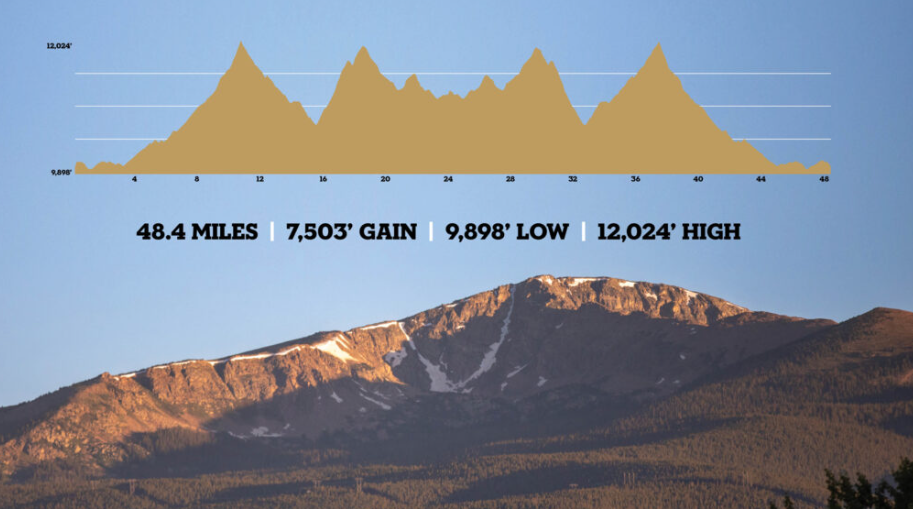
Leadville Silver Rush 50 Run course elevation profile.
Most important course specific knowledge to know about the race

The Silver Rush 50 course features mostly rocky roads rather than single-track trails, with plenty of climbing and power hiking. I recommend training specifically for steep uphill climbs to prepare your body for this event. Prepare to be shocked by the stunning views as well!

Aesthetics – Is it a pretty course?

This course is absolutely stunning! Throughout the race, you’ll pass through historic mining areas—especially as you near the turnaround point—and be treated to breathtaking views of the Rocky Mountains from nearly every angle. The course winds past several majestic 14,000-foot peaks, with vibrant wildflowers lining the trail. You’ll even cross a few small streams, which are perfect for cooling off by dunking your hat when the heat kicks in. I’d give the views a solid 10/10! For many, this might just be the most beautiful course they’ve ever run.

Difficulty – Is it a tough course?

The Silver Rush 50 presents a unique challenge for runners. The trail is scattered with rocks, making footing tricky for anyone who isn’t paying close attention. It’s easy to see how one wrong step could lead to a twisted ankle. Both the climbs and descents are tough and relentless, demanding not just physical stamina but serious mental grit. Because the race is an out-and-back, it can be difficult to stay in the moment—you know exactly what’s waiting for you on the return trip. Mental strength is key here. The best approach is to focus on one mile at a time and stay locked into the present.

Organized and well run – Did it feel like a well-oiled machine or were they flying by the seat of their pants?

Life Time put on outstanding events. Their strong reputation for top-notch race organization really shines throughout the entire day. From the well-stocked aid stations and energetic volunteers, to the smooth award ceremony and exciting LT100 lottery drawing, every detail reflects their passion and dedication. The course is marked with signs and ribbons on the trees, leaving no guesswork for runners. Life Time truly capture the spirit of the trail running community, uplifting the Leadville area, and leaving a lasting impression on everyone involved.
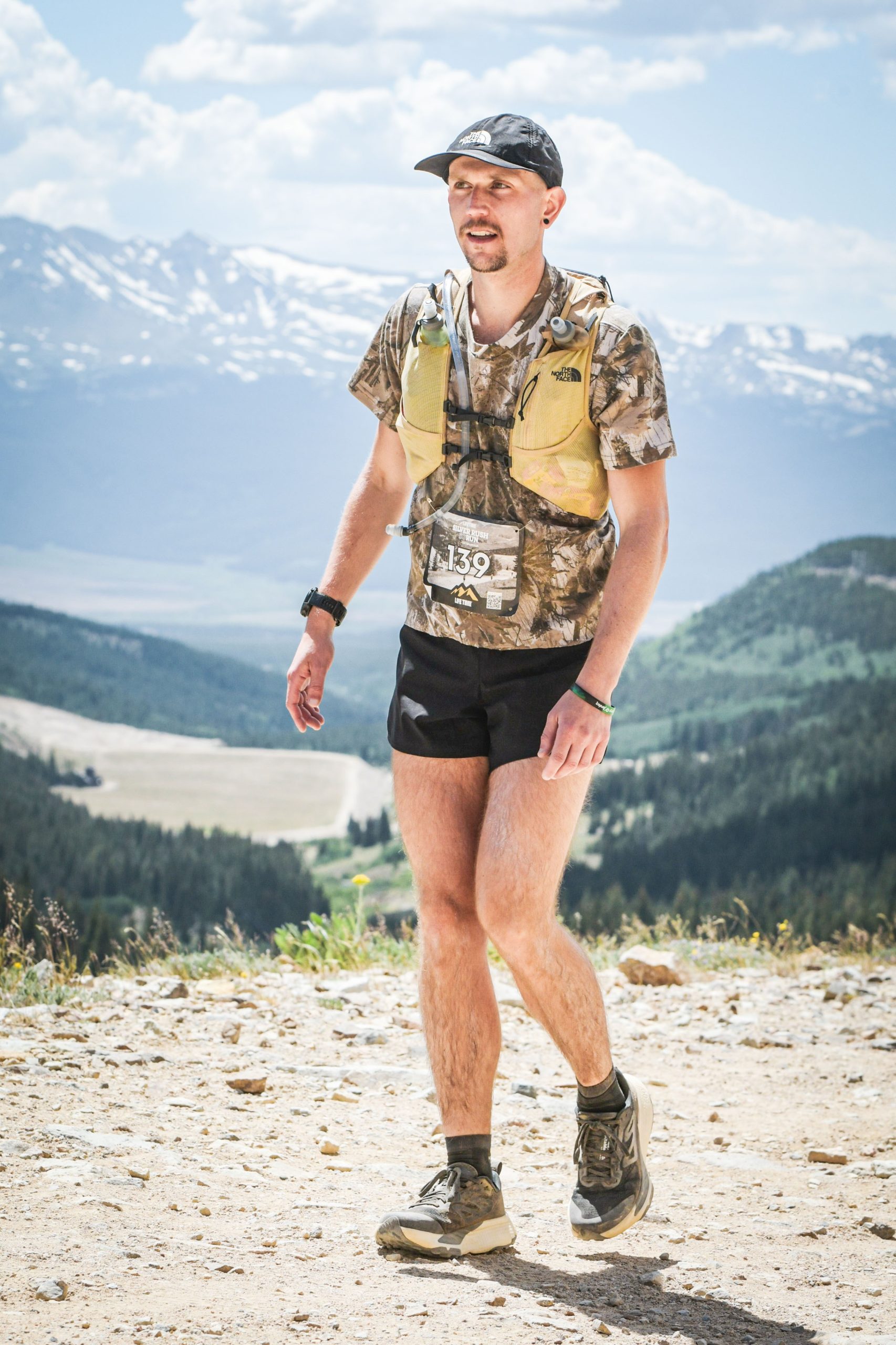
TRR Coach Tanner Amrhien during the Leadville Silver Rush 50 Run. PC: Marathon FOTO
Competition – Is there a strong field?

The Silver Rush 50 Run boasts an exceptionally competitive and stacked field across all categories, including male, female, and non-binary participants. Any Leadville 100 qualifier race will be competitive!

Logistics – Does it require a special handshake, registration a year in advance, hotels all booked? Give us the low down on the nuts and bolts of making the race happen.

Since there aren’t commercial flights into Leadville, most people fly into Denver and then rent a car for the roughly 2 hour and 15 minute drive to the Leadville area. While Leadville has some smaller hotels and motels, my crew and I chose an Airbnb in Twin Lakes, about 23 minutes away. Leadville offers a variety of dining options, but we decided to pick up groceries at a local store and prepare our own meals at the Airbnb. Race registration opens in January, right after the LT100 Run lottery results are announced. I recommend signing up as soon as registration opens, since the race tends to sell out quickly as summer approaches. Likewise, booking your lodging early is a good idea because accommodations fill up fast. The 2025 registration fee was $125: a great value for a top notch 50-mile race.

Aid Stations – Standard fare or anything special to know about the aid stations in terms of what’s available or when?

The aid stations were well-stocked with classic favorites like bananas, M&Ms, and pretzels. They also offered a variety of Skratch Labs carbohydrate mixes, Neversecond C30 gels, and Skratch Labs chews. These options were especially helpful for runners who hadn’t been able to bring all their own nutrition for the race.

Weather and typical race conditions

This year, 2025, the race started at 6 am with a crisp temperature of around 47°F. As the day went on, it warmed up to the low 70s under bright sunshine—pretty typical for Leadville this time of year. Also, it’s not uncommon to have a brief late morning/afternoon rain shower. It does not last very long and will probably feel good if you’re hot!

One key tip: don’t forget your sunscreen. At this high elevation, the sun’s intensity is stronger, so make sure to use a sunscreen that suits your skin and helps keep you cool while you run . Another thing to keep in mind is to bring ice for your crew to give you. You can pat your neck or face with it to help control your body temperature. Personally, I preferred going without a hat throughout the afternoon. I felt extremely hot wearing my hat from miles 31 to 45. If you’re determined to wear a hat the whole time, I recommend investing in a lightweight spandex hat that still provides UV protection and keeps you cool.

Gear – Did you need anything special or is there anything you’d recommend for the next runner?

I highly recommend using poles for the long uphill sections of this race, especially the climb between Stumptown and Printer Boy aid stations. That stretch features several miles of steady uphill, and poles can really help save your legs.
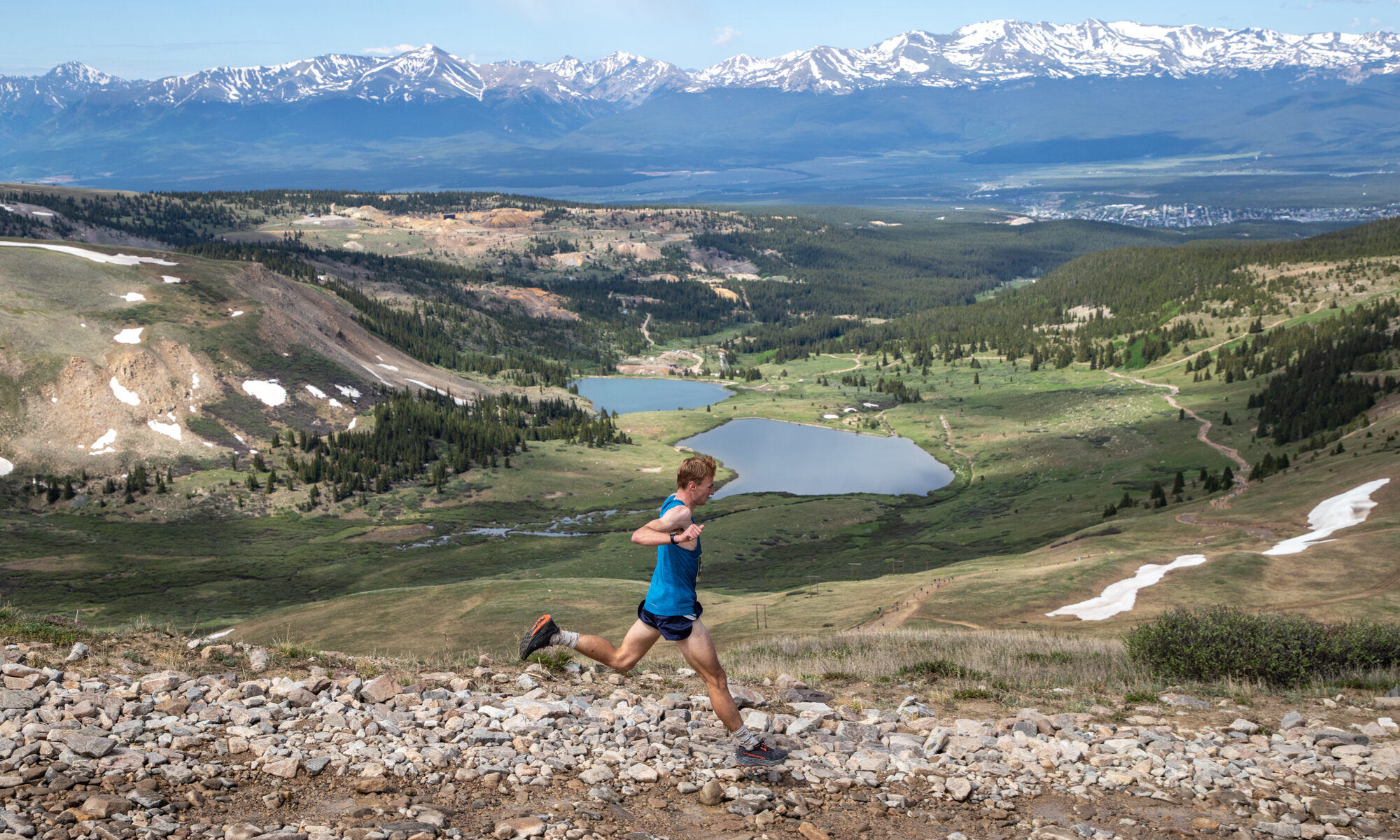
A runner racing on the Leadville trails with beautiful scenery in the background. PC: Life Time
Spectators – Is this a friendly course for your friends?

The aid stations were staffed with high-energy crews who were incredibly encouraging to all runners. There are shuttles available to transport your crew to the aid stations, which can be helpful, but they don’t always guarantee your crew will arrive before you do. According to my crew, getting to the Stumptown aid station (the turnaround point) was a bit tricky, so I’d recommend giving yourself (as crew or spectators) plenty of time to make that drive.

How’s the Swag?

Runners receive a high quality Leadville Silver Rush 50 Run shirt, some snacks, and a set of rubber stretch bands. All finishers are awarded a custom finisher medal and a copper cup engraved with “Leadville Finisher.”

The Overall Score – How many stars do you give this race and do you recommend that others run it?

10/10! I thoroughly enjoyed every part of the Leadville Silver Rush 50 Run—from the infectious positive energy of the runners, event staff, crews, and spectators, to the challenging yet manageable course. I’d highly recommend signing up for this, or another Life Time event!
Tanner Amrhien is a coach with Team RunRun based in Charlotte, North Carolina. He helps athletes improve performance through thoughtful training, science-based nutrition guidance, and injury prevention strategies.
My Cancer-Filled Ultramarathon: Part 4

This is part 4 of a multipart blog series about one Team RunRunner’s, Vincent Rossi, cancer-filled ultramarathon. Catch up on part 1part 2, and part 3.

Beyond Me: Running for the Bladder Cancer Advocacy Network (BCAN)

Vincent running the Rocky 50 ultramarathon.

Throughout my cancer journey, the Bladder Cancer Advocacy Network (BCAN) has been a great resource; in particular, their message boards allowed me to connect with other bladder cancer patients and receive valuable advice. As I learned and gained experience, I tried my best to help others facing a new cancer diagnosis too. I made strong connections with patients through BCAN’s resources, some of whom have become real and meaningful friends. So before the race, I contacted the team at BCAN to set up a “DIY fundraising page”, which I began sharing with friends and family.

While I was thankful to see donations come in before the race, this also made me nervous. I wanted to do my part and finish this race—not just to support BCAN, but to achieve this crazy bucket list goal for myself, and to show my family and children what determination and strength look like. In many ways, the cancer community felt a lot like the ultrarunning community, where friendships and strong bonds formed quickly.

The Final Three Miles: Snakes, Surprises, Strength

With three miles to go, my wife and I reached a stretch of flat, open trail from where we could hear music from the finish area. I could not believe it. “Am I really going to do this?” I thought. I was ecstatic, though also delirious.

It was fully dark now. My wife kept the pace while my eyes stayed fixed on the reflective strips on the back of her running shoes, lit by my headlamp. At one point, my focus glued to her feet moving down the trail, I saw her step on something. “A snake!” I yelled. She looked back, before marching on as if this was normal. Still delirious, I later told her that she had stepped on a venomous copperhead. In hindsight, this felt symbolic—my wife leading me through a dark forest, stepping on threats, driving me to the ER, holding my hand as I woke from a surgery that carried, on average, a 10 percent mortality rate. Together, my wife and I have shared this cancer-filled ultramarathon, and the end wasn’t in sight yet. We kept pushing forward.

Amazingly, we passed at least eight runners in the last three miles, each one a source of energy and motivation to keep going. Many were much younger than me, a 51-year old man holding on tightly; I felt both surprised and proud. The finish line was in sight. This was it, the last part. “Holy shit, we are going to do it!” I thought. As we neared the finish line, despite my delirium and exhaustion, I raised my hand, and my wife high-fived me. It was 9:00 pm and, despite the fact that I was among the final finishers, music was blaring, people were cheering, and the finish line vibes were high!

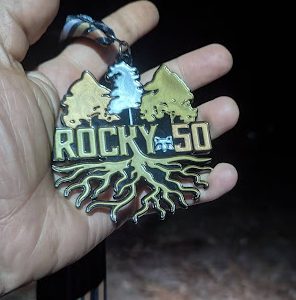
Vincent's Rocky 50 ultramarathon finisher medal.
Vincent’s Rocky 50 ultramarathon finisher medal.

I Am An Ultramarathoner! (…and my body knows it!)

I crossed the finish line and high-fived the race director. Humorously, a kind volunteer reminded me to stop my watch: the Strava gods rejoiced! I was presented with a Rocky 50 finisher medal and put it around my neck. I just could not believe it: I had finished, I was an ultramarathoner. Then, with all the energy I could muster, I walked to our crew blanket and collapsed. 

My wife, a superhero, packed our rental car with coolers, food, and race supplies as I laid on the ground totally exhausted. We picked up our drop bags and drove back to the hotel. Getting out of the car and limping to our hotel room felt like another ultramarathon, this one rewarded with a long, hot bath.

Post Race Reflections

That night, in the bathtub, I thought about the day’s events. I thought about the last four years of this difficult journey. I was filled with gratitude for my wife, the rock of our family, who kept me going. She made sure dinners were ready while I recovered from chemo, surgery, the difficult treatments, and the side effects of cancer. 

The phrase “run the mile that you are in” became a deep understanding. Beyond what I had done during the race, it was what I had done through my entire cancer journey. It was what my wife was doing every day, coping with the constant stress of this horrible disease. It was what all my cancer friends were doing. Despite tough and awful situations, each of us was running the mile we were in: that was all any of us can do when facing seemingly impossible challenges. Over time, the miles–literally and metaphorically–carve a path through the dark forest of doubt and hopelessness. Tears ran down my face as I lay in the tub with sore and bleeding legs, this deep understanding washing over me.

Waffles at the hotel post race.

Our Cancer-Filled Ultramarathon 

On Sunday, waiting for our flight back to D.C., I wrote a race report thanking everyone who donated to my Bladder Cancer Advocacy Network fundraiser. I was incredibly grateful for both their donations to BCAN, and the encouragement and belief they showed me. When the race seemed impossible, I persevered through the heat, pain, and endless miles to reach the finish line, fueled by their support.

I was also very thankful for this new ultrarunning community I found. From the aid station crews who encouraged me and opened my Skratch electrolyte packets when my fingers were too swollen, to Chris’s kindness in traveling to Huntsville to meet a stranger and race with him, and of course, my wife, who paced me. I know I would not have finished if she had not been there.

Final Thoughts and Transferable Takeaways 

As I get ready for my next surgery and the continuation of my cancer-filled ultramarathon, I will remember this mantra. I will remember the support from the ultramarathon community and the Bladder Cancer Advocacy Network. And I suggest that when things get hard, when they feel impossible and you cannot take another step, you do your best, put one foot in front of the other, and run the mile you are in.

About Vincent

Vincent Rossi is a father, husband, cancer survivor, and newly minted ultramarathoner! Check out Vincent’s website and Instagram @gnocchi_dinner. He continues to fundraise for the Bladder Cancer Advocacy Network (BCAN). Take a look at Vincent’s BCAN fundraising page here. 

My Cancer-Filled Ultramarathon: Part 3

This is part 3 of a multipart blog series about one Team RunRunner’s, Vincent Rossi, cancer-filled ultramarathon. Catch up on part 1 and part 2

The physical startline of Vincent's cancer-filled ultramarathon at the Rocky 50. PC: Let's Wander Photography
The physical startline of Vincent’s cancer-filled ultramarathon at the Rocky 50. PC: Let’s Wander Photography

The First Lap: A Challenge From Step One

Right from the start, this race was hard. My training leading up to the Rocky 50 had been entirely on the flat streets of Washington, D.C., and I had almost no trail running experience. Running with Chris the first five miles was invaluable. He taught me the power hike method for hills that I had read about, but never practiced. 

Immediately, the hills took their toll, as did the heat. As a total newcomer to trail running, the most challenging part was the uneven ground and the tree roots. Oh, the tree roots. The Rocky Raccoon races are known for large pine tree roots on the trail: traps for tired runners. About 10 miles in, I tripped on a root and landed hard. The wind was knocked out of me. “Holy shit,” I thought. “Ok, my first fall.” I told myself iIt was part of the race, and then got up, brushed myself off, and started running again. It must have looked bad because runners around me stopped to check on me. “I’m good!” I yelled, stunned but not hurt. 

Blood, Sweat, and Pee

Later in loop one, I stopped to pee and saw I was already peeing blood. It was a lot—my urine was dark red and thick. This blood was not from running; it began before the race: a sign that the cancer had spread to my kidneys. This, plus my abbreviated training build to this race, made understanding my fluid losses and hydration needs impossible. My right kidney ached: my cancer-filled ultramarathon continued. That was the area surgeons would soon inspect, and then possibly remove. I put thoughts of cancer aside and kept running.

Runner navigating lots of tree roots on the Rocky 50 ultramarathon course.

At the end of the first loop, I had run 16.7 miles. In training, 16 miles was normal for me. I had been running about 50 miles per week. But this was different. The heat, hills, and uneven ground left me completely exhausted. “Oh fuck,” I thought. Finishing felt impossible after that first lap. I had promised myself I would not quit. I would push myself as far as possible, no matter what.

Before the race, Chris, who seemed worried he had gotten me into a dangerous situation, said, “Hey man, if you feel like you are hurting yourself, it’s just not worth it.” With my cancer history and new diagnosis, I knew today was my only chance. My future was uncertain, so I would push hard. I thought, “Hell, to die during an ultra would be more badass than dying on fentanyl in a hospital bed.” I smiled at Chris and said, “I think I am ready to do hard things.” Chris smiled nervously back. Two more 16.7-mile loops to go.

Lap Two: “Run the Mile You Are In”

Lap two was brutal. I had told my coach I wanted to suffer, and there’s no doubt my wish was granted! Despite refilling my ice bandana at each aid station, the Texas heat meant it quickly became a wet rag. I fell two more times, each time so suddenly and hard I did not even catch myself. One moment I was running, the next I was on the ground. 

I chose not to show my mileage on my running watch; ultramarathon math would not help me right now! I feared that constantly seeing how much distance was left—like 40, 30, or 20 miles to go—would make me lose the mental battle, which I knew was key to staying in the race.

On the flight to Texas, I listened to an ultrarunning audiobook. The author warned about the dangers of ultrarunning math, instead advising runners to simply “run the mile that you are in.” Thinking about running another 30 miles could have broken me easily. During the second lap, this advice came to mind and became my race mantra. I felt a large blister on my right foot from sand in my shoe, but I was too tired to stop and empty it. “Run the mile that you are in,” I thought. My quad muscles began to shake with intense pain. For a moment, I thought, “How can I keep going for another 30 miles?” The mantra returned: “Run the mile you are in.”

Cancer, Caution, and Crew Stations

By the end of the second lap, I reached my crew station where my wife had my race vest ready and waiting. She had packed it with gels, trail mix, salt tablets, and hydration powder for my final lap. The first two laps were so hot that I had opted to run with a belt instead of a vest. 

As I approached, my wife immediately saw I was in trouble. Due to cancer treatments, I had lost the ability to sweat and control my body temperature. For me, 83 degrees Fahrenheit felt like 120! I walked up to the five-gallon ice bucket my wife had also prepared, and put my arms in the ice water, trying to recover from near heat stroke. Chris was there and decided to stop after two laps and about 55 miles, since his main race, the Umstead 100, was coming up. Wisely, he did not want to hurt his performance. 

Rocky 50 ultramarathon aid station.

I was a zombie. Chris talked to me and gave advice, but I do not think I heard anything he said. I struggled to stand. From what I had read about ultras, I knew sitting down was not a good idea. Finishing the second lap meant I had officially run an ultramarathon–beyond the 26.2 mile (42K) marathon distance. But my goal was 50 miles, not 33.4. 

As if Rocky 50 wasn’t already challenging enough, then the nausea hit. I removed a handful of gels from my vest, knowing that if I ate one more, I would throw up. From then on, I would only drink water. I managed to give Chris what might have looked like a smile, unable to speak, and a fist bump on my way out.

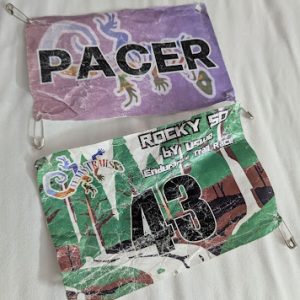
Rocky 50 race bibs: "43" for Vincent, "pacer" for his wife.
Rocky 50 race bibs: “43” for Vincent, “pacer” for his wife.

The Final Lap

The third lap started. I had no idea how I would get through the next 16.7 miles. As we began, some of the 50K finishers clapped as I went back on the course. Race rules allowed a pacer for the last lap, and my wife joined me—she was my savior. She did the ultramarathon math for me and tried her best to keep me moving at a pace to finish. Before the race, our plan was for me to speed up on the last lap, maybe run a 9:30-minute mile. Now in real time, the thought of running that fast would have been funny if I was not so scared. My wife ran far ahead, then looked back to see me limping. “Oh man, I am in trouble,” I thought.

At one point, I sat to tie my shoe. An abdominal muscle cramped so badly the pain was unbearable. I screamed, surprising myself. My wife looked at me, very worried, but I got up and kept going. She knew the plan: keep me moving no matter what. “Run the mile that you are in,” I thought again. 

It’s Me Against the Clock 

Near the end of the last lap, with four miles to go, I started to believe I could finish this cancer-filled ultramarathon. But I did not want to get too confident. If my pace slowed or I fell again, I could miss the cutoff time. As we walked up a steep hill, my wife checked her watch. She turned to me and said, “Okay, we need to pick it up now.” Her tone scared me, though not as much as the thought of a DNF (did not finish). I had come so far, endured so much: it was now or never.

I dug deep, trying my best to keep up with my wife. She was jogging at a slow 12-minute mile pace, but for me, it felt like a sprint. My legs were completely raw, and both my feet were bleeding. But for a moment, the thought of crossing that finish line gave me goosebumps. Despite the pain, I felt a fleeting giddiness. I smiled through this new kind of pain.

About Vincent

Vincent Rossi is a father, husband, cancer survivor, and newly minted ultramarathoner! Check out Vincent’s website and Instagram @gnocchi_dinner. He continues to fundraise for the Bladder Cancer Advocacy Network (BCAN). Take a look at Vincent’s BCAN fundraising page here. 

Part 4 of My Cancer-Filled Ultramarathon will be released soon.

North Fork 50 Race Report

Race: North Fork 50 Mile

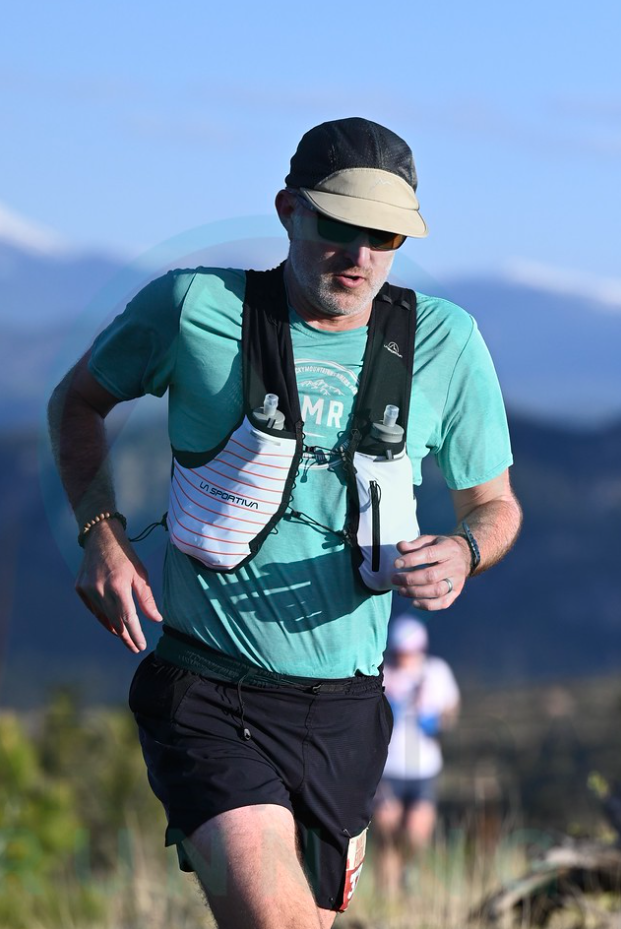
TRR Coach Kyle Fulmer during the North Fork 50. PC: Liberty Pro Imaging

Runner: TRR Coach Kyle Fulmer

Race Date: 05/31/2025

Location: Buffalo Creek, Colorado

Result: 11 hours, 58 minutes and 54 seconds (including 8 bonus miles!), 39th overall

Strava Activity Link: https://www.strava.com/activities/14657170724

3 Bests – What aspects of the race did you like the most?
  1. Super smooth, runnable trails: A wide variety of runnable trails, all with tons of views: in and out of pines, burn scar, mountain bike rollers and more.
  2. Location: It’s not too far from the Front Range. It took 1 hour and 15 minutes to drive from Boulder on race morning.
  3. Scenery: Wildflowers were popping along the trails!
Not so much – Aspects of the race that didn’t do it for you

Well, I did run an extra eight miles because the out-and-back wasn’t marked very well. About a dozen of us missed the turn, and proceeded to run about 4 past the turnaround before realizing our mistake. Only 4 of us actually went back and completed the course. So, we got 8 bonus miles for free!

Weird factor – What’s the weirdest thing about this race?

The aforementioned out-and-back was kind of weird, because then you had to run “back” to the previous aid station and then “back” again past the out-and-back point. In previous years, they marked bibs and color-coded the signs to make this clearer, but not this year. The takeaway… don’t be like me! Instead, remember to study the North Fork 50 course map before race day!

Highlights of your race – What did you do well and enjoy about your race in particular?

I really enjoyed the running trails. With only ~6500 feet of climbing in the standard 50-mile route, you can get into a good groove and practice chugging along. Also, I’m proud of my mindset when I realized I’d run off course. I chose to focus on the positives: logging more miles on great trails, getting better value for my race entry fee, and finishing 1st in what I termed the North Fork XL!

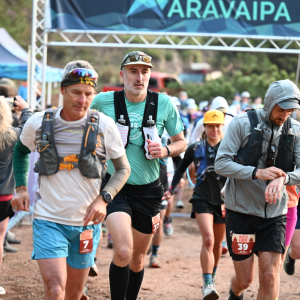
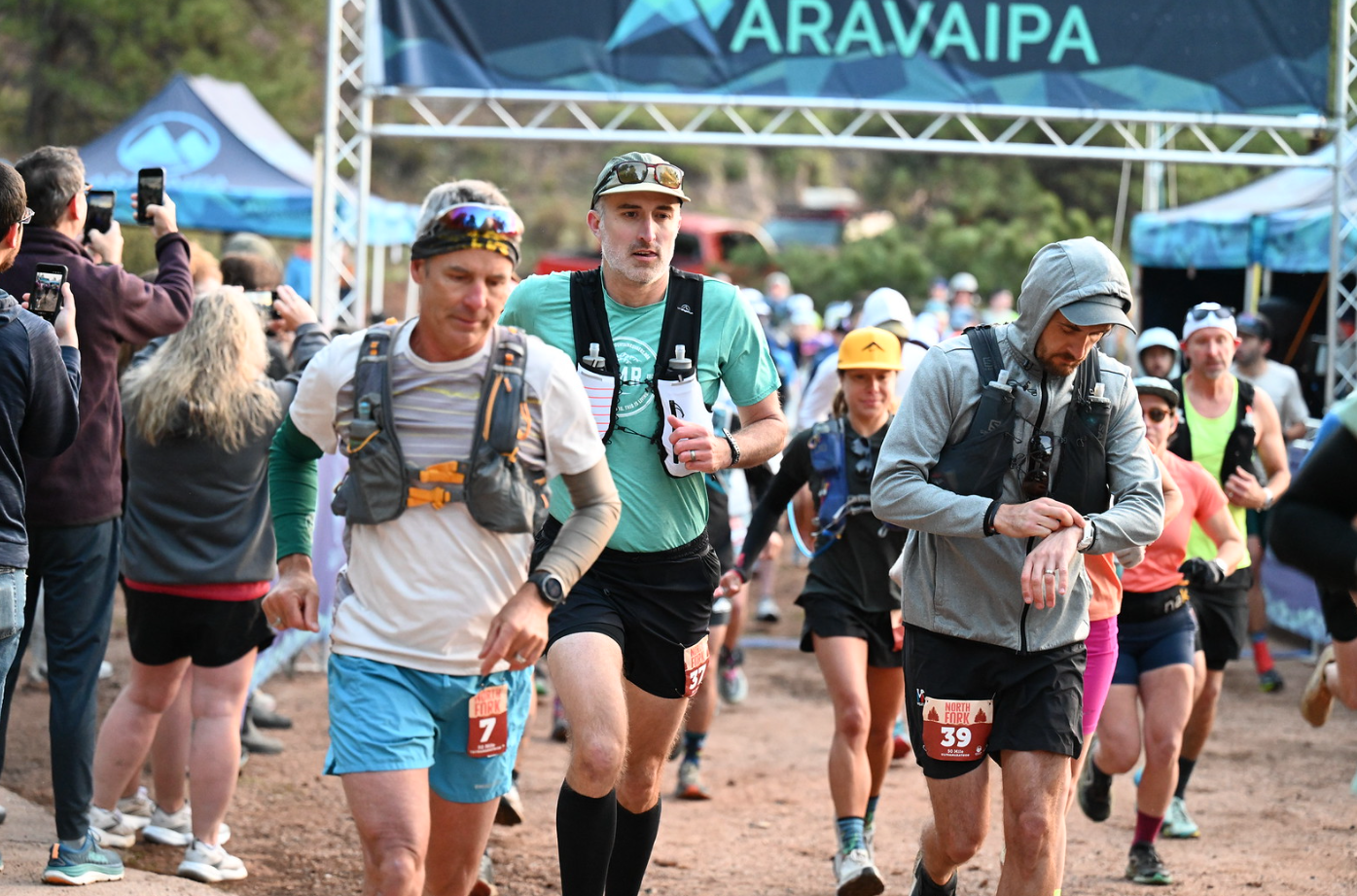
TRR Coach Kyle Fulmer at the start of the North Fork 50. PC: Liberty Pro Imaging
Lessons for others – Share your pro-tips on the race to help the next runner

Be prepared for a variety of weather conditions. It can get hot, though you reach pretty high elevations, above 8000 feet at points, so that makes it a bit cooler. We did get hailed on pretty good, and had a brief but intense thunderstorm. Also, remember to study the map and know when to expect the out-and-back!

Lessons you learned that will help you next time around

I now know where the confusing out-and-back is, and the right way to navigate the course!

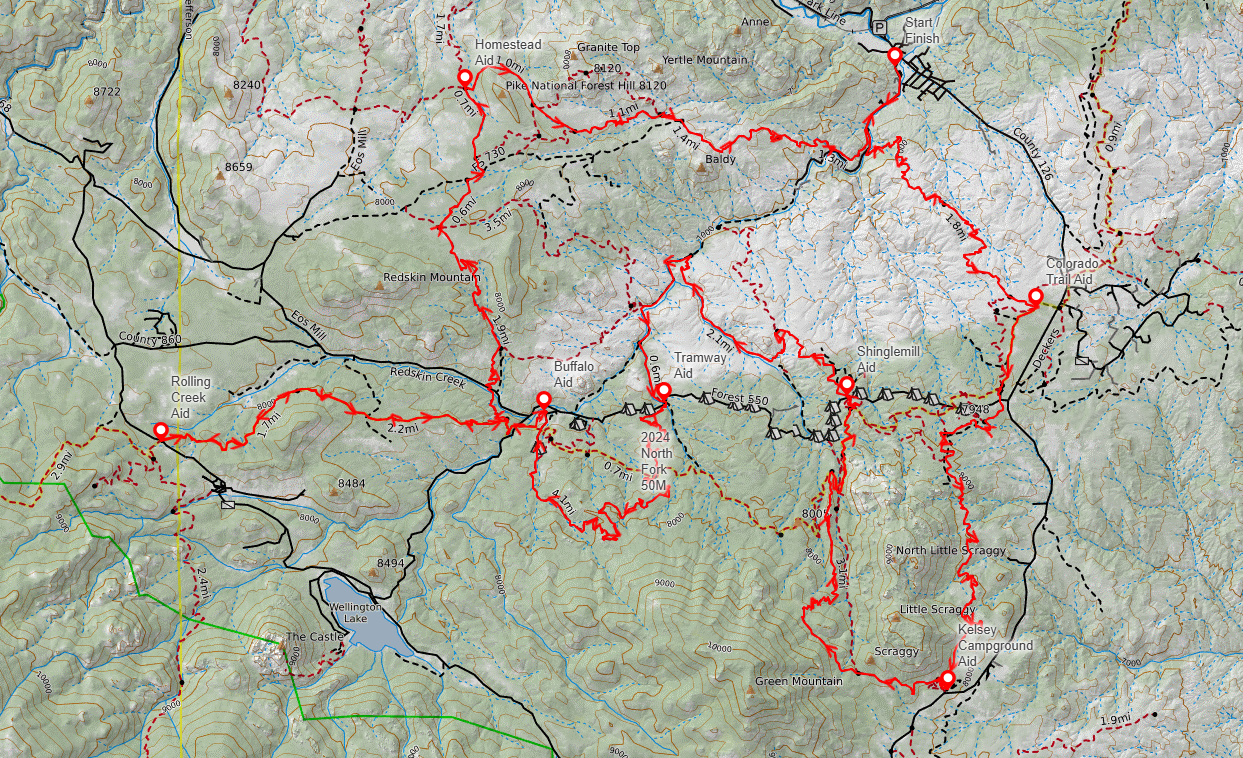
North Fork 50 mile course map with the out-and-back at Rolling Creek Aid.
Most important course specific knowledge to know about the race

You’ve guessed it: the darn out-and-back!

Aesthetics – Is it a pretty course?

The North Fork 50 is a very pretty course! You can expect stunning views of the surrounding mountains, snow-capped peaks, tons of wildflowers and aspen sections. You could see all the way to Pikes Peak and beyond!

Difficulty – Is it a tough course?

Not especially tough, but the runnable trails will test your running fitness!

Organized and well run – Did it feel like a well-oiled machine or were they flying by the seat of their pants?

The North Fork 50 is organized by Aravaipa Running, one of the best trail race organizers out there, so you can trust it will be well-run. This race was no exception: it was dialed, especially the aid stations. And with free burgers at the finish line, Aravaipa did well!

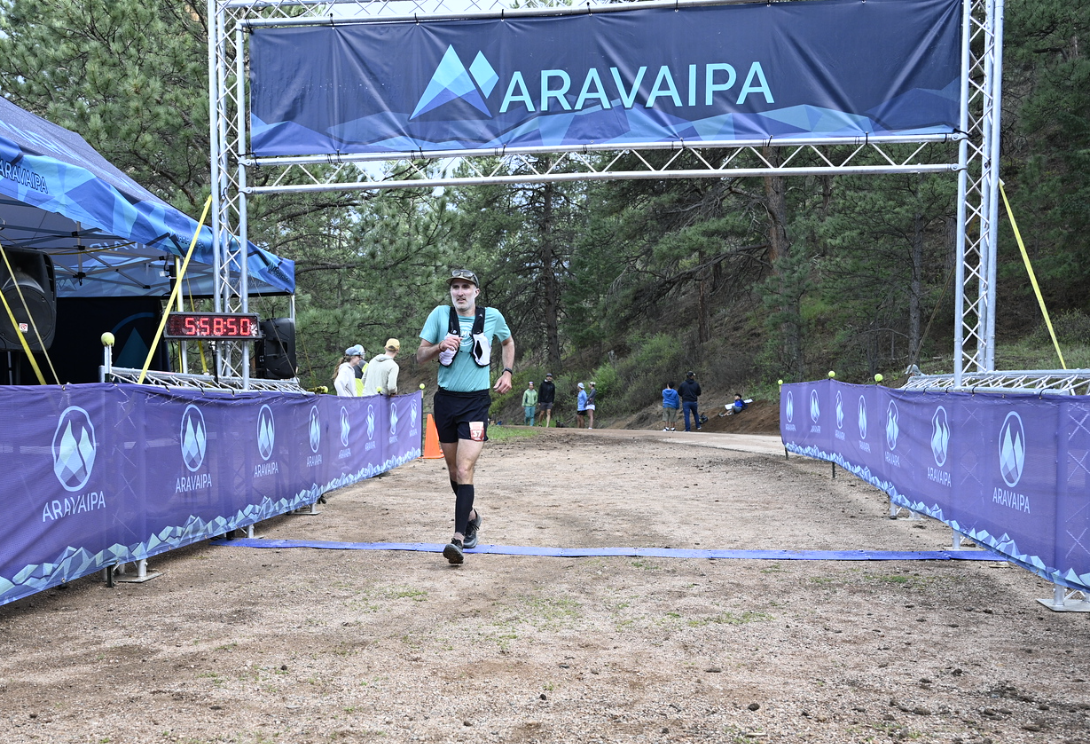
TRR Coach Kyle Fulmer crossing the finish line. PC: Liberty Pro Imaging
Competition – Is there a strong field?

Any race in Colorado is always going to have strong local runners in the field. This year, the men’s and women’s champions were particularly strong, both setting new course records!

Logistics – Does it require a special handshake, registration a year in advance, hotels all booked? Give us the low down on the nuts and bolts of making the race happen.

Very easy logistically. The North Fork 50 was easy to enter and didn’t sell out. Parking at the start was also hassle free.

Aid Stations – Standard fare or anything special to know about the aid stations in terms of what’s available or when?
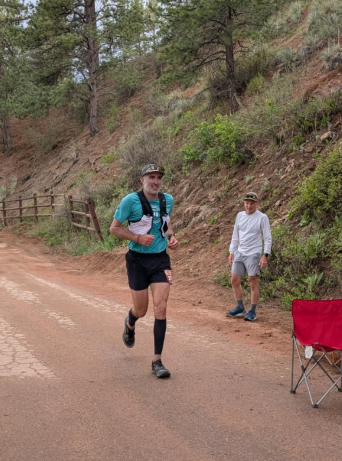
Kyle running the North Fork 50 mile race. PC: Silke Koester

Really good aid stations, 8 in total. You were allowed crew at 4 of the aid stations, but crew wasn’t necessary. There were great offerings at the aid stations, including avocado and bean burritos, which I loved!

Weather and typical race conditions

As noted above, be prepared for anything! It can get toasty, but a sizable thunderstorm also rolled in on us!

Gear – Did you need anything special or is there anything you’d recommend for the next runner?

Not really. It was a little cold at the start at 6:00am, but warmed up quickly, so avoid overdressing.

Spectators – Is this a friendly course for your friends?

 Average for a trail race. There were 4 aid stations with spectators and crew access.

How’s the Swag?

Solid. We got a pint glass and a casual t-shirt.

The Overall Score – How many stars do you give this race and do you recommend that others run it?

8.5 out of 10!! I would rate the North Fork 50 higher except for the course marking issue. My bad, but still a little more detail there would have been appreciated. Instead, I finished first in the “North Fork XL” (almost 100K)!

Kyle Fulmer is a coach with Team RunRun and our social media manager extraordinaire. He is an experienced trail and ultra coach and athlete based in Boulder, Colorado.

Glen Ogle 33 Race Report

Race: Glen Ogle 33 mile race

Team RunRunner David Taylor finishing Glen Ogle 33-mile race in Scotland.

Runner: Team RunRun Coach David Taylor

Race Date: 11/02/2024

Location: Killin, Stirlingshire, Scotland

Result: 5 hours and 15 minutes (including a 35 minute 50K PB en route!)

3 Bests – What aspects of the race did you like the most?

1. Race feel: Friendly events team and well-organized.

2. Scenery: Gorgeous sights throughout (even when the weather wasn’t playing ball!)

3. Beginner friendly: Glen Ogle 33 would be a great first ultra or for someone trying to push quite hard. There is some elevation, but not what you’d call ‘hilly’.

Not so much – Aspects of the race that didn’t do it for you

For my liking, there was a little bit too much tarmac as I have been used to running a lot more trails. At the same time, the tarmac and lack of technical trails probably makes this race really good for people as their first ultra.

Weird factor – What’s the weirdest thing about this race?
The squirrel (or beaver) that helps you cross the road on the way to pick up your drop bag is pretty unique (and weird)! With the event being around Halloween, there are always a few folk that are fully dressed up, making for a fun and memorable atmosphere.
Highlights of your race – What did you do well and enjoy about your race in particular?

Having transitioned to running much longer races, I liked the shorter duration (only” 33 miles!) and actually enjoyed being challenged by some speed work! While there was still 3000ft of climbing, it was much flatter and more runnable than I’m used to. As it was my last ‘official’ race of the year, I decided to try and go at it as hard as I could, which included running all of the first (four-mile) hill!

Lessons for others – Share your pro-tips on the race to help the next runner
  1. Even if it is colder, ensure your hydration is still on point. I probably didn’t take quite enough, which may have led to some cramping.
  2. Tempo work is important to do in training! Very runnable races (just like this) might have you running at relatively high intensities for quite a long time: you need to train for this!
  3. Go for it! I wanted to push hard, and while I probably pushed even harder than that, resulting in some cramping later, it meant that I now know exactly where I am at and what I need to work on next. I recommend using this experience and you performance as data for understanding what you can then improve on.
Lessons you learned that will help you next time around

1. Speed and tempo work are important when training for shorter ultras.
2. Keep up hydration as if it were a warm day; the extra effort on race day makes fluid loss greater.
3. Strength work is also important; stronger muscles means less relative strain on them.
4. Hill work is ace in training, making any hill in races easy (well, easier)!

Most important course specific knowledge to know about the race

Shoe choice is important! The Glen Ogle 33 race course favors more of a road shoe than a trail shoe. In fact, a lot of the people did wear road shoes, while I went for a super cushioned trail shoe.

Aesthetics – Is it a pretty course?

Very! The course makes its way up a glen with lots of colorful autumn leaves. The photos tell the story. This is of course unless the weather closes in, which it very well could at this time of the year.

Some of the very runnable trails throughout Glen Ogle 33.
Difficulty – Is it a tough course?

Hard to answer – but I would say not really. The elevation is moderate (about 3000 ft) and most of the course is quite runnable with no technical terrain. That said, for a first ultra it is in the “tough enough” bracket!

Organized and well run – Did it feel like a well-oiled machine or were they flying by the seat of their pants?

Glen Ogle 33 is very well organized by Rocket Events. They put on a lot of events in Scotland: it’s not their first rodeo!

David Taylor before racing the Glen Ogle 33.
Competition – Is there a strong field?

The field has a big mix of running abilities, but at the sharp end it looked pretty competitive with the first finisher finishing the 33-mile course in 3 hours and 36 minutes. The final finisher ran just under 9 hours, while the rest of the ~300 racers crossed the finish in between.

Logistics – Does it require a special handshake, registration a year in advance, hotels all booked? Give us the low down on the nuts and bolts of making the race happen.

I didn’t enter Glen Ogle 33 till a couple of months before the event and there were still plenty of spaces remaining. The race is withing driving distance of both Glasgow and Edinburgh, and there is quite a lot of accommodation available nearby.

Aid Stations – Standard fare or anything special to know about the aid stations in terms of what’s available or when?

There were 5 aid stations in total with one of them including a drop bag at around the halfway point.

Weather and typical race conditions

It was cool, between 7-11 degrees Celsius (45-52 degrees Fahrenheit) and dry for my race = pretty much perfect conditions. That said, for future years it could be much different – it’s November in Scotland after all!

David Taylor smiling his way through the 33-mile race.
Gear – Did you need anything special or is there anything you’d recommend for the next runner?

There was only a fairly basic kit list. Only thing I’d recommend would be wearing the most comfortable shoes that you can (rather than an especially grippy and hard core trail shoe) as there is a decent amount of tarmac throughout Glen Ogle 33.

Spectators – Is this a friendly course for your friends?

Unfortunately, not really. Spectators can catch up with you around the halfway point and at the end.

How’s the Swag?

Pretty good! Finishers received a t-shirt, finishers medal and a goody bag with juice, chips, sweets and the very awesome Rockets Events beer!

The Overall Score – How many stars do you give this race and do you recommend that others run it?

5/5 for a relatively short, beginner-friendly, well organized ultra!

Team RunRun Coach David Taylor is based in Glasgow, UK. He specializes in trails and ultras for both beginner and intermediate runners, whether you’re just bumping up in distance or looking to improve your next trail race,

Bootlegger 50 Miler Race Report

Race: Bootlegger 50 Miler

Runner: Matt Anthony

Race Date: 04/06/2024

Location: Jackson, GA

Strava Activity Link: https://www.strava.com/activities/11122963713

Team RunRunner Matt before the Bootlegger 50 Mile race.
Team RunRunner Matt before the Bootlegger 50 Miler.

3 Bests – What aspects of the race did you like the most?

  1. Really well run by Revolution Running: they’re total pros; lots of experienced runners to offer guidance; excellent food and care; lots of specific and knowledgeable support.
  2. Perfect weather
  3. Great location near Atlanta

Not so much – Aspects of the race that didn’t do it for you

Nothing, except my stomach getting wobbly.

Weird factor – What’s the weirdest thing about this race?

They really pushed the mid-race BBQ sandwiches… I just couldn’t do it!

Highlights of your race – What did you do well and enjoy about your race in particular?

It was my first 50 miler and I feel great about it. Thanks to Coach Matt Urbanski, I was very well prepared!

Lessons for others – Share your pro-tips on the race to help the next runner

Make sure your watch has enough battery for the full race!

Lessons you learned that will help you next time around

  1. Same as about: making sure my watch has enough battery for the full race!
  2. And it’s always important to test aid station food: PB&J sandwiches, grilled cheese, pizza, etc. (For more fueling guidance, check out this Q&A with Registered Dietitian Heidi Strickler)

Most important course specific knowledge to know about the race

The course is changing next year, so that’s super important to remember, but this year, the repeated loops meant you didn’t nearly have to carry anywhere near as much as you think. And then remember that everything looks, feels, and runs different in the dark.

Aesthetics – Is it a pretty course?

Yes! It was beautiful, rolling hills, and surprisingly isolated for an hour from Atlanta.

Difficulty – Is it a tough course?

It was my first 50 miler, so I don’t really have anything to compare it to, but I didn’t think it was particularly tough. The only challenging things were the roots and rock: my toes are banged up post race.

A view of Bootlegger 50 Mile race's beautiful course.
A view of Bootlegger 50 Miler’s beautiful course.

Organized and well run – Did it feel like a well-oiled machine or were they flying by the seat of their pants?

A well-oiled machine!

Competition – Is there a strong field?

Not really relevant to me, but there were a bunch of SEAL looking dudes – ripped, shirtless, tall, fast. They were polite while passing!

Logistics – Does it require a special handshake, registration a year in advance, hotels all booked? Give us the low down on the nuts and bolts of making the race happen.

Nope, registration was straightforward through UltraSignup.

Aid Stations – Standard fare or anything special to know about the aid stations in terms of what’s available or when?

Fully stocked, tons of food.

Weather and typical race conditions

It was beautiful; Atlanta, GA, isn’t too hot this time of year. 

Gear – Did you need anything special or is there anything you’d recommend for the next runner?

Nope. I didn’t even really need a vest since it was 5 x 1 mile loops but as the course is changing next year, a vest might be more important. And make sure you have a watch that lasts more than 13 hours!

Spectators – Is this a friendly course for your friends?

Super friendly, family-oriented too.

How’s the Swag?

Mediocre: shoulder bag + t-shirt + medal.

The Overall Score – How many stars do you give this race and do you recommend that others run it?

5 stars, it was a great first 50 miler!

Salt Flats Endurance Runs 50 mile Race Report – Dandelion Dilluvio-Scott

Photo: Damien Scott

Race: Salt Flats Endurance Runs, 50 Miler

Runner: Coach Dandelion Dilluvio-Scott

Race Date: 05/05/2023

Location: Bonneville Salt Flats Speedway, UT

Results: Overall:5 GP:1 // 10:20:00

3 Bests – What aspects of the race did you like the most?

  1. The challenge: As a runner who specializes in technical high alpine and traditional desert, I found running on outstandingly flat terrain to be an exciting (and intimidating) endeavor. There aren’t many courses that offer miles of flat and featureless topography.
  2. The spontaneous friendships: There were many enthusiastic and stoked runners on this course of all ability levels. Everyone was friendly and excited to be running the event. I ended up spending just over a marathon with another 50-mile racer who, as it turns out, took a mountaineering class with me 12 years ago!
  3. The location: Calling the Bonneville Salt Flats Speedway a unique landscape is an understatement. The terrain consists of a wide open, white expanse that seems to stretch on forever bordered on one side by a small mountain range known as the “islands” as they seem to rise up out of the sea of salt. The mirage is surreal and the endless visibility astounding. Often, I could see the next aid station from 45 minutes away on a course!

Not so much – Aspects of the race that didn’t do it for you

As much as I enjoyed running on the Salt Flats I can’t say I would repeat the effort (maybe I’ll change my mind). The repetitive motion and extended stride over the pancake flat landscape put a great deal of unfamiliar strain on my body. However, I might have at least somewhat avoided the extra stress if I’d specifically trained for this course. However, I registered for Salt Flats mere weeks before the start as a “tune -up race” in preparation for upcoming longer distance events in the mountains. Time was not on my side for meaningful specific training.

Additionally, I think I would have struggled to maintain focus in the flats if I didn’t have a running partner. I usually rely on rocks and other technical features to keep my mind sharp. Unchanging terrain underfoot is difficult for me mentally for long durations.

Weird factor – What’s the weirdest thing about this race?

The location! Running in a giant basin of electrolytes (aka salt) is pretty weird! Another usual fact is dogs can register (bib and all) for this event and run with a racer; even the 100M distance!

Highlights of your race – What did you do well and enjoy about your race in particular?

I knew going into this race that the speedy course would be challenging for me as a technical trail runner. Without specific training I would need to rely on grit, experience, strategy and tactical risk taking to be successful. I would also need to “run my own race” and not get swept along with the pack on the salt flats without intention.

Looking back, I believe I took the right amount of risk (for me). I knew this race favored fast runners, so I went out fast. Risky move, but I did it as part of my plan. I figured I’d move with the front of the pack for a bit and see what happened. If it was unsustainable, I would back off. It should also be noted that it was impossible to know who I was competing against since the 50k, 50M and 100M divisions all start together. This ensured that I would run my own race and not hesitate to back off if needed. Had the field only been composed of racers of my distance I would not have used this tactic. Too much risk of becoming competitive to a fault.

As it turns out, I began chatting with another 50-mile runner. I was able to keep a brisk pace while having a causal conversation with him which made me confident that our speed would be sustainable for me. However, soon after we departed the flats and moved onto the dirt road my left leg began to bother me a bit. This was the result of the repetitive pounding on the flats with no technical terrain for reprieve for a long duration. The problem was localized to my left side because it is markedly more “lazy” than my right (working on resolving this!). I began to walk intermittently at this point hoping that it would alleviate some of the issue. It would dissipate for a bit, but kept returning. At around a marathon I decided that I needed to focus on my own pacing and technique instead of keeping up with my partner. It was hard for us to part ways as we really enjoyed each other’s company, but our pacing wasn’t syncing anymore. I was happy with my decision to run alone and listen to my body, but even more proud that I kept fighting.

I was ahead of cut-offs and likely could have walked it in making for an easier day. Instead, I went to work figuring out how I could move as fast and efficiently as possible without exasperating my leg problem. I began experimenting with my gait, foot strike and stride length. Through these trials I discovered that I could still run pretty well and without much discomfort if I shortened my stride, stayed on the most technical parts of the dirt roads and power-hiked the inclines. Instead of obsessing about my now slower speed I switched focus to efficiency and using the now more technical terrain to my advantage. I was lucky enough to also encounter another running partner and we enjoyed the windy hill climbs together. However, I continued on alone instead of stopping longer at the aid station to keep the company. “Run your own race and keep fighting” became my mantra.

“Keep fighting” became extra challenging to adhere to during the last five miles of the course. These miles are back on the Salt Flats. I did not want to run flat anymore! I wanted to walk! However, I gave myself a pep talk and ran until my gait felt off. Then I reset with a short walk before picking up running again. I repeated this cycle to the finish.

Lessons for others – Share your pro-tips on the race to help the next runner

As previously mentioned, I didn’t specifically train for the race as I signed up weeks before the start as a “tune-up” race for longer events later in the season. This led to the repetitive motion over flat and featureless terrain being incredibility brutal on my body during the event. Luckily, I recovered quickly, but I would have likely felt better during the race if I had the time to put in miles on a very flat surface. Salt Flats aren’t exactly easy to come by unless you happen to live near Bonneville Salt Flats Speedway or Badwater. I think doing long runs on a track would be a comparable and more accessible venue. Time would also be well spent on gently rolling dirt roads to address the second portion of the race. Additionally, I recommend a heat training intervention for this event as it is extremely exposed and can potentially get very hot.

Lessons you learned that will help you next time around

Specific train for flat and featureless!

Photo: Sean Wetterberg

Most important course specific knowledge to know about the race

Wear gaiters to keep out the salt and also don’t let salt get into any open wounds! Also, thoroughly wash your shoes and any other gear that comes into contact with the salt as soon as possible after the race. Salt can damage textiles and rubber.

Aesthetics – Is it a pretty course?

Absolutely! I’ve always been one to believe that there us beauty is simplicity. The first portion of the race involved running across a massive, white, flat stretch of white. Aid stations could be seen from 2+ miles away! The next portion of the race in the “islands” is the total opposite. Nothing but brown tones of rock, dirt and the first hints of green sage.

Difficulty – Is it a tough course?

It wasn’t tough in the traditional sense. The course doesn’t have a ton of vert or technical, rocky terrain. However, flat is an underdeveloped area for me (and likely many other mountain runners) so I found this course difficult! I also believe the barren, featureless landscape could pose a mental challenge without a running partner/pacer.

Organized and well run – Did it feel like a well-oiled machine or were they flying by the seat of their pants?

Wow this race was dialed! The RDs and volunteers executed the event flawlessly. They even have a secondary course all laid out and ready to go in case the salt flats are not in running condition (flooded).

Competition – Is there a strong field?

This is a small race with multiple distances: 5k, 50k, 50M and 100M. I’m surprised the Salt Flats Endurance Runs aren’t more popular considering their vicinity of Salt Lake City and the unique venue of the Bonneville Salt Flats Speedway. Looking back on race results, I think it’s fair to say that although elites don’t run the course often, runners consistently post impressive times. I was certainly looking over my shoulder!

Logistics – Does it require a special handshake, registration a year in advance, hotels all booked? Give us the low down on the nuts and bolts of making the race happen.

I registered for this race weeks before the start as a last-minute tune-up. In 2023 the race did not fill, but other years may vary as this was a light year per the RDs. Folks can car camp on the Salt Flats for free. There are also standard accommodations in nearby Wendover.

Aid Stations – Standard fare or anything special to know about the aid stations in terms of what’s available or when?

All the aid stations were stocked with water, drip drop electrolytes and the standard aid station fare.

Weather and typical race conditions

This year was delightfully cool with a high of about 60F, wind from 10-30mph and partly cloudy! There were very brief periods of rain as well. The course usually has varying degrees of wind as it is a big, open expanse. The flats and “islands” are also extremely exposed and temperatures can and do soar this time of year. We just got lucky! I completed a sauna intervention in preparation for this race in anticipation of the heat.

Gear – Did you need anything special or is there anything you’d recommend for the next runner?

I would wear gaiters for sure. Salt gets kicked up on the flats and will end up coating the back of your calves. Salt can then work its way into your shoes and become abrasive. This can cause blisters which hurt on their own… but salty blisters are extra heinous!

Spectators – Is this a friendly course for your friends?

The Start/Finish is extremely accessible and located at a landmark location: the Bonneville Salt Flats Speedway. Crewed Aid stations require some dirt road driving.

How’s the Swag?

A tech shirt and optional sun hoodie are provided to racers. Both are good quality and will see use! Finishers are also awarded a metal.

The Overall Score – How many stars do you give this race and do you recommend that others run it?

5/5 stars for this well-organized race! The event is unique not only in its location on Salt Flats of the Bonneville Salt Flats Speedway, but in the challenges runners face in this barren, salty landscape. Highly recommend the experience!

Dandelion Dilluvio-Scott is a coach with Team RunRun. To learn more about her or to work with her, check out her coach profile.

Grayson Highlands 50 Mile Race Report – Peggy Jennings

Race: Grayson Highlands 50 Miler

Runner: Peggy Jennings

Race Date: 05/06/2023

Location: Grayson Highlands, Virginia

Results: 14hr 34min

Strava Activity Link: https://www.strava.com/activities/9024419586

Photo: Bryan Jennings

3 Bests – What aspects of the race did you like the most?

  • The course was marked very well.
  • Aid stations were great. We went roughly 5-6 miles between aid stations.
  • Great communication before race.

Not so much – Aspects of the race that didn’t do it for you

5:30am start. If I had a choice, I would start at 6:30 or 7am.

Lots of creek beds we ran through. Just need to watch footing. It was OK but a little technical to run through but the challenge was good.

Weird factor – What’s the weirdest thing about this race?

Email before the race was a little weird. The race director talked about the weather and that it could be really rainy and cold. I guess he was trying to gear anyone up (Ha, good punt there!) for it to be cold. The weather was predicted to be rainy and cold but we ended up have incredible weather. Unfortunately, many racers decided not to race due to his email.

Highlights of your race – What did you do well and enjoy about your race in particular?

I ate well and stay really hydrated. I think I got enough training hours in before the race. I had no issues with my feet or body. I took it slow, hiked when I needed which was a lot, but I just took my time and kept my goal in check which was the finish. I think the best decision was to bring poles. I saw so many runners using sticks as poles. There were many creek crossing so the poles came in handy. Be prepared to have your feet wet for 75% of this race. I will say the cold water felt amazing on my feet. I stood in the creek multiple times to give my feet some cryotherapy!

Lessons for others – Share your pro-tips on the race to help the next runner

  • If you think you may use poles, do some training runners before your race.
  • DO NOT do anything new on race day.
  • EAT, DRINK, PEE, repeat.
  • If you think you may have issues with blisters, use vasoline or something similar to prevent blisters. I didn’t use anything. I stayed in the same shoes and socks for the entire race.
  • I did not upload the GPX to my watch. The course was marked really well and the racers I spoke to about it and that uploaded the maps on their watches said it was wrong.

Lessons you learned that will help you next time around

My rule of thumb is if the temps start with a 3, wear tights or capris. If it starts with a 4, wear shorts. Don’t overdress at the start. I did but luckily my amazing hubby met me at 5.5 mile water station and I changed into shorts. Think about how you will feel 20 minutes in the race. Study the course.

Most important course specific knowledge to know about the race

Stay alert. Just make sure you see course markings every .25 mile or so.

Aesthetics – Is it a pretty course?

Beautiful course. Amazing views. The wild ponies were awesome to see.

Difficulty – Is it a tough course?

9500 ft of climbing and lots of rocky sections. It’s true trail race. But they give you a pretty generous cutoff. 17.5 hours.

Organized and well run – Did it feel like a well-oiled machine or were they flying by the seat of their pants?

Very well organized and all the volunteers were super great.

Competition – Is there a strong field?

No clue and I didn’t do this to win. This was my first 50 miler so my focus was to stay healthy and to finish strong.

Logistics – Does it require a special handshake, registration a year in advance, hotels all booked? Give us the low down on the nuts and bolts of making the race happen.

  • No, you don’t need to find a book and pull out a page to bring to the aid station. Ha!
  • Registration did not fill up but if you wanted to drop from 50m to 50k, you may not be able to because they have a certain number of permits so you may not be able to. Just need to ask.
  • We stayed at an Air B&B that was 20 minutes from the start for $98 a night. Old cottage but very comfortable.

Aid Stations – Standard fare or anything special to know about the aid stations in terms of what’s available or when?

Nope. All aid stations had quesadillas which hit the spot for me, and with bacon!!!

All the volunteers were great and very helpful. Luckily, I had my hubby and kids out there for me but you could do this race unsupported, as long as you are a somewhat experienced ultrarunner.

Weather and typical race conditions

Weather was amazing. Mother Nature truly gave us the best weather. I heard last year it was rainy, cold, and windy. No bueno. Prepare for lots of creek crossing and for your feet to get wet.

Gear – Did you need anything special or is there anything you’d recommend for the next runner?

Hiking poles were a race saver for me.

Spectators – Is this a friendly course for your friends?

Yes.

How’s the Swag?

Nice, simple, and usable pieces. We got a t-shirt and a winter hat. Both I will use.

The Overall Score – How many stars do you give this race and do you recommend that others run it?

5 out of 5.

Photo: Looking Glass Designs

Antelope Canyon 50 Mile Race Report – Lukas Burrer

Race: Antelope Canyon 50 miler

Runner: Lukas Burrer

Race Date: 03/11/2023

Location: Antelope Canyon, Page, AZ

Results: 11 OA – 1 AG

Strava Activity Link: https://strava.app.link/wWvtgmFc7xb

3 Bests – What aspects of the race did you like the most?

  • Awesome location!
  • Running through the canyon, along horse shoe bend and Lake Powell was amazing!

Not so much – Aspects of the race that didn’t do it for you

Weather was kinda bad! Lot of rain which made the trails very muddy and slippery.

Weird factor – What’s the weirdest thing about this race?

If you do the 55k, 50 miler or 100 miler you have to climb down a 55ish feet ladder into the canyon. There was a long line since it took some people quite some time to climb down.

Highlights of your race – What did you do well and enjoy about your race in particular?

Finished within my time goal and even placed first in my AG!!!

Lessons for others – Share your pro-tips on the race to help the next runner

Be careful inside the canyon. Pretty narrow and dark in there.

Most important course specific knowledge to know about the race

Most of the time you’re running through loose sand which is draining on the legs! And gators.

Aesthetics – Is it a pretty course?

Very pretty! The canyon is amazing to run through. Also horse shoe bent and Lake Powell are very pretty, you’ll also pass both during the race!

Difficulty – Is it a tough course?

Kind of! Not much elevation change but most of the time you’ll run through loose sand which drains the legs after a while.

Organized and well run – Did it feel like a well-oiled machine or were they flying by the seat of their pants?

It’s well organized. Only bad thing was the situation with the ladder. They should have timed it better or at least have different lines and prioritize them, depending on the race distance!

Competition – Is there a strong field?

It’s mixed. Felt like some people just signed up to run through the canyon. But on the other side it was a pretty strong and competitive field of runners!

Logistics – Does it require a special handshake, registration a year in advance, hotels all booked? Give us the low down on the nuts and bolts of making the race happen.

You should book your hotel in advance since it’s a famous and busy location all year around.

Aid Stations – Standard fare or anything special to know about the aid stations in terms of what’s available or when?

Pretty standard. Didn’t really miss anything but also nothing special!

Weather and typical race conditions

Weather sucked this year! Was supposed to be mid 50’s and cloudy which would have been perfect. But it rained a lot and the temperature dropped to low to mid 40’s!

Gear – Did you need anything special or is there anything you’d recommend for the next runner?

Would recommend gaitors because of all the sand.

Spectators – Is this a friendly course for your friends?

Multiple aid stations to meet the crew! They can even go to the horse shoe bent while waiting for you to finish the race.

How’s the Swag?

Pretty good! Everyone seemed to enjoy their time out there!

The Overall Score – How many stars do you give this race and do you recommend that others run it?

9/10! Would definitely recommend it to others. The location is amazing and worth it to run 50 miles!

The Fall 50 Race Report – Zach Ziesemer

Race: The Fall 50

Runner: Coach Zach Ziesemer

Race Date: 10/22/2022

Location: Door County, WI

Results: 1st place overall, 6:11:38

Strava Activity Link: https://www.strava.com/activities/8003444909

3 Bests – What aspects of the race did you like the most?

  • Race crew friendly
  • Beautiful fall colors and lake views
  • Awesome post-race party!!!

Not so much – Aspects of the race that didn’t do it for you

Volunteers were still setting up the water stations at the solo tents for the first couple of aid stations by the time the first runners got there. Wasn’t the biggest issue but did put you out of your flow slightly (could get water from the tents geared for team runners).

Weird factor – What’s the weirdest thing about this race?

Not necessarily weird, but the event does tend to highlight the team offering of the event. However, it doesn’t seem to overshadow those competing solo.

Highlights of your race – What did you do well and enjoy about your race in particular?

The first 30 miles went great and were on parr with what I expected averaging a sub-7:00 minute mile. Despite the latter portions of the race having opportunities for improvement I’m not complaining, coming within 11 minutes of my goal time for my inaugural ultra. The last 20 miles it was nice competing with two other athletes which kept each of us honest to the finish line. We all finished within five minutes of one another.

Lessons for others – Share your pro-tips on the race to help the next runner

Pace yourself! With it typically being a cooler start you may be inclined to go out faster than you should. Also, if you’ve integrated hill repeats into your training you should be fine as you do tackle four climbs during the first half of the route.

Lessons you learned that will help you next time around

Fueling is key! Being my first ultra I had researched fueling strategies prior to the race and had planned to take an energy gel every 45 minutes. However, I soon realized having the same consistency and sweetness over and over was going to pose a bigger challenge than I anticipated. Fortunately, just prior to mile 30 there was an aid station outfitted with broth and PB&J’s that hit the spot! In the subsequent aid stations, they had Cliff bars (among other items) that I relied on to get me through the remaining 20 miles. Prior to my next race I’ll be introducing fueling into my training, which I’ve omitted in the past.

Most important course specific knowledge to know about the race

Between mile 32-38 you’re open to the elements and there was a decent north facing wind which of course was the opposite direction of the course which served as a challenge. The remainder of the course you do have decent coverage on either side with tree coverage.

Aesthetics – Is it a pretty course?

It is a beautiful time of year as it takes place at the peak of the fall colors. This combined with the fantastic lake views make it that much more enjoyable.

Difficulty – Is it a tough course?

Being virtually all pavement (outside of a small section in Door Peninsula State Park) your legs certainly take a pounding over 50 miles. The course has about 4,000 feet of elevation changes throughout the entire race with four decent climbs. The last 20 miles are relatively flat and open.

Organized and well run – Did it feel like a well-oiled machine or were they flying by the seat of their pants?

Outside of a couple water station glitches at the first two aid stations everything else was organized wonderfully.

Competition – Is there a strong field?

Seems that the finishing times have varied from year to year. The last couple of years (2019 & 2021) had finishing times around 7 hours with this last year coming in closer to 6 hours. The course record had been set by Zach Bitter back in 2015 with a finishing time around 5 hours 17 minutes.

Logistics – Does it require a special handshake, registration a year in advance, hotels all booked? Give us the low down on the nuts and bolts of making the race happen.

The team relay option for the race sells out soon after registration opens. However, if you are a solo runner the event doesn’t typically sell out. There is a limited number of hotels in the Sturgeon Bay area so I would recommend reserving a room early. I ended up renting out a room from a motel in Ahnapee which is about 20 minutes from Sturgeon Bay, which worked out well.

Aid Stations – Standard fare or anything special to know about the aid stations in terms of what’s available or when?

There are nine aid stations along the route. Typical fare of items that include gels, bars, fruit, water, and an electrolyte drink. The aide station that’s just prior to mile 30 offers an extended menu to include soup, broth, PB&J, chicken, among other items.

Weather and typical race conditions

October in Wisconsin can always be a hit or miss in terms of the conditions that you’ll get (i.e. rain, snow, sun). This year the weather turned great. Race start temps were in the 40’s and it worked its way up to low 60’s by race end.

Gear – Did you need anything special or is there anything you’d recommend for the next runner?

With it being a road race and having a decent amount of aid stations along the course it’s not necessary to carry excessive amounts of liquids and nutrition, which could weigh you down.

Spectators – Is this a friendly course for your friends?

The course is very conducive to support crews cheering on runners along the course and at the aid stations. If you’re looking at viewing runners within Peninsula State Park a park pass is needed.

How’s the Swag?

The finisher sweatshirts are awesome and comfortable. 50-mile solo finishers also receive nice winter hats that identify you as a 50-mile finisher.

The Overall Score – How many stars do you give this race and do you recommend that others run it

I’m excited to do this race again as the scenery is beautiful and the event is very well put together. The post-race party is epic and features a band, beer, wine, and pizza under large tents that shelter you for the elements. 5/5 rating is my rating for the event and would say that it makes a nice event for entry to seasoned athletes.

Zach Ziesemer is a coach with Team RunRun. To learn more about him or to work with him, check out his coach profile.

McDowell Mountain Frenzy Race Report – Georgia Porter

Race: McDowell Mountain Frenzy

Runner: Coach Georgia Porter

Race Date: 12/03/2022

Location: Phoenix, Arizona

Results: 1st Female, CR

Photo Credit: @spiritofdylan

3 Bests – What aspects of the race did you like the most?

I like that this race had a bit of everything in it. There were fast, flowy trails that tested speed, rocky, technical trails that tested skill, and a gnarly, steep (seriously, it’s insanely steep) climb that tested strength. I also loved the setting. McDowell Mountain Park has some beautiful desert running. I also really liked how the race was set up to come through the start/finish at mile 42 before heading out for the final 8 miles. It made things fun for runners and for spectators.

Not so much – Aspects of the race that didn’t do it for you

It’s always hard for me to find something I don’t like about an Aravaipa race. There was one confusing spot on the trail that could have used a bit more signage. But other than that, it was super well marked.

Weird factor – What’s the weirdest thing about this race?

This year was funky because it rained a ton for the second half of the day! It doesn’t often rain for that long in the desert so the trails got crazy wet and muddy. I felt like I was on a cross country course the final 8 mile loop.

Highlights of your race – What did you do well and enjoy about your race in particular?

I really enjoyed the layout of the course. It was nice to start on the flowy trails to ease into the race. It was also fun to work into the more technical trails and to start climbing when the legs were tired of running flat.

Lessons for others – Share your pro-tips on the race to help the next runner

As with most 50+ mile races, there was a huge benefit to going out at a controlled and conservative effort. Because the trails at the beginning are so flowy, it can be easy to start running too fast. Resist the urge! You want your legs fresh for the climb up Thompson Mountain.

Lessons you learned that will help you next time around

I had a rough first 16 miles with stomach cramps and GI issues. I didn’t feel fresh and I was definitely concerned that I was going to have a really bad day. But things turned around! I learned that things can turn around and that you don’t have to feel great to have a great performance.

Most important course specific knowledge to know about the race

The climb up Thompson Peak is incredibly steep. I’m talking 30% grade in spots. It’s difficult to climb and it’s difficult to descend. It’s also paved. Getting in some specific training to make sure your legs can handle it is ideal!

Aesthetics – Is it a pretty course?

If you like beautiful desert running, this race is for you! The race starts right before sunrise so the first hour is absolutely stunning.

Difficulty – Is it a tough course?

Is a 50 mile race ever easy?! There were aspects of this course that made it “easy” in comparison to other 50 milers, and aspects that added difficulty.

This race is at 2,000ft so there’s no high altitude. The trails are mostly very runnable with nothing too technical. However, because the trails are so runnable, it can beat you up pretty quickly if you’re running hard! The climb up Thompson also adds plenty of difficulty to the course.

Organized and well run – Did it feel like a well-oiled machine or were they flying by the seat of their pants?

As with all Aravaipa events, this race was very well run. The race director Scott Traer does a fantastic job of organizing, playing MC, and keeping the stoke high.

Competition – Is there a strong field?

This year the race offered a year Salomon sponsorship as the prize for the first male and first female. This brought out some good competition and hopefully, the race will continue to build on this momentum!

Logistics – Does it require a special handshake, registration a year in advance, hotels all booked? Give us the low down on the nuts and bolts of making the race happen.

It’s easy to register for this race via the Aravaipa website or Ultra Sign-Up. It’s near Phoenix so lodging is also very easy to find.

Aid Stations – Standard fare or anything special to know about the aid stations in terms of what’s available or when?

There was a typical “runner buffet” at the aid stations. The volunteers are always so amazing!

Weather and typical race conditions

Typically weather is great. 50s and 60s for temps with clear skies. This year it was cloudy and it rained later in the day.

Gear – Did you need anything special or is there anything you’d recommend for the next runner?

No special gear needed for this one.

Spectators – Is this a friendly course for your friends?

Spectators can hang out at the start/finish and watch runners start, see them come through at mile 42, and watch them finish.

How’s the Swag?

The swag included a race shirt with awesome Aravaipa artwork and a sticker.

The Overall Score – How many stars do you give this race and do you recommend that others run it?

Two enthusiastic thumbs up!

Georgia Porter is a coach with Team RunRun. To learn more about her or to work with her, check out her coach profile.

Des Plaines 50 mile Trail Race Report – Vince Kwok

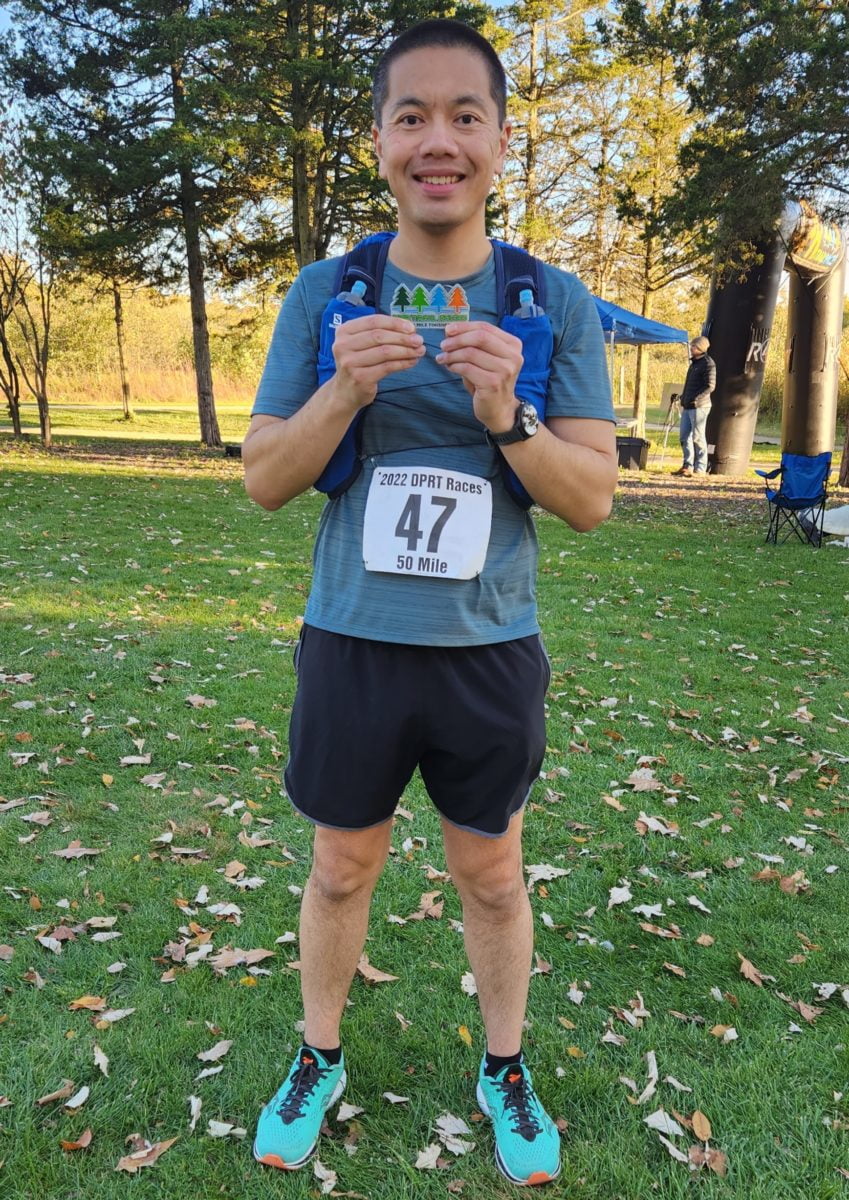
Race: Des Plaines River Trail Race (50 miles)

Runner: Vince Kwok

Race Date: 10/15/2022

Location: Vernon Hills, IL

Results: 9:52:51

Strava Activity Link: https://strava.app.link/Xd0t0lNIcub

3 Bests – What aspects of the race did you like the most?

  1. Super flat.
  2. Logistics were easy.
  3. Volunteers were friendly and helpful.

Highlights of your race – What did you do well and enjoy about your race in particular?

I prepared well all summer for this race. It’s a local race for me and so I knew the course very well. This was my first ultra and so I wanted to set myself up for success. For the first 7-8 miles, there were other runners around me but after that, I was pretty much by myself. So I just treated it like any of my other long runs. I tried to not get caught up with what other runners were doing and stuck to my gameplan. I stayed consistent, relaxed, and just kept going. At the halfway turnaround, I was able to see the runners behind me. There were a few people that I thought were ahead of me but were actually behind me. So that was a nice little surprise. I also executed my nutrition plan very well and had no stomach issues. I ran at a steady pace to around mile 35. The last 15 miles were tough but I was able to employ a “run a couple miles and then walk for a few minutes” cycle.

Most important course specific knowledge to know about the race

It’s a north-south course. From the start, you go south ~1.75 miles, turnaround, and go back north to start ~1.75 miles. Then you head north ~25 miles to halfway turnaround. They you come back to south to same start/finish point.

Aesthetics – Is it a pretty course?

It is in a forest preserve along the Des Plaines River. Most of the course is surrounded by trees. There are some open areas. Some of the leaves were starting to change colors. But I wouldn’t describe it as a pretty course.

Difficulty – Is it a tough course?

Not difficult at all. Very flat. It is crushed gravel for majority of course. Not technical at all.

Organized and well run – Did it feel like a well-oiled machine or were they flying by the seat of their pants?

Very organized and well run. Website and details about race were clear. Packet pick-up was easy (although no day before packet pick up available for out of towners; but if you stay at host hotel, you can pickup packet there). Pre-race instructions were clear. Course markings for the different distances were clear. Volunteers were great. They had porta potties at start/finish and a few other aid stations. There were also permanent bathroom structures along the course.

Competition – Is there a strong field?

It’s a small and local race in the northwest suburbs of Chicago. There were 89 people signed up and 62 finishers.

Logistics – Does it require a special handshake, registration a year in advance, hotels all booked? Give us the low down on the nuts and bolts of making the race happen.

This year the host hotel was fully booked for the first time. But I believe they provided an alternative hotel option.

Aid Stations – Standard fare or anything special to know about the aid stations in terms of what’s available or when?

Aid Stations were standard. They were about every 5 miles. This is a cupless race. They had tailwind and water.

Weather and typical race conditions

The weather was perfect. At race start (7am), it was about 33F. Around 11am, it was around 46F. The rest of the afternoon was low 50s. At the start, the ground was a little wet but it dried up after a couple hours. I heard a few years earlier, it had rained a lot. So they had to do an alternate course (6-8 mile loop) because the Des Plaines River flooded. They had to still go through large puddles of water.

Gear – Did you need anything special or is there anything you’d recommend for the next runner?

Standard gear. I used a Salomon vest with two 500 mL water bottles. Not technical so no poles or trail shoes required. I wore my Saucony Endorphin Speed 2. I chose them because they were comfortable and light.

Spectators – Is this a friendly course for your friends?

Very friendly for spectators. I had my crew meet me at one of the aid stations (mile 31.7) so I could eat some whole food and restock up on gels/bars.

How’s the Swag?

I got a belt buckle. It’s okay. The only thing I wish they added to it is the year. The shorter distance medals (50K, marathon, 1/2 marathon) looked pretty cool as the center part of the medal spinned. Also got a t-shirt.

The Overall Score – How many stars do you give this race and do you recommend that others run it?

5/5. This was a perfect first ultramarathon for me. The weather was great. The course is very flat. It was a local race so I got to practice on the course all summer. I had an awesome time!

Dam Yeti 50 Mile Race Report – Angie Moses

Race: Dam Yeti 50 Miler

Runner: Angie Moses

Race Date: 06/04/2022

Location: Abingdon, Virginia

Results: 08:10:07

Photo: schreinertrailphotography

3 Bests – What aspects of the race did you like the most?

  1. The atmosphere! Such a warm, fun, welcoming race that celebrates the fast and the slow! Everyone is supportive of one another and the energy is contagious.
  2. The scenery! You have a point to point for 30+ miles (the 55k is point to point and the 50 miler you turn around and run a section twice) and for 30 miles you have truly spectacular scenery to take in! A beautiful creek/river runs along a large portion of the course and the sounds and sights are magical! You also have a lot of tree coverage for a large portion of the race, which really helps with the long day and keeping you cooler and from burning.
  3. The overall course. Truly an excellent course for a first time ultra runner (in my opinion at least). It was my first 50 miler and I couldn’t have asked for a better course. You have a lot of downhill in the first half of the race, lots of shade. No significant climbs. All uphill was gradual and runnable. Great support at aid stations, the list goes on!

Not so much – Aspects of the race that didn’t do it for you

The only complaint I can come up with is that there wasn’t a ton of bathroom options (other than the woods) on the back half of the run. There is a bathroom at the Alvarado aid station; which you hit at mile 25 and again at 41.7– but the aid station at Watuga (that you will hit at miles 29.5, 37 and 46.5) doesn’t have a porta potty– so from 25 to 41.7 if you need to potty, your only option is the woods. I would have loved a bathroom at Watuga!

Weird factor – What’s the weirdest thing about this race?

  • There are some cattle gates, and a few gates on the Creeper Trail (Not sure I understand the purpose of the gates on the Creeper trail that doesn’t involve the cattle) that you have to open and close on the course.
  • Another weird/interesting fact is that in the first 10ish miles, you are running downhill and with this course being a rails to trails course, trains use to expend a lot of coal to make it to the top of White Top mountain– so it is cautioned that you make sure to pick up your feet in those first few miles because a fall can result in some nasty cuts/wounds with sharp coal remnants.

Highlights of your race – What did you do well and enjoy about your race in particular?

Highlight is that I ran over an hour faster than I had anticipated for my first ever 50 miler, so I couldn’t be more proud of my race. I was able to stay very strong mentally and anytime anything would start to hurt or ache I would just tell myself “of course XYZ hurts… you’re at mile XX, it’s supposed to hurt!” I was able to accept my aches and pains as normal/expected aches and pains and continue to run the entire race. I would reward myself with walk breaks on the second half, mainly to make sure I took in fluids, but mentally just allowing myself a quick 20-30 second break was a nice reward, but then I could continue to run afterwards. I was really able to bank time in the first 20ish miles or so because there was so much downhill and shade– and we had a cool start to the race, so I was able to cruise for a good while and felt good. The race director’s moto was “start fast, and who knows, you just might end fast” and I kind of loved it! 🙂 I used it as a mantra several times during the race.

Lessons for others – Share your pro-tips on the race to help the next runner

  • I think the biggest lesson I learned, I mentioned above and a lot of it is being okay with feeling not okay. It takes time and understanding your body to understand a normal/expected hurt, that you have to accept and continue to push through versus a pain/hurt that isn’t normal that you would have to decide whether or not to continue.
  • I think another thing I really took from this was maintaining a positive attitude during the race made a HUGE difference in my performance. I will admit that my mental game is one of my weakest links, so by frequently telling myself to “keep going, you are doing amazing” really did help boost my confidence and kept me moving in a run versus giving up on my abilities and succumbing to walking.
  • It is a requirement to carry a hydration system (I used a Solomon vest and carried 32 oz on me) and 500 calories with you at the start. Be smart and drink plenty because there are a few sections that you are exposed and it does get warm, so you want to make sure to stayed hydrated.
  • They keep basics at the aid stations, oranges, watermelon, salty snacks (The aid station in Damascus *I think* had a lady that had a whole table of assorted little debbies), several had vaseline, Gatorade, water, etc. It is a cupless race, and the volunteers are absolutely wonderful, so if you have your water bottle ready, you can tell them what you want, and they will fill it for you.

Aesthetics – Is it a pretty course?

It is breathtaking!

Difficulty – Is it a tough course?

I think in the grand scheme of things, when is 50 miles not difficult? 🙂 But overall, I found the course fantastic and not one I would consider difficult– especially in the world of trail running. I wore road shoes and gaiters and had absolutely no issues with my shoe choice. It is crushed gravel and the uphills are gradual. Very runnable course.

Photo: schreinertrailphotography

Organized and well run – Did it feel like a well-oiled machine or were they flying by the seat of their pants?

It is very organized. Jason Green the race director has several ultra trail races across the nation and does an absolutely fantastic job putting together a race. he has a laid back attitude, so if you didn’t know any better, you would think he’s flying by the seat of his pants, but in reality, it is a well-oiled machine that just doesn’t take itself too seriously.

Competition – Is there a strong field?

I think it depends on the year, but I think it is becoming more competitive. To put it in perspective, the race has been around since 2018, and this year I was 8th overall female and 12 overall participant. In 2018 I would have been 1st female and 6th overall, 2019 I would have been 2nd female and 7th overall, 2020 I would have been 1st female and 6th overall, and 2021 I would have been 2nd female and 4th overall. When looking at the top performances for females since the race started, 7 of the top 10 times came from this year alone! It has the potential to be very competitive, but that being said, Jason also doesn’t pick favorites or invite individuals to the race, it is first come, first serve, so whoever gets in on registration morning, that is who will be there.

Logistics – Does it require a special handshake, registration a year in advance, hotels all booked? Give us the low down on the nuts and bolts of making the race happen.

Registration opens up around the end of the year and this past year, sold out in 11 minutes, so if you are wanting in– you need to be sitting at your computer the morning the race opens up ready to pull the trigger. I would encourage booking a cabin or hotel even before you register; since you can always cancel your reservation if you don’t get in. There is a shuttle that takes you from the finish to the start if you are coming without support, so book a hotel or cabin closer to Abingdon and shuttle to the start. If you are coming with friends/family, I would encourage maybe an Airbnb of sorts in Whitetop where the start is located and then just have family drive you back to your cabin after it’s over (that’s what we did). I think this is personal preference. If you are going to want to shower and come back for the party for the day after your finish; then definitely book in Abingdon.

Aid Stations – Standard fare or anything special to know about the aid stations in terms of what’s available or when?

It is a requirement to carry a hydration system (I used a Solomon vest and carried 32 oz on me) and 500 calories with you at the start.
They keep basics at the aid stations, oranges, watermelon, salty snacks (The aid station in Damascus *I think* had a lady that had a whole table of assorted little debbies), several had vaseline, Gatorade, water, etc. It is a cupless race, and the volunteers are absolutely wonderful, so if you have your water bottle ready, you can tell them what you want, and they will fill it for you.

Weather and typical race conditions

For me the weather was wonderful. Start was colder than normal from my understanding and I’m not sure what it was at the start at the top of Whitetop but you could see your breath! It was chilly! It topped out around high 70’s for our race, but I think it can easily get in the 80’s in Virginia around that time. So expect a cooler start at the top of the mountain, but to definitely warm up at the day progresses.

Gear – Did you need anything special or is there anything you’d recommend for the next runner?

It is a requirement to carry a hydration system (I used a Solomon vest and carried 32oz on me) and 500 calories with you at the start.

Spectators – Is this a friendly course for your friends?

It is! The race guide gives you good directions and options for your friends to see you. I had my 4 year old, 2 year old, and my husband along (along with my friends husband and 2 kids since she was running as well) and we had them stop at Watuga and see us at mile 29 and 37 and then again at the finish. You can have spectators at 6 total spots (one being the finish of course)– so truly, if your spectator wants to help aid you, there are a lot of options for them to be able to help out!

How’s the Swag?

Great! Yeti Trail Runners has a ton of swag that you can purchase additionally as well on the website! The tank top we got was great! There are tons of stickers and patches at the race you can get on race day! TONS of Yeti specific gear and swag you can purchase at packet pick up if you want more than what you get in your packet. We also got Yeti Trail socks which were great as well!

I made the mistake of not selecting to get the trucker hat when I registered for an additional price and was super bummed because it was an awesome hat, so that was a rookie mistake on my part.

The Overall Score – How many stars do you give this race and do you recommend that others run it?

I would give it a 9 out of 10. I would have given it a 10 if there would have been a porta potty at Watuga! I would absolutely recommend the race to others!

Looking to run your first ultra? Check out our 7 steps to get started.

Wy’East Wonder 50 Mile Race Report – Dandelion Dilluvio-Scott

Race: Wy’East Wonder 50 Miler

Runner: Coach Dandelion Dilluvio-Scott

Race Date: 06/12/2022

Location: Parkdale, OR

Results: Overall: 67, GP: 27

3 Bests – What aspects of the race did you like the most?

  • I oddly enjoyed that there were no vistas during this year’s edition of Wy’East. It allowed me to fully focus on running instead of gawking at views which I am very prone to doing!
  • The community of racers! I met some amazing people out on the course and experienced more camaraderie than I ever have before. A racer and I spent 26 miles together and alternated who was on pacing duty. It became a team sport. She was also kind enough to help me change shirts when my hands lost dexterity due to cold and swelling.
  • I really liked the mantra I developed during my low point at mile 20. It had a different feel than any of the others I’ve used in the past and was inspired by Scott Jurek. I kept chanting “I like to hurt. I like to hurt. I like to hurt” in my head hoping I would start to believe it. I think I convinced myself!

Not so much – Aspects of the race that didn’t do it for you

The final 2-3 miles of the race was a heinously steep descent and had an incredible amount of slick mud. I’m not sure how I managed to stay upright!

Weird factor – What’s the weirdest thing about this race?

It was weird that there was an insane amount of snow on the traditional course! For this reason, the race was re-routed 7 days before we toed the line. Instead of a point to point with a small loop the course became a double loop lollipop with an short out and back. The new route added 2000+ feet of vert to the course with no change in cut-offs increasing the difficulty.

Highlights of your race – What did you do well and enjoy about your race in particular?

I am normally a conservative racer and prefer to take minimal risks out on the course. However, after examining the course changes with particular attention to the additional 2000+ft of vert I decided I had two choices. The first option was to play it safe and run like I normally do which would likely result in flirting with cut-offs. Stressful. The other option was to race out of my comfort-zone and take risks in order to not be against cut-offs while still running smart. Also, stressful! After contemplation I decided to use the re-route as an opportunity to challenge myself to run harder and take more risks than I ever have in a race. Approaching the course with this mindset was the highlight for me.

Lessons for others – Share your pro-tips on the race to help the next runner

Wearing split shorts on a wind blasted, frigid ridge was not the optimal choice! Otherwise, there is not a lot of flat terrain on the course. You are either going up or down. This includes steep grades, rolling terrain and some long gentle inclines.

Lessons you learned that will help you next time around

I learned how to adapt mentally to course re-routes. When I examined the course changes and discovered that I would almost be running a completely different and much harder race than I’d signed up for I was petrified. I felt under-prepared and under-trained for the event and fixated on that for about 24 hours. However, dwelling on this fact wasn’t helping me, so I decided to focus on the training I did have, my cumulative mountain experience and looking at this race as an opportunity to dig deeper than I ever have. I left the notion of the previous course behind completely and focused on strategizing for the new challenge.

Most important course specific knowledge to know about the race

That descent to the finish is STEEP and it is also on the traditional course. I suggest leaving poles in the final drop bag.

Aesthetics – Is it a pretty course?

I did get a short glimpse of Mount Hood and I suspect that under clear skies the mountain views are incredible from the ridge. The forest running is lovely this time of year with the vibrant green understory and the open meadow at the beginning/end of the course was freckled with colorful wildflowers.

Difficulty – Is it a tough course?

The terrain is not technical, except for the mud! However, I would say that this year the course was difficult. The additional vert with no change in cut-offs combined with the adverse weather conditions made this race gnarly in all the best ways.

Organized and well run – Did it feel like a well-oiled machine or were they flying by the seat of their pants?

Wy’East Wonder was extremely well organized. This is impressive considering the major re-route that occurred just a week before the start. It is also worth noting that the race directors took the time and effort to re-route the course instead of cancelling it. This was incredibly generous and kind of them!

Competition – Is there a strong field?

Yes! Elite runners competed in this race which was awesome to briefly witness during the out and back.

Logistics – Does it require a special handshake, registration a year in advance, hotels all booked? Give us the low down on the nuts and bolts of making the race happen.

I signed up right when the registration opened. It didn’t fill overnight, but it didn’t take long to fill (maybe 2 months?). It’s a popular race so the earlier you sign up the better. Campgrounds fill quickly on summer weekends so booking those well in advance in also recommended.

Aid Stations – Standard fare or anything special to know about the aid stations in terms of what’s available or when?

The aid station fare seemed standard to me, though I did not partake in anything except water. Volunteers were always available to help with anything and everything. One volunteer was kind enough to pick up the sock I dropped because there was a real danger of me never straightening back out again if I bent over at mile 40!

Weather and typical race conditions

This race is known for being a pleasant late spring race with stunning views of Mt. Hood. This weekend’s race felt was more reminiscent of stormy November. The forecast featured freezing rain, thick mist, blustery wind and cold temperatures. Very different!

Gear – Did you need anything special or is there anything you’d recommend for the next runner?

Poles would have been awesome during the final steep descent to take some pressure off the legs and keep balance in the slippery mud.

Spectators – Is this a friendly course for your friends?

It is somewhat spectator friendly. A shuttle needs to be taken to the start/finish. This is true even without the re-route. Spectators/crew can also meet racers at the Aqueduct Aid Station. This year racers passed through three times. On the traditional course runners come through two times.

How’s the Swag?

The swag is a traditional tech t-shirt and they also provided an assortment of stickers. There is no metal for this race. Finishers are given a glass of water with the race name etched in at the finish.

The Overall Score – How many stars do you give this race and do you recommend that others run it?

I’d give this race a 10/10! Keep in mind I am judging this by the re-route and not the traditional course.

Dandelion Dilluvio-Scott is a coach with Team RunRun. To learn more about her or to work with Coach Dandelion, check out her coaching page.

Bryce Canyon Ultras – 50 Mile Race Report – Dandelion Dilluvio-Scott

Race: Bryce Canyon Ultras- 50 Miler

Runner: Coach Dandelion Dilluvio-Scott

Race Date: 05/29/2021

Location: Hatch, UT

Results: Overall: 195 / GP: 70

Photo: Dandelion Dilluvio-Scott

3 Bests – What aspects of the race did you like the most?

  • The scenery! Running through towering orange hoodoos and vibrant Red Canyon were definitely highlights of this race. The landscape of South Utah is outstanding and truly unique.
  • Only one cut off! I appreciated that this race only had one “aid station cut-off” at mile 36.7 (second pass through of Red Canyon Aid Station). This removed a great deal of stress. In addition, the generous overall time limit of 17.5 hours allowed for ample picture taking and maximum scenery enjoyment.
  • The environment! I personally love the physiological challenge of running in both high temperatures and high elevation. Although the Bryce Canyon 50 Miler is not what I would consider extreme in these traits, it did feature respectable heat and altitude which added an extra degree of difficulty to the course.

Not so much – Aspects of the race that didn’t do it for you

There was a significant bottleneck in the beginning of the race during the first substantial climb. I remember waiting in a huge line spread out for over at least a mile as we trudged up this steep ascent. I believe this was the result of having multiple race distances with large fields using the same section of the course without adequate staggering of the start times.

Weird factor – What’s the weirdest thing about this race?

Our legs turned orange/red from the vibrantly colored dust!

Highlights of your race – What did you do well and enjoy about your race in particular?

I had a personal “beware the chair” and “only sit on the ground to change socks” rule when I began this race. Why the rules? I have found that a debilitating stiffness sets in if I sit in on a raised object during a long-distance run and hoped to avoid this affliction. I stuck with these self-imposed restrictions throughout the distance and my muscles never suffered the Tin-man effect. There were definitely times when I felt like the comfy aid station camp chairs were calling out to me though!

Additionally, I was happy with my pace. My goal was to simply finish the race and thoroughly enjoy the experience of moving efficiently through the spectacular landscape. I didn’t worry much about my place in the pack and I also walked a fair amount during the hottest part of the day to avoid heat illness. Keeping my pace in check during the heat of the day resulted in strength reserves that allowed to me pick up my pace considerably once the sun went down and finish strong.

Lessons for others – Share your pro-tips on the race to help the next runner

  • This race is hot and exposed! Carry more water than you think you’ll need especially between miles 24.5 and 32.4. This section has absolutely stunning and magnificent orange hoodoos, but it is so very toasty! Lots of racers ran out of the water here.
  • Along the same lines, there is a five-mile loop section that departs the Red Canyon Aid Station. Many racers, including myself, thought this would be a quick five-mile jaunt. We should have been tipped off by the haggard faces of the racers who had already gone through that section of the course! Ascending through the red rock formations felt like climbing through a furnace. Everything slowed down in the Red Canyon and we were not prepared for it mentally.
  • Finally, this race has a rolling start and, therefore, the cut off time at the finish is also rolling. Do not rely on volunteers at aid stations to tell you how much time you have left. It is different for everyone.

Lessons you learned that will help you next time around

I knew it would be hot, but since I have a history of performing decently in warm temperatures I focused more on fitness during my training. I managed the heat well, but I would put effort into specific heat training for this course in the future. Running miles of exposed dirt roads and through radiating rock formations amplified the “toasty” factor. Heat training would have likely allowed me to finish the race with a faster time.

Most important course specific knowledge to know about the race

You will turn red! Other than that, the race can be very hot and heat training is likely worth the effort. Also, be prepared for crowded sections in the beginning of the race.

Aesthetics – Is it a pretty course?

The course is absolutely stunning. The race is a wonderful way to explore many miles of Southern Utah’s majestic landscape. Completing the course self-supported with be tricky with the lack of water sources, so the race is a wonderful solution!

Difficulty – Is it a tough course?

The terrain isn’t technical in my opinion. However, the heat and exposure can make even easy terrain feel challenging.

Organized and well run – Did it feel like a well-oiled machine or were they flying by the seat of their pants?

The race was very well organized, though there were some issues worth noting:

  • I think communication prior to the race could be improved. I sent an email or two with simple inquiries and never got a response.
  • Though it did not affect me directly, perhaps the biggest problem became evident after the race. A huge chunk of racers, including some I know, from all distances signed onto their accounts the following day to see inaccurate DNF’s listed by their names on the results. This is a disheartening thing for racers to wake up too and caused many runners to question if they made the cut off. It turned out that the system was never changed to accommodate the rolling start which was new in 2021. I learned this from race staff when I returned to the course in search of an explanation. The results were corrected by the end of the weekend, but racers never received an email explaining that there had been a technical error or any apology which was disappointing.

Competition – Is there a strong field?

The field was indeed strong and impressive times were posted!

Logistics – Does it require a special handshake, registration a year in advance, hotels all booked? Give us the low down on the nuts and bolts of making the race happen.

Since this race takes place on Memorial Day weekend near Bryce Canyon National Park, it is definitely advisable to plan your lodging well in advance. The race does not fill fast and there are still spots available now many months after registration opened. In 2021 there were no qualifiers, but in 2022 anyone entering the 50 miler must have completed a marathon or longer race within the past two years.

Aid Stations – Standard fare or anything special to know about the aid stations in terms of what’s available or when?

Standard fare at the “full aid stations”. There are a few aid stations that are simply self-serve water tanks. One of these self- serve water tanks leaked (and I think it might have completely drained). Luckily, a truck with jugs of water was sent out swiftly to provide water to the racers and was there by the time I arrived. I’m not sure how common this is, but I’m not sure I would rely on these tanks as a water source in the future.

Weather and typical race conditions

We experienced typical race conditions. Hot (up to 95 degrees), dry, exposed and dusty.

Gear – Did you need anything special or is there anything you’d recommend for the next runner?

Gaiters are a must for this race along with shoes with a tightly woven fabric to keep out the sand. I would also suggest having the means to carry more water than you think you’ll need.

Spectators – Is this a friendly course for your friends?

It is very easy for spectators or crew to access the start/end and the Red Canyon Aid Station.

How’s the Swag?

Great swag! A shirt and metal, along with lots of add on merchandise at bib pick up.

The Overall Score – How many stars do you give this race and do you recommend that others run it?

This is beautiful course and it provides a unique opportunity to have a memorable adventure near Bryce Canyon National Park. 8/10

Dandelion is a coach with Team RunRun. To learn more about her or to work with her, check out her coaching page.

Capitol Peak 50 Mile Race Report – Nick Keenan

Race: Capitol Peak 50 miler

Runner: Nick Keenan

Race Date: 04/23/2022

Location: Capital Forest near Olympia, WA

Results: 10:20:45

Strava Activity Link: https://www.strava.com/activities/7030596962/overview

Photo: Calvin Kuo

3 Bests – What aspects of the race did you like the most?

  • Course — beautiful, varying terrain and flora, trail was in great condition, and amazing views and overlooks. Very little forest-road as part of the course. Snow on the course!
  • Great race management, volunteers and aid stations — RD was amazing. Volunteers knew what they were doing and were encouraging. Aid stations were well stocked and had a great variety.
  • Easy to get to, and economically priced – thirty minutes SW from Olympia, on well maintained forest roads. $50 for a 50 miler?! No short-cuts taken by the RD, it was well done.

Not so much – Aspects of the race that didn’t do it for you

  • It’s a working forest, so there are sections of clear-cut timber.
  • It’s a multi-use forest, so there was shooting-range noises and motorbikes
  • There was an overlap section with the 25k racers, where they were going downhill and the 50 milers are going uphill — overlapping for several miles (and you as the 50 miler interrupt your climb to step to the side to let them by)

Weird factor – What’s the weirdest thing about this race?

A foot of snow for a few miles, RD told us about it the week before, but surprising to find that much at 2600′ in late-April!

Highlights of your race – What did you do well and enjoy about your race in particular?

Parts of the course you could see for miles — see the next part of the course wayyyy over in the distance, great view of Mt Rainier and the surrounding area.

Lessons for others – Share your pro-tips on the race to help the next runner

  • It’s a runnable course, with only one longish climb.
  • Run your own race the first 20-mile section.
  • Save something for the mostly-downhill final 7 miles of the course.
  • Temperature varies on the course quite a bit – exposed clear-cut areas, northern side of the ‘peak’ with snow, shadowy forest sections, etc.

Lessons you learned that will help you next time around

  • Be faster at the aid station at mile 20, which is the starting line — I had stuff in my car, so I had to get my keys out, and it took too much time.
  • Bring sun protection – some pretty exposed areas.
  • I didn’t use poles — not sure if the one long climb makes them worthwhile.

Most important course specific knowledge to know about the race

  • Not much aid the first 20 miles – water only at mile 6.
  • Miles 27-43 are mostly flat / rolling, with an out-and-back 9 mile section which is nice to get a snapshot of where other runners are relative to you — before starting the 7 mile descent to the finish. 6 AM start had plenty of daylight to not need a headlamp.

Aesthetics – Is it a pretty course?

Really pretty. Mossy old growth forest, streams, drier bushy slopes, great overlooks and views of the surrounding area.

Difficulty – Is it a tough course?

~7,000 climbing. Trail is relatively well groomed, with few roots and rocks to watch for. Most downhills were gradual and very runnable.

Organized and well run – Did it feel like a well-oiled machine or were they flying by the seat of their pants?

Really well organized. Brief pre-race meeting 5 minutes before the start. Well marked course. Great volunteers. 6 AM start.

Competition – Is there a strong field?

Small 50 mile field — 35 finishers, 9 DNF, 9 DNS. 73 25k racers who start at 9 AM.

Logistics – Does it require a special handshake, registration a year in advance, hotels all booked? Give us the low down on the nuts and bolts of making the race happen.

Camping available at the start – plenty of space. Well maintained forest roads to get there.

Aid Stations – Standard fare or anything special to know about the aid stations in terms of what’s available or when?

Standard stuff.

Weather and typical race conditions

April in the PNW, lucked out with no rain.

Gear – Did you need anything special or is there anything you’d recommend for the next runner?

Need to carry water & calories for the first 15.5 miles. Otherwise, aid stations 3-6 miles apart.

Spectators – Is this a friendly course for your friends?

Not really.

How’s the Swag?

Not much.

The Overall Score – How many stars do you give this race and do you recommend that others run it?
4.5 stars.

Thinking about running your first ultra? Check out our 7 steps to get started.

Bull Run Run 50 Mile Race Report – Meagan Denman

Race: Bull Run Run 50 miler

Runner: Meagan Denman

Race Date: 04/09/2022

Location: Clifton, VA

Results: 3rd overall female

3 Bests – What aspects of the race did you like the most?

  • Trails are in great condition and not overly technical
  • Volunteers were very nice and helpful
  • Very well marked course – never felt lost!

Not so much – Aspects of the race that didn’t do it for you

Finish line was under-whelming

Weird factor – What’s the weirdest thing about this race?

That it’s not actually 50 miles! maybe 46? We did the high water course due to all the rain all week, we were told it would be about two miles shorter, but seems we were closer to 46.

Highlights of your race – What did you do well and enjoy about your race in particular?

I finally fell into a groove after a couple of hours and was able to enjoy that I was finally participating in a 50 mile race, and would actually finish!

Lessons for others – Share your pro-tips on the race to help the next runner

The hills on the way back are pretty brutal, save some energy and keep fueling!

Lessons you learned that will help you next time around

Gummies/gels aren’t substantial enough for 9+ hours of running…need to find a way to eat more calorie dense food.

Most important course specific knowledge to know about the race

The rocks along the river at the end are the worst part of the race. The Do-loop is actually not that bad. The course is VERY well marked.

Aesthetics – Is it a pretty course?

The bluebells are very pretty, otherwise it’s early April and not much is growing. Still pretty woods though.

Difficulty – Is it a tough course?

There are technical sections but it’s a fairly runnable course.

Organized and well run – Did it feel like a well-oiled machine or were they flying by the seat of their pants?

Definitely well run race. I didn’t have anyone come with me – we had drop bags we could access at 3 points throughout the race. They’ve been doing this race for years so they have it nailed down.

Competition – Is there a strong field?

It didn’t seem overly competitive but most likely has years that are competitive.

Logistics – Does it require a special handshake, registration a year in advance, hotels all booked? Give us the low down on the nuts and bolts of making the race happen.

Very easy to get in! There was a waitlist at some point but they cleared it and re-opened registration.

Aid Stations – Standard fare or anything special to know about the aid stations in terms of what’s available or when?

Gatorade was the electrolyte option, otherwise normal aid station type stuff (soup, fruit, bagels etc.)

Weather and typical race conditions

The weather was perfect, started in low 40’s ended in low 50’s. Partly sunny, breezy. The weather can vary though due to spring, could be cold or hot.

Gear – Did you need anything special or is there anything you’d recommend for the next runner?

Nothing special needed, except trail shoes that do well in mud!

Spectators – Is this a friendly course for your friends?

There are plenty of spots that spectators can access folks (there weren’t any spectators though)

How’s the Swag?

Nice finishers sweatshirts!

The Overall Score – How many stars do you give this race and do you recommend that others run it?

I’d rank it a 4 – mostly because I finished 3rd and had to ask someone how I did ..no one seemed overly excited about it. To me top 3 is a big deal! Not even sure if they do prizes for top 3.

Looking to run your first ultra? Check out our 7 steps to get started!

Badger Mountain Challenge 50 Race Report – Annika Brubaker

Photo : FotoRuby

Race: Badger Mountain Challenge 50 miler

Runner: Coach Annika Brubaker

Race Date: 03/25/2022

Location: Kennewick, WA

Results: https://ultrasignup.com/results_event.aspx?did=86938#id1472793

3 Bests – What aspects of the race did you like the most?

  1. The race very affordable; definitely worth more than you pay.
  2. Aid-stations are stocked with lots of goodies
  3. The race is in the middle of town so easy to access for runners, crew & support (cell service the entire time).

Not so much – Aspects of the race that didn’t do it for you

There was not port-a-potties at every aid-station. Being 5mons pregnant this made many miles very comfortable! This race is in the desert so no good places to “hind behind”. take advantage of the ones you see!

Weird factor – What’s the weirdest thing about this race?

Since the race is desert terrain, all the course marking are at ground level. Most are little flags stuck in the sand, on rocks and a few clipped to sage bushes. As runners we look a head and not down… so it’s easy to miss markings/turns if you don’t pay attention(and look down)! There are reflective flags at night so head lamps are a must. Many runners get lost and miss turns because they don’t pay attention.

Highlights of your race – What did you do well and enjoy about your race in particular?

Nutrition aka fuel – One of my big concerns doing this race pregnant was getting in enough calories & hydration. I started practicing this months ahead and planned out “race day fuel” the week before. I planned to take in 60g of carbohydrates + 5-10g of protein per hour. For food- Picky bars, Honey stinger waffles, chews, peanut butter pretzels, and “fuel for fire” fruit smoothie pouches. For hydration- Nuun Endurance and Nuun electrolyte(200mg sodium very 1/1.5hrs). I carried enough fuel for the amount of hours it took me to restock at my drop bag(McBee miles 19&31). I also got (real) food from the aid-stations. I did very minimal caffeine and spaced throughout the day. I never hit a wall, major fatigue or mental exhaustion!! I finished feeling really good and strong(14:34). I’m so glad I did this race with the goal to finish and not push; it gave me the opportunity to focus on nutrition and the importance of being well fueled! This was a HUGE win for me!!

Lessons for others – Share your pro-tips on the race to help the next runner

Extra socks, more socks and socks!! You’ll will go through the “jeep trails” filled with sand or moon dust plus the single track part can be really dusty. It will eat your feet up! Pack baby wipes, salve (Happie Toes by squirrel’s nut butter) and lots of socks. MAKE the time to take care of your feet!

Lessons you learned that will help you next time around

The climb of McBee about mile 20 and steep (just over 1,000ft in less than a mile) take your time. The ridge line out to ChandlerButte is really rocky and technical. It will take longer than you think; especially if you’re doing at night (100milers). Watch your step, use hiking poles(several fell on this part).

Most important course specific knowledge to know about the race

  • Plan for wind, strong wind! (more on this later in the weather info)
  • Watch for course markings about a foot off the ground!
  • You’ll go through a culvert that gets really dark. Pull out your light; doesn’t last long but you don’t want to fall!

Aesthetics – Is it a pretty course?

It’s a beauty within its own… lots of desert, sage brush, vineyards, apple orchards and farm land. The scenery changes as the course does so that keep things more interesting. Lots of spring beauty being the end of March.

Difficulty – Is it a tough course?

  • Yes and No.. there are some easy sections that are very runnable & fun. A few miles on paved road and a nice gravel section through the “endless vineyards”. There are some technical, hard parts that you’ll hike/walk. This course is very unique in how it changes and varies along the route.
  • The 50 mile is basically an out & back loop. For the 100 mile, you do it twice. In some ways it would be nice to know what’s coming but could be mentally challenging doing it twice.

Organized and well run – Did it feel like a well-oiled machine or were they flying by the seat of their pants?

YES! A lot of the volunteers return each year and know how to run the aid-stations. Start/Finish area(Badger Mt park) had lots of help/volunteers at check-in for drop bags and to answer questions. It seems each person knows there job and how to do it! I had some of the most lovely, encouraging volunteers at the aid- stations. RD does a great job planning this race! Keep in mind there’s 100, 50, 55k & 15k distances in two days.

Competition – Is there a strong field?

I wasn’t competing so I can’t speak for this. There’s usually some speedy people and plenty of people that hike/walk it. It is a smaller race and the only ultra race in Eastern Washington. The 100 mile is a UTMB qualifier!

Logistics – Does it require a special handshake, registration a year in advance, hotels all booked? Give us the low down on the nuts and bolts of making the race happen.

This race smaller and still somewhat unknown. There seems to be plenty of registration spaces available for the ultra distances. With this race being “in-town” there are lots of hotels close by. A few camping places are available at Badger Mt park start/finish area

Aid Stations – Standard fare or anything special to know about the aid stations in terms of what’s available or when?

Located every 3-7 miles You’re in for a treat with the aid stations! Lots of good snacks & drink options at each station plus good food to sit down and warmup.
McBee station has delicious Avocado, Turkey wraps and soup. I believe all the other ones offer soup & quesadillas. There’s no skipping on the food! You may also find beer if you know who to ask 😉

Weather and typical race conditions

Spring time in the Tri-Cities can have awful wind. You’re better off being prepared for wind and count your blessings if it’s not too bad. There is NO protection from the elements. It can be hot during the day(70s) with full sun; pack sunscreen & a hat. It can also be chilly at start/finish(high 30s)cold(low 30’s) during the night for the 100miles. Pack layers and plan for all weather; spring weather in the Tri can be crazy!

Gear – Did you need anything special or is there anything you’d recommend for the next runner?

  • Gators covering your shoes help to keep the sand/dirt out(it will still creep in tho).
  • Hiking poles can be helpful in parts on the course but many places you’ll just carry them.
  • Hydration pack for water as it can get really hot during the day. Given the terrain you maybe awhile in between stations for water.

Spectators – Is this a friendly course for your friends?

Yes, lot of good places to come cheer on runners! Crew is not allowed at Jacobs Rd station anymore but there are plenty of other places. There are additional places to pull off the road and check on your runner plus the aid stations.

How’s the Swag?

  • 50 miler – a nice medal and maybe a stuffed badger if you have an extra hard day 😉
  • 100 miler- custom belt buckle, tech fabric shirt and 100 miler hoodie
  • nothing over the top; also a swag bag at packet pickup

The Overall Score – How many stars do you give this race and do you recommend that others run it?

9/10 – It’s worth traveling to this race and experiencing the unique course in town but yet out in the desert!

Annika Brubaker is a coach with Team RunRun. To learn more about her or to work with Coach Annika, check out her coaching page.

Photo: FotoRuby

Olympic Mountains 50 mile Race Report – Nick Keenan

Race: Olympic Mountains 50 mile

Runner: Nick Keenan

Race Date: 09/11/2021

Location: Quilcene, WA

Results: https://ultrasignup.com/results_event.aspx?did=79802#id58330

Strava Activity Link: https://www.strava.com/activities/5945441344/overview

3 Bests – What aspects of the race did you like the most?

  • Beautiful, challenging course, with a mixture of terrain and lots of climbing
  • Well stocked aid-stations and excellent volunteers
  • Small field (30 runners), but overlaps with 50k runners (57 runners) later on the course and timed well to have new people to run along with

Not so much – Aspects of the race that didn’t do it for you

Last two miles was on forest roads, no signage, no fan-fare. Finish-line was great, but I had no idea how much longer until the final turn and finish.

Weird factor – What’s the weirdest thing about this race?

  • There’s an out-and-back part that almost goes to Mt Townsend’s summit.
  • You repeat a ~nine mile loop that is ~4 miles forest road, at least it’s mostly downhill, otherwise is a bit disappointing given the amount of trails (and the skipped summitting opportunity of Mt Townsend)

Highlights of your race – What did you do well and enjoy about your race in particular?

Loved the small field. Loved the camping at the starting-line. Loved the wooden coaster that is etched wood of the race’s course and logo.

Lessons for others – Share your pro-tips on the race to help the next runner

  • Only two aid stations the first 20.8 miles. Plan accordingly.
  • Bring poles. The long climbs make their use worthwhile, and you can stow for the long descents.
  • Be aware of the 50k runners out on the course – it was a bit of a surprise for me, but not in a bad way.
  • The Deadfall climb, which you do twice, is tough. Your quads will be tested by the 1.5 mile, 1k ft descent, and then further tested by the 3.5 mile, 800 ft forest road descent.

Lessons you learned that will help you next time around

  • The last aid station is five miles from the finish. It’s flat. It’s runnable. You probably ran down from Mt Zion too quickly, but you can do it.
  • Also, bring an extra 8 oz of water for those first two 10-mile spaced aid stations, especially for miles 10-20, as it will take longer than you think.

Most important course specific knowledge to know about the race

There are a few longish stretches of forest road. Miles 16.5 to 20.3 is all road and about 1k ft of climbing – a great chance to get some calories in and power hike. You can really make some good time by having legs for the downhill road to Mt Zion (twice).

Aesthetics – Is it a pretty course?

Pretty. Great time of year in the eastern Olympics. Trails you probably wouldn’t otherwise run or hike on.

Difficulty – Is it a tough course?

14k gain and loss. Footing was pretty straight forward. No water crossings.

Organized and well run – Did it feel like a well-oiled machine or were they flying by the seat of their pants?

Well organized. Excellent volunteers at aid stations. Well marked.

Competition – Is there a strong field?

Small field. A bit confusing when the course merged with the 50k course, as the bib font color was the distinction for 50M and 50k runners.

Logistics – Does it require a special handshake, registration a year in advance, hotels all booked? Give us the low down on the nuts and bolts of making the race happen.

A bit of a drive on forest roads to the starting line, and no cell coverage there, so have a map or at least the turns saved. Getting out was tough for me, as I was tired and didn’t recall the drive in. Dirt camping at the start was simple but great.

Aid Stations – Standard fare or anything special to know about the aid stations in terms of what’s available or when?

Standard stuff, well equipped.

Weather and typical race conditions

Early September in the PNW. Got dumping rain the night before, had a few minutes of light sprinkles during the race, otherwise dry.

Gear – Did you need anything special or is there anything you’d recommend for the next runner?

  • Poles
  • No real traction needs for shoes – I wore my Altra road shoes.
  • The ability to carry 10 miles of water/fluids (for me ~40 oz)

Spectators – Is this a friendly course for your friends?

Road access at a few points.

How’s the Swag?

Beautiful and unique race map etched wood coaster. Amazing 1st place finisher awards as well.

The Overall Score – How many stars do you give this race and do you recommend that others run it?

Four and a half stars. Highly recommend the 50M and 50K if you want vert, and to experience beautiful Olympic Mt trails not far from Seattle.

Looking to run your first ultra? Check out our 7 steps to get started!

Razorback Running Revival Race Report – Eric McCulley

Race: Razorback Running Revival 50M/55k/10M

Runner: Eric McCulley

Race Date: 11/06/2021

Location: Lake Fort Smith, Mountainburg, Arkansas

Results: DFL

3 Bests – What aspects of the race did you like the most?

  1. The founder and the race director were both very hands on with the race.
  2. The course was exceptionally well marked.
  3. If you want to be challenged physically and mentally, this course will do it and take a lot out of you before the finish line, but there’s a lot of great scenery along the way.

Not so much – Aspects of the race that didn’t do it for you

The only thing I can think of is the food selection at the aid stations was very little. I was really hoping for some soup especially, but none was there.

Weird factor – What’s the weirdest thing about this race?

I don’t know if this is recommended or not, but the river water was clear enough, and in my opinion, pure enough to drink without filtration. I personally filled my handheld 3 times with the river water and gulped it right down. It was better than most city water.

Highlights of your race – What did you do well and enjoy about your race in particular?

I saw several baby blue racers which I found interesting. I didn’t want an easy race, and boy did I get my wish on that one. All the people I talked to were very upbeat and positive. No one seemed to regret doing the race or had a bad thing to say about the race or the directors of the race.

Lessons for others – Share your pro-tips on the race to help the next runner

I have 2 strong suggestions here, and mind you, this was my first ultra, and my first technical trail race, so take it for what it is worth.

  1. If you know there will be water crossings during the race, make sure your shoes are up for it. Mine weren’t. I ran in Saucony Periguins. The traction was good, and so was the toe protection. But the insoles fell apart after the first river crossing.
  2. What ever nutrition you think you need to take with you, double or even triple that amount. It may only be 8 to 10 miles between aid stations, but that is hours of time.

Lessons you learned that will help you next time around

Most of this is in the lesson for others, but I would also add, either plan to stay overnight after the race or find someone to go with to drive, especially if hours away from home. I was 9 hours away, and a driver would have allowed me to sleep on the way home.

Most important course specific knowledge to know about the race

It has steep ups and steep downs with lots of rocks and multiple water crossings.

Aesthetics – Is it a pretty course?

There is a huge lake there with waterfall. The park is clean, and everything was easily accessible except the finish line.

Difficulty – Is it a tough course?

This course is very difficult, mostly single track, rocky, and has several steep inclines and declines. It may not be Mount Everest or whatever, but it is still a mountain race nonetheless.

Organized and well run – Did it feel like a well-oiled machine or were they flying by the seat of their pants?

John and Emily very much know what they’re doing. They’re not necessarily going to babysit you and hold your hand, but they’ll make sure the race starts on time, get the drop bags to their locations, have the volunteers organized and be waiting for you at the finish line.

Competition – Is there a strong field?

The field seemed to be a mixed bag of strong experienced runners to beginners like me. It wasn’t a huge field, but as people go, it was a quality field.

Logistics – Does it require a special handshake, registration a year in advance, hotels all booked? Give us the low down on the nuts and bolts of making the race happen.

To get in the race, simply go to Ultrasignup.com or Google Razorback Running Revival and you’ll find it. Accommodations seem like they’re bountiful enough, but I didn’t look too much into it, as I had planned to dirtbag it the entire time.

Aid Stations – Standard fare or anything special to know about the aid stations in terms of what’s available or when?

Aid stations were nothing special at all. After spending years listening to runners on podcasts talk about the aid station smorgasbords, this is the one area I was disappointed.

Weather and typical race conditions

This year the weather was beautiful. It started around 37 degrees. Got a little warm in the afternoon. I heard some say the mid 60s. But overall, no rain or snow or wind, so it was a great day on the trail.

Gear – Did you need anything special or is there anything you’d recommend for the next runner?

Typical trail gear will get you through this race fine.

Spectators – Is this a friendly course for your friends?

No. This is definitely not a spectator friendly race.

How’s the Razorback Revival Swag?

I think the swag is great. I got a t-shirt, a collapsible cup, a tin coffee mug, a wristband, a small towel or neck wrap (not sure what it’s called), a couple of stickers, and a water bottle.

The Overall Score – How many stars do you give this race and do you recommend that others run it?

If I were to score the Razorback Running Revival on a 5 star rating, I would give it a solid 4.8 stars.