Results: 12 Hours of Mt. Pisgah laps! (1100’/ 3 miles per lap)
3 Bests – What aspects of the race did you like the most?
The community: both the intersection of people from different backgrounds and experience in running, as well as the camaraderie as you pass back and forth and cheer each other on all day. It is a unique and uplifting experience watching people get PRs in distance and elevation all throughout the day, and learning the reasons people are there.
I got to not only participate myself but also alongside some of the runners I coach, and that was very special. Having helped them prepare for this event and also be there in real life to witness and support them was awesome.
A friend and former running client brought his son (11 years old) to the event to participate. His son continued even when his dad paused his laps, on his own. He was so proud to be out there crushing it on his own. That was inspiring to see and gave me so much hope to see a kiddo out there experiencing what we all hope to experience at races.
Not so much – Aspects of the race that didn’t do it for you
Not a thing. Beautiful day.
Weird factor – What’s the weirdest thing about this race?
Up and down the same hill over and over and over? It’s become more popular and normalized to do such a thing. It’s no longer weird. A cool thing though? After 10 laps (11,000′, 31 miles) you got a bolo tie with a buckle. That was new this year and very cool. It motivated a LOT of people!
Sporting the bolo tie!
Highlights of your race – What did you do well and enjoy about your race in particular?
My throat is so sore from cheering all day long- all the whoops and whewwws and YEAHs! Being overwhelmingly positive and supportive of my fellow racers made the day even better, and I received it right back. I went in this year less competitive than last year- not competitive in fact. My goals were to get a lot of vert, be aware of my hip (I injured it last year and have been rehabbing it), and enjoy doing laps with others. Success on all goals!
Lessons for others – Share your pro-tips on the race to help the next runner
Set multiple goals for the day, that are not only related to performance but also experience! Also, make sure you eat and hydrate consistently. Pace yourself. Don’t sit down for too long!
Lessons you learned that will help you next time around
I did not stay on top of hydration during the first couple of laps- it was cold, which it usually is to start, and I struggle to hydrate enough in the cold. I could have done better at this!
Most important course specific knowledge to know about the race
The course is mostly on a packed dirt/gravel road, with sections of looser gravel and dirt trail near the top. The downhill can be hard on your joints, so be aware of that. At the summit is a bin of ducks – you grab one to bring down to the bottom with you as proof of your lap! Also, the course starts/ends at the bottom of the hill where everyone parks- so you can have your car pretty close by to use as an aid station, so you don’t need to carry too much.
Gotta prove you did the lap!
Aesthetics – Is it a pretty course?
Though on repeat all day, the views from the top are beautiful! On a clear day, snow-capped peaks are visible, and sunrise is a total moment- people hang out on top to watch it.
Difficulty – Is it a tough course?
1100′ in 1.5 miles is stout both up and down!
Organized and well run – Did it feel like a well-oiled machine or were they flying by the seat of their pants?
Very well run the two years it has taken place. Everything was dialed.
Competition – Is there a strong field?
There are always some heavy hitters who go for huge numbers- 45+ miles, over 16,000′ of vert for the podium positions. There is no winning or losing in this event though – it is what you make of it, and every lap is meaningful.
Photo: Jake-Southard-Visuals-@jakesouthardvisuals
Logistics – Does it require a special handshake, registration a year in advance, hotels all booked? Give us the low down on the nuts and bolts of making the race happen.
Registration is in advance and capped to a limited amount, and it sold out this year! Keep an eye on the Recovery Strong social media handle for information on future events; they are the main sponsor of the event.
Aid Stations – Standard fare or anything special to know about the aid stations in terms of what’s available or when?
There is a limited aid station at the start/finish, but bringing your own fuel and hydration and operating out of your car makes it really easy for this event.
Photo: Jake-Southard-Visuals-@jakesouthardvisuals
Weather and typical race conditions
The weather is typically chilly to start (20’s and 30’s), warming up throughout the day into the 40’s.
Gear – Did you need anything special or is there anything you’d recommend for the next runner?
Although I never busted mine out, poles are helpful. Don’t forget a headlamp like I did for the first 90 minutes!
Spectators – Is this a friendly course for your friends?
It’s a great course for family or friends to come out and join for a lap or two, or they can hike the numerous other trails in the park.
How’s the Swag?
Amazing. T-shirts and stickers for participants, a bolo tie and buckle for 10 laps, and winner plaques.
The Overall Score – How many stars do you give this race and do you recommend that others run it?
5 stars.
Photo: Jake-Southard-Visuals-@jakesouthardvisuals
Emily Keddie is a coach at Team RunRun. To learn more about her or to work with her, check out her coach profile.
3 Bests – What aspects of the race did you like the most?
I absolutely love the small town vibes and the scenery of the race. The race is set out in farming country in Turner, OR, just south of Salem. Often times in January it is either raining, sunny, or at times even snowy. This year, it was 30 degrees and sunny at the start!
Each race is very flat. The course is a very simple out and back, and the lack of turns makes it very easy to maintain your pace without having to exert additional effort.
Competition! This race is usually very competitive for the faster runners, but still has runners competing of all abilities so that you are not alone during the event.
Not so much – Aspects of the race that didn’t do it for you
My one pain point- lack of porto potties on the course. They have 2 porto potties set up approximately 2 miles in, and then at the turn around point at 6.5 miles. You hit the porto potty again at 11 miles. I had an incident where nature called, and I had to hobble a couple miles until I reached the 11 mile porto potty. That was the only part of the race that did not do it for me!
Weird factor – What’s the weirdest thing about this race?
The “Weird” factor (But in a great way!)- They serve post race baked potatoes, chili, and tortilla chips! After spending a lot of time in the cold for the half marathon, it made for an enjoyable way to refuel.
Highlights of your race – What did you do well and enjoy about your race in particular?
My personal goal was to go under 1:16. My first 5K was in 17:53, and first 10K in 36:05 which had me on pace comfortably to be able to achieve my goal time. Even after I took my nature break after 11 miles , I was able to get back and run 5:51 miles for the last 2 miles as comfortably as I could. Although I didn’t hit my goal time due to those circumstances, I came out of the race knowing that I have the capabilities to dip under 1:16 in the half marathon this year. To be in this level of fitness in January , with goal races taking place later on this year I was very happy!
Lessons for others – Share your pro-tips on the race to help the next runner
Make sure to consciously back off the first mile effort wise. It is pancake flat, and very easy to get sucked into the race day atmosphere and go out harder than you intended!
If you tend to need the bathroom frequently, and sometimes nature calls during the race no matter what, keep in mind that their are only 3 locations (2 mile, 6.5 mile, and 11 mile) for porto’s. Do what you need to do before hand to prepare!
Lessons you learned that will help you next time around
I usually have a supplement I take before races to help with my nature movements. Will make sure I don’t forget that!
Most important course specific knowledge to know about the race
No ground breaking knowledge to have for the race. Just look at the map and take mental note of where you are at in the race when you make your turns.
That can help mentally break the race down into segments, and not feel like a certain stretch goes on for ages!
Aesthetics – Is it a pretty course?
It is a GORGEOUS course! Usually sunlight is out for the race, very cold temps make the farm fields glisten with frost in the morning which was such a welcome sight while taking part of the course.
Difficulty – Is it a tough course?
Not a tough course at all, very flat and runner friendly! Wide country roads and excellent traffic control
Organized and well run – Did it feel like a well-oiled machine or were they flying by the seat of their pants?
The race is very well run! The race director this year also runs the Salem 70.3 Ironman competition each summer, so is very well organized.This is one of the oldest Half Marathons in the state of Oregon, and have kept their modest race setup over the years. Makes for a very great participant experience.
Competition – Is there a strong field?
Strong field (Albeit a couple strong runners for faster people to run with). I ran with an ON pro trail runner in the half. There are usually local run clubs that bring their elite race teams to this event. There are also plenty of people at multiple paces which help the race feel not lonely and have people to run with.
Logistics – Does it require a special handshake, registration a year in advance, hotels all booked? Give us the low down on the nuts and bolts of making the race happen.
Very easy for me to get to the race. 50 minute drive down. The race had it’s largest turnout this year (550 total participants), so if you are coming from out of town, hotels are very easy to find and usually inexpensive for this time of year
Aid Stations – Standard fare or anything special to know about the aid stations in terms of what’s available or when?
Very basic aid stations. Water, gatorade, and bananas
Weather and typical race conditions
Usually between 25-32 degrees at the start, and warms up slightly to the end.
Gear – Did you need anything special or is there anything you’d recommend for the next runner?
I would just recommend gloves, and any cold weather gear you usually would run in! I run super hot, so just wear gloves for the race. Others were bundled in tights, long sleeves, arm sleeves, and beanies. To each their own!
Spectators – Is this a friendly course for your friends?
VERY SPECTATOR FRIENDLY for those who are willing to drive to certain points to cheer. Otherwise, the course is just out and back.
How’s the Swag?
A basic dry-fit long sleeve tee. However, the artwork on it is very cool, retro looking and plays into the low cost vibe of the race
The Overall Score – How many stars do you give this race and do you recommend that others run it?
I give this a 9/10! Docking 1 point only for the lack of porto potties. Highly recommend to anyone in the area who is interested!
Chris Poole is a coach with Team RunRun. To learn more about him or to work with him, check out his coach profile.
This year, Team RunRunner Jason completed his epic goal of running the Hood to Coast Relay in 34 hours! As a part of a small team, Jason ran a total of 9 legs and 50 miles over the two day event. The 2025 Hood to Coast will be remembered for being the hottest edition to date being the hottest one to date, with temperatures soaring over 100 degrees Fahrenheit.
Following the event, he wrote up this wonderful race recap, and shared this: “There’s no way I would have been able to do this, and recover as quickly as I did, without the gradual build up in mileage that TRR Coach Brian Comer has had me doing in preparation for a sub 3-hour marathon. At over 50 years old, I have more endurance now than ever before in my life!”
On the Springwater Trail
I heard a pop, almost like a whistle, before my right foot felt like it was getting pricked every time I ran a step. For sure, I thought I had stepped on a nail. I kept on running anyway, which didn’t work; the nail kept pricking at my foot. I knew I’d have to stop. Sort this out. The problem was that I was running the Hood to Coast Relay and the temperature in Happy Valley, Oregon, was over 100 degrees. I was on the Springwater Corridor, a remote section of the blackest asphalt, and it felt like running on the sun. The last thing I wanted to do was stop and prolong this experience–with no shade. No access for cars. My team couldn’t help. And I was all out of water.
Jason finishing one of his Hood to Coast Relay legs.
Oh, and I had about 44 miles to go in the next few days–because I was running the “The Mother of All Relays” in a team of only three people. I had just run Leg 9 and was now three miles or so into Leg 10, which was essentially the start of the relay for me.
Back to reality…
I already felt laid out.
So I sat down beside the trail, on the dead dry grass, and took off my shoe. I inspected the bottom. It wasn’t a nail. It was a stout little wooden sliver, almost an inch long. No blood. It didn’t pierce my skin, which was nice. Except I couldn’t quite pinch it out of the bottom of my shoe with my finger nails, either. This was a big problem. I tried to bite it out with my teeth, before I realized how this looks to other runners: some shirtless, half-naked man with his short-shorts on, eating his own shoe. They’d think the heat really got to me.
Eventually, after about 20 minutes of fiddling with it, I slowly but surely pushed and wiggled the sliver out. When I stood back up, I almost passed out. I now had 3 miles to go to the next exchange, if I didn’t die.
Heat exhaustion (if not death) was a real concern.
This is certainly an issue when the ambient temperature is over 100 degrees and you are running on asphalt, which absorbs the heat and cooks your feet and body from below. Even my water bottle ended up scalding to my own touch. I could tell how close I was getting to the next exchange from the ambulance sirens getting louder and louder.
Our Hood to Coast (H2C) Team: The Running Yeti Its
H2C teams have a long tradition of creative names and we were the “Running Yeti Its.” I was the main Yeti It (which sounds like “idiot”) because I had decided to run nine legs in what turned out to be the hottest Hood to Coast since the race’s inception in 1982.
Normally, runners ran three legs each for a total of 14-17 miles each over two days, Friday and Saturday. This time, I didn’t want to spend so much time in a van. Since the only other option was running, and someone had dropped out with a broken toe, I was “runners” 4 in Van One, as well as 9 and 10 in Van Two, for a total of close to 50 miles. This meant that I would transfer vans at each major exchange, leaving very little time for sleep. I thought this would be fun and exciting, and it was–until the sun fully came out and I was marooned on the hot asphalt trail eating my own shoe.
We had eight people on our team for a relay that took us 196 miles from almost the top of Mount Hood to the city of Seaside, Oregon. See the picture to the right for us in front of our Air Dancer Yeti It mascot before the event.
From left to right in the picture:
Casey “Who’s Going to Carry the Boats” Carroll
Jessica Bailey, our superstar HR event organizer and Team Captain, my sister, and pregnant but doing this anyway
Aaron Schoknecht, Jessie’s husband, who was tall enough to be an alt Yeti It mascot by throwing up his hands at exchanges so we could always find our people
Jason Hagen (me)
Stephanie Hagen, my other sister and Van Two “mom” with 25 years of experience as an EMT, which made us feel safer
Adria Biasi, our physical therapist who kept Jessica and I running, overcoming niggles and injuries. We couldn’t have done this without her. And her ultramarathon friends (and our new friends) from Seattle:
Jocelyn O’Donnell who had run 80 miles to be the overall winner of the One Step Closer 18 hour ultra in Seattle, WA, the weekend before H2C and had the severe blisters to prove it
Walter Hicks, finisher of the Cascade Crest 100
In the above picture, on my red tank top, it said:
Let’s Wake Up Really Early and Run Super Far.– Psychopaths
Luckily, we could get away with 8 people instead of the recommended 12 because we had three people running 6 legs or more: Adria, Jocelyn, Walter and I (Jason). The four of us made up Van One, while myself and Adria ran in both Van One and Van Two.
Our Hood to Coast Relay team plan, with boxes and the check marks for completed legs.
Running Yeti Its’ Team Strategy
My family has been doing H2C yearly since 2023, and I had run as two people the year before. This time, I wanted to bridge the vans as a runner in both Van One and Van Two. Adria was willing to try this as well. Jocelyn and Walter represented two runners (six legs each) and remained in Van One with us.
Two things changed the game this year when bridging vans: basically no sleep, and then the heat. When you bridge vans, you do not have much time to sleep because you are always just finished running or preparing to run again throughout the day and night. With the heat, you need to slow down to avoid heat exhaustion. This makes pacing, hydration, and calories key to feeling okay (or maybe just blazay) throughout the relay.
Running Multiple Hood to Coast Relay Legs: My Pacing Plan
For pacing, I tried to keep my heart rate below 130 bpm as a general guideline. A simple rule of thumb for estimating your maximum heart rate is to subtract your age from 220. As a 50-year-old man, my estimated max would be roughly 170 beats per minute. I wanted to remain at a solid “zone 1” or “zone 2” pace, staying well below my max effort.
After I was through Friday’s heat wave, however, I had discussed with my awesome Team RunRun Coach, Brian Comer, how it would be all right to pick up the pace on Saturday. So, on Saturday night at around 2am, on some nice downhills with my heart rate hovering around 120 bpm at a pace of around 9-9:30 minutes per mile with a cool breeze, I decided to “send it,” to speed up, to get up and GO–but I didn’t. Physically, I couldn’t. This was odd. My brain and legs struggled to understand each other.
My Brain: Let’s go! Let’s do this. Come on!
My Legs: Go to hell.
My Brain: There’s plenty of bpm room here to speed up and Brian said I could.
My Legs: No. You don’t know me. I know me.
My Brain: Come on, you pussies!
My Legs: You need to run H2C again in a matter of hours, another 16 miles, you idiot.
My Brain: Oh, yeah.
My Legs: Dude. Stop reasoning. I got this.
Fueling The Hood to Coast Relay
I ate like a toddler or an elderly man on hospice (pick your analogy on either side of that spectrum). Immediately after each run, I drank an Ensure Plus for 350 calories after each run. This was usually followed up with grapes, bananas, Pedialyte, and a lot of water, constantly sipping. I still ended up dehydrated.
Solid foods were minimal, mostly consisting of what I called “Yeti It Pizza”: peanut butter, banana slices, and crushed M&Ms sandwiched inside of two tortillas, cut like pizza. The only ‘super solid food’ I ate were bagels with cream cheese that Adria thankfully made for me. While I had to keep the solid food light to keep my stomach in check, I knew the importance of fueling. In order to consume adequate carbohydrates and protein, I set nutrition targets for every hour or two. For protein, I targeted 20-30 grams every two hours. Ultimately, this proved challenging when combined with constantly drinking water and getting in enough total calories
For fueling while running, on shorter legs, I downed a GU, or the equivalent gel, for about 100 calories every 20 minutes. On my longer legs (or when stacking two relay legs back-to-back), I carried a bottle of ice cold Pedialyte and targeted 100 calories every mile, via either GU or Clif Bloks. Additionally, I would meet my team at the exchanges midway throughout the legs for refills of water or Pedialyte.
Back on the Springwater Trail…
When I finally stood up, having removed the splinter from my shoe, fought off the strong inclination to pass out from the sudden head rush of hot blood, I stumbled into a slow jog. I looked off into the distance and saw that most of the runners had been reduced to a slow walk. I could hear ambulance sirens popping off all over Gresham or Sandy or wherever the hell I was.
I reminded myself that my sisters and friends were waiting for me with a cold wash rag, hugs, and congratulations–if I could just make it through this leg without hurting myself. So I played it safe. When my heart rate hit 150 bpm or above, I walked. This happened about every 0.10 miles. I would walk for a minute to lower my bpm to about 130 (which was, alarmingly, as low as it would go) before plodding along again.
1 Mile to Go!
Finally, with about a mile to go, I witnessed a reprieve in the form of a volunteer or some guardian angel neighbor with a water station, handing out cold water bottles–and hoped this wasn’t a mirage. The station saved some lives out there, I’m sure of it. I took three bottles. I downed one on the spot, used another to refill my own water bottle, and used one more to cool off my head and lower my core body temperature.
This enabled me to finish the leg and hand off to our epic family physical therapist, Adria. She proceeded to throw down an unbelievable pace to the next major exchange. Despite her Camelbak vest not working for the water and having only a hand-held bottle, she steamrolled all the way to OMSI and beyond, down the waterfront and through the city of Portland. By her own normal standards, she paced it easy and played it safe, but we’ve never seen anything like it. Although she felt like a “beotchy” hot mess by the end, she was in good form in no time, if only a little more stiff for the rest of the relay.
Our entire team completed all of our legs safely and without incident in a year when many teams ended up not finishing legs due to the heat. Additionally, many teams were asked to skip legs in order to finish on time. So, we’re pretty proud of our little family of Yeti Its.
Team Running Yeti Its at the finish of the Hood to Coast Relay.
Finishing the 2025 Hood to Coast Relay
We finished in 34 hours. Our Team Captain, Jessica, led us through the finish line where we could finally grab our medals, go home, eat cheeseburgers or pizza or whatever we wanted, and finally take some showers!
And then, of course, there was a wonderful welcome waiting for us at our family beach house. See the picture to the left for proof!
3 Bests – What aspects of the race did you like the most?
Simon Pollock after finishing the Gorge Waterfalls 50K.
Scenery: As advertised, there were so many waterfalls and beautiful views of the Gorge.
Course profile: It’s fun! And better yet, the course gets more and more runnable as you work your way back (even for us back of the packers).
Organization and event weekend: Daybreak Racing and Freetrail put on a really well-run, fun weekend in town. It was awesome to be a part of the trail community hanging out all weekend. I would encourage anyone running the 50K on Sunday to arrive a couple days early to enjoy the vibes!
Not so much – Aspects of the race that didn’t do it for you
Just one area: the start was late and felt rushed. Part of this was because the start area was difficult for shuttle buses to access. However, driving 10 miles west of the start area without communicating that the buses would turn around was nerve-wracking. The late arrival made for a horrible bathroom line wait after 45 minutes on the shuttle and 300+ people crowding the lines. Though runners were encouraged to join the wave they selected at sign-up, a number of us in Waves 3 and 4 had no recollection of being able to select one. This also made for a chaotic first climb with multiple full stops on the trail.
Weird factor – What’s the weirdest thing about this race?
The second to last section of the Gorge Waterfalls 50K course is an out-and-back on the Pacific Crest Trail. It’s a beautiful trail, but expect to dodge runners ahead of you as they zoom back down into Cascade Locks #2 aid station. This is my major (only?) real piece of feedback for Daybreak on the course. I personally didn’t hate the idea of the out-and-back, but some guidance from Jeremy (the race director) and the team for how runners should observe right of way would have been nice. It would be good to clarify whether the correct etiquette is always ceding to uphillers, or asking slower runners to step of the trail.
One other note: you’ve only got one spot for a drop bag at this race, so either bring crew or train with the on-course fuel.
Highlights of your race – What did you do well and enjoy about your race in particular?
I had to throw my time goals out in the first 6 miles or so, but once I did that, I stuck to my race plan and process goals. As a result, I moved up a ton of spots, and even improved my splits for the latter 20ish miles. I problem solved for a side stitch, a brief calf cramp, and some warmer temperatures. In my previous two 50Ks, I mostly went out conservative and stayed that way. My plan for the Gorge Waterfalls 50K, regardless of actual splits, was to race myself and take some risks. I definitely did that!
Running through the Gorge with waterfalls in the backdrop. PC: James Holk
Lessons for others – Share your pro-tips on the race to help the next runner
Be ready for some *very* technical trail, especially the descents in the first 8-mile section of the Gorge Waterfalls 50K. You climb almost 2,000 feet in the first two miles, before descending almost immediately! It’s not just slippery or steep stuff—there are a number of sections with sharp rocks. My best advice is to wear what you need to protect your feet, prepare yourself to handle that terrain, and practice on the course (if you can) ahead of time.
And a warning for trail runners who abhor road: there’s a decent amount of pavement in this course. Personally, I enjoyed the reprieve after the super-techy stuff, and was able to move up a bunch of spots on the two miles of gentle road rollers. But if you’re a trail purist, this might be a dealbreaker for you.
Some of the gorgeous waterfall views throughout the Gorge Waterfalls 50K.
Take note of the time cutoffs. I don’t think these cutoffs are particularly aggressive, BUT I’ve done other races with a much more generous approach. Even though nine hours may seem pretty generous for a lot of folks, you’ve got nearly 12, 000 ft of elevation change (~5900 up and 5900 down) and that includes the aforementioned technical first section. Plan accordingly: if you’re in the back of the pack, you’ll have your work cut out to make the first time cutoff at the Wahclella aid station.
Most important course specific knowledge to know about the race
Check out the above notes about technical trails, footing, paved sections, and time cutoffs.
Aesthetics – Is it a pretty course?
YES, it more than lived up to the hype! (see image to the right)
Difficulty – Is it a tough course?
Sure is! Again, if you’ve read this far, you’ve already got a feel for the challenge.
Organized and well run – Did it feel like a well-oiled machine or were they flying by the seat of their pants?
Other than the aforementioned start line stuff—which was somewhat out of Daybreak’s control—yes, the Gorge Waterfalls 50K was very well run. There was great communication beforehand, a super thorough website, and an easy-to-use new race weekend app!
Competition – Is there a strong field?
Yes, top class competition! The Gorge Waterfalls 100K race served as the qualification race to make Team USA for the 100K World Championships, so, unsurprisingly, great runners showed out! Course records fell across all races distances and divisions.
Logistics – Does it require a special handshake, registration a year in advance, hotels all booked? Give us the low down on the nuts and bolts of making the race happen.
This race sells out! If it’s on your bucket list, don’t wait to sign up.
We booked an AirBnB right in Cascade Locks two months out. It seemed like there were a few hotel/motel options in town, with plenty more across the river in Stevenson or 20 minutes east in Hood River. Camping is popular too. That said, I can’t recommend staying in town enough. We were easy walking distance to the Cascade Locks aid station and the Marine Park Pavilion finish line which made for a great atmosphere!
Aid Stations – Standard fare or anything special to know about the aid stations in terms of what’s available or when?
The four 50K aid stations were well staffed, well run, and well stocked with: Neversecond gels and hydration drink, water, soda, PB&J sandwiches, cookies, various fresh fruit options, potato chips, gummi snacks, trail mix, and basic first aid supplies. Shoutout to all the Wy’east Howl and Cowgill volunteers!
Weather and typical race conditions
It was 62ºF and sunny this past weekend, but this race happens in April in the Pacific North West, so be prepared for any and all conditions! Also, don’t count on anything other than wind coming down the gorge.
Gear – Did you need anything special or is there anything you’d recommend for the next runner?
It’s not a road shoes course!!
Spectators – Is this a friendly course for your friends?
For a longer trail race, yes. While there is no aid station access for spectators at mile 8 (Ainsworth), there’s lots of opportunity for support at Wahclella (mile 15) and Cascade Locks #1 and #2 (same spot; outbound is mile 20 and inbound is mile 28). The finishing area is a great spot to hang out at too with full on trail party vibes.
How’s the Swag?
Great, high quality stuff from Territory Run Co., especially the hat. Instead of the standard medal (which, let’s face it, we all have too many to know what to do with), finisher’s receive a sweet, custom jar that you actually want to keep! You also get a voucher/ticket for food and beverages at the finish area (and the food is actually really good!).
The Overall Score – How many stars do you give this race and do you recommend that others run it?
I give the Gorge Waterfalls 50K 4.5 stars out of 5. You can always count on Daybreak Racing and Freetrail to put on a great race weekend! Take a look at more of their races here.
Check out this article to learn more about other Daybreak Racing’s great events: Wy’east Wonder 50 Mile Race Report. And there’s still time to sign up for the Wy’east Trailfest on August, 9-10th if you’re interested!
3 Bests – What aspects of the race did you like the most?
The race takes place on the Nike WHQ campus. Seeing the various features of the campus, from athlete statues to the track lined with trees, is always cool and exciting.
Competition and course are both fast. Definitely a race where you can run a PR. For the kids, there is also an elementary 1K that’s free and run prior to the 5k.
The post-race party is pretty good and features a free raffle. There’s also a pop up shop where you can buy merch.
Not so much – Aspects of the race that didn’t do it for you
Not too much to speak on here but note that they don’t offer a bag check so unless you have a car, prepare to stash belongings in the courtyard by the start/finish.
Photo: Maggie Troxell @magz.memz
Weird factor – What’s the weirdest thing about this race?
Not weird but definitely something cool and unique is the fact that Evan Jager acted as the starter for the race.
Highlights of your race – What did you do well and enjoy about your race in particular?
It wasn’t necessarily hot but it was humid and muggy so I was able to adapt my warmup accordingly where I wasn’t doing too much but also still did enough to feel warm and ready once the gun went off given the shorter race distance. Race got out fast (coming through the mile in 4:40 and 2 mile in 9:36 while not even being in the lead pack) but I was able to mentally stay in it and compete with the people around me. Despite the incline of the 2nd mile, effort was maintained and I was able to finish strong, clocking a new PR in the process. Seeing all the buildings, Nike Woods/Hollister Trail, banners featuring athletes, basketball and sand volleyball courts was cool of course as aforementioned.
Lessons for others – Share your pro-tips on the race to help the next runner
There is plenty of competition but like any distance race, do your best not to go out too fast. No matter your pace, there’s plenty of people to run with but once you get past the chaotic start, it’s easy to carve out your own space and settle in.
Lessons you learned that will help you next time around
While there was an incline the 2nd mile, it wasn’t necessarily steep. However, it was still enough of one that it psyched myself and a few others out. In hindsight, I would have pushed it more there knowing that the last mile would take care of itself.
Most important course specific knowledge to know about the race
The course changed a little compared to last year and previous years. Given the high frequency of course changes and variability this could change but the course lends itself to being able to run tangents smoothly with the gradual nature of turns. There was only one hairpin turn just after the 2nd mile serving as a turnaround as you make your way back to the finish but there is plenty of room so your not stopping on a dime, going around a single cone, and turning around.
Aesthetics – Is it a pretty course?
Despite how urban the area is, there is definitely plenty to see and look at so I’d say it’s scenic.
Difficulty – Is it a tough course?
Not really, the aforementioned 2nd mile climb was the only one but given the turnaround, it lends itself to a fast finish. Course is otherwise pretty flat and given it’s on the roads, there is sure footing throughout.
Organized and well run – Did it feel like a well-oiled machine or were they flying by the seat of their pants?
Yes it was super organized and well run. In the past, there have been timing mishaps but that didn’t happen this year.
Competition – Is there a strong field?
Yes absolutely, probably the fastest road 5k around, at least in the PNW. Winner ran 14:11 and I ran 15:06 for 9th place overall.
Logistics – Does it require a special handshake, registration a year in advance, hotels all booked? Give us the low down on the nuts and bolts of making the race happen.
Nothing too specific but like all races, registration fees go up the closer it is to race day. You’ll be sent an email with race details and a QR code to scan at check in to get your bib, timing chips are attached to the bib.
Aid Stations – Standard fare or anything special to know about the aid stations in terms of what’s available or when?
Pretty standard, had a couple tents with tables set up with water.
Weather and typical race conditions
Usually warm, rarely wet. Cloud cover this year made it so the weather was particularly muggy.
Gear – Did you need anything special or is there anything you’d recommend for the next runner?
Just yourself, your watch, and a pair of fast road racing flats.
Spectators – Is this a friendly course for your friends?
Overall pretty spectator friendly. With some fast walking or jogging you can see the start along with earlier portions of the race. The latter half went by the finish so for those looking to stay in one place, if you went by the finish, you could see runners 3 different times without moving or with minimal movement.
How’s the Swag?
Pretty good, all registered get a race shirt and they have past race shirts for sale at the pop up merch tent along with some other nice Nike/Bowerman gear.
The Overall Score – How many stars do you give this race and do you recommend that others run it?
5 stars, definitely would recommend this race to others.
Brian Comer is a coach with Team RunRun. To learn more about him or to work with him, check out his coach profile.
3 Bests – What aspects of the race did you like the most?
Great trail culture vibes, stunning views, and runnable single track trails
Weird factor – What’s the weirdest thing about this race?
No weird factor! But you could run the 50M on Saturday and the 50K on Sunday. One person tackled the challenge.
Highlights of your race – What did you do well and enjoy about your race in particular?
I was able to run the entire course with fairly even pacing throughout. 50K PR given runnable trails without a ton of vert
Lessons for others – Share your pro-tips on the race to help the next runner
Get there early! Parking is limited. No crewing allowed so be prepared with hydration/nutrition though aid stations well stock with your basic needs.
Lessons you learned that will help you next time around
It’s a fast course with some climbing but the entire race is on runnable single track. Even pacing is ideal for this course.
Most important course specific knowledge to know about the race
I ran it sight unseen. The kind of race you can do well at without seeing it first. Great trails!
Aesthetics – Is it a pretty course?
Absolutely beautiful race course on clear day. Mt. Hood is stunning. Lots of mountain, forest and lake view along the entire route.
Difficulty – Is it a tough course?
All single track but very runnable throughout. Less than 3K of total vert and runnable trails makes for the opportunity for a fast race and PR.
Organized and well run – Did it feel like a well-oiled machine or were they flying by the seat of their pants?
GoBeyond Racing does a tremendous job. Super well organized and post race party vibes. Definitely experience the trail culture of an iconic PNW trail race in a beautiful area.
Competition – Is there a strong field?
Strong local runners from Oregon/Washington.
Logistics – Does it require a special handshake, registration a year in advance, hotels all booked? Give us the low down on the nuts and bolts of making the race happen.
Tons of camping nearby and hotels/Airbnb’s in the Mt. Hood vicinity. I was on the waitlist and eventually got it. 50M race on Saturday is lottery and the 50K is sign up with waitlist.
Aid Stations – Standard fare or anything special to know about the aid stations in terms of what’s available or when?
Aid stations and the volunteers were tremendous!
Weather and typical race conditions
The trail is primarily shaded throughout so makes for ideal conditions though it can be extremely hot in this part of Oregon in mid July.
Gear – Did you need anything special or is there anything you’d recommend for the next runner?
No crew allowed so carry what you need.
Spectators – Is this a friendly course for your friends?
No crew support allowed or needed but able to spectate and see runners at several of the aid stations.
How’s the Swag?
T-shirts, stickers, beer mugs. Full age group awards
The Overall Score – How many stars do you give this race and do you recommend that others run it?
4 and half stars. Highly recommend for a local trail race in a beautiful area
Finished! (8:55, but the course ran 1.5 miles longer than advertised)
3 Bests – What aspects of the race did you like the most?
Location, location, location. Wy’east Wonder is a point-to-point course that basically runs south to north just east of Wy’east (aka Mt. Hood) on a ridge line between 4,000-6,000 ft above sea level. On good or better weather days, the mountain views are stupendous.
It’s a very runnable course. Multiple people recommended this as a first ultra, part of why I picked it. Everything other than the precipitous descent over the last 2.5 miles was either double-track fire road or mostly well-packed single-track. Although speed demons may not love that many of the descents have lots of turns.
Not so much – Aspects of the race that didn’t do it for you
Prepare well for long gaps between aid stations, and honestly, the course needs at least one more. The gap between the first and second aid stations ran 1.5+ miles longer than listed due to some last-minute construction on a nearby forest road, and while the race organizers announced at the start line that the cutoff at the second aid station was extended, they did not really mention the mileage. I was told at the second aid station that many runners were coming in much later than expected because of this shift.
Plot the course on Footpath, or Gaia, or whichever reliable GPS service you use offline. Don’t just rely on GoBeyond Racing’s .gpx file. There are some easy-to-make wrong turns. GoBeyond did an okay job marking turns, but they need more proper “RACERS + [ARROW]” signs. Make sure you keep an eye out for those orange agility cones.
Weird factor – What’s the weirdest thing about this race?
Prepare for the shuttles. Because this is a point-to-point, know that you’ll be bussed from race central to the start (25ish minutes), and that there is a shuttle from the finish line back to race central (short ride, about 7 minutes). If you don’t have crew, make sure to drop finish line change of clothes and anything else you want on the tarp, as directed at the start.
Plan for a net downhill course and save your quads for the end. You will make a techy, switchback-y 2000-foot descent in the last 2.5 miles.
Highlights of your race – What did you do well and enjoy about your race in particular?
This course is an excellent adventure. My primary goal was to finish, and I was well-coached and well prepared to ignore my HR/pace/cadence data, run by feel, meet people and take tons of pictures. I had a great time.
I had a particular focus on making sure I carried all my own gels and portioned electrolyte mix, plus full restocks of everything in my crew bag for the 22-mile mark. Can’t emphasize this enough: know how you sweat and what you need for hydration. Aid stations are staffed by amazing volunteers, but they’re far apart and it’s worth making sure you have what you need for nutrition and hydration (plus a little extra just in case) in your vest/belt.
Most important course specific knowledge to know about the race
Already mentioned this and, worth emphasizing:
Know your body and plan for that gnarly descent at the end.
Plan for the second section to run long
Aesthetics – Is it a pretty course?
1000% yes.
Difficulty – Is it a tough course?
I was told that it was a good choice for first-time ultrarunners like myself, and I’d mostly agree. Very runnable up until about 29.5 when you make your final turn and start the descent. About two-thirds of the descent is totally runnable, but it’s all switchbacks, so don’t expect to be able to set it in down-hill gear and charge it.
Organized and well run – Did it feel like a well-oiled machine or were they flying by the seat of their pants?
I give GoBeyond a B+. They had to extend the cutoff twice, once right before we started +15 min, and again once they realized how much longer the course was running into the second aid station. I’m both grateful for that and got briefly worried that I’d made a wrong turn when the aid station didn’t show up within a half mile of what I was expecting.
Also, as mentioned above: needs more signage. A few more direction signs in the ground would go a long way from keeping runners off of nearby fire roads.
Competition – Is there a strong field?
Wasn’t my focus.
Logistics – Does it require a special handshake, registration a year in advance, hotels all booked? Give us the low down on the nuts and bolts of making the race happen.
Nope! Just keep an eye on GoBeyond’s registration dates and plan ahead.
Aid Stations – Standard fare or anything special to know about the aid stations in terms of what’s available or when?
Know how you sweat. Bring your own electrolyte mix. Plan for the long gaps.
Weather and typical race conditions
Late June is a terrific time to be around Mt. Hood.
Gear – Did you need anything special or is there anything you’d recommend for the next runner?
Nope!
Spectators – Is this a friendly course for your friends?
Not really, but there’s lots of hiking to do and beautiful orchards to explore while they wait.
How’s the Swag?
Totally fine. Provided by Territory Run Co.
The Overall Score – How many stars do you give this race and do you recommend that others run it?
3.5 stars! I had an absolute blast. Easiest way to bump up to 4 or 4.5 is to improve signage and pre-race comms about course changes. This race would definitely be a 5-star race for me with another aid station.
3 Bests – What aspects of the race did you like the most?
This is a well-run race, in an absolutely beautiful setting, almost entirely on great single-track trails.
Not so much – Aspects of the race that didn’t do it for you
I’m not a big fan of courses that require a shuttle to the start, but not a big deal.
Weird factor – What’s the weirdest thing about this race?
I wish there was something weird about this race. –Can’t think of anything.
Highlights of your race – What did you do well and enjoy about your race in particular?
The first two-thirds of the race is up high near The Sisters and Broken Top. They’re great trails and I felt like I was in the flow for big parts of this. Interesting that almost all of the vertical gain is in the first 10 miles. Makes for an interesting course profile which I thought was fun.
Lessons for others – Share your pro-tips on the race to help the next runner
The 10-mile climb to start is pretty mellow, but make sure you don’t go out too fast. The trails aren’t too technical–makes for a potentially fast course when you consider the profile as well.
Lessons you learned that will help you next time around
Is it possible I need to hold back more for the end of the race?! Yes.
Most important course specific knowledge to know about the race
The course profile is interesting in that almost all the gains happen in the first ten miles, followed by 22 miles of descending/flat. That sounds like a lot of descending but it’s pretty mellow so not something to watch out for. In fact, the last 12 miles are quite flat.
Aesthetics – Is it a pretty course?
The first two-thirds of the course is incredible. But the race needs to end in Sisters and for that reason the low-lands finish to the course isn’t nearly as beautiful as the first 20 miles. Definitely, in total, it’s a beautiful location worth doing for that reason.
Difficulty – Is it a tough course?
It’s relatively easy as far as 50k races go.
Organized and well run – Did it feel like a well-oiled machine or were they flying by the seat of their pants?
Race organizers had their act together! No complaints.
Competition – Is there a strong field?
There were some strong runner, but I wouldn’t say it was intensely competitive.
Logistics – Does it require a special handshake, registration a year in advance, hotels all booked? Give us the low down on the nuts and bolts of making the race happen.
There’s a ton of accommodations in Bend, which is 30 minutes away. There’s some but less up in Sisters. Given the early start, and the need to make the shuttle on time, it would definitely be preferable to stay the night in Sisters the night of the race.
Aid Stations – Standard fare or anything special to know about the aid stations in terms of what’s available or when?
Standard fare.
Weather and typical race conditions
September in Sisters is about as good as it gets, though it got pretty hot by mid-day.
Gear – Did you need anything special or is there anything you’d recommend for the next runner?
Consider how you’re carrying your liquids, given 10 miles between the first couple aid stations.
Spectators – Is this a friendly course for your friends?
The course is almost impossible for spectators. Probably best to plan on seeing your crew at the finish only.
The Overall Score – How many stars do you give this race and do you recommend that others run it?
3 Bests – What aspects of the race did you like the most?
This race was mostly on single track! Plus, the sections of blacktop and dirt road were strategically thought out. The first two miles of the race are on blacktop which allows the racers to spread out and find their ideal place in the pack. This is followed by several miles of dirt road which allows the field to further disperse. By the time we reached single track there is enough space to avoid crowding and constant passing.
Camaraderie! It was a truly diverse field of experience levels and we all supported each other out on the course. I enjoying chatting with the other racers and offering cheer to those having a rough moment. Admittedly, I was too exhausted to come up with new jokes or words of encouragement during the second half so I kept recycling the same phrases!
Running the course (mostly) without support! I completed this race in 2021 with crew and pacers. This year I decided to attempt the distance without a dedicated team. Admittedly, this was partly due to both of my pacers deciding to run the race this year! However, I did purposefully choose to not seek alternate assistance as I wanted to challenge myself to run a 100 miler without crew/pacers. Full disclaimer, my friend/former pacer’s crew did fill my water bottles and retrieve my drop bags at aid stations. This was circumstantial though and I never counted on them to be at the aid stations upon my arrival. Being dominantly self-reliant during the 2022 edition of the Oregon Cascade 100 was a great learning opportunity and created a very different race experience than last year
Not so much – Aspects of the race that didn’t do it for you
If I’m being petty maybe a few more sweeping vistas? At the same time, I enjoyed the protection of the trees when the sun was beaming high overhead.
I also felt a great deal of loneliness during the race. I ran about 70% of the course alone including the entire portion after dark which was especially taxing
Weird factor – What’s the weirdest thing about this race?
I can’t think of anything weird. It was coincidental that so many Team RunRun folks were on the course this year though!
Highlights of your race – What did you do well and enjoy about your race in particular?
I was very happy with my self-motivation and mental acuity during this race. From miles 1-20 I felt absolutely excellent. After mile 20 I lived in the pain cave. My hamstrings and hip abductors ached and eventually my quads and right calf joined the party. Soon I also had a problem sucking down my gels and tailwind because my body decided that it didn’t like sweet things anymore. I did have ritz crackers for a salty option, but my stomach really craved savory which I did not have. Luckily, I could manage to get down my undesirable nutrition without throwing it up. I just felt a bit nauseous for about three minutes after consumption. I also began to feel some hints of self-doubt as the miles wore on. My race the previous year had gone near perfect. How come I was having so many problems on my second run when I was more experienced as a runner and on the course? Then, to top all of that off I found myself mostly running alone with only my thoughts for company after the 50k mark. However, despite so many things going wrong I always believed that it was temporary and I would come out of it. I thought that if I just kept moving forward things would eventually turn around and get better. They did! Around mile 80, when the sun began to rise on the second day of the race, I came out of my sixty-mile low point and felt mentally and physically strong all the way to the finish line.
Additionally, prior to the race I was most concerned about the night. I don’t historically have issues with sleep deprivation so long as I take caffeine. However, I was definitely in a bad mood throughout the night last year (just ask my pacer!). Therefore, I was concerned about maintaining positivity without a pacer to help guide my thoughts. Being alone in a bubble of light for hours on end makes it is easy to fall into a spiral of catastrophic thoughts. I did spend a great deal of time convincing myself prior to the race that the night portion would be a fun and exciting challenge. I also downloaded several episodes of KoopCast. My plan was to not only listen to the episodes after mid-night, but also stay engaged and absorb the information. It seems ridiculous, but these strategies worked! By the time the sun went down I was excited to navigate solo through the darkness and I vividly recall the episodes of KoopCast! I admittedly was still in a low point throughout the night, but I had control over it. I remained alert and engaged and I was able to successfully divert any negative thoughts that crossed my mind. For me it was the most exhilarating part of the race despite the loneliness.
Lessons for others – Share your pro-tips on the race to help the next runner
The trail is dusty so gaiters and shoes with a tighter weave are welcome. On the elevation topo it appears as though most of the climbing is completed during the first 60 miles, but beware the rolling and sometimes steep ups and downs that follow later in the race. You’ll feel those short hill climbs!
Lessons you learned that will help you next time around
Last year my crew had a cooler of savory options like cold pizza and pasta. I think it was the lack of these options that caused my “sweets” flavor fatigue during this race. Crackers and mini muffins did not fill the void as I had hoped. In the future, when I do 100 milers without crew I will do some nutrition practice with traditional aid station savory options like “cup of noodles” to see if that will be a good option for me.
Most important course specific knowledge to know about the race
Many folks classify this race as technical. I found myself longing for more rocks and roots to make things more interesting. The lesson here is that the terrain difficulty is subjective. I think a skyrunner or runner with a mountaineering background would find the terrain tame. Others may not.
Wear gaiters for the dust and choose shoes that have a tight weave fabric to prevent sand from leaking through.
Aesthetics – Is it a pretty course?
This was a mostly treed course, but that was great due to the copious sunshine. The most scenic section of the course is high ridgeline around mile 80 which is outstanding at sunrise!
Difficulty – Is it a tough course?
With only 12k of climbing and well-groomed trails, I think is a very runnable course. I believe it is an “easy” 100 miler and good introduction to the distance! However, it is still a 100 miler and those are tough regardless!
Organized and well run – Did it feel like a well-oiled machine or were they flying by the seat of their pants?
I ran this race during its inaugural year and if felt like a 20-year-old race. Well-oiled machine then and still was this year!
Competition – Is there a strong field?
There were definitely fast times posted, but I don’t think this race has attracted many elites (at least not yet!). Many folks running this race were running their first 100.
Logistics – Does it require a special handshake, registration a year in advance, hotels all booked? Give us the low down on the nuts and bolts of making the race happen.
As of right now this is a pretty easy race to get into. There are no qualifiers to enter and slots were open when registration closed. This is surprising to me since the race is located in Bend which is known for outdoor adventures and the course is excellent. Additionally, Oregon Cascades 100 is now a Western States qualifier.
Aid Stations – Standard fare or anything special to know about the aid stations in terms of what’s available or when?
The aid stations seemed standard to me, though I did not partake in anything except water. Volunteers were always available help with anything and everything!
Weather and typical race conditions
This course could potentially top out with temperatures in the high 90s in late August. The location of Bend and Sisters can also receive high levels of wildfire smoke. We got crazy lucky in 2022! The highs for the race were in the low 80s and there was no smoke whatsoever. Such conditions are not the norm in this region.
Gear – Did you need anything special or is there anything you’d recommend for the next runner?
Though it may be warm/hot during the day be prepared for plummeting temperatures after dark! I spent half the night running with my puffy on!
Be prepared for dust and wear gaiters as I said above. Also, breathing is dry, dusty air all day can make you lose your voice. Sucking candies are an excellent remedy.
Spectators – Is this a friendly course for your friends?
Absolutely! Last year my crew was easily able to access all the aid stations without difficulty. They all commented on how easy it was to support me logically during the race. Additionally, the race ends on a High School Track was is very spectator friendly and reminiscent of Western States!
How’s the Swag?
Standard swag consisting of a shirt, stickers and a shiny belt buckle!
The Overall Score – How many stars do you give this race and do you recommend that others run it?
I registered for this race twice so yes, I recommend it! Though it’s not a very technical course it is still fun and fast! This is likely a great race to set a 100-mile PR. 10/10
Dandelion is a coach with Team RunRun. To learn more about her or to work with her, check out her coach profile.
3 Bests – What aspects of the race did you like the most?
The Course: it was so beautiful and just the perfect blend of technical and fast. Really beginner-friendly route that ends with a gorgeous loop around a stunning lake!
The volunteers, staff & organizers – it’s very well organized, very well marked, and super high energy. Aid stations (2) are well run, with lots of fuel options at Aid Station # 2. The post-race party is so much fun.
No medals! I loved the commemorative beverage glass instead of the medal! They are handing to you as you cross the finish line filled with cool water (though in my drowsy state, this was quite risky to be handing me a glass, hah!)
Not so much – Aspects of the race that didn’t do it for you
No cell service – if it’s your first time in the woods racing, if you’re at all concerned about being connected, make sure you download your map and music, and share tracking links or anything else that needs to be shared AHEAD of the race. There is no service at the start or anywhere throughout the course.
Lodging – closest lodging is about 45 mins away in Welches, where I stayed. If you want to be closer, you’ll have to camp. Otherwise, get your morning timing right (fueling, bathroom, etc).
Car parking / bag check – I had a crew so they held my stuff, but if you’re alone, I didn’t really see an option to check a bag or leave personal belonging. Perhaps this is just a city thing, or most people probably leave things in their cars. But car parking is along the road leading up to the start at the Ranger station, so depending on how far you’ve parked, it might be a decent back / forth to go and leave things in the car before the race. Plan ahead.
Weird factor – What’s the weirdest thing about this race?
It’s Oregon – weird comes with the territory 🙂
Highlights of your race – What did you do well and enjoy about your race in particular?
I was in a really good groove for the first 5 miles of the race which was where all the incline / vert was. I was really happy with how I managed my start, breathing through the uphills, leaning into the downhills and staying focused to get through the first half before pushing the gas on the back half. Unfortunately, and unbeknownst to me, I was racing with COVID, which would show itself at mile 8, the part of the course that flattens out and is mostly a lake-side loop and the part of the course where I had strategically planned to really kick and go for my time goal (originally 2:30-2:40ish). Calf cramps, heavy fatigue, and a massive headache had me thinking I was dehydrated, but it turns out (via a positive test the next day) that I was actually battling the onset of COVID. When I knew the hard running was out of the picture, I reset my expectations of what the race experience meant to me. So when I needed to pause on running and take a walk break, I allowed myself to do that with grace, and I took in the beauty of Mt. Hood, which I possibly would have missed had I been running. Something I’ve discovered about myself since training with Coach Matt for trails is how much I love being in nature, whether I am running or simply walking, and how to give myself grace. I hadn’t expected to be particularly zeroed in on either of those things on race day, but I’m glad I had them in my back pocket!
Lessons for others – Share your pro-tips on the race to help the next runner
Pay attention to course markings! The organizers do a good job of calling this out, but because there is both a Mt Hood 25K and 50K happening at the same time, there are a couple places where the course intersects. Make sure you’re staying on the right course.
Make sure you know which course markings the organizers are using! Pink ribbons were hanging from branches, but those weren’t for our race!
Download the GPX map and upload it to Strava if you’re racing with your phone and want extra security.
Bug spray – bring it and use it. You’re in the woods!
Total newb / rookie error but I forgot to bring a change of shoes. If you plan on jumping in the lake (and you should!), don’t forget a change of shoes (/clothes).
The town of Welches has a good variety of lodging, dining and grocery store options. The Mt Hood Oregon Resort is owned by Best Western and is the most central to that town. There is another Best Western, called the Best Western Mt. Hood Inn, that is about 15 minutes closer to the start than the Mt. Hood Oregon Resort, but it’s kind of on its own and it’s still going to be 30+minute drive to the start – I’d recommend staying at the Mt Hood Oregon Resort and reap the benefit of being in a town if access to coffee, dining, and other things are important.
Lessons you learned that will help you next time around
The biggest red flag for me was that I wasn’t hungry for fuel, and when I forced myself to take in my 1st gel, I could hardly get it down it made me sick. This was unusual because I had practiced – and nailed – fueling the entire training cycle. I should have taken in almost 6-7 gels during that race. That day I only took in 2 because I was so nauseated by them. That convinced me that I needed to reevaluate my race strategy.
Trust your body – when you sense that something is off, it probably is.
Most important course specific knowledge to know about the race
First 6 miles has all the incline and is as technical as it’s going to get. Conserve, and then cruise for the remainder of the race!
Aesthetics – Is it a pretty course?
There are a few pockets where you get the scenic Mt. Hood view across the lake and that’s really gorgeous, but you have to stop to veer off to the shoreline to see it. The Mt. Hood 50K course runs the Pacific Crest Trail and has ALL the views. The 25K does not run the PCT, so you’re inside the forest and then running a lake / bike trail. It’s beautiful in that nature is beautiful, but it’s not a jaw dropping stunner of a course as some might expect when they think of the Pacific Crest Trail. A couple people I spoke to didn’t realize that the 25K was mostly along the bike trail – I think they had the PCT in their minds as the kind of scenery they’d be exposed to.
Difficulty – Is it a tough course?
No. It’s really manageable for a beginner. I saw a lot of people with road shoes on and they were just fine on the technical parts. Of course that comes with its own set of risks, and a trail shoe is definitely better suited, but for the most part, it’s a really accessible course.
Organized and well run – Did it feel like a well-oiled machine or were they flying by the seat of their pants?
It was really well run. You can tell the organizers not only have a lot of knowledge, but also a lot of passion for the community, its safety, and its racing experience.
Competition – Is there a strong field?
I think the 50K and 50M have stronger fields. The 25K felt really hyper local and not super competitive.
Logistics – Does it require a special handshake, registration a year in advance, hotels all booked? Give us the low down on the nuts and bolts of making the race happen.
The 50M is a lottery. The 50K and 25K had a waitlist a few months before the race, so definitely act on it if you’re considering racing! And you can’t change distances once they are sold out. (A friend was supposed to race the 50K, got covid a month out, asked if she could switch to the 25k, and she couldn’t).
Aid Stations – Standard fare or anything special to know about the aid stations in terms of what’s available or when?
I’ve never seen an aid station with so many snacks! There are 2 aid stations, Mile 6 which has fluids, and Mile 12 which has fluids, snacks, pickles, etc. Both were well-run and well-staffed.
Weather and typical race conditions
Really beautiful conditions and perfect weather. It was probably just about 50 degrees on race morning, and maybe inching into the 60s as we got started. Sunshine was dappled thanks to shaded routes. It couldn’t have been more perfect.
Gear – Did you need anything special or is there anything you’d recommend for the next runner?
There are no bottles or cups at the aid stations – you must have your own vessel, so definitely recommend a hydration vest or bottle depending on needs.
Spectators – Is this a friendly course for your friends?
It’s a very spectator-friendly start but there aren’t many other opportunities for spectating aside from the 2nd aid station and the start/finish.
How’s the Swag?
I was really happy to get a water glass instead of a metal. They have swag for sale as well. It’s bare bones, but the swag isn’t a motivator for me!
The Overall Score – How many stars do you give this race and do you recommend that others run it?
5 stars out of 5, totally recommend it for others!! I plan to go back next year and get my fair shot at the race I trained for!
3 Bests – What aspects of the race did you like the most?
Challenging course, with a little of everything, including a really difficult final seven miles — 2800 ft climb and then a 800 ft descent to the finish
Well spaced, well stocked, and well executed aid stations (drop bag aid station you go through twice – mile 31 and 50, make for easier planning/packing)
Really scenic first half, some really nice views in parts of the second half
Not so much – Aspects of the race that didn’t do it for you
A bit much of forest roads on the route.
A long climb on a downhill mountain bike trail — built for bikes, not for ascending runners
Weird factor – What’s the weirdest thing about this race?
Four races going on that day, starting line is at the Mt Ashland ski lodge.
Highlights of your race – What did you do well and enjoy about your race in particular?
First part of the course along the PCT was really spectacular. Finisher’s mug and hat were pretty cool.
Lessons for others – Share your pro-tips on the race to help the next runner
Camping the night before can be loud, plan accordingly.
The race is at 6k-7k feet for many miles, be aware if you’re coming from sea level and might not be use to the altitude.
The pre race and post race food was a little meager in quantity.
The race shirt was a bit lame in design.
Don’t bother going the day before to get your t-shirt from the local running shop, unless you want to see downtown Ashland. The shop is nice, but not many items stocked, and nothing special for the race.
Eat breakfast Sunday at the Breadboard in Ashland – really tasty.
Lessons you learned that will help you next time around
Either camp further away from everyone else or stay in a motel/hotel/b&b. The number of 50k’ers there with a 7 AM start (vs 5 AM 100k start) were a bit loud.
Likely do some altitude exposure beforehand next time, or just plan on taking it slower in the higher up parts of the course.
Most important course specific knowledge to know about the race
The temperature can really vary along the course – the lower section which runners go through around mile 36-44 can be quite a little warmer than the rest of the course. The top of Mt Ashland can be windy and colder, especially at dusk – I’m glad I had a light windbreaker I picked up in my drop-bag at mile 50.
Aesthetics – Is it a pretty course?
Very scenic, PCT and great views of low peaks and Mt Shasta in the distance.
Difficulty – Is it a tough course?
Over 10k feet gained and the same lost over the course. Footing is mostly not technical, but some really long and steady descents can wear you down. Climbing up Time Warp is as difficult as everyone says. I didn’t need much water starting up around 6 PM (took me 2:17), but for some, it can take 3 hours to get from the aid station to the finish – plan accordingly.
Organized and well run – Did it feel like a well-oiled machine or were they flying by the seat of their pants?
Extremely well organized. A little late with bib picks at 4 AM (weren’t available until 4:15 AM), but the race started exactly at 5 AM. The course was well marked and easy to follow.
Competition – Is there a strong field?
Good variety in the field, many repeat runners.
Logistics – Does it require a special handshake, registration a year in advance, hotels all booked? Give us the low down on the nuts and bolts of making the race happen.
Paved road to the ski lodge, easy to get to. 15k, 50k and 50M the same day as well for spouses or friends. 100k doesn’t seem to fill up.
Aid Stations – Standard fare or anything special to know about the aid stations in terms of what’s available or when?
Standard stuff, including ice to use for cooling.
Weather and typical race conditions
July in Southern Oregon – 2022 was coolish at 85.
Gear – Did you need anything special or is there anything you’d recommend for the next runner?
Wished I had trekking poles for the last climb. Glad I had ~40 oz of water/fluids for some of the sections.
Spectators – Is this a friendly course for your friends?
No.
How’s the Swag?
Sweet finisher’s mug.
T-shirt wasn’t special.
The Overall Score – How many stars do you give this race and do you recommend that others run it?
7/10. You can probably find a 100k with less forest roads and better weather.
3 Bests – What aspects of the race did you like the most?
Race Organization – Go Beyond Racing does an outstanding job organizing races.
Course – Great Single track trails with constant views of Mt. Hood and the Hood River valley. Clouds and fog disrupted the views on my race day but the views are typically amazing.
Volunteers – The local volunteers in the greater Portland area put always show up to support local races. Make it fun at every aid station.
Not so much – Aspects of the race that didn’t do it for you
Due to high snow levels this year our course was changed. The course was supposed to be a net downhill, 4k of gain and 6k of downhill. Our course was changed to 5.8k of gain and descent including a steep 2200ft climb to start the race which was also the muddy descent to the finish. Made for a very tough start and finish to the race. But the views of the valley during this section were amazing along with the wild flowers.
Weird factor – What’s the weirdest thing about this race?
Nothing really weird about this one. Interesting fact is that the term Wy’East is what the Native Americans referred to Mt. Hood as.
Highlights of your race – What did you do well and enjoy about your race in particular?
Race nutrition went really well and was mentally strong throughout. Race day was windy and rainy on the upper ridge sections of the course so was happy to stay strong during these sections.
Lessons for others – Share your pro-tips on the race to help the next runner
This course is usually a point to point run and net downhill. Beautiful single track trails. Be prepared for snow as usually there is some snow in the higher section. Weather can be all over the place. I got a cold, wet, windy day but next year it could be 80 deg and sunny.
Lessons you learned that will help you next time around
I chose to stay in Hood River the night before the race. It was 20 minutes from the start. I would stay there again.
Most important course specific knowledge to know about the race
Since my course was different than the usual course, I will just say that the last downhill could be muddy, be prepared with shoes that have some sort of traction. Road shoes not recommended.
Aesthetics – Is it a pretty course?
Yes, Mt. Hood National Forest never disappoints.
Difficulty – Is it a tough course?
Tougher than anticipated. I didn’t get to do the net downhill course, but even that has some slower sections than would be anticipated from the course profile.
Organized and well run – Did it feel like a well-oiled machine or were they flying by the seat of their pants?
Go Beyond Racing is a professional organization, this is not a hobby for them. They care about all the runners and take time to get to know each runner. It feels like a family now that I have done many of their races.
Competition – Is there a strong field?
They get a pretty good field of Portland and Bend speedsters.
Logistics – Does it require a special handshake, registration a year in advance, hotels all booked? Give us the low down on the nuts and bolts of making the race happen.
Easy race to get into. Everyone can pretty much get in. I signed up 6-7 weeks in advance of race and made it a training run for another race.
Aid Stations – Standard fare or anything special to know about the aid stations in terms of what’s available or when?
They carried my gels of choice and many real food options. Tons of volunteers to assist the runners get in and out quickly.
Weather and typical race conditions
It can be sunny, or cold and wet, be prepared for any conditions.
Gear – Did you need anything special or is there anything you’d recommend for the next runner?
I would have a light jacket for the higher sections of the course. Maybe gloves if it is windy.
Spectators – Is this a friendly course for your friends?
Not really, difficult navigating. One aid station is easy to get to and finish line is extremely family friendly. While you run there is plenty of cool things to see for your crew in the area.
How’s the Swag?
They give out finisher glasses for each of their races. They make buying shirt optional which is nice, no one needs more race T-shirts.
The Overall Score – How many stars do you give this race and do you recommend that others run it?
3 Bests – What aspects of the race did you like the most?
I oddly enjoyed that there were no vistas during this year’s edition of Wy’East. It allowed me to fully focus on running instead of gawking at views which I am very prone to doing!
The community of racers! I met some amazing people out on the course and experienced more camaraderie than I ever have before. A racer and I spent 26 miles together and alternated who was on pacing duty. It became a team sport. She was also kind enough to help me change shirts when my hands lost dexterity due to cold and swelling.
I really liked the mantra I developed during my low point at mile 20. It had a different feel than any of the others I’ve used in the past and was inspired by Scott Jurek. I kept chanting “I like to hurt. I like to hurt. I like to hurt” in my head hoping I would start to believe it. I think I convinced myself!
Not so much – Aspects of the race that didn’t do it for you
The final 2-3 miles of the race was a heinously steep descent and had an incredible amount of slick mud. I’m not sure how I managed to stay upright!
Weird factor – What’s the weirdest thing about this race?
It was weird that there was an insane amount of snow on the traditional course! For this reason, the race was re-routed 7 days before we toed the line. Instead of a point to point with a small loop the course became a double loop lollipop with an short out and back. The new route added 2000+ feet of vert to the course with no change in cut-offs increasing the difficulty.
Highlights of your race – What did you do well and enjoy about your race in particular?
I am normally a conservative racer and prefer to take minimal risks out on the course. However, after examining the course changes with particular attention to the additional 2000+ft of vert I decided I had two choices. The first option was to play it safe and run like I normally do which would likely result in flirting with cut-offs. Stressful. The other option was to race out of my comfort-zone and take risks in order to not be against cut-offs while still running smart. Also, stressful! After contemplation I decided to use the re-route as an opportunity to challenge myself to run harder and take more risks than I ever have in a race. Approaching the course with this mindset was the highlight for me.
Lessons for others – Share your pro-tips on the race to help the next runner
Wearing split shorts on a wind blasted, frigid ridge was not the optimal choice! Otherwise, there is not a lot of flat terrain on the course. You are either going up or down. This includes steep grades, rolling terrain and some long gentle inclines.
Lessons you learned that will help you next time around
I learned how to adapt mentally to course re-routes. When I examined the course changes and discovered that I would almost be running a completely different and much harder race than I’d signed up for I was petrified. I felt under-prepared and under-trained for the event and fixated on that for about 24 hours. However, dwelling on this fact wasn’t helping me, so I decided to focus on the training I did have, my cumulative mountain experience and looking at this race as an opportunity to dig deeper than I ever have. I left the notion of the previous course behind completely and focused on strategizing for the new challenge.
Most important course specific knowledge to know about the race
That descent to the finish is STEEP and it is also on the traditional course. I suggest leaving poles in the final drop bag.
Aesthetics – Is it a pretty course?
I did get a short glimpse of Mount Hood and I suspect that under clear skies the mountain views are incredible from the ridge. The forest running is lovely this time of year with the vibrant green understory and the open meadow at the beginning/end of the course was freckled with colorful wildflowers.
Difficulty – Is it a tough course?
The terrain is not technical, except for the mud! However, I would say that this year the course was difficult. The additional vert with no change in cut-offs combined with the adverse weather conditions made this race gnarly in all the best ways.
Organized and well run – Did it feel like a well-oiled machine or were they flying by the seat of their pants?
Wy’East Wonder was extremely well organized. This is impressive considering the major re-route that occurred just a week before the start. It is also worth noting that the race directors took the time and effort to re-route the course instead of cancelling it. This was incredibly generous and kind of them!
Competition – Is there a strong field?
Yes! Elite runners competed in this race which was awesome to briefly witness during the out and back.
Logistics – Does it require a special handshake, registration a year in advance, hotels all booked? Give us the low down on the nuts and bolts of making the race happen.
I signed up right when the registration opened. It didn’t fill overnight, but it didn’t take long to fill (maybe 2 months?). It’s a popular race so the earlier you sign up the better. Campgrounds fill quickly on summer weekends so booking those well in advance in also recommended.
Aid Stations – Standard fare or anything special to know about the aid stations in terms of what’s available or when?
The aid station fare seemed standard to me, though I did not partake in anything except water. Volunteers were always available to help with anything and everything. One volunteer was kind enough to pick up the sock I dropped because there was a real danger of me never straightening back out again if I bent over at mile 40!
Weather and typical race conditions
This race is known for being a pleasant late spring race with stunning views of Mt. Hood. This weekend’s race felt was more reminiscent of stormy November. The forecast featured freezing rain, thick mist, blustery wind and cold temperatures. Very different!
Gear – Did you need anything special or is there anything you’d recommend for the next runner?
Poles would have been awesome during the final steep descent to take some pressure off the legs and keep balance in the slippery mud.
Spectators – Is this a friendly course for your friends?
It is somewhat spectator friendly. A shuttle needs to be taken to the start/finish. This is true even without the re-route. Spectators/crew can also meet racers at the Aqueduct Aid Station. This year racers passed through three times. On the traditional course runners come through two times.
How’s the Swag?
The swag is a traditional tech t-shirt and they also provided an assortment of stickers. There is no metal for this race. Finishers are given a glass of water with the race name etched in at the finish.
The Overall Score – How many stars do you give this race and do you recommend that others run it?
I’d give this race a 10/10! Keep in mind I am judging this by the re-route and not the traditional course.
Dandelion Dilluvio-Scott is a coach with Team RunRun. To learn more about her or to work with Coach Dandelion, check out her coaching page.
3 Bests – What aspects of the race did you like the most?
The race course and scenery was stunning – Great views of the valley and snow capped mountains (Smith Rock State Park outside of Bend, OR)
Race organization was top notch, volunteers amazing and post party atmosphere a super fun vibe
Trails were in great shape and runnable
Not so much – Aspects of the race that didn’t do it for you
Only downside of the course is spectators/crew can really only see you and the start/finish. The straight downhill start and uphill finish is a monster after 30 miles (I don’t think Walmsley could run up this to the finish!)
Weird factor – What’s the weirdest thing about this race?
Not weird, but you have about 170 feet to descend/ascend from the start/finish before you hit the main trails in maybe a third of a mile. They had a staggered start (runner every 5 seconds) and you must walk solo (safety precaution) across a foot bridge before you reach the main trail.
Highlights of your race – What did you do well and enjoy about your race in particular?
This is only my 3rd race longer than a marathon (one 50K and one 50 miler prior) so still have so much to learn. I felt pretty good heading into race day and was curious to see how it would go. Translating marathon pace/effort to trails continues to be my biggest area of opportunity. I’ve consciously practiced hydration and nutrition and don’t think I could have done much more. I consciously tried to hold back in the early miles and walked many of the uphills in an effort to conserve energy. I ran a good solid pace up until about mile 22 and then just didn’t have any legs. I felt fine and don’t think it was hydration/nutrition related, and though the sun came out and it was warm, it didn’t feel too hot. I just couldn’t get myself to run with much (if any) pace. Wasn’t a total walk but was very very slow! The last 6 miles or so are very runnable with a long descent and mainly flat sections and I lost a whopping 16 places from the last aid station (26.5 mile mark) to the finish. While humbling to be passed by so many people near the end, I did set a 50K PR and was certainly pleased with the day and the overall experience of the race.
Lessons for others – Share your pro-tips on the race to help the next runner
It can get lonely in the middle miles on this course to try and find people to run with nearby if possible.
Try and save something for the end. Last aid station is at 26.5 miles and basically flat/downhill from there to the finish.
Lessons you learned that will help you next time around
Pacing, pacing, pacing. Figure out how to push myself on tired legs while not overdoing training. A hard balance.
Appreciate Keith’s help/training and look forward to growing as a trail runner.
Most important course specific knowledge to know about the race
The first few miles are super smooth with some gradual uphills so be careful not to go to hard. The last 5 miles starts with a big descent and then basically flat until the uphill finish at the very end. The climbs were tough, but most of the elevation was spread out over say 3 sections with no massive long climbs like you might find in a true mountain race. Given the course is challenging for spectators, you could find yourself all alone in sections. Was nice to find people to run with during the middle part of the course where you are out of Smith Rock State Park and very few people around.
Aesthetics – Is it a pretty course?
The course is stunning and hard to describe the beautiful landscape. Smith Rock State Park is known as the birthplace of American sport climbing.
Difficulty – Is it a tough course?
The course is pretty runnable, not overly technical and while ~4,700 of elevation doesn’t sound too daunting, it is a challenging course and given not much tree cover, you are exposed to the sun. Some sections of the trail were a bit sandy but a good mix of terrain from flats to uphills to downhills.
Organized and well run – Did it feel like a well-oiled machine or were they flying by the seat of their pants?
My first event with Go Beyond Racing. They certainly know what they are doing. Well organized. Great volunteers, fun atmosphere.
Competition – Is there a strong field?
Seemed like it. Bend is a popular place for elite level type runners. Ian Sharman was the overall winner and he’s well known in the Trail running circles.
Logistics – Does it require a special handshake, registration a year in advance, hotels all booked? Give us the low down on the nuts and bolts of making the race happen.
The race is popular but I do believe runners were able to sign up in the weeks leading up to race day. The 50K is run on Saturday and on Sunday they had a 15 mile and a 4 mile option. Free kids races were conducted each day as well. Smith Rock State Park is in Terrebonne, Oregon which is about 35 minutes north of Bend. Bend is a popular town but has several hotel and Airbnb type options as well as nearby camping. Great destination race. The park is extremely popular and busy, parking is offsite with a shuttle the last mile or if you have a spectator, you are able to park near the race start for a daily use fee of $5.
Aid Stations – Standard fare or anything special to know about the aid stations in terms of what’s available or when?
Volunteers were great. Everything you would want/expect from aid stations to support your hydration and nutritional needs.
Weather and typical race conditions
Turned out to be a nice day post some rain/sprinkles at the start and I even got quite sunburned. In May, in this part of Oregon, be prepared for all types of weather. Rain, sun, cold, heat …all conditions could come into play during the race. Weather changes quickly in Mountain towns this time of year. Most of the course is exposed so not much tree cover/shade at all. If its sunny, you will feel it (I certainly did). The trails were in good condition and not overly technical but did have a few sandy spots to manage through.
Gear – Did you need anything special or is there anything you’d recommend for the next runner?
Nothing special other than to be prepared for various weather conditions throughout the day.
Spectators – Is this a friendly course for your friends?
The race course is not friendly for spectators unless they want to run quite a few miles. You do see other park users. The first 5-6 miles and last 4-5 miles are conducted within the State Park.
How’s the Swag?
The logo beer mug at the end was great swag. And nothing like a second beer mug that says 2nd Place 50-59 year old division to make you smile!
The Overall Score – How many stars do you give this race and do you recommend that others run it?
5 star race. I would highly recommend this race. Bend is a super fun town to spend a few days, Smith Rock State Park and the race course is runnable, with stunning scenery, great organization and volunteers, and a fun after race party vibe. Great destination race.
3 Bests – What aspects of the race did you like the most?
The finish at Hayward Field was pretty cool!
Overall organization was solid. I felt taken care of and most details seemed to have been well thought out.
The course. I never felt too crowded apart from the very start, it was scenic, and there were also a good amount of people cheering along the way.
Not so much – Aspects of the race that didn’t do it for you
If I HAD to pick something, I would say that I wasn’t blown away by the expo and was a little confused by the additional vendors in the marketplace across the street. It was not clear who was a part of the expo and who was not. But, this didn’t really bother me.
Highlights of your race – What did you do well and enjoy about your race in particular?
Finishing on Hayward Field was really cool. I was drained at that point but hitting the track was a real boost. I also really enjoyed the overall vibe. The whole race was very professionally organized and supportive feeling.
Lessons for others – Share your pro-tips on the race to help the next runner
Bring a layer for after the race. The Finish Festival is quite nice, so it would be a bummer to leave sooner just due to getting cold. If you’re planning to do gear check, bring a sharpie. They give you a clear bag at the expo, but you’ll need to write your number on it. Unfortunately, they did not have us do that at the expo and the line for bag drop was a tad long pre-race since people had to write on their numbers in the moment. However, picking up my bag after the race was extremely quick.
Lessons you learned that will help you next time around
Personally, I need to get better at turnover once my legs are heavy and (I suspect like plenty of others) not let enthusiasm take over too much during the beginning and middle of the race! But overall, I’m pleased with my performance because I hit my goal and learned some lessons thanks to another race under my belt.
I also affirmed how I can independently can get things done. My partner was planning to come with me to the race to cheer, but last minute he was unable due to a bummer circumstance out of our control. I went to Eugene for the race by myself and despite not having support I was expected, still managed to perform.
Most important course specific knowledge to know about the race
Eugene is a flat course overall but there are two noticeable climbs, with the second one being a big steeper (a bit after mile 8). Don’t find yourself surprised!
Also keep mind that you will pass by the starting area around mile 9 where you will see the fast half marathoners finishing. Depending on your mood, it can be fun to cheer for them coming in, or you could feel annoyed you’re not the one finishing! Be mentally prepared.
Aesthetics – Is it a pretty course?
Yes. It starts out going through neighborhoods and much of it is along the river.
Difficulty – Is it a tough course?
No. It’s a pretty fast course!
Organized and well run – Did it feel like a well-oiled machine or were they flying by the seat of their pants?
The race is very well-run.
Competition – Is there a strong field?
Yes. The average pace for this race seems to be higher than others I have run.
Logistics – Does it require a special handshake, registration a year in advance, hotels all booked? Give us the low down on the nuts and bolts of making the race happen.
It was not terribly difficult for me to find a reasonably-priced hotel within walking distance of the start (1.5 miles) a month and a half ahead of time.
Aid Stations – Standard fare or anything special to know about the aid stations in terms of what’s available or when?
They don’t offer gels until about mile 10 so if you’d like to take any earlier, bring your own. Personally, I’m picky about the flavors so I brought my own anyway. Otherwise, the stations are frequent (about every 2 miles) with water and Nuun.
Weather and typical race conditions
The weather was great this year–slightly cloudy, in the high 40s/low 50s. Apparently this is pretty typical.
Spectators – Is this a friendly course for your friends?
This is a spectator friendly course. If people plan, it’s possible to catch runners at multiple points on the course.
It’s also a good race for people tracking you from afar! People can get alerts at 6 points along the course and there is a livestream of the finish.
How’s the Swag?
Pretty good. T-shirt, water bottle, bag.
Also, they offer race photos for free download which is nice! There was a photographer at the end attempting to snap post-finish photos of the racers. Since I forgot to take a medal photo of myself, I am glad someone else did!
The Overall Score – How many stars do you give this race and do you recommend that others run it?
4.5 stars out of 5. I would definitely recommend it.
Thinking about a running coach but not sure where to start? Check out how an online running coach works.
3 Bests – What aspects of the race did you like the most?
First, the finish at Hayward Field was incredible! Second, the race was very well organized and updates were communicated early and often. Third, the supporters and volunteers were energetic and welcoming (and they had live music at certain points!).
Not so much – Aspects of the race that didn’t do it for you
Nothing in particular stands out! There were many stretches of the race where there were no spectators (so it was quiet) but it was scenic along the water!
Highlights of your race – What did you do well and enjoy about your race in particular?
I enjoyed the other runners and their encouragement! I wanted to have a fun race and it was helped by friendly runners who were all supporting one another.
Lessons for others – Share your pro-tips on the race to help the next runner
If you need nutrition (gu) prior to mile 10, bring your own as they didn’t start handing them out until the 10-mile mark.
Lessons you learned that will help you next time around
When in doubt, follow the pacer!
Most important course specific knowledge to know about the race
The last 5-6 miles can feel lonely since it’s along the river in a park. For me, it was even harder mentally to get through these miles given the environment.
Aesthetics – Is it a pretty course?
Parts of the course are very pretty!
Difficulty – Is it a tough course?
The elevation wasn’t too tough!
Organized and well run – Did it feel like a well-oiled machine or were they flying by the seat of their pants?
VERY well organized! I was super impressed.
Competition – Is there a strong field?
Yes, in my opinion.
Logistics – Does it require a special handshake, registration a year in advance, hotels all booked? Give us the low down on the nuts and bolts of making the race happen.
Hotels definitely went fast new the start/finish line, but there were plenty of options about 5 miles away.
Aid Stations – Standard fare or anything special to know about the aid stations in terms of what’s available or when?
Nuun and water at all drink stations. Gu didn’t start until after mile 10.
Spectators – Is this a friendly course for your friends?
Yes!
How’s the Swag?
t-shirt and water bottle.
The Overall Score – How many stars do you give this race and do you recommend that others run it?
3 Bests – What aspects of the race did you like the most?
It is a big race with a lot of camaraderie and holiday spirit. With how many people there are (~15,000 in all 4 races combined), it’ll be a challenge to find yourself in that dreaded no man’s land.
The swag is pretty cool, everything from what can be found in the merchandise tent to the finisher medals. Not to mention the nice long sleeve race shirt you get at the expo.
The start/finish area along the waterfront is nice and packed with energy that’ll motivate you to a strong finish. The 5K and 8K courses are relatively flat out and backs while the
15K and half marathon offer some challenging hills. This race really has something for everyone.
Not so much – Aspects of the race that didn’t do it for you
Honestly not much to report here, could have asked for some better weather but there isn’t much control on that. There was quite a brutal headwind on the way back during the 8K but on the other hand, it was at our backs (much like in a popular Irish blessing) on the way out. In a way, the weather was very much a PNW (or Irish) squall and made the experience all the more authentic.
Weird factor – What’s the weirdest thing about this race?
Nothing overly so but being a St. Patty’s race in Portland, your bound to find some people fully decked out in leprechaun costumes and other St. Patrick’s Day festive attire.
Highlights of your race – What did you do well and enjoy about your race in particular?
I decided to give myself an extra challenge by racing both the 5K at 8 AM then coming back to race the 8K 2 hours later. The legs definitely felt cooked by the end of the day likely to being in racing flats for so long and for the first time in awhile, but I wound up placing pretty well in both races (10th overall in the 5K in 16:23 and 13th overall in the 8K in 26:47). I think I came through the 5K split of the 8K around the same time I ran in the 5K a couple hours prior so that was fun and was still able to finish strong despite the challenges brought on by the fierce headwind. All in all, both races were solid efforts and I once again was able to run relatively evenly in both races as well.
Lessons for others – Share your pro-tips on the race to help the next runner
It can be a bit of a body crunch in terms of the crowd so if your trying to meet up with people on race day at the start/finish, it helps to be specific. Also don’t be afraid to get on the starting line earlier than normal. In the 5K, I had to make my way through the crowd sort of last minute in order to get up to an appropriate start corral and even then still had a fair share of maneuvering to do in the opening strides in order to carve out some space for myself/get into race rhythm. Despite being a “local”, I spent the night before the race at a nearby hotel, which really helped in terms of logistics race morning. I’d start my warmup at the hotel heading in the direction of the start/finish area, do drills and strides along the waterfront, where there’s plenty of space to do so, and even do some stretching and drills undercover in an effort to get a slight break from the rain.
Lessons you learned that will help you next time around
As mentioned, getting on the start line with plenty of time to spare and the fact that there is no such thing as packing too many warmups. In my case of running multiple races, having dry clothes to put on between races is helpful and it made a trip to the merchandise tent necessary in order to accomplish this. All in all, be prepared for anything that may come your way, especially if you need to factor in multiple warmups and cooldowns or anything else that would make for an extended period of time in the elements. Also another big thing to keep in mind was that the race was held during Daylight Savings. It made for a somewhat brutal awakening as it felt earlier than it really was but in the event of Daylight Savings Time still being around, make sure to factor that into your race morning routine so you don’t miss the start of your race or get thrown off your game otherwise.
Most important course specific knowledge to know about the race
Since I raced the 5K and 8K, I’ll try to keep it specific to those races. The 5K going out is hillier than you’d think it is but on the other hand makes for a pretty decent downhill coming back that could make for a fast, strong finish. On the way out, you also get routed off Naito Parkway and make a couple turns downtown in order to get to the 5K distance so in a sense it isn’t a true out-and-back. The finish also comes up before you make it back to the start in the 5K while the 8K, you actually go past the start to the finish. In both races, the turnaround point shouldn’t be taken too sharply, especially when it was wet like it was this year. Running slightly wide but not breaking stride is a better option to taking the turn too tight in hopes of running tangents/shortest distance possible.
Aesthetics – Is it a pretty course?
I’d say that it is a pretty course. This year, the weather somewhat socked in any views you’d get following the climbs you encounter in the longer races but each race has some variety to keep things interesting.
Difficulty – Is it a tough course?
In the longer races, yes it is a tough course with an added variable of train crossings. The shorter races are easier in regards to hills by comparison but even still I was somewhat surprised at some of the hills encountered, particularly in the early stages of the 5K on the way out to the turnaround.
Organized and well run – Did it feel like a well-oiled machine or were they flying by the seat of their pants?
Absolutely, this was the 44th edition of the race and with all the variables provided with the different races offered, it ran like a well-oiled machine. Despite the over 1,000 day hiatus since the Portland Shamrock Run was last held, it was as if they didn’t lose a beat after all that time. The community was of course much appreciative and excited for the race’s return as well.
Competition – Is there a strong field?
Absolutely, each race has a strong field with blistering times up front. It’s also not everyday that you get to line up behind an American Record holder (Alan Webb) like I did in the 8K. Fortunately I was able to keep the fanboying to a minimum (though the photo ops were still plentiful) but as this is a big event in the Portland running community, there is no shortage of local or out-of-town talent to be found regardless of what distance you sign up for.
Logistics – Does it require a special handshake, registration a year in advance, hotels all booked? Give us the low down on the nuts and bolts of making the race happen.
Nothing overly specific, make sure to visit the Fitness Fair to pick up your race bib (held at the Oregon Convention Center Friday and Saturday prior to the race). I’ll also echo my earlier sentiment on staying at a hotel. It was nice simplifying race morning by doing this despite being a local. Didn’t have to worry about driving to the race start as we were close enough to go by foot (and utilize that for the purpose of warming up). With that said, the hotel I was at wasn’t as full as I expected it to be given the race was going on. Other hotels were likely more full with Shamrock participants but with where I stayed, we lucked out in terms of booking. Having the hotel was also really nice in my case given I ran two races. I was able to get a break from the elements, take off my flats, stretch, get a small bite to eat, and get in warm dry clothes while letting my race gear dry out a little courtesy of the bathroom heat lamp.
Aid Stations – Standard fare or anything special to know about the aid stations in terms of what’s available or when?
Pretty standard fare, for the 5K and 8K there really is only one station in each (which you hit twice since the course is out-and-back) but the longer races have more.
Weather and typical race conditions
Be prepared for anything, depending on the year, it can either feel like spring or feel like winter. This year felt more like the latter with the wind and rain.
Gear – Did you need anything special or is there anything you’d recommend for the next runner?
Nothing too out of the ordinary, especially when just doing one race, but if you got inspired to do a Shamrock double like I did this year, then make sure to have plenty of gear if less than ideal weather conditions are expected.
Spectators – Is this a friendly course for your friends?
If the spectator is dedicated, then they can catch you at multiple spots along the out-and-back route or if they prefer to not be as mobile, there’s always great race viewing to be had at the waterfront park despite the large crowd.
How’s the Swag?
Great, there is no shortage of gear available at the fitness fair or merchandise tent from multiple shirts, sweatshirts and quarter zips to stickers, hats, and refrigerator magnets (which were a giveaway the first day of the Fitness Fair until they ran out of stock). The race shirt is also a long sleeve with nice material (which I got two for running two races). The finisher medals are also pretty cool with bottle openers and are appropriately festive for St. Patrick’s Day with a four leaf clover design.
The Overall Score – How many stars do you give this race and do you recommend that others run it?
5 stars for sure, I’d recommend it to others and I’ll definitely be coming back to this one, maybe I’ll see you there too? Like my previous race so far this year, the Shamrock Run is another hallmark on the running calendar here in Portland that brings out runners of all kinds.
Brian Comer is a coach with Team RunRun. To learn more about him or to work with Coach Brian, check out his coaching page.
3 Bests – What aspects of the race did you like the most?
The river and all the foliage was so beautiful, striking fall colors, the sun hitting the river and the orange, red and yellow trees reflecting on the water, just stunning.
This race was almost all single track and that really appeals to me; when I’m running on single track, I feel so much closer to nature and just think it’s more fun to run than something like wide logging roads.
The morning was cold and I appreciated the warmth of the fire pit they kept feeding.
Not so much – Aspects of the race that didn’t do it for you
As much as I love single track, I found that in this race it created some issues. At the 7.5 mile mark, the course doubles back so faster runners were running at me and I had to constantly step off the path – the narrowness of the trail and the spongy vegetation on the sides of trail made it very awkward irritating to jump back and forth.
The other issue was at the beginning of the race, I ended up behind a long string of runners as we were funneled into the single track. There was really no way to pass them; I could tell there were faster runners behind me so I just thought I’d be patient and wait for an opening but it was several miles before things opened up, maybe 4 or 5 miles. And this was all downhill which I love running but couldn’t get to the pace I wanted – those of us behind ended up even walking some because of the traffic jam.
Lastly, the last couple of miles of the race, I had a hard time knowing which way to go and made several wrong turns which I quickly realized. In each case, I turned back to the intersection where I went wrong and looked around. It wasn’t that I wasn’t paying attention; I had to do some serious looking around to find the ribbon – it was not obvious which way to go.
Highlights of your race – What did you do well and enjoy about your race in particular?
I loved the downhill after I cleared the traffic jam. The course is basically 7.5 miles downhill and then 6 miles uphill. After about mile 4, I had space to go my own pace; my plan was to keep my HR at an easy/tempo type pace to save gas for the uphill. When I’m not pushing my pace, it’s so much easier for me to look around and enjoy nature and the beautiful scenery.
Lessons you learned that will help you next time around
Since I have fallen before, I always remind myself safety is my top goal because if I get hurt, I can’t run. I know that when I get tired legs, I’m more liable to trip/fall but somehow in this race, I got into some weird auto-pilot running and did not realize how tired my legs were becoming and sure enough, I fell on a rock and today, the day after, I’m limping around with a sore knee. I need some cues to stay aware of where I’m at, to check in with how I’m feeling. This extends to my hydrating and nutrition too. Another thing I zoned out on was using my gels. Today I realized I only consumed two of them in almost three hours, which was not my plan. I had no idea I did this until I was cleaning out my hydration vest.
Aesthetics – Is it a pretty course?
Yes – absolutely beautiful, the most attractive feature of the race.
Difficulty – Is it a tough course?
It was tough for me but it’s not a tough course – the 6 mile uphill portion isn’t steep, the elevation gain shows up as 630 ft in my running apps (even thought the website says that there is 900 ft of gain). For me what was tough is that not only is it the second half the race but 6 miles of continuous ascent for this trail novice is still difficult.
Organized and well run – Did it feel like a well-oiled machine or were they flying by the seat of their pants?
It was mostly well run. It started on time and picking up my bib was easy. The only thing that disappointed me was that they ran out of soup and coffee. Those were two items I was looking forward to after my run. The only appealing item on the food table for me was a banana. They offered komboucha in place of coffee but that’s not my thing.
Logistics – Does it require a special handshake, registration a year in advance, hotels all booked? Give us the low down on the nuts and bolts of making the race happen.
There’s a campground right there at the race start where the runners can camp out the night before. Then there is a lodge called “Union Creek Resort” but it’s not a resort, it’s a rustic lodge. I feel that I could get some bad sleep by camping so I chose to room at the lodge. They offer cabins and rooms in the lodge. Not knowing any better, I just got one of the rooms. There are several rooms on the second floor above the registration desk and lodge store and the rooms do not have bathrooms – there are two shared bathrooms for the entire floor. When I was getting food at the cafe across the street, I got talking to another runner and she mentioned that last year, she stayed in one of the cabins (not the lodge rooms) and it was nice. She wanted to do that again this year but didn’t sign up on time so decided to camp in her car rather than in the lodge. When I registered for my room, I saw that there was this cafe across the street and I was hoping to eat there. Due to covid though, the restaurant is to-go only and that’s not what I expected and was disappointed.
Aid Stations – Standard fare or anything special to know about the aid stations in terms of what’s available or when?
For the half marathon, there was one aid station at the turn-around point. All they had was gels and liquids which I was already carrying. At the last race I did, I really appreciated that there were orange segments and banana slices available. I think I was hoping for something like that but they had nothing I wanted.
How’s the Swag?
I found the giveaway rather strange. We were given these glass jars with the race name “Rogue Gorge” printed on them. I’m thinking they go with the theme of the Kombucha. I suppose I could use it for brewing tea which I don’t do so I’m probably going to throw it away.
The Overall Score – How many stars do you give this race and do you recommend that others run it?
Because of the traffic congestion on the single track, the colliding with oncoming runners, and the issue of course markings, I would give this race a 3 out of 5. But the scenery is awesome – this would be a good place to just go on a solo trail run.
3 Bests – What aspects of the Secret Beach 50 Mile did you like the most?
1. The beach section in the morning was fantastic. I love the fog and sound of crashing waves.
2. The scenery throughout was truly amazing and helps you appreciate the beauty of nature and why we run these.
3. The other runners were a great group and very fun to chat with during and after the race.
Not so much – What aspects of the Secret Beach 50 Mile didn’t work for you?
The wind picked up causing dangerous surf. So a section of the race had to be run on Highway 101 instead of the beach. Kind of a bummer expecting to run the beach for a few miles and instead running the shoulder of a busy highway.
Weird factor – What’s the weirdest thing about the Secret Beach 50 Mile?
Things that wash up on the beach can be weird!
Highlights of your race – What did you do well and enjoy about your race in particular?
I enjoyed the variety of surfaces to run on. There was beach, trail and road all mashed together!
Lessons for others – Share your pro-tips on the Secret Beach 50 Mile to help the next runner
You get to place your own drop bags at each aid station. USE THEM! I changed shoes at mile 30 and they felt amazing. It was just the perk that I needed. Plus my feet were hurting and putting on some extra cushion really helped.
Lessons you learned that will help you next time around
I am still learning how to fuel throughout a long race. I had a plan but coming up to each aid station and seeing the people ahead of me taking off really caused me to make some poor decisions.
Most important course specific knowledge to know about the Secret Beach 50 Miler?
If the wind causes a dangerous surf on the beach they will reroute onto Highway 101. This is hard to plan for but the highway miles are much MUCH faster than the beach.
Aesthetics – Is the Secret Beach 50 Mile a pretty course?
It is wonderful!
Difficulty – Is the Secret Beach 50 Mile a tough course?
Not really. The climbs are all 200-300 ft which go by pretty quickly.
Organized and well run – Did it feel like a well-oiled machine or were they flying by the seat of their pants?
Rainshadow Running does a great job with their races. This one is no exception. Very well done.
Competition – Is there a strong field?
Not really. This race is out of the way of most in the PNW. Only 15 people in the 50M and 25 people in the 100K.
Logistics – Does it require a special handshake, registration a year in advance, hotels all booked? Give us the low down on the nuts and bolts of making the race happen.
Nope! Registration is always open because it doesn’t fill up. A great backup race in case you don’t make it through the lottery of your A race.
Aid Stations – Standard fare or anything special to know about the aid stations in terms of what’s available or when?
The aid stations are in pulloffs of Highway 101. So very easy to navigate to as crew. Plenty of parking as well. Pretty standard fare at the aid stations. Best part is having a drop bag at each one. They are 10 miles apart though so that is quite a ways. Better carry extra!
Weather and typical race conditions
Started off the morning being beautiful and pristine. Later in the day the wind really picked up and finishing conditions were difficult.
Gear – Did you need anything special or is there anything you’d recommend for the next runner?
Enough room to carry 10 miles of gear between each aid station. Extra shoes/socks/hat/etc in each drop bag.
Spectators – Is this a friendly course for your friends?
Very much so! I would have had my friends meet me on the beach and run those last few miles if any had come.
How’s the Swag?
Minimal.
The Overall Score – How many stars do you give the Secret Beach 50 Mile and do you recommend that others run it?
7.5/10 – Without the super strong headwind this would be 8.5/10
3 Bests – What aspects of the Portland Half-Marathon did you like the most?
The conditions! October in Portland can range from squall to sunny and warm. We hit the jackpot with clear skies and a temperature of 47F/8C when the gun went off at sunrise.
Aid stations were every other mile for the first half, and every mile for the second half, with Nuun, water, and bathrooms at all, and PowerBar gels/shots and fruit at about half. For the half, I only took on liquids, but having something available that frequently was great.
The course itself was nice and flat, with a few gradual climbs and one slightly steeper (short) hill at 9 miles. You get a nice sense of the city’s southwest and southeast neighborhoods, and there were friendly neighbors outside cheering the entire way.
Not so much – What aspects of the Portland Half-Marathon didn’t do it for you?
I don’t envy the race photographers, but for a clear, sunny day, I was a bit disappointed by the race photos.
Highlights of your race – What did you do well and enjoy about your half-marathon in particular?
Despite nursing some significant Achilles issues for the week before the race, I lined up with my goal pace group (1:30 or 6:51/mi). After about a mile and a half into the race, I was feeling comfortable and smooth at about 6:30, and decided to listen to my legs and not hold back, which worked out great! On the final climb up and across the Burnside bridge, I could feel my form starting to slip, but was able to hold on and finish strong, moving up one spot in my age group in the last half mile.
Lessons for others – Share your pro-tips on the race to help the next runner
Getting to the starting line via car can be challenging due to street closures and the downtown location. Parking or getting dropped off on the east side of river and walking across the Hawthorne bridge just adds a nice half mile walk or jog and lands you right at the starting line.
Aesthetics – Is the Portland Half-Marathon a pretty course?
Very much so!
Difficulty – Is the Portland Half-Marathon a tough course?
It’s not the absolute flattest or fastest, but there were plenty of PRs!
Organized and well run – Did it feel like a well-oiled machine or were they flying by the seat of their pants?
Very well-organized. Plenty of bathrooms at the start, drop bag system worked well, clear pre-race communications.
Competition – Is there a strong field?
I mean, no one is breaking 60:00 on this course, but the top 10 ranged from 1:07 to 1:17, so pretty darn quick.
Logistics – Does the Portland Half-Marathon require a special handshake, registration a year in advance, hotels all booked? Give us the low down on the nuts and bolts of making the race happen.
Easy to register, with a reasonable cancel/defer option.
Spectators – Is this a friendly course for your friends?
Yes, absolutely, though the start/finish area is a bit more challenging to get to due to traffic and street closures.
How’s the Swag?
The race shirts are a little chintzy. Would love to see races move to printing on high-quality blanks from respected brands, and away from the plastic-feeling “tech” shirts that seem to be the new norm.
The Overall Score – How many stars do you give this race and do you recommend that others run it?
5/5
Getting ready for a half-marathon? Check out our coach-approved race prep checklist!

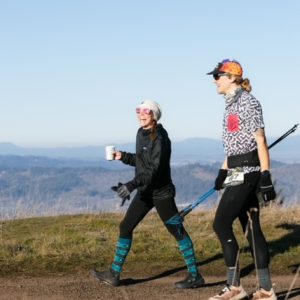
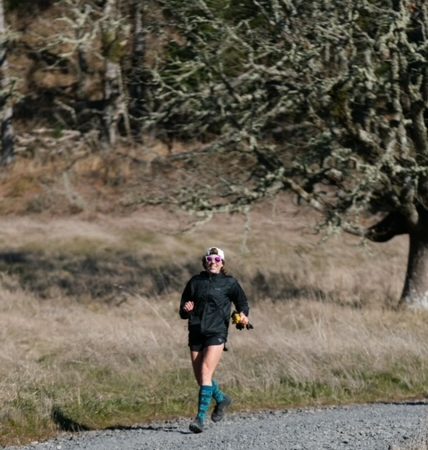
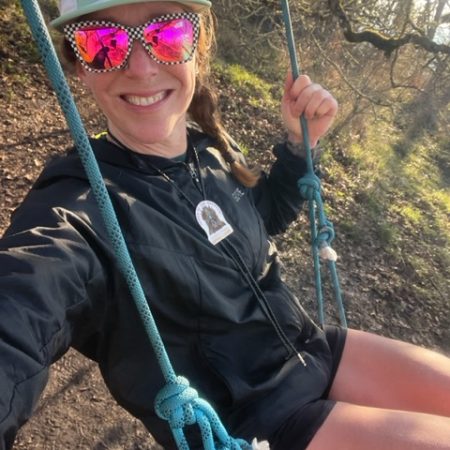
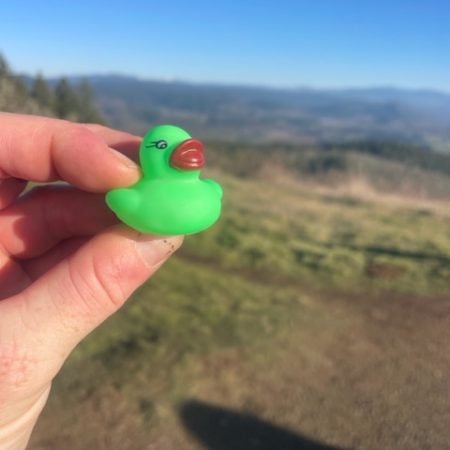
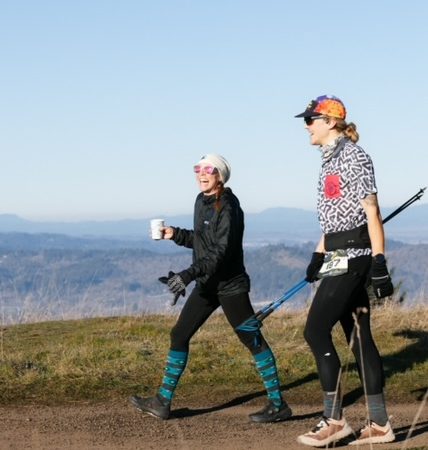
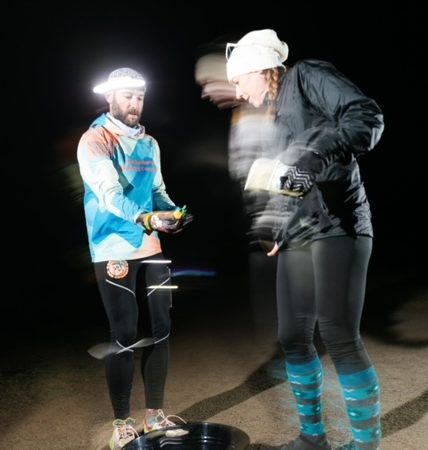
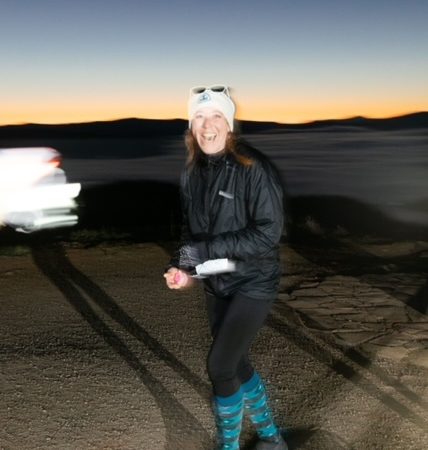
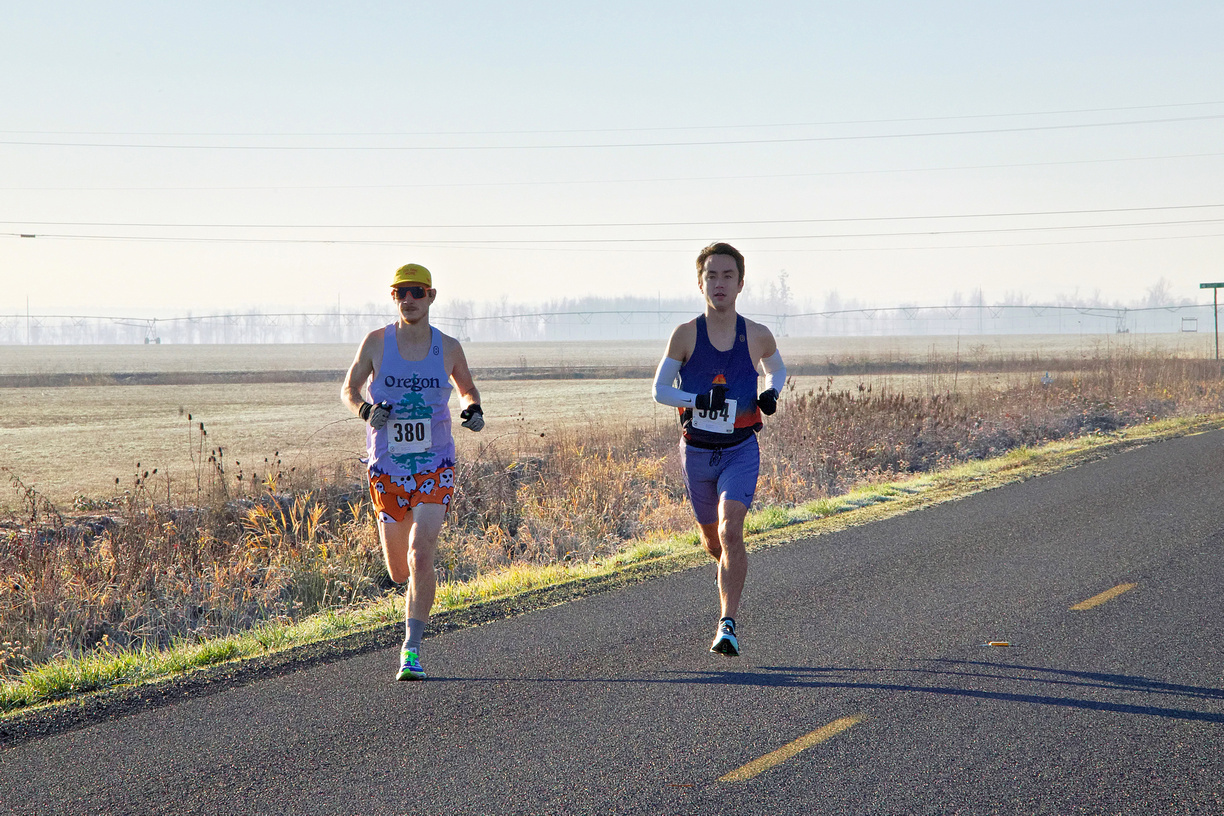
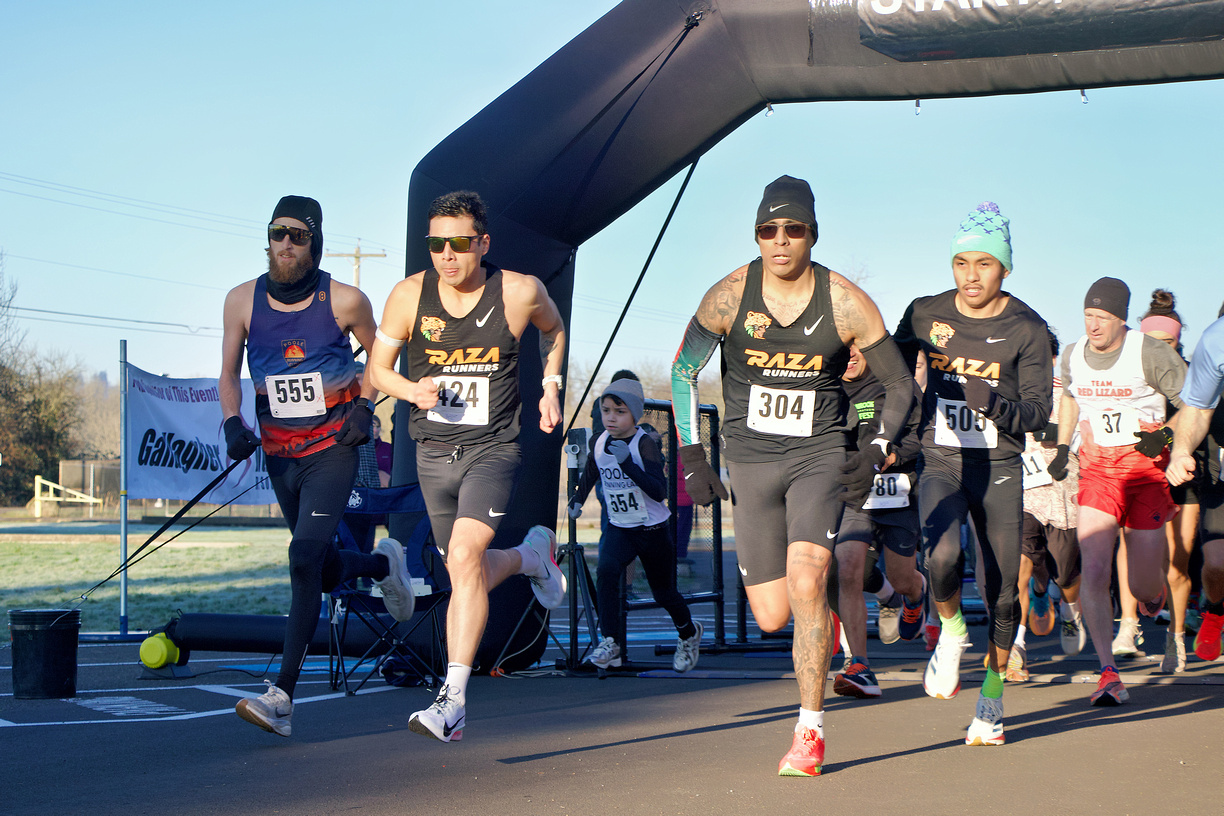
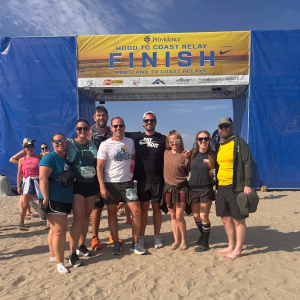
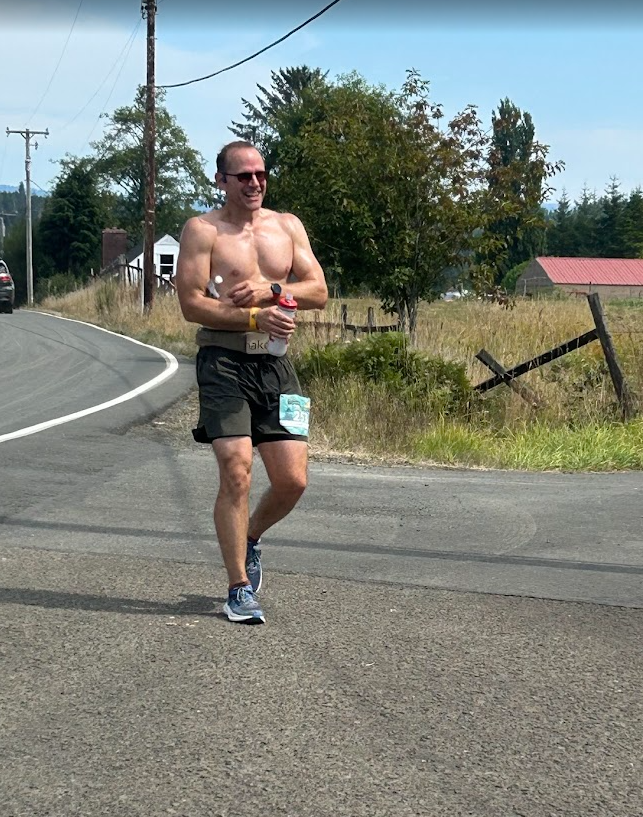
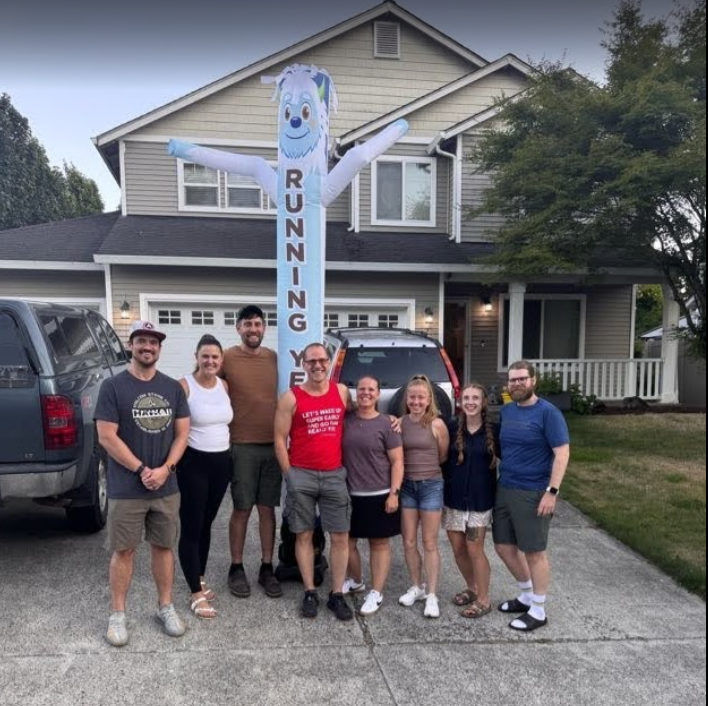
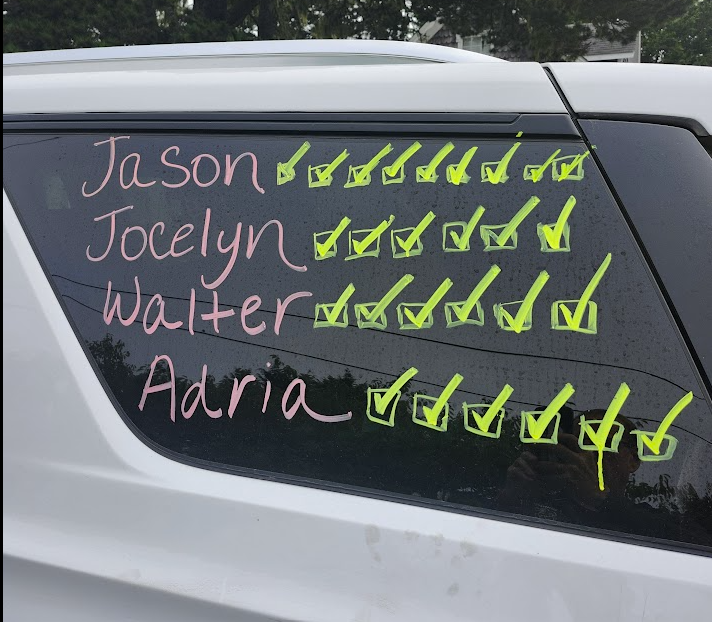
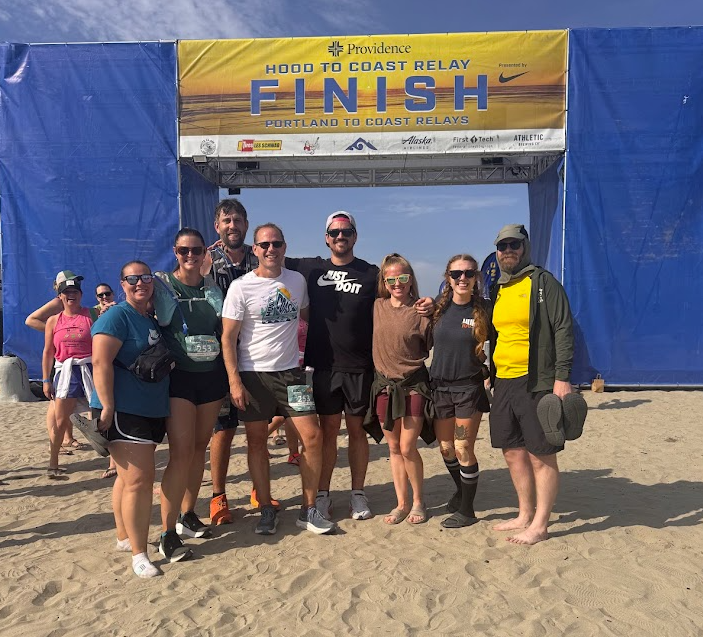
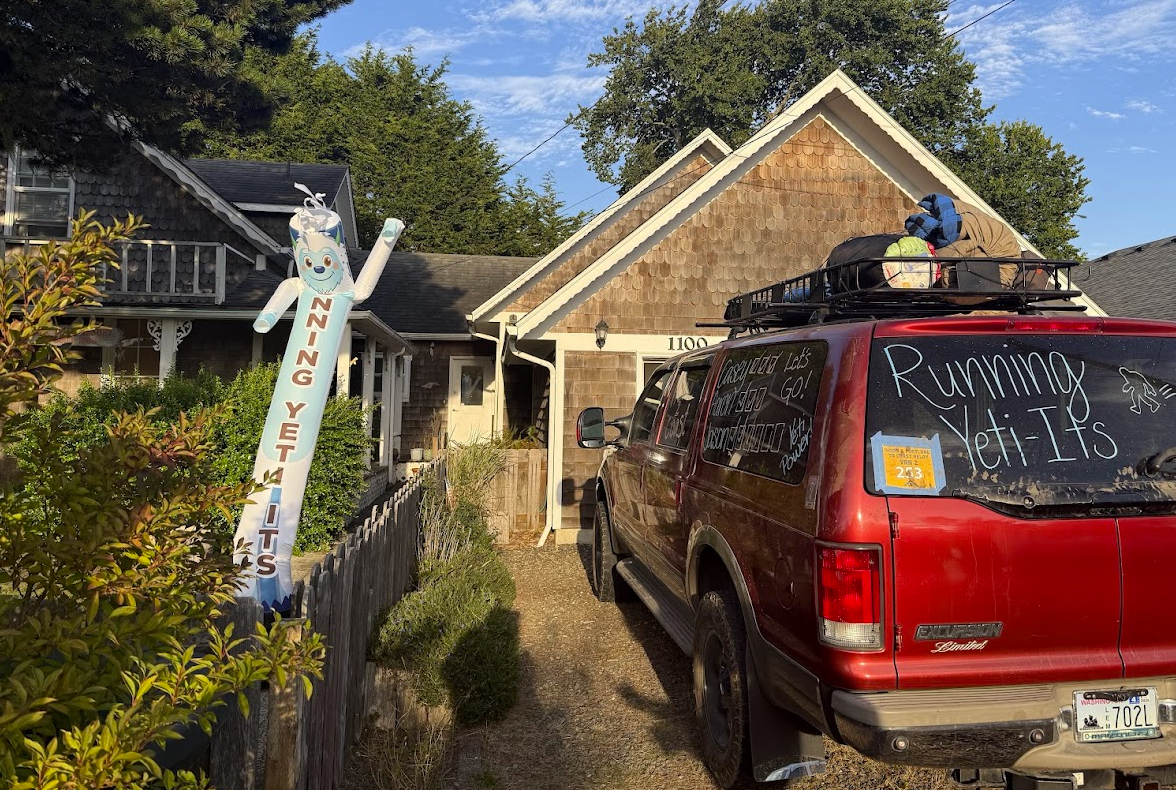


 Race:
Race: 
 Race:
Race:  Weather and typical race conditions
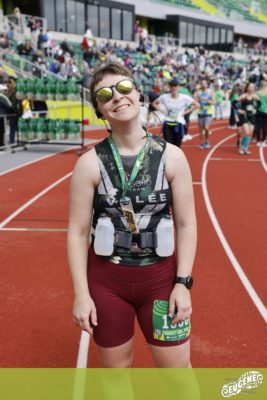 Race:
Race: 

 Lessons for others – Share your pro-tips on the race to help the next runner