Portland Shamrock Run 5k & 8k Race Report – Brian Comer

Portland Shamrock Run 5k & 8k Race Report – Brian Comer

Race: Portland Shamrock Run 5K & 8K

Runner: Coach Brian Comer

Race Date: 03/13/2022

Location: Portland, Oregon

Results: http://results2.xacte.com/#/e/2421/leaderboard

3 Bests – What aspects of the race did you like the most?

  1. It is a big race with a lot of camaraderie and holiday spirit. With how many people there are (~15,000 in all 4 races combined), it’ll be a challenge to find yourself in that dreaded no man’s land.
  2. The swag is pretty cool, everything from what can be found in the merchandise tent to the finisher medals. Not to mention the nice long sleeve race shirt you get at the expo.
  3. The start/finish area along the waterfront is nice and packed with energy that’ll motivate you to a strong finish. The 5K and 8K courses are relatively flat out and backs while the

15K and half marathon offer some challenging hills. This race really has something for everyone.

Not so much – Aspects of the race that didn’t do it for you

Honestly not much to report here, could have asked for some better weather but there isn’t much control on that. There was quite a brutal headwind on the way back during the 8K but on the other hand, it was at our backs (much like in a popular Irish blessing) on the way out. In a way, the weather was very much a PNW (or Irish) squall and made the experience all the more authentic.

Weird factor – What’s the weirdest thing about this race?

Nothing overly so but being a St. Patty’s race in Portland, your bound to find some people fully decked out in leprechaun costumes and other St. Patrick’s Day festive attire.

Highlights of your race – What did you do well and enjoy about your race in particular?

I decided to give myself an extra challenge by racing both the 5K at 8 AM then coming back to race the 8K 2 hours later. The legs definitely felt cooked by the end of the day likely to being in racing flats for so long and for the first time in awhile, but I wound up placing pretty well in both races (10th overall in the 5K in 16:23 and 13th overall in the 8K in 26:47). I think I came through the 5K split of the 8K around the same time I ran in the 5K a couple hours prior so that was fun and was still able to finish strong despite the challenges brought on by the fierce headwind. All in all, both races were solid efforts and I once again was able to run relatively evenly in both races as well.

Lessons for others – Share your pro-tips on the race to help the next runner

It can be a bit of a body crunch in terms of the crowd so if your trying to meet up with people on race day at the start/finish, it helps to be specific. Also don’t be afraid to get on the starting line earlier than normal. In the 5K, I had to make my way through the crowd sort of last minute in order to get up to an appropriate start corral and even then still had a fair share of maneuvering to do in the opening strides in order to carve out some space for myself/get into race rhythm. Despite being a “local”, I spent the night before the race at a nearby hotel, which really helped in terms of logistics race morning. I’d start my warmup at the hotel heading in the direction of the start/finish area, do drills and strides along the waterfront, where there’s plenty of space to do so, and even do some stretching and drills undercover in an effort to get a slight break from the rain.

Lessons you learned that will help you next time around

As mentioned, getting on the start line with plenty of time to spare and the fact that there is no such thing as packing too many warmups. In my case of running multiple races, having dry clothes to put on between races is helpful and it made a trip to the merchandise tent necessary in order to accomplish this. All in all, be prepared for anything that may come your way, especially if you need to factor in multiple warmups and cooldowns or anything else that would make for an extended period of time in the elements. Also another big thing to keep in mind was that the race was held during Daylight Savings. It made for a somewhat brutal awakening as it felt earlier than it really was but in the event of Daylight Savings Time still being around, make sure to factor that into your race morning routine so you don’t miss the start of your race or get thrown off your game otherwise.

Most important course specific knowledge to know about the race

Since I raced the 5K and 8K, I’ll try to keep it specific to those races. The 5K going out is hillier than you’d think it is but on the other hand makes for a pretty decent downhill coming back that could make for a fast, strong finish. On the way out, you also get routed off Naito Parkway and make a couple turns downtown in order to get to the 5K distance so in a sense it isn’t a true out-and-back. The finish also comes up before you make it back to the start in the 5K while the 8K, you actually go past the start to the finish. In both races, the turnaround point shouldn’t be taken too sharply, especially when it was wet like it was this year. Running slightly wide but not breaking stride is a better option to taking the turn too tight in hopes of running tangents/shortest distance possible.

Aesthetics – Is it a pretty course?

I’d say that it is a pretty course. This year, the weather somewhat socked in any views you’d get following the climbs you encounter in the longer races but each race has some variety to keep things interesting.

Difficulty – Is it a tough course?

In the longer races, yes it is a tough course with an added variable of train crossings. The shorter races are easier in regards to hills by comparison but even still I was somewhat surprised at some of the hills encountered, particularly in the early stages of the 5K on the way out to the turnaround.

Organized and well run – Did it feel like a well-oiled machine or were they flying by the seat of their pants?

Absolutely, this was the 44th edition of the race and with all the variables provided with the different races offered, it ran like a well-oiled machine. Despite the over 1,000 day hiatus since the Portland Shamrock Run was last held, it was as if they didn’t lose a beat after all that time. The community was of course much appreciative and excited for the race’s return as well.

Competition – Is there a strong field?

Absolutely, each race has a strong field with blistering times up front. It’s also not everyday that you get to line up behind an American Record holder (Alan Webb) like I did in the 8K. Fortunately I was able to keep the fanboying to a minimum (though the photo ops were still plentiful) but as this is a big event in the Portland running community, there is no shortage of local or out-of-town talent to be found regardless of what distance you sign up for.

Logistics – Does it require a special handshake, registration a year in advance, hotels all booked? Give us the low down on the nuts and bolts of making the race happen.

Nothing overly specific, make sure to visit the Fitness Fair to pick up your race bib (held at the Oregon Convention Center Friday and Saturday prior to the race). I’ll also echo my earlier sentiment on staying at a hotel. It was nice simplifying race morning by doing this despite being a local. Didn’t have to worry about driving to the race start as we were close enough to go by foot (and utilize that for the purpose of warming up). With that said, the hotel I was at wasn’t as full as I expected it to be given the race was going on. Other hotels were likely more full with Shamrock participants but with where I stayed, we lucked out in terms of booking. Having the hotel was also really nice in my case given I ran two races. I was able to get a break from the elements, take off my flats, stretch, get a small bite to eat, and get in warm dry clothes while letting my race gear dry out a little courtesy of the bathroom heat lamp.

Aid Stations – Standard fare or anything special to know about the aid stations in terms of what’s available or when?

Pretty standard fare, for the 5K and 8K there really is only one station in each (which you hit twice since the course is out-and-back) but the longer races have more.

Weather and typical race conditions

Be prepared for anything, depending on the year, it can either feel like spring or feel like winter. This year felt more like the latter with the wind and rain.

Gear – Did you need anything special or is there anything you’d recommend for the next runner?

Nothing too out of the ordinary, especially when just doing one race, but if you got inspired to do a Shamrock double like I did this year, then make sure to have plenty of gear if less than ideal weather conditions are expected.

Spectators – Is this a friendly course for your friends?

If the spectator is dedicated, then they can catch you at multiple spots along the out-and-back route or if they prefer to not be as mobile, there’s always great race viewing to be had at the waterfront park despite the large crowd.

How’s the Swag?

Great, there is no shortage of gear available at the fitness fair or merchandise tent from multiple shirts, sweatshirts and quarter zips to stickers, hats, and refrigerator magnets (which were a giveaway the first day of the Fitness Fair until they ran out of stock). The race shirt is also a long sleeve with nice material (which I got two for running two races). The finisher medals are also pretty cool with bottle openers and are appropriately festive for St. Patrick’s Day with a four leaf clover design.

The Overall Score – How many stars do you give this race and do you recommend that others run it?

5 stars for sure, I’d recommend it to others and I’ll definitely be coming back to this one, maybe I’ll see you there too? Like my previous race so far this year, the Shamrock Run is another hallmark on the running calendar here in Portland that brings out runners of all kinds.

Brian Comer is a coach with Team RunRun. To learn more about him or to work with Coach Brian, check out his coaching page.

Rogue Gorge Half Marathon Race Report – Renee Gale

Race: Rogue Gorge Half Marathon

Runner: Renee Gale

Race Date: 10/17/2021

Location: Prospect, Oregon

Results: 81 of 103 overall, 49 of 66 gender

Strava Activity Link: https://www.strava.com/activities/6128527820

Photo: @stevenmortinson | @daybreakracing

3 Bests – What aspects of the race did you like the most?

  1. The river and all the foliage was so beautiful, striking fall colors, the sun hitting the river and the orange, red and yellow trees reflecting on the water, just stunning.
  2. This race was almost all single track and that really appeals to me; when I’m running on single track, I feel so much closer to nature and just think it’s more fun to run than something like wide logging roads.
  3. The morning was cold and I appreciated the warmth of the fire pit they kept feeding.

Not so much – Aspects of the race that didn’t do it for you

As much as I love single track, I found that in this race it created some issues. At the 7.5 mile mark, the course doubles back so faster runners were running at me and I had to constantly step off the path – the narrowness of the trail and the spongy vegetation on the sides of trail made it very awkward irritating to jump back and forth.

The other issue was at the beginning of the race, I ended up behind a long string of runners as we were funneled into the single track. There was really no way to pass them; I could tell there were faster runners behind me so I just thought I’d be patient and wait for an opening but it was several miles before things opened up, maybe 4 or 5 miles. And this was all downhill which I love running but couldn’t get to the pace I wanted – those of us behind ended up even walking some because of the traffic jam.

Lastly, the last couple of miles of the race, I had a hard time knowing which way to go and made several wrong turns which I quickly realized. In each case, I turned back to the intersection where I went wrong and looked around. It wasn’t that I wasn’t paying attention; I had to do some serious looking around to find the ribbon – it was not obvious which way to go.

Highlights of your race – What did you do well and enjoy about your race in particular?

I loved the downhill after I cleared the traffic jam. The course is basically 7.5 miles downhill and then 6 miles uphill. After about mile 4, I had space to go my own pace; my plan was to keep my HR at an easy/tempo type pace to save gas for the uphill. When I’m not pushing my pace, it’s so much easier for me to look around and enjoy nature and the beautiful scenery.

Lessons you learned that will help you next time around

Since I have fallen before, I always remind myself safety is my top goal because if I get hurt, I can’t run. I know that when I get tired legs, I’m more liable to trip/fall but somehow in this race, I got into some weird auto-pilot running and did not realize how tired my legs were becoming and sure enough, I fell on a rock and today, the day after, I’m limping around with a sore knee. I need some cues to stay aware of where I’m at, to check in with how I’m feeling. This extends to my hydrating and nutrition too. Another thing I zoned out on was using my gels. Today I realized I only consumed two of them in almost three hours, which was not my plan. I had no idea I did this until I was cleaning out my hydration vest.

Aesthetics – Is it a pretty course?

Yes – absolutely beautiful, the most attractive feature of the race.

Difficulty – Is it a tough course?

It was tough for me but it’s not a tough course – the 6 mile uphill portion isn’t steep, the elevation gain shows up as 630 ft in my running apps (even thought the website says that there is 900 ft of gain). For me what was tough is that not only is it the second half the race but 6 miles of continuous ascent for this trail novice is still difficult.

Organized and well run – Did it feel like a well-oiled machine or were they flying by the seat of their pants?

It was mostly well run. It started on time and picking up my bib was easy. The only thing that disappointed me was that they ran out of soup and coffee. Those were two items I was looking forward to after my run. The only appealing item on the food table for me was a banana. They offered komboucha in place of coffee but that’s not my thing.

Logistics – Does it require a special handshake, registration a year in advance, hotels all booked? Give us the low down on the nuts and bolts of making the race happen.

There’s a campground right there at the race start where the runners can camp out the night before. Then there is a lodge called “Union Creek Resort” but it’s not a resort, it’s a rustic lodge. I feel that I could get some bad sleep by camping so I chose to room at the lodge. They offer cabins and rooms in the lodge. Not knowing any better, I just got one of the rooms. There are several rooms on the second floor above the registration desk and lodge store and the rooms do not have bathrooms – there are two shared bathrooms for the entire floor. When I was getting food at the cafe across the street, I got talking to another runner and she mentioned that last year, she stayed in one of the cabins (not the lodge rooms) and it was nice. She wanted to do that again this year but didn’t sign up on time so decided to camp in her car rather than in the lodge. When I registered for my room, I saw that there was this cafe across the street and I was hoping to eat there. Due to covid though, the restaurant is to-go only and that’s not what I expected and was disappointed.

Aid Stations – Standard fare or anything special to know about the aid stations in terms of what’s available or when?

For the half marathon, there was one aid station at the turn-around point. All they had was gels and liquids which I was already carrying. At the last race I did, I really appreciated that there were orange segments and banana slices available. I think I was hoping for something like that but they had nothing I wanted.

How’s the Swag?

I found the giveaway rather strange. We were given these glass jars with the race name “Rogue Gorge” printed on them. I’m thinking they go with the theme of the Kombucha. I suppose I could use it for brewing tea which I don’t do so I’m probably going to throw it away.

The Overall Score – How many stars do you give this race and do you recommend that others run it?

Because of the traffic congestion on the single track, the colliding with oncoming runners, and the issue of course markings, I would give this race a 3 out of 5. But the scenery is awesome – this would be a good place to just go on a solo trail run.

Photo: @stevenmortinson | @daybreakracing

Secret Beach 50 Mile Race Report – Les Sheffield

Race: Secret Beach 50M

Runner: Les Sheffield

Race Date: 10/02/2021

Location: Gold Beach, OR

Results: 4th Place OA

Strava Activity Link: https://www.strava.com/activities/6055309227

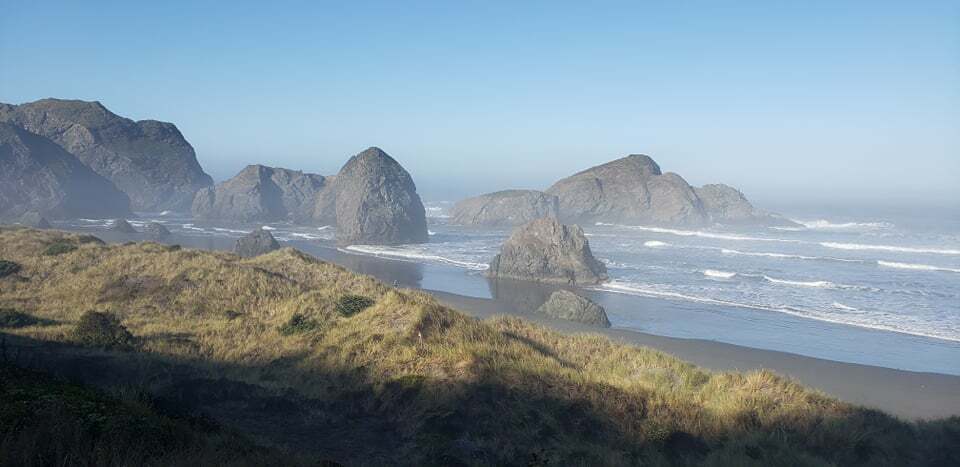
secret beach 50 mile course

3 Bests – What aspects of the Secret Beach 50 Mile did you like the most?

1. The beach section in the morning was fantastic. I love the fog and sound of crashing waves.
2. The scenery throughout was truly amazing and helps you appreciate the beauty of nature and why we run these.
3. The other runners were a great group and very fun to chat with during and after the race.

Not so much – What aspects of the Secret Beach 50 Mile didn’t work for you?

The wind picked up causing dangerous surf. So a section of the race had to be run on Highway 101 instead of the beach. Kind of a bummer expecting to run the beach for a few miles and instead running the shoulder of a busy highway.

Weird factor – What’s the weirdest thing about the Secret Beach 50 Mile?

Things that wash up on the beach can be weird!

Highlights of your race – What did you do well and enjoy about your race in particular?

I enjoyed the variety of surfaces to run on. There was beach, trail and road all mashed together!

Lessons for others – Share your pro-tips on the Secret Beach 50 Mile to help the next runner

You get to place your own drop bags at each aid station. USE THEM! I changed shoes at mile 30 and they felt amazing. It was just the perk that I needed. Plus my feet were hurting and putting on some extra cushion really helped.

Lessons you learned that will help you next time around

I am still learning how to fuel throughout a long race. I had a plan but coming up to each aid station and seeing the people ahead of me taking off really caused me to make some poor decisions.

Most important course specific knowledge to know about the Secret Beach 50 Miler?

If the wind causes a dangerous surf on the beach they will reroute onto Highway 101. This is hard to plan for but the highway miles are much MUCH faster than the beach.

Aesthetics – Is the Secret Beach 50 Mile a pretty course?

It is wonderful!

Difficulty – Is the Secret Beach 50 Mile a tough course?

Not really. The climbs are all 200-300 ft which go by pretty quickly.

Organized and well run – Did it feel like a well-oiled machine or were they flying by the seat of their pants?

Rainshadow Running does a great job with their races. This one is no exception. Very well done.

Competition – Is there a strong field?

Not really. This race is out of the way of most in the PNW. Only 15 people in the 50M and 25 people in the 100K.

Logistics – Does it require a special handshake, registration a year in advance, hotels all booked? Give us the low down on the nuts and bolts of making the race happen.

Nope! Registration is always open because it doesn’t fill up. A great backup race in case you don’t make it through the lottery of your A race.

Aid Stations – Standard fare or anything special to know about the aid stations in terms of what’s available or when?

The aid stations are in pulloffs of Highway 101. So very easy to navigate to as crew. Plenty of parking as well. Pretty standard fare at the aid stations. Best part is having a drop bag at each one. They are 10 miles apart though so that is quite a ways. Better carry extra!

Weather and typical race conditions

Started off the morning being beautiful and pristine. Later in the day the wind really picked up and finishing conditions were difficult.

Gear – Did you need anything special or is there anything you’d recommend for the next runner?

Enough room to carry 10 miles of gear between each aid station. Extra shoes/socks/hat/etc in each drop bag.

Spectators – Is this a friendly course for your friends?

Very much so! I would have had my friends meet me on the beach and run those last few miles if any had come.

How’s the Swag?

Minimal.

The Overall Score – How many stars do you give the Secret Beach 50 Mile and do you recommend that others run it?

7.5/10 – Without the super strong headwind this would be 8.5/10

secret beach 50 mile course

Getting ready for a race? Check out our coach-approved race prep checklist!

Portland Half Marathon Race Report – Alex Nydahl

Get runner Alex Nydahl’s take on the Portland Half-Marathon in this race report!

Race: Portland Half Marathon

Runner: Alex Nydahl

Race Date: 10/03/2021

Location: Portland, OR

Results: 1:25:55

Strava Activity Link: https://www.strava.com/activities/6058650209

3 Bests – What aspects of the Portland Half-Marathon did you like the most?

  1. The conditions! October in Portland can range from squall to sunny and warm. We hit the jackpot with clear skies and a temperature of 47F/8C when the gun went off at sunrise.
  2. Aid stations were every other mile for the first half, and every mile for the second half, with Nuun, water, and bathrooms at all, and PowerBar gels/shots and fruit at about half. For the half, I only took on liquids, but having something available that frequently was great.
  3. The course itself was nice and flat, with a few gradual climbs and one slightly steeper (short) hill at 9 miles. You get a nice sense of the city’s southwest and southeast neighborhoods, and there were friendly neighbors outside cheering the entire way.

Not so much – What aspects of the Portland Half-Marathon didn’t do it for you?

I don’t envy the race photographers, but for a clear, sunny day, I was a bit disappointed by the race photos.

Highlights of your race – What did you do well and enjoy about your half-marathon in particular?

Despite nursing some significant Achilles issues for the week before the race, I lined up with my goal pace group (1:30 or 6:51/mi). After about a mile and a half into the race, I was feeling comfortable and smooth at about 6:30, and decided to listen to my legs and not hold back, which worked out great! On the final climb up and across the Burnside bridge, I could feel my form starting to slip, but was able to hold on and finish strong, moving up one spot in my age group in the last half mile.

Lessons for others – Share your pro-tips on the race to help the next runner

Getting to the starting line via car can be challenging due to street closures and the downtown location. Parking or getting dropped off on the east side of river and walking across the Hawthorne bridge just adds a nice half mile walk or jog and lands you right at the starting line.

Aesthetics – Is the Portland Half-Marathon a pretty course?

Very much so!

Difficulty – Is the Portland Half-Marathon a tough course?

It’s not the absolute flattest or fastest, but there were plenty of PRs!

Organized and well run – Did it feel like a well-oiled machine or were they flying by the seat of their pants?

Very well-organized. Plenty of bathrooms at the start, drop bag system worked well, clear pre-race communications.

Competition – Is there a strong field?

I mean, no one is breaking 60:00 on this course, but the top 10 ranged from 1:07 to 1:17, so pretty darn quick.

Logistics – Does the Portland Half-Marathon require a special handshake, registration a year in advance, hotels all booked? Give us the low down on the nuts and bolts of making the race happen.

Easy to register, with a reasonable cancel/defer option.

Spectators – Is this a friendly course for your friends?

Yes, absolutely, though the start/finish area is a bit more challenging to get to due to traffic and street closures.

How’s the Swag?

The race shirts are a little chintzy. Would love to see races move to printing on high-quality blanks from respected brands, and away from the plastic-feeling “tech” shirts that seem to be the new norm.

The Overall Score – How many stars do you give this race and do you recommend that others run it?

5/5

Getting ready for a half-marathon? Check out our coach-approved race prep checklist!

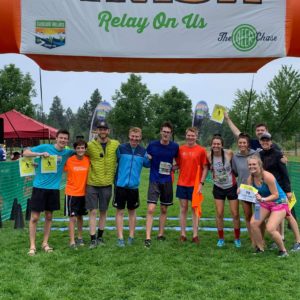
team runrun at a race

Cascade Lakes Relay Race Report

Race: Cascade Lakes Relay

Runner: Brian Comer

Race Date: 7/30/2021

Location: Diamond Lake to Bend, Oregon

Results: https://eclecticedgeracing.overallraceresults.com/pages/event_summary/492/

3 Bests – What aspects of the race did you like the most?

The camaraderie is top notch and really second to none. Something about running through the night while sleep deprived really brings out the spirit amongst teammates and other runners alike. Seeing all the creative costumes, van decorations, and team names is always a sight to behold as well. The team component is unique and gives the feeling of running for something greater, a sensation lost among many once a runner’s competitive scholastic days are over. The times while your van is on break can be both functional and fun. After our first cycle, our van made a side trip to Crater Lake, hiking down and sticking our feet in, which was a lot of fun. The finish in Bend is basically one big party which is always fun and the entire team meets their anchor runner at the end to run across the finish line together, which is pretty cool too. Running in the middle of the night is always a blast and there is picturesque scenery to enjoy throughout the race. I’d say CLR has a leg up here on Hood to Coast both in terms of scenery and in being less commercialized (and in turn, less crowded).

Not so much – Aspects of the race that didn’t do it for you

This was a unique situation this year due to the Bootleg Fire but the first 14 legs were all relocated to running laps around Diamond Lake, which was a very good and understandable reason to adjust the route but made for a somewhat mundane start that didn’t quite have the same relay feeling as it would have otherwise. Similarly once finishing at Diamond Lake, teams would then have a pause and would have an assigned restart wave at Fort Rock to resume the race. It was nice to enjoy Diamond Lake more than normal and while this wasn’t a problem for our team, other teams didn’t always make it to Fort Rock in time for their restart wave. However major props to the race organizers for closely monitoring the wildfire situation and taking precautions to keep everyone safe while still holding the race in person. Organizing and putting on an overnight relay race is no small task and is quite the feat to pull off in itself never mind factoring in the curveballs that were thrown this year due to the wildfires.

Weird factor – What’s the weirdest thing about this race?

Did I mention the fact that you are running through the night? Being an approximately 200 mile event (216.6 in normal years, 191.3 this year following course revisions), your team is typically running a full day if not longer in order to complete the race. Running in the middle of the night isn’t actually as bad as it sounds. It is actually pretty peaceful running in a rural forest area on a clear night. Some teams particularly embrace the weird as this year one van was converted into what resembled a double decker bus complete with lights and music blasting that resembled a dance party. One of the major van exchanges that usually occurs in the night also takes place with a backdrop of flashing lights with strobe lights across the night sky and of course music (this being the midnight rave at the end of leg 18 going into leg 19). Also expect to find other team’s stickers/magnets on your van, some truly outrageous costumes on the costume leg and your fair share of impromptu tunnels being formed to cheer on an incoming runner.

Highlights of your race – What did you do well and enjoy about your race in particular?

Overnight relays are really a delight and a highlight on the yearly running calendar. Even on minimal sleep, you can do some pretty amazing things. I enjoy the unique challenges that are imposed in these types of races. We only had 11 runners on our team instead of a full 12 so myself along with 2 others were given the task of running an extra 4th leg for our team. Even though my training has lacked specificity, I was pleased that I was able to stay at a fairly consistent pace throughout the event regardless of various distances and terrain I encountered on each of my legs (not to mention the altitude we were running at was consistently around 5000 feet give or take a few hundred feet each direction). I was able to stay the course and stay tough even when it got hard towards the end as I knew we were doing really well as a team and I wanted to come through for my team. I also like how while still being competitive, there is a great deal of support around you from your own team and others. The volunteers are also amazing and the race wouldn’t be possible without them.

Lessons for others – Share your pro-tips on the race to help the next runner

Definitely make sure to have a stash of snacks (both healthy snacks along with other snacks to satisfy hankerings your bound to encounter) and fluids on hand. Hydration is important not just during the event but in the entire week leading up to it. Keeping running clothes in separate Ziploc bags also help keep you organized so you’re not scrambling before your next leg and help mitigate the smell in the van of everyone’s sweaty running clothes. Sleep is hard to come by so get it while you can and also make sure that you are stretching and rolling out regularly. It doesn’t take much for your body to seize up and Charlie-horses to ensue from all the sitting in the van you’ll be doing. Likewise for sleep, take advantage of comfy settings if you have access to them or don’t be afraid to leave the van at designated sleep areas and sprawl out a sleeping bag or blanket to get more comfy. Just make sure you have a way to communicate with teammates or utilize the buddy system so you know when to head back and catch your van when it is time to leave.

Lessons you learned that will help you next time around

On the first leg, my back started to hurt midway through. I’m certain that this was because when camping the night prior, I was just in a sleeping bag with no sleeping pad underneath. This will help me rethink what I pack and the way I pack. Our team also had the experience this year of locking the keys in the van so make sure to know where “key” belongings are at all times or have someone in the area to ensure things aren’t left unattended. This happened as I was set to run next. Amidst the chaos, I nearly missed the exchange. Fortunately my leg was the last one in the cycle so we had a few hours to work with but a teammate had to get a ride from another team in order to find cell service to call Triple A (this all happened in a rural forest area around 2 AM where cell service was hard to come by). Despite being a Van 1 runner, I was adopted by Van 2 for a few hours in case I was needed to fill in to start the next Van 1 cycle. Fortunately, Triple A arrived and we got the problem resolved before our van was due up to run again. We didn’t get as much sleep on that break as we would have otherwise but it makes for a standout memory and something we can laugh at in hindsight (just not so much in that moment when it was happening). All in all, a memorable way to roll into the infamous rave exchange.

Most important course specific knowledge to know about the race

There are 36 legs and each van takes turns alternating in cycles of 6 legs (like Hood to Coast). Each leg has its own rating based on elevation profile, surface, and distance. Ratings range from easy to WTH (only one such leg this year as the other was scrapped due to the course revisions). There are only two legs in a typical year with the WTH rating. One runs up Mt. Thielsen then flies down the other side while the other climbs up to the west village at Mt. Bachelor. The last 6 legs coming down Bachelor have plenty of downhill coming down into Bend. Surfaces tend to be road, gravel/trail, or a mix. Not so much a problem this year since we had some rain but some of the trail legs can get dusty particularly in the heat.

Aesthetics – Is it a pretty course?

Absolutely there is lots of scenery to be enjoyed throughout the event as it is a pretty course highlighting some of the finest nature central Oregon has to offer. There is a lot of picturesque mountains in the area while on the other hand there are plenty of lakes to enjoy as well (as suggested in the race name). The rural towns and the forested areas are also a delight to run through as well. Communities along the route really embrace the event and support it whole-heartedly.

Difficulty – Is it a tough course?

Depending on your leg assignments it can be a difficult course but it really varies. Even on some of the legs that have a moderate rating, there can be some deceptive climbs that can surprise those who aren’t prepared for them. I also firmly believe some of the ratings of the legs are given because of where in the race they come up. Towards the end, everybody is tired and that can make every incline seem more steep than it really is.

Organized and well run – Did it feel like a well-oiled machine or were they flying by the seat of their pants?

Yes I’d definitely describe CLR as a well-oiled machine as the event is well-organized. This was the 14th year of the race so they have logistics down pretty well and were even able to adjust on the fly when it came to making modifications as a response to the wildfires. During the Diamond Lake section, they had organized shuttles to take runners back and forth between the main start area and the other exchange zone along the lake. Course markings are always clear with signs and flagging, depending on where you are on the course and often have helpful volunteers around as well to offer support.

Competition – Is there a strong field?

Competition is usually pretty strong. An average year usually has around 200 teams. There were a little less this year but our team placed 4th overall (and 3rd in the always competitive Open Mixed division)! As a team, we averaged 7:22 pace (which would have met the cutoff of 7:30 pace for consideration in the Elite division). There was only one team in the Elite division and they were well out in front by a substantial margin until it dropped back to the group of three teams (us included) that were all relatively close to each other. Start waves are organized by projected finish time with faster teams starting later and slower teams starting earlier. The top 8 teams were all in the last start wave (which this year was 9:00 AM Friday morning).

Logistics – Does it require a special handshake, registration a year in advance, hotels all booked? Give us the low down on the nuts and bolts of making the race happen.

There is a cap to the number of teams so it is recommended to register as soon as registration opens (usually October or November of the year prior). The race website does a good job of listing key dates along the way to be mindful of, such as when registration deposit is due, registration balance is due, deadline for timesheets, registering and submitting shirt sizes etc. so it is always good to review that so you aren’t surprised by anything. Most teams (ours included) usually camp at Diamond Lake the night before so reserving a campsite or two with plenty of advance notice is also helpful. Don’t rely on the resort where the start line is as that fills up quicker and has more limited space than the campground.

Aid Stations – Standard fare or anything special to know about the aid stations in terms of what’s available or when?

There are no designated aid stations with the exception of certain legs that particularly call for them. Carry water with you if you think you’ll need it or if the leg can be accessed by van, have your team supply you with water, energy chews, or whatever else you might want or need. Our team often asks our runner this question at least once, sometimes more if the leg is particularly demanding. More often than not we stop along the way in order to supply our runner with water or anything else they need.

Weather and typical race conditions

Usually it is pretty sunny and warm. We did encounter some rain this year, which was a welcome sight considering the wildfires in the area. There was even some fair share of overcast particularly in the morning which actually made for some pleasant running conditions. It would usually burn off in the afternoon but the cloud cover also kept in the heat we received in the day, which made for overnight temperatures that weren’t too cold as we were out running in the night.

Gear – Did you need anything special or is there anything you’d recommend for the next runner?

Everyone needs to have a headlamp/flashlight and reflective vest with them in order to participate. They ask for 12 vests and a minimum 2 headlamps or flashlights at team check-in on Thursday night. You may have designated vests with the flashing red lights that people swap around to run in but your personal reflective vest will come in use whenever you’re not running but you step out of the van. Not to mention you’ll run with your personal headlamp or flashlight. Like how it is recommended to have different running clothes for each leg, you may want to bring multiple pairs of running shoes (like a pair of flats or a trail shoe in addition to standard trainers), if not, then a minimum of one pair of running shoes and a pair of sandals for when you aren’t running (which is a good idea regardless of how many pairs of running shoes you bring).

Spectators – Is this a friendly course for your friends?

Actually if you do your homework, this can be considered a spectator friendly race if the spectator is truly dedicated. While the race isn’t typically thought of as spectator friendly, the mother of one of our team members followed along with us this year in her own car and cheered us on. She car camped Thursday at the same place we were camping, then followed along the route meeting us at various exchange zones, then again at the finish. So I learned first hand this year that spectating for an overnight relay can be done with the right preparation.

How’s the Swag?

The swag is great, teams get shirts for every member after finishing along with a results ticket and finisher medal (we got CLR medals this year for 2020 and 2021 as our team was registered for the 2020 race as well). There’s also vendor samples (such as a CBD muscle massage oil this year) along with food and beer (finishers receive one beer token, after which you pay for yourself). Also Thursday night before the race, they have bins full of past year’s shirts that they give away for free. They also sell sweatshirts before and after the event as well.

The Overall Score – How many stars do you give this race and do you recommend that others run it?

Five stars – I can’t recommend this race enough. While it may seem daunting or intimidating, it can be very achievable with a solid training base under your belt. Crossing the finish line and getting a team photo after any overnight relay is very satisfying and you’re also sure to make memories that will last a lifetime as this is more than just a race, it is an experience.

Brian Comer is a coach with Team RunRun. To learn more about him or to work with Coach Brian, check out his coaching page.

Photo: Linette Bethurum

Wy’east Howl 100k Race Report – Frank Fisher

Race: Wy’ East Howl 100k

Runner: Frank Fisher

Race Date: 7/31/2021

Location: Mt. Hood, Oregon

Results: 14:51:29, 40th place

Strava Activity Link: https://www.strava.com/activities/5718982585/overview

Photo: Steven Mortinson (stevenmortinson.com)

3 Bests – What aspects of the race did you like the most?

  1. The course was beautiful!
  2. The aid stations were awesome!
  3. The course was challenging but still runnable.

Not so much – Aspects of the race that didn’t do it for you

I can’t think of anything, pretty much liked everything about this race. The only thing that kinda bummed me out was not getting a Western States qualifier. This race needed 100 finishers to do that, and only 76 finished.

Weird factor – What’s the weirdest thing about this race?

Not weird, but kind of funny to me was running around the finish area for the last 6-7 miles. You could see it down the hill a ways, but you also still have several miles to go before you actually get there. You can hear the excitement of the finish line for most of it. It was like calling the horses to the barn for me personally, but some others out on the course didn’t seem to enjoy it as much. Also funny, we all took the same selfie at the same waterfall.

Highlights of your race – What did you do well and enjoy about your race in particular?

I paced it well from the start being cautious for quite a while since it was my first shot at the distance and I really wanted to finish. I felt like I trained and prepared well for what my scheduled allowed, and my legs were surprisingly strong all the way through the race. I was able to problem solve the few issues I had successfully (missed my crew at the 30 mile aid, and a pre-existing ankle issue), had to improvise nutrition a bit but was on point with it and kept my stomach in check for the most part. Mentally, I kept my mind in a positive space and grew more confident as the race went on. I was able to finish really strong and felt like the last 24 or so miles were the best part of the race for me.

Lessons for others – Share your pro-tips on the race to help the next runner

Get on your pace early on, and by that I mean know what that long ultra pace feels like because it will pay huge dividends at the end of the day. Practice being patient in your training, get your power hiking strong and know the course and the aid stations. Know your body and be prepared to improvise and problem solve because nothing ever goes totally as planned in these things. Have your mindset right and visualize prior to race day how you want your day to go. I didn’t feel great at the start, it took about 15-20 miles for me to get going, which was kind of worrisome, but once it started clicking I got more and more confident.

Lessons you learned that will help you next time around

For me personally, every time I felt like stopping I ran instead which made hiking seem like a break. I got really efficient at the aid stations, kept my body fueled, and I’m finally getting good at managing my stomach which has previously held me back performance wise. I also found I can push the downhills harder than I would’ve thought throughout the whole race. I changed some things up in training that also made a big difference for me, kind of went outside the box with that and it paid off.

Most important course specific knowledge to know about the race

The first couple miles of this race are steep and slow, take your time. You also need be cognizant of the last climb coming out of the mile 51 aid station. It can be a butt kicker, especially at that point in the race. It’s fairly steep and it goes on for a long time. I’d say most of this race is runnable. Other things to watch out for would be the middle 17-18 miles, there’s only one aid station from mile 21 to mile 39 so make sure you’re topped off and fueled up going out of the mile 21 aid and the mile 30 aid. Also, make sure your crew knows how long it takes to get to the mile 30 aid station. I almost brought a back-up drop just in case I came in fast (which I did), but then decided not to since I figured my crew would be there ( they were not… ). Several crews mentioned it took a lot longer than they thought to get up there, GPS/phone signal not working great in that area either, so just be sure to know the way up.

Aesthetics – Is it a pretty course?

Oh man, this was one of the most beautiful courses I’ve ever done! Views all over the place from Mt. Hood Meadows to the ridges, and even the Forest Service roads. This race should grow in popularity on this factor alone.

Difficulty – Is it a tough course?

Yes, tough but not brutal. I thought it was a great challenge but didn’t feel like a sufferfest. It does not let up a whole lot though, you gotta work from start to finish on this one. 22 of 98 starters dropped.

Organized and well run – Did it feel like a well-oiled machine or were they flying by the seat of their pants?

Daybreak did a fantastic job! I feel like these folks keep getting better at each race. The aid stations were fantastic! They did a great job managing COVID precautions while providing excellent assistance to all the athletes, really engaging fun people at each station too. They certainly made the race more enjoyable. I’m always grateful to the aid station crews at every race, but I thought these were exceptionally done.

Competition – Is there a strong field?

Yep. Quite a few fast people out there for a small field in the 100k. Local boys held it down hard.

Logistics – Does it require a special handshake, registration a year in advance, hotels all booked? Give us the low down on the nuts and bolts of making the race happen.

This race did not fill up, very easy to get into. It was only the second running of the 100k, but I think it will get bigger as it’s such a good race. The 50k race had a much bigger field.

Aid Stations – Standard fare or anything special to know about the aid stations in terms of what’s available or when?

As mentioned, the aid stations were great. Standard fair though, COVID has certainly changed what we can expect at most races, but I think these guys did a fantastic job. The large field of the 50k went through a bunch of the food and water, so the 100k racers on their way back didn’t have a totally full spread, but it was plenty. A couple of us got some PB&J sandwiches without any PB&J… it was kinda funny.

Weather and typical race conditions

This is probably very subjective, but I thought it was perfect. It was warm in the morning, right around 70 degrees. It rained periodically, which made for a warmer very muggy afternoon. Overall, a cool PNW summer day. It was a great relief from the 90’s that were forecast. Pretty smokey though. Air quality was fine, but it hung pretty heavy throughout the day.

Gear – Did you need anything special or is there anything you’d recommend for the next runner?

Nothing special, but you need your headlamp for the morning. It’s required gear if you’re leaving the mile 51 aid station after 5pm.

Spectators – Is this a friendly course for your friends?

Sort of… the start/finish area at the ski resort is very spectator friendly and you can get up to the Timberline aid station if you wanted. There were quite a few people at the Surveyor’s ridge station and Elk Meadows was a good place for family and friends too. My family had a good time out there, and my kids didn’t want to leave the playground after the race.

How’s the Swag?

Everyone got some nice socks, a beer glass, and a post race meal ticket. You could also purchase some other things form Territory Run Co., I got a really nice t-shirt.

The Overall Score – How many stars do you give this race and do you recommend that others run it?

5 out of 5 stars for sure! I think both the 50k and 100k are cool races, the course is fantastic with tons of views and an excellent challenge. Most everyone I spoke with afterwards loved it.

Frank Fisher is a coach with Team RunRun. To learn more about him or to work with Coach Frank, check out his coaching page.

Wy’east Wonder 50 Mile Race Report

What is the Wy’east Wonder 50 Mile race?

The Wy’east Wonder 50 mile is an annual point-to-point race on Mt. Hood in Oregon. They offer a 50 km race as well as a 50 mile race. Read this review for runner Stephanie Gundel’s experience of the 50 mile race!

What is a race report?

At Team RunRun, we know that working towards a race is a great motivation for running. That said, not all running events are created equal. Our athletes report back on their experiences so that you can figure out which race is right for you. Read on for a breakdown of what you can expect from the Wy’east Wonder 50 mile race!

Wy'East Wonder Race Report - Winner SWAG

Race: Wy’east Wonder 50 Mile

Runner: Stephanie Gundel

Race Date: 6/12/2021

Location: Mt. Hood, OR

Results: 9:15, 3rd woman

Strava Activity Link: https://www.strava.com/activities/5460005972

3 Bests – What aspects of the Wy’east Wonder 50 Mile did you like the most?

Smooth trails, the course markers were on the ground (aka right where you’re looking) and plentiful, and that it felt like a normal race with a finish line hang out and everything!

Not so much – Were there aspects of the Wy’east Wonder 50 Mile that didn’t do it for you?

I wish I could say I was the type of person that loved the snow and found it super fun, but I’m not, and I didn’t.  I also wasn’t a fan of the assigned wave starts based on Ultrasignup rankings, which have issues.

Weird factor – What’s the weirdest thing about the Wy’east Wonder 50 Mile?

Maybe not weird – but I was surprised by it being more difficult than I anticipated based on the elevation profile.

Highlights of your race – What did you do well and enjoy about your race in particular?

For my first ultra in 18 months I was very happy with it overall. I felt like I paced fairly well and my body held up, including my stomach for the most part. I was also told I was in 4th at mile 40 and was able to frame that as a fun challenge, which is not always a strength. At mile 45, I was able to catch 3rd place and put a decent gap between us by the finish.

Lessons for others – Share your pro-tips on the Wy’east Wonder 50 Mile to help the next runner

The course somehow felt more uphill and more downhill than I was expecting. The last two miles are unlike anything else on the course and steep and rocky.

Lessons you learned that will help you next time around

Sometimes even all my foolproof foods sound terrible! Need to think of more options. Woman cannot exist on Coke alone.

Most important course specific knowledge to know about the Wy’east Wonder 50 Mile

Apparently, the course can be very snowy! The second 10 miles are really fun and fast and downhill, and there’s really not much that’s steep until the last two miles.

Aesthetics – Is it a pretty course?

Yes! Some good views of Mt. Hood and lots of PNW forest.

Difficulty – Is it a tough course?

Harder than I thought! I think part of what made it hard was being so runnable. My legs were ready for some hiking breaks. Also, 50 miles is always hard.

Organized and well run – Did it feel like a well-oiled machine or were they flying by the seat of their pants?

Very well run.

Competition – Is there a strong field?

It seemed like it! I felt like the race went out really fast, and stayed that way.

Logistics – Does Wy’east Wonder 50 Mile require a special handshake, registration a year in advance, hotels all booked? Give us the low down on the nuts and bolts of making the race happen.

COVID makes everything weird, and hopefully, not applicable for the future.

Aid Stations – Standard fare or anything special to know about the aid stations in terms of what’s available or when?

I didn’t see any PB&J, which was weird!

Weather and typical race conditions

It was only the third year of the race and it looks like it’s been rainy, sunny and warm, and this year mostly sunny and perfect.

Gear – Did you need anything special or is there anything you’d recommend for the next runner?

If there was that much snow I’d probably take poles next time, and ditch them at my drop bag. (Check out Team RunRun’s recommendations for winter running gear here.)

Spectators – Is the Wy’east Wonder 50 Mile a friendly course for your friends?

Lots of spectators lined the trail at Aqueduct aid station which was fun since you go through there twice. No spectators anywhere else.

How’s the Swag?

Nice glass for everyone, good prizes for the top 3.

The Overall Score – How many stars do you give the Wy’east Wonder 50 Mile and do you recommend that others run it?

5 and yep!

Want more insider info from real runners? Sign up for the Team RunRun newsletter for race reports, running advice, and more!

Get Running Tips

marys peak 50k race report

Mary’s Peak 50k Race Report – Andrew Kisslo

Summary: Mary’s Peak 50k race report from Team RunRun athlete Andrew Kisslo, from the 2021 race. He shares course specific knowledge, gives advice for other runners, and gives you a great sense for the feel of the race. Read on to learn more and see if this race is for you!

Race: Mary’s Peak 50K

Runner: Andrew Kisslo

Race Date: 5/15/2021

Location: Blodgett, OR

Results: 11th OA; 1st AG – https://ultrasignup.com/results_event.aspx?did=78134

Strava Activity Link: https://www.strava.com/activities/5303212746

marys peak 50k race report

3 Bests – What aspects of the race did you like the most?

1. Good long climb from start. All runnable and great to get body moving and ‘just keep swimming…’.
2. Views – Rewarding at top of Mary’s Peak, 360 degrees really great to look coast to the mountains, north & south
3. Free hot food at end, bowls, fresh quesadillas, etc.

Not so much – Aspects of the race that didn’t do it for you

1. % of logging road on the course. When we were in the forest, single track, it was great. There just wasn’t enough of it.
2. Time Trial – Rolling Start. COVID protocol let you step to the chip start in 30 mins whenever you wanted. So it was a time trial race and you had no idea where you were, which racers you needed to pass/hang with.
3. Lodging – We decided to stay in Newport, OR at the coast. It was 15 degrees colder and fog/overcast. We froze everyday and the town has a few places to eat, good organic food market but not much else.

Weird factor – What’s the weirdest thing about this race?

The rolling time trial. This is likely a one off year with COVID protocols to spread runners out. The ‘Castle’ house you pass at mile 31 was a random surprise. There is one portion at miles ~25 where you enter this forest that is so dark, it’s literally dark, very little sun light. Trail is new and not great but it was like being in Hansel Gretel fairytale where a witch and goblins might appear at any minute.

Highlights of your race – What did you do well and enjoy about your race in particular?

I was coming off a multi-month injury with not a lot of running volume under my belt. I did better than my expectations on the climbs. I was faster overall than I expected. I had not run more than 15 miles in 6 months so once I got to miles 22-28, I was feeling the pounding and had to slow down.

Lessons for others – Share your pro-tips on the race to help the next runner

1. Make time on the first climb to the peak. It is runnable, a mental grind but you will gain time and confidence here, especially when you pass folks here.
2. The downhill off of Mary’s Peak is runnable, so fly, some sections are technical (roots, rocks, small drops) but it’s really runnable.
3. The back half of the course ~15 miles to finish is much harder than the first. The rolling nature and climbs are larger than the course profile leads on. So be prepared for this part with strong climbing, good pacing but run, run, run the last 3 miles all out.

Most important course specific knowledge to know about the race

Save yourself for second half. The rolling hills and two climbs are harder than the profile seems to lead you.

Aesthetics – Is it a pretty course?

I found it an odd course b/c it had no real consistency. There are pretty sections but I would not call this a ‘pretty’ course. There were a lot of visual transitions. Rocky road to the summit, great PNW forest descent, into a different forest of trees that was nothing like the descent, back to rocky roads but now curvy, into a sun exposed road, then into dark forests you can’t even see the sky, etc.

Difficulty – Is it a tough course?

If you don’t like a long climb, it’s tough. I found the second 16 miles the harder part. I did not find it ‘technical’ in any sections.

Organized and well run – Did it feel like a well-oiled machine or were they flying by the seat of their pants?

Yes, it was actually well done from check-in to final tally. Course marked well, aid stations stocked.

Competition – Is there a strong field?

‘ish’ – With Oregon State down the road, felt like there were some speedy younger folks. I did race with women who were top 15 at Western States.

Logistics – Does it require a special handshake, registration a year in advance, hotels all booked? Give us the low down on the nuts and bolts of making the race happen.

UltraSignup, easy peasy. It does compete with the GoBeyond race at Smith Rock the same weekend.

Aid Stations – Standard fare or anything special to know about the aid stations in terms of what’s available or when?

Standard. Given COVID small selections but individual PBJs, water, coke, a few granola bar flavors.

Weather and typical race conditions

It was a glorious day. 50 at the start into full sun and 70 at then end.

Gear – Did you need anything special or is there anything you’d recommend for the next runner?

I did use my poles in sections and found them worth the packing.

Spectators – Is this a friendly course for your friends?

Yes in that the aid stations are accessible, the peak has loads of parking. ‘On’ the course they are public trails so if you want to hike in you can.

How’s the Swag?

Trucker hat and pint finisher’s glass with race logo. Medal for Top 3 age groups. Shirts/hats for sale extra. Goodie bag were samples and coupons.

The Overall Score – How many stars do you give this race and do you recommend that others run it?

7 of 10 as the rolling start, choppy visual appeal of the course. It’s WORTH doing and a good challenge.

marys peak 50k race report

elkhorn crest 50

Elkhorn Crest 50 mile Race Report – Andrew K

Race: Elkhorn Crest 50

Runner: Andrew K

Race Date: 07/25/2020

Location: Sumpter, OR

Results: https://ultrasignup.com/results_event.aspx?did=70699

Strava Activity Link: https://www.strava.com/activities/3817203313

elkhorn crest 50
Photo: James Holk

3 Bests – What aspects of the race did you like the most?

  1. Remote-ness – Course gets you up and out fast from anything so it really appeals to a wilderness trail run.
  2. Free 3 miles! Billed as a 50 but you get 3 ‘free’ for a 53 mile course. Who doesn’t want free stuff! 🙂
  3. Start/End in Sumpter ‘fair grounds’. Given COVID it was more social distance camping but in out years I can see how this would be festive vibe.

Not so much – Aspects of the race that didn’t do it for you

  1. Rocks and Vert. Some of the downhills and climbs are steep and long. It felt like a lot of the running was pounded out scree fields, so lots of pounding on the feet. This course will beat you up.
  2. Not a lot of shade so expect to be in the sun.
  3. Course was mix of out back’s so I didn’t like this ‘oh boy, I gotta back here again…’ mental feeling in the siege. Some folks may like the ‘known’ but I prefer a course to all new in the miles to come.
  4. Early bus ride to the start. It’s short but just means you are up even earlier to eat.

Weird factor – What’s the weirdest thing about this race?

Well, COVID. I am so….grateful they went ahead. They really did a great job with a pragmatic and safe approach in week prior to aid stations etc. Outside of a pandemic, I didn’t find anything ‘odd’.

Highlights of your race – What did you do well and enjoy about your race in particular?

I enjoyed the elevation at 5K to 8.5K above sea level. The ridge running and passes give you HUGE and ‘bigly’ views for forever into the Oregon Cascade range.

Lessons for others – Share your pro-tips on the race to help the next runner

Prepare for rocks, wear ankle socks, maybe short running gaitors. Nutrition was hard given COVID rules and distance between aid stations might make some think about hydration needs of a bladder vs a bottle etc.

Lessons you learned that will help you next time around

My personal lessons were this course isn’t easy to get to for me (Seattle to Sumpter). It took 2.5hr longer than anticipated so late bedtime, early rise, remote setting means camping so bringing more and better food. Post run, the town was shut down so a second night of camping was needed and I didn’t have the right supplies.

Also, more vert training for the climbs. GPS Watch with better battery! I lost battery for a bit and had to run with a charger connected to my watch. Threw of my distance.

Most important course specific knowledge to know about the race

Just pay attention to the course profile pre-race to know your climbs.

Aesthetics – Is it a pretty course?

Yes. The expansive views are huge. Some lakes, some forest. At one point you are on the ridge and see Baker City OR and into Oregon’s vast, flat plateau it makes you appreciate the diversity of this state’s topography.

Difficulty – Is it a tough course?

Yes. It chewed me up.

Organized and well run – Did it feel like a well-oiled machine or were they flying by the seat of their pants?

Yes, I think Alpine Running did a great job, especially in a COVID world. Communication was great and everything went off without any issues.

Competition – Is there a strong field?

Everyone seemed to be better than me this day so I’ll say YES! 🙂 Actually given the CR, relative short life of this race, I expect it will grow and become a must do for 50 miler crews. I found it harder than the White River 50 or the Tahoe 100K.

Logistics – Does it require a special handshake, registration a year in advance, hotels all booked? Give us the low down on the nuts and bolts of making the race happen.

Not many hotels local. Baker City is 35 miles away. So that is your HQ if you need stuff etc. Sumpter is an old mining town, so it’s small, not much there. The ‘mayor’ had to come turn on the water for the showers. Bring quarters! You need them to run the showers.

Aid Stations – Standard fare or anything special to know about the aid stations in terms of what’s available or when?

Standard stuff. All were fully stocked, great volunteers, seats if you wanted them and Adventure medics at all stations.

Weather and typical race conditions

Blue bird sky, cold start! 37 degrees but FAST warm up once sun came up into 70’s.

Gear – Did you need anything special or is there anything you’d recommend for the next runner?

Poles! I’d take them to save yourself.

Spectators – Is this a friendly course for your friends?

COVID world so none. But given parts of the trail were accessible I can see how this would be great for some to ‘hike in’ a bit to see you.

How’s the Swag?

Just fine. I had to buy a shirt ($5) but it was a prior year Territory Running Co shirt so steal for $5. Just a medal, no ribbon attached so made my own.

The Overall Score – How many stars do you give this race and do you recommend that others run it?

3.5 stars of 5. Not higher because of the price and lack of swag. Then again, a remote course costs money to pull off so I also get it. I took off .5 point just out of spite for my own lack of proper planning here on drive, sleep, food etc. So yes I am taking it OUT ON THEM so add .5 back if you want to a 4. Course will push you, higher elevation etc.

Looking to run your first ultra? Check out our 7 steps to get started?

bristow trail runs 50k race report

Bristow Trail Runs 50k Race Report – Ashley Nordell

Race: Bristow Trail Runs 50k

Runner: Ashley Nordell

Race Date: 02/01/2020

Location: Elijah Bristow State Park- Dexter, Oregon

Results: https://eclecticedgeracing.overallraceresults.com/pages/event_summary/351/

bristow trail runs 50k race report

3 Bests – What aspects of the race did you like the most?

1) Small, low key feel, but also very professional timing system and organization.
2) Would make for a good family friendly event since it is loops and you could see your family frequently. If the weather were good, lots of trails and open space for kids.
3) I ran the entire race with Janessa Taylor and it helped the time and loops pass much faster than if I had been alone, and I think it made me keep an honest effort when my legs were tired and the mud got worse. It was a small race, so the fact that I found a person to run with was a great coincidence since neither of us knew the other would be there.

Not so much – Aspects of the race that didn’t do it for you

1) The mud. It was pretty insane. There were some areas where you just could not get any footing, and because it was a loop course and there were other race distances that began an hour and a half after the 50k start, it got worse as the day went on. Some of the worst muddy sections had two way traffic where you could be passing runners going the other direction, so the limited places to find footing were even harder to come by. There were also three huge puddles per loop, so you run through shin deep water 18 times.
2) It is loops- this is convenient for gear and self crewing, but it is mentally challenging. Each loop is 5.2 miles, and I would say the 4th and 5th loops were the hardest mentally. The 6th loop you know is your last, so that one is less mental.
3) Within the loops there are some out and backs and some two way traffic, so it can get a bit confusing especially when the other races begin.

Weird factor – What’s the weirdest thing about this race?

Going with mud again. So much!

Highlights of your race – What did you do well and enjoy about your race in particular?

Worked together with Janessa and despite the mud and pretty much non-stop conversation, we both ran 50k PRs. I think there are definitely times for racing against the other runners and pushing each other all the way to the finish, but I think when you are using races as training runs, there is also a place to work together and enjoy conversation while putting out an honest effort. I felt like we did a good job of keeping it fun and friendly, while working hard enough to get what we wanted from the day.

Also, we were very consistent in pacing. The difference between our first lap (fastest) and 5th lap (slowest) was just a minute and a half (first 3 loops all within 30ish seconds of each other, last 3 loops all within 30ish seconds of each other), and when you add in the worsening conditions and added runners after loop 2, it felt like we did a pretty good job here.

Lessons for others – Share your pro-tips on the race to help the next runner

I don’t know if the mud is a huge factor every year, but I can imagine since this is a February race in Oregon, it probably is always an issue to some extent. Because of this I suggest trail shoes with good lugs. Also, a towel for after if you want to save your car interior for the drive home.

Gear- I carried a hand bottle and Janessa wore a pack. She did not have to grab anything from aid the entire race, I swapped out a bottle half way through. I liked going light, but at times I wished I was totally hands free and did not have to dig around at my bag at the tent for extra fuel. I thought I would add drink mix to a bottle mid race but we spent such short time in the aid station I never had a chance to do this, and so my calorie intake was on the lower end. You can place a bag at the timing mat tent at the start/finish, so if you are organized, it can be an easy way to self crew.

Lessons you learned that will help you next time around

-Knowing how the loops work- there were few times we almost missed turns or went the wrong way and were saved by a guy who had done the race before.
-Mentally- prepare for the mud and the loops.

Most important course specific knowledge to know about the race

You can access a map of the course from the website, but I don’t know how helpful it would be. Since it is loops, you can get a feel for the layout after running a loop or two. I am not sure if it is always so flooded that there are shin deep puddles, but this year we had to cross through pretty high water each loop, so you will have wet feet the entire time. By the last loop I had a pretty good amount of gravel in my shoes.

Aesthetics – Is it a pretty course?

The course is at Elijah Bristow State Park-it is along the middle fork of the Willamette River and has a combo of wetlands, forested areas and meadows. Very Willamette valley Oregon- green, wet, muddy. It is pretty but there are no big mountains or spectacular views.

Difficulty – Is it a tough course?

It is very flat. Even with the mud I ran my fastest 50k here, but in a way, the constant running to me feels challenging. I prefer hills to break up the running and change the muscle groups being used, so for me, keeping a faster effort is in ways harder than more hilly courses. The mud can be both physically and mentally frustrating.

Organized and well run – Did it feel like a well-oiled machine or were they flying by the seat of their pants?

Yes, the race feels very well organized. There were some confusing points on the course that could have been a bit clearer, but overall a very well run race. The 50k was fairly small, but the other three races had quite a few runners, so I think most people opt for the shorter distances.

Competition – Is there a strong field?

Some of the other distances seemed to be more competitive than the 50k. I think local runners use the 5 mile, 10 mile, and 25k as good speed workouts. Like any race, it probably varies year to year in who shows up.

Logistics – Does it require a special handshake, registration a year in advance, hotels all booked? Give us the low down on the nuts and bolts of making the race happen.

Like the 6 hour I did in December, I signed up the night before. I happened to be visiting family in the Valley and when I saw this race was only an hour away, I decided it would make a good long run. You can even sign up race day. With how popular many races are becoming, I love the fact that there are still some that you can decide to run on a whim.

Aid Stations – Standard fare or anything special to know about the aid stations in terms of what’s available or when?

Some Gu and water/sports drink, plus a few of the standard spread. I did not notice too much what food was out since I was running self sufficient, but I was wishing there was coke on lap 6 when I just needed a quick 50 calories and burst of energy. There is a water aid part way through the loop, as well as a main aid station at the start/finish of each loop.

Gear – Did you need anything special or is there anything you’d recommend for the next runner?

Again, I would recommend trail shoes with good lugs.

Spectators – Is this a friendly course for your friends?

Very much so- there are a couple road crossings I saw people spectating from, as well as the start and finish area that you go by each loop.

How’s the Swag?

Nada. You can buy a shirt, but otherwise, nothing. The race is cheap though. Entry was $55 (more like $60 with fees).

The Overall Score – How many stars do you give this race and do you recommend that others run it?

This is hard to score- for me, loop courses are not what I would normally choose- though my last two races have been loops, but I chose both them just because they were races I could do on a whim and I happened to be in the valley on the same weekend as them. I would not choose this race specifically to do if I were not over in the valley. It would be a good race to run a fast time if your body can handle the mud. There are not many ultras available this time of year in this part of Oregon, so I would recommend it for a good training run to practice fueling or pacing since it is loops or simply to get in the miles. I prefer races with big views or a mixture of climbs, so for me, the race is more a 6 or 7 out of 10. But it is a well done race with a great friendly atmosphere, and if the weather were better, it would be a fun venue to hang out afterwards. I might recommend one of the shorter distances more, unless you want to run 6 loops of mud!

Ashley Nordell is a coach with Team RunRun. To learn more about her or to work with Coach Ashley, check out her coaching page.

bristow trail runs 50k race report

operation jack 6 hour race report

Operation Jack 6 Hour Race Report – Ashley Nordell

Race: Operation Jack 6 Hour

Runner: Ashley Nordell

Race Date: 12/07/2019

Location: Tigard, Oregon – Summerlake Park

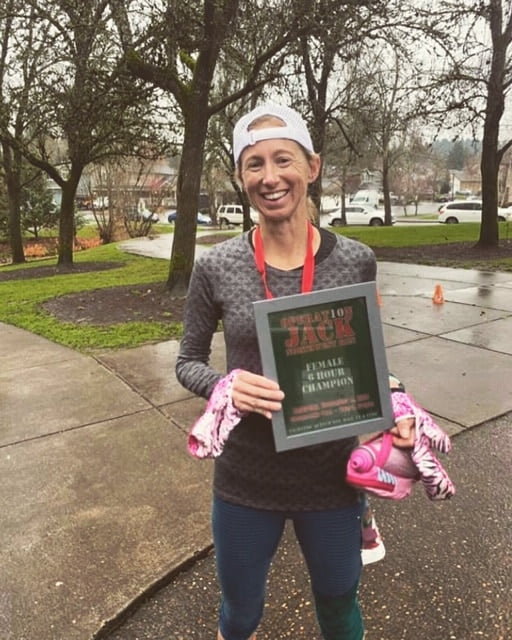
Results: Official results not posted yet, my result was 1st OA and CR with 41 miles and change (it’s a 9/10 mile loop, so you stop at the finish if you can’t make it one more loop)

operation jack 6 hour race report
Photo Credit: Steve Walters, RD

3 Bests – What aspects of the race did you like the most?

*This race was a last minute decision (signed up the night before) and one of the main reasons I did it was that it was a fundraiser for Autism and I was intrigued by the idea of a timed race. I didn’t go into it with any big expectations on great views or big crowds. So keeping that in mind, what I did like was…

1) All the money goes to a good cause
2) The park we ran loops around was open to the public, so I loved seeing so many people out walking despite the POURING rain
3) Getting to see the other runners so frequently and having access to our bags so often, plus I was fortunate that Zach Gingerich was there spectating and he jumped in and crewed for me for the first 4ish hours, since I was out solo. I love how awesome runners are. If I had my things more organized this could have even been a greater help, but I was so happy to see a friendly face so frequently offering to help.

Not so much – Aspects of the race that didn’t do it for you

-It rained for 6 hours straight – that was a bit hard for my muscles, especially since I don’t often run long on pavement or do runs that are so runnable, so it took a toll pretty quickly.
-The loop was challenging in that it had a lot of hairpin turns and lots of little hills. This would not be ideal if you were wanting to go for a lot of miles (about 2,000ft gain over 40+ miles, which is not major for trail ultras, but feels like a lot when trying to run steady splits). It is also pavement for the whole loop, so just good to know for those who prefer dirt timed courses.
-The small aid station was positioned behind the timing mat and hard to access easily.

Weird factor – What’s the weirdest thing about this race?

I am pretty sure running so many loops around a park is weird to most people.

Highlights of your race – What did you do well and enjoy about your race in particular?

Hmm, I can probably list a lot of things I did not do well since I went into it so unorganized. I would say smiling the whole time, despite running mostly alone and soaking wet for so long. It was hard to stay in it mentally and keep going for the whole time. Oh, and one of the bathroom stalls had a heater in it.

Lessons for others – Share your pro-tips on the race to help the next runner

See below in Lessons Learned.

Lessons you learned that will help you next time around

I think I went into this too casually. Even though I had no goals or big plans for it, just being organized could have made my day more enjoyable. I had my bag all thrown together and in the back of the covered picnic area that was not close to where we ran by, so I ended up not accessing my bag enough, thus not getting enough calories. I also only brought minimal calories since I signed up on a whim, and was in the valley, not at my house to grab my usual stuff. Because of how cold and wet I was, I never felt thirsty, but I could tell the next day I definitely did not drink enough. I also think I underestimated how hard running loops for so long would be. I had visions of meeting all sorts of runners and running with other people and it being a social event, but I think because of the weather people were so bundled up with heads down that I never really got to interact with others as much as I envisioned. Because of that, it was a long solo six hours. My legs went from feeling like I could easily run 7:50s-8:10s all day to suddenly feeling so tight and sore that by the end, 9:00 pace felt like torture. I am sure part of that is just due to never really running long on pavement and the cold rain, but I am sure part of it was also due to my lack of fueling/drinking/electrolytes. I love doing some races casually and not worrying too much about the details, but there are definitely things I could have done to help myself feel better and enjoy it more. Doing a loop course is such a great way to practice fueling, and I should have taken advantage of that since fueling at ultras is my challenge. I think being low key is great, but being unprepared is not so great. I was more the unprepared person on this day.

Most important course specific knowledge to know about the race

The mini hills feel huge by the end, and knowing the way the loop goes so that you can position your gear or car would be really helpful. It is a short loop, so you have lots of time to get to know the course.

Aesthetics – Is it a pretty course?

It is a paved loop around a neighborhood park, but it is a pretty park with a pond in the middle. I saw lots of birds – geese, ducks, blue heron. But it is an urban course still.

Difficulty – Is it a tough course?

It is not tough like a trail run, but it is challenging in a different way. I learned several lessons out there.

Organized and well run – Did it feel like a well-oiled machine or were they flying by the seat of their pants?

It is pretty laid back and put on mostly as a fundraiser. The race also offers a half and full marathon option. The timing system was very well done – we had chip timing and every time we crossed the timing mat our information was relayed onto a big TV screen so we could see what mile and loop we were on.

Competition – Is there a strong field?

No, lots of people use this race as a chance to walk a marathon with 6 hours to finish. But I think in a run like this it is kinda cool to be yourself against the clock. I was more aiming to get 41ish miles because the course record was 40ish, so in a way I was racing an imaginary person.

Logistics – Does it require a special handshake, registration a year in advance, hotels all booked? Give us the low down on the nuts and bolts of making the race happen.

Nope, signed up about 12 hours before it started and I could have signed up race morning.

Aid Stations – Standard fare or anything special to know about the aid stations in terms of what’s available or when?

Pretty minimal. Bring your own stash. I wish I had brought some more choices. They did have hot cider which was nice in the cold weather.

Weather and typical race conditions

It is Oregon in December. Probably pretty standard to have pouring rain, though not sure it always lasts the whole time.

Gear – Did you need anything special or is there anything you’d recommend for the next guy?

Warm food/drink in a thermos, (wish I had had), waterproof mittens, organized gear bag if going crewless.

Spectators – Is this a friendly course for your friends?

Yep! Great for family. There are playgrounds on the park, so if the weather is ok, it is very family friendly

How’s the Swag?

Not really, again, it is more put on to raise money. There are shirts if you sign up early enough.

The Overall Score – How many stars do you give this race and do you recommend that others run it?

I give the race an 8/10 as far as an event, just not sure the loop course on pavement is for me. Of course, I will probably want to try to do better someday, so I am sure I will try another one at some point. I think if the start/finish area had a bit more going on (music, people cheering, etc) it might be a bit more fun, but I don’t blame people for not wanting to hang out in the weather.

Ashley Nordell is a coach with Team RunRun. To learn more about her or to work with Coach Ashley, check out her coaching page.

run the rock 50 mile race report

Run the Rock 50 Mile Race Report – Matt P

Race: Run the Rock 50 Mile

Runner: Matt P

Race Date: 11/09/2019

Location: Smith Rock State Park, Terrebonne, OR

Results: 63/106 12:07:42

Strava Activity Link: https://www.strava.com/activities/2853670998

run the rock 50 mile race report
Photo Credit: Trevor Lyden

3 Bests – What aspects of the race did you like the most?

1. Beautiful desert terrain.
2. Mostly on smooth MTB singletrack trails.
3. Awesome aid stations: food and attendees.

Not so much – Aspects of the race that didn’t do it for you

1. Didn’t like that the 20 miler runners were sent downhill at us on an uphill segment for the 50 milers.
2. The big downhill sections were very rocky with scree like terrain.
3. Wow I really can ‘t think of a 3rd….

Weird factor – What’s the weirdest thing about this race?

The medal was a circular hunk of thin metal! Unusual for me!

Highlights of your race – What did you do well and enjoy about your race in particular?

I paced well especially early on, completing the first 50% in just over 5 hours. I really enjoyed the camaraderie established between similarly paced runners. I hydrated well and judged my food intake pretty well during the race.

Lessons for others – Share your pro-tips on the race to help the next runner

There is a lot of dust that can get into your shoes and this caused me serious blisters which killed my pace in the second half. Bring gaiters or a change of socks because once they get saturated in dirt it’s hard to undo.

Lessons you learned that will help you next time around

Be prepared to tape or lubricate feet, change of socks maybe. I’m also finding that a pack isn’t so necessary for me when the aid stations are good. Double bottles seemed to do it, and I could have stored gels in something lighter. Chafing is really — all over, from pack, shoes, etc. Prepare for these things.

Most important course specific knowledge to know about the race

The elevation profile is deceiving. It looks like 3 steep climbs but it’s actually quite runnable except for a few parts, and even those are runnable with enough stamina.

Aesthetics – Is it a pretty course?

Absolutely gorgeous — multiple volcanoes in sight, desert terrain, GORGEOUS.

Difficulty – Is it a tough course?

It is my first 50 miler but I think all things considered it depends on the athlete — it’s very runnable, which could be harder for some. I.e. some like a lot of steep hikeable vertical. All in all, I’ve run harder routes but the distance for me was uncharted territory.

Organized and well run – Did it feel like a well-oiled machine or were they flying by the seat of their pants?

Well-oiled machine. Alpine Running was all over it. Really enjoyed the race.

Competition – Is there a strong field?

Seems to be a popular race!

Logistics – Does it require a special handshake, registration a year in advance, hotels all booked? Give us the low down on the nuts and bolts of making the race happen.

I signed up 3 days before and no warnings of filling up. I was able to camp onsite at the starting line in my car. Lots of accommodations in nearby Bend, Redmond and Terrebonne.

Aid Stations – Standard fare or anything special to know about the aid stations in terms of what’s available or when?

Badass aid stations – real food as well as Muir gels, Spring gels, Tailwind, candy, etc. PB&J (YES!)

Weather and typical race conditions

It was wet last year I’m told, but it was 70 degrees and clear skies by mid day. I know some folks that didn’t finish because of this fact though.

Gear – Did you need anything special or is there anything you’d recommend for the next guy?

Don’t overdo it on carried supplies. I hardly needed anything that I brought and I only used my drop bag to ditch my hoodie after the startup.

Spectators – Is this a friendly course for your friends?

Yeah it’s open hiking/MTB trails so folks can come watch and hang.

How’s the Swag?

Cool buff, t-shirts, hoodies, and fun finisher medal.

The Overall Score – How many stars do you give this race and do you recommend that others run it?

5/5 – I recommend this one. I think it’s a good first 50 miler.

run the rock 50 mile race report
Photo Credit: Trevor Lyden
oregon coast 30k trail race report

Oregon Coast 30k Race Report – Jon-Erik J

Race: Oregon Coast 30K (Rainshadow Running)

Runner: Jon-Erik J

Race Date: 10/13/2019

Location: Yachats, Oregon

Results: 6th OA, 3rd AG 3:01:54

Strava Activity Link: https://www.strava.com/activities/2787397044

oregon coast 30k race report
Photo Credit: Michael Jardine: https://qamera.com/

3 Bests – What aspects of the race did you like the most?

– Beginning and ending “in town” creating a dynamic experience of a trail race coupled with a kind of domestic aesthetic.
– A coastal race; getting to run portions next to the roaring ocean shore waves that also boasts beautiful vistas, challenging hills (~3400′ elevation gain), and diverse forest trails.

Not so much – Aspects of the race that didn’t do it for you

The Highway crossing isn’t great, but it’s very minor in this race. Hardly remember doing it twice.

Weird factor – What’s the weirdest thing about this race?

You start and finish at this really real quintessential, modest pacific coast resort. Most of the town (as I head through the grapevine) didn’t know there was this event going on, and the hotel seems to be full of guests that aren’t just blatant runners or athletes of some kind. A real mixing of trail running community and small-town shore folk.

Highlights of your race – What did you do well and enjoy about your race in particular?

I did well in taking advantage of the flats. The race begins flat (first 3 miles) and ends flat (last 3 miles). This was an opportunity for me to test my speed, and it shined well out there along the shore break.

Lessons for others – Share your pro-tips on the race to help the next runner

Be prepared for the hills! The first one climbs to well over 900 feet and catches you by surprise, even though you know its coming, because of the first miles being quick and easy. The second big climb is much more gradual with some rolls into gullies. Knowing how you operate mentally in these different types of climbs will help you prepare how to tackle them head-on and stay focused.

Lessons you learned that will help you next time around

Climbs are always longer in your head than in actuality. Staying calm and focused with your breathing entering a climb is really key to be able to keep a consistent heart rate while ascending. Hills can really slow runners down (as it did for me) and cause a significant gap between racers that will be hard to make up.

Most important course specific knowledge to know about the race

There is one aid station you visit twice at mile 6.7 and 13.6.

Aesthetics – Is it a pretty course?

Yes, absolutely stunning. Twice you get to ascend to a vista looking out across the pacific, looking south. There is also a number of miles at the start and end in which you are running alongside the shore on the highway and on smaller streets (the 50K course actually takes you on 10 additional miles of sand running on the beach!)

Difficulty – Is it a tough course?

This is a deceptively tough course. The name and beach features make it seem like a stroll, but in actuality, you don’t stay down at sea level for long. The entire middle of the race has a total of 3 major climbs that take you to 1,000′. I’ve run 50k trail races with less elevation than this 30k!

Organized and well run – Did it feel like a well-oiled machine or were they flying by the seat of their pants?

Yes. Rainshadow always puts on a really good and organized run. Their races (including this one) have live music, free wood-oven pizza, and beer. Very well-marked course. There is also a spot where you cross Hwy 101 twice, which can be a little nerve-wracking. I had to stop on my way back and wait for traffic, but it was just one car and got going right away.

Competition – Is there a strong field?

Yes.

Logistics – Does it require a special handshake, registration a year in advance, hotels all booked? Give us the low down on the nuts and bolts of making the race happen.

The 50K filled up very quickly, but the 30K still had open spots. I believe there was also room at the hotel, although I am not entirely sure, I reserved a hotel room back in July.

Aid Stations – Standard fare or anything special to know about the aid stations in terms of what’s available or when?

No disposable cups. Rainshadow running has a culture of reducing waste and has opted out on having pre-poured cups available for runners. Instead, you can either bring your own water bottle or collapsible silicone cup that has become popular in these shorter races.
Packed with your typical fruits, PBJ sandwich cuts, electrolytes, Gu…

Weather and typical race conditions

Variable winds (can get really strong), sun breaks, ever-so slight drizzle at times. Temperatures in the low to mid 50s F.
Technical trail but easy to navigate.

Gear – Did you need anything special or is there anything you’d recommend for the next guy?

Plan to carry some water, you can get through AS quicker, and you’ll probably need it on the “backstretch” Lollipop loop.

Spectators – Is this a friendly course for your friends?

Yes! Although you can’t go to the AS. It causes problems for the Forest Service. Instead, drive up St. Perpetua rd to Perpetua Vista and await the runners at a stunning view! Also, the race is at a resort so great for friends who can just chill there all day as well if you’re taking your sweet time ;). There’s a visitor center as well that is a cool place to watch them zip by before the first big climb.

How’s the Swag?

Great. Lots of options and they even bring in older swag they sell on clearance.

The Overall Score – How many stars do you give this race and do you recommend that others run it?

I’d give this 5 stars out of 5. Some folks had the unfortunate happenstance of encountering ground wasps. A considerable number of swollen ankles hobbling around at the finish line post-race. Probably a single instance that won’t repeat itself each year! Other than that, this race was amazing. I’d recommend it to anyone!

oregon coast 30k trail race report
Photo Credit: Michael Jardine: https://qamera.com/
mountain lakes 100 mile race report

Mountain Lakes 100 Race Report – Christy S

“This was my first attempt at the 100-mile distance, and I was worried about cutoffs. I really wanted to get that buckle! I was thrilled that I was able to finish strong and get that buckle with a little over 2 hours to spare. I’d been around 1.25-1.5 hrs ahead of the previous cutoffs (miles 26, 55, 70), so I was really glad to expand that a bit in the home stretch. I think I paced myself fairly steadily, and I had enough left in the tank to run in the last 10k or so. I wound up passing people that I hadn’t seen since the earlier part of the race.”

Race: Mountain Lakes 100

Runner: Christy S

Race Date: 09/21/2019

Location: Olallie Lake, Oregon

Results: 27:58:43

mountain lakes 100 mile race report
Photo Credit: Darren Holt

3 Bests – What aspects of the race did you like the most?

1) Scenery for first 26 miles
2) Volunteers and aid stations
3) Well-organized event, well-marked trails, nice buckle
(sorry, that’s more than three)

Not so much – Aspects of the race that didn’t do it for you

-I got a bee sting in the first three miles.
-I fell early in the race (but that was my fault and could have happened anywhere).
-More portapotty locations (at aid stations on roads would be nice); there were 3 locations, but my GI doesn’t like ultras.
-The part that repeated (30M on the PCT) wasn’t as scenic as I’d hoped, but maybe I was just tired.

Weird factor – What’s the weirdest thing about this race?

It’s not weird, but there’s zero cell coverage anywhere (start, finish, major aid stations), which makes it a bit tricky to plan with crew and pacers. And the one-lane forest road to the start/finish is a little dicey.

Highlights of your race – What did you do well and enjoy about your race in particular?

This was my first attempt at the 100-mile distance, and I was worried about cutoffs. I really wanted to get that buckle! I was thrilled that I was able to finish strong and get that buckle with a little over 2 hours to spare. I’d been around 1.25-1.5 hrs ahead of the previous cutoffs (miles 26, 55, 70), so I was really glad to expand that a bit in the home stretch. I think I paced myself fairly steadily, and I had enough left in the tank to run in the last 10k or so. I wound up passing people that I hadn’t seen since the earlier part of the race.

Lessons for others – Share your pro-tips on the race to help the next runner

This was my first hundred, so I don’t have any pro tips to share. Just the usual stuff: don’t start too fast, keep eating, drinking, and always moving forward. Avoid chairs and warming tents! I never sat down except in the 4 portapotties along the course.

Lessons you learned that will help you next time around

Pacers and crew are awesome! Line them up early and have backups too. Have more liquid calorie options that I can suck down quickly when I don’t feel like eating anything; baby food pouches are helpful for drop bags, they’re bulky to carry. (Because I planned to eat a good portion of real food, I found I didn’t really bring enough gels once I couldn’t stomach solid food after about mile 40.)

Double-check batteries and lighting in advance; I forgot the proper battery for my Kogalla light and had to use a USB pack, which died after about 3 hours. I had backup, but it wasn’t nearly as bright.

Most important course specific knowledge to know about the race

It’s well-marked. The first 26 miles is the most scenic part (I think), unless you can run miles 55-70 in the light. 11k elevation change doesn’t sound like a lot over 100M (and isn’t compared to many mountain races), but it still adds up. Most of the race is between 3000-5000ft elevation (high point at 5700ft), so the weather and temperatures can vary quite a bit throughout the race.

Aesthetics – Is it a pretty course?

Yes, though most of the “Mountain Lakes” are in the first 26-mile loop, except for Timothy Lake (miles 55-70), which I ran in the dark. The lakes are gorgeous! The race bills itself “One of the country’s most beautiful 100-milers.” I’m a jaded Northwesterner because we have so many spectacular places here, so I thought the 30 miles that repeated on the Pacific Crest Trail (miles 26-55, 70-100) were not that amazing. Pretty enough, but kind of the standard PNW forest with occasional views. The start/finish at Olallie Lake with Mt. Jefferson behind it is stunning!

Difficulty – Is it a tough course?

For me, yes. 100 miles is tough. For a mountain/trail 100, it’s probably comparatively “easy” – that’s why I picked it as a good first one. But it was still plenty challenging for me, and it has quite a few rocky/rooted areas that aren’t particularly runnable, especially when being careful not to fall. (In typical fashion, I fell on the road part instead—just when I let my guard down.)

Organized and well run – Did it feel like a well-oiled machine or were they flying by the seat of their pants?

Go Beyond Racing puts on awesome races. I have been very impressed by all of them. Well-organized events, well-marked courses. I also appreciate how they reduce waste by having a cupless race, incentives for carpooling, and reusable mugs at the finish line.

Competition – Is there a strong field?

I think it’s a regional draw (mostly OR, WA, BC, ID) and doesn’t attract the big-name racers. (CR is 16:15 for men and 16:24 for women.)

Logistics – Does it require a special handshake, registration a year in advance, hotels all booked? Give us the low down on the nuts and bolts of making the race happen.

It’s a popular race with a lottery entry, capped at 170 spots. I think you register in January and the lottery drawing is the first week of February. I think in 2018 (when they instituted the lottery, I think) and 2019, the waitlist has cleared, so you can probably get in if you train and are willing to wait. I started at #37 in February and got in in late July. Trail work (8 hours) is required by Sept 1, so do that early. It was a scramble for me to complete when I got in off of the waitlist with an already-booked August calendar (but I should have done it before I got in).

If you can book the Olallie Lake Resort (at start/finish) right away, that would be awesome. There’s nothing else near the start. We stayed in Government Camp on Mt. Hood, which is about 1.5hrs away (though 30mins from the big aid station at mile 55/70).

Aid Stations – Standard fare or anything special to know about the aid stations in terms of what’s available or when?

I had to carry all my own food due to my delicate GI needs (celiac disease), but they seemed very well stocked. I was grateful for the broth in the night hours! They had GU gels and hydration, which I’m not a fan of. It looked like they had quesadillas, sandwiches, and the usual ultra fare. The night aid stations had festive lighting, costumes, and music, especially the Timothy Lake Dam – wow! The volunteers were awesome!

Weather and typical race conditions

I think it varies a lot from year to year. It’s the autumn equinox weekend in the Oregon mountains, so it could be summer, fall, or winter – or more than one season in the weekend! I think we generally lucked out with weather this year – no snow on the course. It was about 38 degrees F at the start (8am Sat), but it was clear, sunny, and quickly warmed up to the 70s. It cooled off once it got dark, maybe in the 40s at the higher elevations and 50s around Clackamas AS/Timothy Lake (mile 55-70, overnight for me). It started raining by mid/late morning, but it didn’t get hard until after I finished (noon).

Gear – Did you need anything special or is there anything you’d recommend for the next guy?

I found poles to be helpful, especially for the climb back up to Olallie Lake in the last stretch of the race. But I carried them for the whole time and used them sporadically even in the early parts, on more technical sections. When I left Olallie Lake (mile 26), I needed to dress for the heat of the day as well as the transition into night (warmth, light)… so I basically needed to carry all the things for that 30-mile stretch to my next dropbag/crew spot. (My friend didn’t have her jacket with her, and she got really cold in those last few hours.)

Spectators – Is this a friendly course for your friends?

It’s a beautiful area, but pretty much the only place to see runners is the start/finish/mile 26 (Olallie Lake) and mile 55/70 (Clackamas Lake)… and it’s about a 1.5hr drive on slow roads between them.

How’s the Swag?

I love my buckle!! And a finisher’s pint glass. They also have long- and short-sleeve tees (technical and non), hoodies, beanies, etc. available for pre-order and for sale at the race.

The Overall Score – How many stars do you give this race and do you recommend that others run it?

4.5 stars – yes, I would definitely recommend it to others.

mountain lakes 100 mile race report

hood to coast relay race report

Hood to Coast Race Report – Larry Merrifield

Race: Hood to Coast

Runner: Larry Merrifield

Race Date: 08/23/2019

Location: Oregon

Results: Team Results 80th Overall, 5th in Mixed Submasters

hood to coast relay race report

3 Bests – What aspects of the race did you like the most?

I’ve been running this race for 35 years during which I have run over 105 total legs and am a member of the inaugural Century Club, so there are way more than “3 Bests”. Relays are fun. What other race do you get together with running friends for a day or two running across a state or just down the road?

It is a team event. Running can be such a solitary endeavor, so a relay is an opportunity to run as team where each runner is dependent on the other.

The challenges. 199 miles using a team of 12 runners running from Mt. Hood to Seaside, Oregon. Each runner does 3 runs averaging over 6 miles per leg in an 18 hour period. Sleep deprivation and its effect upon your performance is real which in my case meant sleeping for 90 minutes in a 38 hour.

Not so much – Aspects of the race that didn’t do it for you

Traffic. The race has 1400 teams each of who uses 2 vans, so that math works out to 2800 vans. Even though teams start as early as 5:00 a.m. and the final wave of teams leaves at 2:00 p.m. Highway 202 in the Oregon Coast Range might as well be the 405 in Los Angeles. The backup means many runners on the faster teams (sub-27 hours) have to run a mile or so up the road to the exchange before they begin their final leg. When you have already run 12-13 miles hard this is a black mark on the race. When the RD prioritizes their financials over the quality of the race and assuring the enjoyment of the runners, it truly is a negative.

Weird factor – What’s the weirdest thing about this race?

Running at 2:00 a.m. down a dark road in the woods with little to no homes while ahead of you and behind you are other runners with headlamps and reflective gear.

Highlights of your race – What did you do well and enjoy about your race in particular?

My van which had 4 rookies to the race one of whom wasn’t even born when I started running the race. It is odd that most sub-masters (age 30-39) were not born when I first ran the race in 1985. The rookies were awesome, as was the other veteran in the van. No one had an attitude, everyone pitched in to get us from Mt. Hood to Seaside.

Lessons for others – Share your pro-tips on the race to help the next runner

Make sure and eat a good mix of protein and carbs within 30 minutes of finishing your leg. It really pays off on the third leg. Skip the easy calories of cookies, Pop-Tarts and energy bars as a means of fueling you. They aren’t substantial enough.

Lessons you learned that will help you next time around

After 35 years there really isn’t anything to learn.

Most important course specific knowledge to know about the race

If you are running any of the first three legs on Mt. Hood do some downhill specific training. It makes it much easier come race day.

Aesthetics – Is it a pretty course?

At times no. You run down Highway 26 from Mt. Hood to the outskirts of Portland. It’s a highway and while there are some scenic vistas, they are behind you. You then run along the Springwater Corridor, which can be scenic, but can be well…we have a homeless problem in Portland. After a quick run through downtown Portland it is back onto the highway heading from Portland to St. Helens. Who likes running along a highway? No one.

The course eventually gets scenic when climb out of the Columbia County Fairgrounds and head into the Coast Range. For the last half of the race the scenery of forests, open valleys with meadows, cattle grazing and elk make the miles pass pretty quickly.

Difficulty – Is it a tough course?

The challenge is running three times in 18 hours while spending most of the time between legs sitting in a van. Add in the lack of sleep and less than desirable meal choices with a full compliment of nutritious items, and the toughness is infused throughout the race.

Organized and well run – Did it feel like a well-oiled machine or were they flying by the seat of their pants?

Overall it is well organized and run, but even as I write this I shake my head. The race has been put on for 38 years and yet each year there is some problem with the leg descriptions in the booklet. It doesn’t matter that there were no changes to the leg, there is a problem that requires an email from the race director. Then there was the shirt snafu this year in which they ran out of large shirts at packet pickup. Since everyone has to register well in advance and give their shirt size, this is baffling.

Competition – Is there a strong field?

We were 80th in 26 hours 12 minutes. That is an average of 7:54 per mile. So yes, from my perspective the field is strong when nearly all the top 100 teams run under 8 minutes per mile that is an indication of a strong field.

Logistics – Does it require a special handshake, registration a year in advance, hotels all booked? Give us the low down on the nuts and bolts of making the race happen.

Registration is by lottery in October the year prior to the race. Hotels and vans are booked up as well. You have to be on it even before the race registration opens because if you wait until you are accepted it gets much harder to find hotels or homes by the finish and vans to get you there.

Aid Stations – Standard fare or anything special to know about the aid stations in terms of what’s available or when?

A fairly new addition to the race in the last few years are water stations on any leg over 6 miles. The water station is at the midpoint of the leg.

Weather and typical race conditions

It can be cool and cloudy at the start on Mt. Hood to sunny and hot. This year it was sunny and hot. Then when you get to the coast range the next morning it is usually cloudy and cool in the morning before becoming typical comfortable beach weather by the afternoon when you reach the beach. So in sum be prepared for everything.

Gear – Did you need anything special or is there anything you’d recommend for the next guy?

Nothing special is needed but runners are required to wear a headlamp, a reflective vest and have two flashing LEDs (one on the front, one on the back) from 7:00 p.m. to 7:00 a.m.

Spectators – Is this a friendly course for your friends?

No.

How’s the Swag?

You get a Nike Dri-Fit shirt, which is of nice quality, and a finishers medal which also has a bottle opener, but beyond that you get nothing

The Overall Score – How many stars do you give this race and do you recommend that others run it?

I’d give the race 3 stars out of 5 this year. Why? By allowing 400 more teams in they created traffic congestion that had previously been resolved using 1000 teams spread out over 9 hours. An increase of 40% in the field size was going to create traffic headaches and they knew this. Plus, they tout being a Certified B Corporation, which is a corporation which is supposed to evaluate its environmental impact in its endeavors, so who thought adding 800 vans to narrow roads where they would idle and spew carbon monoxide was going to be a positive environmental impact?

It calls itself the “Mother of All Relays” and it really is, so yes I would recommend it to others.

Larry Merrifield is a coach with Team RunRun. To learn more about him or to work with Coach Larry, check out his coaching page.

wyeast howl 50k

Wy’East Howl 100k and 50k Race Info

Summary: Wy’East Howl 100k and 50k are on the super scenic, runnable singletrack trails on the slopes of Mt. Hood, with plenty of vert to challenge runners in both events. New for 2019, the 100k course is an out and back starting and finishing at Mt. Hood Meadows Ski Resort, while the 50k is a point to point, starting at Rim Rock and finishing at Mt. Hood Meadows (new 50k course in 2019, about 1,500 feet less climbing).

Lessons Learned from Race Reports

  • Typical weather is warm and sunny but 2018, the inaugural year, saw rain, fog and chilly temperatures, so be prepared. Several race reports talking about being very cold for a lot of the race and not being able to stop long at aid stations because they were so chilly.
  • New course for 50k in 2019 – less elevation gain of 6,500 vs. 8,000 in 2018
  • Course descriptions on race website note creek crossings – be prepared for wet feet and possibly have shoes in your drop bag if you think this will bother you

Elevation

Total gain/loss:

100k: 11,600/11,600

50k: 6,500/5,100

Ft/mile gain:

100k: 187 ft/mi

50k: 210 ft/mi

Total climbs:

100k: 6 main climbs of ~1,000-1,500ft, with the longest and most gain from miles ~7-14 and ~37-44

50k: 3 main climbs of ~1,000-1,500ft, with the longest and most gain from miles ~6-13 and ~25-30

100k Course Map/Elevation profile

50k Course Map/Elevation profile

Aid stations

Total aid stations:

100k – 9

50k – 4

Furthest distance apart: 7.6 miles

Locations:

100k: Miles 7.4, 11.6, 18.4, 26, 31.3, 36.6, 44.2, 51, 55.2 (Bold = Crew access)

50k: Miles 5.5, 13.1, 20, 24.2

What’s available: Not noted on website – prepare for typical aid station fare of salty and sweet, soda, water, and plan accordingly if you need something special. Drop bags are allowed at several aid stations.

Crew access

Access Locations:

100k: Miles 7.4, 26, 36.6, 55.2, and start/finish. Miles 7.4 and 55.2 are the same aid station (Bennett Pass), and 26 and 36.6 are the same as well (Surveyor’s Ridge)

50k: Miles 24.2 (Bennett Pass) and finish at Mt. Hood Meadows. Not enough parking at Surveyor’s Ridge (mile 5.5) for 50k crew.

Crew instructions/directions: Limited parking at aid station at miles 26 and 36.6 for 100k runners (Surveyor’s Ridge) and 50k crew are asked to not go to that aid station because of parking.

Pacers

None

Race reports

Frank Fisher’s 2021 100k Race Report

Rob S’s 2018 50k Race Report

https://runoregonblog.com/2018/10/30/race-recap-inaugural-wyeast-howl-50k/

Race Website

https://www.daybreakracing.com/wyeast-howl/

mt hood 50 mile

Mt. Hood 50 Mile Race Info

Summary: Starting at the Clackamas Lake Ranger Station, runners do two out and backs, first heading North 14.2 miles to the Frog Lake Aid Station, then turning around, passing through the Clackamas Ranger Station at mile 28.4, and heading South for another out and back. The course is almost entirely on the Pacific Crest Trail, and is heavily shaded with soft, good footing, with some technical sections of rocks and roots. Other distances run are a 50k (on Sunday, so runners can run the 50/50) and a 25k.

Lessons Learned from Race Reports

  • Cupless race, so be sure to have your own bottles and/or bladder
  • Nearest hotels are in Government Camp, OR, which is 21 miles from the start/finish. Lots of camping options nearby (search for Timothy Lake)
  • While the race is described as not very technical, expect it all to be technical, then be pleasantly surprised when you get smoother sections of trail
  • With the course being out and backs, be prepared to be passing people on the single track sections. With it at least being a small field, it’s not too troublesome
  • If you’re camping, be prepared for mosquitos!
  • Even with how shaded the trails are, it’s still going to warm up if the sun is out, so make use of the ice at the aid stations
  • With shade and warmer temps, it’s easy to get overheated without noticing, and then your stomach goes sour, so be aware of keeping cool in order to keep fueling
  • 2nd half is inevitably harder because, well, you’ve already run 28 miles, but also because there are 3 sizeable climbs and descents left. If you’ve run too hard too early, the second half will be that much more difficult
  • Be mentally prepared to go through the mile 28 aid station efficiently, as it’s the start/finish, and you don’t want to be tempted to drop out
  • Lots of scenery to look at throughout, just be sure to keep one eye on the trail so you don’t fall while you’re checking out Mt. Hood 🙂

Elevation

Total gain/loss: 5,630/5,630

Ft/mile gain: 113

Total climbs: 2x1000ft, 1×600, 1×500, 2×400, countless rollers smaller climbs

Longest climb: 1000 ft from ~23-32

Steepest climb: 400 ft from ~10.8-11.6

Course Map/Elevation profile

Aid stations

Total aid stations: 9

Furthest distance apart: 6 miles

Locations: Miles 6, 9.2, 14.2, 19.2, 22.4, 28.4 (the start/finish), 33.7, 39.2, and 44.7

What’s available: Standard ultra fare, including but not limited to GU gels, GU electrolyte drink, chips, PB&Js, pickles, gummy bears and other salty and sweet snacks.

Crew access

Access Locations: Miles 0, 9.2, 19.2, 28.4 (the start/finish), and 50 (finish). Miles 9.2 and 19.2 are the same aid station, as runners hit 9.2 on the way out and 19.2 on the way back, then go through the start/finish at mile 28.4 before beginning another out and back, which is not accessible by crew.

Crew instructions/directions

Pacers

None

Race qualifiers

50m: 3 UTMB points

Race reports

Delaney’s 2018 Race Report

https://freeradical.me/2016/07/14/tripping-stumbling-mt-hood-50m/ (lots of good photos)

https://trailto50.com/2014/08/10/mt-hood-50-mile-race-report/

https://www.bibrave.com/races/mt-hood-50-reviews#.Wy6os4gvw2w

https://athlettuce.com/2017/07/19/mt-hood-50k-recap-and-review-ultramarathon-25-state-20-oregon/

Strava activities and GPX files

https://www.strava.com/activities/66910077

Race Website

https://gobeyondracing.com/races/mt-hood-50/

peterson ridge rumble

Peterson Ridge Rumble 40 mile Race Report – Ashley Nordell

Race: Peterson Ridge Rumble (20 mile and 40 mile- I did the 40)

Runner: Ashley Nordell

Race Date: 04/14/2019

Location: Sisters, Oregon

Results: http://www.runwildadventures.com/wp-content/uploads/2019/04/2019-Peterson-Ridge-Rumble-40-Mile-Results.htm

peterson ridge rumble

3 Bests – What aspects of the race did you like the most?

  1. This race is a fundraiser for our local cross country team (which my husband coaches), so we see first hand how the money raised from this race is used. The race is a non-profit, and all proceeds benefit the cross country team, with a donation also being made to the Sisters Trail Alliance. So going along with this, the community aspect of the race is my number one “best.” The race finishes around the track, and people congregate in the infield post race, so everyone hangs out cheering on other runners. The cross country kids all volunteer at the race, so they give back to the event that gives so much to them. It has a very “small town community” feel.
  2. The organization- I will admit I am biased here – we are good friends with the race director, and help with many aspects of the race, but that also gives me an “in” to see all the work that goes into putting this event on. The RD does not live here in Sisters anymore (though he is looking to move back), so he comes out here a week early and is very attentive to all the important details that make a race successful. He hires out the timing and post-food catering so he can focus all his attention on the other aspects of race directing.
  3. Post race meal – burritos by Long Board Louie’s

Not so much – Aspects of the race that didn’t do it for you

We can have very fickle weather in April here in Sisters. This year was perfect running weather, though a bit cold for the post race hanging out. It could snow, rain, or be 70 degrees. A week before the race we still had a bunch of snow on the course, though by race day it was 99.9 percent gone. The 20 miler allows dogs and this year there was a record number of dogs, so if you are not a dog person, you might find the 20 mile start a bit overwhelming.

Weird factor – What’s the weirdest thing about this race?

Probably 70 dogs (rumor has it that was the number), or the three feet tall chocolate bunny I won.

Highlights of your race – What did you do well and enjoy about your race in particular?

I ran the first half of the race with two friends and the time flew by. I think keeping the Peterson Ridge trail section a bit more conversational pace allowed me to have a strong second half. I also tried a new nutrition plan – I used Skratch drink instead of Tailwind, and though it had less calories, I liked how it tasted and seemed to settle well in my stomach. I even ate some gels, which I usually cannot stomach, but the cooler temps and easier effort early on made me be able to eat a bit more. I felt super strong at the finish, which is always way more desirable than the death march finish.

Lessons for others – Share your pro-tips on the race to help the next runner

This is a very runnable course- I ran every step of the 40 miler (closer to 37 miles). I passed several people at the end who were having cramping issues. I think the faster pace and using the same muscles for so long caused people to have muscle issues. The 40 miler is sort of two parts – the up and down on the Peterson Ridge Trails (first half), and then what we call the red cinder road section, which takes you up a long climb before hitting the Metolius Windigo Trail to complete the second half. Dividing the course mentally into two parts helps with pacing. It is important to save some legs for the longer climb on the second half, and I think many people take the race out too fast. If training specifically for this race, it would be important to do some long runs that are really runnable.

Lessons you learned that will help you next time around

Bring a bit more calories to carry with me – other than water from aid stations, I mostly use my own stuff, and I ate more early on than I normally do, so I wished I had a couple more gels. Cooler temps can make me more hungry too.

Most important course specific knowledge to know about the race

Like I covered above, I think what gets most people is how runnable it is. The trail sections have some rocky areas, but also some great fast single track. There are some long stretches of fire roads, which can either be mentally daunting or nice because you can open up your stride a bit. The 40 miler finishes with a net downhill the final 9 miles with two sneaky climbs.

Aesthetics – Is it a pretty course?

Sisters, Oregon is high desert, with lots of Juniper and Ponderosa Pines. The course is all dirt – whether it be single track (Peterson Ridge and Metolius Windigo trails) or fire roads, and finishes running around the middle/high school track. Because I live here, I often get a bit tired of those trails, but those who visit say they love them. There are some great views of the Three Sisters and other mountains if you are lucky to get a clear day.

Difficulty – Is it a tough course?

No, other than the fact you have to run so much more than a lot of ultras. I find the 20 miler to be harder than the 40 because the pace is that much faster and you can’t really ease into the pace as much.

Organized and well run – Did it feel like a well-oiled machine or were they flying by the seat of their pants?

This was the 17th year – it is dialed in well. This year they switched to pink ribbons (instead of yellow), which made it much easier to see course marking.

Competition – Is there a strong field?

Yes, especially the 20 miler. Bend, OR is so close, we get a bunch of fast runners. But it is also a fun, low key event, so the draw to this race is not the competition as much as a great weekend event.

Logistics – Does it require a special handshake, registration a year in advance, hotels all booked? Give us the low down on the nuts and bolts of making the race happen.

The race fills every year. The permit is for 500 runners between both races, and the RD usually allows about 575 to enter (factoring in the average number of no-shows). Lots of people camp in the middle school parking lot or in the national forest right by the school. We have limited number of hotels here in town, but lots of house rentals available. Bend is also close by, so I know of many runners who stay there or rent a cabin in Camp Sherman.

Aid Stations – Standard fare or anything special to know about the aid stations in terms of what’s available or when?

There are doggy treats for the dogs. Standard fare – oranges, soda, candy, hot food (at least at an aid station in the 40), Gu, Nuun, etc. There are also drop bags available. Aid stations are every 4-7 miles.

Weather and typical race conditions

Weather can be ANYTHING. It spat snow for a bit this year, but was also 50’s and sunny for part. We have had it lightly snow and we have had 70 degrees. It can often be windy. The trails dry out quickly, so it is rarely muddy except in sections.

Gear – Did you need anything special or is there anything you’d recommend for the next guy?

Because the race is so fast, it is nice to be able to be fairly self sufficient and not have to stop too often (if you are trying to race for a specific time or place). I used two aid stations the entire race, and carried two 12.5 oz bottles in my Nathan pack. If it had been hotter, I am sure I would have used more water. Paying attention to the weather beforehand can help in knowing what clothing to wear. I was able to get away with shorts, a T shirt, and arm bands, but some years you might need more layers. If you are a watch person and are paying attention to the mileage, the course comes out at about 37 miles, not a full 40.

Spectators – Is this a friendly course for your friends?

Yes! It is a friend and family encouraged event! There is a gravel road called Brooks Scanlon that runners head out on for several miles, and also come back on for some miles. It is a great place to spectate because there is ample parking and places to stand, and you can see runners both directions. Cow Camp Aid (about 4 miles from the finish of the 40 miler) is another good place to watch for your runner because there is plenty of parking and it is easy to get to. Most of the aid stations are crew accessible. Everyone hangs out around the track at the finish, and runners’ friends and family can pay a small donation to eat the post race food as well (this year significantly fewer people paid the donation and unfortunately that is a lot less money that goes to the team in the end because the food is catered and one of the highest race expenses). This is a great race for families with kids- the grassy infield and high jump mats are a hit for little ones. There are a LOT of dogs at the finish, so just something to keep in mind if your kids are scared of dogs.

How’s the Swag?

Drymax socks to all finishers. They are always awesome (and secret until race day) designs. The race is also fairly cheap as far as ultras go, and it is always nice knowing the profits are going to benefit kids (or any great cause). There is always a raffle with lots of great sponsor prizes (Mountain Hardware/Montrail is one of the sponsors), and winners receive $100, plus an assortment of other prizes.

The Overall Score – How many stars do you give this race and do you recommend that others run it?

I definitely recommend this race if you want a fast, competitive, well put on event that has a great community feel.

Ashley Nordell is a coach with Team RunRun. To learn more about her or to work with Coach Ashley, check out her coaching page.

elk kings mountain marathon

Elk-Kings Trail Mtn Marathon Race Report – Ashley Nordell

elk kings mountain marathon
Photo: Go Beyond Racing

Race: Elk-Kings Trail Mountain Marathon

Runner: Ashley Nordell

Race Date: 10/13/2018

Location: Tillamook National Forest, Oregon

Results: 5:27, 1st gal

3 Bests – What aspects of the race did you like the most?

  1. The weather made the entire day amazing – we don’t often get sunshine from the beach to the mountains in mid October in Oregon, but I could not have asked for a more blue bird, perfect fall day. To go along with this, the race has amazing views, which we were able to see without rain, fog, or clouds. It’s a beautiful area!
  2. The course- OK, this was a love/hate. The race was 27.5 miles and gained 8,000 ft (my Garmin showed over 10,000, but it was probably wonky in the woods and with all the swtichbacks). There were several sections of literally crawling on hands and knees to get up the climbs, there were ropes to help us down from the steep sections, it was rocky; the race was gnarly. I can’t think of any other races in Oregon that offer so much elevation in such a “short” distance, so it was a unique event and so different from what I usually run. I have done the Elk Kings Traverse 50k, and it shares a small section of the course, but the mountain marathon actually peaks both Elk and Kings Mountain twice, so you get a lot more climbing, views, and technical running in the marathon (my marathon time is slower than my 50k time at this event). I have not done much climbing in training, especially since Superior, so my legs were like jello by mile 8. I absolutely loved it, although I had serious concerns I would need to just lay down in the trail and re-group a few times throughout the day.
  3. The RDs/Event- Go Beyond (Todd and Renee) are very seasoned RDs and they put on great events. You know if you are doing a Go Beyond race, it will be well organized. There races are also cup-less, which I think more events should be doing!

* Bonus “best”- This race is great if you have kids because it is 30 minutes from the beach, so my family dropped me off, went to the beach and the Tillamook Cheese Factory, had a great day, and then made it back 10 minutes before I finished. The finish is at the Tillamook Nature Center, so there are things for kids to do/see right at the finish. So its a win/win for families.

Not so much – Aspects of the race that didn’t do it for you

Nothing really! Maybe some cold sodas at the finish would have been nice, but they do have beer and chocolate milk.

The only thing I did not love is that there are a few sections where (one in particular) where you are coming upon the 50k runners going out, plus the faster 50k runners going back, so there was a few miles of single track that became a bit of a traffic jam. If the Mountain Marathon got much bigger, I could see this being an issue. Plus, it was such a nice day out, there were a lot of hikers on the trail as well.

Weird factor – What’s the weirdest thing about this race?

Three ropes sections to descend – you don’t get that too often in Oregon races.

Highlights of your race – What did you do well and enjoy about your race in particular?

I signed up on the last possible day (this is a theme for me), so I did not actually plan to do this race. Because of this, I went in relaxed and could just enjoy a long day on the trails. I think I ran happy and positive, even when I was silently cursing the climbs and worrying I may have gotten in over my head. The last 7.5 miles are slightly more rolling (instead of straight up and straight down), and once I recovered from the last steep downhill, I was able to get my legs back a bit to finish strong. I used Tailwind (three packets throughout the day), one cup of coke, and few gummies. My stomach was fine, and it seemed to be enough. I was pretty thirsty by the end, so might have needed to drink a bit more.

Lessons for others – Share your pro-tips on the race to help the next runner

The race is essentially three climbs – one long, somewhat gradual one before becoming steep at the end, one super steep (hiking the entire thing) and one rolling. There are two runnable sections- the stretch after the first steep downhill before you climb back up Elk and Kings, and then the final 7.5. Both runnable sections still have climbs (the second one includes the last climb of the race, but after the first two climbs, it seems tame). The race ends with a net downhill, which is always nice. So, save some legs for the end if possible.
There are two other race options as well – the 50k is also challenging, and has an out and back along the river, and then a different out and back that climbs the base of the mountains. The 25k climbs all the way to the top of the peaks once, before finishing the same way as the 50k and marathon.

Lessons you learned that will help you next time around

Practice climbing/descending – I know I am not a great technical downhill runner, so I would definitely work on this a bit. I think I could have run a bit better if I had done some more training on climbs, especially steep ones. Even some leg strengthening exercises or stair work would be helpful. Also, I think my shoe choice wasn’t great- I am loving the Hoka Torrents, but my feet slide around in them a bit, especially on something this steep. I love their traction, but I think a tighter fitting shoe would be helpful for the nature of this course.

Most important course specific knowledge to know about the race

If it were to be rainy, this course could be even more gnarly. The higher points are technical, the lower parts are more buffed out trail. Overall, the most important thing is just to be prepared for the amount of climbing and descending. The second climb gains over 2,000 ft in about 2 miles.

Aesthetics – Is it a pretty course?

Very! Think PNW greenery, single track, finishing across a river. There are amazing views if you are lucky enough to hit the weather jackpot. The location is between Portland and the beach, so you get a cross of vegetation between these two areas.

Difficulty – Is it a tough course?

10/10 in difficulty. It does not have altitude as a factor, but the steepness makes up for that!

Organized and well run – Did it feel like a well-oiled machine or were they flying by the seat of their pants?

Super well run-  seasoned RDs, so you know if you are doing one of their races, it will be organized and have great volunteers.

Competition – Is there a strong field?

I think it varies year to year – there are three events going on at the same time – 50k, mountain marathon, and 25k, so between the three you have about 200-250 runners. It is close enough to Portland that it always seems to draw a fast crowd from the locals.

Logistics – Does it require a special handshake, registration a year in advance, hotels all booked? Give us the low down on the nuts and bolts of making the race happen.

There is even race day sign up, so you can be a last minute decision maker like me and still get in (if not full!). The race is close enough to Portland or the beach that you could stay in either location if coming from out of state. Because the marathon started late (9:00), I was able to stay in Corvallis at my parents’ and drive up race morning. The last time I did the 50k out here, we camped near the start area in some dispersed camping. Most campgrounds nearby are closed for the season.

Aid Stations – Standard fare or anything special to know about the aid stations in terms of what’s available or when?

The aid stations are every 3-5 miles, so I only carried one bottle. Some of the aid had just water/gu, but there were several fully stocked aid stations with the standard fare. The race is cupless, so I carried an Ultraspire collapsible cup in my pack.

Weather and typical race conditions

This time of year, you can get anything. Being close to the coast, it can be fogged in even if the valley is clear. You can also get inversions, rain, fog, sun, wind, you name it. We had a cold (40 degree) start and about 70 degree finish, but I would say rain or fog is more likely.

Gear – Did you need anything special or is there anything you’d recommend for the next guy?

Good traction trail shoes are pretty helpful, especially for the descents, most especially if it is wet.

Spectators – Is this a friendly course for your friends?

The finish is really the only place to see people unless you have family out hiking. But the finish is at a great location with a river, so its not a bad place to wait. Or send you family to the coast for the day and meet up at the end!

How’s the Swag?

I think all finishers receive a pint glass and socks. There is beer and hot food for finishers and family (donations). I also received a free pair of Nike shoes, an extra pint glass, and a really special glass made locally with Mt. Hood designed in the bottom as a prize – plus a gold crown for being queen of the mountain. There are T-shirts and other swag available for purchase. I believe they also had some great raffle prizes.

The Overall Score – How many stars do you give this race and do you recommend that others run it?

I would give this race a 5/5 stars – It was really a great event.

Ashley Nordell is a coach with Team RunRun. To learn more about her or to work with Coach Ashley, check out her coaching page.
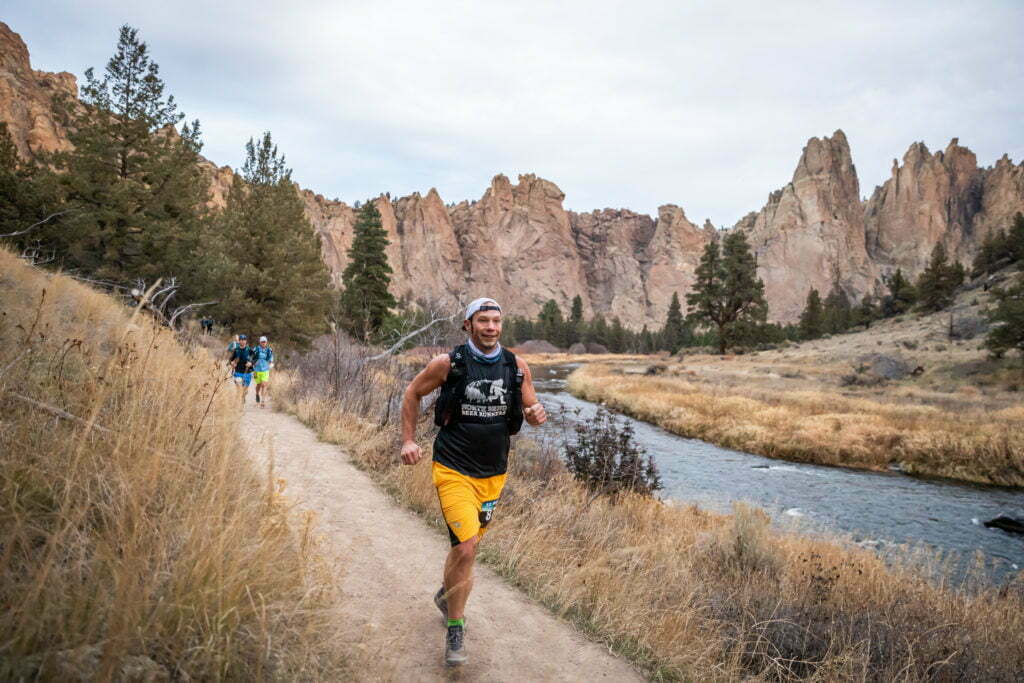
wyeast howl 50k

Wy’east Howl 50k Race Report – Rob S

Race: Wy’east Howl 50k

Runner: Rob S

Date: 10/6/2018

Location: Mt. Hood, OR

Results: 8:30:10

wyeast howl 50k
Photo: Pursuit Films

This was Not a Midlife Crisis

The pounding on the cabin’s roof was relentless. Worries of a cold and wet event haunted my restless sleep. Would I be dry enough? Would I be warm enough? I wrangled my thoughts around the possibilities until, at some point, I just said, “Screw it.” Instead of using the ultra-light layers I had so carefully researched and purchased, I would instead rock my ‘city’ rain jacket that would not only repel the most torrential of rains, but simultaneously keep me warm simply through its lack of breathability. No more worries. Time for sleep.

I awoke to the beeping drone of my alarm at 4:45am. The inaugural Wy’east Howl 50K would commence in under 3 hours. Eat the pre-planned breakfast, gather all the essentials for the day, and get to the race in time to register/pick up race bib. I had run a marathon several years ago. A road marathon. I retired from marathons as I crossed the finish line. A couple years later, I ran a 25K trail race in the North Cascades. A difficult race for sure, but clearly to my liking as evidenced by my dorky grin beaming from start to finish.
So here I am, about to turn 50 and standing at the start line of a 50K ultra-marathon trail race that would take me from a trailhead down in the valley up onto the broad shoulder of Mt.Hood. Apparently, the race moniker, ‘valley to volcano,’ wasn’t just a snappy slogan. I had decided early in the year to run my first ultra in honor of my surviving 50 years in this crazy world. 50Ks for 50 years had a nice ring to it. (Much better than 50 miles for 50 years) I had trained hard all summer for this moment. Anne and TT even came up to root me on. There was no turning back.

3…2…1…GO! The herd of roughly 100 runners jogged up an old gravel road for a short warm up until connecting onto a trail that would take us up 2500’ in roughly 2 miles. The beauty of this climb, steep as it is, unless you are ‘racing,’ you needn’t run. Power hiking is acceptable, and even encouraged, in order to save energy for the multitude of Ks yet to be traveled. Hiking happens to be my strength. Just one foot in front of the other.

The herd had spread out quite a bit by the time we got to the top. I was hopscotching back and forth amongst an assemblage of fellow runners who seemed to share a similar fitness level. The first big downhill was welcome and a total blast. My feet were quick, dodging rocks and roots, as I raced down the slope. The trail was twisting and turning with the topography. I was skipping, leaping, and even howling. All that training was worth it.

The first aid station came quickly. Volunteers were all dressed in wolf costumes. Could this get any better? I fueled up on some tasty snacks, thanked the volunteers, and was off. Only 42Ks to go. The next stretch was tough. It was rolling trail, but rolling uphill. In other words, it was a long, mellow climb with a few short descents thrown in. I could try to grind this section out, but I knew that would likely wreck me. So I took it easy, staying with a fellow Seattleite (via Russia) the entire way. I’d like to think we pushed each other to dig a little deeper.

The second aid station came and went. Once again, great volunteers and snacks. My Russian comrade and I stuck close. This was his first 50K as well. 2000’ of gain in 7 miles to the high point of the race, and the next aid station. I should mention, the travel brochure for this race promised fabulous views of Mt Hood, willing us toward the finish. Oops. Although it wasn’t raining, (so much for my midnight worries) we were one with the clouds. Literally, running through them. Couldn’t see more than 100 yards in any direction the entire day. The great volcano was out there somewhere, but we were blind to her. All was not lost, however. Being early autumn in the high country, the bright yellows, oranges, and reds cast the perfect foreground to the deep greens of the spruce and fir forest. I never tire of October color.

It was a bit chilly at the third aid station. 30Ks into the race; I was tired but feeling positive. I fueled up and happily ambled down a rare, sustained section of descending trail, letting gravity work with me for once. By now, the train of participants was so spread out I was running by myself most of the time. A classic Pacific NW mist hung in the air. Another 1000’ climb followed by a reciprocal downhill. Not nearly as fun as earlier in the race with my tired legs, but I was still moving. Then a sudden pain in my left ankle. As I looked to see what happened, another pain in my right thigh. I found a burst of energy as I ran while swatting bees away. Only a couple stings, but still…really?? It was wet and cold out. Why were they even up and about? I walked off the pain for a few minutes and continued plodding along until… nirvana.

The most amazing aid station I’ve ever come across. A big roaring fire to warm me up. A hot and gooey quesadilla fresh from the frying pan. Even beer and wine. I REALLY wanted to have a beer, but I knew if I started drinking now the volunteers would be driving me to the finish line. Would that be so bad?? No. Yes. I mean, I gotta keep moving. Off into the cloud bank I went. Only 11Ks to go; half downhill with the final Ks back up. Who designs such torture??

I saw nobody but occasional hikers for the remainder of the race. I was ready to be done. Where was this promised finish line? Hopefully it would be easier to find than the volcano. A couple beautiful waterfalls distracted me briefly as I trudged forward. Then I saw it. Glorious civilization. A familiar voice rang out, “Great job, honey.” I had made it. I put on my relieved/happy face and ran to the finish, happily accepted my awards for accomplishment, (a cool bottle opener and a pint glass) and slowly moved inside where I sat for a long time. Until, that is, I heard there was chocolate milk to be had. I can always get up for some chocolate milk.

8 hours 30 minutes. A respectable time for a first time ultra runner, especially one with 8200’ of elevation gain. I’m glad I did it. I’m proud that I finished standing up. The 25K is probably my wheelhouse race, but I could definitely see myself running another 50K…one day.

Oh, and by the way, while Anne and TT were strolling around Mt Hood after they dropped me off, they noticed something moving on a ridge above them. A dog of some type. After careful observation and some Google research, it turned out to be a wolf. A Wolf!!! I knew they were in the area, but didn’t expect to see one. Of course, I didn’t. Anne and TT did. Yep, no matter what I do, how far I run, how high I climb; Anne will always be there to one up me.

wyeast howl 50k
Photo: Pursuit Films