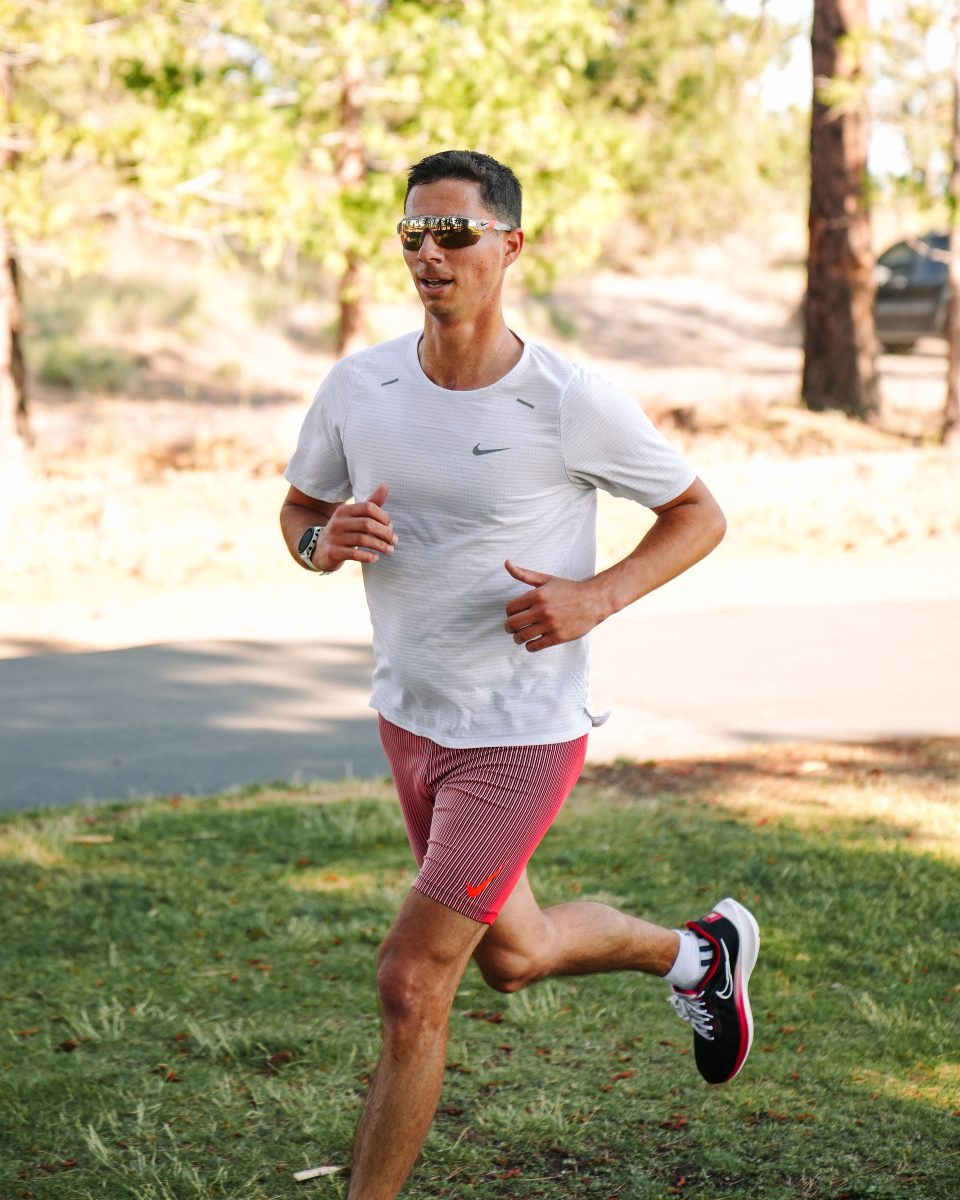
In this training tips article, Team RunRun Coach Miles Bennett-Smith continues his series diving into the wonderful world of running shoes, this time sharing his picks for the best daily running shoes on the market made specifically for your daily training needs.
Choosing the right pair of running shoes is a critical decision for any runner, be it a novice just starting their journey, or an advanced runner aiming to improve their performance and crush a qualifying mark. The market is flooded with countless options, each promising superior comfort, support, and performance-enhancing features. However, not all shoes are created equal…and most importantly, all runners have been created differently.
In this article, I will guide you through a curated list of top running shoes on the market, specifically tailored for new and intermediate runners. Whether you’re searching for cushioning, stability, or versatility, I’ve got you covered. Let’s lace ‘em up!
1.Nike Zoom Pegasus 39 (Neutral):
First on my list is a perennial favorite among runners – the Nike Zoom Pegasus. Renowned for its versatility and responsive cushioning, Nike’s Pegasus line has been a trusted companion for runners for decades. You will note that this is not Nike’s latest iteration, the Pegasus 40, because the 39 offers virtually the same shoe but can be found about $50 cheaper online. The Pegasus line features an updated mesh upper for enhanced breathability and a midsole that strikes an excellent balance between cushioning and responsiveness. It won’t be featured in many Instagram stories for doing anything bold or “sexy,” but it’s still regarded as a neutral shoe that is unlikely to rub blisters, is light enough for the average beginner’s pace, and can tackle long distances while delivering consistent performance.
2.ASICS Gel-Kayano 29 (Stability)
For runners in search of additional stability and support, the ASICS Gel-Kayano 29 stands out as a reliable option. This shoe boasts a well-crafted blend of cushioning and stability features, making it ideal for runners with overpronation or those seeking a little extra support. The Gel-Kayano 29 utilizes ASICS’ proprietary Gel cushioning system with pads to absorb shock in both heel and forefoot, and provide a smooth stride. The shoe’s updated upper offers improved breathability and a more secure fit, combined with a slightly low-profile heel ensuring a comfortable ride throughout training sessions.
3.Brooks Ghost 15 (Neutral)
Next up in my top daily running shoes on the market list, we have the Brooks Ghost 15, a shoe that epitomizes comfort and durability. The Ghost series has consistently been a go-to choice for runners seeking a plush, cushioned ride. With its soft yet supportive midsole, the Ghost 15 excels in providing a smooth and effortless running experience, with an updated DNA Loft v2 foam that’s even lighter than prior models. The shoe’s engineered mesh upper ensures a secure fit while allowing ample airflow to keep your feet cool and dry. If you prioritize comfort on your runs, the Ghost 15 won’t disappoint as a daily workhorse.
4.New Balance Fresh Foam 1080v12 (Max Cushioning)
If you’re looking for maximum cushioning without sacrificing responsiveness, the New Balance Fresh Foam 1080v12 is worth considering. The shoe’s Fresh Foam X midsole delivers exceptional cushioning while maintaining a lightweight feel. The 1080v12 offers a stretchy toe box for a bit more room and comfort, making it an excellent choice for runners who prefer a more natural foot movement. The newest model has been improved to be able to pick up the pace a bit more, though it admittedly won’t be confused for a true speed shoe. But whether you’re logging long miles or recovering from a demanding workout, the Fresh Foam 1080v12 is a fantastic option.
5.Hoka Clifton (Neutral Rocker)
A great introduction to Hoka’s signature high stack height look, the Clifton 9 is a neutral lightweight daily trainer that is a favorite of many runners (and easily the best walking shoe on this list). A bit more narrow through the forefoot and heel like many Hokas, the Clifton has plenty of foam as cushioning for comfort. Its inclusion on this list of top daily trainer shoes, however, is mainly due to the “rocker” style which creates a sense of forward propulsion underfoot. It will be immediately noticeable, and is not to everyone’s taste, but once again Hoka has a strong contender for top entry-level trainer.
Conclusion:
Remember, finding the right shoe may require trying on several pairs and considering factors such as arch support, pronation control, cushioning, and durability. The five best daily running shoes I’ve shared are tried and true shoes on the market, but there are others out there as well. It’s advisable to visit a specialty running store or consult with an expert to ensure a proper fit and personalized recommendations. Investing in a quality pair of running shoes is an investment in your running journey. So, lace up, step out, and let your feet carry you toward your running goals with comfort, confidence, and style!
Miles is a coach with Team RunRun. To learn more about him or to work with him, check out his coach profile.
3 Bests – What aspects of the race did you like the most?
The Mud: Call me crazy, but I registered for this event hoping for a rugged adventure with the copious shoe-sucking, tacky and deep mud this course is infamous for. In fact, I was disappointed when I did course recon a month prior and found it dry. I am a harsh environment specialist and relish challenging terrain/weather. Luckily, weeks of daily rain followed allowing a substantial amount of mud to develop on the course. Race day did not disappoint!
Running in my home state: Cowboys at aid stations. Bears foraging in the meadows. Elk bugling on the hills. I simply love the wild landscape and culture of Wyoming.
My crew/pacer: Prior to this race, I only had complete pacer/crew support for one event which happened to also be my first 100 mile race several years ago. I don’t think I fully understood how to utilize support back then. More or less, I wanted to continue making decisions for myself during that race as long as I was conscious and did not give my team much control. I approached Bighorn differently. I explained my goals to my one-man crew/pacer ahead of time and noted the sections where I would likely need him to be extra firm with me. Then, during Bighorn 100, I let go of control and put 100% of my trust in him. The result was this unique synergy that only happens when the crew/pacer is totally in tune with their runner during a race. He guided me along the fine edge of pushing myself harder than I thought I was capable of without allowing me to blow up. In fact, he paced me so flawlessly that crossing the finish line was the exact moment I felt like I had nothing left.
Not so much – Aspects of the race that didn’t do it for you
I could have done without the insane amount of poison ivy on the course this year. It was especially dense and thick along the trail due to the generous rainfall and I happen to be extremely allergic.
Weird factor – What’s the weirdest thing about this race?
Nothing really weird about the race that I can think of. I’m likely weird though for loving the mud so much!
Highlights of your race – What did you do well and enjoy about your race in particular?
I made the transition from running ultras to racing ultras this year. I hoped to place in the top ten women and front of the pack overall going into this event. Even more importantly though, my ultimate goal was to execute a calculated and patient performance strategically utilizing my love of gnarly conditions to my advantage and arrive at the finish line with absolutely nothing left. I also wanted to be a cooperative athlete while being crewed so that I could turn off my brain and save the mental energy for when I was alone on the course. Finally, I was determined to put full trust in my pacer for the last 18-miles. I wanted to commit myself to doing minimal thinking during that section and just be along for the ride.
I was near the front of the line when the gun went off at 9am. The stampede of runners flying down the road was outstanding and fast! Tempting as it was to maintain a front of the pack position, I let myself casually drift to somewhere in the middle. My place would not be secured in the first 10 miles after all and I insisted on running my own race no matter what went on around me.
I immediately jumped into the very first mud puddle I saw instead of running around it. I saw no reason on delaying the inevitable. Embrace the mud! Many repeat racers commented that this was the muddiest they had ever seen the course. Typically, the mud is in sections… this year the sections merged into each other! I ran for months in wet shoes on purpose and always chose muddy, sloppy trails for training whenever possible. By the time I arrived at Bighorn mud was a standard surface for me. I continued to always travel straight through the middle of the sloppy, muddy mess for the duration of the race. I find freedom and delight moving through unforgiving landscapes and enjoy discovering how to work with harsh environments instead of against them. I held onto this mindset and, though I did get annoyed with how slow I had to maneuver in two sections, the conditions never overwhelmed me with negatively.
I think this positive outlook allowed me to endure and, ultimately, pass people. As the sun began to sink behind the limestone cliffs, I passed through the group I’d been leap-frogging with since the beginning of the race and never saw them again. I later learned that when I reached my crew/pacer at Jaws (mile 48.5) I’d moved to 15th female. Overnight I did nothing but focus on nutrition, hydration and efficient movement. I also noted, to my surprise, that for the first time I didn’t get cold at night. Typically, my body stops being able to maintain temperature. Unbeknownst to me, by the time I reached Dry Fork (mile 82) I’d moved into the position of 6th female.
When I arrived at Dry Fork inbound the mental part of my race was over. No more decision making. I put all my trust in my pacer. My only job was to follow him. We left right when the Bighorn 18-Miler race gun went off! Suddenly, the course was awash with 300+ fresh 18-mile racers bounding up a big hill. I got a bit competitive seeing all these fleet-footed short distance runners. I wanted to keep up! I think my pacer sensed this spark and we took off. As I ran over the rugged landscape my pacer pushed me to keep pace with the short distance runners. This was pleasant on the single/and double track where the course rolled and plunged down descents. I love that kind of terrain! However, the last part of the course is a 5-mile-long hard packed dirt road that slopes gently, but very notability, uphill. This, naturally, is my least favorite terrain to run! Before the race I warned my pacer that I would want to walk this portion and that he was not to allow it. Keeping to our agreement, my pacer got every last drop of energy that remained out of me on that 5-mile section. Determined not to be dropped, I kicked hard and chased him up the road. He coaxed me into running speedy surges uphill and challenged me to pass 18-mile runners ahead of me. The final quarter mile was an all-out sprint to the finish (well it felt like a sprint for me). Running down the final chute I felt like I might throw up and I really, really, really hoped I wouldn’t! The exact moment I crossed the finish line is the moment I drained the tank. I was told I looked okay approaching the finish and then horrendous once I crossed. That’s pretty much exactly how I felt!
Lessons for others – Share your pro-tips on the race to help the next runner
My musculoskeletal and cardiovascular systems held up very well during the race. I cannot say the same for the skin on my lower legs! Throughout the duration of the course, I would splash though mud which would cling to my legs and then dry up. After a few layers of mud adhered to my legs it felt like I was wearing a compression sleeve that was two sizes too small when the mud was dry. This was because the clay-based mud was literally sucking all of the moisture out of my skin. Eventual mud removal at the end of the race revealed that all the skin on my lower legs had cracked and I was covered in thousands of thin cuts! I have never seen anything like it! I’m guessing this could have been avoided by wearing tall socks or frequently cleaning my legs at aid stations. Personally, if I did it again, I wouldn’t change anything though. The discomfort was more of a mild annoyance than overwhelming and, for me, it was more important to keep moving.
Lessons you learned that will help you next time around
This lesson goes for pretty much every race I run: I need to learn to be comfortable carrying less nutrition. I always pack way too much extra since I do not eat aid station food.
Most important course specific knowledge to know about the race
Expect mud and embrace the mud! No matter how much you try to avoid it, you will get dirty during this race. There is also the possibility of encountering moose, bears and elk along the way. These animals have young this time of year and can be aggressively protective. Keep a safe distance and do not try to bypass these animals at close range. I recommend not using ear buds of any kind during this race to maintain wildlife sound awareness.
Aesthetics – Is it a pretty course?
June is wildflower season in Wyoming! There’s plenty of frolicking through “Sound of Music” meadows adored with balsamroot, lupine, blue bells and an assortment of other flora. The limestone cliffs in Little Bighorn and Tongue River Canyons are also a majestic sight to behold. There is absolutely no shortage of wild beauty on this course!
Difficulty – Is it a tough course?
Yes. This course is pure mountain running on mostly very technical and primitive trails in harsh conditions. This is also a higher attitude race with about 20,000ft of vert to contend with.
Organized and well run – Did it feel like a well-oiled machine or were they flying by the seat of their pants?
I felt like the race was dialed from check in to the finish. This was the 30th running of Bighorn and they have things figured out!
Competition – Is there a strong field?
Yes! Several elite runners participated in the 52 and 100 mile distances of the event.
Logistics – Does it require a special handshake, registration a year in advance, hotels all booked? Give us the low down on the nuts and bolts of making the race happen.
The 100 and 52 mile versions of Bighorn fill very fast each year. I suggest early registration to ensure a spot. The Bighorn Trail Run is a major event in the region for not only the runners, but locals well. There is a festival like quality to both the pre-race meeting and finish line. Therefore, I suggest also booking accommodations as early as possible as well.
Aid Stations – Standard fare or anything special to know about the aid stations in terms of what’s available or when?
Standard aid station fare along with Tailwind. Some aid stations are run by wranglers who serve up bacon and other western cuisine.
Weather and typical race conditions
This race has the potential to be extremely hot. Even if the temperature is mild the high elevation and exposed terrain can make it feel much warmer. In fact, I did a sauna heat training intervention to prepare. Of course, race day was mostly cloudy and had a chance of rain, snow, hail and lightning. The lesson here is that WY weather is variable and can change in the blink of an eye no matter what is predicted. Conditions can go from delightfully sunny to rain, hail, snow, wind, lightening and freezing temperatures at any time of the year. You can get all of these in a one-hour period sometimes!
Gear – Did you need anything special or is there anything you’d recommend for the next runner?
I smeared IvyX Post Contact, which is a poison ivy barrier gel, on my legs three times along the course. I also carried and used IvyX cleansing wipes. I am 100% certain I had contact with poison ivy, but these products prevented a reaction… or the mud did!
Gaiters are also a necessity to keep out all the mud… or at least keep some of it! No matter what mud is going to get into your shoes to some extent. Moisture and mud do not affect my feet negatively, but not everyone is so fortunate. Have the products necessary for YOU to deal with moisture and mud on race day.
Spectators – Is this a friendly course for your friends?
The race start is accessible to spectators if they take the shuttle. The finish at Scott Park in Dayton is probably the best place for friends and family to cheer on runners though. There is a large festival at the finish-line with food, vendors and a live band. Note that parking is very limited.
How’s the Swag?
I have never gotten so much swag at a race before! Of course, there was the standard race shirt. However, we also received a Bighorn themed cooler bag, scarf, socks, beanie, food vouchers and soft cup.
The Overall Score – How many stars do you give this race and do you recommend that others run it?
10/10 for this amazing, rugged adventure!
Coach Dandelion is a running coach with Team RunRun. To learn more about her or to work with her, check out her coach profile.
3 Bests – What aspects of the race did you like the most?
Downhill (prob 95%) course
Very PR’able
Beautiful scenery
Not so much – Aspects of the race that didn’t do it for you
Definitely have someone waiting for you at the finish so you don’t have to deal with the shuttles! Point to point race so if you park at the start (which most people do) you have to shuttle/bus back. This is typically no big deal. Pretty common. BUT, they obviously didn’t have enough shuttles or busses. Waited almost an hour (in full sun) and then 20+mins to travel back to Loveland ski area. Almost 90 mins just to get back to my car — for a race that took 1:52 to run.
There is also a relay race in this event and I heard from people that the shuttles to their start area was just as awful. 🙁
Weird factor – What’s the weirdest thing about this race?
It’s a fairly late start — 8 am. Even though it’s in the mountains, still a lot of potential for it to be WARM in late June. Seems like a no-brainer to start it a bit earlier.
Highlights of your race – What did you do well and enjoy about your race in particular?
I enjoyed the course very much! Placed in my AG (3rd out of 70), too!
Lessons for others – Share your pro-tips on the race to help the next runner
Parking is easy but the shuttles aren’t. Have someone drop you off/pick you up.
Lessons you learned that will help you next time around
See above about getting a ride to/from the race.
Most important course specific knowledge to know about the race
This is downhill course, yes. However, there are a few significant uphills — and the website doesn’t have a proper course elevation map so it’s hard to know in advance where they are. There’s a small hill in the first mile (no biggie, fresh legs); the main incline comes around mile 6 and it’s significant. There’s another brief hill around mile 10. And then, it’s dirt and a gradual up for the last quarter mile — pretty harsh at the end.
The first mile is also on dirt trail. It’s no big deal but it’s narrow (maybe 6′ wide) and before people start fanning out, it’s a crowded first mile.
Aesthetics – Is it a pretty course?
Very much so! Even though parts of it are close to I-70, some of the best views are in the later part of the course when the path opens up along the highway.
Difficulty – Is it a tough course?
Not really. If you haven’t trained for significant downhill running, quads will be on fire.
Organized and well run – Did it feel like a well-oiled machine or were they flying by the seat of their pants?
Very much so! Except for the busses/shuttles. There are a ton of prizes/giveaways at the end, good beers, REAL FOOD and an overall good vibe!
Competition – Is there a strong field?
Unsure, it’s a mid-size race. Mostly locals.
Logistics – Does it require a special handshake, registration a year in advance, hotels all booked? Give us the low down on the nuts and bolts of making the race happen.
Nope!
Aid Stations – Standard fare or anything special to know about the aid stations in terms of what’s available or when?
Pretty standard fare. Water and I think gatorade. Water stations seemed plentiful.
Weather and typical race conditions
It’s late June so yes, it can be warm. And you’re running directly into the sun.
Gear – Did you need anything special or is there anything you’d recommend for the next runner?
Not really
Spectators – Is this a friendly course for your friends?
More so than I thought! Since it’s also a relay race, they have several designated parking areas in at least 4 spots along the course. While there weren’t a ton of spectators along the course, in these few areas, it was really nice!
How’s the Swag?
Long sleeve shirt — which is odd for a summer race. But the design and logo for Slacker is AWESOME!
The Overall Score – How many stars do you give this race and do you recommend that others run it?
4 out of 5 stars
Nicole Thome is a coach with Team RunRun. To learn more about her or to work with her, check out her coach profile.
Finished! (8:55, but the course ran 1.5 miles longer than advertised)
3 Bests – What aspects of the race did you like the most?
Location, location, location. Wy’east Wonder is a point-to-point course that basically runs south to north just east of Wy’east (aka Mt. Hood) on a ridge line between 4,000-6,000 ft above sea level. On good or better weather days, the mountain views are stupendous.
It’s a very runnable course. Multiple people recommended this as a first ultra, part of why I picked it. Everything other than the precipitous descent over the last 2.5 miles was either double-track fire road or mostly well-packed single-track. Although speed demons may not love that many of the descents have lots of turns.
Not so much – Aspects of the race that didn’t do it for you
Prepare well for long gaps between aid stations, and honestly, the course needs at least one more. The gap between the first and second aid stations ran 1.5+ miles longer than listed due to some last-minute construction on a nearby forest road, and while the race organizers announced at the start line that the cutoff at the second aid station was extended, they did not really mention the mileage. I was told at the second aid station that many runners were coming in much later than expected because of this shift.
Plot the course on Footpath, or Gaia, or whichever reliable GPS service you use offline. Don’t just rely on GoBeyond Racing’s .gpx file. There are some easy-to-make wrong turns. GoBeyond did an okay job marking turns, but they need more proper “RACERS + [ARROW]” signs. Make sure you keep an eye out for those orange agility cones.
Weird factor – What’s the weirdest thing about this race?
Prepare for the shuttles. Because this is a point-to-point, know that you’ll be bussed from race central to the start (25ish minutes), and that there is a shuttle from the finish line back to race central (short ride, about 7 minutes). If you don’t have crew, make sure to drop finish line change of clothes and anything else you want on the tarp, as directed at the start.
Plan for a net downhill course and save your quads for the end. You will make a techy, switchback-y 2000-foot descent in the last 2.5 miles.
Highlights of your race – What did you do well and enjoy about your race in particular?
This course is an excellent adventure. My primary goal was to finish, and I was well-coached and well prepared to ignore my HR/pace/cadence data, run by feel, meet people and take tons of pictures. I had a great time.
I had a particular focus on making sure I carried all my own gels and portioned electrolyte mix, plus full restocks of everything in my crew bag for the 22-mile mark. Can’t emphasize this enough: know how you sweat and what you need for hydration. Aid stations are staffed by amazing volunteers, but they’re far apart and it’s worth making sure you have what you need for nutrition and hydration (plus a little extra just in case) in your vest/belt.
Most important course specific knowledge to know about the race
Already mentioned this and, worth emphasizing:
Know your body and plan for that gnarly descent at the end.
Plan for the second section to run long
Aesthetics – Is it a pretty course?
1000% yes.
Difficulty – Is it a tough course?
I was told that it was a good choice for first-time ultrarunners like myself, and I’d mostly agree. Very runnable up until about 29.5 when you make your final turn and start the descent. About two-thirds of the descent is totally runnable, but it’s all switchbacks, so don’t expect to be able to set it in down-hill gear and charge it.
Organized and well run – Did it feel like a well-oiled machine or were they flying by the seat of their pants?
I give GoBeyond a B+. They had to extend the cutoff twice, once right before we started +15 min, and again once they realized how much longer the course was running into the second aid station. I’m both grateful for that and got briefly worried that I’d made a wrong turn when the aid station didn’t show up within a half mile of what I was expecting.
Also, as mentioned above: needs more signage. A few more direction signs in the ground would go a long way from keeping runners off of nearby fire roads.
Competition – Is there a strong field?
Wasn’t my focus.
Logistics – Does it require a special handshake, registration a year in advance, hotels all booked? Give us the low down on the nuts and bolts of making the race happen.
Nope! Just keep an eye on GoBeyond’s registration dates and plan ahead.
Aid Stations – Standard fare or anything special to know about the aid stations in terms of what’s available or when?
Know how you sweat. Bring your own electrolyte mix. Plan for the long gaps.
Weather and typical race conditions
Late June is a terrific time to be around Mt. Hood.
Gear – Did you need anything special or is there anything you’d recommend for the next runner?
Nope!
Spectators – Is this a friendly course for your friends?
Not really, but there’s lots of hiking to do and beautiful orchards to explore while they wait.
How’s the Swag?
Totally fine. Provided by Territory Run Co.
The Overall Score – How many stars do you give this race and do you recommend that others run it?
3.5 stars! I had an absolute blast. Easiest way to bump up to 4 or 4.5 is to improve signage and pre-race comms about course changes. This race would definitely be a 5-star race for me with another aid station.
Welcome to the Team RunRun Community, where we strive to empower and support runners of all levels in their pursuit of excellence. I’m Coach Miles Bennett-Smith, and in this training tips article, I am thrilled to kick off a series dedicated to one of the most crucial aspects of preparing to pound the pavement: footwear. Today we’ll focus on 7 key tips for choosing your first pair of running shoes.
As a coach and runner, I have witnessed firsthand the transformative power of the right pair of shoes. Unfortunately, part of this comes from watching way too many people out on the trails and roads putting in mile after mile in the WRONG footwear – and honestly, it’s not their fault! Carbon plates, cushioning, colorways, pronation, stack height, brands on brands on brands – buying your first or 100th pair can be exciting, but also overwhelming, considering the multitude of options available in the market.
Today’s blog post is targeted a bit more toward those at the beginning of your running journey, as I will help guide you through some dos and don’ts of making that first (real) running shoe decision and setting you up for long-term success in your running journey. Let’s lace ‘em up!
1. DO… Get Fitted at a Specialty Running Store
Sometimes it’s just this simple – if you want running shoes, go to a running shoe store, at least to start. Because when it comes to buying running shoes, one size does not fit all. It’s vital to visit a specialty running store (like Fleet Feet, RoadRunner Sports, Heartbreak Hill, San Francisco Running Company, Brooklyn Running Company, and many many more), and get properly fitted by knowledgeable staff. They will analyze your foot type, arch shape, and running style (sometimes with a camera, or on a treadmill) to recommend shoes that provide the necessary support and comfort. In the golden age of online shopping, trying shoes on in-person with a salesperson is not some pretentious perk or unnecessary luxury, it’s legitimately important! If they don’t have the perfect brand/fit/colorway, you can always order from them online or even go to another shop. But finding a true personalized fitting ensures a better fit, reduces the risk of injuries, and enhances your overall running experience.
2. DON’T… Choose Based on Brand or Look Alone
While flashy designs or hot new colorways may catch your eye, it’s crucial not to prioritize aesthetics or loyalty over functionality. Sports marketing is big business, but remember, your running shoes are a performance tool; their primary purpose is to support your feet and enhance your running mechanics. While certain brands may have a deservedly strong reputation, it’s a long list, and it’s more essential to consider the individual shoes especially as lines within the same brand can vary significantly. Look beyond the exterior and focus on features such as cushioning, stability, and durability that align with your specific needs. If you’re dying to support a specific brand, wear their shirts or bras or hats or sockseven, but choose shoes based on what feels the best for your feet. And if you’re truly desperate (or still flush with pandemic cash), many obscure colors/designs can be found or even customized online.
3. DO… Consider Your Training Goals and Environment
Are you aiming to complete your first 5K, conquer a marathon, or simply enjoy regular runs to maintain fitness? Your training goals should influence your shoe selection. If you’re a beginner or focusing on shorter distances to start (2-5 miles per run), you may prioritize comfort and cushioning. For longer distances (7+ miles), you might lean towards shoes that offer more responsiveness and support for endurance running. See if you can hone in on what kind of surface you will be doing most of your training on as well – hard packed dirt? Asphalt? A track? These are important answers to questions your shoe salesperson should ask, but you also want to share early in the conversation.
4. DON’T… Be Nervous or Hide Who You Are (A New Runner 🙂
Yes, you might be a novice – but so was everyone when they first started running! Don’t let the intimidation of newness overwhelm you, and try not to slip either into a false sense of confidence (i.e. pretending to know more than you do) or underselling your own knowledge (especially about your body). Have an open mind, and ask lots of questions, as this is a great opportunity to learn a lot from potential experts who have worked with a lot of different feet and shoes. But if the sales team pushes you in a direction that you don’t feel comfortable, speak up.
5. DO… Brush Up On Basic Running Shoe Options Before You Go
As a natural follow-up to No. 4, make sure you’re putting yourself in a good position to optimize your experience at the shoe store. Lots can be learned from reading a few articles on foot type / arch stability (what’s the difference between stability, neutral, minimalist, motion control, maximal). Ask a few friends who run for their opinions, not to hold as Gospel but because it can be good contextual information. Get comfortable with some of the types of designs, brands and prices that are common in the marketplace, so that the emotional connection to any one element isn’t quite so heightened when you’re in the moment at the store.
6. Don’t… Rush Your Decision
When choosing your first pair of running shoes patience is key. Set aside an hour to go to the store – make sure you take the time to try on multiple models and brands, and go for a test run in-store or on the sidewalk if at all possible. Pay attention to how the shoes feel on your feet, as it’s one of the most consistent predictors of overall fit even after just a minute or two. Tune into the level of comfort they provide, and whether they accommodate any specific foot (pronation, supination) issues you may have. Rushing the decision may result in choosing the wrong shoe, leading to discomfort and potential injuries down the road.
7. BONUS DO… Buy At Least One Nice Pair of Running Socks
Relatively straightforward, but often overlooked. Socks are perhaps even more differentiated by personal preference, but just make sure you’re running in a sock that was designed for running and covers your heel!
Conclusion
Choosing your first pair of running shoes is a significant step on your running journey, but no matter how much you think you know or don’t know, you can make a well-informed decision that aligns with your unique needs and goals. Remember, investing in the right pair of shoes will enhance your comfort, support your feet, and contribute to your overall running enjoyment and performance.
In the next articles of this series, we’ll dig deeper into some of the specific elements of marathon footwear, shoe rotation, and speeeeeed. Stay tuned!
Miles is a coach with Team RunRun. To learn more about him or to work with him, check out his coach profile.
3 Bests – What aspects of the race did you like the most?
The crowd support is definitely off the charts in a good way
The other runners around me in the HUGE pack in the 3 hr group that I was apart of throughout the race were good to speak with at least for a couple minutes
I have to put the weather here. Very nice & cool temperatures to start
Not so much – Aspects of the race that didn’t do it for you
*The 3 hour pacer dropped out after Mile 19
Weird factor – What’s the weirdest thing about this race?
*See previous answer
The 3 hour pacer dropped out after mile 19. I was very confused by that move. I told my friends about this as well & they thought that it was very strange too. I honestly never seen that before
Highlights of your race – What did you do well and enjoy about your race in particular?
The last 3/4 mile I pass some 10 to 12 runners bring it home!
Lessons for others – Share your pro-tips on the race to help the next runner
Just go out there & have fun enjoy what Duluth has to offer
Lessons you learned that will help you next time around
Maybe if I waited another mile or so early in the 2nd half of the race I would have been solid as far as under 3 hr goes. But I continue to trend in the right direction, exciting!
Most important course specific knowledge to know about the race
Not major but you better do some hill training. Lot of rollers for sure. Mile 22 & I think 25ish you need to have some energy saved
Aesthetics – Is it a pretty course?
The people who ran this race before me they were telling me the truth! Very pretty course running along Lake Superior & into town
Difficulty – Is it a tough course?
However, don’t sleep on those rolling hills. Especially in the 1st half of the race
Organized and well run – Did it feel like a well-oiled machine or were they flying by the seat of their pants?
Grandma’s Marathon is definitely a well-oiled machine! This race is like ranked #12 in the US as far as marathons go. I personally think it doesn’t get talked about enough.
Competition – Is there a strong field?
This was a SOLD OUT field across the field 5k, Half, & Full Marathons. Good competition I like that
Logistics – Does it require a special handshake, registration a year in advance, hotels all booked? Give us the low down on the nuts and bolts of making the race happen.
Lucky for me and some of the other runners, hotels were a big issue because the event was sold out the university dorms opened up. If y’all do sign up be sure to booked in advance
Aid Stations – Standard fare or anything special to know about the aid stations in terms of what’s available or when?
Aid stations where well managed! Something there for every runner
Weather and typical race conditions
Cooler temps early in the race…did actually get a little humid late in the race.
Gear – Did you need anything special or is there anything you’d recommend for the next runner?
Nothing special.
Spectators – Is this a friendly course for your friends?
Crowd: Brings the noise 10/10, course friends indeed!!
How’s the Swag?
Swag was awesome. Got another sweet GMA’s Marathon hoodie along with the jacket
The Overall Score – How many stars do you give this race and do you recommend that others run it?
3 Bests – What aspects of the race did you like the most?
Now living in the AZ desert this time of year it’s hot but it’s a lot cooler at 7000ft elevation. Race started at 49° and only got in the mid 70’s but with enough shade under the pines to not get overheated.
This event was Aravaipa Running sponsored and they always put on a well-organized race with well-stocked aid stations.
There was plenty of single track which I like with only about 1200ft gain/loss over 17 miles. Other than being at elevation, the course isn’t too difficult or technical.
Not so much – Aspects of the race that didn’t do it for you
When I signed up for the race, I was able to rent a large-domed tent with a cot that was in walking distance from the start line. At $100, it was cheaper than a hotel but I don’t think I will ever camp out the night before a race again. I got annoyed by a loud voice carrying over from a public address system at a rodeo event being held at the same park as the race. On top of that, there were many campers with loud children and dogs and I don’t think I slept more than 3 hours that night.
Also, I don’t like races that have repeat loops. Mentally, its hard to circle around and realize I have to do the same thing all over again (the 27k was two loops of the same route).
Weird factor – What’s the weirdest thing about this race?
It wasn’t weird but unexpected arriving to the race the night before and there are hundreds of people arriving but most of them are arriving to attend the rodeo. In fact, the people assisting with parking didn’t know about the race.
Highlights of your race – What did you do well and enjoy about your race in particular?
There are races within driving distance from my home that I have thought of doing but many of them are above 5000ft and many years back when I was in Denver, I went for a bicycle ride with some friends and I got altitude sickness (I wasn’t running or even physically fit back then). So my biggest goal in doing this race was to figure out how my body would react to doing a race at elevation. I made sure to do things like hydrate, hike and take it easy in the beginning. This was a race where I feel like I was continuously in the moment, soaking in the views and experiencing what my body was capable of. For example, at one point I ended up behind this guy who had passed me but wasn’t going very much faster than me. I started emulating him: I ran when he ran, hiked when he hiked and then when we got to this one lengthy downhill section, I cruised closely behind him totally having fun keeping up with him. I think that was my favorite moment of the whole race.
Lessons you learned that will help you next time around
Biggest lesson I learned is I’m not camping the night before a race!
Most important course specific knowledge to know about the race
The route circled around away from the campground and then at some point, I was running back into the campground. I saw the rodeo venue and recognized other parts of the park so I thought I was close to that midpoint aid station where I would start the 2nd loop; however, it was probably another couple of miles before getting there which messed with me mentally.
There were some places on the single track trail where I ran into other runners coming back at me and I had to step off the trail quite a bit. Because the course was a loop and not an out & back, I didn’t expect that.
Aesthetics – Is it a pretty course?
There were a lot of pretty parts, especially running through the pine trees. It was a nice change from the desert scenery I run in now. But there were also a few more miles than I expected of running through the campground.
Difficulty – Is it a tough course?
Other than being at 7000ft, I would say this is a pretty easy course. The total gain/loss for 17 miles was 1200ft which is on the low side for all the trail races I’ve done. Also, the trail was more dirt than the rocks I’m used to seeing on the Arizona trails near my home.
Organized and well run – Did it feel like a well-oiled machine or were they flying by the seat of their pants?
Aravaipa puts on very well-organized races. However, when I arrived in my car, it was not obvious where to park or to go to see about my tent. There were tons of cars coming into this big parking lot but most of them were there for the rodeo and the parking lot attendants didn’t know about the race. I had to park and go over to the Aravaipa tents and this one guy walked me to where the tents were. But in my emailed instructions, I was supposed to be able to drive to the “host” and drop off my stuff for the tent. It ended up being a little bit more complicated than that but after some detective work, finally figured it out.
Logistics – Does it require a special handshake, registration a year in advance, hotels all booked? Give us the low down on the nuts and bolts of making the race happen.
It seems this is a race one could sign up for at the last minute. There was a maximum limit of 500 runners and it looks like 400 finished the different distances this year. Since I rented a tent, I’m not sure if there would be an issue finding hotels.
Aid Stations – Standard fare or anything special to know about the aid stations in terms of what’s available or when?
Aid stations every 4.0 to 7.3 miles including water, electrolyte drink (Gnarly Fuel-2O), sweet snacks, salty snacks, and fruit. At the aid station at the almost 13mile mark, I had coke, ginger ale, banana, orange, and one of the aid station assistants sponged my head with cold water which was super appreciated!
Weather and typical race conditions
Typical Flagstaff weather in June is sunny and warm with daily high temperature ranging from 73° to 81°.
Gear – Did you need anything special or is there anything you’d recommend for the next runner?
In the tent I had a cot. I brought my sleeping bag and two blankets. I was warm on top but it got to the low 40’s at night and cold air came up under the cot. I should have put one of the blankets under my sleeping bag, not sure why I didn’t just get up and do that.
Spectators – Is this a friendly course for your friends?
Definitely a course where your friends can hang out and cheer you on. In fact, I brought a non-running friend who was there taking pics at the start and then she held my poles as I ran to use the port-a-potty when I looped around the first time and then she was there cheering me to the finish!
How’s the Swag?
I got a nice heavy coffee mug which I actually like as they remind me of my race every time I use them.
The Overall Score – How many stars do you give this race and do you recommend that others run it?
I would give this a 6.5 out of 10. I don’t know that I would do it again but I did enjoy myself so I’m glad I did it this once.
3 Bests – What aspects of the race did you like the most?
The best little tour of bits of the Alps – dipping into Austria for a bit, some very runnable trails and some pretty wild climbing. Just felt like a treat being in two countries for the race. I also loved the setup of the course… good flat to get started, 4 main climbs, all getting progressively more challenging. But a relatively flat 15 miles after the first climb to reset the body.
Weather is pretty much perfect this time of year. Cool at night, not too hot during the day. Loved it.
Loved the 10PM start in theory, but flying over from the US was tough.
Not so much – Aspects of the race that didn’t do it for you
Not a single toilet on the entire 111K course. Outside of trees, of course. And this was a race when I really could’ve used a real toilet.
Highlights of your race – What did you do well and enjoy about your race in particular?
I have friends who live in this Bavarian village, so I’ve been coming here for almost ten years. Super rad to start and finish in this little town with your best friends from across the country waiting up for you.
Lessons for others – Share your pro-tips on the race to help the next runner
Pretty well supported throughout. But that last climb is a real one.
Lessons you learned that will help you next time around
This was a tough one with time zones from the US coupled with a 10PM Friday start.. just when you get over the jet lag, you stay up all day and start a race before Midnight.
Most important course specific knowledge to know about the race
Some pretty technical downhill spots and some real climbing throughout.
Aesthetics – Is it a pretty course?
Gorgeous course. You’re running in and around Germany and Austrian Alps.
Difficulty – Is it a tough course?
Yes. Definitely lots of climbing and some technical downhill sections. Great runnable sections in plenty of spots and a nice 15 miles of relatively flat between big climbs 3 and 4.
Organized and well run – Did it feel like a well-oiled machine or were they flying by the seat of their pants?
Well oiled machine. They keep adding distances, so were put to 5 races this year. Seems to be
Germany’s largest trail race with ~4,000 runners.
Competition – Is there a strong field?
Eh, not particularly strong. A few folks that absolutely flew but not a pro field.
Logistics – Does it require a special handshake, registration a year in advance, hotels all booked? Give us the low down on the nuts and bolts of making the race happen.
No special handshakes – super easy, and can pay an extra $25 for a Flex pass – and decide which race distance you want to run up to the day before the race.
Aid Stations – Standard fare or anything special to know about the aid stations in terms of what’s available or when?
Every 6-10 miles on the course.
Weather and typical race conditions
50s and perfect. Was warm during the day but 30s at night. Perfect conditions.
Gear – Did you need anything special or is there anything you’d recommend for the next runner?
Just a typical long list of required gear.. nothing you wouldn’t have already.
Spectators – Is this a friendly course for your friends?
Very friendly – couple great spots to take a gondola up to watch and cheer. First half of the course is largely in the dark so not as spectator friendly.
How’s the Swag?
Eh. Good enough.
The Overall Score – How many stars do you give this race and do you recommend that others run it?
Took my 30L Ultimate Direction Fastpacker (nice pack, horrible color, worse name), just because I wanted to carry poles and a lot of water. I carried a windshirt, very basic first aid kit, headlamp – and poles and a lot of water. I decided to wear full-length leggings and a sun hoodie; I decided that not getting all scratched up in long grass was more important than maybe being a bit cooler. I wore La Sportiva Bushidos (or Akash? can’t remember what they are), which are pretty substantial shoes that feel safe on bare rock.
Fuel – What did you consume and/or not consume?
OK so I haven’t exactly got this down to a fine art. I like those nut butter Clif bars but they’re $11.99 for 5 here so I bought fig bars instead (raspberry flavor, actually). I complemented them with a big bag of chips and a side of these big crunchy cookies from a local bakery. This was topped off with a bag of crystallized ginger aka magic beans and paired with some delectable Nuun tabs. Mmmm.
Logistics – What kind of planning was involved for both prep and implementation?
This whole thing came about because I was looking at maps of the national park while plotting some backcountry explorations, and I realized you could in theory string together a load of trails into an uninterrupted crossing of the park, and it would be about 50k. I had broken my foot last year during one of said backcountry explorations, and I decided that this route would be my first big trail run after coming back. To make it a bit more fun I submitted it as an FKT route a couple weeks before my target date, and it got accepted!
For training, Coach Des had me first build up road mileage, then transition to trails for a few weeks. This felt like a good approach. I made sure to put in some time on the actual trails along the route, to get used to the terrain (an awful lot of lava rock) and get a feel for being out in a very remote, hot, and windswept environment.
On the day, my partner dropped me off shortly before sunrise at the Footprints trailhead, and picked me up at the Pu’u Loa trailhead in the afternoon. Along the way I filtered water at two backcountry cabins/shelters; I must have drunk a good 6 liters in total.
What went “right” or at least how you expected it to go?
I mean, I finished it? And in the last few miles I did this thing that was slightly faster and more tiring than walking; let’s be generous and call it running. There were some really nice points along the route as well. Setting off below the vast bulk of Mauna Loa starting to turn pink in the sunrise; a small but delightful forest about 18 miles in (basically the only shade that whole day); looking down on the beach at Halape and planning to come back with a hammock and some mai tais; the amazing variety of lava colors and textures in the last 8 miles – that kind of thing.
What went “wrong” or completely unexpected that you had to deal with?
OMG MY FEET. The trail was very overgrown around the 10-mile mark and my feet got soaked and started to rub. I did stop a few miles later to dry them in the sun and brush off the sand (actually volcanic ash), but that wasn’t enough. Soon I had blisters on both heels and the balls of my feet were rubbing as well. Also, the trails are so rocky that every step was some fresh discomfort from stepping on yet another hard, pointy lump. One of the blisters popped a mile or so before the end and that wasn’t pleasant at all.
One other thing is that when I stopped to use the outhouse at the Pepeiao cabin there was a little nest in there with three dead baby birds in it. That was sad and depressing and for some reason made me feel lonely. I put on a running podcast after that, which helped. (Actually it was the one where Coach Des talks about Cocodona, which was great except that bit about feet was a bit much).
Lessons learned for either the next trip or another’s first trip?
Mainly, deal with your feet and take some fresh socks.
Everything else!
So there was this long stretch in the middle where I just walked the whole thing, because it was uphill and the ‘trail’ was just a load of rocks hidden under grass. And at that point I didn’t feel like an ultrarunner at all, just a person doing a very long hike. And I was like “this is going to take 10 hours, that’s 3 mph, how is that a respectable pace, what is the point of this?”. But having had time to digest the whole thing, I’m now just happy to be a middle-aged woman who can push through 31 miles of pretty gnarly trails and still be in one piece at the end. Well, apart from the feet. The feet have opinions about this whole thing…
3 Bests – What aspects of the race did you like the most?
Net downhill!
The views at the start
They had two waves
Not so much – Aspects of the race that didn’t do it for you
The 7:00am start time
Highlights of your race – What did you do well and enjoy about your race in particular?
I enjoyed the downhills. I ran a 20 minute PR!
Lessons for others – Share your pro-tips on the race to help the next runner
This is an easy beginner half marathon.
Most important course specific knowledge to know about the race
The first 8 miles are downhill.
Aesthetics – Is it a pretty course?
Very pretty course!
Difficulty – Is it a tough course?
Pretty easy even for someone who has never run a half.
Organized and well run – Did it feel like a well-oiled machine or were they flying by the seat of their pants?
A little bit of both but it effect anything.
Competition – Is there a strong field?
There were definitely an elite group of runners in the second wave.
Logistics – Does it require a special handshake, registration a year in advance, hotels all booked? Give us the low down on the nuts and bolts of making the race happen.
It is popular with the surrounding area but it’s pretty assessable. There are lots of things to do in Ithaca so plan to stay a few days. Lots of nice airbnbs!
Aid Stations – Standard fare or anything special to know about the aid stations in terms of what’s available or when?
The volunteers were amazing at all the aid stations. Standard stations with an extra one that offered fruit!
Weather and typical race conditions
It can be very hot but we had perfect conditions. Some of it is on a rail trail so there is some shade.
Gear – Did you need anything special or is there anything you’d recommend for the next runner?
Didn’t need anything special.
Spectators – Is this a friendly course for your friends?
Once you get off the rail trail and onto the road headed back to town there are more spectators.
How’s the Swag?
Sway is pretty cool!
The Overall Score – How many stars do you give this race and do you recommend that others run it?
3 Bests – What aspects of the race did you like the most?
Scenery
Great hill training (660′ climb)
Great, enthusiastic volunteers
Not so much – Aspects of the race that didn’t do it for you
5 bathrooms at start line (1800+ runners) = massive lines
There were lots of bathrooms at the end. Odd.
Weird factor – What’s the weirdest thing about this race?
Unusual geology. Pretty.
Highlights of your race – What did you do well and enjoy about your race in particular?
I wasn’t pushing hard and still was within 2 minutes of PR 10K time, even with big elevation climb. Bolder Boulder = 220′ climb by comparison.
Lessons for others – Share your pro-tips on the race to help the next runner
VIP parking saves a tiny amount of time up front and takes a bit more time after race; the breakfast is super basic; not sure I’d do it a 2nd time.
Most important course specific knowledge to know about the race
Train for hills!
Aesthetics – Is it a pretty course?
10/10
Difficulty – Is it a tough course?
Yes, it’s a challenge. That’s what I wanted!!
Organized and well run – Did it feel like a well-oiled machine or were they flying by the seat of their pants?
It’s well organized other than the bathrooms.
Competition – Is there a strong field?
85%+ are just from CO Springs; balance seemed to be mostly from Denver or CO.
Logistics – Does it require a special handshake, registration a year in advance, hotels all booked? Give us the low down on the nuts and bolts of making the race happen.
Easy to register for this.
Aid Stations – Standard fare or anything special to know about the aid stations in terms of what’s available or when?
There were plenty. they are trying to get to cup free, so bring a cup or water bottle if you can. They did have some paper cups
Weather and typical race conditions
A+. 52 degrees, light wind and sunny.
Gear – Did you need anything special or is there anything you’d recommend for the next runner?
Water, see above.
Spectators – Is this a friendly course for your friends?
Some spectators, not a lot. I think they were turned off by climbing the hills!
How’s the Swag?
Good. Typical.
The Overall Score – How many stars do you give this race and do you recommend that others run it?
If you like mountain scenery and hills, this is a great choice.
3 Bests – What aspects of the race did you like the most?
Lots of entertainment along the route
Great energy at the beginning of the race
Route covers a lot of great neighborhoods
Not so much – Aspects of the race that didn’t do it for you
Course was crowded the entire time
Lanes were too narrow for the amount of people
Weird factor – What’s the weirdest thing about this race?
We went through a road construction section, which was not great!
Highlights of your race – What did you do well and enjoy about your race in particular?
First time running more than 10 miles since 2019. My time was far from my best, but it was a great confidence booster to just go through the distance.
Lessons for others – Share your pro-tips on the race to help the next runner
No need to arrive super early – access is easy
Get ready for hills – not crazy steep, but plenty of them, all the way until the last 0.25 mile
Aesthetics – Is it a pretty course?
Yes – plenty of fun neighborhoods
Difficulty – Is it a tough course?
It was more hills than I had anticipated
Organized and well run – Did it feel like a well-oiled machine or were they flying by the seat of their pants?
Yes – well organized with good structure (bathrooms, snacks at the end)
Logistics – Does it require a special handshake, registration a year in advance, hotels all booked? Give us the low down on the nuts and bolts of making the race happen.
I signed up 6 days before the run, so no need to rush. I was local and took a Uber to get to the beginning of the course
Weather and typical race conditions
It’s San Diego 😊, and it started at 6.15am… perfect weather in the low 60s, slight overcast, no humidity
Spectators – Is this a friendly course for your friends?
Yes – plenty of opportunities for friends to meet on the course
How’s the Swag?
Nice t-shirt and solid/heavy medal
The Overall Score – How many stars do you give this race and do you recommend that others run it?
3 Bests – What aspects of the race did you like the most?
Race was very well-organized
The swim course was in a unique “S” pattern
The run course was scenic. It went along the river and around a lake before finishing downtown.
Not so much – Aspects of the race that didn’t do it for you
The bike course was not very scenic and any amount of wind can make it challenging
Weird factor – What’s the weirdest thing about this race?
It was the second Ironman 70.3 in Des Moines after hosting a full Ironman last year.
Highlights of your race – What did you do well and enjoy about your race in particular?
I had a solid swim. After a hard bike, I dug deep to finish the run.
Lessons for others – Share your pro-tips on the race to help the next runner
Train on hills for the bike and run. Prepare for warm weather.
Lessons you learned that will help you next time around
I didn’t train on hills enough. I also didn’t do enough training for bike to run transition.
Most important course specific knowledge to know about the race
Iowa is not flat. The bike course is hilly.
Aesthetics – Is it a pretty course?
The run is scenic as you run by a river, by the minor league ballpark, around a lake and finish downtown Des Moines.
The bike course was not very scenic.
Difficulty – Is it a tough course?
The bike course was challenging.
The run course was good.
Organized and well run – Did it feel like a well-oiled machine or were they flying by the seat of their pants?
The race is put on by the Ironman organization so it is very well run. There were over 600 volunteers who did a great job.
Competition – Is there a strong field?
I’m not sure if there were any pros at the race, but the age group fields were very competitive.
Logistics – Does it require a special handshake, registration a year in advance, hotels all booked? Give us the low down on the nuts and bolts of making the race happen.
Register early for the best price. It is best to book your hotels early if you want to be near the finish line and athlete village. There is a Facebook group which really helps answer questions.
Aid Stations – Standard fare or anything special to know about the aid stations in terms of what’s available or when?
Aid stations are stocked with Gatorade, Red Bull, water, pretzels, fruit and gels.
Weather and typical race conditions
It can be hot in Des Moines in a June. There is not a lot of shade on the course. The bike is in the country so can be windy.
Gear – Did you need anything special or is there anything you’d recommend for the next runner?
A wetsuit is helpful. The race was wetsuit legal this year.
Spectators – Is this a friendly course for your friends?
It is difficult to spectate on the bike course. The run course is very spectator friendly.
How’s the Swag?
I got a gear bag, shirt, finisher medal and finisher hat. The post-race food was really good.
The Overall Score – How many stars do you give this race and do you recommend that others run it?
3 Bests – What aspects of the race did you like the most?
Point to point course which travels mostly along the beautiful Huron River
Tons of spectators along the course cheering and encouraging
Very well organized and executed
Not so much – Aspects of the race that didn’t do it for you
Uphill finish can be brutal.
Summer races are HOT!
Huron river drive, which the race mostly traverses, is noticably crowned.
Highlights of your race – What did you do well and enjoy about your race in particular?
A local gem, running for almost 50 years, brings out the local community. Seeing familiar faces volunteering, running, and otherwise helping out is inspiring and motivating.
Lessons for others – Share your pro-tips on the race to help the next runner
There are a number of steeper hills that come up on you. Check out the course profile so you aren’t unexpectedly surprised. Prepare yourself mentally for the uphill finish, you can’t see the finish line until you’re really close!
Lessons you learned that will help you next time around
The shade is your friend, even if you don’t end up running tangents. It can get hot out there real fast.
Aesthetics – Is it a pretty course?
Running mostly along the Huron river, with some sweeping views is a beautiful distraction through the pain. The start and end, through the Dexter and Ann Arbor feel lackluster in comparison.
Difficulty – Is it a tough course?
If you aren’t used to rolling hills it can be surprisingly difficult.
Organized and well run – Did it feel like a well-oiled machine or were they flying by the seat of their pants?
Well executed and organized year after year.
Competition – Is there a strong field?
Surprisingly strong field for a “local” race.
Logistics – Does it require a special handshake, registration a year in advance, hotels all booked? Give us the low down on the nuts and bolts of making the race happen.
Plan ahead for the bus ride to the start, the lines can be long, but they are efficient.
Aid Stations – Standard fare or anything special to know about the aid stations in terms of what’s available or when?
Water, gatorade, and zero waste setups.
Weather and typical race conditions
Hot, sunny, and often humid
The Overall Score – How many stars do you give this race and do you recommend that others run it?
4.5 stars — well worth racing, with options for 5k and 10k as well.
3 Bests – What aspects of the race did you like the most?
Spectacular scenery on the route, going up one side of Mt. Sentinel, then up to University Peak and “the Beacons.”
Great camaraderie.
Well organized.
Not so much – Aspects of the race that didn’t do it for you
For me, the cutoffs were a bit close, e.g., the first cutoff was for 90 minutes to go 6.1 miles and up about 2,000 vertical feet.
Weird factor – What’s the weirdest thing about this race?
Being offered a margarita at the aid station at the highest altitude of the race – but no complaints! 🙂
Highlights of your race – What did you do well and enjoy about your race in particular?
I made the cutoffs, which I was not sure I could do.
Lessons for others – Share your pro-tips on the race to help the next runner
See above. If the cutoffs seem close for you, make up time on the relatively level portions.
Lessons you learned that will help you next time around
Prep that much more for the cutoffs.
Most important course specific knowledge to know about the race
Making the cutoffs.
Aesthetics – Is it a pretty course?
Yes! Spectacular!
Difficulty – Is it a tough course?
Yes, but worth it.
Organized and well run – Did it feel like a well-oiled machine or were they flying by the seat of their pants?
Very well organized, done by the same folks who bring you the Missoula Marathon, which has been designated best marathon a couple different years, partly if not largely because of it being so well run.
Competition – Is there a strong field?
Yes.
Logistics – Does it require a special handshake, registration a year in advance, hotels all booked? Give us the low down on the nuts and bolts of making the race happen.
This year (2023), it did not fill up. Missoula is an amazing town to visit, very fun. Also home to Adam Peterman.
Aid Stations – Standard fare or anything special to know about the aid stations in terms of what’s available or when?
They were absolutely fine.
Weather and typical race conditions
Weather was fine, starting in the mid-50s, threatening to rain but it did not. Getting up above the clouds added to the beauty, the atmospherics.
Gear – Did you need anything special or is there anything you’d recommend for the next runner?
Cupless event, but there were 3 aid stations, which was plenty.
Spectators – Is this a friendly course for your friends?
If friends want to climb up Mt. Sentinel or parts of it, great. If not, the start and finish line is at a nice athletic-type field next to the University stadium, alongside the Clark Fork River.
How’s the Swag?
A little different – instead of a T-shirt, they gave Sayso sunglasses with the name of the race on the temple.
The Overall Score – How many stars do you give this race and do you recommend that others run it?
5 out of 5 stars, but I would encourage the directors to extend the cutoffs a little to be that much more inclusive – though I am aware it is a balancing act, balancing inclusiveness with safety and volunteer logistics.
3 Bests – What aspects of the race did you like the most?
Great course; Well organized; good swag
Not so much – Aspects of the race that didn’t do it for you
The portapotties were kind of rough for the second day of races, with the long races happening the day before. The only other negative is that I have not seen race results posted on Runsignup, which is where I signed up for the race.
Highlights of your race – What did you do well and enjoy about your race in particular?
Ran well considering I was 2 weeks post-COVID. Was pleased that I kept a steady pace and didn’t burn out early.
Lessons for others – Share your pro-tips on the race to help the next runner
It’s not an easy course and it’s easy to go out too hard and burn out. I passed several folks that went out fast and then ended up walking.
Aesthetics – Is it a pretty course?
Absolutely
Difficulty – Is it a tough course?
Yes, 1,000 ft +/- of climb
Organized and well run – Did it feel like a well-oiled machine or were they flying by the seat of their pants?
Very organized
Competition – Is there a strong field?
Yes
Logistics – Does it require a special handshake, registration a year in advance, hotels all booked? Give us the low down on the nuts and bolts of making the race happen.
I signed up two weeks before as a replacement race for missing another race due to catching COVID. No issues signing up.
Aid Stations – Standard fare or anything special to know about the aid stations in terms of what’s available or when?
Standard
Weather and typical race conditions
It was hot even for an 8am start. Course was in great shape.
Gear – Did you need anything special or is there anything you’d recommend for the next runner?
Just trail shoes
Spectators – Is this a friendly course for your friends?
At the end yes, but not much for other spectator spots
How’s the Swag?
Good looking gear and medal
The Overall Score – How many stars do you give this race and do you recommend that others run it?
3 Bests – What aspects of the race did you like the most?
Well organized!
Point to Point
Nice views along the River
Not so much – Aspects of the race that didn’t do it for you
The last two miles are grueling especially in the heat. Because most of it is on a rail trial, there are not a lot of spectators.
Highlights of your race – What did you do well and enjoy about your race in particular?
I finished well for me! (Thanks to my awesome coach who helped prepare me)! I had enough hydration!
Lessons for others – Share your pro-tips on the race to help the next runner
If it’s hot make sure you bring enough hydration as there were only 3 water stops and no fuel.
Lessons you learned that will help you next time around
If it’s hot I need something to help cool down my core as there were points I didn’t think I could continue.
Most important course specific knowledge to know about the race
Most of the course is on a rail trial but there are parts that are residential. It’s more all sun than shade so take that into consideration. (It is ends at a casino so plan accordingly)
Aesthetics – Is it a pretty course?
There are very pretty parts as it runs along the Mohawk River.
Difficulty – Is it a tough course?
Not difficult but the last two miles are a bit of an elevation.
Organized and well run – Did it feel like a well-oiled machine or were they flying by the seat of their pants?
Very well organized! The race director does an amazing job with all the races!
Competition – Is there a strong field?
It’s a popular race for the locals so they crush it!
Logistics – Does it require a special handshake, registration a year in advance, hotels all booked? Give us the low down on the nuts and bolts of making the race happen.
Very well organized. Since it ends at a casino, people who want to stay usually just book at the casino. Always rooms available!
Aid Stations – Standard fare or anything special to know about the aid stations in terms of what’s available or when?
Nothing special. Only had water available but the race handbook was clear that was going to be the deal so people should have been prepared.
Weather and typical race conditions
Hot!! Hot!!
Gear – Did you need anything special or is there anything you’d recommend for the next runner?
I had a hydration vest as I knew it was going to be hot and only 3 water stops!
Spectators – Is this a friendly course for your friends?
There are places for spectators along the route. However since most of the route is a rail trial, they are few and far between.
How’s the Swag?
Amazing!!
The Overall Score – How many stars do you give this race and do you recommend that others run it?
3 Bests – What aspects of the race did you like the most?
On time
Very well labeled route
Great swag
Not so much – Aspects of the race that didn’t do it for you
Lots of turn arounds
The route was open to the pubic, so other walkers, runners, bicyclists were on the route.
Weird factor – What’s the weirdest thing about this race?
You pass the same aid stations twice, but you could only get the water, etc. one direction.
Highlights of your race – What did you do well and enjoy about your race in particular?
Got a PR, 1 year from working with my Coach and being released to run from hip surgery.
Lessons for others – Share your pro-tips on the race to help the next runner
Down hills and gravel are in the beginning and end of the race so save your energy for the last couple miles, you will need it.
Lessons you learned that will help you next time around
Don’t go out too fast in the beginning.
Most important course specific knowledge to know about the race
It’s not a straight course, hills in the beginning and end, with lots for turn arounds.
Aesthetics – Is it a pretty course?
It’s run in a park, so it’s nice to be out of the city hustle.
Difficulty – Is it a tough course?
Not particularly, one good sized hill near the finish.
Organized and well run – Did it feel like a well-oiled machine or were they flying by the seat of their pants?
On time by the second!
Competition – Is there a strong field?
It’s an all women race, I’d say good competition.
Logistics – Does it require a special handshake, registration a year in advance, hotels all booked? Give us the low down on the nuts and bolts of making the race happen.
They only allow 1200 runners between all three distances. The city is very busy, so you have to get there early to get there in adequate time.
Aid Stations – Standard fare or anything special to know about the aid stations in terms of what’s available or when?
Water and electrolytes at each station
Weather and typical race conditions
Normal race conditions. Was mid-60°
Gear – Did you need anything special or is there anything you’d recommend for the next runner?
Canada has weird reactions on race fuel so bring your own, don’t rely on getting any there and expect it to be the same.
Spectators – Is this a friendly course for your friends?
Yes, very friendly course.
How’s the Swag?
Huge bag of snacks at the finish.
Puma is the main sponsor, so a nice Puma shirt.
Finisher’s medal for the 1/2 marathon was a necklace. 5k/10k were medals.
The Overall Score – How many stars do you give this race and do you recommend that others run it?