3 Bests – What aspects of the Portland Half-Marathon did you like the most?
The conditions! October in Portland can range from squall to sunny and warm. We hit the jackpot with clear skies and a temperature of 47F/8C when the gun went off at sunrise.
Aid stations were every other mile for the first half, and every mile for the second half, with Nuun, water, and bathrooms at all, and PowerBar gels/shots and fruit at about half. For the half, I only took on liquids, but having something available that frequently was great.
The course itself was nice and flat, with a few gradual climbs and one slightly steeper (short) hill at 9 miles. You get a nice sense of the city’s southwest and southeast neighborhoods, and there were friendly neighbors outside cheering the entire way.
Not so much – What aspects of the Portland Half-Marathon didn’t do it for you?
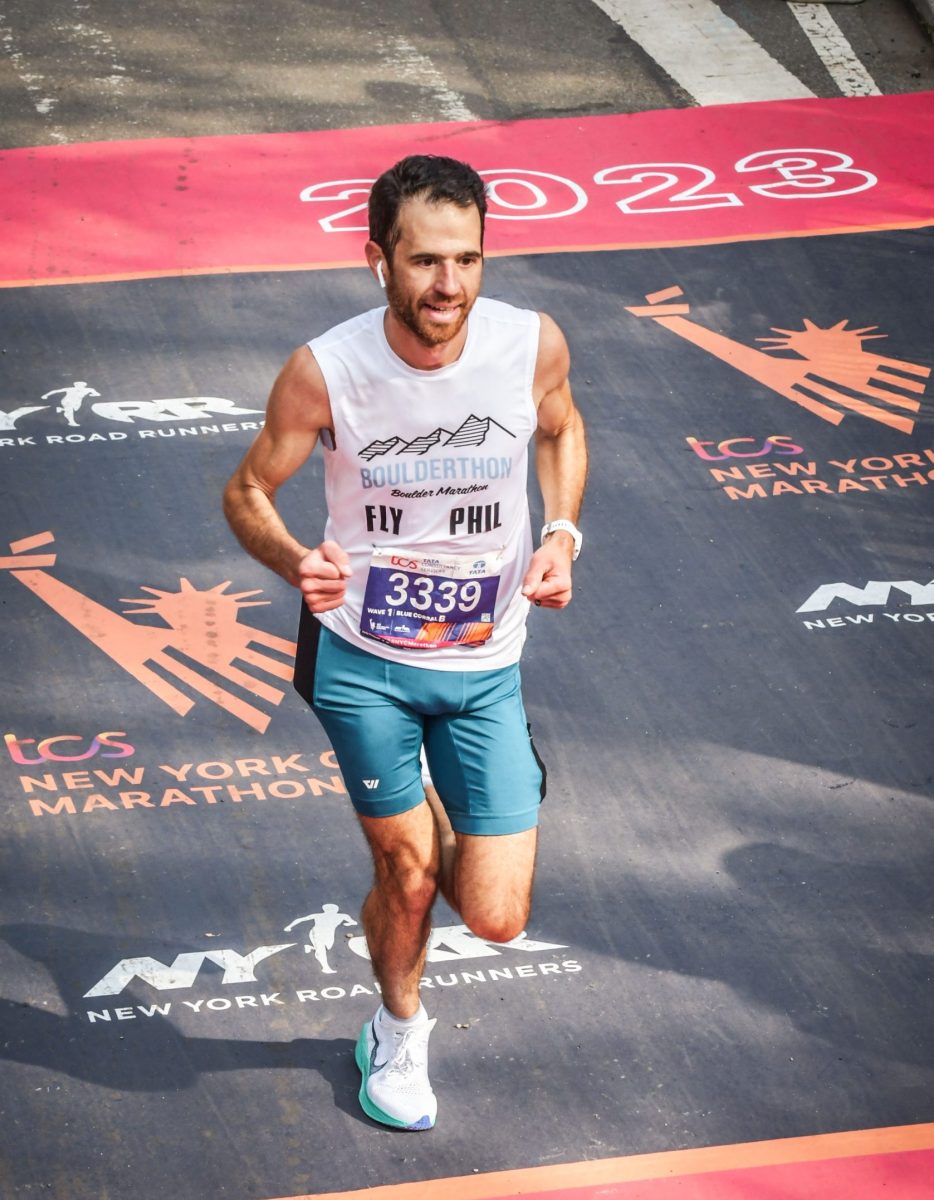
I don’t envy the race photographers, but for a clear, sunny day, I was a bit disappointed by the race photos.
Highlights of your race – What did you do well and enjoy about your half-marathon in particular?
Despite nursing some significant Achilles issues for the week before the race, I lined up with my goal pace group (1:30 or 6:51/mi). After about a mile and a half into the race, I was feeling comfortable and smooth at about 6:30, and decided to listen to my legs and not hold back, which worked out great! On the final climb up and across the Burnside bridge, I could feel my form starting to slip, but was able to hold on and finish strong, moving up one spot in my age group in the last half mile.
Lessons for others – Share your pro-tips on the race to help the next runner
Getting to the starting line via car can be challenging due to street closures and the downtown location. Parking or getting dropped off on the east side of river and walking across the Hawthorne bridge just adds a nice half mile walk or jog and lands you right at the starting line.
Aesthetics – Is the Portland Half-Marathon a pretty course?
Very much so!
Difficulty – Is the Portland Half-Marathon a tough course?
It’s not the absolute flattest or fastest, but there were plenty of PRs!
Organized and well run – Did it feel like a well-oiled machine or were they flying by the seat of their pants?
Very well-organized. Plenty of bathrooms at the start, drop bag system worked well, clear pre-race communications.
Competition – Is there a strong field?
I mean, no one is breaking 60:00 on this course, but the top 10 ranged from 1:07 to 1:17, so pretty darn quick.
Logistics – Does the Portland Half-Marathon require a special handshake, registration a year in advance, hotels all booked? Give us the low down on the nuts and bolts of making the race happen.
Easy to register, with a reasonable cancel/defer option.
Spectators – Is this a friendly course for your friends?
Yes, absolutely, though the start/finish area is a bit more challenging to get to due to traffic and street closures.
How’s the Swag?
The race shirts are a little chintzy. Would love to see races move to printing on high-quality blanks from respected brands, and away from the plastic-feeling “tech” shirts that seem to be the new norm.
The Overall Score – How many stars do you give this race and do you recommend that others run it?
5/5
Getting ready for a half-marathon? Check out our coach-approved race prep checklist!
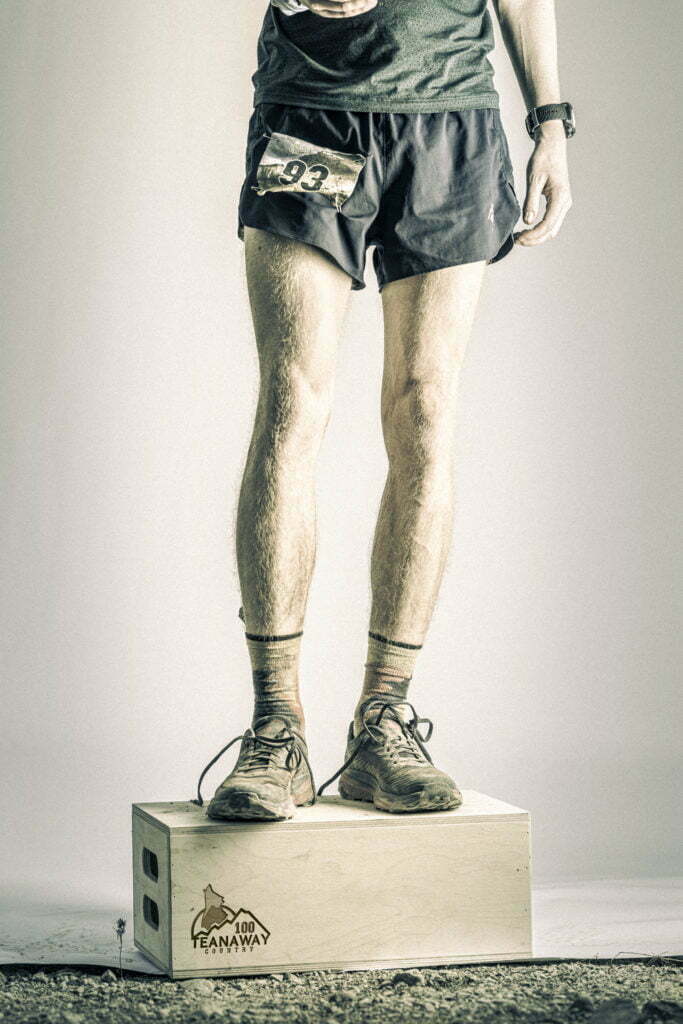
3 Bests – What aspects of the Teanaway Country 100 did you like the most?
1. The well-thought out and cared for event by the RD, Brian Morrison and their entire team, including volunteers.
2. The sheer difficulty of the course in terms of the elevation profile, terrain; and so much uncertainty to even completing the race.
3. Grand views and memorable landscape of the Teanaway Mountains nestled in the Cascades.
Not so much – What aspects of the Teanaway Country 100 didn’t work for you?
Two of the aid stations mid-race with very minimal choices and options for food, when I really was just craving much more!
Weird factor – What’s the weirdest thing about this ultra?
I recall seeing some blow up unicorns at one or two of the aid stations. Also, there was a cougar encounter just off the trail on the second morning with two runners (and one pacer) who were well ahead of me but luckily, I didn’t see it when I went through that section or didn’t know about it until after the fact! Nobody was hurt though and they were able to scare it away by yelling and acting big.
Highlights of your race – What did you do well and enjoy about your race in particular?
Both my mental headspace and nutrition/hydration strategy all day, especially given my first 100-miler and first race over 50 miles. I had no expectations yet no limitations either. I had been training all summer for the more runnable (but still difficult) Pine to Palm 100 course but it had been unfortunately cancelled the Monday of race week. Luckily, the RD let me and a few other runners into this event.
So I didn’t put any pressure on myself to perform in an XYZ place or specific time but rather the mindset to above anything else, complete this monster of a challenge! I did so, despite a few biomechanical issues that flared up or felt tight throughout the race but bad enough that I’d think it’d cause a serious injury.
I also climbed pretty well and efficiently with the trekking poles.
Lessons for others – Share your pro-tips on the Teanaway Country 100 to help the next runner
Certainly pace yourself smart from the start as a lot can happen over the course of the day. Be prepared mentally for a big day in the mountains.
Bring a few changes of gear/clothing such as shirts, shoes and socks during the event. Trekking poles can be a huge advantage on the steep, technical terrain.
Lessons you learned that will help you next time around
I hadn’t trained for this course but if I were to try this or other similar course again, I’d certainly incorporate several more steeper or long runs with trekking poles, as well as a higher vert per mile ratio or one that matches the course profile. I did quite a bit of strength and mobility work throughout the summer but may have backed off too much over the final 3-week taper, potentially resulting in unexpected hip flexor tightness felt in my right leg for most of the race. So making my body, tendons, muscles extra resilient and improving their fatigue resistance. I had spent the majority of the day between 4th and 6th place but then was forced to a slower walk for most of the final 18 miles, so lost a few places over the final stretches.
Most important course specific knowledge to know about the Teanaway Couuntry 100?
Everything between the Sasse Ridge AS (mile 6) and the Van Epps AS (21), and then again on the return, is quite a brutal section! Even the 4ish mile jeep road section… don’t be lulled into thinking that section is fast and runnable. This includes the Paris Creek Trail and other trails that are actually no longer on many trail maps. The RD even eluded that besides this 100-mile race, it may not get any other foot traffic for the remainder of the year. Then the jeep road is exceptionally rugged with several giant puddles/divots. The final 3-mile descent back to the start/finish may have been the longest stretch ever with more relentless loose rock and seemingly endless switchbacks!
Aesthetics – Is it a pretty course?
You know it. Big sweeping views all around during the day. Even the night time was spectacular with the stars shining bright. Lake Ann and Esmerelda Basin were beautiful! Iron Peak / Eldorado Pass, Teanaway Ridge Trail, and Gallagher Head Lake were all memorable too. At one point, you can even clearly see the Enchantments looking toward the next mountain range north of the course.
Photo: Sozinho Imagery
Difficulty – Is it a tough course?
Probably a 10 out of 10 as far as 100-mile courses go! This is considered a “graduate level” course and has even been compared to the Hardrock 100 as the “low-altitude Hardrock”. Only a 49% finisher rate this year.
This course packs in 31,000 feet of climbing, many of which are quite steep and rocky. But what makes this course even tougher is the technicality of the trails, where there’s hardly any areas to really open up your stride and requiring more mental focus on the technical rocks/dirt (lots of loose rock), abandoned trail systems, roots.
Organized and well run – Did it feel like a well-oiled machine or were they flying by the seat of their pants?
Excellent job here by the RD and race staff. This includes pre-race communications, packet pickups, and overall execution. Race bibs were also much smaller than most races, making it easy to pin to your running shorts.
Competition – Is there a strong field?
Strong field up front, many of whom had plenty of experience in extremely long and/or burly endurance events but also a few first-time 100 mile runners too who did an amazing job. Resilient field of athletes across the board!
Logistics – Does it require a special handshake, registration a year in advance, hotels all booked? Give us the low down on the nuts and bolts of making the race happen.
I could see this race selling out quicker and quicker in the near future. Plenty of camping options available including free camping at the start/finish, as well as two campgrounds nearby. It sounded like some runners also stayed in AirBNBs in nearby Roslyn (only a 20-minute drive away).
Aid Stations – Standard fare or anything special to know about the aid stations in terms of what’s available or when?
Pretty standard for many aid stations such as chips, watermelon, grapes. When the sun started to set, then there seemed to be more solid food options available including hot cup of noodles, tomato soup, veggie broth, bacon, and instant mashed potatoes. I believe the gels options were all GU brand.
Weather and typical race conditions
We truly lucked out with ideal, clear conditions. Started in the high 40s and only a high of low 70s by mid day. It felt a bit warm for a few hours but definitely still easily manageable.
Spectators – Is this a friendly course for your friends?
Not too bad actually and especially since the course is mostly an out-and-back, plus one 13-mile loop where you return back to the same aid station. Driving between the aid stations for crew/spectators sounded like it wasn’t too complicated or long.
How’s the Swag?
Impressive! Finishers will get a belt buckle with the race logo. And all entrants received a Territory Run Co. T-shirt (with race logo), a stainless steel cup, 2-3 salves from Squirrel’s Nut Butter and a pair of black running socks from Wrightsock.
The Overall Score – How many stars do you give the Teanaway Country 100 miler, and do you recommend that others run it?
5 of out 5 stars for a truly memorable experience where it feels like they care about every runner that chooses to embark on this challenge, no matter if they finished or were a DNF.
Running a mile is a great first milestone for anyone who wants to get started with a running practice. One mile alone can feel far too long for folks who haven’t put on their jogging shoes lately, so it is worth working towards – and celebrating once you get there!
For anyone working on running a mile, we asked Team RunRun coaches for their expert answers to some of your most common questions. Here is what our coaches had to say:
The Coaches
Donald CastellucciLydia GonzalezBrian Comer
What tips do you have for a beginner runner whose goal is to run one mile?
Donald:
Enjoy the journey! Building up to running a mile can take time and it is important to enjoy the journey while keeping your eyes on your goal. Make some mini milestones along the way to help you measure progress. These mini milestones help us stay grounded in the present and not put too much pressure on ourselves.
Making a plan that allows you to build your distance gradually will help you stay motivated and ensure you are smart about training. There are great coaches here at TRR who can help build you a smart plan that allows you to reach your goals and give you the encouragement you need along the way.
Celebrate! As runners, it is easy for us to reach a milestone then move on to the next one. Don’t do that immediately! Take some time to celebrate what you just accomplished! Life goes by too quickly to not dance and celebrate our accomplishments!
Lydia
I encourage beginning runners to start by walking one mile for a week or two to get them familiar with what a mile feels like. Afterwards, we progress to a walk-run, and within a month, most of my athletes can run a mile straight through.
Brian
Be patient with yourself. Beginners often see the most gains but also starting anything new comes with its challenges. Celebrate every milestone, no matter how big or small.
How long should I be in training before I can run a mile?
Donald
For most beginner runners, I’d expect we would do a lot of run/walk training to help get them used to time on feet and build their fitness. We don’t want to shock the body, however, so slowly increasing mileage is usually best. Smart, steady progression keeps runners happy and healthy!
Lydia
I say a month at least, if not maybe even 6 weeks, depending on the level of fitness.
Brian
Depends on athletic background, but 4-6 weeks is reasonable for those coming from a more sedentary background, less for those with prior sports experience.
How can I run a faster mile?
If you are already running a mile and want to get faster, our coaches have a few tips for training:
Lydia
More strength training and walking more miles depending on what kind of athlete this is that is looking for time.
Brian
More seasoned runners need to incorporate regular speedwork and strides. Hill training is a bonus too. Once beginners are running more steadily and taking fewer and shorter walk breaks, they could also benefit from strides and hill sprints too. Hills are good for developing power and are often referred to by Frank Shorter as “speedwork in disguise”.
Is there an average number of steps per running mile?
Short answer: No, and our coaches don’t measure your success by steps!
Lydia
I believe it’s like 2,000 maybe? I don’t consider this an important metric for my runners.
Brian:
Everyone has their own unique stride length and running gait so it is hard to generalize. Taller runners take fewer steps than shorter runners and faster runners take fewer steps than slower runners.
Is there an average number of calories burned per running mile?
Brian
100 is the general standard but it also depends on the runner’s size and pace. Faster runners burn more calories than slower runners. Also given two runners are going the same pace, the heavier runner would burn more calories than the lighter runner.
Thank you to Donald Castellucci, Lydia Gonzalez, and Brian Comer for breaking down everything you need to know about running a mile. Check out their coach profiles to book private coaching with them!
Got more questions about running? Sign up for the Team RunRun newsletter for expert tips in your inbox!
3 Bests – What aspects of the Cascade Super Ultra did you like the most?
Beautiful scenery
Ultra community, runners and volunteers
Completely runnable trail
Not so much – What aspects of the Cascade Super Ultra didn’t do it for you?
Mileage was a bit more than 50, so when pushing the limit to finish last two miles, was discouraged when realized end wasn’t at 50 on the money.
Weird factor – What’s the weirdest thing about the Cascade Super Ultra?
At an aid station, (Easton) asked directions to the porta-potties and never found one, when had been announced one there were to be some there.
Before race, ran warm up away from the start and ran into a deer buck blocking the trail, decided confrontation wasn’t worth it so turned back.
As the day went on, was almost over run by cyclists, ton, mostly good natured, but some dangerous fast in and out of lanes.
Highlights of your race – What did you do well and enjoy about your race in particular?
Ran at about the max I could have run, ran it as a race, rather than a recreational run (which is how I usually approach races). Since I have been reading Endure, I have recently seen in the pages that we can go beyond what our bodies tell us we can go. With that new to me knowledge, when in last 21 miles and effort/Heart rate dipped to lower 150’s, sped up without having any body problems that I hadn’t already been experiencing. (GI went a bit sideways)
Lessons for others – Share your pro-tips on the Cascade Super Ultra to help the next runner
Easily runnable course, very gradual incline for first 29 miles, then last 18 about 1’500 decline.
Make sure to have headlamp easily accessible for the Three tunnels.
Lessons you learned that will help you next time around
Practice nutrition at a higher intensity, have had tummy problems both 50’s this year.
Practice drop bag use.
Most important course specific knowledge to know about the Cascade Super Ultra?
Old RR grade wide double track trail
Probably 90% of course was in the shade, making it much more comfortable than it might have been.
2 drop bags, 29 and 42.5 miles
30 to 40 minutes dark running from start (headlamp needed)
Aesthetics – Is it a pretty course?
Beautiful, Fall colors are out, vibrant maples, yellows, rust and a whole lot of green.
Course runs next to Yakima river, over high bridges, through the mountains and a 2.4 mile pitch black tunnel
Difficulty – Is it a tough course?
Easy!
Organized and well run – Did it feel like a well-oiled machine or were they flying by the seat of their pants?
Pretty well oiled, but either directions to outhouse at Easton aid were bad, or they just didn’t have one. Someone I caught up with was looking and didn’t find one either…
Competition – Is there a strong field?
Second year race, starting to get stronger, with Matt Urbanski (My coach) racing and crushing the last race record by nearly 2 hours, Derek Siebert taking 3rd, also faster than previous record.
Logistics – Does it require a special handshake, registration a year in advance, hotels all booked? Give us the low down on the nuts and bolts of making the race happen.
Ought to be easy to get into race and get accommodations.
Aid Stations – Standard fare or anything special to know about the aid stations in terms of what’s available or when?
Can’t comment on this, had mostly my own, through wife crewing and drop bag.
Weather and typical race conditions
Ran same route last year – last year overcast beginning in the upper 40’s, rain from 10 in ending about 55.
This year start upper 40’s turned sunny, ended mid 70’s.
Gear – Did you need anything special or is there anything you’d recommend for the next runner?
Personally I used a vest and needed it for two flasks, gels, headlamp (when not in use), TP (just in case, you never know) and inhaler.
Spectators – Is this a friendly course for your friends?
Only a couple of places easily accessible. Hyak is best, just before the 2.4 mile tunnel at mile 29!
How’s the Swag?
Buckle, Tee, water bottle, buff bag.
The Overall Score – How many stars do you give this race and do you recommend that others run it?
5
Trying to decide on your next race? Check out our coaches’ advice for choosing the best race for you.
In this race report, runner Bucky Love shares what you should know about the mysterious Barkley Fall Classic before running this 50k event. (Sorry, no hints on elevation or course map!)
3 Bests – What aspects of the Barkley Fall Classic 50k did you like the most?
1. I love the lore and general mystery surrounding the race.
2. Race route changes every year and you get the map the evening before the start. You never know how you will do because of this.
3. No GPS tracking is permitted. Distance and Elevation gain is mostly unknown.
4. Love the general community feel and the comradery amongst runners and the support given even to those who are clearly destined to fail.
Not so much – What aspects of the Barkley Fall Classic didn’t do it for you?
1. Covid protocols seemed to be close to non existent. Mask at the start and that is about it. Nothing at aid stations and nothing at pre-race pick up.
2. Getting questions answered if you have them can be very intimidating, as there are a lot of none answers, sarcasm and general harshness given. Don’t ask a basic question that could be answered with a little research.
3. They changed the map at the last minute and did not make a general announcement about it. You had to hear it through the grapevine or find out during the race when you get to the turn. To the RD’s credit they did place people at the turn to direct traffic, which they never do.
Weird factor – What’s the weirdest thing about the Barkley Fall Classic?
That the race course changes every year and that the failure rate is typically over 60% of the starters. You run through an old prison yard and up a ladder over the prison wall and in a tunnel under the prison. The race bib punches spell out something different each year. This year it was either “I nailed the BFC” if you made it to the decision point before cut off or “I failed the BFC” if you had to take the marathon finish route because you missed the final cut off.
Highlights of your race – What did you do well and enjoy about your race in particular?
I nailed the ups on this race and felt strong throughout, particularly compared to two years ago. I loved the challenge of literally fighting, clawing, and crawling up mud slides due to the rain on the bush whacking power line cuts (testicle, meth, rat). It used some much more than running muscles and really felt like an adventure race at times.
Lessons for others – Share your pro-tips on the Barkley Fall Classic to help the next runner
Best lesson is to power hike the ups and run the downs and flats. There aren’t a lot of flats. Use the park map that has the blaze colors and write on your course map the color of the blazes you should be on. They don’t place confidence markers but most of the trails are blazed in the park.
I also like to know if I am supposed to be going up or down on the trail sections so that if I accidentally take a wrong turn and I am going down when I should be going up, I will know it easily. Train for a 50 mile race with at least 14K in elevation gain and you will be fit to finish.
Finally, if you are going up Bird Mountain switch back trail at the start, then run fast that mile down the road before you start up, because it WILL BE a VERY SLOW and long conga line to work around otherwise. Get ahead of that the best you can.
Lessons you learned that will help you next time around
My take aways from this time is get better shoes with a rock plate in them or A LOT more cushioning and to work on my running/power hiking transitions. There are a lot of down grade gravel type road running and it is murder on my feet. By 5 hours in my feet were toasted and it made the last 10 miles (8 down hill and 2 up) absolutely brutal. I also need to work on my running, power hiking, and running again transitions. I have some kind of mental block with this and just stop caring to go fast when I can and feel like I still have the power/energy in me but lack the motivation to tap into it.
Most important course specific knowledge to know about the Barkley Fall Classic?
That it changes every year but that most of race will be on Frozen Head State park trails and that they try to hit the big named things from The Barkley Marathon (testicle spectacle, meth lab and Rat Jaw).
If you do this race, know that testicle hangs to the left into the woods and down to a road. You could easily miss this turn like the lead runners did this year. There isn’t a sign for it. Also, on Meth Lab when you hit the stream you want to look for a small opening in the embankment and not follow the stream all the way down. Finally, also on Meth lab after the left out of the stream you will be on an old road. You will make a right (usually signed), then another right (again a sign), you will see a shed, cross a small bridge and make a sharp left (usually not a sign) and take the road toward the prison.
Aesthetics – Is it a pretty course?
There aren’t any amazing spanning views, but the woods are pretty, but nothing special. If you are looking for a pretty course this isn’t the race for you.
Difficulty – Is it a tough course?
Yes, very tough, but most of it is runnable. Come prepared and accept that you are power hiking and/or bear crawling at points and you will finish.
Organized and well run – Did it feel like a well-oiled machine or were they flying by the seat of their pants?
I would say a well-oiled machine. Lines moved quickly at pre-race check-in, aid stations were supplied, they didn’t seem to run out of anything, had plenty of volunteers, and in general it all went smoothly.
Competition – Is there a strong field?
There tends to be a couple of big contenders, not necessarily world class known names, but very fast people looking to score a golden ticket into the Big Barkley. The male and female winners get that as an award.
Logistics – Does it require a special handshake, registration a year in advance, hotels all booked? Give us the low down on the nuts and bolts of getting into the Barkley Fall Classic.
Yes, yes, yes, and more yes. Register the day it opens and get in the lottery. It will tell you that you are on a waitlist but that is because everyone is then they draw the names usually around October 1st. Never withdraw even if you don’t get initially picked there is always a lot of movement throughout the year.
If you don’t get picked the first year then your name is marked and if you register that 2nd year then the first 100 people into the race are pulled from the list that didn’t get in the year before and so on and so forth. If you don’t get pick in that first 100 you name is still in the general lottery that year too.
It took me three years to get in the first time, but I got in back to back years thereafter. You will definitely want to book your lodgings well in advance, some people even book their camping spot or Airbnb before they even get into the race over a year in advance.
Aid Stations – Standard fare or anything special to know about the aid stations in terms of what’s available or when?
Very standard fare with pre-package food selections. Their drink of choice is Sword, which is very high in sodium. I suggest getting some and trying it out before the race to make sure it doesn’t cause you any distress race day as it is it not a well know electrolyte drink from what I can tell.
Weather and typical race conditions
It can very from hot and humid to a monsoon. Usually it is warm either way and I wouldn’t bother with rain or wind gear, if would just get shredded in the briars.
Gear – Did you need anything special or is there anything you’d recommend for the next runner?
I wore arm sleeve and calf sleeves to protect my skin from the power line sections which can have poison ivy, poison XYZ plant, and very thorny briars. While I wore the calf sleeves all day, I only put on the arm sleeves during the bushy whacking times. My first time running this race, I had a poison ivy outbreak, and this time I came out fine.
Spectators – Is the Barkley Fall Classic an easy course for your friends to watch?
It depends on the course route. They discourage people from standing around on the park trails but usually they run the course around the prison which would be the best spot for spectators to get to.
How’s the Swag?
Not that great. The first year I did it they gave out a fun book that talked about the race, and Frozen Head State park. Kind of a do and do not guide to finishing, but not this year. This year it was just a few pantalets and a t-shirt. The finishers medal is pretty cool. It is a French style military cross (croix)
The Overall Score – How many stars do you give the Barkley Fall Classic and do you recommend that others run it?
Overall I would give it a 10. There is nothing they could really do that would make me like it more (perhaps, I should ding them for the lack of covid protocols in my rating). This race is a good mix between running and a little taste of adventuring racing. If you are looking for a 50K PR this isn’t the race for you. Also, if you are looking for an all out adventure race this isn’t the race for you. If you are looking for a challenging race with a varying course and distance between 30-45 miles and 10-15K elevation and you like the challenge of bush whacking through some briars and challenging yourself in a race that most people fail to finish, then this is the race for you and you will have a lot of fun along the way.
Trying to decide on your next race? Check out our coaches’ advice for choosing the best race for you.
3 Bests – What aspects of the Washington DC Half Marathon did you like the most?
1. Beautiful course along the Potomac
2. Water stops every 2 miles
3. Really organized, had plenty of volunteers, medical staff, etc
Not so much – What aspects of the Washington DC Half Marathon didn’t work for you?
They needed more restrooms at the starting line and throughout the course. Also, there was no parking near the starting line, it would be nice to have shuttles for future races.
Highlights of your race – What did you do well and enjoy about your half-marathon in particular?
I had a great PR at this race despite it being 70 degrees and muggy. I took a 5 second walk at each water stop to ensure that I drank enough water (without spilling it all over myself) so I felt really hydrated despite the heat and humidity.
Lessons for others – Share your pro-tips on the Washington DC Half Marathon to help the next runner
Go out slower than your goal pace. I always struggled with that in prior races. I had enough energy for the second half to pick it up.
Lessons you learned that will help you next time around
Stay calm. I was really hyped up on adrenaline for the first few miles. I had to really focus on staying calm and keeping my pace on track.
Most important course specific knowledge to know about the Washington DC half marathon?
For the most part the course is shaded, which helps with the hotter/muggier conditions. However, the last couple of miles are mostly exposed to the sun. It gets really hot so it’s important to be well hydrated prior to that.
Aesthetics – Is it a pretty course?
Beautiful course. Lots of trees and stone bridges.
Difficulty – Is it a tough course?
It was a fairly flat course but in the middle there were a handful of gradual inclines that I wasn’t expecting.
Organized and well run – Did it feel like a well-oiled machine or were they flying by the seat of their pants?
It was the Washington DC Half Marathon’s first year, and I think they did a great job organizing.
Competition – Is there a strong field?
It wasn’t a huge race, maybe 1000-1500 total, but there was a good range skill levels and paces to keep it competitive for everyone.
Logistics – Does it require a special handshake, registration a year in advance, hotels all booked? Give us the low down on the nuts and bolts of making the race happen.
It was a really simple race to sign up for, all done online. With it being the first year for the half-marathon not many people knew about it. I think as it becomes more popular hotels/places to stay may become more difficult but for me this year it was simple. DC prices are more expensive and there is no parking near the starting line so you need to have someone drop you off near the Lincoln Memorial.
Aid Stations – Standard fare or anything special to know about the aid stations in terms of what’s available or when?
Pretty standard. Water and Gatorade every 2 miles. Plenty of volunteers handing out cups and cleaning up around the trash bins.
Weather and typical race conditions
It was hot and muggy, something DC natives said was typical for this time of year. Most of the course was shaded so that helped but when you were in the sun it got pretty brutal.
Gear – Did you need anything special or is there anything you’d recommend for the next runner?
They strongly recommended bring fluids (belt or vests were ok). At some races they limit the fluid amounts/don’t allow vests but for this one they encouraged it due to the hot and muggy conditions.
Spectators – Is this a friendly course for your friends?
Not a large crowd but scattered cheering groups were excited and happy to be there.
How’s the Swag?
Swag was simple but nice. The t-shirt was a softer cotton with the race logo on the front and graphic on the back and seemed true to size. Also, post race you could take your bib to The Shake Shack and get a free shake, beer, or wine. It was a nice post-race celebratory drink that got people out to see some of the city.
The Overall Score – How many stars do you give the Washington DC Half-Marathon and do you recommend that others run it?
5 out of 5. For this being the race’s first year, I was really impressed. I am excited to see how it grows in the years to come as more people learn about it.
Getting ready for a half marathon? Check out our coach-approved race prep checklist!
3 Bests – What aspects of the Wildcat Ultra 50k did you like the most?
2.5-mile looped course makes for easy access to aid whenever you want
positive Race Director and volunteers
attracts a lot of first-timers
Not so much – What aspects of the Wildcat Ultra 50k didn’t do it for you?
2.5-mile looped course (even though it makes for easy aid station access) is mind-numbing; but that can be a positive if you take it as a mental challenge
step right-to-left slope around a retention pond threatens to exacerbate an old knee injury since you have to run it often with such short loops
Weird factor – What’s the weirdest thing about the Wildcat Ultra 50k?
HEAT!: it’s always hot and humid. Considering it got into the 90’s with a heat index will over 100 degrees last year, this year was “cold” with it only topping out in the 80’s with a heat index in the low 90’s.
Highlights of your race – What did you do well and enjoy about your race in particular?
I finished 1st in a race for the first time ever. My coach and I had planned how to handle the temperatures and navigate to a sub-6 hr PR. But, when the display at the start/finish showed me in -and maintaining- first place after several laps, the plan went out the window, and I started racing. Heat training over the summer paid off handling the “cooler” 80-deg temperatures and I handled hydration well finishing approximately 3/4 of my hand-held bottle every lap. The higher pace contributed to a bad stomach which lead to nausea for the last 15 miles, but switching to straight water and cycling Pepsi, ginger ale, and ginger chews helped a lot. An ice-filled bandana also helped with the temperature and stomach issues.
Lessons for others – Share your pro-tips on the Wildcat Ultra 50k to help the next runner
Stay positive. When my stomach turned on me, I focused on problem-solving instead of how gross I felt.
Surround yourself with smart crew, when possible. Having friends to help crew filled in the gaps when my plan went out the window as I switch from trying to just beat 6 hours to actually winning the race.
Cheer on others and compliment aid station volunteers and crew. Give to others what you would like to receive yourself, and it will give you a mental and emotional boost as well as just make the world around you a better place.
Lessons you learned that will help you next time around
Bring ginger chews in my kit
Salt Stick flavored chewable salt tabs work better for me than electrolyte capsules
Most important course specific knowledge to know about the Wildcat Ultra 50k?
The course isn’t hard. The temperature is the biggest nemesis.
Aesthetics – Is it a pretty course?
There isn’t much of a view. It’s held at an equestrian center park so the course is either running through a field, under a power line, or through a jeep trail in the woods.
Difficulty – Is it a tough course?
Nope. Only one shallow hill. One section is a side-slant but can be hiked, if needed.
Organized and well run – Did it feel like a well-oiled machine or were they flying by the seat of their pants?
Simple and well-organized. Plenty of places to set up your own aid station in the back of your car or set up a tent. You can rent a camp spot or just set up in the field either side of the race course.
Competition – Is there a strong field?
A lot of first-timers, so the field isn’t usually that deep. A few local fast runners periodically show up but I currently have the 4th fastest time with only a 5:47.
Logistics – Does it require a special handshake, registration a year in advance, hotels all booked? Give us the low down on the nuts and bolts of making the race happen.
Just head over to ultrasignup.
Aid Stations – Standard fare or anything special to know about the aid stations in terms of what’s available or when?
Tailwind, soda, and standard chips, candy, and fruit.
Weather and typical race conditions
HOT
Gear – Did you need anything special or is there anything you’d recommend for the next runner?
Bring a cooler of ice and pack it in a bandana around your neck every lap or so.
Spectators – Is this a friendly course for your friends?
Very spectator friendly.
How’s the Swag?
The 100-miles get a nice buckle, but the other distances don’t get much. The 15 miler and 50k get a wooden medallion “medal”. Still, it is unique and it never is really about the swag, anyway.
The Overall Score – How many stars do you give this race and do you recommend that others run it?
4 of 5 stars for the unique challenge of the hot weather, good support, and easy logistics. If the location/scenery was more interesting, then I’d give it 5 stars.
Getting ready for an ultramarathon? Check out our coach-approved race prep checklist!
The New York Marathon (hosted by the New York Road Runners) is a huge race with thousands of runners and even more spectators each year. At Team RunRun, we’ve had several members run it over the years, so we have learned everything you need to know in order to have a great race (sometimes, we learned it the hard way). Read on for an overview of the race, and then check out individual race reports to hear from runners in their own words!
When is the New York City Marathon?
The New York Marathon is hosted on the first Sunday of November every year.
The New York Marathon route begins in Staten Island and finishes in Central Park in Manhattan. In between, you run through Brooklyn, Queens, and the Bronx, which means you get a tour of New York City’s five boroughs as you run. Our runners have highlighted how cool it is to experience multicultural neighborhoods, including the Hasidic Jewish area in Brooklyn.
Some quick facts about the NYC Marathon route:
Course Type: Point to Point, starting on Staten Island and finishing in Central Park, never repeating the same street.
The runners who didn’t train for hills reported that these hills made the course a little tough, but if you prepare for them, you may hardly feel them.
What are the aid stations like?
Locations of water stations: Every mile starting at mile 3 Locations of electrolyte stations: Every mile starting at mile 3 except mile 17 Electrolyte offered: Gatorade at every station and Gatorade Endurance Energy Gels at mile 18. Fruit at miles 20-23
What should I know about the NYC marathon logistics?
Review logistics ahead of time
The logistics for the New York Marathon get tricky, so it is worth paying attention to deadlines and details well before the week of the race. You’ll need to sign up for transportation to the start line on Staten Island, plus the finish line is complex, too. Make sure you know your plan before they close sign-up deadlines. Oh, and everyone recommends you opt for the poncho option rather than the bag-check for the finish line!
Plan for a wait
There are a lot of runners at this race, which means there is a long wait between when you show up and when you start running. The Team RunRun race veterans recommend bringing warm clothing you can toss off and donate as well as water, hot food, and the right attitude.
You’ll be walking after the marathon
There’s a lot of walking to get out of the race chute, meet up with family, and getting back to your lodging. Be prepared to walk, even though you just ran a marathon!
Expect crowds
In the average year, there are 50,000+ runners. The course will be crowded pretty much the whole time. Plus, the expo before and after the race is very crowded, too. This is New York City, we’re talking about. Be ready to be surrounded by people!
How should I train for the New York Marathon?
Be ready for hills and cement! Also, be aware that with the energy of the crowd as you wait in your corral, it is easy to start off too fast in this race. Make a plan for how you will handle the race mentally, in addition to physical training.
Want more advice? Check out the Team RunRun marathon reviews here:
Race: New York City Marathon 2025 The start of the NYC Marathon. PC: Brooklyn's Lifestyle Runner: Rohit Eipe Race Date: 11/02/2025 Location: New York City, USA Result: 5:06:15 Strava Activity Link: https://www.strava.com/activities/16336604258 3 Bests – What aspects of the race did you like the most? Crowd and spectators: It was truly amazing! I almost never run without my audiobook, but ...
Did you know that the 2024 New York City Marathon became the world’s largest marathon ever with 55,646 total finishers? Now you do! Team RunRun athlete, Laura, after crushing the New York City Marathon! And with all the intel below, you're on your way to your own historic NYC finish! 1. Pre-Race Zoom Call With the New York City (NYC) ...
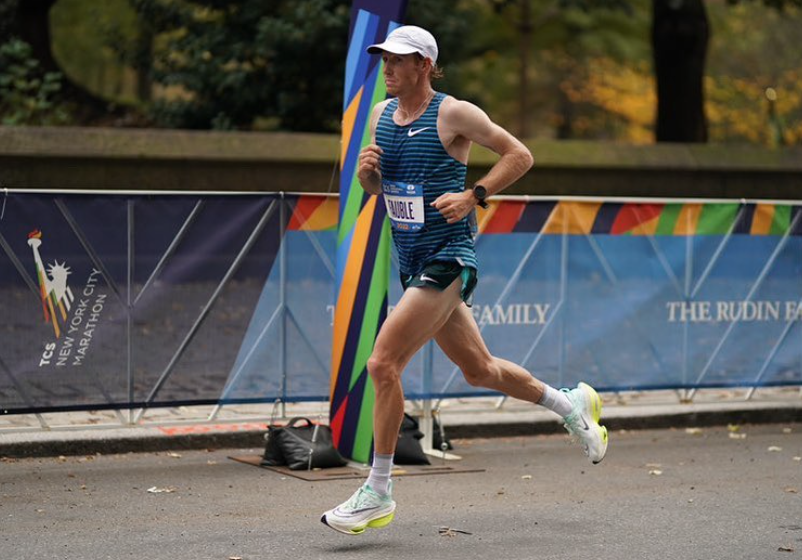
Two time top 10 finisher and Team RunRun Coach Scott Fauble breaks down the NYC Marathon Course and shares his pro tips to run your best marathon ever this November in New York. The hay is in the barn and the time to build fitness is over. That doesn’t mean you can’t still get faster! Commit to a smart taper, ...
Race: TCS NYC Marathon Runner: Austin Meyers Race Date: 11/07/2021 Location: New York City, New York Results: 3:12:54 (PR!) Strava Activity Link: https://www.strava.com/activities/6226337150 3 Bests – What aspects of the race did you like the most? The course: The route is awesome. It starts on Staten Island and takes you through all 5 boroughs of New York City. I've been ...
Team RunRun coach Heather LeFriec shares her experience running the New York City Marathon for the second time. Read on for her tips on how to plan better for the course, whether to choose the poncho or the bag, and how she pushed through her mental wall at mile 19. Race: New York City Marathon Runner: Heather LeFriec Race Date: ...
In this New York Marathon race review, runner Cassie G shares her experience running the 2018 marathon and shares her tips for you! That includes setting your expectations accordingly, planning for a long start, and enjoying the experience. New York Marathon Race Review Race: New York City Marathon Runner: Cassie G Race Date: 11/04/2018 Location: NYC Results: 3:57:11 3 Bests – ...
Runner Jonny reviews the New York City marathon route, logistics, and overall experience. Read why he was converted from a skeptic to a fan! Review: New York City Marathon Route, Logistics, and Overall Experience Race: New York City Marathon Runner: Jonny Date: 11/5/17 Location: New York, NY Results: 3:39:48 Strava Activity Link: https://www.strava.com/activities/1263149499 3 Bests – What aspects of the ...
Runner Emily reviews her experience of the NYC Marathon in 2016. Read on for her advice on hills, booking your hotel, and more! Race: NYC Marathon – http://www.tcsnycmarathon.org/ Runner: Emily M Date: 11/6/2016 Location: New York City Results – 4:50:24 (PR) 3 Bests – What aspects of the NYC Marathon did you like the most? The spectators were amazing! Very well organized The course ...
In this NYC Marathon race report, Matt Urbanski shares his experience running the 2016 marathon and what you need to know for your race! 2016 NYC Marathon Race Report Race: NYC Marathon – http://www.tcsnycmarathon.org/ Runner: Matt U Date: 11/6/2016 Location: New York City Results – 313th place out of 51,390 finishers; 2:49.27 3 Bests – what aspects of the NYC Marathon did you like ...
3 Bests – What aspects of the Boulder Rez Marathon did you like the most?
Close to home.
Smooth, fast dirt roads.
Easy logistics for a good hard long run.
Not so much – What aspects of the Boulder Rez Marathon didn’t do it for you?
It was hot and sunny with no shade. But it’s August in Boulder at the Rez. I knew this coming in, so I’m not complaining about it. It was just a challenge of this race!
Highlights of your race – What did you do well and enjoy about your race in particular?
I backed off my effort soon enough that I didn’t blow up! I was working a good steady effort early on to keep pace with my friends Steve and Andrew, and while many times in my life that effort was fine for a marathon, I’m not there right now and I realized it early enough to keep the race from falling apart.
Lessons for others – Share your pro-tips on the Boulder Rez Marathon to help the next runner
It’s a 4 loop course, so after loop 1, you know what you’re in for the rest of the day. The first part of the course has a few rollers. They feel like bigger hills on lap 3 and 4! Once you do the turn around just past Monarch Road, you’re done with nearly all hills for the loop, so you can celebrate! There is a bit of trail from when you get off Monarch road until you get to the loop around the Rez – it’s a section of trail that follows the water ditch, and this is normally off limits and not something we get to run on. It’s not technical trail, but if you’re expecting all smooth roads, this part is a bit bumpy.
There is no shade. Be ready for sun, and hot! And with the race not starting until 7:15am, the second half of the race was toasty.
There are four stations along the course, so a total of 16 aid stations (and once or twice coming through the start/finish I think they were handing out water too). This was ample opportunity to drink, and to pour cold water over my head.
Lessons you learned that will help you next time around
A little more prep for those hills would have helped on the last two laps! Otherwise, just being ready to handle the heat and to pace well for a not super fast course.
Aesthetics – Is it a pretty course?
It’s dirt roads outside of Boulder and some trail around the reservoir. It’s not un-pretty, but it’s also not breathtaking!
Difficulty – Is it a tough course?
Compared to the Berlin marathon, this is a slow course! Given the conditions, I’d say it was a challenging marathon.
Organized and well run – Did it feel like a well-oiled machine or were they flying by the seat of their pants?
Yep. Easy to sign up for, easy to get to, nothing weird or difficult about it. The course was easy to follow, well marked, and with plenty of marshalls along the course directing us on where to go.
Competition – Is there a strong field?
Not usually. And this year from the get go, it was me and my buddy Steve out in front. He wanted his BQ (and he got it), but it was only the two of us under 3 hours.
Logistics – Does it require a special handshake, registration a year in advance, hotels all booked? Give us the low down on the nuts and bolts of making the Boulder Rez Marathon happen.
Nada. Super easy. Low key marathon, easy to sign up for, and I don’t think it sold out. I don’t think this is a race people would be traveling to, so hotels aren’t likely a thing to be thinking about. But Boulder has plenty of options, though the race was right around the time when CU students were coming back to town, so town may have been busy and booked up for that!
Aid Stations – Standard fare or anything special to know about the aid stations in terms of what’s available or when?
They weren’t quite as dialed in as the big city marathons where the volunteers had cups ready for you to grab on the go. I had to stop and go to a table for water most of the time. Not a big deal, and later in the race I welcomed the walk through and drink part of the aid station visits. There were some gels there too, I don’t remember the brand, but I carried my own. Plenty of cold water available, and that was all I wanted!
Weather and typical race conditions
Hot! Sunny!
Gear – Did you need anything special or is there anything you’d recommend for the next runner?
I didn’t carry anything with me. I had some gels in my shorts pockets, and that’s it.
Spectators – Is this a friendly course for your friends?
With it being a looped course, we came through the start/finish area 4 times including the finish. While spectators could have been elsewhere on the course, that would have been a hassle for them, and not great for the runners b/c that would have meant more cars on the dirt roads, and more dust kicking up.
How’s the Swag?
Red shirt, fits a little big. Finisher medal. Standard swag.
The Overall Score – How many stars do you give this race and do you recommend that others run it?
4 of 5 stars. I wouldn’t travel for this race. But for a local event that is well organized, it was a good event and I’m happy I did it. This was a substitute for a good hard long run for me, and I’m glad I did this race rather than doing something solo!
Trying to decide on your next race? Check out our coaches’ advice for choosing the best race for you.
In this race report, Team RunRun co-founder Matt Urbanski shares his experience running the Staunton Rocks Marathon in Colorado, including where he ran out of water! Read on for the full report.
3 Bests – What aspects of the Staunton Rocks Marathon did you like the most?
Beautiful course.
Convenient and easy to get to from Boulder/Denver.
Gnar Runners put on a good race. It was well run, had a good vibe, and was an all around good experience being there.
Not so much – What aspects of the Staunton Rocks Marathon didn’t work for you?
I got worked by the higher elevation in the race! This isn’t a knock on the race, it’s a knock on my training and acclimation to CO! (I just moved back here a month before the race and was still feeling that 9,500′ we got to during this race!)
Highlights of your race – What did you do well and enjoy about your race in particular?
I kept powering through even when things got rough in the second half. I walked way more than I wanted to and more than I normally would have, but I didn’t quit. It was a good hard training run for me, and I’m glad I was out there because I wouldn’t have pushed that hard on a normal training run. I also really enjoyed running with my buddy Andrew. We shared the first 12 miles together before he dropped me. But making the trip to the race with him and racing together was a highlight.
Lessons for others – Share your pro-tips on the Staunton Rocks Marathon to help the next runner
The trails are not very technical and are generally smooth running. With the exception of the part of the course going up to Lion’s Head, the grades are runnable for a skilled mountain runner and at least smooth. The little bit up Lions Head has a bit more big rocks and technical terrain, but that section is short lived. There is a nice bombing downhill to the finish. Don’t be like me, have your legs and body ready to run fast at the end!
Lessons you learned that will help you next time around
As much as I felt like I was pacing well at the time, I likely would go out a bit more conservatively next time. The elevation on this course, with an average elevation of 9,000′, should be respected! I was worn down from this element of the course more than anything and I paid for it!
Most important course specific knowledge to know about the race
The first climb is smooth, and we ran the entire thing. The last climb is a pain, and unless you manage your day well, it’s tough to run (though it should be runnable IMO!) The climb up Lion’s Head is steeper and more technical. The downhill to the finish is faster running if you have the legs. I didn’t think I’d need water for the final climb/descent, but I was sorely mistaken! I was parched by the end of the climb and had slowed down enough that it was a slog to the finish, and I was dehydrated! Get some water at that final aid station!
Aesthetics – Is it a pretty course?
This park and course totally surprised to the upside. Everyone I talked to during and after the race lived somewhere close by, but no one had actually been to this park before. The trails were well maintained, the park was pretty, and it was an all around pleasant and pretty place to run! I’m kicking myself now because I didn’t take a single picture!
Difficulty – Is it a tough course?
Yeah. I think most courses have their tough parts though and any race can be hard, so take my opinion with a grain of salt. Not overly technical. Good vert for a marathon but not crazy. Average elevation of 9,000′ is no joke, but there are higher courses. I got worked during this one, so it was a tough course to me!
Organized and well run – Did it feel like a well-oiled machine or were they flying by the seat of their pants?
I’ve done two Gnar Runner races and they’ve both been awesome (2019 Never Summer 100k). They are low key and friendly with a great vibe, while at the same time professional and smooth.
Competition – Is there a strong field?
Solid field for an inaugural year.
Logistics – Does the Staunton Rocks Marathon require a special handshake, registration a year in advance, hotels all booked? Give us the low down on the nuts and bolts of making the race happen.
Easy to sign up and easy to get to. If it sold out, it sold out last minute – I signed up just a couple weeks before the race. And it was just over an hour from Boulder so we drove up the morning of. It was all easy (except for the running of course!).
Aid Stations – Standard fare or anything special to know about the aid stations in terms of what’s available or when?
I only took water and didn’t slow to see what they had; I carried my own gels. The aid station workers were cheerful and helpful. They filled my water bottles for me, and they provided some much needed cheer along the way.
Weather and typical race conditions
It got warm. It was a nice temp at the start, 60s maybe? But it was sunny and maybe in the 80s when we were finished around noon. There was some shade and tree cover, but it was definitely getting toasty out there!
Gear – Did you need anything special or is there anything you’d recommend for the next runner?
I used a Nathan VaporKrar belt with a 16 ounce soft flask. I filled it once along the way and should have filled it twice. No other gear needed for this one.
Spectators – Is this a friendly course for your friends?
The park isn’t huge, and we were able to see the same spectators out there a few times. I think the park was reasonably easy to navigate so if you’re adventurous, you can get out there and cheer! I was being chased down by Sandi Nypaver and that meant that I saw Sage Canaday a few times out there cheering!
How’s the Swag?
I like the shirt! It fits to size – a men’s small is actually small and fits me well! And there was a nice medal at the end. They also had a BBQ at the finish line. However, my stomach was a mess and I couldn’t really enjoy that part much. I did eat my share of watermelon though while I recovered!
The Overall Score – How many stars do you give this race and do you recommend that others run it?
5 out of 5! I used this race as a training run so that I could have a more fun way to get a long hard run accomplished. I was pleasantly surprised with everything about this race and am glad I gave it a try!
3 Bests – What aspects of the Cascade Crest 100 did you like the most?
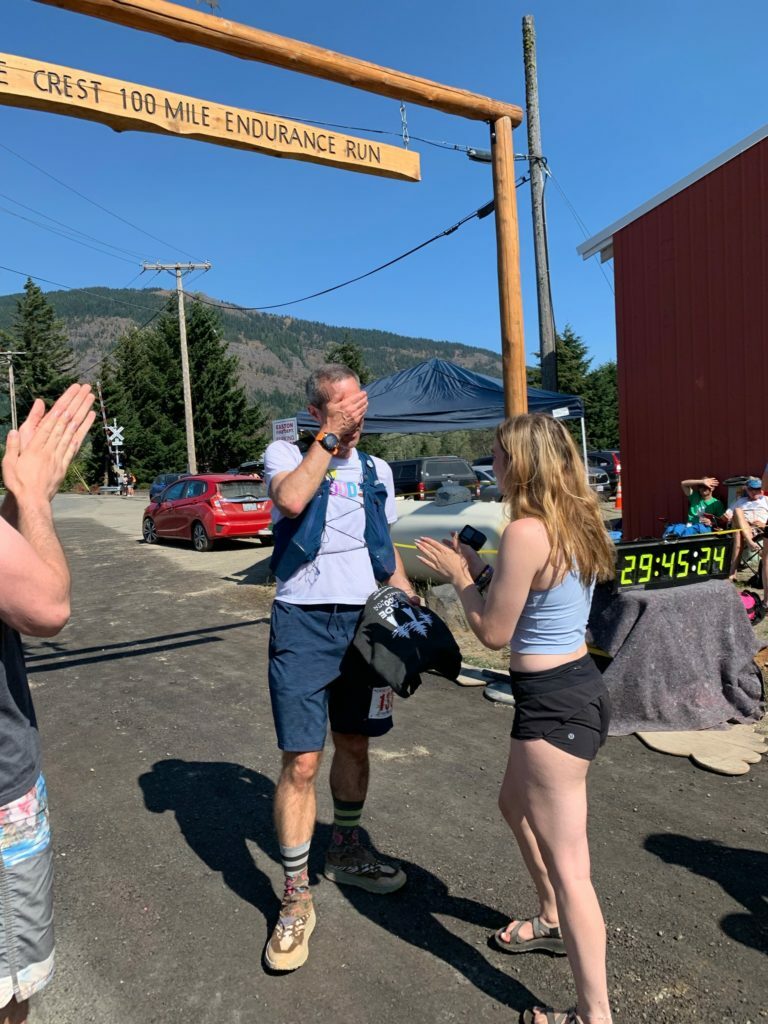
It’s a classic! It’s super friendly! And it’s gorgeous!
Not so much – What aspects of the Cascade Crest 100 didn’t do it for you?
Not one thing.
Weird factor – What’s the weirdest thing about the Cascade Crest 100?
Nothing weird, it’s a classic!
Highlights of your race – What did you do well and enjoy about your race in particular?
We had a re-route this year because of closed access to some private lands, so we did an OAB from Hyak to Tacoma Pass then the regular course from Hyak to Easton. I was able to run a lot of the course in training ahead of race day so felt good knowing what was coming. I managed my nutrition well and took care of any niggles as they came up instead of just riding them out.
Lessons for others – Share your pro-tips on the Cascade Crest Endurance Run to help the next runner
I don’t know that I have any pro-tips, especially from the back of the pack. Try to run the course as much as you can in your training, especially the Cascade Crest cardiac needles. You’ll be on 85+ mile legs by then. The Pacific Coast Trail is hillier than you may realize so plan for that, too. And there is no shame in walking early in the race, as well as later in the race. It really doesn’t start until you get to Hyak.
Lessons you learned that will help you next time around
I didn’t realize how hard it was going to be (for me) to run the last 10-ish miles. My legs didn’t want to move quickly because I was tired. I power-walked as much as I could, even the downhill parts.
Most important course specific knowledge to know about the Cascade Crest 100
The Cascade Crest Cardiac Needles are the real deal. Prepare for them and run them ahead of time if you can.
Aesthetics – Is it a pretty course?
Yep, gorgeous from start to finish.
Difficulty – Is it a tough course?
Yep.
Organized and well run – Did it feel like a well-oiled machine or were they flying by the seat of their pants?
Excellent all around, from pre-race communications to day of to after, it’s a top-notch event.
Competition – Is there a strong field?
Seems like it. Lots of strong runners.
Logistics – Does it require a special handshake, registration a year in advance, hotels all booked? Give us the low down on the nuts and bolts of making the race happen.
Nope. Just win a spot via lottery. And the 9am start time almost makes it a leisurely morning if you’re coming up from Seattle.
Aid Stations – Standard fare or anything special to know about the aid stations in terms of what’s available or when?
Terrific aid stations. Lots to choose from. Fresh huckleberry pancakes at No Name Ridge in the morning!
Weather and typical race conditions
We had great weather. 70’s and clear during the day, 50’s and a gajillion stars at night.
Gear – Did you need anything special or is there anything you’d recommend for the next runner?
Nothing special. I picked up poles at Lake Kachess for the last 30 miles.
Spectators – Is this a friendly course for your friends?
Kind of? Stampede Pass is off-the-charts for fun and the vibe. A great place to see your runner. Hyak is great, too. Maybe Lake Kachess after that but it’s probably middle of the night by then.
How’s the Swag?
It’s a buckle!
The Overall Score – How many stars do you give the Cascade Crest 100 and do you recommend that others run it?
13/10.
Get more tips on the Cascade Crest 100 from our race intel page!
Runner Justin Huff shares his experience of the Three Corner Rock 50k race in Washington State. Read on for what he liked, what he didn’t like, and his tips for making this the best ultra run you can!
3 Bests – What aspects of the Three Corner Rock 50k race did you like the most?
1. Well organized.
2. Relaxed runners and volunteers; good vibe.
3. Great course.
Really, this is classic, local ultra running. It’s the type of race that got me hooked.
Weird factor – What’s the weirdest thing about the Three Corner Rock 50k race?
There are very few races on the PCT. Also, point-to-point is fun!
Highlights of your race – What did you do well and enjoy about your race in particular?
Had a few stomach issues early on, but recovered decently. First 50k finish in 4 years.
Lessons you learned that will help you next time around
Keep the first descent in check.
Organized and well run – Did it feel like a well-oiled machine or were they flying by the seat of their pants?
Yeah, the Three Corner Rock 50k was solid. Course marking was spectacular even though “stay on the PCT” would have been reasonable. Volunteers were fantastic and the RD was not stressing.
Competition – Is there a strong field?
It was a good mix.
Logistics – Does it require a special handshake, registration a year in advance, hotels all booked? Give us the low down on the nuts and bolts of making the race happen.
I don’t think it sold out.
Aid Stations – Standard fare or anything special to know about the aid stations in terms of what’s available or when?
Pretty standard.
Weather and typical race conditions
Dryish and mid-80s. Luckily, there was lots of tree cover.
Spectators – Is this a friendly course for your friends?
Not really.
The Overall Score – How many stars do you give the Three Corner Rock 50k race and do you recommend that others run it?
3 Bests – What aspects of the Nebraska State Fair Marathon race did you like the most?
Very well run official course.
Not so much – What aspects of the Nebraska State Fair Marathon race didn’t work for you?
A hot/windy day!
Highlights of your race – What did you do well and enjoy about your race in particular?
Ran a 122:13 Half on a super hot and windy morning. Was happy with my time for the running conditions. After the finish I ran back to pace another doing the full. She ran a 3:41:41-got a shiny new PR-and qualified for Boston by over 20 minutes!! Well done Dawn Claus!! Thanks TeamRunRun and coach Andrea! Running is so much fun!!
Running mental health training is key to hitting any new personal record. As a coach, there is nothing I love more than hearing a runner wants to set a new goal, and for many that is finishing a longer distance event, such as moving from 5k to a 10k or from a half-marathon to your first marathon. While this type of goal requires a lot of physical training, I have found that just as much, athletes need to pay attention to their mindset in order to crush that new goal.
In this post, I’m going to break down some of the common runner’s mental health roadblocks I observe, and how to overcome them.
Roadblock #1: Picturing the Worst-Case Scenario at the Start Line
Those moments before your race begins have a lot of emotional power over you. For many runners, facing the start line for a new distance is when all the worst-case horror stories start flooding your mind. All of a sudden, you can only imagine yourself failing. Your running mental health plummets, making it harder for you to start the race on the right foot.
The Solutions:
Visualization is a powerful tool, but you should save your worst-case imagining for well-before the race so that you can plan against it.
Visualizing things going wrong – and imagining how you will handle those obstacles – can actually be a great source of confidence. That way, you know that you are prepared for whatever comes up. However, this type of visualization is best done before race day.
Race Research
If the race is local, I recommend running at least part of the course as part of your training before the event. If you don’t have access to the course ahead of time, then study the course map to know the turns and terrain. In Team RunRun’s bank of race reports, you may be able to find details such as typical weather for race-day, what kind of elevation you’ll face, the specific spots where runners typically fall, and what to expect from aid stations. Being able to visualize the course in specifics, rather than going in with a vague impression, will help you realistically plan for what might go wrong.
Plan for Surprises
Expect the unexpected. This helps you prepare in the event things don’t go according to plan. Maybe there will be physical problems like cramps, bonking, and GI issues. There could also be surprises like being the sole runner for a stretch of the course, or getting stuck in a pack. And then there are things like losing a shoe (it happened to me once) or fueling malfunctions. While you can’t know what will go wrong on the course, you can plan to be surprised during your race.
Visualize Positive Outcomes
Once you have visualized what might go wrong, be sure to visualize positive outcomes, too. Where on the course will you be able to run easily? Where will you be able to spot your mom, partner, or friend cheering you on from the crowd?
By doing this visualization work before race day, you will have a plan for which images to draw upon as you line up behind the start line.
Ahhh, the finish line!
Roadblock #2: Getting Distracted by Logistics
Logistics may not seem like they will impact your running mental health. After all, when you decide to run your first marathon, you probably aren’t thinking about the commute or which fuel packets you like best. However, without planning these logistics, you can’t properly visualize race day, which means these little details can snag your whole race plan.
The Solutions:
Start thinking about logistics well before race day so you don’t get frustrated by any surprises. Follow your normal routine as closely as possible. Be sure to allot enough time to wake up, eat breakfast, and report to the start line with at least half an hour to spare. At the race, make time to stretch and hydrate, especially since these routine movements will help you calm your nerves.
Research Race Logistics
As far as race logistics go, be sure you know ahead of time where bathrooms and aid stations are throughout the course. Many bigger long-distance races, like the Rock ‘n’ Roll Marathon series, begin in corrals rather than a mass-start. For many runners, waiting in the corral exacerbates nerves, so plan to wait somewhere else in the pre-race area until you need to report to your assigned corral.
Practice Fueling
Finally, during the race itself, many runners get tripped up worrying about fueling. Again, you will want to start adding the fuel during your training. That way, you can figure out what kind of fuel works for you and when you need it. Just remember: if your fuel plan gets messed up during the race, that is ok!
Research your aid stations, like this one from the Edison Bishop 100k
Roadblock #3: Anxiety Before the Race
For many runners, the excitement you feel at signing up for your first longer distance event transforms into anxiety the closer you get to race-day. Suddenly, you start second-guessing your training plan or your fitness. You worry about what will happen if you don’t finish. Your running mental health, in other words, plummets before you even get to the event.
The Solutions:
The closer you get to the race, the less you can control. For example, you cannot go backwards in time and add more strength training, nor can you add extra weeks to your training plan. Instead, you have to breathe and trust your training.
Focus On What You Can Control
Rather than thinking about would-have-could-have-should-haves, focus on reality. Remember those great workouts that brought you this far. Get enough sleep, remember your stretch and foam rolling routines, and don’t forget about nutrition and hydration.
Surround Yourself With Inspiration
During the taper part of your training leading up to your race, you will have more time to rest, which means more time to get anxious. If you like podcasts or movies, this is a good time to turn to inspirational media. There are lots of podcasts about training for races that may give you new ideas for mantras or physical check-ins. You may also want to queue up your favorite sports movies, like Prefontaine or Rocky.
Remember What Success Means to You
As you approach race day, you may start fixating on beating a certain time or getting on the podium or other goals that are more specific than the reason you signed up for this event: to run a new distance! It is important to keep perspective at this point. Remember that bad races happen for all of us. Not every day is a personal record, and sometimes it takes multiple attempts at a distance before you crack the code so to speak (I, too, am an example of this). While running is a big part of any runner’s identity, it isn’t the be all end all so be okay with the outcome, no matter how it pans out. Chances are you aren’t the cream of the crop doing this for a salary, but for fun and fitness. You are much more than just a finish time on a clock.
Both in failure and success, have a short memory so you can learn from past experiences for the future and move onto better things to come (or coming off a success, leave you hungry for more).
Go in with a positive mantra to get you through the tough parts of the race
Roadblock #4: Negative Thoughts During the Race
Once you get going in the race, the obstacle may not be any external element but your own negative self-talk. Sometimes it is as simple as seeing you aren’t pacing to your preferred time while other times it is the physical fatigue that comes with long distances. Whatever it is, the negative voice in your head that says you’ll never finish this race certainly isn’t going to help you crush your goals.
The Solutions:
Positive Mantras
After the visualization exercises explained previously, you will have a good idea of when this voice might pop-up, so now all you have to do is plan for how you will handle it. I recommend choosing a positive mantra or two. This can be a statement that reminds you of why you want to complete the race, an affirmation of why you will complete it, or any other sentiment that will remind you that you are awesome, you are prepared, and you are going to succeed.
Physical Form Check-Ins
Another great technique for interrupting your negative thoughts is to have a physical response. For example, when you catch yourself in a negative spiral, check in on your form with a routine of relaxing your shoulders or face or both. This re-centers you in your body so you have time to remind yourself that you will be successful at this challenge.
Running Playlists
Music can also be helpful. You may even want to prepare multiple playlists, such as one to calm you or give you a sense of ease and another that gets you pumped up. Use your own discretion on when to use them and what songs to include as you know yourself best and that includes what you need (and when).
Good luck on your race!
When it comes down to tackling any new running goal, your mental health is as important as your physical training. As you prepare for your race, be sure to plan for how you will keep yourself mentally in-shape throughout the event. Once you overcome your mental roadblocks, the sky is the limit to how far your legs can carry you!
Brian Comer is a personal, online running coach with Team RunRun. Based out of Portland, OR, he helps runners of all levels maximize their potential with consistent training that fits their lifestyle. Hire him as your running coach!
3 Bests – What aspects of the race did you like the most?
1. Scenic course, a few nice bridges, heavily forested for first 10 miles or so. Nice wide path, no trouble passing people.
2. Downhill all the way.
3. Wave starts make it not very crowded on the course and you get to just run your own race for the most part.
Not so much – Aspects of the race that didn’t do it for you
1. They got rid of water in cups at the aid stations in 2021 (past years have had it). There is water, but you have to carry a cup / bottle / pack and refill. I’d happily pay more to offset the environmental impact of the cups, but the whole point of a supported race is that you get… support. I ended up carrying a backpack but would not run this race again unless they changed back. Very disappointing.
2. While the downhill is great for going fast, I think the gravelly trail is a bit slower than asphalt, so you kind of gain a bit and lose a bit if you’re looking to PR.
Highlights of your race – What did you do well and enjoy about your race in particular?
I was happy with the consistency of my pace for miles 3-10. I also ended the race feeling like I could do another 5-6 without too much trouble, and since this was a tune-up for a marathon and not a goal in itself, that felt good for me.
Lessons for others – Share your pro-tips on the race to help the next runner
Honestly, this race used to be one of my favorites, but I can’t recommend it any more if you have to carry your own water or bottle / cup. The last 3 to 3.5 miles are in a dead straight line, and it can be a little soul-sapping. Something about running in a straight line for that long just feels exhausting at just the moment when you need to dig deep mentally.
Aesthetics – Is it a pretty course?
It’s a fairly nice course, yes. Not so much about grand views (other than a few nice bridges to cross), but just a mellow nature-immersion for 10 miles or so.
Difficulty – Is it a tough course?
Mostly not. It’s downhill all the way (and there really aren’t any uphill sections that I can think of), not just an average -2% grade. But the gravel / dirt is a little slower than asphalt.
Organized and well run – Did it feel like a well-oiled machine or were they flying by the seat of their pants?
They do run the race very well. The wave starts are really great; as a result, it’s really easy to get into a porta-potty at the start. I did notice there were fewer porta-potties on the course than past years and I saw short lines (2-3 people) at them, so that seems like they went backwards from past years. It’s a point-to-point race, so they drive you in a bus from the finish to the start, and that’s also done really well; you don’t have to wait long.
Competition – Is there a strong field?
I can’t see that far from my position in the field to the front!
Aid Stations – Standard fare or anything special to know about the aid stations in terms of what’s available or when?
Lack of fully support is a terrible choice IMO.
Weather and typical race conditions
It’s usually a little cooler than in the city of Seattle since it’s in the foothills of the mountains. The first 10 miles are under tree cover, so usually fairly cool, but the last 3 or so are in the open. August is usually quite warm in the area, though it was quite cool this year – mid-60s and misting.
Gear – Did you need anything special or is there anything you’d recommend for the next runner?
Carry your own water.
Spectators – Is this a friendly course for your friends?
Probably so, yes; particularly the last 3 miles.
How’s the Swag?
The medals are made of wood. The t-shirts are disappointing, they’re cotton, not wicking fabrics.
The Overall Score – How many stars do you give this race and do you recommend that others run it?
In these first time runner tips, coach Vivian Vassall shares her advice for your first race day. From how to prepare for weather to what to expect mentally, she is here to help your initial running event go smoothly.
Your first race is a big deal. You have been working towards it for months, planning the logistics for days, and hyping up to achieve this first running landmark. Here are the tips I give my athletes to make sure they make the most of their race day as first time runners:
Tip 1: Train for All Weather
Be prepared for all possible weather patterns on race day. The best way to do this is by training in various conditions. Try not to skip or reschedule training runs based on the weather. Instead, get experience running in various conditions, and try to have go-to clothing and gear for each.
Tip 2: Don’t Do Anything New on Race Day!
You will be tempted to buy clothes, shoes, accessories, fuel, and tons of gimmicky products at the pre-race expo. Feel free to buy them all! Just don’t use them on race day, despite how convincing the vendor is. Feel free to buy anything you want, but don’t test it out on race day – save it for your next race. You don’t want to be distracted by any unexpected discomfort.
Tip 3: Prep Your Race Day Kit
Pin your bib to the front of your shirt (or square in front of your shorts). That way, the photographer can capture you! Also, runners tend to frown upon wearing old race shirts for races you haven’t actually run, or wearing the race shirt for the race you are currently running. I’m not sure why; I think it’s superstition.
Tip 4: Look for the “Solutions” Tent
If you’re at a larger race and anything goes wrong before the race starts, make a beeline for the solutions tent. The solutions tent is the place at the race where all the logistics and registration things happen – there is one at every race! Did you forget your safety pins? Is your registration under the wrong gender, or age? (Pro-tip: keep your ID on your person throughout race weekend, including the race). Are you panicking about anything? The solutions tent is your friend!
Tip 5: Expect “The Wall”
If you run a distance race, you will inevitably hit the wall. Even if you’ve trained properly, it happens to the best of us. It’s more than just a rough patch in the race. “The wall” is when your mind starts to play tricks on you – you become convinced that you must slow down, or stop – you may trip and fall – you may cry…it’s a dark place. It’s hard to fully prevent encountering the wall as a first time runner, but you can have a plan for it in advance. Long before race day, think about other major obstacles you’ve overcome in your life, and borrow some techniques that were successful for you then. Additionally, think of 1-2 short mantras to say in your head (or out loud) that will give you the power to run straight through the wall!
Photo: David Jaewon Oh
Coach Vivian Vassall is part of Team RunRun, whose mission is to match runners with the right coach for their lifestyle and budget. Sign up for the free Team RunRun newsletter for more tips!
This blog post comes straight from down under from our coach Tom Scott (based in Newcastle, Australia). Read on for a break down of stability vs strength, and how to add stability into your training as a runner.
The terms strength and stability training are often used interchangeably when referencing ‘strength programs’ for runners. However it is important to recognise that these are two very separate (although interlinked) physiological outcomes that provide different benefits to your running.
What is the difference between strength and stability?
Lets start by looking at the definition of each:
Strength – the amount of force a muscle can produce
Stability – the ability to maintain control of balance and joint movements by coordinating the action of muscles
Do you need both strength and stability training as a runner?
Running requires your limbs to act independently – one opposite arm/leg combination drives forward, while the opposing combination swings back. Muscle stability keeps your spine and pelvis in the correct alignment with all the rotation and swinging going on around them.
Put another way, while strength helps power you up a particularly steep climb or hold your pace at the end of a marathon, muscle stability provides a solid platform for you to run with a balanced, correct gait. Stability also helps you maintain that foundation when you are fatigued, such as at the end of a race.
How do I test my muscle stability?
There are a couple of simple tests to check in on your muscle stability. One is single-leg squats. When doing your single-leg squats, instead of counting how many you can complete, pay attention to your alignment. Do your hips look like this?
If so, you need to improve your muscle stability.
A great exercise to test your stability is to close your eyes, stand on one leg and see how long you can balance for. If you can’t last at least one minute, you need to work on your core and hip stability.
How does stability training improve your running?
Firstly, good stability reduces the potential for imbalances by keeping your core strong and in the correct alignment. Many running injuries initially start out with a fatigued stabiliser. That impacts running form, and it over-stresses a major muscle that is trying to compensate. For example, a fatigued glute muscle leads to a hamstring taking extra load and becoming tight and/or placing extra load on the knee. Secondly, good stability will improve your capacity to transfer the ‘strength’ generated by the major muscles groups into efficient and fast running.
How do you train for stability?
Generally your stability will improve over time with an ongoing running program as your stabilising muscles become stronger with running load. However, you are unlikely to develop strength in your stabilising muscles evenly, or adequately for large volumes of running, without dedicating time to work on them.
Specific stability training often includes single leg activities such as single-leg squats, single-leg deadlifts, lunges, and other such movements where you are balancing on one leg whilst moving your body in unstable positions.
Here is an example of a running-specific stability routine for new runners:
Kettlebell Revolutions – 20 each leg
Kettlebell Twisting Lunge – 10 total
Lateral hops – 10 each leg
Kettlebell Single Leg Squat – 10 each leg
Single Leg Rainbows – 15 each leg
Kettlebell Reverse Lunge – 10 each leg
Kettlebell Single‐leg Deadlift – 10 each leg
Leg Swings – 30 each leg (15 front to back, 15 side to side)
Kettlebell Swings – 10 each leg
Kettlebell Twisting Lunge – 10 total
Can I still lift weights?
One day, probably yes! However, many runners are best served by focusing on a dedicated stability program first. If you are new to running, or if you failed any of the above tests, then focus on stability training. After six months, if you achieve your goal running mileage without injury, you can incorporate strength training again.
When it comes to running, training for both strength and stability is important. That said, stability training will give you a stronger foundation to run faster, longer, and more safely.
Get more training advice from Tom by joining Team RunRun and selecting him as your personal running coach!
Whether you are getting ready for your first 5k or your thirtieth marathon, here is our coach-approved checklist for how to prepare for your next running race.
How to Prepare 3-9 Months Ahead of Time
Register for the race. Check out our guide for choosing the right running race here
Book any necessary travel for the race.
Start gathering intel on the race, such as course distance, elevation, and road conditions, so that you can adjust your training accordingly.
If this is your key race for the year, start your race-specific training.
Set your goals for the race.
How to Set Goals for Your Race
When it comes to goal setting, each runner enters the competition for a different reason, so make sure the goal is the right one for you. Our coaches generally recommend that you set an A, B, and C goal. In the words of Deserae Clark, “A is what you shoot for if everything goes perfectly, B is an attainable goal, and C is worst-case scenario.”
Sometimes, your goal will be to set a personal record, and other times it may be related to completing the race or even to raising a certain amount of money for the associated charity. Whatever it is, coach Vivian Vassall points out that your goal is what will help you push through the hardest parts of the races, so it has to be meaningful to you.
“A great activity is to identify your goal, and write it down. Then ask yourself why you want it. Drill down and ask why you want THAT. Drill down deeper: why do you want THAT? And so on. Continue to ask “why” until you reach a goal that will withstand pain, low motivation, and the desire to give up. Write it down again on a piece of paper, and perhaps carry it with you on race day. Write it on the back of your bib number, wear it as a bracelet, put it in your pocket.”
How to Prepare 6-24 Weeks Ahead of Time
If you haven’t started tailoring your training to the race, now is the time to begin. Coach Brian Comer uses this rule of thumb: “Training for longer races can begin anywhere from 16-24 weeks ahead of the day while shorter races can be 6-12 weeks.”
How to adapt your training for running a race:
Training should be adapted to prepare for the distance, elevation gain, and road conditions. If the race will be on trails, then you should start running on trails. You should also implement intervals, tempos, and speedwork for sharpening. This is where a running coach can help you align your training with your personal goals to help you make the most of the race.
Make sure you have the right gear for the running race.
It is always good to plan ahead when it comes to running gear. While coach Ashley Nordell reminds us that running doesn’t need to come with expensive gear, you will want to review what you know about the race course and plan accordingly. Here is some of the basic gear you will want to consider:
Running shoes (or several pairs, if you are running an ultra distance)
Warmup layers
A singlet or shirt (not cotton, think moisture wicking materials)
Watch
Running shorts
Socks
Headlamp
Reflective vest
Handheld water bottles
Vest with flasks or bladder for water
How to Prepare 2 Weeks in Advance of a Running Race
As the race approaches, our coaches recommend you start tapering your training.
If possible, do a trial-run of race morning to make sure you know what to expect in terms of getting to the course, parking, and any other logistics you may not have considered.
Now is a good time to try out any new fuel or nutrition plans for your race to make sure you know how your body will react.
Coach Jacob Moss training on the track
How to Prepare the Week Before Running a Race
Make your last week before the race as low-stress as possible
Pack your gear two days before the race so that you don’t have anything to worry about in the 24 hours leading up to it.
“I like to have my athletes do small shake out runs so they feel sharp, but the week of the race is not for training or pushing through any niggles. When in doubt, do less. Stay off your feet as much as possible. Don’t make the mistake of trying to cram any last minute workout or extra run into the week before a race,” advises coach Ashley Nordell
Brian Comer recommends, “Make sure to hydrate and get plenty of sleep. Stretch, roll out, take care of all the little things.”
And for coach Tom Scott, the most important thing in that last week: “Make sure you sleep well in the 4-5 nights before the race as it’s unlikely you will sleep well the night before!”
How to Prepare the Day Before the Running Race
Hydrate
Fuel up. There are dozens of articles (like this one from the BBC) on what to eat before a race, but in general, our coaches recommend protein and carbohydrates spread out in the 48 hours leading up to the race so that you have all the nutrition your body needs.
De-stress
Go to bed early
How to Prepare the Morning of the Running Race
Plan to wake up with plenty of time for your morning routine. Coach Tom Scott recommends setting two alarms, just in case, and giving yourself a buffer of thirty minutes in case of traffic.
Eat a good breakfast. Coach Ashley Nordell says, “My go-to pre race is to eat a good breakfast two hours before the start, and then 75-100 calories or so (like a banana) within a half hour of the race.”
Hydrate periodically until your start time
Warm-up, stretch, do drills
Use the bathroom before leaving the house
As you head into the race, Brian Comer says your goal is to be “loose, mentally psyche yourself up, and have some fun!”
Race day is an exciting morning, so make sure you do all you can to make the most of it with these preparation tips! Get more expert advice on running by signing up for the free Team RunRun newsletter.
Choosing the best running race for your year is a big decision. After all, races influence how you train, what running gear you invest in, and your travel budget. With that in mind, we asked our coaches for their advice on how to choose (and prepare for) the best running races for you.
How should you evaluate a running race?
Our coaches recommend reviewing a few basic stats of each race before committing:
Race distance and difficulty (including distance, terrain, and elevation gain)
How long you have to train for the race
Your current fitness and your ability to train properly for the race
Cost of the race
Travel required to and from the race (and, if relevant, child care for the duration of your travel)
Weather conditions
Level of competition
Whether you can race with friends
Whether the race is for a cause
Does running race size matter?
Coach Vivian Vassall breaks down the pros and cons to race size:
“Smaller races are more convenient logistically. A local race series in my city has 10am gun times, tons of free parking, only costs $35, and allows runners to register onsite. These races tend to be a lot more peaceful, and it tends to be easier to focus on your pacing if you have a goal time in mind. Small races are easier for your spectators to actually cheer for you as well. Best of all, fewer runners may increase your likelihood of a podium finish!
Bigger races are far less convenient. They may require you to register months in advance (you may even need to qualify or get picked through a lottery), and they tend to have heftier race registration fees. You may need to show up at the start line hours before gun time, and wait in lines for everything from bag check to port-o-potties. However, big races tend to be a lot of fun, may have festivities like on-course bands and after-parties (Rock n’ Roll marathons come to mind), and the memories created tend to justify all the trouble. Plus, in very large races, there are typically tons of spectators, and you’ll never have to run alone!”
How far in advance should you commit to a race?
Some of us are planners. Some prefer to decide weekend plans on Friday night. We asked our coaches if races should be planned far in advance (assuming you qualified for the event and have the luxury of signing up at your will).
As a rule of thumb, Brian Comer recommends, “Longer races (certainly marathons and ultras but half marathons qualify here too) should be determined 12-18 weeks out while shorter races can be decided on 6-10 weeks out.”
That said, coach Deserae Clark advises that it comes down to whether you are already prepared for the race: “It depends on the difficulty of the race and your current fitness. Longer races take longer to prepare for. If you already have a base built you won’t need to train for as long. Past experience can also be important, especially in ultras. I would suggest planning for more time to train if you are new to racing.”
As a final note, Vivian Vassall points out that races require your training in the days and weeks leading up to the actual race day, so you will want to make sure you don’t have any other stressful events (like your wedding or a big work event) coinciding with the running race.
Photo: Linette Bethurum
How do you decide what distance to run, if the race offers multiple events?
Many races offer multiple distances, such as a half or full marathon. How do you know when to choose the distance you know you can achieve versus the distance that would challenge you?
Tom Scott recommends talking through this decision with your coach. Whatever you select, he advises that it be the distance that you can “sustainably train for and complete without pushing yourself beyond your body’s current capability.”
In addition, be sure to consider each race in the context of all your running goals for the year. Brian Comer suggests, “Look at where you are in your training cycle. If you are closer to your goal or peak race, you may want to get more selective and specific and select a distance that serves as a dress rehearsal while further out from a goal race, you could choose to race an ‘off distance’ or select a distance that allows you to try and work on any weaknesses you have.”
What should you try to find out about the course before running the race?
The coaches all agree that you should gather as much information as possible about the course before race day. For some courses, you may even want to run it in a dry-run beforehand!
In general, you will want to find out the total elevation ascent, length and grade of major climbs, geographic features like river crossings, and where your aid stations will be located.
Here is Vivian Vassall’s list of pre-race intel:
Course profile: Most races have a course map and a course elevation chart on their websites. If you’re a road runner looking to avoid hills, be sure to check the Y-axis of the chart. Depending on the scale, the hills may appear larger (or smaller) on paper than in reality. Also, a “net downhill” course may still have hills – e.g., rolling hills or perhaps one big hill. “Net downhill” just means the finish line is at a lower elevation than the start line.
On-course support: How many aid stations are there? Which mile markers have water? Fuel (what type?)? Bathrooms?
Are there pacers? Pacers are official runners who hold signs above their heads displaying the pace they are running. You can run with a pacer to meet a specific goal time without doing any of the thinking!
Does the race have a cutoff time? Some races pull runners off the course if they cannot finish within a certain timeframe. If you’re a “back of the pack” runner, find out the cutoff time in advance. Find a race with a generous cutoff time to take the pressure off.
Are there festivities? A pre-race expo? Post-race party?
Are there age-group awards? If so, how are they broken down? (5-years? Or 10-years?) How many prizes are given? Are you the youngest in your age group? Will you be the only runner in your age group? While you may not be running to win, some smaller races have pretty sweet prizes!
Should you specialize your training for specific running races?
When you know a race is on your schedule, you should 100% specialize your training for that race. For example, Deserae Clark uses the training sessions just before taper to have her athletes “train in similar conditions to what they’ll experience on race day, and at least some of their training runs prior to that as well.”
In addition, Brian Comer recommends running on similar surfaces to the race course.
How often should you run races? Is there such a thing as too many races?
An eager runner could find a race just about every weekend, but should you? Across the board, our coaches recommend you discuss this with your running coach to make the best decision for you as an athlete. Some runners do very well with frequent races while others are better off doing one or two per year.
Annika Brubaker sees over-racing as a problem “if you are always running them at ‘race pace’” (as opposed to taking on some races for fun). Meanwhile, Brian Comer advises:
“For more seasoned runners, I believe there is such a thing as over racing. As a general guideline, for half-marathons or shorter, races should be no more than every other week, with 3 or 4 weeks often being a better gap if the training demands it. Beginner runners can be better served with racing more frequently but should still not be racing every week as that’ll quickly lead to overdoing it.”
Be sure to temper your training after the race for recovery. Brian recommends that for every 5k of the race, you take one day of easy training post-race.
Are there any running race red flags?
Running races are often hosted by volunteer or not-for-profit organizations, and some of them are better organized than others. When evaluating whether the race is good for you, the coaches recommend reaching out to local running organizations to find out who is running the race and what other runners’ experiences have been. (At Team RunRun, our community reviews races in race reports, so that you can go in with plenty of info.)
Brian Comer shared his personal experience: “I learned the hard way that races that are run on a closed course tend to be better. Courses open to traffic can be messy, especially without course monitors or without proper directing of that traffic. Also back to my point on course markings, it’s always a good idea to opt for a race with good, clear course markings.”
Photo: Light at the End of the Tunnel Marathon
Is it worth it to travel to races?
Across the board, our coaches agree: traveling to races is worth it!
That said, there are some considerations to keep in mind. Vivian Vassall breaks it down for you:
Race size and reputation: While some small, less-popular races are in scenic locations, I recommend considering the race size and reputation of the race before committing to travel to one. Less-established races may not be very organized (e.g., could the race get cancelled last minute? Could you get lost on the course? Could they run out of fuel and water? Is there no bag check?). Larger, well-known races tend to be well-oiled machines.
Miles vs Kilometers: If you’re travelling internationally, find out in advance whether the race uses the imperial or metric system on the course (or know how to convert the distance in your head!)
Running at altitude: There is a lot of science in this area that it’s important to learn before committing to the race. Team RunRun Coach Maxx Antush is a great resource for this. To paraphrase him, if you’re going to run a race at altitude: get as fit as possible (i.e., plan to supplement your running with cross training), go on slower easier runs, hydrate more than you need to – as your body will lose water (through evaporation off of your skin) faster than usual in drier climates, and work on slowing down (e.g., by running with and talking to a friend). Most importantly, if you’re going to travel to a race at a higher altitude, aim to get to your destination a month in advance, or just 1-2 days beforehand. Typically, 3-4 days is when altitude sickness tends to set in. On the flip side, I personally was living in Boulder, CO (a mile above sea level) when I trained for my first half marathon, which was in the Seattle (at sea level). It was a pleasant surprise to find I breathed much easier on race day!
Are there any special considerations for virtual races?
In the COVID-19 pandemic, many running races were replaced with virtual races, so that you can still get the competition in without being exposed to hundreds of people at a time. Our coaches recommend a few things for choosing a virtual running race:
Choose a race that feels personal to you. You’ll need to find internal motivation, since there won’t be crowds cheering you on.
With that in mind, don’t beat yourself up if you don’t perform the way you normally would. Without in-person competition, you won’t have the usual adrenaline driving you to a faster time.
Recruit a friend, family member, or local running club to (safely) participate with you. Says Coach Vivian: “You never know when you’ll need water, assistance, or a morale boost. Have then drive a car to various points on your route to cheer you on, and have supplies ready. Plan your route in advance, including bathrooms and water stops. Treat it like you would any other race. Try to run with others, if possible. And, most importantly, make sure you’re on a social fitness app so your virtual fans can show you love!”
When choosing a running race, what matters most is your own personal fitness and whether the race fits into your training goals. If you work with a running coach, be sure to discuss your race options with them. Once you commit, check out our checklist for preparing for your race!
In this race report, runner Nathan McBride shares his experience of the Anchor Down Ultra – 24 Hour race. Read his review for what you need to know about the course and his tips for finishing the race.
3 Bests – What aspects of the Anchor Down Ultra race did you like the most?
The race director does an amazing job and really puts his heart and soul into this race. The volunteers are stellar and it’s such a great race environment. I also love that everyone is supportive of everyone else through this one.
Not so much – Aspects of the Anchor Down Ultra that didn’t do it for you
Heat…once again heat did me in. Well, heat and chafing. It gets so hot there, and its really hard to train for both mid 90 temps and mid 90 humidity. The pros can handle it quite well it seems, but that’s not me unfortunately. Beyond the heat though, it’s pretty much a great race (if you are into the 24 hour thing).
Weird factor – What’s the weirdest thing about Anchor Down Ultra?
7pm start on a Friday night. It’s hard to think about, but after a week of working 7 to 7 and then having to try and shift out of work mode for a Friday night race start is difficult. It’s just very weird to try and drop life all of a sudden.
Highlights of your race – What did you do well and enjoy about your race in particular?
I really didn’t do anything well. I trained for 16+ months…pretty much thought about this race every day, trained in blazing heat, got my diet dialed in for this…did all of THOSE things. Then on race day, that guy did not show up. My only redeeming moment was after a few hours laying under an ice blanket I was able to get up at 3:30 in the morning and pump out another 25 hard miles before I succumbed to terrible chafing, which I didn’t notice until it was too late. Plain and simple rookie gear mistake did me in!
Lessons for others – Share your pro-tips on the Anchor Down Ultra race to help the next runner
Spend as much time as you can emulating the TRUE course conditions in your training. This race is very well known to be dangerously hot and every year they carry people off to emergency rooms from this race. I trained in heat but it was dry heat or like low-80’s heat…so manageable.
If you feel your body breaking down from heat, don’t keep going and hope you will get past it. Stop and cool down and don’t move again until you are back to normal. Had I stopped after mile 9 and fixed it, I probably would not have spent 3.5 hours under an ice blanket being monitored by my wife. It happened that fast.
Bring ALL of the gear you might need. Don’t neglect to bring that thing you need only like twice a year. Bring it anyway! I needed it and it would have been a game changer for me.
If you get the stomach sloshiness, your body is not processing liquids. You need to stop and resolve that issue whether through cooling down, salt balance change or basic rest.
Lessons you learned that will help you next time around
Keep one pair of training boxer briefs in my summer 100 miler kit.
Don’t pick a race for which I can not properly emulate heat conditions.
Start slower.
Most important course specific knowledge to know about the race
Next year the Anchor Down Ultra is changing to a qualifier and lottery. Racers will need a qualifying race to get in, and it will be a lottery. The area where you can set up your own crew station doesn’t open until 1pm on race day, and everyone jockeys for the best spots. It’s tough to set up a race site when it’s over 100 degrees out 6 hours before your race so plan accordingly.
Aesthetics – Is the Anchor Down Ultra a pretty course?
The first .9 miles or so are very difficult. You are running through double-track with neverending roots. There are one or two brief patches where you can jog but so many runners go down on this section constantly. Then you have about a mile of running along a beautiful bay…literally about 15 yards from the bay. Then you go into a bit of an oven running across an exposed field.
Difficulty – Is the Anchor Down Ultra a tough course?
The loop is short but it is anything but easy. At sunup, the park fills with families and tons of people all playing and camping and hanging out at the beach ledge and you have to block it all out and run through it. There is very little elevation. I would say it is a very tough course for that time of year.
Organized and well run – Did it feel like a well-oiled machine or were they flying by the seat of their pants?
One of the best run and best organized races I have ever been to. It is why I keep coming back!
Competition – Is there a strong field?
There are 3 or 4 elite runners in each of the 3 divisions (6 hour, 12 hour and 24 hour). Then it sort of drops way off for times and distances. I think the same person keeps winning the 24 hour every year.
Logistics – Does it require a special handshake, registration a year in advance, hotels all booked? Give us the low down on the nuts and bolts of making the race happen.
The Anchor Down Ultra 24 hour sold out in 26 seconds this year. Like I said, next year it is going to require qualifying and it will be a lottery. Only runners who finished this year will get an automatic pass if they want it. Very difficult to get into.
Aid Stations – Standard fare or anything special to know about the aid stations in terms of what’s available or when?
The aid station is very well stocked and there is a water station about 1.5 miles into the loop. Otherwise, it’s whatever you bring yourself.
Weather and typical race conditions
This was my fourth year, and this was the second hottest year I have done it. The first time, I did the 100 miles in 21 hours, and it was close to 100 all day on the second day. For whatever reason, it just happens to always be on the hottest day of the summer in Rhode Island. Race conditions are brutal, even for those who trained properly.
Gear – Did you need anything special or is there anything you’d recommend for the next runner?
Gaiters…the first .9 miles of trail is very dusty and dirty and your calves will be black after a few hours with tons of grit in your shoes. Simple gaiters will do ya right.
Spectators – Is this a friendly course for your friends?
Very friendly course for all spectators.
How’s the Swag?
Cool technical t-shirt (SS) and finisher’s medal for anyone who does 100k or more.
The Overall Score – How many stars do you give this race and do you recommend that others run it?
I give it 5 stars out of 5. Sheer toughness. It requires a literally perfect set of circumstances to get it done. You have to be 100% dialed in across the board. That’s pretty freaking hard to do. I probably won’t be going back again, at least not for the 24 hour. The 12 hour people looked much happier when they were all done. 🙂
Prepping for a race? Our coaches have tips for making the most of your race day! Check it out in this checklist.