3 Bests – What aspects of the race did you like the most?
The founder and the race director were both very hands on with the race.
The course was exceptionally well marked.
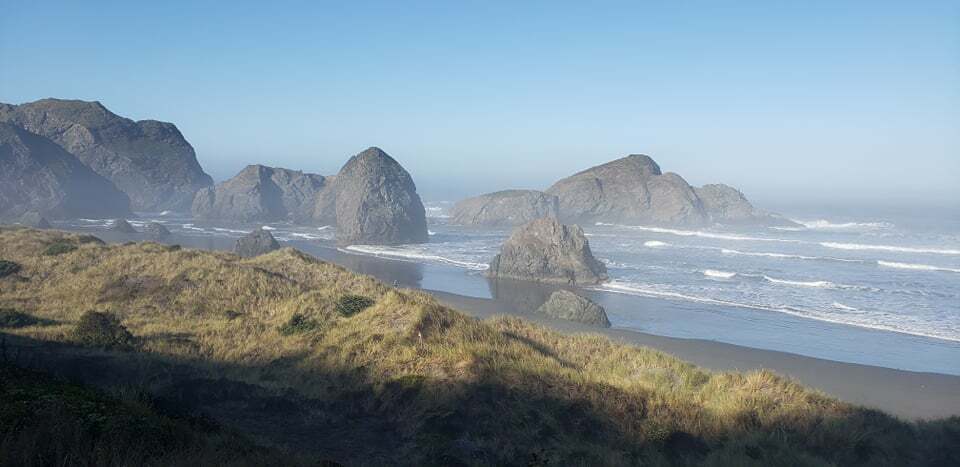
If you want to be challenged physically and mentally, this course will do it and take a lot out of you before the finish line, but there’s a lot of great scenery along the way.
Not so much – Aspects of the race that didn’t do it for you
The only thing I can think of is the food selection at the aid stations was very little. I was really hoping for some soup especially, but none was there.
Weird factor – What’s the weirdest thing about this race?
I don’t know if this is recommended or not, but the river water was clear enough, and in my opinion, pure enough to drink without filtration. I personally filled my handheld 3 times with the river water and gulped it right down. It was better than most city water.
Highlights of your race – What did you do well and enjoy about your race in particular?
I saw several baby blue racers which I found interesting. I didn’t want an easy race, and boy did I get my wish on that one. All the people I talked to were very upbeat and positive. No one seemed to regret doing the race or had a bad thing to say about the race or the directors of the race.
Lessons for others – Share your pro-tips on the race to help the next runner
I have 2 strong suggestions here, and mind you, this was my first ultra, and my first technical trail race, so take it for what it is worth.
If you know there will be water crossings during the race, make sure your shoes are up for it. Mine weren’t. I ran in Saucony Periguins. The traction was good, and so was the toe protection. But the insoles fell apart after the first river crossing.
What ever nutrition you think you need to take with you, double or even triple that amount. It may only be 8 to 10 miles between aid stations, but that is hours of time.
Lessons you learned that will help you next time around
Most of this is in the lesson for others, but I would also add, either plan to stay overnight after the race or find someone to go with to drive, especially if hours away from home. I was 9 hours away, and a driver would have allowed me to sleep on the way home.
Most important course specific knowledge to know about the race
It has steep ups and steep downs with lots of rocks and multiple water crossings.
Aesthetics – Is it a pretty course?
There is a huge lake there with waterfall. The park is clean, and everything was easily accessible except the finish line.
Difficulty – Is it a tough course?
This course is very difficult, mostly single track, rocky, and has several steep inclines and declines. It may not be Mount Everest or whatever, but it is still a mountain race nonetheless.
Organized and well run – Did it feel like a well-oiled machine or were they flying by the seat of their pants?
John and Emily very much know what they’re doing. They’re not necessarily going to babysit you and hold your hand, but they’ll make sure the race starts on time, get the drop bags to their locations, have the volunteers organized and be waiting for you at the finish line.
Competition – Is there a strong field?
The field seemed to be a mixed bag of strong experienced runners to beginners like me. It wasn’t a huge field, but as people go, it was a quality field.
Logistics – Does it require a special handshake, registration a year in advance, hotels all booked? Give us the low down on the nuts and bolts of making the race happen.
To get in the race, simply go to Ultrasignup.com or Google Razorback Running Revival and you’ll find it. Accommodations seem like they’re bountiful enough, but I didn’t look too much into it, as I had planned to dirtbag it the entire time.
Aid Stations – Standard fare or anything special to know about the aid stations in terms of what’s available or when?
Aid stations were nothing special at all. After spending years listening to runners on podcasts talk about the aid station smorgasbords, this is the one area I was disappointed.
Weather and typical race conditions
This year the weather was beautiful. It started around 37 degrees. Got a little warm in the afternoon. I heard some say the mid 60s. But overall, no rain or snow or wind, so it was a great day on the trail.
Gear – Did you need anything special or is there anything you’d recommend for the next runner?
Typical trail gear will get you through this race fine.
Spectators – Is this a friendly course for your friends?
No. This is definitely not a spectator friendly race.
How’s the Razorback Revival Swag?
I think the swag is great. I got a t-shirt, a collapsible cup, a tin coffee mug, a wristband, a small towel or neck wrap (not sure what it’s called), a couple of stickers, and a water bottle.
The Overall Score – How many stars do you give this race and do you recommend that others run it?
If I were to score the Razorback Running Revival on a 5 star rating, I would give it a solid 4.8 stars.
The Arkansas Traveller 100 is a classic. This is one of the original eight 100s in the United States. Check out the race’s statistics and you’ll see previous winner names like Ann Trason and David Horton, and one of our coaches, Ashley Nordell, who holds one of the top 10 fastest times! This course is sneaky hard, with a touch more elevation gain than you’re expecting, and the humid weather can be a beast if you’re not ready for it. Read on for lessons learned and new perspectives on this classic 100 miler!
Race: Arkansas Traveller 100 Runner: Rick Harris Race Date: 10/02/2021 Location: Perryville, Arkansas Results: 28:50:44 Strava Activity Link: https://strava.app.link/4cUFL1ydmkb 3 Bests – What aspects of the race did you like the most? 1. Well-organized 2. Positive volunteers 3. Challenging temperatures/humidity Not so much – Aspects of the race that didn’t do it for you Parking was a pain. Had to ...
In this race report, coach Ashley Nordell reviews the Arkansas Traveler 100 ultra race. Check it out for tips on training for the course! Race: Arkansas Traveller 100 Runner: Ashley Nordell Race Date: 10/05/2019 Location: Ouchita National Forest, Arkansas. Close to Little Rock. Results: https://www.runarkansas.com/results/AT100res2019.htm 3 Bests – What aspects of the Arkansas Traveler 100 Ultra race did you like ...
3 Bests – What aspects of the race did you like the most?
Gorgeous fall weather most years, flat and fast course (BQ certified), well-marked/well-supported.
Not so much – Aspects of the race that didn’t do it for you
The course is out and back on the bike path in town, so it’s not the most exciting route. The trees along the trail are beautiful and it’s nice and cool since the path follows the Rio Grande. Knowing that I run this route at least once or twice a week, it was a bit repetitive.
Weird factor – What’s the weirdest thing about this race?
The marathon, marathon relay, half marathon, and 10K go out and back on the bike path. The fastest runners in the half marathon and 10K will most certainly catch slower marathon and relay runners, so anticipate weaving in and out of foot traffic on the bike path until you turn around.
Highlights of your race – What did you do well and enjoy about your race in particular?
Pacing myself, fueling early, and hydrating often were keys to my success at Duke City. The air in Albuquerque is dry, so runners who don’t hydrate early and often can feel very depleted. I felt like my pacing was well-executed such that I didn’t hit a wall until Mile 23, at a time where I slowed down by 30 seconds per mile while some other runners I passed slowed down by minutes.
Lessons for others – Share your pro-tips on the race to help the next runner
Hydrate well the week before the race, save some energy for the last half of the race since it’s slightly downhill, and don’t get flustered when you get passed by a faster runner in the marathon at this race. Chances are this runner could be in the marathon relay or the half marathon. Stay on your pace!
Most important course specific knowledge to know about the race
The course is flat and fairly fast. The bike path slants slightly uphill on the way out to the halfway point, as it follows the flow of the Rio Grande river, and slants slightly downhill on the way back to the finish. Overall, you will have less than 300 ft of elevation gain. However, it’s important to remember that this race takes place at 4,500 ft of elevation!
Aesthetics – Is it a pretty course?
Yes! The trees along the trail are gorgeous and this time of the year brings out yellows and reds in the trees. You also have the beautiful Sandia Mountain range in the background.
Difficulty – Is it a tough course?
No. The actual bike path is well-paved and there are no challenging hills along the trail. However, you are at 4,500 ft of elevation so the air is thin if you are coming from sea level.
Organized and well run – Did it feel like a well-oiled machine or were they flying by the seat of their pants?
Yes! Well-organized, well-supported along the trail, and lots of people in town turned out for this year’s event at the finish line.
Competition – Is there a strong field?
The majority of the competition in town will do the half marathon or the 10K. Faster runners in the area will typically do one of the world marathon majors in the fall, so the marathon field wasn’t the strongest on the women’s side. I had a 23 minute lead on second place and I didn’t have any male runners to race against after the halfway point.
Logistics – Does it require a special handshake, registration a year in advance, hotels all booked? Give us the low down on the nuts and bolts of making the race happen.
This race rarely caps out. I have a friend who signed up for the race four weeks out and there were plenty of entry spots still. Registration will typically open in the late spring and won’t close until race day. I’d recommend staying outside of downtown, close to Uptown or Nob Hill, so you are closer to better restaurants. There was plenty of parking at the race and there is hardly any traffic in Albuquerque. There is a nice gear drop at the race start. The race start is a mass start so there is no need to worry about corrals. Plenty of bathrooms located at the start and finish.
Aid Stations – Standard fare or anything special to know about the aid stations in terms of what’s available or when?
Gatorade drinks and water were provided at every aid station, which was about two miles apart from each other. There are no food or energy products on the course. If you’d like to have a gel on the course, plan to bring it with you on the course.
Weather and typical race conditions
40-50 degrees, sunny, no wind.
Gear – Did you need anything special or is there anything you’d recommend for the next runner?
I wore shorts, a tank top, and arm warmers. It does start in the high 30s/low 40s at race start, so plan to dress in layers at the start, and warms up fairly quickly once the sun crests the mountain range. I finished when the weather reached 60 degrees.
Spectators – Is this a friendly course for your friends?
Yes! Lots of spectator friendly spots along the course. The Bosque trail has numerous parking lots so spectators could easily move along the course by driving to the different parking lots.
How’s the Swag?
Long sleeve tech shirt, finisher medal and age group finisher medals, lots of food at the finish and a beer garden.
The Overall Score – How many stars do you give this race and do you recommend that others run it?
I’d give this race a 4/5. Knowing that it’s the biggest race of the year in a small city, it is a very well-run event. The course itself isn’t the most exciting as a local, but it is a beautiful course and fast. I appreciated the support along the way and the event organization.
Erin Wagner is a coach with Team RunRun. To learn more about her or to work with Coach Erin, check out her coaching page.
3 Bests – What aspects of the race did you like the most?
Section done for Halloween with spooks and scares in the dark starting hour.
Not so much – Aspects of the race that didn’t do it for you
Changed course map last minute, dark and no lighting pre sunrise, kind of a cluster.
Weird factor – What’s the weirdest thing about this race?
No lights- even street lights, in the first 2-3 miles.
Highlights of your race – What did you do well and enjoy about your race in particular?
First half, happy to finish if a little later than anticipated. Part of the course was hilly-er than expected.
Lessons for others – Share your pro-tips on the race to help the next runner
Work on hills. Bring a body light.
Lessons you learned that will help you next time around
Hill work, pacing, body light.
Most important course specific knowledge to know about the race
Large bridge (hill) to cross both 2ays. Hilly middle section.
Aesthetics – Is it a pretty course?
Beautiful houses on the coast.
Difficulty – Is it a tough course?
Mid level.
Organized and well run – Did it feel like a well-oiled machine or were they flying by the seat of their pants?
Flying by the seat of their pants- confirmation email only came in this Friday evening. Late. Changed up the course map day of race.
Competition – Is there a strong field?
Not sure.
Logistics – Does it require a special handshake, registration a year in advance, hotels all booked? Give us the low down on the nuts and bolts of making the race happen.
No – easy peasy. Sign up through RunSignup. Cheap – $75. Didn’t have to travel so don’t know about hotels.
Aid Stations – Standard fare or anything special to know about the aid stations in terms of what’s available or when?
Water/Gatorade.
Weather and typical race conditions
65 and once the sun was up, sunny.
Gear – Did you need anything special or is there anything you’d recommend for the next runner?
Hydration vests.
Spectators – Is this a friendly course for your friends?
Yes.
How’s the Swag for the Treasure Coast Half Marathon?
So so. Long sleeve tech shirt and medal.
The Overall Score – How many stars do you give this race and do you recommend that others run it?
3 Bests – What aspects of the Purdue Half Marathon did you like the most?
The weather was perfect. They had a ton of great volunteers with water or Gatorade every 1.5 miles. The course was well laid out, running all through campus and the outlying parts were great.
Highlights of your race – What did you do well and enjoy about your race in particular?
It was hillier than expected and I was rather happy I didn’t die on mile 11 like I had during a previous 1/2.
Lessons for others – Share your pro-tips on the race to help the next runner
My coach had me fuel specifically every 5k and it worked fabulously. I think it was why I could tackle the end well and drop time.
Aesthetics – Is it a pretty course?
It was really nice and the leaves had started changing making it even better!
Difficulty – Is it a tough course?
No, just a couple of rough hills throughout but nothing crazy.
Organized and well run – Did it feel like a well-oiled machine or were they flying by the seat of their pants?
Very organized and well done. They made it easy to show up and run.
Competition – Is there a strong field?
There were about 1000 people and quite a few had some super fast times.
Spectators – Is this a friendly course for your friends?
Very spectator friendly. People had the funniest signs.
How’s the Swag?
It was eh. A shirt and a medal. Nothing spectacular.
The Overall Score of the Purdue Half Marathon – How many stars do you give this race and do you recommend that others run it?
I highly recommend this race. It was my second 1/2 marathon and I think it was a 5/5.
3 Bests – What aspects of the Detroit Half Marathon did you like the most?
1. Running with fellow Team Run Run-er and my brother-in-law Tyler Zenk!
2. Since the border to Canada was closed, it was a new course running through Detroit and it was a great race course through some cool neighborhoods.
3. Perfect running weather! Mid-50s.
Not so much – Aspects of the race that didn’t do it for you
Because of the course change, it was harder for spectators to get to multiple places on the course to cheer you on.
Weird factor – What’s the weirdest thing about this race?
There were new traffic humps put into some neighborhoods so you had to keep an eye out so you don’t trip on them! Plus watching out for potholes because… Michigan roads.
Highlights of your race – What did you do well and enjoy about your race in particular?
Running with Tyler helped me keep up my pace and do much better on this race than I thought I would!
Lessons for others – Share your pro-tips on the race to help the next runner
I feel like I’m not qualified to give expert advice but I’d just say don’t start out too fast! Especially easy to do this in races.
Lessons you learned that will help you next time around
Find a pacer and stick with them!
Aesthetics – Is it a pretty course?
Yes! They’ll likely go back to their usual course if the Canada border is open which is still a great course.
Difficulty – Is it a tough course?
No, it’s pretty flat which I loved!
Organized and well run – Did it feel like a well-oiled machine or were they flying by the seat of their pants?
Yes, it was very organized.
Competition – Is there a strong field?
Yes!
Logistics – Does it require a special handshake, registration a year in advance, hotels all booked? Give us the low down on the nuts and bolts of making the race happen.
The biggest thing is finding parking outside of the race course, but there are a lot of options.
Aid Stations – Standard fare or anything special to know about the aid stations in terms of what’s available or when?
Plenty of aid stations with water and Gatorade.
Weather and typical race conditions
Cool and cloudy.
Gear – Did you need anything special or is there anything you’d recommend for the next runner?
Bring a sweatshirt to keep warm before the race starts!
Spectators – Is this a friendly course for your friends?
The usual course is better to see runners multiple times but still a good one for spectators.
How’s the Swag?
Cool shirt and Buff! Lots of food available after the race.
The Overall Score – How many stars do you give this race and do you recommend that others run it?
10 out of 10!
Preparing for your next race? Check out our checklist to help you prepare for it!
3 Bests – What aspects of the race did you like the most?
1. The COMMUNITY! There is something special about the trail and ultra running community but I feel like running a 200 is a niche within a niche and every single person attempting this distance has a unique and interesting story to tell. Even though you are “racing” the race is long enough that you are all in it together and the ultimate goal is to help everyone else finish this incredible distance.
2. The VOLUNTEERS!! This race would not be able to be put on without the help of all the volunteers at the aid stations, at the start, at the finish line. The runners were so well taken care of. I would get into an aid station to sit down and a volunteer would come over and take my pack from me and ask what I needed filled up. I didn’t have to tell them how to take out the bladder from my pack or where to find my flasks they just took it and did it all. They also made food to go and I could custom order a breakfast burrito to go, oatmeal, hamburgers, soup, etc. At one point I was sitting while a volunteer was CLEANING my feet and taping up my feet and I dropped my breakfast burrito on the ground and another volunteer came over and picked it up and said “I’ll go get you another one!” She then hand delivered it to me while I was getting my feet taken care of by the medical volunteers. I just want to send another HUGE shout out of THANKS to all the volunteers at the race. You all made the experience that much better.
3. The BEAUTIFUL TERRAIN!! This race location was just gorgeous! When you go 240 miles you get to run on a lot of different terrain and when most people think of Moab they think of all the Red Rocks, which we did run a lot on, there was also a section that had us running on tops of high deserts and then also in the Aspen trees and mountains as well. When you get tired running a race this long it sure is nice to have beautiful scenery to distract you. There was nothing like running in the nighttime and darkness looking up at all the stars in the Moab desert. My pacer and I watched so many shooting stars too!
Not so much – Aspects of the race that didn’t do it for you
Everything about this race is amazing. I have nothing negative to say about it.
Weird factor – What’s the weirdest thing about this race?
Well, there are plenty of weird things that happen in a race that is over 200 miles long. I would say one of the weird things is that many people, myself included, will have to stop to take trail naps. A trail nap is taken when a runner is out on the course and they are really tired, sleepwalking, or starting to hallucinate so that is when a trail nap is often taken. The runner will lie down on the side of the trail and proceeds to fall asleep rather quickly. Some runners take these naps as short as 1 minute and others will take a longer nap up to 15-20 minutes. It starts to become normal for runners to see other runners during the race on the side of the trail sleeping in the dirt. As you walk by these napping runners you often try to stay quiet so as to not wake up the sleeping runner. During my race I was starting to go really slow and was not making good forward progress so I stopped to take a trail nap and told my pacer to wake me up in 5 minutes. I then laid down on the side of the trail and as soon as my head hit my pack I was out cold. I woke up after only a 3 minute nap and my pacer says I just “popped right up after 3 minutes and then started running with new energy.” The 3 minute trail nap was the perfect amount of rest for my body to “reset.”
Highlights of your race – What did you do well and enjoy about your race in particular?
With this race being so long there were many highlights! I’ll choose a couple to talk about. First highlight was spending the entire first day with 1-3 other runners that were about the same pace as me. We had a lot of good conversations and learned about why each of us were doing this race. It was a little rainy and cloudy most of that first day but then as the sun started going down the rain had stopped and we got to watch a beautiful sunset together out in the Moab Desert surrounded by all the red rocks. I have a photo of us during this first sunset.
2nd highlight would be getting to mile 120 – the halfway point and meeting my 2 pacers, Corrine Malcolm and Nikki Buurma. For the first 120 miles I was running on my own and was looking forward to having a pacer be with me for the last 120 miles of the course. It wasn’t easy getting to this halfway point though. In order to get there I had a 4000 feet climb in 18 miles that was really tough on me mentally. This is when I experienced my first really low low during the race. I told myself one small step at a time and I will make it there. As long as I keep going forward I would make it to my pacers. I ended up getting a little lost as I hadn’t slept at this point yet and it was the 2nd day of the race. I was able to find another racer and stay with him on the way up so I wouldn’t get lost. It was so refreshing to see my pacers at the top of that climb as well as my boyfriend, Gavin, and dog Lola who were waiting there as well.
3rd highlight was when I was going through the night hours from 1 am – 6 am with my pacer, Nikki. She ended up singing me lots of songs and we both realized we grew up listening to a lot of the same country music and we also both realized our singing talent is about the same, aka not that great BUT we love singing! We sang during the nighttime hours together and when I was too tired to sing Nikki sang to me and it was just the energy I needed to keep pushing through the night into the sunrise the next morning.
4th highlight was when I was around mile 215 and another runner caught up to me and we realized that I was number 98 and he was runner 99 and it was because both of our last names is Jenkins. We ended up chatting for a good while and he told me some really great stories of his hallucinations he had when he had completed the Moab 240 in 2019. It was just the energy I needed to keep going to make it to that last aid station before the finish line.
5th highlight was when I was about 2 miles out from the finish line. I was running this last section with my boyfriend, Gavin, pacing me. It was a very tough section and I’m glad I had him. 2 miles felt like it was going to take forever so I decided to turn my phone off airplane mode and saw that I had service. I was able to check some of my messages from family and friends and it was so encouraging to read of all their support. That helped me go a little faster and then finally I rounded the corner and saw my Dad, my sister with my dog, my 2 pacers cheering for me. I ran into that finish line and just collapsed onto my poles. It was such a surreal experience and I was happy it was over but also a little sad it was over as well.
Photo: Howie Stern
Lessons for others – Share your pro-tips on the race to help the next runner
Be prepared for the lows. In a race this long you are going to experience some lows and you will have to get through those. It is a great way to learn about yourself and learn that you are stronger than you think you are. Take care of your feet! If you feel a hot spot starting then take your shoes off at the next aid station and tape it up. Clean your feet often to avoid blisters and change socks. Everyone’s feet are different so if you can I recommend doing some long backpacking trips so you know how your feet respond to long treks and where you tend to get blisters. If you know where you tend to get blisters you can pre-tape your feet to prevent them from starting. Prevention is key!
If you don’t have a pacer for the race then see if you can link up with another runner who is about your pace. The first night I didn’t have a pacer but I linked up with another runner who also didn’t have a pacer and we spent the entire night together until sunrise the next day chatting and it helped pass the time and made that section much more fun.
Lessons you learned that will help you next time around
Pacing and sleep strategies. In a race this long you have to be good about not going out too hard but not going too slow. Finding your right pace is key and run your own race. If you are with someone but they are going too fast or too slow for what you need then stick with your plan. Sleep strategies vary for each person so have a sleep plan in mind but also note that it can change during the race. My original plan was to sleep a little at mile 120 but when I got there it wasn’t dark yet so I went through the next section and slept for 40 minutes when it was dark instead. Some people will take longer sleeps ups to a couple hours or some people will sleep shorter. It is a learning experience and something you won’t really know what works best for you until you are out there.
Most important course specific knowledge to know about the race
You have to have to the route loaded onto your phone via Gaia or CalTopo so you know where you are at at all times. Knowing where the climbs are and how long they are is helpful. The Moab 240 website has a race manual that describes each section in detail so being familiar with that prior to the race helps you mentally knowing what to expect.
Aesthetics – Is it a pretty course?
DROP DEAD GORGEOUS!
Difficulty – Is it a tough course?
Yes. I would say it is a difficult course. Lots of elevation, lots of rocks and uneven terrain.
Organized and well run – Did it feel like a well-oiled machine or were they flying by the seat of their pants?
Destination Trail knows how to put on a 200 mile event. They have been doing this for a few years now and have everything SUPER organized. Even when they had to change part of the route of the course this year due to a storm coming in this went super smooth and everyone knew what was going on.
Competition – Is there a strong field?
There is usually a pretty strong field of runners at this event.
Logistics – Does it require a special handshake, registration a year in advance, hotels all booked? Give us the low down on the nuts and bolts of making the race happen.
Lots of logistics to make this happen. Registration for this event will most likely be going towards a lottery as it has gotten more popular.You have to organize drop bags for the event and make sure you have all the required gear needed. The race manual on the Moab 240 website has all the info on here in a very organized fashion that makes it easy to digest. It might seem overwhelming at first but it really isn’t once you break it all down.
Aid Stations – Standard fare or anything special to know about the aid stations in terms of what’s available or when?
The aid stations are AMAZING. Like I commented above they have food to order and depending on the time of day you arrive they will have different things available. Breakfast time they usually had breakfast burritos made to order. They had vegan and vegetarian options as well. They had warm soup, hot chocolate, tea/coffee, and spiced apple cider during the nighttime to get warmed up. They had all the Spring Energy gels. Wraps, bacon, hamburgers. I mean honestly it was better than a restaurant!
Weather and typical race conditions
Weather for this race can vary from being 10-20 degrees up to the uppers 90’s. Utah weather in October is pretty moody. The race does a good job updating the runners what the weather forecast will be as race gets closer. This year it was pretty mild weather with a little rain. Luckily I finished before a storm moved in but for the back of the pack runners they ended up running in very strong wind, snow, hail, rain. Be prepared for anything!
Gear – Did you need anything special or is there anything you’d recommend for the next runner?
There is a list of recommended gear AND mandatory gear in the runners manual. Don’t skip on the recommended gear. There is a reason they recommend it. Better to have it in your pack and NOT need it then to not have it and end up needing it.
Spectators – Is this a friendly course for your friends?
Thera are many aid stations where your family and friends can see you come in. They have a live tracker so your family and friends can follow you on a map as well.
How’s the Swag?
Swag is pretty darn great! You get a large duffle bag with the race logo, a T-shirt, a buff, stickers. When you finish you get to choose what custom buckle you want. All the buckles say Moab 240 but there are many different designs. You also get a finishers mug, and a print of a photo of the Moab 240 course.
The Overall Score – How many stars do you give this race and do you recommend that others run it?
10/10 stars. Highly recommend if you want an experience/adventure of a lifetime!
Alicia Jenkins is a coach with Team RunRun. To learn more about her or to work with Coach Alicia, check out her coaching page.
3 Bests – What aspects of the race did you like the most?
There was so much good about this race. The volunteers were everywhere, lots of them and very helpful. It was very easy to access start and finish area. Loved that there was a lot of music (Dj’s and bands) along the course!!
Not so much – Aspects of the race that didn’t do it for you
The only real issue I had with the race was that there were no timing clocks along the course which I didn’t like.
Highlights of your race – What did you do well and enjoy about your race in particular?
I thought I ran a really smart race. I didn’t go out too fast, I stuck to my plan and when I felt the time was right I starting ramping up the speed. I focused on running the tangents as well as I could. I really enjoyed the crowd support along the race, lots of people cheering, lots of people playing music from their homes along the way. The weather was absolutely perfect. The cloud cover in the morning really helped keeping the sun hidden once it came up. After training in the Southern Louisiana Summer these mid 40 degree temps were very welcoming!
Lessons for others – Share your pro-tips on the race to help the next runner
Stick to your race plan.
Don’t go out fast.
Practice your race day nutrition throughout your long training runs.
Let people pass you! Run your race!
Lessons you learned that will help you next time around
Pick a pace group that will keep you honest at the beginning of the race.
Most important course specific knowledge to know about the race
Everything is gonna go great, the course is pretty flat, and then you get to Belle Isle and you are hit with a ton of bricks from the crazy headwind! At Mile 20 it really hits hard! Stick with a group to draft! I did not and had to push through the headwind alone!
Aesthetics – Is it a pretty course?
It’s cute. You run through a lot of different neighborhoods in Detroit. The course was a different course than they normally have because they couldn’t go into Canada. Next year they are supposed to go back to the course that runs through Canada.
Difficulty – Is it a tough course?
It’s pretty flat, there are a few tiny hills you have to run. Towards the end of the race there are two quick steep uphills, when your legs are tired these are a little challenging.
Organized and well run – Did it feel like a well-oiled machine or were they flying by the seat of their pants?
They definitely know how to put on a race!
Competition – Is there a strong field?
Decent field, based on results I’ve seen in the past I placed right around where I thought I would place.
Logistics – Does it require a special handshake, registration a year in advance, hotels all booked? Give us the low down on the nuts and bolts of making the race happen.
I signed up two weeks before the race. Normally it sells out much sooner. I don’t think the marathon was sold out. The hotels downtown are very expensive and not many choices trying to book last minute.
Aid Stations – Standard fare or anything special to know about the aid stations in terms of what’s available or when?
Lots of aid stations and they are well stocked!
Weather and typical race conditions
Mid 40’s during the race which made for an amazing day! It gets really windy downtown and once you are on Belle Isle.
Gear – Did you need anything special or is there anything you’d recommend for the next runner?
Just your normal throw away gear.
Spectators – Is this a friendly course for your friends?
This course was not too friendly to spectators. My boyfriend could really only see me at the start/mile 13/finish. It was a very spread our course.
How’s the Swag?
Lame! Just a long sleeved T with not many extras in the bag.
The Overall Score – How many stars do you give this race and do you recommend that others run it?
4 1/2 stars … I think it will be back to being an even better race when it goes through Canada.
3 Bests – What aspects of the race did you like the most?
Start/Finish at Colisseum, taking selfies in front of the Altare della Patria with no one in the streets.
Italian national anthem and music at start.
Pace groups were great. (I ran the first half with 3:20 group, legs were burned from Vienna the week before, so enjoyed the last half. Did catch a slower pace group near end which was fun, too)
Not so much – Aspects of the race that didn’t do it for you
Medal is really cool with all of the cobblestones, but running on them near the end was a bit tricky. It’s not nearly as bad as the comments that you see on web.
Weird factor – What’s the weirdest thing about this race?
Cobblestones.
Highlights of your race – What did you do well and enjoy about your race in particular?
Taking pictures and enjoying the ambiance. Hope to do this again.
Lessons you learned that will help you next time around
Running Vienna and Rome on back to back weekends is legendary, but had to promise wife no more marathon vacations 😉
Most important course specific knowledge to know about the race
Cobblestones at end, say around 20 to 26, require more attention than the miles up front, which are much smoother.
Aesthetics – Is it a pretty course?
Awesome! How can you beat running through Rome with only runners in streets?
Difficulty – Is it a tough course?
No. It’s pretty flat, just watch out for cobblestones at end.
Organized and well run – Did it feel like a well-oiled machine or were they flying by the seat of their pants?
Yes, very well organized.
Logistics – Does it require a special handshake, registration a year in advance, hotels all booked? Give us the low down on the nuts and bolts of making the race happen.
No, we stayed at airbnb and Hotel Celio, which were both gorgeous. Both had rooftop views of Coliseo and were about 100 to 200 m from start queues/corrals, restaurants, etc.
Aid Stations – Standard fare or anything special to know about the aid stations in terms of what’s available or when?
Very good.
Weather and typical race conditions
Was good with the 6:45am start.
Gear – Did you need anything special or is there anything you’d recommend for the next runner?
I can’t run with the carbon plate shoes due to ACL repair 6 years ago, but I could hear them coming behind me in the second half. Very distinctive sound. Are they worth it? The noise makes me wonder how much damage they could do to people with 2 good knees.
Spectators – Is this a friendly course for your friends?
Yes.
How’s the Swag?
Medal very nice.
The Overall Score – How many stars do you give this race and do you recommend that others run it?
5 of 5. Definitely a can’t miss destination marathon.
3 Bests – What aspects of the race did you like the most?
The river and all the foliage was so beautiful, striking fall colors, the sun hitting the river and the orange, red and yellow trees reflecting on the water, just stunning.
This race was almost all single track and that really appeals to me; when I’m running on single track, I feel so much closer to nature and just think it’s more fun to run than something like wide logging roads.
The morning was cold and I appreciated the warmth of the fire pit they kept feeding.
Not so much – Aspects of the race that didn’t do it for you
As much as I love single track, I found that in this race it created some issues. At the 7.5 mile mark, the course doubles back so faster runners were running at me and I had to constantly step off the path – the narrowness of the trail and the spongy vegetation on the sides of trail made it very awkward irritating to jump back and forth.
The other issue was at the beginning of the race, I ended up behind a long string of runners as we were funneled into the single track. There was really no way to pass them; I could tell there were faster runners behind me so I just thought I’d be patient and wait for an opening but it was several miles before things opened up, maybe 4 or 5 miles. And this was all downhill which I love running but couldn’t get to the pace I wanted – those of us behind ended up even walking some because of the traffic jam.
Lastly, the last couple of miles of the race, I had a hard time knowing which way to go and made several wrong turns which I quickly realized. In each case, I turned back to the intersection where I went wrong and looked around. It wasn’t that I wasn’t paying attention; I had to do some serious looking around to find the ribbon – it was not obvious which way to go.
Highlights of your race – What did you do well and enjoy about your race in particular?
I loved the downhill after I cleared the traffic jam. The course is basically 7.5 miles downhill and then 6 miles uphill. After about mile 4, I had space to go my own pace; my plan was to keep my HR at an easy/tempo type pace to save gas for the uphill. When I’m not pushing my pace, it’s so much easier for me to look around and enjoy nature and the beautiful scenery.
Lessons you learned that will help you next time around
Since I have fallen before, I always remind myself safety is my top goal because if I get hurt, I can’t run. I know that when I get tired legs, I’m more liable to trip/fall but somehow in this race, I got into some weird auto-pilot running and did not realize how tired my legs were becoming and sure enough, I fell on a rock and today, the day after, I’m limping around with a sore knee. I need some cues to stay aware of where I’m at, to check in with how I’m feeling. This extends to my hydrating and nutrition too. Another thing I zoned out on was using my gels. Today I realized I only consumed two of them in almost three hours, which was not my plan. I had no idea I did this until I was cleaning out my hydration vest.
Aesthetics – Is it a pretty course?
Yes – absolutely beautiful, the most attractive feature of the race.
Difficulty – Is it a tough course?
It was tough for me but it’s not a tough course – the 6 mile uphill portion isn’t steep, the elevation gain shows up as 630 ft in my running apps (even thought the website says that there is 900 ft of gain). For me what was tough is that not only is it the second half the race but 6 miles of continuous ascent for this trail novice is still difficult.
Organized and well run – Did it feel like a well-oiled machine or were they flying by the seat of their pants?
It was mostly well run. It started on time and picking up my bib was easy. The only thing that disappointed me was that they ran out of soup and coffee. Those were two items I was looking forward to after my run. The only appealing item on the food table for me was a banana. They offered komboucha in place of coffee but that’s not my thing.
Logistics – Does it require a special handshake, registration a year in advance, hotels all booked? Give us the low down on the nuts and bolts of making the race happen.
There’s a campground right there at the race start where the runners can camp out the night before. Then there is a lodge called “Union Creek Resort” but it’s not a resort, it’s a rustic lodge. I feel that I could get some bad sleep by camping so I chose to room at the lodge. They offer cabins and rooms in the lodge. Not knowing any better, I just got one of the rooms. There are several rooms on the second floor above the registration desk and lodge store and the rooms do not have bathrooms – there are two shared bathrooms for the entire floor. When I was getting food at the cafe across the street, I got talking to another runner and she mentioned that last year, she stayed in one of the cabins (not the lodge rooms) and it was nice. She wanted to do that again this year but didn’t sign up on time so decided to camp in her car rather than in the lodge. When I registered for my room, I saw that there was this cafe across the street and I was hoping to eat there. Due to covid though, the restaurant is to-go only and that’s not what I expected and was disappointed.
Aid Stations – Standard fare or anything special to know about the aid stations in terms of what’s available or when?
For the half marathon, there was one aid station at the turn-around point. All they had was gels and liquids which I was already carrying. At the last race I did, I really appreciated that there were orange segments and banana slices available. I think I was hoping for something like that but they had nothing I wanted.
How’s the Swag?
I found the giveaway rather strange. We were given these glass jars with the race name “Rogue Gorge” printed on them. I’m thinking they go with the theme of the Kombucha. I suppose I could use it for brewing tea which I don’t do so I’m probably going to throw it away.
The Overall Score – How many stars do you give this race and do you recommend that others run it?
Because of the traffic congestion on the single track, the colliding with oncoming runners, and the issue of course markings, I would give this race a 3 out of 5. But the scenery is awesome – this would be a good place to just go on a solo trail run.
3 Bests – What aspects of the race did you like the most?
Streets and crowds. Hearing Hop, Hop and laughing. It’s Da-E in Italy Rome.
Flat.
Finish area with food, beer, docs, place to rest, etc.
Race staff were great at communicating when my flight from Paris was delayed and I couldn’t get to the Vienna Expo for packet pickup (8 hr flight delay). Lisa Ban and staff were great at replying and were willing to stay late or get the bib to me early next race day if needed. All worked out and actually made it to the expo, which was very well put on.
Not so much – Aspects of the race that didn’t do it for you
Late start at 9am was good and bad. Good for stomach, not so good for heat, which approved 80F by finish.
Tshirt was biggest disappointment. I did learn sizing is 2 sizes off from US (I take small for singlet in US, L or XL in Europe – 5’10”, 155lb)
Bibtags (magnets for holding on a bib don’t work, had to keep my bib in pocket last half of race.)
Weird factor – What’s the weirdest thing about this race?
See Hop, Hop.
Highlights of your race – What did you do well and enjoy about your race in particular?
Boston Qualified! Nearly 6 minutes better than BQ, so I should get in for April 2022.
Lessons for others – Share your pro-tips on the race to help the next runner
Your watch will be a little off. My Garmin 945 said 2.5 km to go when I saw the 3 km sign in distance.
Aesthetics – Is it a pretty course?
Not as pretty as I expected.
Difficulty – Is it a tough course?
No. It’s flat. Perfect for BQ.
Organized and well run – Did it feel like a well-oiled machine or were they flying by the seat of their pants?
Yes, very well organized.
Logistics – Does it require a special handshake, registration a year in advance, hotels all booked? Give us the low down on the nuts and bolts of making the race happen.
No, but likely Covid related. We stayed in Airbnb off Schwedenplatz and really enjoyed the train being downstairs and Pho LaLa post race.
Weather and typical race conditions
Warm at start and finish.
Spectators – Is this a friendly course for your friends?
Yes.
How’s the Swag?
Medal very nice. T-shirt needs a lot of work.
The Overall Score – How many stars do you give this race and do you recommend that others run it?
Not so much – Aspects of the race that didn’t do it for you
Parking was a pain. Had to park on one side of the road leading to the start/finish, so I ended up with a 1/4 mile walk from my truck. Not a big deal until after the race! But, a couple of volunteers saw me and gave me a ride back to my truck after the race without me having to ask. Just plan for the walk or be 1st at race morning check-in!
Weird factor – What’s the weirdest thing about this race?
Getting my quads rolled out at 2AM by an aid station volunteer dressed in a sparkly gold suit. Too bad someone didn’t get that on video!
Highlights of your race – What did you do well and enjoy about your race in particular?
– Minimized aid station turn-arounds: unless I was actually doing something necessary for the race, I didn’t hang around.
– It was a hilly course, so I NEVER ran ANY significant climb (I hiked a lot from the start). That saved my legs.
– Heat-training made a difference for me in the warm/humid weather. Spent a lot of time training in the midday FL humidity and some sauna sessions in the months leading up to race day.
Lessons for others – Share your pro-tips on the race to help the next runner
Put everything in your drop bags in plastic bags. If you’re going to see the drop bag multiple times (out-back or looped course), consider packing specific supplies for specific stops I their own ziplock baggy and numbering each bag. That way, when you have ultra brain in the middle of the night, you don’t have to think: just grab the next bag and replenish your pack.
Lessons you learned that will help you next time around
Desitin (or similar diaper rash cream) works wonders when chaffing after miles in the rain. Also, Squirrels Nut Butter, TriSlide, and Sport Shield totally eclipsed Body Glide for minimizing chafing for me after running in the rain for most of the day.
Most important course specific knowledge to know about the race
Zero flats. Just long climbs and descents. A few are steep, but most are moderate.
Aesthetics – Is it a pretty course?
Very pretty. Spend most of the time in the woods.
Difficulty – Is it a tough course?
For me, it was tough. Only my second 100-miler, but the long climbs and warmer temps really challenged my body and mind.
Organized and well run – Did it feel like a well-oiled machine or were they flying by the seat of their pants?
Super-well run. They’ve got it down!
Competition – Is there a strong field?
The winner this year placed 6th at Badwater a couple years ago, so it does attract some good runners. It is also a WSER qualifier. That said, there’s was around a 35-40% drop rate.
Logistics – Does it require a special handshake, registration a year in advance, hotels all booked? Give us the low down on the nuts and bolts of making the race happen.
You can find it on Ultrasignup, but will have to link to their website to register.
Aid Stations – Standard fare or anything special to know about the aid stations in terms of what’s available or when?
Standard. Hydration was water or Gatorade. Many stations also cooked up quesadillas and pancakes fresh.
Weather and typical race conditions
Warm/humid.
Gear – Did you need anything special or is there anything you’d recommend for the next runner?
A lot of the course is on gravel roads or packed clay, so having some cushion under your feet helps. Only eight miles on single track; but that has a lot of mossy rock, so choose footwear accordingly (esp. if it rains). I ran faster, lower stack, grippier shoes for the first 16 miles and then switch to my Altra Olympus after the single track was done.
Spectators – Is this a friendly course for your friends?
Not really. A lot of aid stations but moderate access for crews. Spectators will be disappointed.
How’s the Swag?
The buckle is small… but I don’t really care. Felt perfect in my hand once I stepped across the finish!
The Overall Score – How many stars do you give this race and do you recommend that others run it?
5/5. Plenty of aid stations. I ran without a crew, but the aid stations volunteers were so attentive, it felt like they all became my crew!
Want to read more about the Arkansas Traveller 100? You can also check out Coach Ashley Nordell’s race report – she holds one of the top 10 fastest times!
Want to know more about the Midstate Massive Ultra? This was Cody’s first 100 miler but he has lots of lessons learned and insight for the course – read on to learn more about the race and how to that 100 mile belt buckle!
3 Bests – What aspects of the race did you like the most?
Most of the climbing and technical trails are done in the 1st half of the race
Part of the fun is navigation. You really need to rely on your GPS tracker to help guide you or else you can get pretty lost
The aid station crew and staff were awesome
Not so much – Aspects of the race that didn’t do it for you
There is a decent amount that hits roads in the 2nd half of the race when your legs are trashed from the technical climbing during the earlier parts. It gives you the opportunity to run a bit faster but also just chews up the quads!
Weird factor – What’s the weirdest thing about this race?
You start in waves in 30 minute intervals. I was in wave 3 starting at 9AM. At mile 30 I was the 1st 100 miler, but not in 1st place. I was able to stay the 1st 100 miler up until about mile 75 where a guy who started at 11:30 passed me. He was the only person in the 100 mile race who passed me the whole day and I was the 2nd 100 miler to cross the finish, but due to the wave situation I came in 9th.
Highlights of your race – What did you do well and enjoy about your race in particular?
I loved the 1st half a lot. I tend to do better on the more technical stuff and can pick off racers during these sections. I use that to my advantage since I am slower on the flats and roads which is where people catch back up. Going up and over Wachusett before the sun started to set was awesome!
Lessons for others – Share your pro-tips on the race to help the next runner
Expect to be lost and at least run an additional 1-2 miles. Over the last 10 miles I was thinking that I had a little over 2 hours to finish … little did I know that about 5-6 of those miles were on this really technical rocky section that you (well at least I) cannot run and ended up doing 17 min miles. It was a mental kick in the gut but after that it is pretty smooth sailing to the finish.
Aid station 4 to after Mt Wachusett is probably the most difficult climbing – once you are done with that you’ve finished the majority of the elevation.
Lessons you learned that will help you next time around
I carried WAY too much in my pack – too much food, too much Tailwind. I would have cut what I carried in half and that would have made things a little easier for my shoulders and back through the course of the race.
Most important course specific knowledge to know about the race
Keep your eyes open and follow the yellow triangles! Just be prepared to get lost and try not to get too frustrated when it happens.
Aesthetics – Is it a pretty course?
It’s really pretty – it is during the height of fall foliage season. You get some great colorful views of lakes, mountains, etc while it is still light out.
Difficulty – Is the Midstate Massive Ultra a tough course?
This was my 1st 100 so it was tough to me! But I will say that given the 2nd half is roads it makes it a slightly easier course than if it was an out and back on the 1st half. I have done hard (physically, not mentally) runs in this same area in the past.
Organized and well run – Did it feel like a well-oiled machine or were they flying by the seat of their pants?
Super well organized – the staff was awesome. It was just the 3rd year running this race but it ran smooth. They allow 1 drop bag that they move along the course to 3 spots during, then the finish – I was worried that I’d miss my bag at some point but never had an issue!
Competition – Is there a strong field?
Fairly strong competition – mostly local New England folks but they are a tough breed.
Logistics – Does it require a special handshake, registration a year in advance, hotels all booked? Give us the low down on the nuts and bolts of making the race happen.
Given that it is relatively new, it isn’t too bad to get into. There are hotels around and AirBnB’s that you can find as well.
Aid Stations – Standard fare or anything special to know about the aid stations in terms of what’s available or when?
Most of the aid stations were supplied with the normal stuff… water, soda, hydration mix (this year was Body Armor and last two years it was Tailwind). Each varied a bit after that from Clif bars, bananas, oranges and watermelon to perogies, quesadillas, veggie broth and chicken soup. Lots of good choices!
Weather and typical race conditions
Expect it to be 40-50 overnight and 60-70 during the day. Typically, it is perfect conditions! T-shirt and shorts for me the whole time with gloves on at night when it dipped into the 50s… I probably didn’t need gloves either but was too tired to take them off after getting them on my hands.
Gear – Did you need anything special or is there anything you’d recommend for the next runner?
They have some requirements which include – flashing red light, phone with extra battery charged (you have to use an app called RaceJoy for tracking/safety purposes but it also helps you when you get off course and allows spectators to follow you and send you cheers), a Buff or mask for covid precautions, headlamp (obviously for running at night), ability to carry 2L of water (you don’t have to hold this much but need to have the option) and an emergency blanket.
Spectators – Is this a friendly course for your friends?
There are a few spots for crew to meet up with you – I forget how many spots since I went crewless, but there was a decent amount. Don’t expect to see people all along this course though like you would a marathon.
How’s the Swag?
Great – long sleeve shirt, buff and belt buckle for 100 mile finishers.
The Overall Score for the Midstate Massive Ultra – How many stars do you give this race and do you recommend that others run it?
4.5 out of 5 – I’d do it again for sure!
Cody Frost is a coach with Team RunRun. To learn more about him or to work with Coach Cody, check out his coaching page.
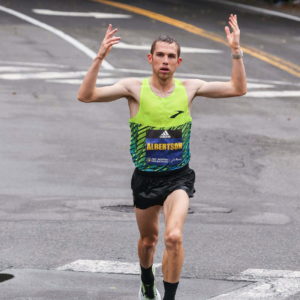
Who was that guy leading the first 21 miles of the Boston Marathon? CJ Albertson, of course! We at Team RunRun knew who that rockstar runner and coach was! Read on for CJ’s Boston Marathon Race Report.
People often think of running and weight loss together, since running is a form of cardio exercise that burns calories. However, running does not always result in weight loss. If that is your only goal, running may not be your answer.
With that in mind, we asked expert nutritionists and our own running coaches your most common questions about running and weight loss, so that you can make healthy decisions.
FAQ: Will running help you lose weight?
While running may help you lose weight, everyone’s body is so different that it is hard to predict results. If your goal is weight loss, you should consult with health professionals before choosing a course of action.
Heidi Strickler, Registered Sports Dietician
Heidi Strickler, a Registered Sports Dietician, says that weight loss depends on many factors. Those include your running practice, nutrition, gender, hormonal health, and even the time of year.
“In my experience, individuals who are running with a goal of weight loss oftentimes become frustrated and mentally/emotionally burned out, and frequently end up with health issues when running is paired with caloric restriction, such as hormone disruption, poor bone health, and disordered eating patterns.”
Similarly, Dawn Lundin, Registered Dietician, advises, “I encourage people to think about running (and other forms of physical activity) separate from changing your body shape, size or weight. You should run because you love it, not because you want to change a number on the scale.”
Setting goals around your running is important, but weight loss may not be the right goal for you. If Coach Julia Lerner’s athletes are interested in setting a personal record or achieving a new race distance, she advises against making weight loss an additional goal. “Focus on eating enough to properly fuel your body to have great training sessions and race performance. You’ll be amazed what your body can do!”
At Team RunRun, our coaches help you map out a running plan that incorporates a healthy, full-body approach to include your nutrition. Our main goal is to help you fall in love with running, and to train with running in a healthy way!
FAQ: What tips do you have about running to lose weight?
If you choose to focus on losing weight as one of your fitness goals, running can help, but only if it is paired with a nutrition plan and consistent training.
Rez Nguyen
Dawn cautions, “If your only motivation to run is to lose weight, then you may find that your expectations (losing weight) doesn’t match reality. If runners want to change their body composition and/or lose weight, there is a specific time during their training cycle where it would be recommended. Creating too much of a calorie deficit while training puts the runner at an increased risk for developing injuries.”
When her runners are interested in weight loss, Coach Rez Nguyen recommends they pay attention to what they eat in addition to hydration, sleep, and stress. Coach Jamie Ness reminds his athletes that fitness is a journey. “Running can’t be treated like a fat-burning tool only. You must consider the stress placed on your body and allow adequate recovery. Given enough time you will be amazed at what you can do, but it does require time.”
At the end of the day, Heidi cautions that weight loss has much more to do with nutrition and genetics than exercise. She advises, “If you are interested in weight loss, any body composition change, or are starting a new exercise program, I ALWAYS recommend working with a Registered Sports Dietitian who specializes in runners.”
FAQ: How much running burns 500 calories?
There is no simple formula to calculate how many calories are burned by running. Much of the formula is determined by your genetic makeup. In fact, even your fancy calorie-tracking apps may be getting it wrong!
Dawn Lundin, Registered Dietitian
Dietitian Dawn Lundlin explains it as:
“Generally speaking, you can estimate to burn 100 calories per mile you run. This would mean that a 5 mile run would burn approximately 500 calories. Please keep in mind that this number is a rough estimate, and calories burned while running are usually lower for people in smaller bodies and higher for those in larger bodies. The amount of calories that a person will burn is dependent on your age, gender, body composition (think fat mass versus muscle mass), type of run you are completing and your genetics.”
Meanwhile, Heidi Strickler admits a health-professional secret:
“We really don’t know, to be perfectly honest. We have always known this is complicated, but some recent research suggests that it’s more complicated than we thought, because it appears the body compensates at a certain point, as a protective mechanism. For example, if your watch says that you burned 500 calories on an hour-long run, you may have actually only burned 400 (hypothetically speaking). This is why so many of the fitness and nutrition trackers (e.g. MyFitness Pal) are faulty, and why running for weight loss can be problematic.”
FAQ: Will running burn fat?
Yes, running burns fat, but not always the way you think it will. Your body generally burns both fat and carbohydrates when running. Depending on your run – and, of course, your genetics as well as other factors – your body will burn through both types of fuel.
Tom Scott
Dawn Lundlin illustrates it this way: “Let’s say someone has the ability to store 400 grams of carbohydrate as glycogen in your muscle and liver. This is roughly 1600 calories of carbohydrate. If you are running a marathon or ultra marathon, you will definitely use up your body’s glycogen stores during your run and start to burn fat if you do not consume any carbohydrates. If your glycogen stores aren’t topped off, then you may start to burn fat sooner.”
Heidi Strickler adds, “Some people burn fat more easily than others, and people with periods burn more fat in the second half of the menstrual cycle (between ovulation and your period). There is also a misconception that the fat you are burning is coming from your stomach or hips or other places where you can visibly see fat. However, much of the fat you burn comes from the fat stores in your muscles (called intramuscular triglycerides, or IMTG).”
Coach Tom Scott adds that new runners will burn less fat than well-trained athletes, so you have to adjust your expectations based on your personal fitness.
At the end of the day, running requires a lot of calories, and if you train regularly, you will probably end up burning both fat and carbohydrates in your body.
FAQ: Will running make you skinny?
This question implies that you want to become “skinny” – which has a lot of implications. “Skinny” is very subjective, so it isn’t a helpful goal. While running regularly may change your body composition by building muscles you don’t already have, there is no guarantee that it will make you look any specific way.
“Your body’s shape and size is dependent on more factors than your weekly mileage. Your genetics have a big role in your body size,” says Dawn Lundin. “Remember that being skinny doesn’t guarantee you will be running your best. Running a hilly course like the Boston marathon requires strong quads and glutes. When muscles build strength, they grow. I know strong runners of all body shapes and sizes. I encourage you to appreciate your body’s uniqueness and what it can do for you versus what it looks like.”
At Team RunRun, we support all body types. Coach Tom recommends readjusting your focus to improving your overall health and happiness. When you run because you love running, you can build a healthy lifestyle that empowers you in every aspect of your life.
FAQ: Can running build muscle?
Yes, running can build muscle as long as you are paying attention to your nutrition, too!
Jamie Ness
Since running requires a lot of effort from your muscles, if you feed them with the appropriate fuel, you can end up building muscle.
“If you are not meeting your body’s calorie needs, then your body could potentially break down muscle mass to meet your body’s nutritional needs,” Dawn Lundlin advises. “Protein needs are important for muscle growth, but you also need to be sure you are consuming enough carbohydrates so that protein can be used to build and repair muscle.”
Giving your muscles a period of recovery after a run is important for building muscle, too. Coach Jamie says, “If your muscles are allowed to rest, recover and provided good nutrition, it can certainly build muscle.”
Meanwhile, it is important to remember that running mostly builds muscles in your legs. Dawn recommends that you add complete core and upper body exercises to build muscles throughout your body.
With that in mind, if you have specific goals around building muscles, a running coach can help build you a custom training plan that targets those muscles while avoiding injury.
FAQ: What tips do you have for runners who *don’t* want to lose weight?
Since running does burn a lot of calories, sometimes you need to make an effort to keep yourself at a healthy weight. Again, the answer is in paying attention to your nutrition. “When in doubt, eat. Eat often; aat enough; eat foods that you like and that taste good,” says dietitian Heidi Strickler.
Julia Lerner
Keep in mind that as you increase your running mileage, you will burn more calories. That means you need to eat more to keep from going into a calorie deficit. Coach Tom advises, “If you are fueling adequately your body will naturally find a healthy weight range and stick to it pretty closely. If you are losing too much weight you need to fuel more!”
In addition, you’ll want to pay attention to when you eat. Says Dawn Lundin, “Nutrient timing is fuel before, during and after your run. If you’re not able to maintain your weight by honoring your body’s hunger and fullness cues, it may be helpful to work with a sports dietitian on nutrient timing.”
Running and weight loss are often interdependent, but one does not necessarily lead to the other. When considering your body and fitness goals, we encourage you to consult with health professionals. Above all, make sure your training plan supports your body in a positive way.
Thank you to Dawn, Heidi, and our coaches for taking the time to answer these questions! If you want to discuss running and weight loss, reach out. We would love to help you build a healthy plan for your goals!
3 Bests – What aspects of the Boston Marathon did you like the most?
The absolute best part of the race is the crowd and the atmosphere. There are almost no silent parts of the race. You have support the entire way, and that is not something you find in many marathons.
I was also really impressed in how many water stops there are. They have one every mile after mile 2, again, this is something I have never seen before.
Not so much – What aspects of the Boston Marathon didn’t do it for you?
There wasn’t anything I would say that I didn’t like about the race or the experience, but the course was more difficult than I had anticipated. For me Heartbreak Hill was not the problem, but more so the first hill you encounter in Newton. For me that felt more like a mountain than a hill. After that, the other three Newton Hills were small in comparison.
Highlights of your race – What did you do well and enjoy about your marathon in particular?
Something I felt I did well was staying calm under pressure and in situations I wasn’t necessarily comfortable with. From the gun, the other elite women were running a strategic race, and no one wanted to take the lead into the headwind. I had a race pace in mind that I planned to stick to, and to my surprise that was enough to lead the race.
I personally use visualization all of the time, so I certainly didn’t feel unprepared for this situation, but never in my wildest dreams did I feel like I would actually be leading. Even though I tried mightily to allow someone else to take the charge, the other women were content with me setting the pace. I had to stay calm and keep my emotions in check during that time of the race.
Lessons for others – Share your pro-tips on the Boston Marathon to help the next runner
While you may not ever find yourself leading a World Marathon Major; you will more than likely find yourself in a position during a race that is less than ideal. You can combat these situations with visualization.
When you’re training you have a lot of time to think about your race. It is super fun to think about all of the ways the race could go well and imagine all the great possibilities that could unfold. And I encourage you to visualize those situations and enjoy that time. BUT also take time to imagine the weather being too warm, too cold, and too wet. Think about how you will feel and how you will adjust not only your race, but also your mindset. With all of the training you put into longer races you have time to think through thousands of scenarios.
Lessons you learned that will help you next time around
Next time I will have more appropriate expectations for the hills. For those who haven’t run Boston and want to train for it, I would train on hills bigger than you imagine the Newton hills to be.
Logistics – Does it require a special handshake, registration a year in advance, hotels all booked? Give us the low down on the nuts and bolts of making the race happen.
Book hotels and flights early, they get expensive quickly.
Aid Stations – Standard fare or anything special to know about the aid stations in terms of what’s available or when?
Every mile they had water and gatorade. They also had three Maurten stops.
Spectators – Is this a friendly course for your friends?
It is a straight shot, so in the aspect of friends and family seeing you on the course, it is not spectator friendly.
The Overall Score – How many stars do you give this race and do you recommend that others run it?
3 Bests – Review the aspects of the Chicago Marathon that you liked the most
It’s pretty well organized overall.
Aid stations were really great. There were stations every 1.5-2 miles. Gatorade and water at all of them, gels after 18 or so, and bananas after 18 as well. A couple of spots had wet sponges to cool off and some pain-relief “biofreeze” gel, but I didn’t try these.
The course is very flat. The only spots with the slightest of elevation were the bridges. I wouldn’t call it the most picturesque, and it was so crowded that you can’t really take your eyes off the road at any point anyway; you have to look out for people all the time.
Not so much – Review the aspects of the Chicago Marathon that didn’t work for you
All in all – it was a really well run race, and these are really quibbles, and there’s not much they can do about the weather.
Weather
Apparently this race usually has perfect running weather, high 40s to start to mid 60s at the end and no rain. But this day had most of the race in the 70s and it was quite humid due to cloud cover all the time. It actually sprinkled a little right at 8am, but fortunately that didn’t turn into any rain, so I guess it could have been worse.
Restrooms
They were actually quite clean, but perhaps not enough for such a large number of people. I saw lines at the restrooms throughout the race. Also there were some extremely long lines at some places at the start (like 200 people long) and some very short lines elsewhere (5 people long), so it seemed like it would make sense to communicate better where all the restrooms were. Fortunately I heard an organizer directing people from the very long line that wasn’t moving at all to the very short lines that only took 2 minutes to get through.
Communication about when to get there
They recommended getting there at 6am for an 8am start of Wave 2, which was just completely unnecessary. I ended up getting there at 7am, and even that was excessive, and I could have got an extra 30 minutes of sleep given that I was staying so close to the race start. The Expo to pick up your race packet as well was very crowded and it took an hour plus to get through the line, and I must have walked 2 miles in the line to pick up my bib etc. Not sure how to solve that, but maybe encourage local people to pick up on Friday instead.
Finisher shirt
I’m guessing you had to pay extra for one of them, because I didn’t get it and I didn’t see many folks with one. The shirts that everyone got for picking up the packet were a little plain as well, and now I have 4-5 black t-shirts.
Highlights of your race – What did you do well and enjoy about your marathon in particular?
I think I fueled really well leading up to and through the race. I’ve been using Spring Energy oatmeal and fruit packs and they give me a ton of slow-burning energy and cause no stomach distress at all. The pack is a little bulky for the calories but it worked well. Logistics went well overall. I found a hotel really close to the start, so it was low stress to get there the morning of.
Apparel worked really well. I found a pair of running shorts a couple of months ago that I liked a lot – lots of pockets! I got a new pair of shoes a month prior and broke them in with about 40 miles, so they were perfect for the race.
Lessons for others – Share your pro-tips on the Chicago Marathon to help the next runner
The recommended time to get there is vast overkill; I got there at 7 and still easily had 30 minutes sitting around doing nothing plus another 20 minutes from the start of my wave until I went past the start line. Next time I’d just get there at 7:30. It took less than a minute to go through security, and maybe 3 minutes to walk up to the corral. Restroom lines might be an issue but I wouldn’t have to use them if I had arrived just in time anyway.
Lessons you learned that will help you next time around
My hydration level could use a bit more tuning. It was a very warm day for this time of the year, and I didn’t take in enough fluids the first half of the race. I got more for the second half but couldn’t make up the debt. Core strength was the limiting physical factor for me. My lower back starting hurting around 18 or so and that was a much bigger limiting factor than any leg pain, though there was plenty of leg fatigue, knee pain, etc. I’d started some strength training a few months prior but for next time around I hope to be significantly stronger.
I ran with the 4:30 pace group for a while, which was too fast for me for the given day, training level, and conditions. Although I hadn’t officially signed up (for free) to run with them, I just saw them and followed them. I was able to stick with them for about 16-17 miles, but I think I’d have been better off sticking with my own race plan and running a little slow to begin with and not dropping off so much after 18.
Most important course specific knowledge to know about the Chicago Marathon?
It’s really flat, so a great course to go for a fast time. The bridges are covered with a red carpet which is mostly fine but still feels a little tricky so watch for bumps and go carefully there. The streets are very wide, so I assume you really have to run in a straight line from corner to corner to really hit 26.2 miles. For the first few miles, my GPS was well off; my watch registered 2.9 miles at the 2 mile marker due to the tall buildings. Even out in the open, I would often hit a mile by my watch anywhere from 10 to 120 seconds before hitting the course mile marker, which was mentally deflating for me.
Aesthetics – Is it a pretty course?
Not really, and especially not compared to the Seattle area. The bridges are interesting, but there are also so many people that you can’t take your eyes off the road for long enough to appreciate the scenery.
Difficulty – Is it a tough course?
No, it’s as flat as they come.
Organized and well run – Did it feel like a well-oiled machine or were they flying by the seat of their pants?
Very well run.
Competition – Is there a strong field?
I’d say so, this is probably where a lot of PRs are set so lots of great runners.
Logistics – Does it require a special handshake, registration a year in advance, hotels all booked? Give us the low down on the nuts and bolts of making the race happen.
The Chicago public transit is excellent, so even if you’re staying a little out of downtown, it’s super easy to get to the start. Ubers and Lyfts are extremely expensive these days and I imagine would be impossible to get one the morning of the race, and probably costing in the $100s of dollars if you did. Hotels aren’t super cheap but not terribly expensive either; definitely cheaper than Seattle.
Aid Stations – Standard fare or anything special to know about the aid stations in terms of what’s available or when?
Standard fare for water, and lots of aid stations. For food / gels etc. I think they should had more and should have had them much earlier in the race. They only offered them from mile 18 or 19 onward. I carried a lot of calories in the form of solid / goopy stuff, but I looked around and saw that most people in my part of the field weren’t really carrying much.
Weather and typical race conditions
I read that typically, the weather in the high 40s at the start and mid 60s by later in the morning, and almost always dry. However, this time around it was low 70s at the start and climbed from there to high 70s, plus there was cloud cover most of the race, resulting in a humid setting.
Gear – Did you need anything special or is there anything you’d recommend for the next runner?
Carry calories with you for the first 2/3 of the race.
Spectators – Is this a friendly course for your friends?
I’d say so, yeah. Easy to get around on the CTA, wide streets with sidewalks throughout that I can remember, goes through lots of neighborhoods (29, officially) so you can just stay where you are and wait for the runners to come to you.
How’s the Swag?
Ok. The medal was nice. The free shirt was just ok; decent material if a little thin, but a bit boring. I think there wasn’t a finisher shirt included in the price of entry.
The Overall Score – What is your final Chicago Marathon review, and do you recommend that others run it?
Definitely a 5 for 5 for me. I don’t think I’d care to run it every year if I had to travel for it but if you live in Chicago I think it’s a fantastic choice.
Getting ready for a marathon? Check out our coach-approved race prep checklist!
We have gathered everything you need to know about running the Amica Seattle Marathon and Half Marathon in these runner reviews. Bookmark this page as you prep for your race!
What is the Amica Seattle Marathon and Half Marathon?
The Amica Seattle Marathon and Half Marathon are the original marathons in Seattle, and the oldest marathon events in the Pacific Northwest! You can race the marathon/half-marathon every year on Thanksgiving Weekend.
Is the Amica Seattle Marathon and Half Marathon different than the Rock N Roll Marathon?
Yes, the Seattle Marathon and Half Marathon are separate events than the Seattle Rock N Roll Marathon and Half Marathon! Check out our intel on the Rock N Roll events here.
What is the Seattle Marathon and Half Marathon course like? Is it hilly?
The course changed for 2017, but it is still plenty hilly! Check out the route info here.
Aid stations
Locations of water stations: Every 2 miles, approximately, including 15 water/aid stations on marathon course and 10 on half marathon course
Locations of electrolyte stations: ~ every 2 miles
Electrolyte offered: Lemon-Lime Gatorade Endurance Formula, GU between mile 5 and 6 for the Half Marathon and at approximately miles 10, 16, and 18 for the Full Marathon.
As you’ll see from the marathon reviews, our runners of the half-marathon have found the aid stations to be a little sparse, so you may want to run with your own water and fuel as much as possible.
Spectator access
Access Locations: Spectators can watch finishers approach and cross the finish line inside Memorial Stadium. Good cheer spots along the course include: 5th Ave Lake Washington Blvd Dexter Ave Mercer Street
Is the Seattle Marathon a Boston Qualifier?
Yes, it is!
Get more detailed info on what it is like to run the Seattle Marathon and Half Marathon in these runner reviews!
TRR Coach Michael Linscott after finishing the Seattle Marathon with his finisher's medal. Race: The Seattle Marathon Runner: TRR Coach Michael Linscott Race Date: 11/30/2025 Location: Seattle, Washington Result: 4:54:55, 1892 out of 2541 Strava Activity Link: https://www.strava.com/activities/16613752479/overview 3 Bests – What aspects of the race did you like the most? A big marathon experience without the big hassle: 8,000 ...
Race: Seattle Half Marathon 2019 Runner: Rohit E Race Date: 12/01/2019 Location: Seattle Results: https://www.athlinks.com/event/300868/results/Event/823220/Course/1450442/Bib/5278?source=internal Strava Activity Link: https://www.strava.com/activities/2904777210 3 Bests – What aspects of the Seattle Half Marathon did you like the most? Course was flatter than it had been in years past - which makes for better times but less picturesque course. Weather held up and it was ...
Jenny D reviews the Seattle Marathon course and race. Check out her tips for Mile 23 below! Race: Seattle Marathon Runner: Jenny D Race Date: 12/01/2019 Location: Seattle, WA Results: 3:54:49 3 Bests – What aspects of the Seattle Marathon course did you like the most? 1) The finish line is in the middle of a stadium, so you feel ...
Runner Lynn T. reviews the half marathon in Seattle, including how to save money when registering and what to wear. Read more below! Race: Seattle Half Marathon 2018 Runner: Lynn T Race Date: 11/25/2018 Location: Seattle, WA Results: 2:03:26 3 Bests – What aspects of the Seattle Half Marathon did you like the most? The perfect Seattle fall weather, amazing ...
In this race report, runner Candice C. reviews the Seattle Half Marathon, including what you should train for and what you should know about the aid stations. Race: Seattle Half Marathon 2018 Runner: Candice C Race Date: 11/25/2018 Location: Seattle, WA Results: 02:14:09 3 Bests – What aspects of the Seattle Half Marathon did you like the most? Large and well supported/organized, from the expo ...
In this race report, Austin M. reviews his experience of the marathon near Seattle, the Amica Seattle Marathon. Read on for his tips for managing the hills! Race: Amica Seattle Marathon Runner: Austin M Date: 11/26/2017 Location: Seattle, WA Results: 3:28:52.0 Strava Activity Link: https://www.strava.com/activities/1291967088 3 Bests – What aspects of the Amica Seattle Marathon did you like the most? Frequency/Spacing of ...
Race: Seattle Marathon Runner: Matt P Date: 11/26/2017 Location: Seattle City Center Results: 03:42:25 Strava Activity Link: https://www.strava.com/activities/1292091484 3 Bests – What aspects of the Seattle Marathon did you like the most? Scenic course along Lake Washington's coast and through some of Seattle's most beautiful, historic parks and neighborhoods. Lots of support being a local race, familiar faces, sense of camaraderie among ...
3 Bests – What aspects of the Secret Beach 50 Mile did you like the most?
1. The beach section in the morning was fantastic. I love the fog and sound of crashing waves.
2. The scenery throughout was truly amazing and helps you appreciate the beauty of nature and why we run these.
3. The other runners were a great group and very fun to chat with during and after the race.
Not so much – What aspects of the Secret Beach 50 Mile didn’t work for you?
The wind picked up causing dangerous surf. So a section of the race had to be run on Highway 101 instead of the beach. Kind of a bummer expecting to run the beach for a few miles and instead running the shoulder of a busy highway.
Weird factor – What’s the weirdest thing about the Secret Beach 50 Mile?
Things that wash up on the beach can be weird!
Highlights of your race – What did you do well and enjoy about your race in particular?
I enjoyed the variety of surfaces to run on. There was beach, trail and road all mashed together!
Lessons for others – Share your pro-tips on the Secret Beach 50 Mile to help the next runner
You get to place your own drop bags at each aid station. USE THEM! I changed shoes at mile 30 and they felt amazing. It was just the perk that I needed. Plus my feet were hurting and putting on some extra cushion really helped.
Lessons you learned that will help you next time around
I am still learning how to fuel throughout a long race. I had a plan but coming up to each aid station and seeing the people ahead of me taking off really caused me to make some poor decisions.
Most important course specific knowledge to know about the Secret Beach 50 Miler?
If the wind causes a dangerous surf on the beach they will reroute onto Highway 101. This is hard to plan for but the highway miles are much MUCH faster than the beach.
Aesthetics – Is the Secret Beach 50 Mile a pretty course?
It is wonderful!
Difficulty – Is the Secret Beach 50 Mile a tough course?
Not really. The climbs are all 200-300 ft which go by pretty quickly.
Organized and well run – Did it feel like a well-oiled machine or were they flying by the seat of their pants?
Rainshadow Running does a great job with their races. This one is no exception. Very well done.
Competition – Is there a strong field?
Not really. This race is out of the way of most in the PNW. Only 15 people in the 50M and 25 people in the 100K.
Logistics – Does it require a special handshake, registration a year in advance, hotels all booked? Give us the low down on the nuts and bolts of making the race happen.
Nope! Registration is always open because it doesn’t fill up. A great backup race in case you don’t make it through the lottery of your A race.
Aid Stations – Standard fare or anything special to know about the aid stations in terms of what’s available or when?
The aid stations are in pulloffs of Highway 101. So very easy to navigate to as crew. Plenty of parking as well. Pretty standard fare at the aid stations. Best part is having a drop bag at each one. They are 10 miles apart though so that is quite a ways. Better carry extra!
Weather and typical race conditions
Started off the morning being beautiful and pristine. Later in the day the wind really picked up and finishing conditions were difficult.
Gear – Did you need anything special or is there anything you’d recommend for the next runner?
Enough room to carry 10 miles of gear between each aid station. Extra shoes/socks/hat/etc in each drop bag.
Spectators – Is this a friendly course for your friends?
Very much so! I would have had my friends meet me on the beach and run those last few miles if any had come.
How’s the Swag?
Minimal.
The Overall Score – How many stars do you give the Secret Beach 50 Mile and do you recommend that others run it?
7.5/10 – Without the super strong headwind this would be 8.5/10


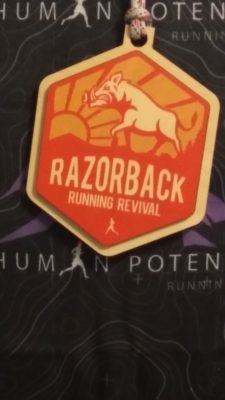 Race: Razorback Running Revival 50M/55k/10M


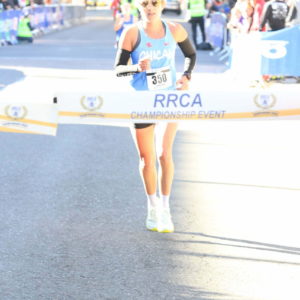



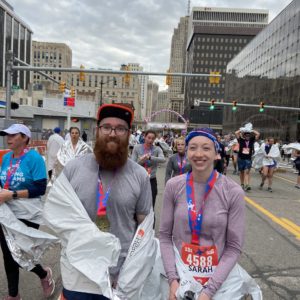


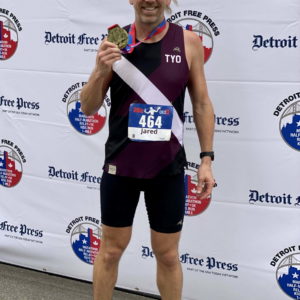


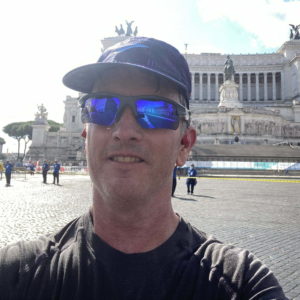


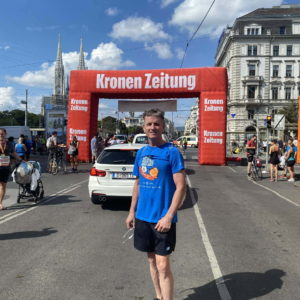

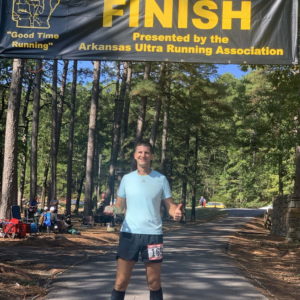


 Gear – Did you need anything special or is there anything you’d recommend for the next runner?