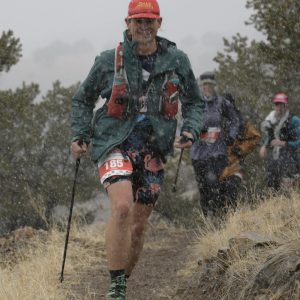
3 Bests – What aspects of the race did you like the most?
This race has a fun energy, beautiful course, and is very accessible. It also has a 7.6km option for folks who do not want to run a half.
Not so much – Aspects of the race that didn’t do it for you
The race is advertised as fast and flat but actually has some challenging hills in unexpected places. Mile 10 is not a fun place for a hill!
Weird factor – What’s the weirdest thing about this race?
This is a race where running tangents really matter and that’s not something I have significant experience with. Lots of turns especially in the first half of the race.
Highlights of your race – What did you do well and enjoy about your race in particular?
I ran another sub-2 half in less than 3 months which has never happened for me. I went in looking to have fun and try a new course. Even though I finished a few minutes slower than anticipated, I really enjoyed getting out of NYC!
Lessons for others – Share your pro-tips on the race to help the next runner
The second half of the course is harder than the first. I wasn’t as prepared for the few hills and where they were on the course and that threw my pacing off. Also, run the tangents. If you do that well, let me know! I need help!
Lessons you learned that will help you next time around
Keep working on not going out too quickly. I got frustrated trying to follow a pacer who was weaving and that led to me. Also, pee a final time before the corrals. No lines for the potty but a final trip would have prevented me from holding my pee from Mile 2 on.
Most important course specific knowledge to know about the race
Many sharp turns in the beginning. Surprise hill at Mile 5 and another hill at Mile 10.
Aesthetics – Is it a pretty course?
Yes!
Difficulty – Is it a tough course?
Not necessarily. I had a tough time in the second half because I wasn’t pacing properly.
Organized and well run – Did it feel like a well-oiled machine or were they flying by the seat of their pants?
Very well organized and great swag!
Competition – Is there a strong field?
Never pay attention.
Logistics – Does it require a special handshake, registration a year in advance, hotels all booked? Give us the low down on the nuts and bolts of making the race happen.
Fairly available until right before the race.
Aid Stations – Standard fare or anything special to know about the aid stations in terms of what’s available or when?
Standard and frequent fare.
Weather and typical race conditions
It was 50 on Sunday.
Gear – Did you need anything special or is there anything you’d recommend for the next runner?
Typical road race! I always run with a handheld and gels.
Spectators – Is this a friendly course for your friends?
Yes.
How’s the Swag?
Great! Mug, Shirt, Beer for those who want!
The Overall Score – How many stars do you give this race and do you recommend that others run it?
3 Bests – What aspects of the race did you like the most?
Super well organized like all Orca races, REI sponsored and even a massage 🙂
Good course support with timing mats at 3&10
Flat, fast, great scenery
Not so much – Aspects of the race that didn’t do it for you
GRT is still having work done so there’s a few bypasses with 6 bridges and extra underpasses. These make for a few sharp turns
Out and backs are not so fun, particularly when you get a little congested with 10k participants
Weird factor – What’s the weirdest thing about this race?
100m on InterUrban Trail to get the distance, and a very abrupt turn around a cone. The support crew was 1 meter behind cone and you had to run between the cone and them. I was sure I’d knock her over!
Highlights of your race – What did you do well and enjoy about your race in particular?
I ran with a friend and we paced it perfectly. It was cool and sunny. Singlet and gloves. This course was ideal for my training and I could hear coach telling me that the stoke is on. I channeled it.
Lessons for others – Share your pro-tips on the race to help the next runner
Be comfortable with turns, and like fast and flat. 200’ overall elevation.
Lessons you learned that will help you next time around
I did not need to carry liquids as they had support with cups which was unexpected for Orca!
Aesthetics – Is it a pretty course?
It’s gorgeous on the Green with loads of trees
Difficulty – Is it a tough course?
No, but the 200’ ups are primarily in the back half.
Organized and well run – Did it feel like a well-oiled machine or were they flying by the seat of their pants?
They have it down. Happy, nice, quick results on QR code and AG awards within minutes.
Competition – Is there a strong field?
This was inaugural run, so less than their will be, less than Lake Sam, but a good group of competitors nonetheless
Logistics – Does it require a special handshake, registration a year in advance, hotels all booked? Give us the low down on the nuts and bolts of making the race happen.
If you’re travelling, there’s places in Tukwila or Kent to stay. Easy logistics and free parking at race start, with a 3 minute walk to start line. And lots of porta potties than were brand new. Win!
Aid Stations – Standard fare or anything special to know about the aid stations in terms of what’s available or when?
Nuun and Clif gels. Cups and self fill. They were easy and friendly!
Weather and typical race conditions
It was ideal. 45-55, sun. I wouldn’t expect that for a Seattle March, usually drizzle and 40’s.
Gear – Did you need anything special or is there anything you’d recommend for the next runner?
Check course support on cups. You might need to carry if you require liquids in a 1-2.
Spectators – Is this a friendly course for your friends?
For sure. Loads of places to view, bridge spots are great!
How’s the Swag?
Excellent. Shirts are unique and match great medal. AG awards for top 3 (gun time) in each AG, plus too 3 overall by gender
The Overall Score – How many stars do you give this race and do you recommend that others run it?
Pool running, also known as aqua jogging, is a popular form of cross-training for runners. This low-impact workout is performed in a pool and provides numerous benefits for healthy runners, including improved cardiovascular health and increased muscle strength. In addition, pool running can help prevent common injuries that often plague runners, such as shin splints, stress fractures, and knee pain.
One of the key benefits of pool running is that it provides a low-impact workout that is easy on the joints. Unlike running on land, which can put a lot of stress on the ankles, knees, and hips, pool running allows you to move your legs in a natural running motion without the impact. This makes it a great option for runners who are looking to cross-train in order to prevent injuries and maintain their overall fitness.
Another advantage of pool running is that it provides a full-body workout. Unlike running on land, which primarily works the legs, pool running also engages the upper body. This can help improve your overall strength and endurance, which can translate to better running performance. Additionally, using a flotation device or pool running belt can help engage the core, which can improve your balance and stability.
Incorporating pool running into your routine is also a great way to add variety to your workouts. This can help prevent burnout and keep you motivated to continue exercising. By switching up your routine and trying new forms of exercise, you can keep your workouts interesting and prevent boredom.
If you are a healthy runner looking to incorporate pool running into your routine, here are a few tips to get started:
Begin by setting a goal for your pool running workouts. This could be a certain number of minutes per workout or a specific number of workouts per week.
Start slowly and gradually increase the intensity and duration of your workouts over time.
Make sure to warm up and cool down before and after your pool running workouts to prevent injury.
Mix up your routine by using different flotation devices or pool running belts, and incorporating upper body movements.
Listen to your body and adjust your workouts as needed. If you experience any pain or discomfort, consult with a healthcare professional.
In my opinion as a coach who has used pool running with numerous athletes, incorporating this cross-training activity into your routine is a great way to add variety and maintain fitness levels during periods of injury or illness. Pool running has been an effective training tool for many of my runners looking to improve their performance, as it engages the upper body and provides a low-impact workout that is easy on the joints. Additionally, switching up your routine and trying new forms of exercise can keep your workouts interesting and prevent boredom. While there is limited scientific research on pool running, anecdotal evidence suggests that it can be a valuable form of exercise for healthy runners.
In terms of evidence to support the use of pool running for runners, there is limited scientific research available. However, a study published in the Journal of Sports Medicine and Physical Fitness found that pool running was an effective rehabilitation tool for runners recovering from lower limb injuries. Additionally, many coaches and athletes have reported positive experiences with pool running, citing its benefits for maintaining fitness levels during periods of injury or illness and improving running performance.
Takeaways:
Pool running provides a low-impact workout that is easy on the joints.
It engages the upper body and can improve overall strength and endurance.
Incorporating pool running can add variety to your routine and prevent burnout.
Begin by setting a goal for your pool running workouts and gradually increase the intensity.
Warm up and cool down before and after your workouts, and listen to your body.
Brant Stachel is a coach with Team RunRun. To learn more about him or to work with him, check out his coach profile.
3 Bests – What aspects of the race did you like the most?
–The weather/snow conditions: It’s probably surprising to find a -25F windchill and sloppy snow mentioned as aspects of the race that I liked the most! However, I registered for this event because it is known for unforgiving and brutal conditions. I wanted to run in harsh, winter weather and I was not disappointed!
–The athletes: The Drift has three divisions: bike, ski and run. We all competed at the same time on the course. It was awesome to see athletes of different disciplines all with the same goal: surviving to the finish! No one method of locomotion was superior over the other. It depended on the section of the course we were in and there was a lot of leap frogging throughout the day. The tenacity of every athlete was inspiring to witness as we all contended with the elements.
— Location: This was a local race for me. I am simply in love the rugged beauty of the Wind River Range, the relentless terrain and crazy weather.
Not so much – Aspects of the race that didn’t do it for you
I didn’t much care for my water freezing despite my insulated containers… but that was also part of the charm of the race and added to the overall excitement!
Weird factor – What’s the weirdest thing about this race?
I wouldn’t consider the race weird in any way. I think it is unique in that it takes place on the Continental Divide during the Wyoming winter when conditions are always guaranteed to be challenging if not completely heinous!
Highlights of your race – What did you do well and enjoy about your race in particular?
I love running in extreme environments and this race 100% fit that description! I not only enjoyed the conditions on the course, but also the creativity involved in coming up with specific training for the race. I exposed myself to a variety of winter challenges during training including waiting to run in the evening when the temperature dropped and timing some runs to coincide with winter storms. My preparation was brutal and, therefore, when race day presented less than ideal circumstances I had the confidence to plow through without much of an afterthought.
I was also very happy with my sweat monitoring. I practiced a lot of layer transitions during training to make sure I had everything dialed. I did two clothing swaps during the race right when I felt like I was heating up and sweat would soon follow. I got the combination correct both times. I don’t think I had any appreciable sweat during the race which is crucial to preventing exposure (more on that later).
Finally, I was pleased with my walk/run decisions and pacing. In snow, even if you can run, sometimes it makes a lot more sense to walk for efficiency and energy savings. What’s the point of exhausting yourself by running 17 minute miles if you can hike at 18 minute miles and feel fresh(er)? I ran about 90% of the first half of the race and switched to about 90% walking during the second half which included most of the climbing and slushier snow conditions. My intensity remained at RPE 7-10 throughout the race regardless of my pace. This was the most intense pacing I’d ever utilized during a race and I am pleased that I pushed myself until the end; in fact my fastest split was the last one!
Lessons for others – Share your pro-tips on the race to help the next runner
Monitor your sweat very closely and adjust layers accordingly on this frigid course. If you allow sweat to build up, when you finally do make an adjustment you will freeze if so much as a gentle breeze sweeps across the damp fabric. Remember that running and walking creates airflow so this can happen even on a calm day. Test what clothes will work for you in different conditions during training so your layering system is dialed.
Lessons you learned that will help you next time around
I would put hot water in my insulated containers and keep the hydration hose on the inside of my jacket (and, yes, the hose was also insulated!). I am still not sure why this happened on race day, but not during training. Maybe it was the duration of -25F windchill!
Most important course specific knowledge to know about the race
Plan your race specific training runs to be in a variety of snow surface conditions and during different times of day. Also, make an effort to train in winter extremes including high winds, negative temperatures, snowstorms and intense sun exposure. Of course, make sure you know how to train safely in these harsh conditions as well before venturing out! The risk of exposure is very real both during the race and while training for it.
Aesthetics – Is it a pretty course?
We were lucky to run this course on a bluebird day! Awesome views of Green River and the Wind River Range throughout the event. The race is also in a winter wildlife protected area, so you could potentially encounter elk, moose, wolves and bears, though I saw none. This adds to the wild beauty of the miles.
Difficulty – Is it a tough course?
The course difficulty varies from year to year. The temperature can be in the 20s, snow consolidated and wind mild. Having the luxury of perfect weather is unlikely in the Winds this time of year though and some difficulty due to the extreme environment is likely to be encountered. For example, race day for me featured the following:
Start temperature was -4F, 20mph headwinds and a -25F degree windchill
By the time I was climbing it had warmed up to 8 degrees and I was fighting the power of the intense winter sun
Snow surface conditions, though somewhat recently groomed, were mostly soft and mushy due to the recent storm that deposited about a foot of snow on the course two days prior
Organized and well run – Did it feel like a well-oiled machine or were they flying by the seat of their pants?
The race directors put on a very well-organized event and made sure all the runners were safe in these risky winter conditions.
Competition – Is there a strong field?
This is a small race with multiple distances and three divisions: run, bike and ski. Not many folks are interested in registering for a race in the harsh Wyoming winter so the fields are small. However, almost every year there seems to be a few elite athletes who register in one or more distances/disciplines and impossible looking times are often posted.
Logistics – Does it require a special handshake, registration a year in advance, hotels all booked? Give us the low down on the nuts and bolts of making the race happen.
Due to the extreme nature of a winter race not many folks sign up for any of the distances or divisions, so there is no need to rush. Lodging can easily be found in nearby Pinedale, WY. The 100-mile version of this race does require previous winter travel experience.
Aid Stations – Standard fare or anything special to know about the aid stations in terms of what’s available or when?
You are expected to be 100% self-sufficient on this course with the exception of water. There are no drop bags and aid stations do not make any promises in regards to fare. There were two aid stations which both had sweet & salty snacks and water when I arrived. Aid station 2 also offered hot cocoa with electrolytes mixed in!
Weather and typical race conditions
The nature of this course varies not only year to year, but also week to week. Snow conditions are constantly evolving during the winter. There is no real way of knowing what you might find on race day until a week prior. Then you can look ahead in the forecast and somewhat predict what the precipitation and freeze/thaw cycle that week might do to the track. Regardless that is still only a guess! Grooming is another wild card. The course is on a snowmobile track, but there is no real way of knowing when it will be groomed and how many times snowmobiles will have used the track before the race. Also groomers can break down! Temperatures, precipitation and wind are also mysteries that can vary greatly and won’t be known until a few days before the race… but the forecasting can be way off at times! Therefore, the runner must be prepared for multiple scenarios on race day.
Photo: Damien Scott
Gear – Did you need anything special or is there anything you’d recommend for the next runner?
A versatile layering system that has been tested in different winter conditions is an absolute must. This will vary from person to person. I also recommend very dark sunglasses, hand-warmers, a face covering, gaiters and mittens. For the 28 mile distance, the race directors require insulated water containers, puffy coat, hat, gloves, blinkie light and nutrition that will last throughout the race.
Spectators – Is this a friendly course for your friends?
Spectators are allowed at the start/finish, but not along the course. Reminder that any friends and family at the start/finish will get cold without lots of insulating layers!
How’s the Swag?
Functional which I love! They gave us socks and hot sauce! First place finishers also got a mug.
The Overall Score – How many stars do you give this race and do you recommend that others run it?
If you are strategic, like the cold and relish suffering in extreme environments this is an excellent race and I rate it 10/10! This is not the race for the fair-weather runner or someone inexperienced with remote winter travel.
Dandelion Dilluvio-Scott is a coach with Team RunRun. To learn more about her or to work with her, check out her coach profile.
3 Bests – What aspects of the race did you like the most?
One of the prettiest courses around.
Super well organized and lots of aid stations.
Perfect weather.
Not so much – Aspects of the race that didn’t do it for you
At mile 16 of the marathon the course joins up with the half marathon and suddenly the course becomes very crowded.
Lots of the course is small out and backs along single-track trails. This causes a lot of congestion and stopping to let other runners pass.
The line for a burger at the finish line was super long.
Weird factor – What’s the weirdest thing about this race?
A lot of the course is part of an out and back, or repeated.
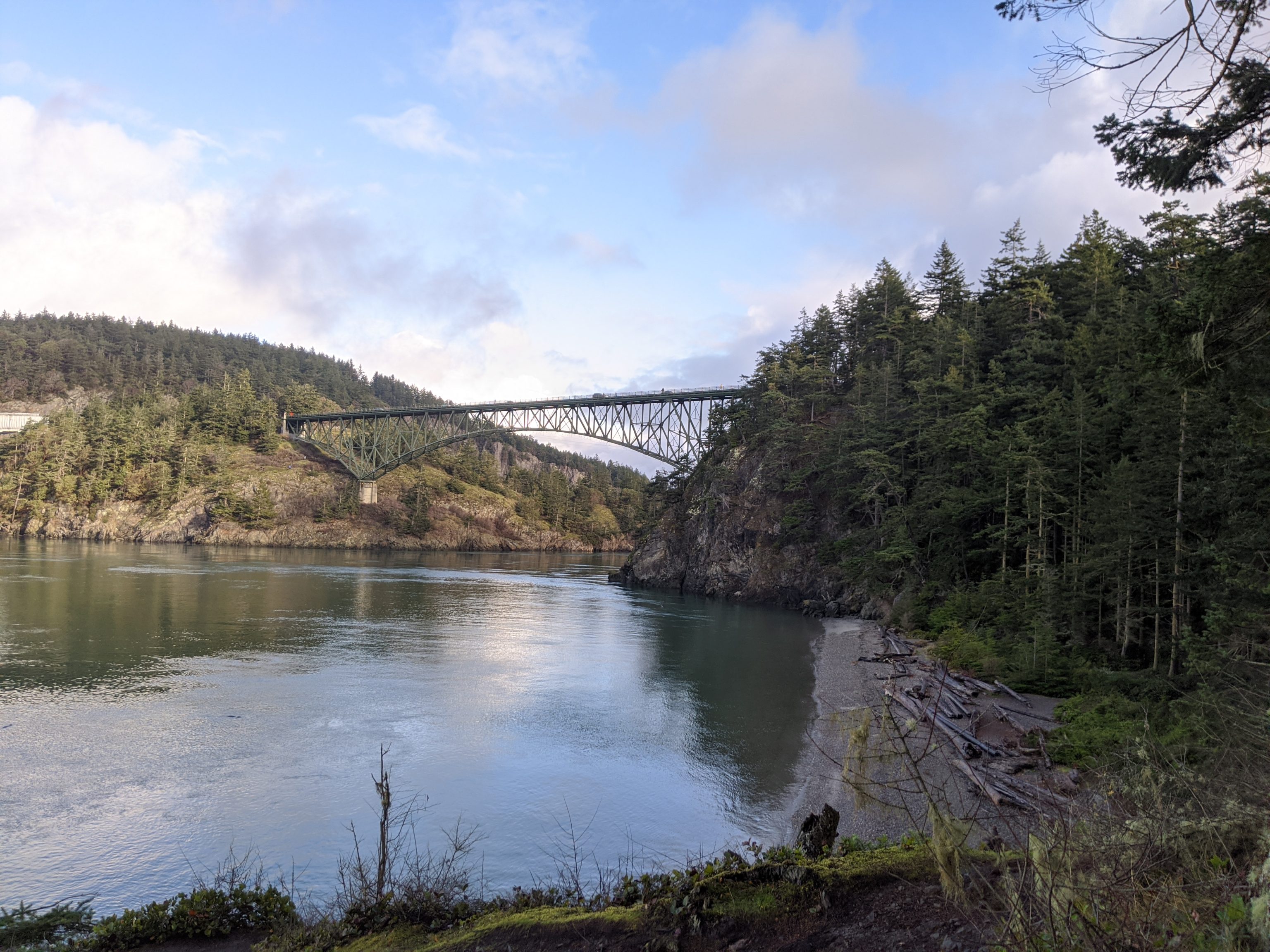
Crossing Deception Pass Bridge is no joke. Especially with a decent side-wind and cars passing by. Not for the faint of heart, but beautiful.
Highlights of your race – What did you do well and enjoy about your race in particular?
Good weather, chilly to start but just right once we got into the woods. The marathoners spread out pretty quickly and for the first 16 or so miles I was running by myself for most of it. The aid stations are well placed and spaced out just right so I didn’t need to carry anything besides a hand-held.
Lessons for others – Share your pro-tips on the race to help the next runner
There are lots of short, steep climbs so be prepared. And the second half has a lot of rocky and rooty sections that are not easy.
Lessons you learned that will help you next time around
A 7am start meant getting up at 4am to drive to the start. Usually I’d stay the night close to the race at Lake Campbell. So waking up early, driving, and trying to get some calories in before the start didn’t work great and the first few miles of the race my body was super sluggish.
Most important course specific knowledge to know about the race
Don’t get frustrated with the stopping and starting along the out-and-backs during the second half of the race.
Aesthetics – Is it a pretty course?
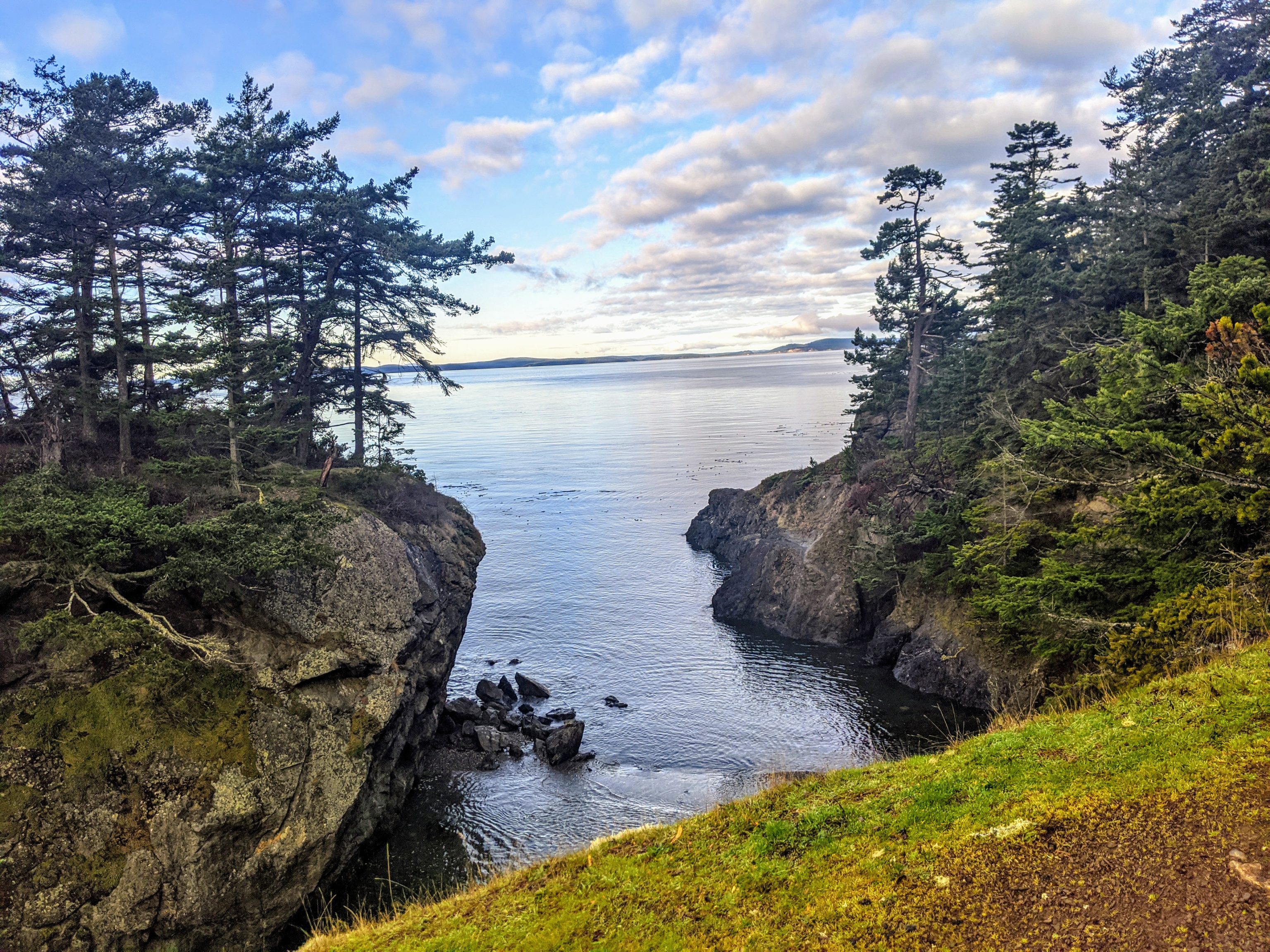
It is one of the prettiest courses in the PNW. You start running along the coast and then up to a beautiful vista at Goose Point. Then miles 7-14 are in a nice lush forest. You cross Deception Pass Bridge, twice, which is spectacular. Then the later miles are out to small points with views of the bays and the ocean, bald eagles, kayakers and sometimes seals.
Difficulty – Is it a tough course?
There are a few short, steep climbs and the rockyness makes parts of it not super runnable but none of it is difficult.
Organized and well run – Did it feel like a well-oiled machine or were they flying by the seat of their pants?
Very well organized, lots of volunteers, well communicated, well marked trails, etc.
Competition – Is there a strong field?
There were a few very fast runners, but for the most part it was pretty chill as far as “competition”.
Logistics – Does it require a special handshake, registration a year in advance, hotels all booked? Give us the low down on the nuts and bolts of making the race happen.
Nothing special, I don’t think it even sold out. Lots of lodging on the island as well as a few minutes further in Anacortes. Lots of parking at the start, you just need a Discovery Pass.
Aid Stations – Standard fare or anything special to know about the aid stations in terms of what’s available or when?
There was quite a bit for everyone at the aid stations. GUs, tailwind, Coke etc as well as your standard snacks.
Weather and typical race conditions
March along the coast is going to be chilly, but the fog burned off and the sun came out later in the race. I think even if it was rainy, most of the course is pretty sheltered by trees. There were a few pretty muddy spots, but nothing horrible.
Gear – Did you need anything special or is there anything you’d recommend for the next runner?
I only carried a hand-held, the aid stations were spaced well and stocked great. The trails are rocky in spots so I’d recommend cushy shoes.
Spectators – Is this a friendly course for your friends?
It isn’t that great for spectators, there are maybe 4 or so spots to see your runner. But on the other hand, it is a great place to go explore and enjoy the park while your runner is out there. Lots of trails to hike/run, on and off the course.
How’s the Swag?
Meh, we all got a race medal that said “Marathon and Half Marathon”. I guess I’d rather pay a bit less and not get the medal or pay a touch more and get one specifically for the distance I ran. But some people don’t mind.
The Overall Score – How many stars do you give this race and do you recommend that others run it?
Five out of five stars. Fun trails, well run and that spectacular, coastal scenery.
3 Bests – What aspects of the race did you like the most?
Well organized and well marked course. Lots of intersections so you do have to pay attention. Really supportive runners, volunteers and race staff. It’s a lollipop course so you get to see full, half and 10k runners multiple times. Great scenery in several parts of the course and nearly all of it is very runnable. Hot soup at the end was awesome on a dreary day.
Not so much – Aspects of the race that didn’t do it for you
Smaller field meant lots of time running alone.
Weird factor – What’s the weirdest thing about this race?
When you run on the beach, the rocks are very difficult to run on. Fortunately it’s only for a couple hundred yards. Enjoy the view while you’re down there!
Highlights of your race – What did you do well and enjoy about your race in particular?
I jumped in last minute as a training race with the goal of negative splitting. I missed this by a couple minutes, but still happy with the even effort. Wasn’t wrecked at end so that’s always a bonus.
Lessons for others – Share your pro-tips on the race to help the next runner
The first couple miles and the tunnel miles you can run pretty freely. The uphill switchbacks are steep, but only take a couple minutes. No reason to kill yourself here. Power hike and have something to eat and get back at it.
Lessons you learned that will help you next time around
Not much I would have done differently. Make sure you wear trail shoes to have any confidence on the single track and downhill portions. It wasn’t muddy, but road shoes would have been dicey.
Most important course specific knowledge to know about the race
Course is marked with ribbons and flour with directional arrows and X’s. Pay attention. It’s well marked, but if you don’t see a flag for awhile, you went the wrong way. Look for the X’s on the ground and don’t cross over them!
Photo: Takao Suzuki
Aesthetics – Is it a pretty course?
Both on the beach, on top in the neighborhoods and through the tree tunnel were all enjoyable to run. A few neighborhood crossings that aren’t monitored, but no traffic to deal with.
Difficulty – Is it a tough course?
If you’re trained for a road marathon, it can be a tough course. If you’ve done some trail prep, then it’s not technical or steep with only 2000′ in the full marathon.
Organized and well run – Did it feel like a well-oiled machine or were they flying by the seat of their pants?
Organized by Run Super on the old DuPont Marathon route. First time they’ve been the race organizer for this course and it was very well organized, as usual. One aid station on course and one at start/finish line so much more of an ultra type spacing vs. a road marathon. Great photos for free, good food/drink, nice medal and t-shirt included.
Competition – Is there a strong field?
A lot more people registered for the half, but with only 37 for the full it was pretty spread out. Most of the racing was done in the first half as people settled into their paces.
Logistics – Does it require a special handshake, registration a year in advance, hotels all booked? Give us the low down on the nuts and bolts of making the race happen.
Very easy to get into. Just register. Local race and plenty of free parking. Can get out of your vehicle 10 minutes before race.
Aid Stations – Standard fare or anything special to know about the aid stations in terms of what’s available or when?
Pretty standard fare, but nice to have warm soup at the end!
Weather and typical race conditions
At race start it was 35 degrees with a rain/snow mix. Precipitation stopped after about an hour. Plan for a long, wet day.
Gear – Did you need anything special or is there anything you’d recommend for the next runner?
Trail shoes and dress to stay warm.
Spectators – Is this a friendly course for your friends?
The full is 2 loops so there is some opportunity. But I don’t think I saw a single spectator on course or at end. You’ll be sharing trails with walkers, runners etc.
How’s the Swag?
Standard T-Shirt and nice medal.
The Overall Score – How many stars do you give this race and do you recommend that others run it?
4/5 stars. It’s a great way to not have to run alone for a long run. I think the half would be fun to race.
3 Bests – What aspects of the race did you like the most?
The course is beautiful! Some beachfronts and backroads out on picturesque Cape Cod. The marathon is two loops of the half marathon course, so it is kind of nice to know whats ahead on the second time around. Lastly, the people are great. Very supportive community of runners, and even had Frank Shorter to send us off and greet runners post race!
Not so much – Aspects of the race that didn’t do it for you
The only thing I didn’t love was that it started at 10am on Sunday. I prefer Saturday races to have the Sunday to relax before going back to work, but it is what it is!
Weird factor – What’s the weirdest thing about this race?
The 10km, half marathon, marathon relay, and marathon all start at the same time. So right off the start it is a a mix of everyone trying to find their groove. The first loop was filled with people, second loop nobody around.
Highlights of your race – What did you do well and enjoy about your race in particular?
This was a marathon PR for me! I eased in nicely, then maybe went a bit too fast for miles 14 to 18 which led to a tough last few miles. I was happy to have not fallen off pace too much grinding it out to the finish. Also, we got extremely lucky with the weather today! The day before had high winds and rain/sleet, but this day was sunny and mild winds.
Lessons for others – Share your pro-tips on the race to help the next runner
This course has some sneaky hills mixed throughout. I had done a course preview a few weeks prior so knew that going into it, and made sure I didn’t overwork myself on the hills. Other than that the beachfronts can be very windy, so similar to the hills trying to relax through them instead of tensing up and straining.
Lessons you learned that will help you next time around
Stay steady through the middle! I think I would have had a faster time had I stayed more steady in the middle and finished stronger. Tough game to play with marathons distance and I think I was close to my best execution.
Most important course specific knowledge to know about the race
Two loops, can be windy, crowded start but lonely finish.
Aesthetics – Is it a pretty course?
Very pretty course!
Difficulty – Is it a tough course?
Not too hard, but the hills and wind keeps you honest! Not the fastest course but also not extremely difficult.
Organized and well run – Did it feel like a well-oiled machine or were they flying by the seat of their pants?
This event has been going on for a long time and is organized very well!
Competition – Is there a strong field?
This race doesn’t see a very competitive field compared to bigger marathons. Some fast locals out there but not many.
Logistics – Does it require a special handshake, registration a year in advance, hotels all booked? Give us the low down on the nuts and bolts of making the race happen.
Easy to get in, and a Boston Qualifying race which got me in for 2024 with this year!
Aid Stations – Standard fare or anything special to know about the aid stations in terms of what’s available or when?
Plentiful water stops. They had water and blue Gatorade which actually was very nice to switch things up a few times throughout the race.
Weather and typical race conditions
It’s late winter in New England, so weather could pretty much be anything! This year it was about as good as it gets.
Gear – Did you need anything special or is there anything you’d recommend for the next runner?
With the warm ish weather I went with shorts, upper base layer and TRR jersey, light gloves, a hat and sunglasses. Also, first time running in the Hoka Carbon x2 which worked very well.
Spectators – Is this a friendly course for your friends?
First loop many spectators, second loop it thins out a good amount. Easy to spectate many different locations.
How’s the Swag?
The race comes with a nice athletic long sleeve. They have many other options you can add on, and some cool free things in the race expo before and after race including a full gear shop for last minute purchases!
The Overall Score – How many stars do you give this race and do you recommend that others run it?
I would give this race a 4 out of 5 star rating. Overall it is a great race and run very well!
Keith Nadeau is a coach with Team RunRun. To learn more about him or to work with him, check out his coach profile.
3 Bests – What aspects of the race did you like the most?
The race has Beautiful scenery, it is a very low key race with no fancy metals or big swag bags, the course was really fun
Not so much – Aspects of the race that didn’t do it for you
The food at the finish.
Weird factor – What’s the weirdest thing about this race?
The town of Salida
Highlights of your race – What did you do well and enjoy about your race in particular?
I fueled really well and was able to push myself better than I have in other trail races
Lessons for others – Share your pro-tips on the race to help the next runner
Pack layers and be prepared for unpredictable weather
Lessons you learned that will help you next time around
Don’t be stubborn and apply sunscreen if I need to.
Most important course specific knowledge to know about the race
The back half of the course is loaded with very technical trails. Even though it’s a forest road it was very technical and challenging to run down
Aesthetics – Is it a pretty course?
The course is gorgeous. The Collegiate Range and Salida never disappoint
Difficulty – Is it a tough course?
It is a difficult and challenging course. The is usually some ice an snow at the higher elevations.
Organized and well run – Did it feel like a well-oiled machine or were they flying by the seat of their pants?
The map the publish for the course and the course directions are not very clear. However, the course is very well marked and the had a lot of markings at every major intersection. Packet pickup was very clear and everything else was very well organized.
Competition – Is there a strong field?
Yes. It attracts some very fast runners.
Logistics – Does it require a special handshake, registration a year in advance, hotels all booked? Give us the low down on the nuts and bolts of making the race happen.
Logistics are easy. Lodging fills up fast and the run fills up fast too.
Aid Stations – Standard fare or anything special to know about the aid stations in terms of what’s available or when?
Very standard trail run food. Electrolytes, goo, chips, candy etc.
Weather and typical race conditions
Weather can be extremely variable. It thundersnowed for the first 2hrs. It then turned to blue bird skys
Gear – Did you need anything special or is there anything you’d recommend for the next runner?
I brought layers and a rain jacket along. I found my poles very useful
Spectators – Is this a friendly course for your friends?
No. There is good spectating at the start but the race coordinator ask to keep the spectators to a minimum in the more remote areas of the course
How’s the Swag?
You get socks for entering. And a nice card for finishing. This race is purposefully swag light.
The Overall Score – How many stars do you give this race and do you recommend that others run it?
3 Bests – What aspects of the race did you like the most?
Awesome location!
Running through the canyon, along horse shoe bend and Lake Powell was amazing!
Not so much – Aspects of the race that didn’t do it for you
Weather was kinda bad! Lot of rain which made the trails very muddy and slippery.
Weird factor – What’s the weirdest thing about this race?
If you do the 55k, 50 miler or 100 miler you have to climb down a 55ish feet ladder into the canyon. There was a long line since it took some people quite some time to climb down.
Highlights of your race – What did you do well and enjoy about your race in particular?
Finished within my time goal and even placed first in my AG!!!
Lessons for others – Share your pro-tips on the race to help the next runner
Be careful inside the canyon. Pretty narrow and dark in there.
Most important course specific knowledge to know about the race
Most of the time you’re running through loose sand which is draining on the legs! And gators.
Aesthetics – Is it a pretty course?
Very pretty! The canyon is amazing to run through. Also horse shoe bent and Lake Powell are very pretty, you’ll also pass both during the race!
Difficulty – Is it a tough course?
Kind of! Not much elevation change but most of the time you’ll run through loose sand which drains the legs after a while.
Organized and well run – Did it feel like a well-oiled machine or were they flying by the seat of their pants?
It’s well organized. Only bad thing was the situation with the ladder. They should have timed it better or at least have different lines and prioritize them, depending on the race distance!
Competition – Is there a strong field?
It’s mixed. Felt like some people just signed up to run through the canyon. But on the other side it was a pretty strong and competitive field of runners!
Logistics – Does it require a special handshake, registration a year in advance, hotels all booked? Give us the low down on the nuts and bolts of making the race happen.
You should book your hotel in advance since it’s a famous and busy location all year around.
Aid Stations – Standard fare or anything special to know about the aid stations in terms of what’s available or when?
Pretty standard. Didn’t really miss anything but also nothing special!
Weather and typical race conditions
Weather sucked this year! Was supposed to be mid 50’s and cloudy which would have been perfect. But it rained a lot and the temperature dropped to low to mid 40’s!
Gear – Did you need anything special or is there anything you’d recommend for the next runner?
Would recommend gaitors because of all the sand.
Spectators – Is this a friendly course for your friends?
Multiple aid stations to meet the crew! They can even go to the horse shoe bent while waiting for you to finish the race.
How’s the Swag?
Pretty good! Everyone seemed to enjoy their time out there!
The Overall Score – How many stars do you give this race and do you recommend that others run it?
9/10! Would definitely recommend it to others. The location is amazing and worth it to run 50 miles!
3 Bests – What aspects of the race did you like the most?
This race is a ten mile loop course. You can stage gear at the start and they have a runners village where you can access your tent or camper on each lap if you chose to stay overnight.
The energy is so high at this race. There is a live band and music the entire time and because the have multiple events you are never alone on the course.
The course is a cross country style course, but the trail is wide enough to fit several runners. You don’t really deal with congestion at the start of this race.
Not so much – Aspects of the race that didn’t do it for you
There was one aid station about half way through the loop around mile 5. Unfortunately, it was unmanned and my second two loops the water was empty. I was using a hydration vest with bottles due to the description of the race informing us that there would be water halfway through. I would suggest using a bladder and refilling at the end of each 10 mile lap.
Weird factor – What’s the weirdest thing about this race?
There is a relay going on as well as a last mind standing. It was wild to be close to mile thirty getting passed by someone running a six minute pace as well as seeing someone who had been awake for over 24 hours hobbling through all in the same event.
Highlights of your race – What did you do well and enjoy about your race in particular?
This was my first ultra race post partum. I did a good job bringing enough calories and managing my nutrition as well as building up safely over several months to get my first post partum 50k under my belt.
Lessons for others – Share your pro-tips on the race to help the next runner
There is not a lot of aid. Be prepared to bring the nutrition and supplies that you enjoy and enough water to stage to refill your bottles or bladder.
Lessons you learned that will help you next time around
There are some fast sections on this course. I could have paced myself better on the first lap. There is also a lot of sand on this course so there was some muscle fatigue due to running on sand and an uneven surface that I had not trained for.
Most important course specific knowledge to know about the race
There are multiple events going on. The course was well marked, but I could see if you are fatigued where you could accidentally make a turn and complete the five mile loop that is for relay runners and last man standing runners instead of continuing onto the ten mile loop. Make sure you stay alert of the course markings.
Aesthetics – Is it a pretty course?
This course is close to Wilmington, NC and has waterfront views at two points. There is a lot of shade cover in several sections and wildlife in the area.
Difficulty – Is it a tough course?
For a coastal race, I was still able to gain 922 feet of vertical gain during the 50k event. Overall, it is a beginner friendly race and a great trail 50K if you are looking for a personal best.
Organized and well run – Did it feel like a well-oiled machine or were they flying by the seat of their pants?
I have done a few of the Without Limits races. I keep coming back because the make the events fun, care about runner safety, and provide really awesome swag and post race festivities.
Competition – Is there a strong field?
I would say that most of the competition is local. There were some fast runners in all the events, but this is a great race to really test yourself and your personal limits.
Logistics – Does it require a special handshake, registration a year in advance, hotels all booked? Give us the low down on the nuts and bolts of making the race happen.
If you are local to the area it is a great event to fit into your schedule. You could stay in Wilmington and only have a 20 minute drive to get the to start. The cost of this event is relatively low.
Aid Stations – Standard fare or anything special to know about the aid stations in terms of what’s available or when?
There was a water only aid station at mile 5. They do allow you to put a drop bag there, if you need to, but it is unmanned. There is a full aid station at the start/finish line at mile 10. They had gels, waffles, water, and gatorade.
Weather and typical race conditions
The weather was perfect. It was about 40 degrees at the start, but warmed to about 60 by the end.
Gear – Did you need anything special or is there anything you’d recommend for the next runner?
I actually did this race in my hoka rincons and was perfectly fine. You could use trail shoes, but it wouldn’t be necessary if you prefer a pair of road shoes.
Spectators – Is this a friendly course for your friends?
This course is perfect to bring family and friends. There is a camping village that you run through each lap. I would say the finish line party and camping is really where all the fun happens. They had a live band and it was packed with spectators.
How’s the Swag?
The swag is perfect for this race. You get a rather large finisher medals and extremely soft t-shirt.
The Overall Score – How many stars do you give this race and do you recommend that others run it?
4.9- I loved this event, I just wish the water stop had water. I spent the last two laps running out about a mile to the 10 mile aid stop.
Cassie Nevins is a coach with Team RunRun. To learn more about her or to work with her, check out her coach profile.
You’re not alone if you love running outdoors and despise running inside on a treadmill. Although the activity is the same in many ways, being outside offers a significantly different experience than running indoors. Yet many people find themselves turning to a treadmill at some point throughout the year: security reasons, dealing with extreme weather, or to escape air pollution, to name a few.
Completing a run on the treadmill can be much harder mentally than completing the same run outdoors. Treadmills can sometimes be boring or offer less stimulation than a trail outside. But if a treadmill run is in your future and you find yourself dreading that treadmill, here are a few tips to keep it entertaining.
Listen to Music/podcasts– Listening to music or podcasts can be very entertaining. A good trick is to pick a playlist that you used to love. For example a throwback to high school or middle school. Songs from years ago are less likely to be overplayed on your playlist and the radio, so the chances of you getting bored of them are slim.
Watch TV- There is no better time to watch TV than when you are running on the treadmill. Save your favorite series for the days you are scheduled to run. That way you are excited to get on the treadmill to watch your show. Saving your special show for the treadmill will also have you looking forward to running indoors and will give you a positive outlook on the dreaded treadmill. Save movies for your long runs. Nothing is worse than finishing a show mid-run and not being able to find another one. Not only would that leave you bored but also frustrated!
Phone a friend- Invest in good Bluetooth headphones and catch up on your calls. Since most runs are done at an easy effort, you should be able to hold a conversation. While running, call your chattiest friend, mother, or anybody willing to listen and have a chat. Before you know it, your run will be over.
Run Blind- A helpful but frustrating feature on treadmills is the screen that displays how far you’ve gone and how much time has gone by. If you watch the numbers carefully, you will notice that they change slowly. Watching the time tick by can be very frustrating and make the run feel much longer than it is. So cover the screen with a towel and check only when you think it may be necessary!
Treadmill features- Some treadmills come with video footage of scenic trails. If you have access to one of these treadmills then check out the different trails and places you can run in the world.
Run with a friend- Find a gym that has two or more treadmills available, and bring some friends. Running with friends is always more enjoyable than running alone. So pick two treadmills that are side by side and enjoy each other’s company.
Create an encouraging environment- Many people have their treadmills tucked away in their basements or garage. Typically a room or space that has been forgotten about. Organize this space so that it is a place you enjoy being in. Hang up your favorite medals, a chalkboard with your goals written on it, and some wall art with an inspirational quote. A little effort goes a long way, and before you know it, your treadmill will make you feel like an elite runner. Adding a fan to the space can also help with airflow and temperature regulation.
The next time you find yourself procrastinating a run, or avoiding it altogether because of the treadmill, think of all the ways you can make it more enjoyable. The best way to stay committed to running on the treadmill is to establish a routine and to set yourself up for success by creating an environment that encourages the habit you’re trying to create.. A positive relationship with the treadmill can be crucial to having a successful training cycle. especially when you’re subjected to all the things mother nature has to offer.
Sanne Lansink is a coach with Team RunRun. To learn more about her or to work with her, check out her coach profile.
3 Bests – What aspects of the race did you like the most?
I loved the atmosphere (DJ, announcer, lots of spectators, and cheering)!
Not so much – Aspects of the race that didn’t do it for you
They didn’t take pictures of each person.
Weird factor – What’s the weirdest thing about this race?
It was my first time racing on a banked track!
Highlights of your race – What did you do well and enjoy about your race in particular?
I loved putting my training to use and feeling confident going into the race! I loved watching other heats before mine and getting inspired by the other runners.
Lessons you learned that will help you next time around
It was great practice to race with other people. I will take lessons into the next race about navigating passing and being passed.
Most important course specific knowledge to know about the race
You can warm up on the 2nd floor!
Aesthetics – Is it a pretty course?
It’s historic and I love the wall of fame on the way up the stairs – great inspiration!
Organized and well run – Did it feel like a well-oiled machine or were they flying by the seat of their pants?
Very well-oiled machine. They explained everything!
Logistics – Does it require a special handshake, registration a year in advance, hotels all booked? Give us the low down on the nuts and bolts of making the race happen.
Just sign up on the Tracksmith website or Trials of Miles.
Aid Stations – Standard fare or anything special to know about the aid stations in terms of what’s available or when?
There were concession stands and vending machines.
Weather and typical race conditions
Indoor meaning weather wasn’t a factor (huge relief)!!!!
Gear – Did you need anything special or is there anything you’d recommend for the next runner?
If you wear track spikes, The Armory has specific rules so check the website first.
Spectators – Is this a friendly course for your friends?
Very spectator friendly!
The Overall Score – How many stars do you give this race and do you recommend that others run it?
Location: Monument Valley Utah/AZ border. Navajo Reservation Land
Results: 8:00. 1st in age group. 11/35 in female
3 Bests – What aspects of the race did you like the most?
Monument Valley is on Navajo Reservation. The scenery/views are (hard to find a word) beyond beautiful..The course was very well marked. The natives allowed us to run on parts of their land that no other non native is allowed without a guide, or at all. The course was challenging and fun. There wasn’t a lot of technical/rocky trail except for the one huge climb at mile 23, which was 1500′ gain in 1 mile. There was also a native ceremony at the start of the race. They played music on their drums and sang to us in their native language. One last thing. The race started at the hotel I stayed in, which was so nice to not have to sit in a car after!
Not so much – Aspects of the race that didn’t do it for you
There is a LOT of sand. Some was hard packed, but a lot of thick sand too. It had snowed a few days prior, then sunny, so there was a lot of mud to trudge through. Coming down Mitchell Mesa, mile 25ish, was extremely steep and very technical. The rocks were slippery due to the mud/snow.
Weird factor – What’s the weirdest thing about this race?
There were no race photographers. Maybe that is normal? The only other races I have done have photographers that get your photo with a beautiful background. There was no excitement at the finish line. They give awards to the first 2 finishers in each age group. I came in first in mine but would not have known it unless I had asked.
Highlights of your race – What did you do well and enjoy about your race in particular?
I enjoyed the challenge.. saying this now that it is over, lol. I learned a lot about the navajo tribe and found it very interesting. I enjoyed there being not a whole lot of runners, so had a lot of room to go whatever pace I want and be able to take in the magical views without any interference. All the rooms at the hotel have a balcony with an incredible view.
Lessons for others – Share your pro-tips on the race to help the next runner
Gaiters are absolutely necessary. Many people had poles, in their drop bag, to help with the big climb at mile 23. If you are a clumsy runner, they will help a lot with stability coming down. But saying that, as much as they may have helped with the climb, you need to carry them along with you for 11 miles. If I did this again, I still wouldn’t bring them. If you can train in sandy conditions, I recommend it.
Lessons you learned that will help you next time around
I learned how important hydrating and nutrition is. I struggle with this. It was 25 degrees at the start and stayed in the 20’s/30’s for a few hours. I wasn’t thirsty due to this and did not drink enough water. Next time around, I will set nutrition alarms on my watch so I take in the calories I need to keep going strong. I also wish I had stopped more to take photos.
Most important course specific knowledge to know about the race
I guess just be ready for the sand, which will always be there… and there is a high possibility that there will be mud/snow due to the time of year it is.
Aesthetics – Is it a pretty course?
Google photos of Monument Valley…BREATHTAKING! If you watch Forest Gump, the end of his run is down the path to Monument Valley. There were also many westerns filmed there. I was very lucky to get to see wild horses out there, and get their photo with an incredible background.
Difficulty – Is it a tough course?
Yes, it is tough, but mostly due to the terrain. The elevation was only 3700′, 1500′ of it was in that one mile climb.
Organized and well run – Did it feel like a well-oiled machine or were they flying by the seat of their pants?
Yes/no. The first few aid stations did not offer much and had only 1 native running it. They did not know the distance to the next aid. But this is something I should have memorized prior. There was not any help to fill bladders or find drop bags. No finish line photo, nor much celebration at the end.
Competition – Is there a strong field?
Not that I’m aware of.
Logistics – Does it require a special handshake, registration a year in advance, hotels all booked? Give us the low down on the nuts and bolts of making the race happen.
There is a 200 runner cap. There were only 74 of us. Book the hotel early and it was worth the extra money to get a star view room on the top floor. Interesting that the hotel does not have a pool due to respect for the natives that have no running water.
Aid Stations – Standard fare or anything special to know about the aid stations in terms of what’s available or when?
I did not really pay attention to that. I brought my own nutrition. I did see bananas and oranges at mile 18. And there liquid fuel is gatorade.
Weather and typical race conditions
It was very cold with strong wind at the start. I am from AZ so had a very low tolerance for this. I heard that a few years back, it was very hot. AZ weather is unpredictable. I recommend buying a throw away layer that you can donate at the first aid station.
Spectators – Is this a friendly course for your friends?
No spectators on the course. If you have support to run you in, they need a special pass that you can get at packet pick up.
How’s the Swag?
The long sleeve shirt is nice. They give you a medal at the finish, which is very cool. I got to pick from having a monument valley mug or hat for placing in my age group. They also give you a monument valley poster.
The Overall Score – How many stars do you give this race and do you recommend that others run it?
I do recommend this race, but it will now be hard to find a race with this amount of breath taking scenery.
3 Bests – What aspects of the race did you like the most?
Great Trail
Great Communication
Great Race Swag/Free Photos
Not so much – Aspects of the race that didn’t do it for you
First mile is narrow trail; got stuck behind slower people.
Weird factor – What’s the weirdest thing about this race?
Part of route was under construction and detoured onto road (won’t be the case next year). In the last 2 miles there was a very sharp left hand turn through a puddle and mud.
Highlights of your race – What did you do well and enjoy about your race in particular?
Maintained target pace for full first half of race. Was well rested/hydrated/fueled.
Lessons for others – Share your pro-tips on the race to help the next runner
Start at the front of the pack if you plan on finishing sub 1:30.
Lessons you learned that will help you next time around
Start a bit faster; I was running with a group for the first 4-5 miles but then they slowed down and I ended up in a big gap between runners
Most important course specific knowledge to know about the race
First mile is crowded but the rest of the course is very wide and open.
Aesthetics – Is it a pretty course?
Very Pretty. Most of it is an old rail corridor and winding through parks
Difficulty – Is it a tough course?
Normally no, but the trail construction detour added a stupid big hill at mile 8.
Organized and well run – Did it feel like a well-oiled machine or were they flying by the seat of their pants?
Very well run. Orca puts on a good race.
Competition – Is there a strong field?
Very Competitive; Multiple people finished sub 1:10. Too competitive for my taste 😆
Logistics – Does it require a special handshake, registration a year in advance, hotels all booked? Give us the low down on the nuts and bolts of making the race happen.
Race sold out so make sure you register at least a month in advance.
Aid Stations – Standard fare or anything special to know about the aid stations in terms of what’s available or when?
Aid Stations are cupless; basically useless. They had a few goos and snacks but I stuck with my hand waterbottle
Weather and typical race conditions
Weather was way worse than normal; 35 and raining 😭
Spectators – Is this a friendly course for your friends?
Lots of good spectating spots along the course but it is a point to point so you have to drive.
How’s the Swag?
Swag is great. Super comfortable t-shirts. Nice handcrafted medals.
The Overall Score – How many stars do you give this race and do you recommend that others run it?
9/10. Definitely plan on doing every year. If they can figure out the first mile clog with some heats or something I’d give it a 10/10..
3 Bests – What aspects of the race did you like the most?
The organization
The volunteers
The course
Not so much – Aspects of the race that didn’t do it for you
The expo (super disorganized and chaotic!)
The lack of info leading up to the race
The many restrictions we had to abide with
Highlights of your race – What did you do well and enjoy about your race in particular?
Was able to keep my breathing easy
Lessons for others – Share your pro-tips on the race to help the next runner
Like for any other race, don’t go out too fast because of all the excitement!
Lessons you learned that will help you next time around
Start way slower
Most important course specific knowledge to know about the race
The first 5km are downhill, so take your time. Also, the GPS signal isn’t accurate because of the tall buildings, so for people that use a watch to pace themselves, maybe wear a time wristband
They have pretty severe cut-off points along the course. If you don’t get to those points by a certain time, the bus sweeps you and you don’t get to finish. I think the max time to complete the race is 7hrs (GUN time)
Aesthetics – Is it a pretty course?
Yes!
Difficulty – Is it a tough course?
Mainly flat with very short uphills
Organized and well run – Did it feel like a well-oiled machine or were they flying by the seat of their pants?
Race day was so smooth! Before was another story
Logistics – Does it require a special handshake, registration a year in advance, hotels all booked? Give us the low down on the nuts and bolts of making the race happen.
Getting into the Tokyo Marathon is notoriously difficult. I went through via charity
Aid Stations – Standard fare or anything special to know about the aid stations in terms of what’s available or when?
15 aid stations with Pocari Sweat offered every 5km. Some food and candy at some points, but didn’t want to try anything new. Very well organized.
Weather and typical race conditions
Was a nice cool day, cloudy with some sun. Windy at some points.
Gear – Did you need anything special or is there anything you’d recommend for the next runner?
No water bottles allowed into the race. Nothing. Have to rely on the course aid stations.
Spectators – Is this a friendly course for your friends?
Yes!
How’s the Swag?
The medal is beautiful
The Overall Score – How many stars do you give this race and do you recommend that others run it?
3 Bests – What aspects of the race did you like the most?
The spectators-they line the streets and not only have fun signs, but offer everything from water to snacks & beer or shots!
The downtown scenes-you get to see some top attractions like the Stockyards, Cultural district, TCU, and Trinity River Park trails.
The friends-this race has been going for 45yrs and has history you can share with other family and friends who had their firsts here.
Not so much – Aspects of the race that didn’t do it for you
There are a lot of people, which requires planning for parking and meeting up.
Weird factor – What’s the weirdest thing about this race?
Define weird haha. If you want a uniquely western TX feel, this is it! Uber friendly folks combined with uber friendly runners! I wouldn’t define necessarily as weird, but maybe not found elsewhere.
Highlights of your race – What did you do well and enjoy about your race in particular?
My friend was running it too! She didn’t have as much confidence, and was dealing with calf issues, so it was nice to feel strong and there for her.
My husband and a good friend came out and met us twice, and were there for the finish. Course support decreases the further you go, and that’s when we planned for. There are no drop boxes/bag options in this race, and the weather is always very different by the afternoon.
My feet made it with blisters, yes, but no major permanent setbacks. Such a great feeling achieving my first Ultra!
Lessons for others – Share your pro-tips on the race to help the next runner
There are distances from 5K to Ultra, kids 5K and adults. Plan to arrive early, and aim for the Friday Expo/packet pickup.
This allows more enjoyment of the moments leading up to the run.
Pace yourself, many start out faster than they should. It’s easy to get swept up in the fanfare.
Lessons you learned that will help you next time around
Course familiarity is a bonus, whether it’s mile 9 bridge hill or the different sections you’re passing.
I liken it to a road trip. The more you remember various stops, even if it’s an aid station in front of a house having a block party, it’s something to help distract you from how many miles are left, or a nagging knee or blister etc.
Most important course specific knowledge to know about the race
Take your time at the beginning as the crowd doesn’t thin out til a couple miles in. There’s no rush, plenty of time to make up for it later once your breathing sets in and legs get warm…sometimes literally. Plan your fuel and stick to it, especially for any areas you struggle with. For most, even myself as I did the shorter distances (Half & Full) it was mentally conquering the mile 9 hill. Having fuel at mile 8 helps, and you can focus on the cheering and mental grit to not stop, etc whatever your goals are. There are bricks you’ll be running on in the Stockyards area. If you have foot or ankle etc issues, you’ll want to take care and plan for a slower section. The finish is uphill, but it’s not steep, just drawn out. Then it turns and you have a flat walk, jog or sprint to the finish line.
Aesthetics – Is it a pretty course?
It’s downtown, so mainly roads and store fronts, but there are some fun sections like the Stockyards and residential area near TCU. The Full/Ultra course go thru nice Trinity River trails, so if you’ve done races there or just weekend training runs, that’s a peacceful area.
Difficulty – Is it a tough course?
I’d say it’s moderate. There are plenty of hills and turns to navigate. For some this might feel like it drains your energy, for others it might feel like a nice change of pace (pun intended).
Organized and well run – Did it feel like a well-oiled machine or were they flying by the seat of their pants?
This is the MOST and BEST organized run of all!!! Constant email communication, prompt replies from race director if you have any team or other questions. They have maps for Expo and Event layout, as well as parking lots, and course, including pacers for all distances.
Competition – Is there a strong field?
Oh yes! There’s an Elite Men & Women start a few mins before the main corrals start.
The longer courses are USATF and BQ, there are division awards 5 deep for the kids, 3 deep for Adults, 1 deep for the Ultra.
Logistics – Does it require a special handshake, registration a year in advance, hotels all booked? Give us the low down on the nuts and bolts of making the race happen.
Best prices are earliest, best hotel availability is in advance, as any travel. They also have a very runner friendly race distance change, or deferment to virtual or another racer for a fee. Friends may pickup packets, everything is in their FAQ.
Aid Stations – Standard fare or anything special to know about the aid stations in terms of what’s available or when?
Standard fare, water and Gatorade Endurance. Some vendors have real food, including pb&j, hot dogs, burgers, plus bananas, oranges, pickles.
I didn’t see much GU or wafers, but I was in a longer run where the shorter quicker distances may have used it up.
Weather and typical race conditions
Just like TX weather, it has varied from icy morning to very warm afternoon. They provide a recyclable cover up at the finish, for the next year. Folks generally plan a hoodie and gloves/hat/gaiter for the morning and shorts or tank for afternoon. They donate any thrown away items, or you can hand it off to a loved one if they’re there. Communication is excellent as far as the Expo and Race hours, and last year we had a delayed start on the Saturday races (shorter distances 5K/10K are Saturday, longer Half/Full/Full Relay/Ultra are Sunday) because of ice.
Gear – Did you need anything special or is there anything you’d recommend for the next runner?
They are a Nonprofit active in the Community and donate to C.A.L.F. (Children’s Activities for Life and Fitness), as well as partner with Alzheimer’s Assoc and Cystic Fibrosis Foundation, and also allow strollers. I’ve seen people run with pockets, running belts, running vest, carrying a hand bottle or hydration packs.
Spectators – Is this a friendly course for your friends?
Yes, as long as they don’t mind navigating road closures and crowds. There is a RunFarUSA app they can follow for live tracking, in addition to your Garmin or Strava options. I carry my phone, and my husband was able to track me in tandem with the app. My friend and I ran separate paces before the first mile. I finally only caught up to her at mile 24, but we texted each other starting around mile 20 checking all was good.
How’s the Swag?
The best around! They have running shirts and finisher shirts. Medals that fit a different theme each year, or that you can combine with the previous series. They also have a “Challenge,” which is running a race distance both days, and another medal. The shirts are drywicking, and they also have a store online and in person at the Expo that you can buy hoodies and hats, additional merchandise.
The Overall Score – How many stars do you give this race and do you recommend that others run it?
5, I absolutely recommend this one for all distances. It’s my favorite and unique to our town culture/history.
Jenny Windham is a coach with Team RunRun. To learn more about her or to work with her, check out her coach profile.
Elliptical training is a popular form of exercise that has been gaining popularity among runners in recent years. This low-impact workout provides numerous benefits for healthy runners, including improved cardiovascular health and increased muscle strength. In addition, incorporating elliptical training into your routine can help prevent common injuries that often plague runners, such as shin splints, stress fractures, and knee pain.
One of the key benefits of elliptical training is that it provides a low-impact workout that is easy on the joints. Unlike running, which can put a lot of stress on the ankles, knees, and hips, elliptical training allows you to move your legs in a smooth, circular motion that is easier on your joints. This makes it a great option for runners who are looking to cross-train in order to prevent injuries and maintain their overall fitness.
Another advantage of elliptical training is that it provides a full-body workout. Unlike running, which primarily works the legs, elliptical training also engages the upper body. This can help improve your overall strength and endurance, which can translate to better running performance. Additionally, using the upper body handles on the elliptical machine can help engage the core, which can improve your balance and stability.
Incorporating elliptical training into your routine is also a great way to add variety to your workouts. This can help prevent burnout and keep you motivated to continue exercising. By switching up your routine and trying new forms of exercise, you can keep your workouts interesting and prevent boredom.
If you are a healthy runner looking to incorporate elliptical training into your routine, here are a few tips to get started:
Begin by setting a goal for your elliptical workouts. This could be a certain number of minutes per workout or a specific number of workouts per week.
Start slowly and gradually increase the intensity and duration of your workouts over time.
Make sure to warm up and cool down before and after your elliptical workouts to prevent injury.
Mix up your routine by using different resistance levels and incorporating upper body movements.
Listen to your body and adjust your workouts as needed. If you experience any pain or discomfort, consult with a healthcare professional.
Talk with your coach about how to incorporate this training into your overall plan.
In conclusion, elliptical training is a valuable form of exercise for healthy runners. It provides a low-impact workout that is easy on the joints, engages the upper body, and adds variety to your routine. By incorporating elliptical training into your cross-training routine, you can prevent common injuries and maintain your overall fitness.
TAKEAWAYS:
Elliptical training provides a low-impact workout that is easy on the joints.
It engages the upper body and can improve overall strength and endurance.
Incorporating elliptical training can add variety to your routine and prevent burnout.
Begin by setting a goal for your elliptical workouts and gradually increase the intensity.
Warm up and cool down before and after your workouts, and listen to your body.
Brant Stachel is a coach with Team RunRun. To learn more about him or to work with him, check out his coach profile.
3 Bests – What aspects of the race did you like the most?
Really well organised race – with great volunteers, checkpoints and a mix of Hong Kong Trails.
Good international scene, with some top runners from around the world.
Ability to have support crew at most checkpoints.
Not so much – Aspects of the race that didn’t do it for you
Difficulty to access some of the checkpoints, finishes if you don’t know Hong Kong.
Award ceremony is rushed after the top 10 have arrived. Would be worth doing it the next day or something.
Weird factor – What’s the weirdest thing about this race?
Running on a mix of road, beaches, very technical trails & steps steps steps!!
Highlights of your race – What did you do well and enjoy about your race in particular?
Running during sunrise onto the beaches. Really enjoyed all the volunteers (HK scouts) – with many children cheering along.
Lessons for others – Share your pro-tips on the race to help the next runner
The race is won during the second half and its easy to overcook it in the first half. Circa. 2/3rds of the elevation is in the last 40km.
Don’t underestimate how hot and humid it can get, even during February.
Lessons you learned that will help you next time around
Pace the first half better, be patient and work on some of the technical parts of the trail. Don’t underestimate how hot it can get, even in February.
Most important course specific knowledge to know about the race
Be familiar with climbing/going down steps. Hong Kong is a very tough surface to run on, so having good padded shoes will help. Also the weather is often a critical factor in Hong Kong.
Aesthetics – Is it a pretty course?
Amazing course, sceneries of beaches, the city and mountains. A must recommend.
Photo: Sportograf.com
Difficulty – Is it a tough course?
It is definitely a tough course.
Organized and well run – Did it feel like a well-oiled machine or were they flying by the seat of their pants?
Very well organised. Been going for circa 15 years.
Competition – Is there a strong field?
I’d say a strong field for the first 50-100 runners. The Top 10 are usually professional runners.
Logistics – Does it require a special handshake, registration a year in advance, hotels all booked? Give us the low down on the nuts and bolts of making the race happen.
Hong Kong (in usual times) is a very accessible city, with many hotels and good infrastructure. English is also commonly spoken so its not an issue. The organisation really communicates well, so it shouldn’t be an issue.
Aid Stations – Standard fare or anything special to know about the aid stations in terms of what’s available or when?
Good aid stations. Water, Coca-Cola, sport drinks, banana’s oranges, nuts, noodles etc… Staff is also very helpful in refilling bottles and putting your nutrition in them for you.
Weather and typical race conditions
February is normally between 15 – 20 degrees. It can be humid as well. Quite hard to predict. Weather could easily be 26 degrees as well!!
Gear – Did you need anything special or is there anything you’d recommend for the next runner?
Poles are helpful on the hills. Otherwise the usual gear.
Spectators – Is this a friendly course for your friends?
The first half is a bit difficult to access. The second half can be accessed via Taxi for most of the places.
How’s the Swag?
The team and volunteers are top class.
The Overall Score – How many stars do you give this race and do you recommend that others run it?
Out of 5 Stars, I’d give it a solid 4.5 / 5. Recommend running it. Also available in 33KM, 50KM and Grand Slam (I.e., 33KM, 50KM and 100KM over 3 days).
What is missing is a good award ceremony the next day. They do it shortly after the top 10 have arrived…
3 Bests – What aspects of the race did you like the most?
Race started at 4:30pm, which is when I usually run (you morning people can keep your sunrise training)
The downhill from miles 2-9 let you groove and focus on efficiency (and bank some time below goal pace).
Running on The Vegas Strip was fun! We finished early enough to get a selfie with Laura Thweatt! 🙂
Not so much – Aspects of the race that didn’t do it for you
The last 4 miles uphill was longer and more challenging than it seemed. It was tempting to go too hard on the first 2 miles of it. A few of the elite women dropped out from miles 10-12.
Highlights of your race – What did you do well and enjoy about your race in particular?
I wanted to run the Marathon OTQ pace (1:18:30), and went well under with the 1:16:57! 🙂
Difficulty – Is it a tough course?
Yes and No. The course makes it easy to be efficient and PR. If you use the middle miles to go slightly faster than pace, but not overly so, and you make sure to pace yourself for a full 4 miles on the uphill at the end, you’ll almost certainly PR at this race.
Having a good HRM on your wrist, and being dialed in with where your Lactate Threshold is (mine is 183/184) is really useful in not overdoing it.
Organized and well run – Did it feel like a well-oiled machine or were they flying by the seat of their pants?
*** For those that don’t know ***
The lead car led the elite field the wrong way (which was awful given there was >$40,000 in prize money at this race, and this screw up affected final places). Everyone who went through the first mile in sub 5:35 was instructed to turn early, cutting a full Kilometer off of the race. Only the top 3 women were affected, and a bike chased them down and made them turn around and backtrack the miles (with Laura T. needing to back track the furthest… She didn’t pass me until mile 8 because she had to run an extra .7 miles). The men’s field was all disqualified (which is why the men’s results start around 1:12).
It was a huge screw up, and was really wild to watch live as they made the course correction right in front of me. (I still ran the full course, but only had ~10 people in front of me instead of ~80).
Competition – Is there a strong field?
Most years it’s only moderately competitive. But this year it was the site for the Rock and Roll Championships, so there was a large purse and it was significantly more competitive than normal.
Logistics – Does it require a special handshake, registration a year in advance, hotels all booked? Give us the low down on the nuts and bolts of making the race happen.
It’s Vegas, so there was plenty of lodging. The race didn’t affect lodging availability like it would at smaller cities. You could register online up to the week before the race.
If you are sub 1:25 for Women and sub 1:11 for men, you qualify for the Elite program for any Rock and Roll race, which is a really nice perk https://www.runrocknroll.com/elite-athlete-program
Aid Stations – Standard fare or anything special to know about the aid stations in terms of what’s available or when?
Every 2 miles
Weather and typical race conditions
55 degrees, 10 MPH wind
The Overall Score – How many stars do you give this race and do you recommend that others run it?
Definitely 4 stars out of 5. The course is a great speed workout. The strip is pretty, but I’ve ran prettier races.
3 Bests – What aspects of the race did you like the most?
No cars to worry about on the race path.
Not so much – Aspects of the race that didn’t do it for you
Too many out-and-backs (3 of them). Additionally, Richland has a lot of walking/bike paths that they could have chosen to keep the racecourse on, but I really didn’t like that they kept the course along the roads instead of the paths along the river. My suspicion is they wanted to add hills to the race, so they did what they did for that reason. But it didn’t make for great scenery.
Highlights of your race – What did you do well and enjoy about your race in particular?
Although I didn’t do as well as I had hoped, I still did a PR for my half marathon time.
Lessons for others – Share your pro-tips on the race to help the next runner
Mile 8 was brutal. It got me! Keep your head in the race the whole time!
Lessons you learned that will help you next time around
Fuel and hydrate better for the cold weather.
Most important course specific knowledge to know about the race
All of mile 8 is uphill.
Aesthetics – Is it a pretty course?
Could have been better.
Difficulty – Is it a tough course?
The course itself is not overly difficult, however there are head games involved because it is a low-grade hilly course with 3 parts with out and backs on some of the steeper parts of the course. Plus, it was 19 degrees out!
Organized and well run – Did it feel like a well-oiled machine or were they flying by the seat of their pants?
Seemed pretty organized aside from the start of the race where they just counted down and shouted “GO!”
Competition – Is there a strong field?
Moderately competitive, but I’d say there were a number of strong runners in the bunch!
Logistics – Does it require a special handshake, registration a year in advance, hotels all booked? Give us the low down on the nuts and bolts of making the race happen.
The more the merrier!
Aid Stations – Standard fare or anything special to know about the aid stations in terms of what’s available or when?
Water, Gatorade, and gels.
Weather and typical race conditions
19 Degrees F; no wind or snow though.
We had a cold snap this year, so normally I think it’s around 35-40 degrees out in Richland in February.
Spectators – Is this a friendly course for your friends?
My friends didn’t want to be in the cold!
How’s the Swag?
It’s OK – a medal and a long-sleeved hooded shirt for the 13.1 mile.
The Overall Score – How many stars do you give this race and do you recommend that others run it?
4/10. In the future I might do the 5k – unless they re-route the course along the Columbia River then I’ll reconsider!