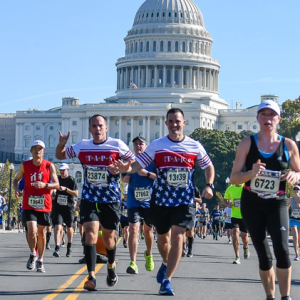
With the Houston Marathon coming up soon, we’re bringing veterans and first-timers together to ask questions, share insights and build some excitement heading into race weekend!
Average high: 63°F (17°C) Average low: 43° F (6°C)
Tips from Coaches
“The wind down in Texas can be pretty strong, so prepare yourself for some possible strong gusts at some portion of the course.” – Coach Jonathan Gooch
“The course is mainly flat and fast! But the last few miles are consistent up and down rolling hills along the Buffalo Bayou Park on Allen Parkway. Nothing too crazy, but your legs will be tired at this point and every incline will feel more challenging than the last.” – Coach Jonathan Gooch
“About half a mile (or roughly 1 km) from the finish will be the largest hill going from the Bayou Park into the city. Once up that hill, it’s flat to the finish, so you can start to pick up the pace with whatever you have left!” – Coach Jonathan Gooch
4. Race Reports
Want even more intel on the Houston Marathon? Read some of the race reports from Team RunRun coaches:
At Team RunRun, we have 100s of wonderful, experienced coaches ready to help you crush your goals, regardless of your ability, budget, or lifestyle. Specifically, for Houston Marathon race advice, here are some coaches to start with:
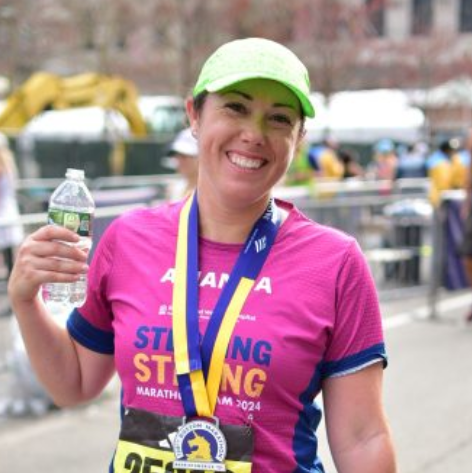
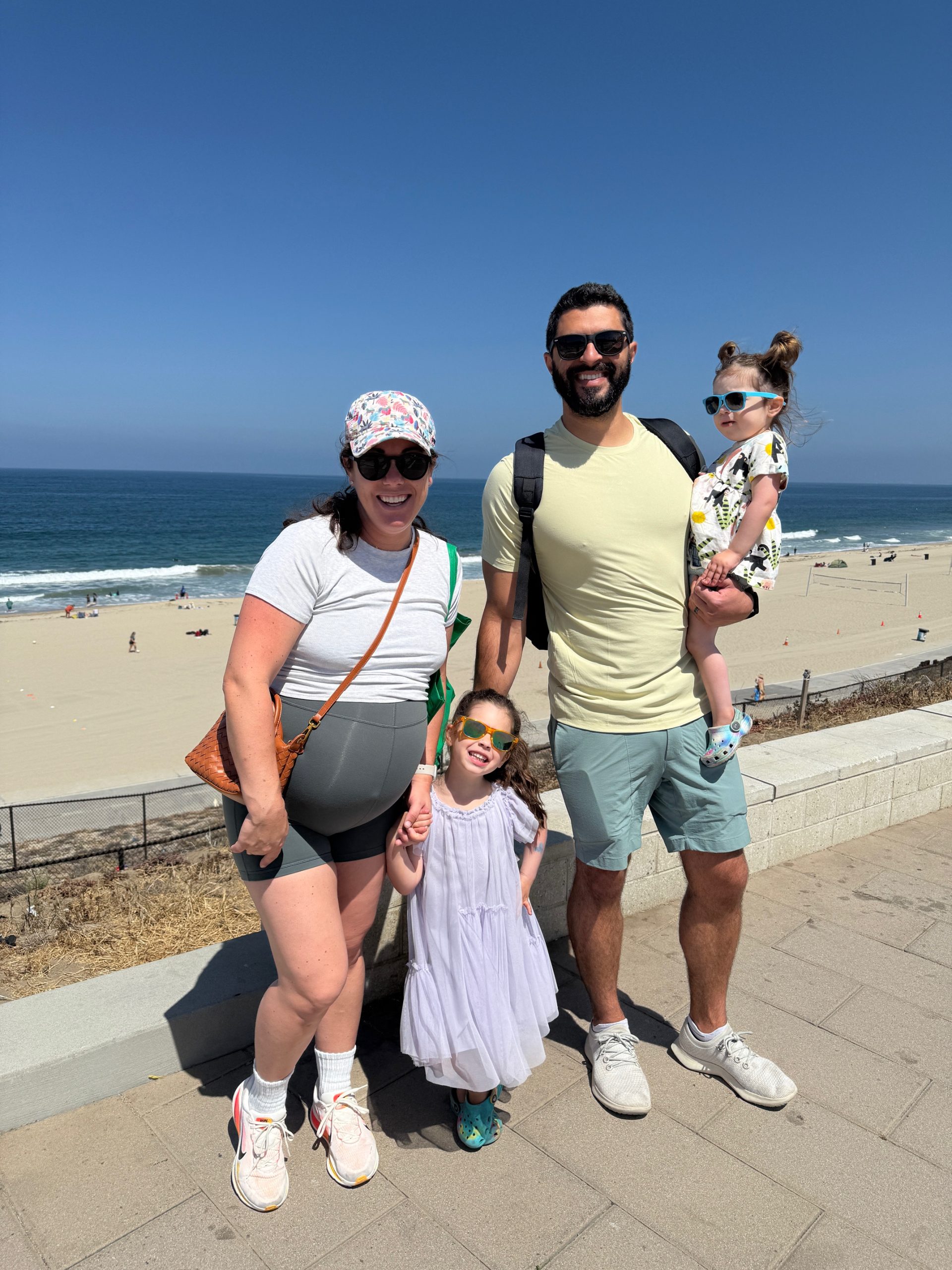
TRR Coach Amanda Hamilton and one of her children after running a race together.
I am now almost 4 months postpartum, and I surpassed the important 12-week mark: time to begin my return-to-run program! Between weeks 6 and 12, I started seeing my pelvic floor physical therapist in person again. During visits, she evaluated my pelvic floor, as well as my whole body. The focus was on addressing any weaknesses and imbalances that could impact my return to running. Early on, I was experiencing some pain in my right Achilles tendon on walks. Ironically, my Achilles presented more of a challenge than my pelvic floor! I began a regimen of weekly PT sessions with additional at-home exercises and icing to rehab the Achilles.
Creating My Return-to-Run Postpartum Program: The Return of the Running Bug
I am currently coaching myself, and when I began to dip my toe into running, the return-to-run program I designed began with a run/walk phase. For each run/walk, I started with 5 minutes of walking to warm up. While I had some sensitivity in my Achilles, my body otherwise felt surprisingly good; the running bug had returned!
Mentally, I found myself struggling to stick to the runs I had programmed for myself. I needed to hold myself back from going too fast or running for too long. This also involved reminding myself to trust in the prescribed training, as I had put a lot of thought and research into the return-to-run program I wrote! I worked on talking to myself as if I was talking to one of my athletes.
Pregnancy vs Postpartum Running: Mom Strength
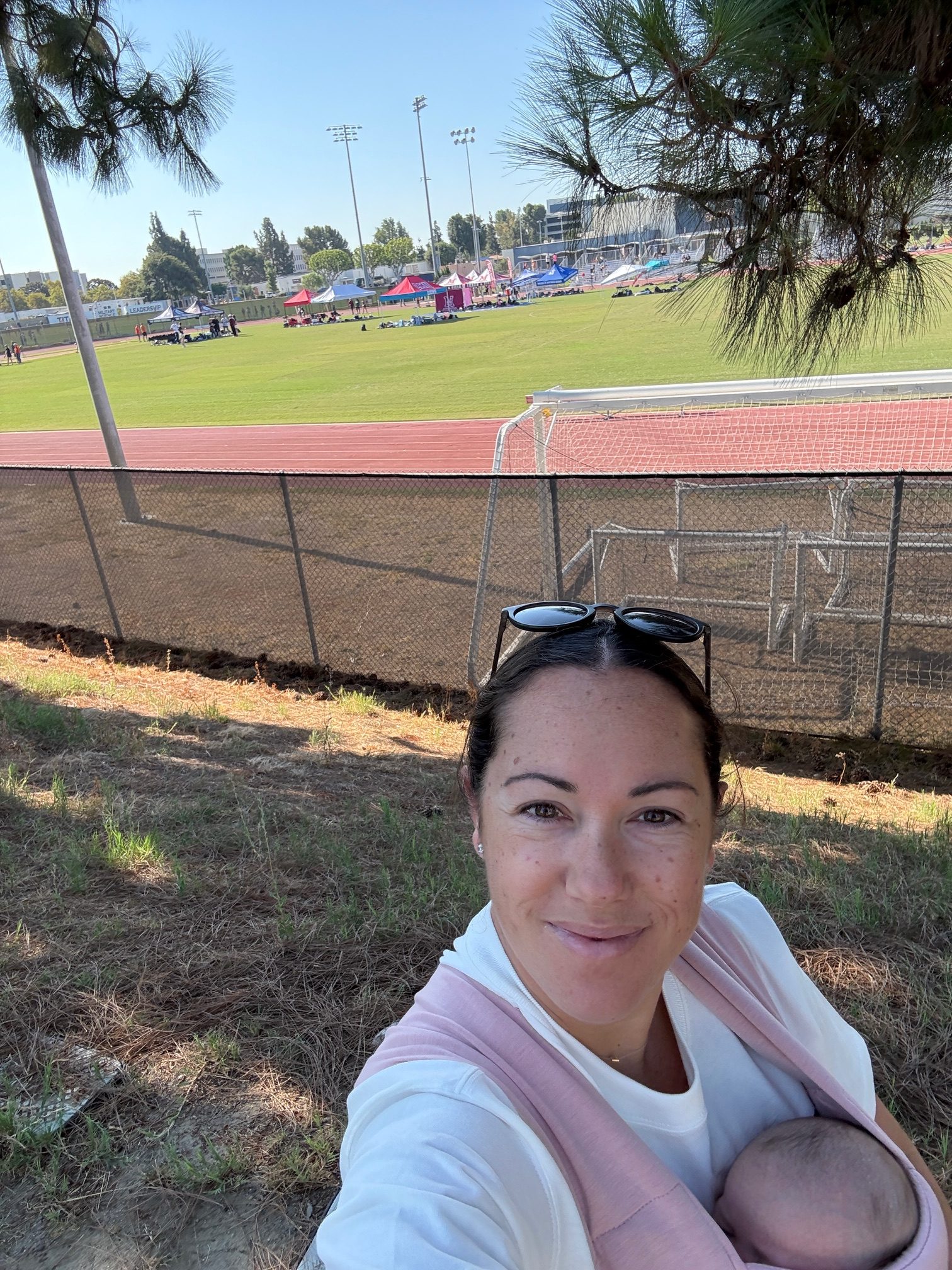
Amanda taking her postpartum running (and newborn) to the track.
While I’m aware that this is not everyone’s experience, for me, the postpartum runs felt easier than my last few runs during pregnancy back in April. I settled into a new easy pace that was 2-3 minutes faster than my easy pace when I was 6 months’ pregnant. I found that my cardiovascular endurance was better than I was expecting it to be, and this realization gave me a renewed sense of motivation.
My Return-to-Run Postpartum Program Details and Postpartum Running Goals
Starting off, I began with just 1 run per week, then progressed to 2, and then to running every other day. I continued to rehab my Achilles, paying close attention to how it was feeling during and after runs. I took an extra rest day or pivoted to cross training if the Achilles didn’t feel great. Again, my pelvic floor and postpartum body felt surprisingly good: something I attribute to regular pelvic floor physical therapy sessions.
After a few weeks of run/walk intervals and very short easy runs, I progressed to slightly longer runs and some speed work on the track. I am LOVING being back out there! I’m feeling really good now, and have my training oriented around a 5K in January. While I’ll only be about 6 months postpartum by the time race day rolls around, I’m still hoping to get close to or even beat my 5K PR, set before my most recent pregnancy.
I will be continuing to document my return to running postpartum in these journal entries. Expect more from me after my 5K in January. Thanks for following along!
Amanda Hamilton is a coach with Team RunRun based near Los Angeles, California. She knows what it’s like balancing a family, returning to running, working and running. She’s excited to help both beginner and intermediate runners achieve their goals.
What a Year of Injuries Taught Me About Running, Aging, and Acceptance
2025: the year I didn’t race.
There are years that sharpen you, and years that sand you down. This past one was a bit of both. It started with a back niggle that refused to explain itself. A low, stubborn ache that stayed just loud enough to remind me it was there, but quiet enough to leave every doctor shrugging.
A runner with an injured knee.
Then, just when things seemed to be settling, I clipped my knee on the corner of a table — the kind of accident that should’ve been nothing. A one-second “ouch,” a shake of the leg, and move on. Except I didn’t. That tiny, stupid bump spiraled into a ten week rebuild that tested every ounce of patience I had.
The realities of aging as a runner
As a masters runner, I had to admit what I’ve been resisting: I don’t bounce anymore. I need to absorb, to settle. and to ease back in. Recovery takes longer, and the margin for error grows undeniably smaller. Patience isn’t optional.
I also had to face down some of my blind spots, the ones I always assumed didn’t apply to me. The biggest one? I was racing to train, not training to race. I wanted fitness faster than my body could give it. And I was chasing timelines I invented, acting like the universe owed me something for effort alone.
Revelations from the year I didn’t race
And somewhere in the middle of all that frustration, something unexpected cracked open. I remembered running isn’t my identity. It’s something I do, passionately, but it isn’t me.
But there was something else too and something uncomfortable to admit: I had pulled away from my tribe.
Somewhere between the back injury that never explained itself and the knee that explained too much, I had drifted into this swampy, quiet place where I tried to handle everything alone. I left my coach, pulled back from the runners I usually banter with, and sat in my own head like it was some noble act of endurance.
Runners having fun at a local group run dressed up in costumes.
Except…
It wasn’t noble. It wasn’t tough. It wasn’t even helpful.
I had to admit that I need people. I need my coach who can see the blind spots I pretend not to have. I need my tribe, the ones who send a message, share a laugh, or just remind me that running is bigger than one person’s struggle.
Above all, I need to stop disappearing every time things get hard. That silence… It’s not healthy for me. It never was.
By the time October rolled around, I quietly admitted what I already knew: 2025 was done. Not in defeat, more like acceptance. Like when the wind changes direction and you know the season is turning, whether you’re ready or not.
If I wanted a strong 2026, it wasn’t going to come from salvaging scraps of a broken season. It was going to come from how I carried myself now. Patient, grounded, willing to take the long road back, and willing to lean on others instead of hiding from them.
The obstacle really is the way. Everything I tried to avoid — slowing down, asking for help, sitting with discomfort and letting go of who I “was” — turned out to be the actual path forward. Reality doesn’t negotiate: it just is. And the moment I stopped fighting it, the year I didn’t race subsequently shifted from feeling like loss to feeling like direction.
Acceptance isn’t quitting. It’s putting down the sword so you can finally move with the current instead of against it.
A better 2026 is built upon the year I didn’t race
So here I am, on the edge of 2026, no longer trying to resurrect the runner I used to be. I’m standing as the runner I’ve become with more humility, more clarity, as well as a greater appreciation for the people who walk (or run) beside me.
I didn’t get the year I wanted. But I got the year I needed. The year that stripped me down undoubtedly asked better questions, and handed me a different kind of victory, the kind you quietly carry inside your chest.
And honestly? That feels like the best starting line I’ve had in a long, long time.
Corey Turnbull is a Team RunRun Coach based in Ottawa. He works with beginners just starting out or with seasoned runners looking for a breakthrough. Above all, Corey helps athletes maximize the limited training time they have, prioritizing consistency, focus and fun.
And Why Your Pace Doesn’t Have to Dictate Your Experiences or Achievements
It’s hard not to get in your head when you’re alone for a whole race – and not because you’re out at the front, but because you’re at the back of the pack.
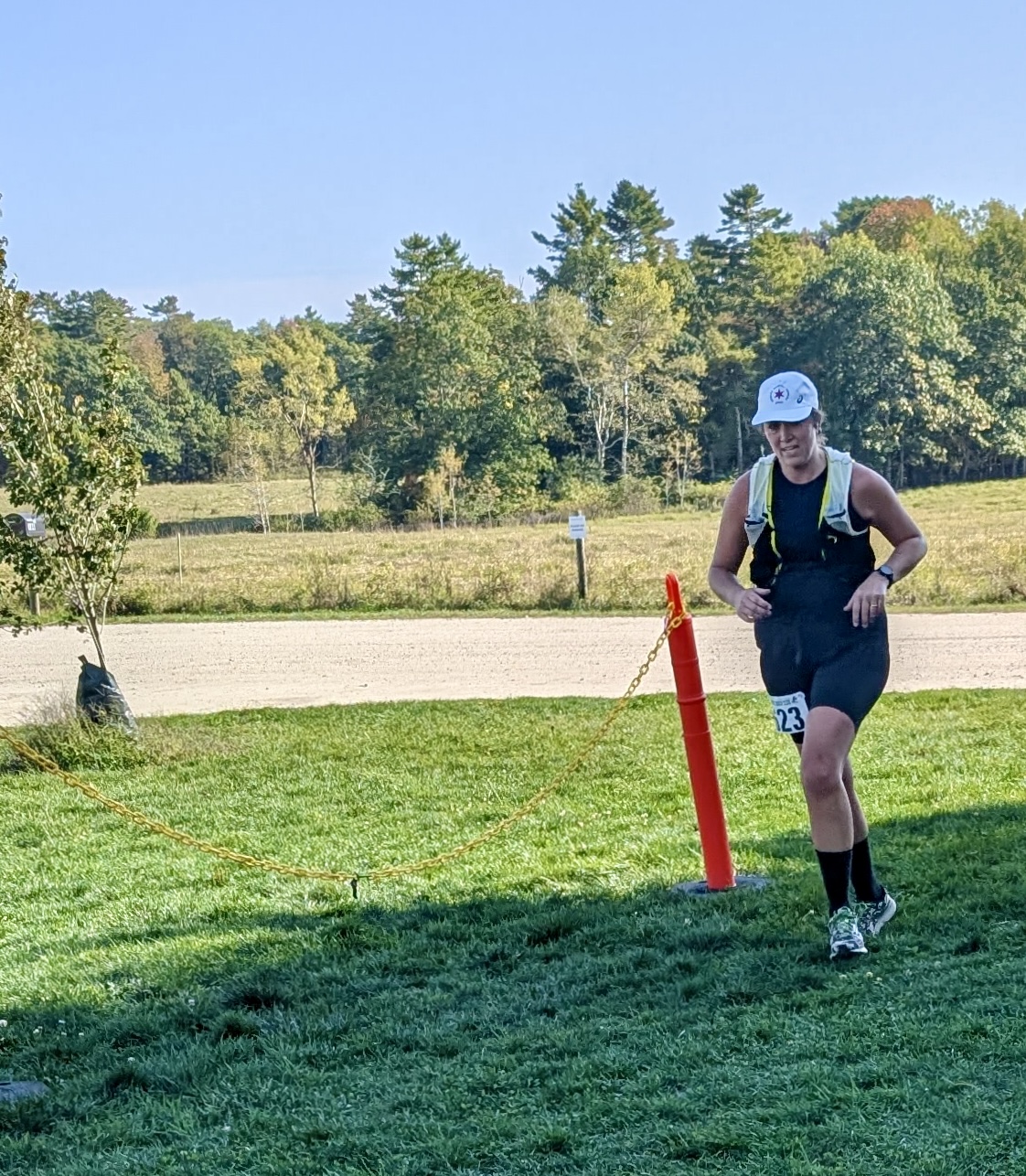
Allie running at the back of the pack, and enjoying it!
A back of the pack perspective
In a world obsessed with being the best – the fastest, strongest, best dressed – it’s hard not to get caught up in the comparison game. The running world can be no exception. Pace-focused and speed-obsessed running goals can start to weasel themselves into your head, despite surrounding yourself with a back-of-the-pack friendly feed and no-pressure races. Thoughts like “What am I even doing?” and “Am I even good at this?” start to become louder and louder the farther away the rest of the group gets. It’s easy to spiral. It’s easy to let self doubt completely take over.
The power of belief in belonging
Allie at the finish of her race after running her own pace.
But do you want to know what’s harder than being at the back of the pack? Believing in yourself. Believing that you’re worthy despite your pace or what you look like doing it. And believing when you start to run your own race and take pride in your own accomplishments, a whole new world is unlocked. All of that self-imposed pressure and inevitable comparison-fueled disappointment, is replaced with pride, confidence and JOY. You start having fun, waving at fellow runners, and feeling the sense of accomplishment that only completing a uniquely difficult race can bring.
There’s more to running that PR’s and placings
It can be an amazing feeling reaching a new PR or finally nailing that negative split you’ve been working towards. But don’t let that be your only focus. Appreciating the training and racing experience in its entirety can give you an entirely different perspective on running, even if you’re at the back of the pack. YOU get yourself to the start line. And you can get yourself to the finish line, too. Sometimes it just might look a little different than you expected.
Allie Smith is a Massachusetts-based coach with Team RunRun. Her passion is helping the everyday athlete have fun, build confidence, and fall in love with running! She works with beginners just starting out, helping them fit running into busy lifestyles while finding joy.
3 Bests – What aspects of the race did you like the most?
Crowd and spectators: It was truly amazing! I almost never run without my audiobook, but it was so loud and so enthusiastic that I felt that I should immerse myself in the experience and enjoy it.
Course: It’s truly iconic as it winds through the 5 boroughs; the bridges are brutal but pretty.
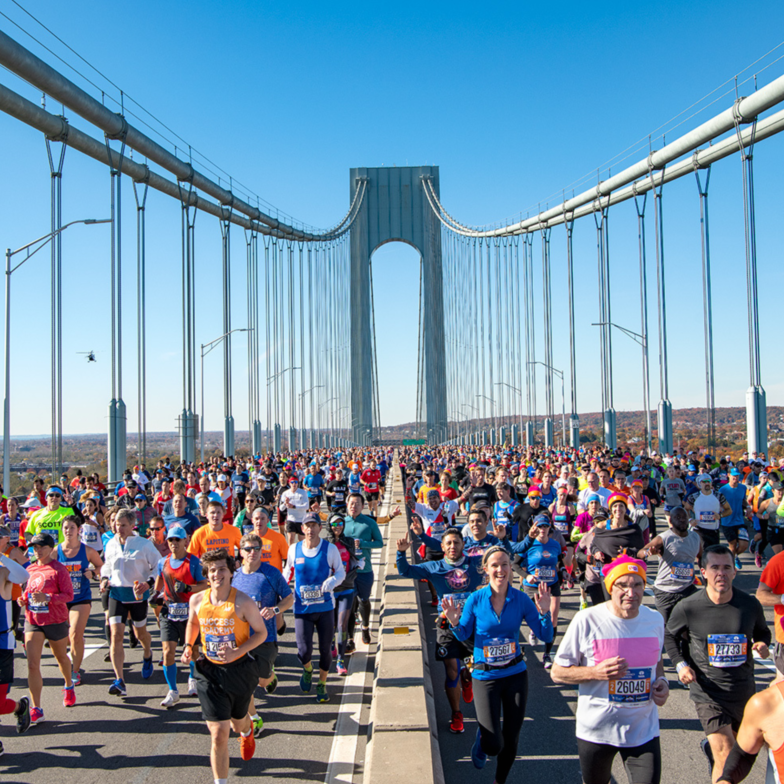
Field size and growth: I’m sure there are differing opinions on this, but I’m glad they’re expanding the field. I believe this year was one of the largest ever at around 71,000 starters. At my pace, I wouldn’t ever qualify for a race like this. I’m also grateful for the second-chance lottery system that got me an entry to this race: thank you NYRR!
Start village organization: For a race with so many people, it was a good size and relatively well organized. Physical signage could have been better within the village. Audio announcements were great.
Not so much – Aspects of the race that didn’t do it for you
Not really complaints or dislikes, but things to look out for:
1. New York City Marathon course difficulty
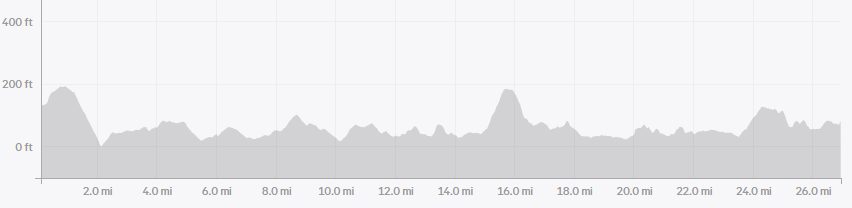
The course is brutally hard – and deceptively so. For someone from hilly Seattle, even the Verrazano Narrows and Queensboro Bridge seemed like nothing: about 150 and 110 feet elevation change about about 0.75 miles. But most of the course has rolling terrain, and if you don’t hold back or haven’t trained appropriately, you’ll destroy your calves and quads, like I did, and then fall apart at the end. For me, I was cruising through mile 19 before falling apart quite abruptly and struggling to the finish. While I would’ve been happy with my finishing time at the start of the race, given how well I was rolling and the time I was on track for before my demise, I was ultimately somewhat disappointed.
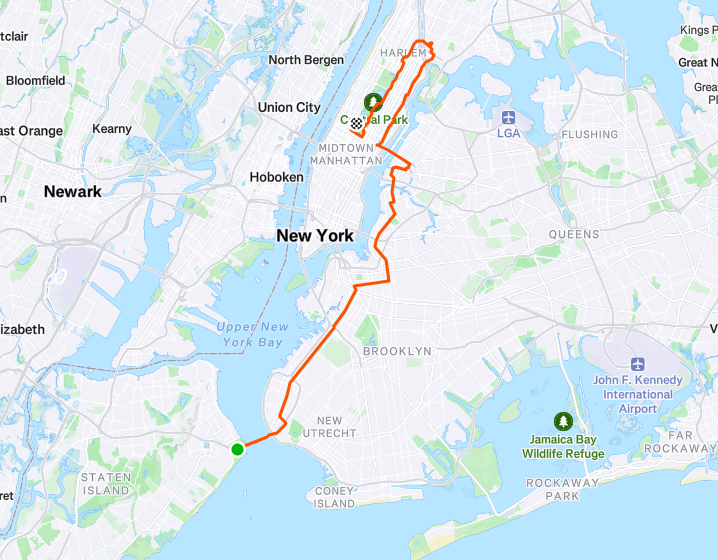
The 2025 New York City Marathon course.
2. Later starts mean warmer temperatures
Because of the expanded field, the slower runners start very late in the day. I crossed the start line about 8 minutes past by designated 11:30 am start time. Given that I had to travel east for the race, and the 2025 New York City Marathon fell on the day the clocks go back, I was happy to be able to sleep in and start the race fresh; I slept a shocking 9 hours before the race, whereas I had slept 3 restless hours before the Chicago Marathon’s 7 am start 4 years ago! However, the late start resulted in warmer temperatures and, in the end, an extremely long day.
3. Getting to the race start
The point to point nature of the New York City Marathon course, means runners must travel a long way to get to the start on Staten Island (see course map to the right). I took the ferry and then a bus on Staten Island. Other runners who took the bus all the way from Manhattan had a far longer total travel time..
Weird factor – What’s the weirdest thing about this race?
The elevation and course profile. While the Seattle marathon has about 1500 feet of elevation in a typical year, I’d argue that the 950-1000 feet of the New York City Marathon is much harder because of the rolling nature of the terrain.
Highlights of your race – What did you do well and enjoy about your race in particular?
For a glorious 19 miles, I was having an amazing time and was extremely optimistic about getting close to a PR. While the crash was rough after that, and my eventual time was disappointing, I came away with optimism that I could run considerably faster with better pacing and better planning for the course, plus some conditioning for quads, calves, and probably other muscle groups.
Even though it eventually hurt me, I felt like I did a great job of running by feel and effort… for the first 19 miles at least!
Lessons for others – Share your pro-tips on the race to help the next runner
Unfortunately, I had not seen this before the race, but in retrospect, I would research any course that I wasn’t familiar with or didn’t have a very straightforward profile, like the person in this reddit post did:
I honestly think that if I had done this sort of research myself or had found this, I would have saved about 10 minutes and not had such a bad last 7 miles.
Lessons you learned that will help you next time around
Plan for the course, and hold back if/ when appropriate.
This was my first race in running in the Nike Alphafly’s, though I had done about a 100 miles of training in them. They helped me go fast, but they had the exact problem that I was concerned they would: they substantially exacerbate any calf weakness late in the race. I think for my next marathon I’ll go with the Asics Superblast. I also liked these a lot in training, and found them much more stable and gentle, yet still fairly fast.
Most important course specific knowledge to know about the race
(Hills!! See above)
Aesthetics – Is it a pretty course?
Quite pretty. However, I don’t think I paid much attention after 15 miles or so, as I was just bearing down mentally and trying to focus.
Difficulty – Is it a tough course?
I’d say so! The constantly rolling hills really add up (see elevation map below). And if you’ve read this far, I think you already know the answer to this question!
The 2025 New York City Marathon elevation map.
Organized and well run – Did it feel like a well-oiled machine or were they flying by the seat of their pants?
Fairly well oiled, especially for a race of this size!
There were a few areas in Brooklyn where the crowd ignored the tape barriers, creating a path barely about 10 feet wide for runners to go through, which felt dangerous and badly managed in terms of crowd control.
Competition – Is there a strong field?
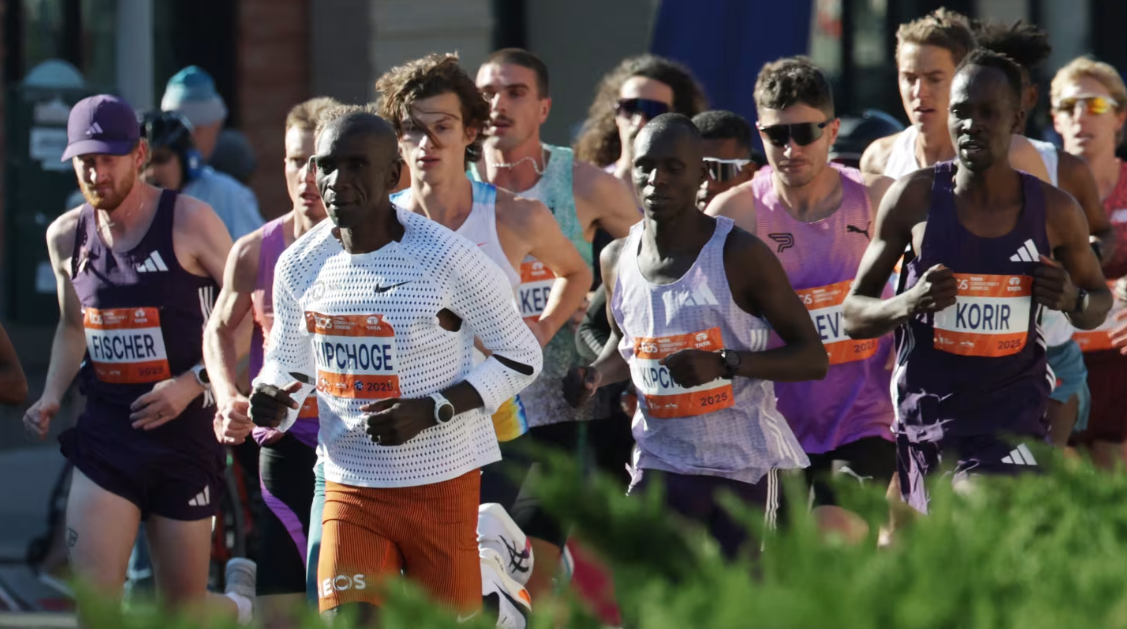
Headlined by marathon GOAT, Eliud Kipchoge, and legendary distance runner, Kenneisa Bekele, need I say more…? While Kipchoge and Bekele enjoyed their retirement tour, finishing 17th and DNF-ing respectively, the elite men’s field wasn’t short of talent. 1st and 2nd place finishers, Abdi Nageeye and Evans Chebet, returned, in a field that included 8 men who have run under 2:05:00. Americans Joe Klecker, Charles Hicks, and Hillary Bor ran their marathon debut, alongside Britain’s Patrick Dever, who ended up a second off the podium. Other notable men included: Americans Reed Fischer, Joel Reichow, and Biya Simbassa, alongside 2:02:00-marathon runners, Benson Kipruto and Deresa Geleta.
On the women’s side, the last 3 New York City Marathon finishers returned to battle it out with Olympic Champion, Sifan Hassan. Akin to the 2025 Boston Marathon, it ended up being a match race between Hellen Obiri and Sharon Lokedi, with Obiri ultimately prevailing victorious. Other notable women included: Americans Fiona O’Keefe, Molly Seidel, Stephanie Bruce, and Sara Hall, Britain’s Jessica Warner Judd, and Ireland’s Fionnuala McCormack.
2025 New York City Marathon elite men, featuring Eliud Kipchoge. PC: REUTERS/Jeenah Moon
Logistics – Does it require a special handshake, registration a year in advance, hotels all booked? Give us the low down on the nuts and bolts of making the race happen.
It’s very hard to get into the New York City Marathon! There are various different ways to enter, including qualifying standards for faster runners, charity places, and lottery picks. I got in through a second-chance lottery that randomly picks people who miss the main lottery. If you get a phone call with caller-id ‘NYRR’ pick up!
Hotels are expensive, yeah – though I don’t think it’s particularly necessary to stay in Manhattan, so you could definitely save some money by staying elsewhere.
Aid Stations – Standard fare or anything special to know about the aid stations in terms of what’s available or when?
Aid stations were pretty good: Gatorade and water every mile starting at 3, which is pretty good. They had some Maurten 100 gels available at miles 12 and 18, but I didn’t want to try something new on race day and I had plenty of fuel with me. Also, they had bananas at mile 21, which seemed odd to have just one point with them. Apparently had biofreeze was available at some of the later medical stations; in retrospect, I should have made use of that to deal with some of the discomfort in my legs.
A small complaint I have is that some aid stations couldn’t keep up with the number of runners coming through, because the volunteers seemed to be untrained and not able to keep pace. This resulted in multiple instances of runners waiting longer than ideal, and small backlogs forming. At aid stations and just after, definitely watch your step, be careful not to slip, and watch out for people crossing lanes aggressively.
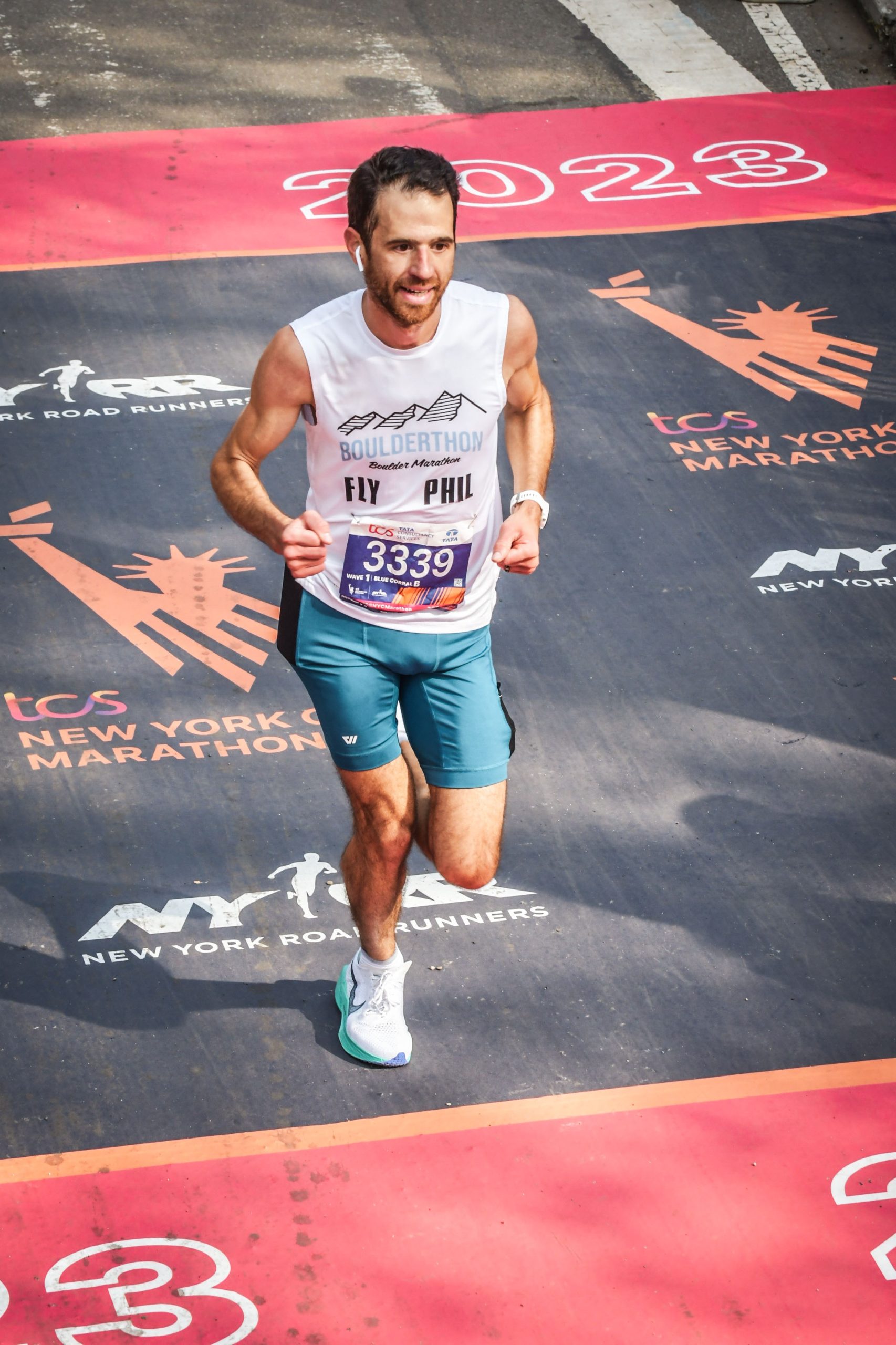
TRR athlete, Phil Shin, finishing the 2023 New York City Marathon.
Weather and typical race conditions
Typically cold and dry. Occasionally rains because it’s early November: Thursday and early Friday of this year’s race week had been extremely wet.
Gear – Did you need anything special or is there anything you’d recommend for the next runner?
I definitely would recommend a good headlamp, as it can get super dark.
Spectators – Is this a friendly course for your friends?
Yes and no. It’s a great experience as a runner, and I’d imagine as part of the cheering crowd as well. There are lots of points with great music – notably Brooklyn, Harlem, and the Bronx. However, with so many people trying to get around the city to cheer runners on at multiple points, the subway system gets pretty overwhelmed. My wife met me at 3, 8, 18, and after the finish. Even though I’m a slower runner, she just barely made it to these stops!
How’s the Swag?
The New York City Marathon 2025 t-shirt was solid, though I prefer short-sleeved shirts: thin long-sleeved shirts are just a bit of a waste for me. There’s a ton of branded apparel for sale at the expo, but I don’t typically buy that sort of thing. The medal was nice, very solid (and hard earned)!
The Overall Score – How many stars do you give this race and do you recommend that others run it?
The New York City Marathon definitely gets 5 stars! While I don’t think I would do it again for a long time, it’s an outstanding experience. I highly recommend it to others.
For more New York City Marathon insight and coaching tips, we put together this New York City Marathon 101 race guide.
3 Bests – What aspects of the race did you like the most?
Festive: Halloween themed
Timed race: I did the 30-hour version of the Ghost Train Rail Trail Race, removing any time cut-off pressure. Given the race directors knew how long runners would be on course, alongside the looped course, aid station snacks were refreshed throughout.
Looped course: This allowed for the start/finish to be the central hub for all runners/volunteers/pacers/tents, and was easily accessible.
Not so much – Aspects of the race that didn’t do it for you
Loop length: the 15-mile laps made it difficult to make any adjustments on-course.
Night temperature: while fine for running, the low temperatures were chilly for camping overnight and anyone not running.
Weird factor – What’s the weirdest thing about this race?
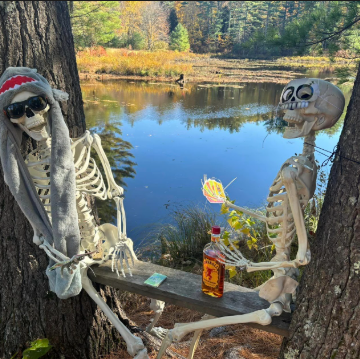
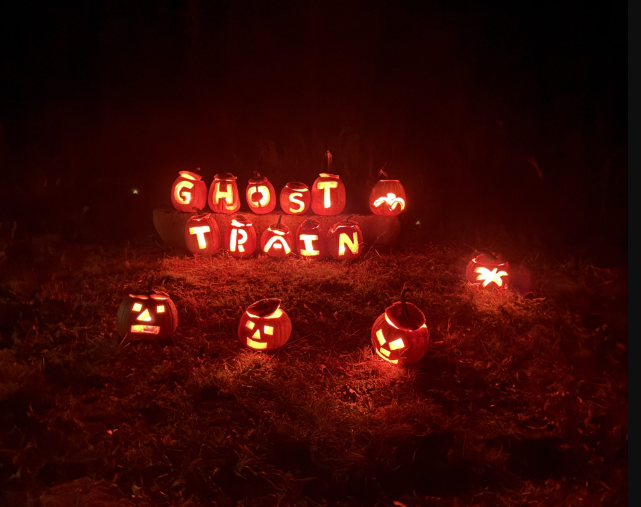
There were a lot of Ghost Train Rail Trail Race runners dressed in Halloween costumes!
Highlights of your race – What did you do well and enjoy about your race in particular?
After struggling with GI issues and blisters after the second lap (miles 15 to 30), I wasn’t sure if I would be able to continue on for a third lap at night. I did a full reset and rested for a while before heading back out. This was my first time running into the night, and handled it with no caffeine and limited calories due to my stomach issues. Overall, I’m happy I did persevere! The result: setting a new distance PR during this race!
Lessons for others – Share your pro-tips on the race to help the next runner
A few tips for runners considering this race:
October nights in New England can get VERY cold; therefore, it’s important to pack enough layers for running AND sleeping!
Even in lower temperatures, hydration is still very important to stay on top of. Don’t be fooled by the lack of sweat!
Talk to other runners. The looped course is conducive to chatting to other runners, and this makes the time go by very quickly.
Lessons you learned that will help you next time around
1. Stay on top of hydration. 2. Take care of feet early!
There’s no going back on these two things: once they start to go south, they’ll more than likely keeping going south.
Most important course specific knowledge to know about the race
1. The Ghost Train Rail Trail Race course is mostly hard-packed, rail-trail type terrain with a little bit of New England trail running mixed in. 2. The 4 mile aid station and 7 mile turnaround aid station are fully stocked with bathrooms.
Aesthetics – Is it a pretty course?
The race takes place in the fall, with some beautiful foliage and fun decorations throughout!
Difficulty – Is it a tough course?
No, it is a relatively flat and very well marked course.
Organized and well run – Did it feel like a well-oiled machine or were they flying by the seat of their pants?
Very well run! From the race director to each volunteer, everyone involved in the Ghost Train Rail Trail Race were amazing!
Competition was not the main point of focus of Ghost Train Rail Trail Races, especially in the 30-hour event. The focus is more on completion.
Logistics – Does it require a special handshake, registration a year in advance, hotels all booked? Give us the low down on the nuts and bolts of making the race happen.
Registration was VERY competitive. For example, the 30-hour Ghost Train Rail Trail Race sold out in about 2 minutes! Fortunately, there are several different Ghost Train Rail Trail Race distance options.
Aid Stations – Standard fare or anything special to know about the aid stations in terms of what’s available or when?
Aid stations had plenty of snacks and sodas, with Tailwind as the endurance fuel option. The halfway aid station had a lot of homemade goodies and plenty of hot food!
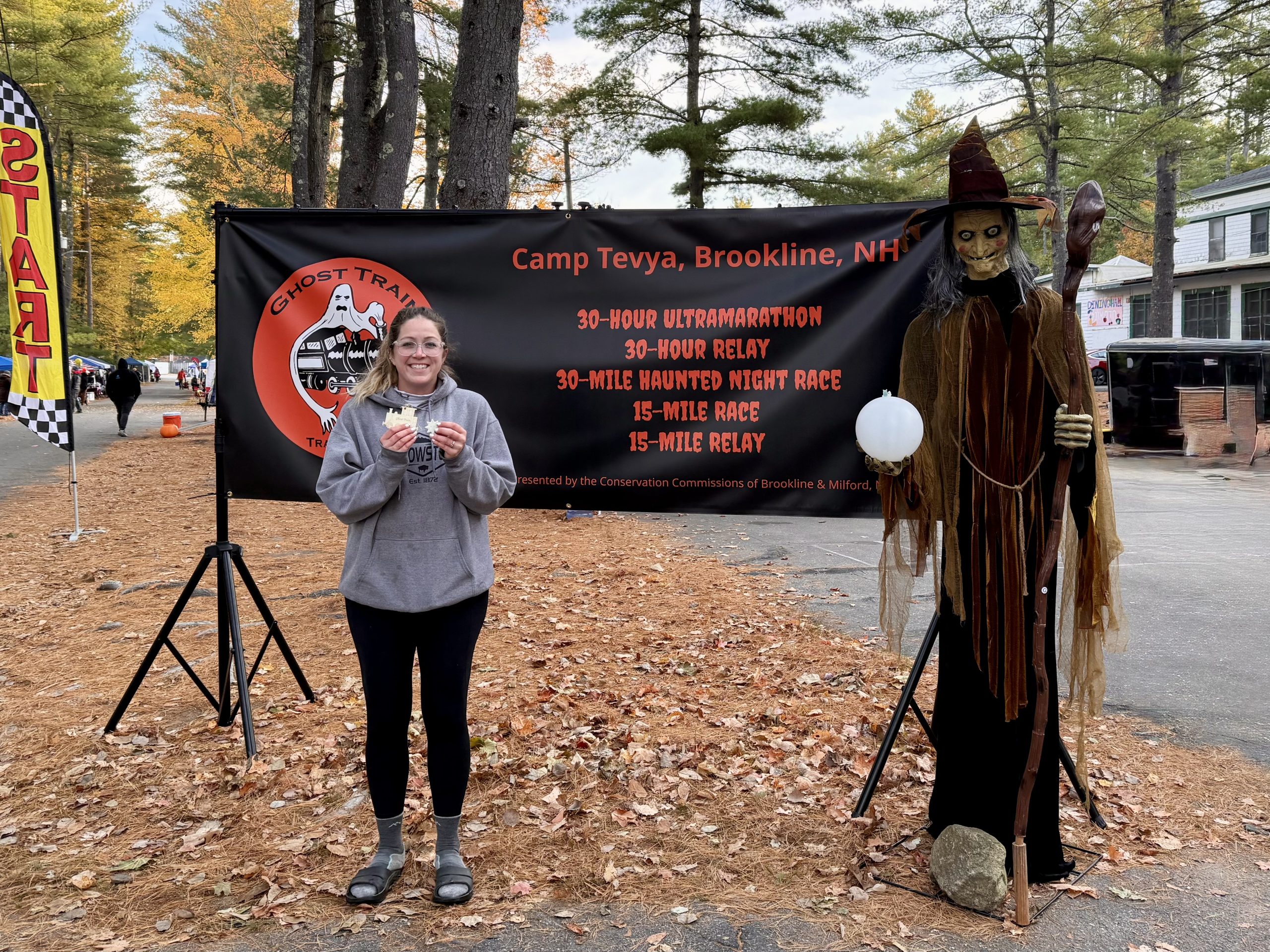
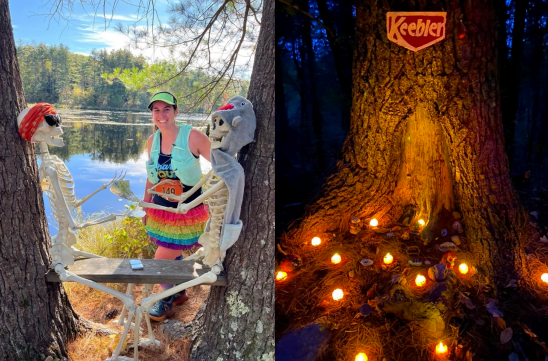
Halloween-themed fun along the Ghost Train Rail Trail Race course.
Weather and typical race conditions
The Ghost Train Rail Trail Race happens during fall in New England, so can vary drastically. This year, it got quite cold during the night. Be prepared for everything, especially the worst!
Gear – Did you need anything special or is there anything you’d recommend for the next runner?
I definitely would recommend a good headlamp, as it can get super dark.
Spectators – Is this a friendly course for your friends?
Friends are able to hang out at the start/finish area, and pacers are allowed during the night portion.
How’s the Swag?
There is a wooden train ornament for finishers, as well as a PR star.
The Overall Score – How many stars do you give this race and do you recommend that others run it?
I would DEFINITELY recommend any of the Ghost Train Rail Trail Race events to others!!! It’s festive and fun, great weather (at least in 2025 there was!), a lot of aid station food and bathrooms, and very well run. Above all, it’s a great format to go for distance PR’s and to chat with other runners.
Allie Smith is a coach with Team RunRun based in Gloucester, MA. She enjoys helping the everyday athlete have fun, build confidence, and fall in love with running!
Known for being one of the fastest marathons in the country with it’s net downhill elevation profile, the California International Marathon (CIM) is a top choice for those chasing Boston Marathon and U.S. Olympic Trials Marathon qualifiers.
Look out for TRR Coach CJ Albertson as he ticks off his 6th marathon of the year (!!) on his hometown course. Of the last 5 CIM’s, CJ’s run 4 of them, including winning the race in 2023 and two runner-up finishes!
1. Pre-Race Zoom Call
With the California International Marathon (CIM) coming up soon, we’re bringing veterans and first-timers together to ask questions, share insights and build some excitement heading into race weekend!
I highly recommend turning off autolap and using the manual split button on your watch and course markings to gauge your pacing. If you decide to use auto lap, subtract 2-3 seconds per mile from the splits listed below to account for gps and tangent error.
Start off conservatively! The first mile is a downhill effort. The race day vibes are contagious, and it is easy to get sucked into the race atmosphere! Go in with a gameplan, and stick to it!
0-6 miles. The first 5-6 miles are pretty aggressive downhill, there are still a couple rolling hills but losing a lot of elevation. Start the race running conservative mile splits. CIM is a course i recommend focusing on 3 mile splits and not each individual mile, especially in the first 13.1
Although the course is net downhill, there are some gentle rollers on the course. Make sure to check your effort +/- 5 seconds per mile depending on the part of the course.
6-12 miles. Rolling portion of the course. In general, I’d recommend letting the miles slip by around 5 seconds a mile here through here while maintaining a similar effort while you were running the first 6 milers. Only thing to note here, rolling hills stop at 10 and the downhill picks back up. Splits will likely pick back up naturally from 10-12. If they do, aim to hit what you hit for those first 6 miles.
12-18. Resumes the downhills. The section is much more even than not, it’s just a very smooth downhill.
We are getting to the point where we want to start consciously progressing forward. You should begin making an intentional push forward. I Don’t make any big risks yet, but get yourself into a settled rhythm, pacing and effort. After 16, you should be able to gauge your effort, feel out where you are at in the race.
Once you are at 18 miles, its all about cranking to the finish line. Gauge your effort, settle into goal pacing, and head home!
“They say CIM is net downhill. What they don’t tell you is that the first 10 miles are rolling hills. Train hills and you won’t notice them. Don’t train hills and listen to the hype about a “downhill race” and you will be very surprised at your finish time… and not in a good way.” – Coach Jamie Spruiell
California International Marathon (CIM) course and elevation maps.
3. Race Reports
Want even more intel on the California International Marathon (CIM)? Read some of the race reports from Team RunRun coaches:
At Team RunRun, we have 100s of wonderful, experienced coaches ready to help you crush your goals, regardless of your ability, budget, or lifestyle. Specifically, for CIM race advice, here are some coaches to start with:
3 Bests – What aspects of the race did you like the most?
Terrain and scenery: If you have not spent much time in the western part of Michigan’s Upper Peninsula, it should definitely be on the top of your vacation / race list. The colors were about to turn, and mother nature provided great weather. This race is timed to coincide with peak fall colors!
Crewed by my wife: This was the first race my wife crewed for me. Typically, I run my races with support from drop bags and aid stations, but this time, my wife was there to crew me the entire race. I enjoyed sharing the experience with her.
Community: The Marji Gesick 100 is self- / community-supported race, and it was fun and exciting to interact with all the other runner crews. They always offered water, food, or any assistance, really highlighting one of the aspects that makes trail and ultra such a special community.
Not so much – Aspects of the race that didn’t do it for you
There really is not too much I don’t like or love about this race. The mountain bike race, which starts 24 hours after the run, is on the same trails, so depending on your pace and time, you may need to step aside or navigate the bikers as they pass. It is not all bad though. Based on my 2023 experience, every bike rider cheered and encouraged me along the route. The inconvenience of stepping off the trail was balanced out by the support from the bikes.
Weird factor – What’s the weirdest thing about this race?
Everything about this race is weird and unconventional! Marji Gesick really is a 365 day event. Registration sells out in minutes, there is not waitlist, and the intentional misinformation, confusion, and tom foolery from the race organizers and fellow participants is nonstop to race day. Check out “Marji Geski Talks” on Facebook, and you will understand. The 100 mile run starts with a 0.5 to 0.75 mile bike ride. Yes, you need to bring a bike to a running race! There are no aid stations. You bring your own crew, or you rely on the community. Full stop. It is up to you to prepare. The course map is available only a couple days before the race, and to prove you ran all 100 miles, you need to collect “tokens” from plastic pumpkin buckets along the course. The tokens could be “Dum Dum” suckers, random objects, or wooden tokens. Trust me, if something is in a bucket, you need to bring it to the finish line. This year, I collected 2 suckers and 3 wooden tokens. Oh, and just for fun, there are even more “fake” buckets that are completely empty!
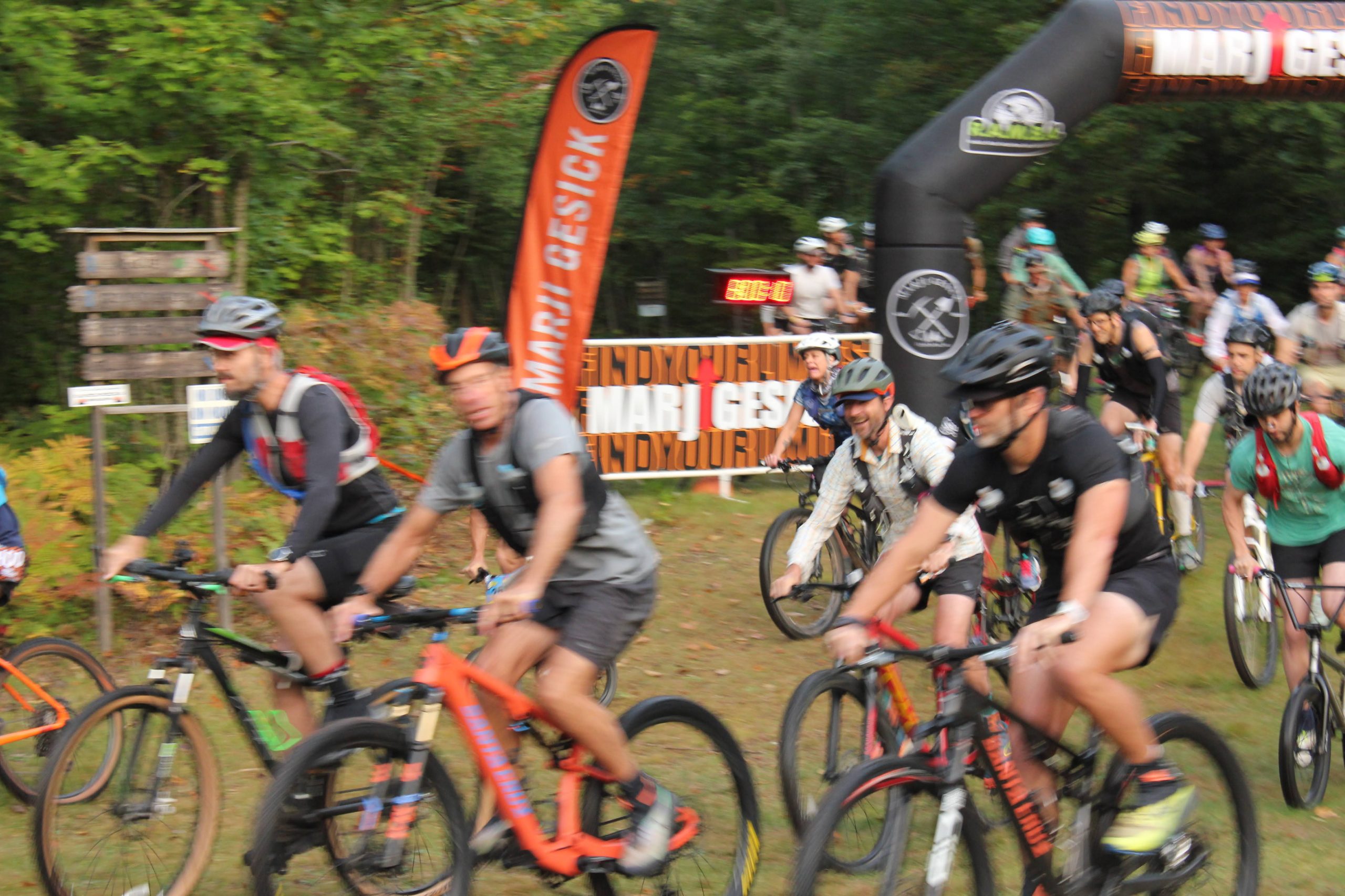
The mountain bike start to the Marji Gesick 100 Mile, an ultramarathon running race!
Highlights of your race – What did you do well and enjoy about your race in particular?
This race for me was what the Marji community calls #unfinishedbusiness. I completed the Marji Gesick 100 in 2023 in a little over 39 hours. Yes, it was my first 100 mile race, but I knew I had much more potential. My training was less than I wanted, I didn’t know how to fuel, and I was only a couple years into my running rebirth. Add to that, I slept terribly the week and days before (my dad was suffering from cancer at the time, and I got a call around mile 40 that he fell unconscious and wouldn’t wake up. He passed away less that 2 days after I finished).
OK, sorry for the bummer start. But, this time, I was able to train very well heading into the race, and my nutrition and hydration were dialed. I ran way more of this race than I have in other 100 milers, and I finished in time to earn my belt buckle, awarded to runners under 28 hours.
Lessons for others – Share your pro-tips on the race to help the next runner
A few tips for runners considering this race:
Do your homework. There is no race packet or step by step instructions for the race. You need to go out and dig up the information. It is worth getting onto the Marji Gesick Facebook pages, and yes, if you do not have a Facebook account, it might be worth creating one.
Plan your crew. This is pretty much the same for every race that allows crew, but remember, there are no aid stations to fall back on. Coming up with a detailed crew plan is a must.
Be ready for sudden changes in weather. The race happens on the shore of Lake Superior, it can go from 70 and sunny to 40 and rain in minutes.
Positive split pacing. Last, the back half of the race is more technical and harder to run. I recommend banking some time in the first 60 miles, if possible, but don’t over do it.
Lessons you learned that will help you next time around
I think I would add more crew stops. We planned on about every 10 miles, and during the afternoon, I was running out of water between stops and had to slow down a bit. I noticed runners with more stops were moving a bit better and faster during the warmer part of the day. I also would try to limit my stop time a little more. We had a hard cap of 10 minutes max at any stop. I think in the future I would try to limit that to 5 minutes. Also, a waist light is a must. I did have a waist light, but I didn’t plan a better way to attach it to my belt. I could have moved better at night if I had better lighting.
Most important course specific knowledge to know about the race
Make sure you are keeping your head up and don’t miss the pumpkins! Don’t worry, they are not hidden like the books in the Barkley Marathons, but as the race goes on, you could miss one in a sleep deprived state. Also, be ready for the punchy and rocky climbs that come after mile 60. The first half of the race has pretty good flow to it, however, after mile 60, there are a lot of technical trails with short, but very punchy climbs. Don’t forget, the race will probably be somewhere between 100 and 110 miles, so don’t get discouraged when you cross 100 miles on your watch and there is still and hour or two left to go in the race.
Aesthetics – Is it a pretty course?
The race is beautiful. You spend most of the time running through the forest just as the leaves start to change. You are treated to views of lakes, and you run along rivers: there are few better places to suffer.
Difficulty – Is it a tough course?
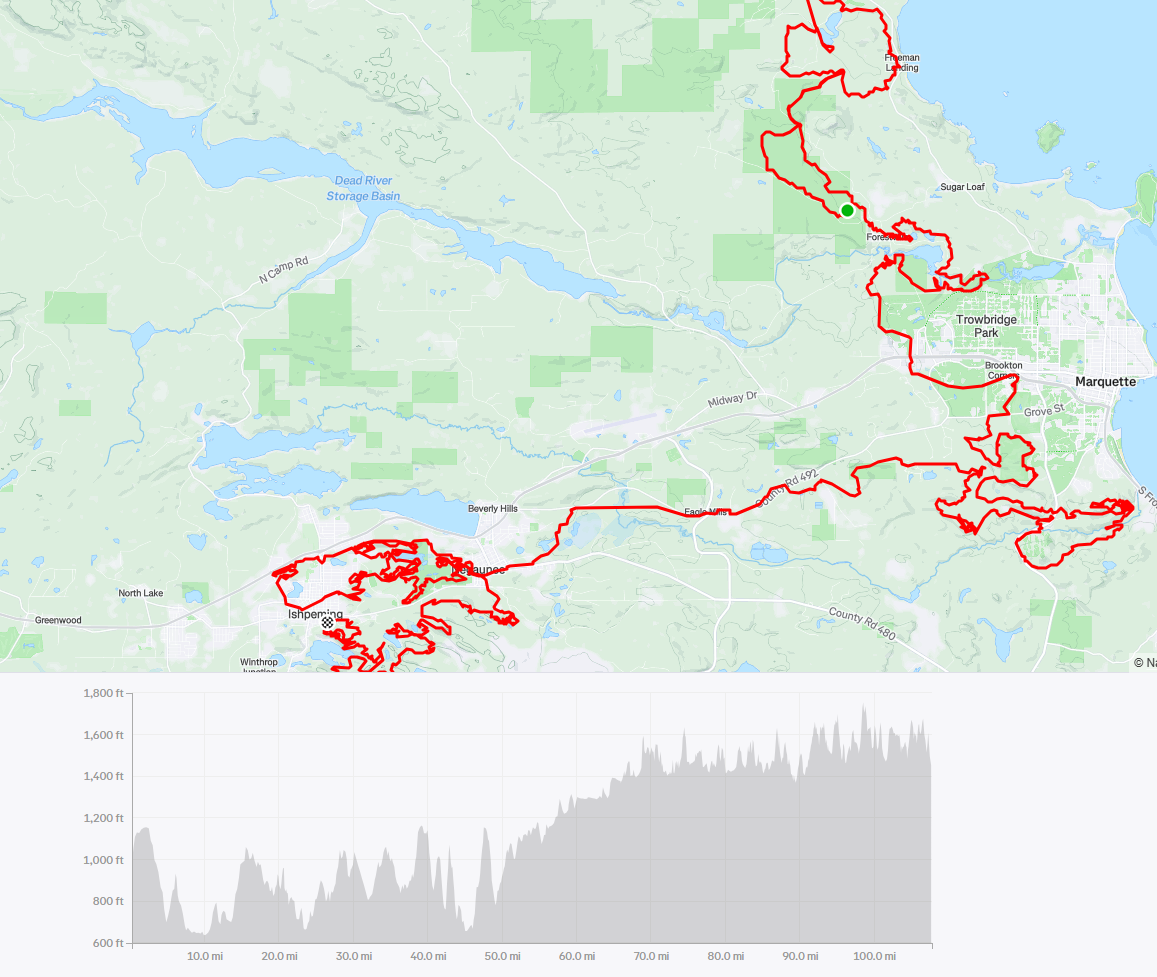
The course is harder than the elevation profile will show. The course is much more like an east coast trail: rocks, roots, and punchy climbs. No climb is terribly long, but they just keep coming. Be ready for a tough go at the end of race. This years Marji Gesick 100 race was closer to 110 miles with over 13,000 feet of elevation!
Marji Gesick 100 Mile course map and elevation profile.
Organized and well run – Did it feel like a well-oiled machine or were they flying by the seat of their pants?
Despite it’s unconventional nature, the Marji Gesick 100 is very well run. Remember, this is intentionally difficult to get information, but the race itself is run very well and smoothly. The after party is work sticking around for, cheering on the other race distances between the runners and bikers.
Competition – Is there a strong field?
This year had one of the stronger fields. There were a record number of runners and bikers earning buckles, finishing under 28 and 12 hours respectively. 2025 also saw the first 3 women earn buckles for mountain biking! The biking field is very strong, with a number of sponsored riders, but the run is more regionally competitive.
Logistics – Does it require a special handshake, registration a year in advance, hotels all booked? Give us the low down on the nuts and bolts of making the race happen.
The registration for the run is on BikeReg, which might seem odd. Also, there is no waitlist, and the race sells out in less than a minute for the bike races and within five minutes for the runs. Even though there is no waitlist, if you stay connected to the Facebook pages you likely will be able to find a bib transfer or win a random race entry for playing along with the random games.
Aid Stations – Standard fare or anything special to know about the aid stations in terms of what’s available or when?
There are NO AID STATIONS! On Saturday afternoon, the community does come out and create some aid stations, but those are often not there during the run. However, as the run has gained popularity, each year sees more community members coming out to set up aid for the runners. Make sure you come with a well planned out crew support plan.
Weather and typical race conditions
This is early fall in Michigan’s UP. Every year the weather has been different, from 80 degrees and sun, to 40 degrees and rain. This year, the temperature was in mid 60s to low 70s, with sun during the day for the run. Saturday afternoon and evening, rainstorms came in and soaked many runners and bikers still on course. Make sure you crew has clothes for you for all weather.
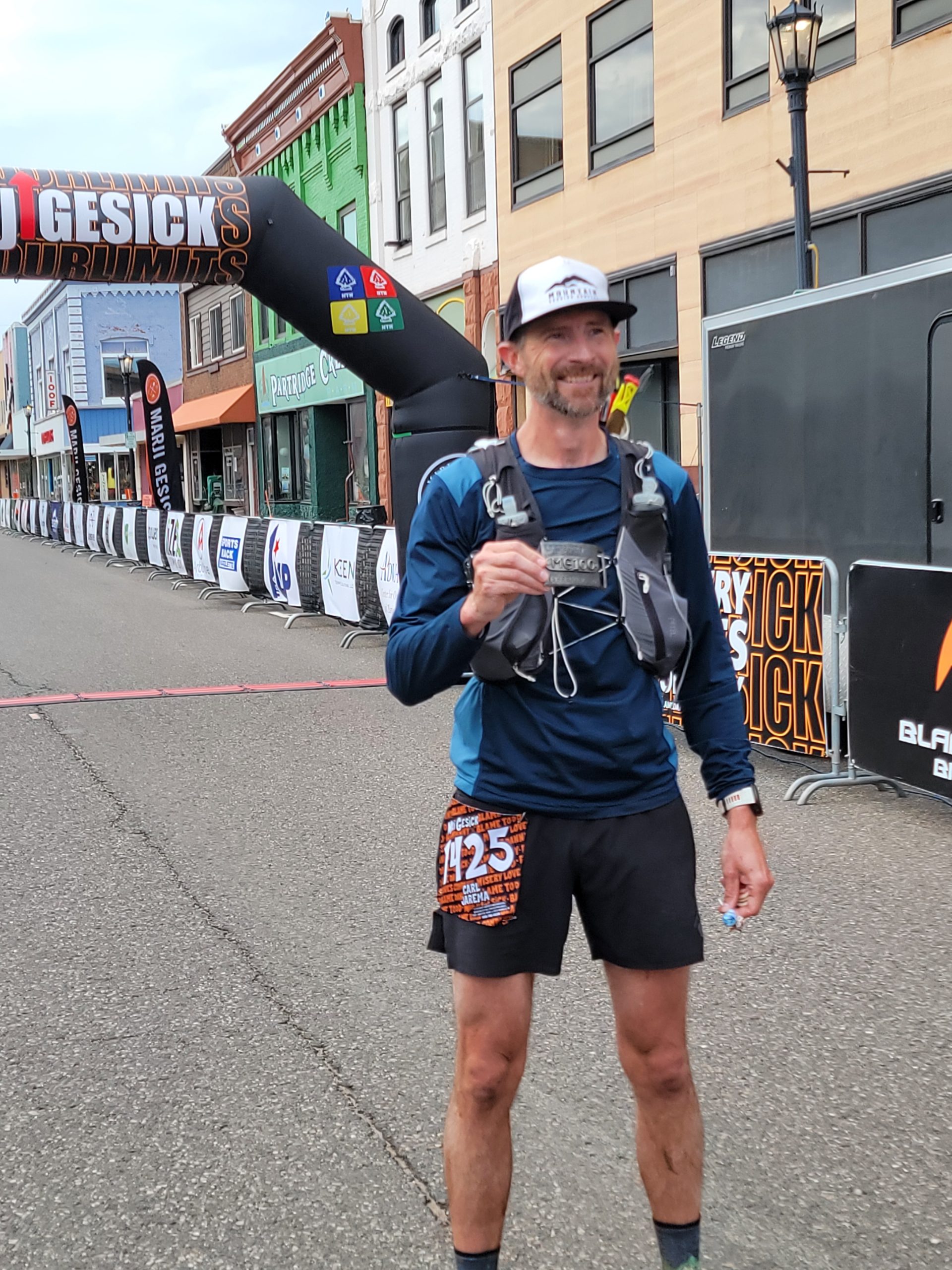
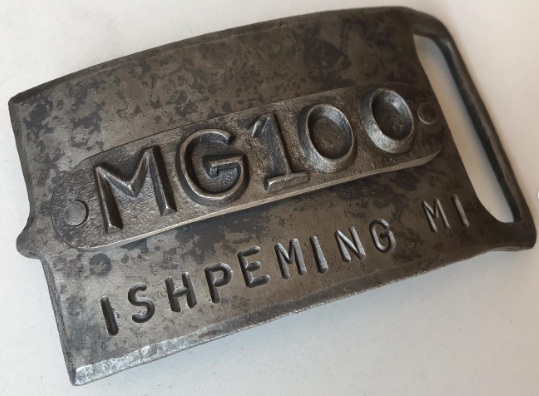
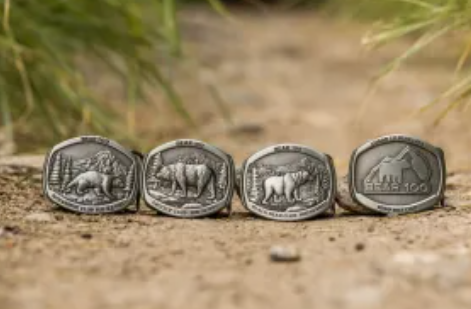
Marji Gesick 100 Mile belt buckle.
Gear – Did you need anything special or is there anything you’d recommend for the next runner?
I did not bring anything special. The Marji Gesick 100 is not a mountain race, but I did find my poles to be helpful. Also, a secure waist light is a game changer on the technical trails.
Spectators – Is this a friendly course for your friends?
Because it is crew supported, friends and family can see their runner very often during the race. There are very few limitations to where crew and spectators can access. Only rule – no pacers!
How’s the Swag?
This is a non profit organization, so all race swag is for purchase only. Personally, I like this idea. I have too many shirts, medals, and other race swag just collecting dust and it feels wasteful. I do not mind deferring any additional cost from registration to “free” swag vs purchasing on my own. Also, you do get to keep your tokens as an award. Note that this is also a buckle or bust race: if you don’t buckle (finish under 28 hours), there is no finisher medal.
The Overall Score – How many stars do you give this race and do you recommend that others run it?
9 out of 10 starts. This is a 365 day event, and the community is awesome. Once the community comes out to the run like they do for the bike, I will rate the Marji Gesick 100 10 out of 10 stars!
3 Bests – What aspects of the race did you like the most?
Autumn: This race is timed to coincide with peak fall colors!
State-to-state traverse: It’s pretty unique for a 100-mile course to take runners across state borders.
Porcupine sighting: During the night, a porcupine ran in front of me on the trail for a few seconds before moving off to the side. And no, I was not hallucinating!
Not so much – Aspects of the race that didn’t do it for you
I can’t think of anything. I suppose it would have been nice to have some more cloud cover midday, but that’s not something the RDs can control!
Weird factor – What’s the weirdest thing about this race?
Nothing weird. A unique factor is different buckles for various finish times: –Black Bear Buckle: 30-36 hours –Grizzly Bear Buckle: 24-30 hours –Wolverine Buckle: under 24 hours
Highlights of your race – What did you do well and enjoy about your race in particular?
Pre-race mindset and expectations
My only goal for the Bear 100 Endurance Run was to focus only on the process of running 100 miles. This would be an internal journey to rediscover my “why”, which had become blurred. After almost two years of non-stop competing and tune up performance-based events, I wanted to go back to my roots and simply endure. I needed the Bear 100 to purely be about working with the terrain to get from Utah to Idaho. I wasn’t completely certain what focusing only on “the process” would look like in action when I toed the line, but I felt confident the best methodology would reveal itself.
Once we began the first climb, it didn’t take long for me to realize that I was carrying a massive amount of cumulative physical fatigue from racing Hardrock 100 earlier this summer. I also identified that I did not have the mental capacity yet to go back into the pain cave and embrace suffering like I did during the second day of Hardrock 100. My approach became clear in that moment: I would run the Bear 100 at a chill and causal pace. My goal was to be intentional, but not urgent. It didn’t matter how long it took me or where I placed.
Day 1
I was surprised at how easy it was for me to commit to this plan. I never once felt compelled to reel runners in or calculate a finish time based on my pace. Shockingly, I probably only checked the clock three times during the entire 31-hour event! Instead, I focused on moving efficiently through the course and proactive self-care.
During early portions of the first day, I pushed a bit harder uphill, drawing from my Hardrock training. Then I chilled on downhills to preserve my quads. Carbohydrates, electrolytes, and fluids were consumed regularly, and I maintained steady energy. By afternoon, the sun exposure became powerful in short sections and my focus switched to active cooling. I backed off on my intensity through these portions, stopping at creeks to throw water on myself whenever possible.
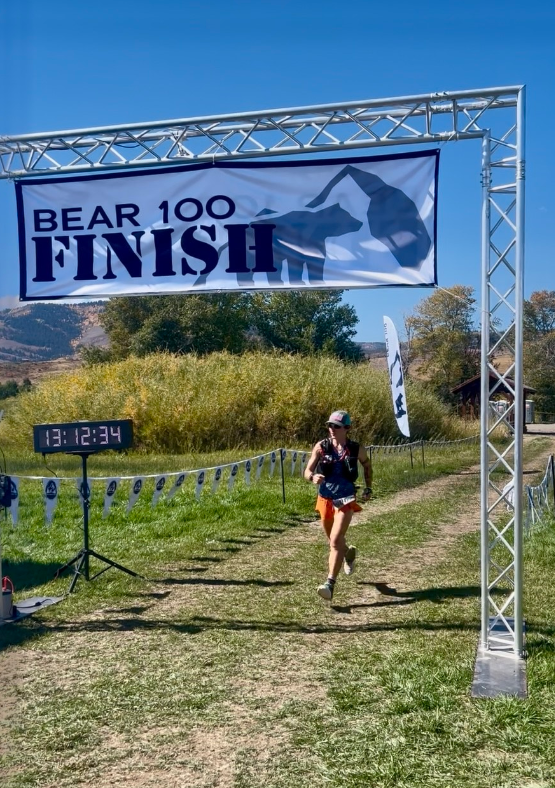
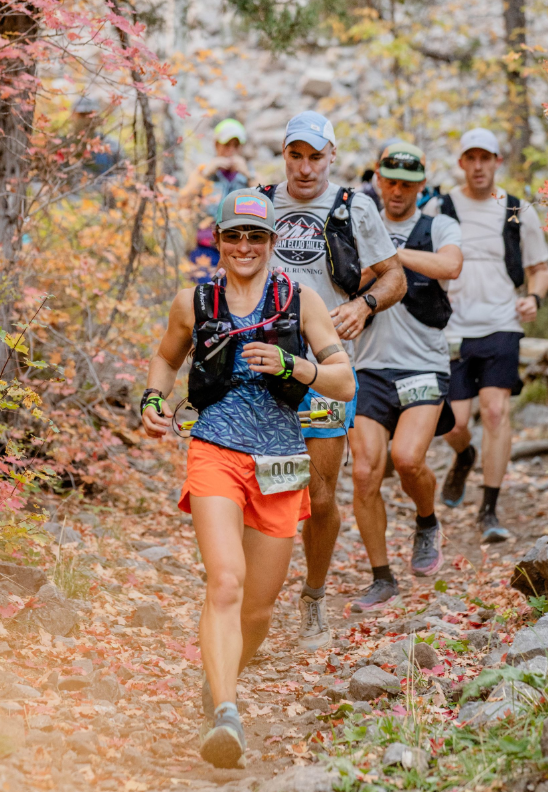
Dandelion running through fall foliage during the Bear 100. PC: Bethany Draper
Moving into the evening, I upped my consumption of solid hot foods at aid stations. I wasn’t going to be blasting through the climbs ahead and knew the reduced bouncing made GI distress unlikely. Hot foods (and drinks) would help me maintain a warm core, which would be essential to get through the night. The early hours of darkness were warm, so I stayed with light layers to reduce sweat; any moisture build up would cause me to freeze later. Later, when the temperature plummeted in the basins, every layer went on, plus hand warmers.
Running into the night
While I was never warm throughout the night, I wasn’t cold either. I stopped a bit longer at two aid stations to reset my internal temperature near the fire. I never got too close though, as I didn’t want to get overly warm and have the sudden cold suck the life out of me when I went back onto the trail! The miles clicked by as the long night wore on and I kept moving forward.
Warmth did not return upon sunrise. I continued eating hot food as I moved in and out of aid stations. I didn’t rush, but I also never lingered at aid stations throughout the event. After the final aid station at mile 91.8, I climbed the final hill. This is a notorious climb in the race because, although short, it’s mercilessly steep. I remember feeling indifferent about it, falling naturally into the mountaineer’s rest step. Unhurried, but efficient.
Day 2 to the finish
At the top of the ascent, it was finally warm enough to remove what remained of my nighttime layers. By no means did my body feel fresh! It was apparent that I had done something significant. Transitioning from hiking to running was bit awkward, but after a minute my body would adjust to the gait. Reading rocky terrain took a bit more mental effort, but I wasn’t tripping. My quads were sensitive, but not blown, so I could still maintain a gentle trot downhill. All things considered, physically and mentally, everything was still functioning well and my energy remained even. It stayed that way until I crossed the finish line in the afternoon on the shore of Bear Lake.
It sounds ridiculous to say that I ran a very casual and chill 100 miles, but that is honestly the best way I can describe this race. I truly stuck to my plan of running 100 miles for the sake of running 100 miles. I would not describe the experience as easy, but I cannot identify a moment of struggle either. The process felt familiar and intuitive to me. For the first time in a while I didn’t feel plagued by imposter syndrome. The Bear reminded me that I know how to run long distances through the mountains. Did I drain the tank? Absolutely not… but that wasn’t the point of completing The Bear 100. I was searching for something more internal.
Lessons for others – Share your pro-tips on the race to help the next runner
Cattle on the course! This is standard issue on many trails in the “Square States”, but folks less familiar may find loose livestock intimidating. There is no need to be afraid, and the bovines will move off the trail with gentle encouragement. Living in the ‘cowboy state’, I meet cattle all summer on training runs and have never had a negative encounter.
Lessons you learned that will help you next time around
My biggest lesson was very internal. Not every event needs to be a competition or even have a performance goal. So much joy can be found by simply running the course with no plan beyond being efficient and proactive with the process while appreciating the journey. Executing an event in this style helped me to reset my mental state so I can take on the challenge of competition again next season.
Most important course specific knowledge to know about the race
The Bear takes place during “Indian Summer.” This is the time of year in the Rockies where temperatures can swing wildly. Heat exhaustion can be a real danger during the day, while at night hypothermia can become a reality. Prepare with gear to avoid both dangers.
Many of the earlier aid stations are 8-10 miles apart, which is long for most 100 milers. It’s not problematic, but nutrition and hydration need to be planned accordingly.
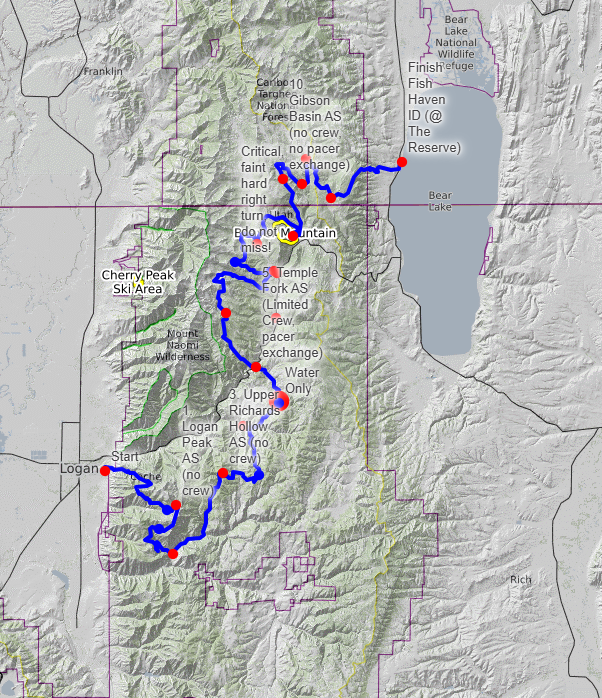
The Bear 100 course map.
Aesthetics – Is it a pretty course?
Yes! Think red maples, yellow aspens, golden grasses. The Bear 100 is timed when fall colors are peaking, and the sweeping mountain vistas are a ablaze with an autumn palette. It is a spectacular course!
Difficulty – Is it a tough course?
The Bear 100 is a proper Hardrock 100 qualifier. It has about 22,000 feet of vert in a mountainous environment, and covers a good amount of technical rocky terrain. However, many of the climbs are not aggressive (simply long), so a great deal of the course can be run if the athlete desires.
Organized and well run – Did it feel like a well-oiled machine or were they flying by the seat of their pants?
Cody and Bethany Draper are excellent RDs and have everything dialed. If anything went wrong during the event, I never found out about it.
Competition – Is there a strong field?
Yes! Elite athletes show up to this event regularly, and stellar times were put up this season on both the male and female podiums.
Logistics – Does it require a special handshake, registration a year in advance, hotels all booked? Give us the low down on the nuts and bolts of making the race happen.
This year (2025) was the final year The Bear 100 was available for first come first served registration. Moving forward it will be a lottery due to huge demand (it filled in about 8 minutes after opening in 2025!). Runners can also gain entry by acquiring a Bear Tag through winning a partner race. Further details can be found at https://bear100.com/lottery/.
Aid Stations – Standard fare or anything special to know about the aid stations in terms of what’s available or when?
The aid stations featured traditional fare: chips, soda, goldfish, broth, granola bars, quesadillas, trail mix, pickles, PB&J, etc. Gnarly and Gu sponsored the event, so their products were offered as the main engineered tech nutrition option. Later aid stations offered some special options like pizza, French toast sticks, hashbrowns, eggs, soup, tater tots, avocado sandwiches and perogies; a nice, wide range of options!
Weather and typical race conditions
Late September in the Rockies can be fickle. As was the case in 2025, this race usually has “Indian Summer” mild conditions: warm temperatures during the day, and colder nights. However, there have also been years with extremely hot daytime temperatures and bitterly frigid nights. Snow is also possible. In fact, the week after the 2024 edition it snowed a few inches on the course. Rain and electric storms are also possible. In general, anything and everything can happen this time of year in the mountains, so be prepared!
Gear – Did you need anything special or is there anything you’d recommend for the next runner?
I brought my standard mountain 100-mile race kit. My biggest recommendation is to be ready for a cold night. It drops into the 20s or 30s (degrees Fahrenheit) most years. During the day, I only carried a very light jacket. Leading into evening, I picked up an alpha fleece, hard-shell jacket, gloves, buff, long sleeved shirt, and hand warmers from a drop bag. I used every single item. The layers made the temperature tolerable while I was in motion, but I would not say I felt toasty warm.
The different buckles on offer for finishing the Bear 100 based on finish time.
Spectators – Is this a friendly course for your friends?
As I did not have crew, I cannot comment much on the logistics of getting to aid stations. However, Right Hand Fork and Temple Fork aid stations have limited space, so runners must pick between one of the two locations to meet their crew at (a pass is provided). The start is certainly easy for speculators to get to as it is in the city of Logan, Utah. The finish line in Fish Haven, Idaho, is on the beach of Bear Lake: a beautiful set up for folks to hang out all day and enjoy watching runners complete their journey.
How’s the Swag?
The Bear 100 had plenty of pleasantly affordable swag available to buy at the pre-race check in. Additionally, all athletes received a shirt and socks in a nice tote bag. Finishers were awarded with a unique buckle and wood plaque.
The Overall Score – How many stars do you give this race and do you recommend that others run it?
10/10. If you love a classic Rocky Mountain ultra set against the colorful tones of autumn, do this event!
Dandelion Dilluvio-Scott is a multisport outdoor athlete, ultra-runner and certified coach. She is passionate about collaborating with driven athletes who love to explore, train and play outside.
Often overlooked in favor of the World Marathon Majors, the Philadelphia (Philly) Marathon is one of the most popular in the United States, for good reason!
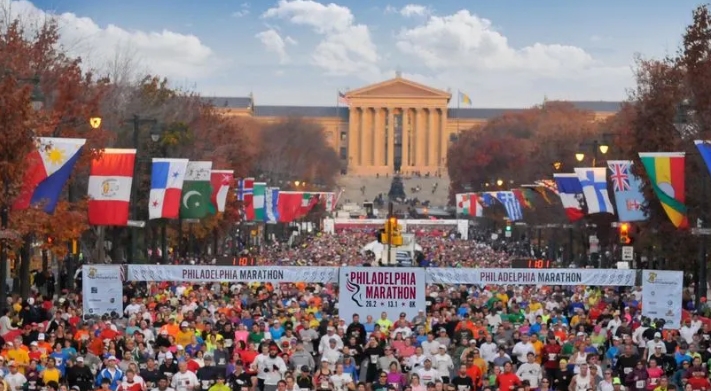
Philadelphia Marathon race start.
1. Pre-Race Zoom Call
With the Philadelphia Marathon coming up soon, we’re bringing veterans and first-timers together to ask questions, share insights and build some excitement heading into race weekend!
Join our drop-in Zoom call on Monday, Nov. 10, 2025 at 7:00 pm EST where first-time Philly runners can get answers from athletes and coaches who have run this race before.
If you think you can make it, or want to submit a question in advance, email your host TRR coach Elaina Raponi at [email protected].
Can’t make the call? We’ll record the call and share the link in the following week’s newsletter.
2. Philadelphia Marathon Race Intel
Date: Sunday, November 23, 2025
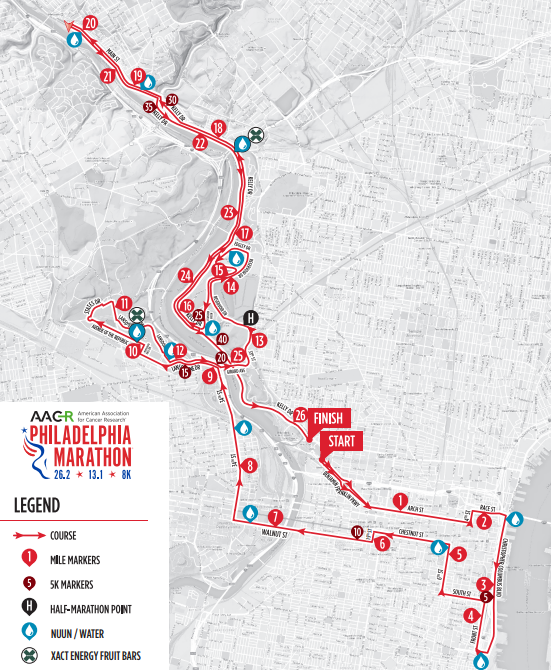
Philadelphia Marathon course map.
Location: Philadelphia, Pennsylvania
Start: 22nd Street & Benjamin Franklin Parkway, near the Philadelphia Museum of Art
Finish: Eakins Oval on Kelly Drive, near the Philadelphia Museum of Art
Course type: Mostly a loop; take a look at this page for more Philadelphia Marathon course info
Boston Qualifier: Yes
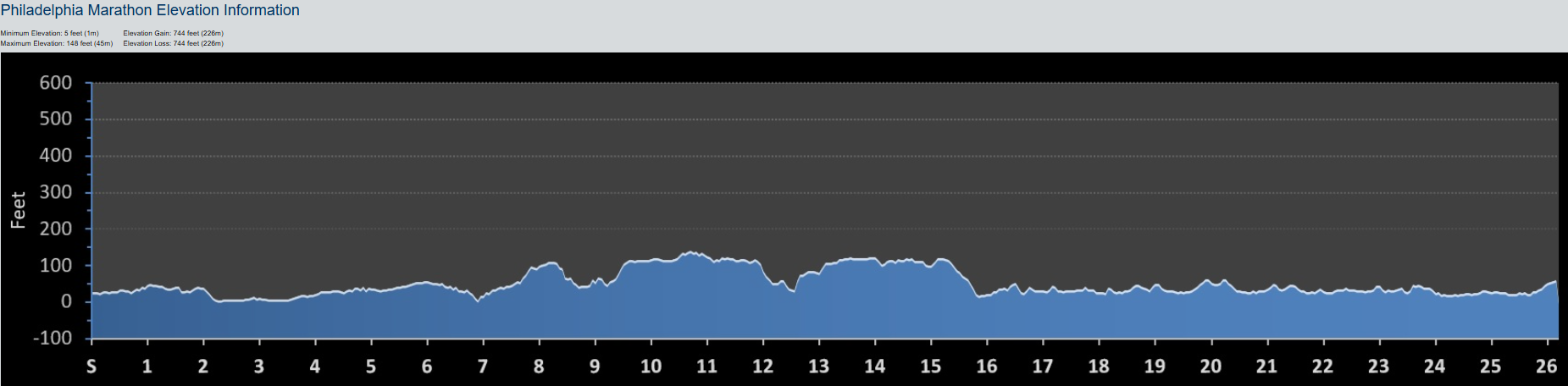
Elevation gain: 744 feet/ 226 meters
Elevation loss: 744 feet/ 226 meters
Temperature:
Average high: 51°F/ 10°C Average low: 34° F/ 1°C
Tips from Coaches
“Practice hills! Philly is not classified as hilly, but the rolling hills from miles 7–16 and the tougher climbs in Manayunk (miles 19–22) add up.” – Coach Jonathan Gooch
“Stick to the tangents. Kelly Drive is wide and winding, and poor tangents can add up to half a mile to your race, so minimize side-to-side movement to stay on the shortest course.” – Coach Jonathan Gooch
“The race ends with a 10 mile out-and-back on the river that feels longer than the first 16; save some mental energy to get back from the turn around.” – Coach Matt Weller
Philadelphia Marathon elevation map. PC: findmymarathon.com
3. Shakeout Run
Date: TBD
Time: TBD
Location: TBD
4. Philadelphia Marathon Coaching Info
At Team RunRun, we have 100s of wonderful, experienced coaches ready to help you crush your goals, regardless of your ability, budget, or lifestyle. Specifically, for Philadelphia Marathon race advice, here are some coaches to start with:
3 Bests – What aspects of the race did you like the most?
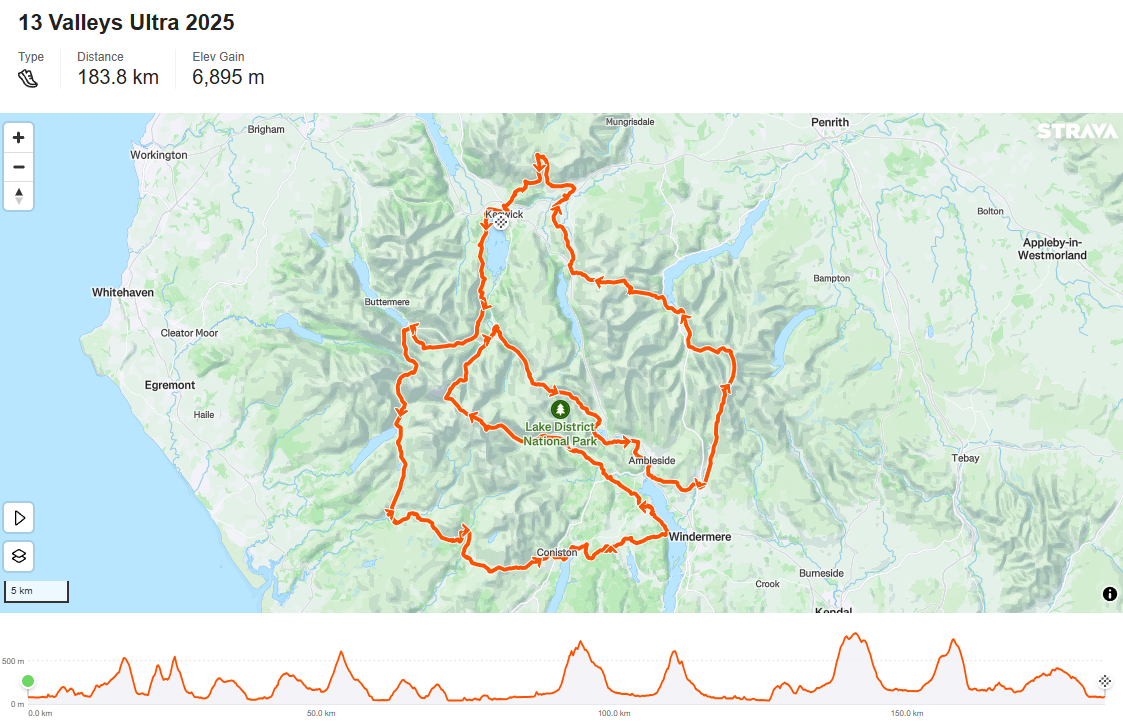
1. Course difficulty: It’s simply a super tough course, and the 60% DNF rate will attest to that! 184km/ 120 miles with 7000m/ 23,000 feet through all 13 Valleys of the Lake District National Park is no joke!
2. Scenery: The Lake District scenery is stunning, not much more to say.
3. Race feel: There’s a great mix of big race logistics and atmosphere, yet small enough not to feel too commercial.
Not so much – Aspects of the race that didn’t do it for you
1. Drop bags: You only have access to a drop back once, 75 miles in, which makes it difficult logistically.
2. Required gear and pack size: There is a large required kit list, adding up to quite a lot to carry. I needed a 20L pack for all my gear.
Weird factor – What’s the weirdest thing about this race?
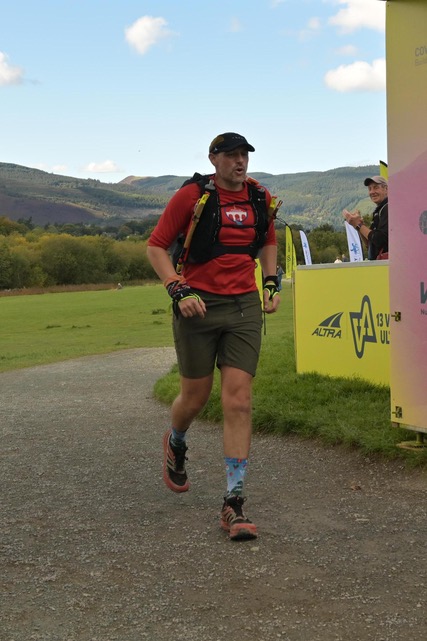
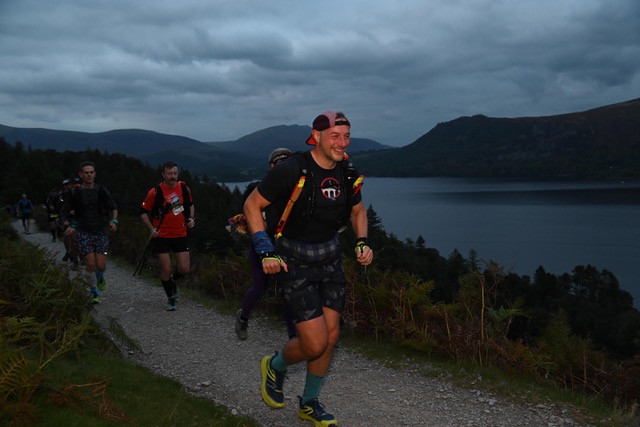
David Taylor running into the night during the 13 Valleys race.
It’s at the end of the Summer season in the Lake District, so the chances of bad weather are much higher. There’s also a lot more darkness – a solid 12 hours per night – so running with a head torch is a key skill, along with navigation for the first 130km, until you pick up the way-marked 5 Valleys route.
Highlights of your race – What did you do well and enjoy about your race in particular?
Just how hard it was! Even with a lot of training, it’s super challenging, but what this race does is force you to tap into your mindset and willpower as much as your muscles, especially when the rain and cold hammer you early on!
My highlight was the run back through Keswick at the end. As I ran, I basically receiving a standing ovation from everyone out shopping and sitting outside the pubs!
Lessons for others – Share your pro-tips on the race to help the next runner
1) Use the drop bag well: have a full change of clothes, including shoes and waterproofs. This might be just enough to get you through the race if/when the weather changes; lots of people dropped out at this aid station because of this.
2) Get comfortable running, navigating, and working in mountains in the dark while carrying a fairly large pack.
3) If possible, check out the route ahead of time. Some of the trails are un-runnable, so being prepared for what’s to come, and knowing how to move efficiently across the boulder fields, is really useful.
Lessons you learned that will help you next time around
1) Plenty of hill training: being able to move efficiently up the hills, and not haven them destroy your legs, will help you get to the end.
2) Being used to using poor weather kit and waterproofs: it’s quite likely that you will need them! Too many people DNF’d because of weather-related issues.
13 Valleys course map and elevation chart.
Most important course specific knowledge to know about the race
Nothing beats being able to recce the route ahead of race day. While the course profile is hard, it’s as much the terrain that makes this race difficult: bog, boulders, and large rocks make up a lot of the paths, which just makes progress super slow.
Aesthetics – Is it a pretty course?
One of the major draws of the lakes is the stunning scenery! And when it wasn’t dark, it was simply awe inspiring.
Difficulty – Is it a tough course?
With a completion rate of around 40%, this is very much so a difficult race! The high attrition rate has been consistent, even after increasing the numbers in the race. This year, 240 registered, 195 started, and only 78 finished. The course is as beautiful as it is brutal.
Organized and well run – Did it feel like a well-oiled machine or were they flying by the seat of their pants?
Despite this only being the third year of the 13 Valleys race, it is already top notch in terms of organization and feel. Everything form the event village to the aid stations is dialed.
David Taylor smiling through the incredibly challenging 13 Valleys ultra.
Competition – Is there a strong field?
It’s tough to say as there weren’t any ‘big’ names, but some of the best have ran this in the past and, as the event grows, I’m sure more will be attracted to it.
Logistics – Does it require a special handshake, registration a year in advance, hotels all booked? Give us the low down on the nuts and bolts of making the race happen.
No, at the moment it is first come first served, with entries for the following year open before the race starts at special, super early bird prices as well.
Aid Stations – Standard fare or anything special to know about the aid stations in terms of what’s available or when?
There are 12 aid stations along the course, that have a mix of basic and enhanced fare. The “menus” are available pre-race to allow people to plan and test out the on-course options ahead of time. The longest gap between aid stations was a half marathon, so they were well spaced out. The volunteers were all excellent.
David Taylor braving a rain storm mid-race.
Weather and typical race conditions
13 Valleys takes places at the end of summer in the Lake District, so expect variable weather and race conditions. During my race, it was around 10oC to start, going down to around 1-2oC at tops of the climbs. There was heavy rain and gusts on the first night – some of the paths were in effect turned into rivers. It rained for half the night, 5 or 6 hours, and then brightened up during the day. It was very cold during the second night, probably just above freezing, especially with wind chill (and fatigue).
Gear – Did you need anything special or is there anything you’d recommend for the next runner?
There is a fairly large kit list which you can see online here. I ended up using a 20L pack – the normal 12L one that I use was just too tight. A 20L pack has enough room for you to get things in and out without too much of a squeeze.
Spectators – Is this a friendly course for your friends?
There are certain parts where spectators are allowed. This is clear in the instructions, but crewing isn’t allowed for the 13 Valleys to try and prevent too much erosion on the paths
How’s the Swag?
Fairly basic. Runners get a slate medal that doubles as a coaster and a patch, but I would’ve liked an event t-shirt. There’s plenty of merch available to buy in the event village.
The Overall Score – How many stars do you give this race and do you recommend that others run it?
If you are up for a VERY tough challenge then a good, solid 9/10 from me. There are other versions of the race: 7 Valleys (110K), 5 Valleys (58K), and 2 Valleys (21K) that could be better options to get a feel for this event.
David Taylor is a coach with Team RunRun based in Glasgow, UK. He specializes in trails and ultras for both beginner and intermediate runners, whether you’re just bumping up in distance or looking to improve your next trail race.
TRR Coach Natalie Lutz running the 2023 Indy Marathon.
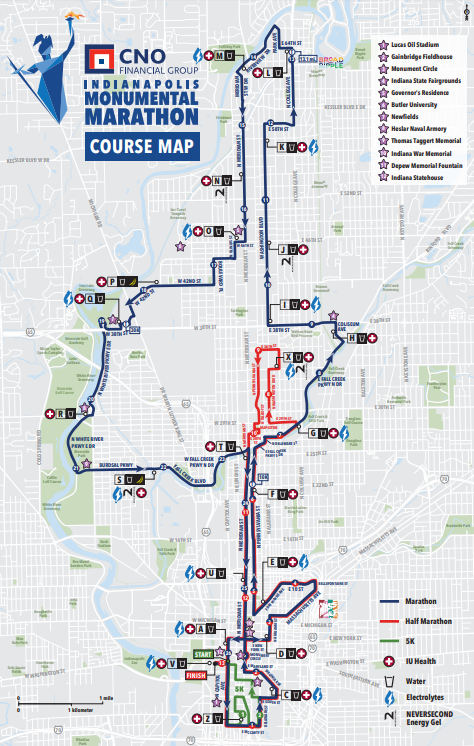
Often overlooked in favor of the World Marathon Majors, the Indianapolis (Indy) Monumental Marathon is a flat, fast race perfect for PR-seekers and first-timers.
1. Pre-Race Zoom Call
With the Indianapolis Monumental Marathon coming up soon, we’re bringing veterans and first-timers together to ask questions, share insights and build some excitement heading into race weekend!
Join our drop-in Zoom call on Monday, Oct. 27, 2025 at 7:00 pm EST where first-time Indy runners can get answers from athletes and coaches who have run this race before.
If you think you can make it, or want to submit a question in advance, email your host TRR coach Elaina Raponi at [email protected].
Can’t make the call? We’ll record the call and share the link in the following week’s newsletter.
2. Indianapolis Monumental Marathon Race Intel
Indianapolis Monumental Marathon course map.
Date: Saturday, November 8, 2025
Location: Indianapolis, Indiana
Start: Near the Indiana State House
Finish: Near the Indiana State House
Course type: Loop; take a look at this page for more course info
Boston Qualifier: Yes
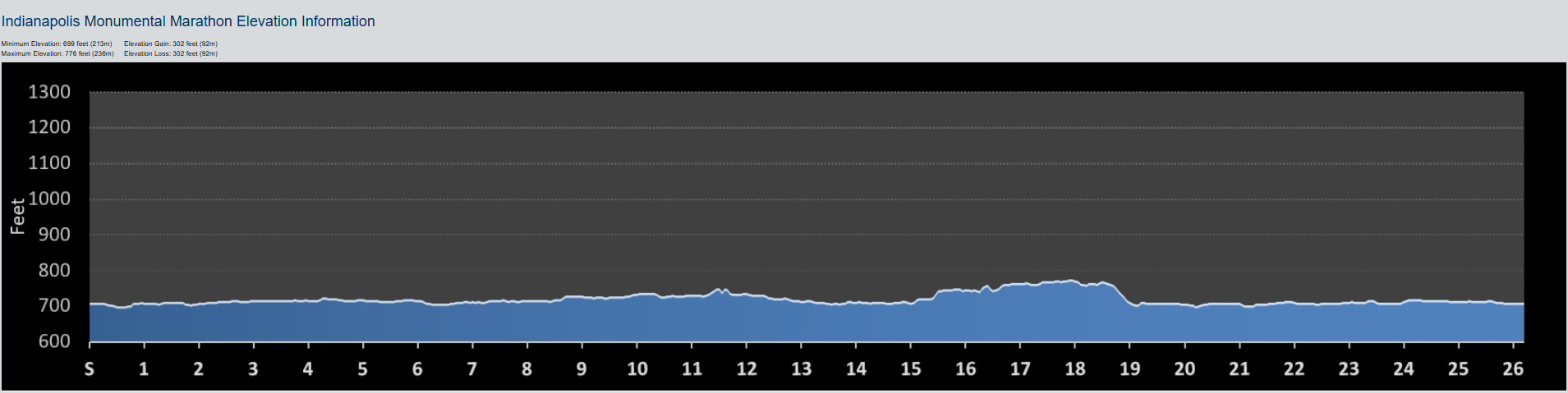
Elevation gain: 302 feet/ 92 meters
Elevation loss: 302 feet/ 92 meters
Temperature:
Average high: 58°F/ 14°C Average low: 39° F/ 3°C
Tips from Coaches
“The half marathon and marathon start at the same time. So, especially if you are in the top corrals, be aware that the race goes out very fast. Try not to get caught up and pulled along with the half marathoners in the beginning. Run your own race and pace to avoid hitting the wall too early!” – Natalie Lutz
“Be extra vigilant of your footing and the road bifurcations during the first 3 miles. In 2024, there were a few pot holes in the beginning of the race.” – Natalie Lutz
3. Race Reports
Want even more intel on the Indy Marathon? Read some of the race reports from Team RunRun coaches:
Indianapolis Monumental Marathon elevation map. PC: findmymarathon.com
4. Shakeout Run
Date: TBD
Time: TBD
Location: TBD
5. Indianapolis Monumental Marathon Coaching Info
At Team RunRun, we have 100s of wonderful, experienced coaches ready to help you crush your goals, regardless of your ability, budget, or lifestyle. Specifically, for Indianapolis Monumental Marathon race advice, here are some coaches to start with:
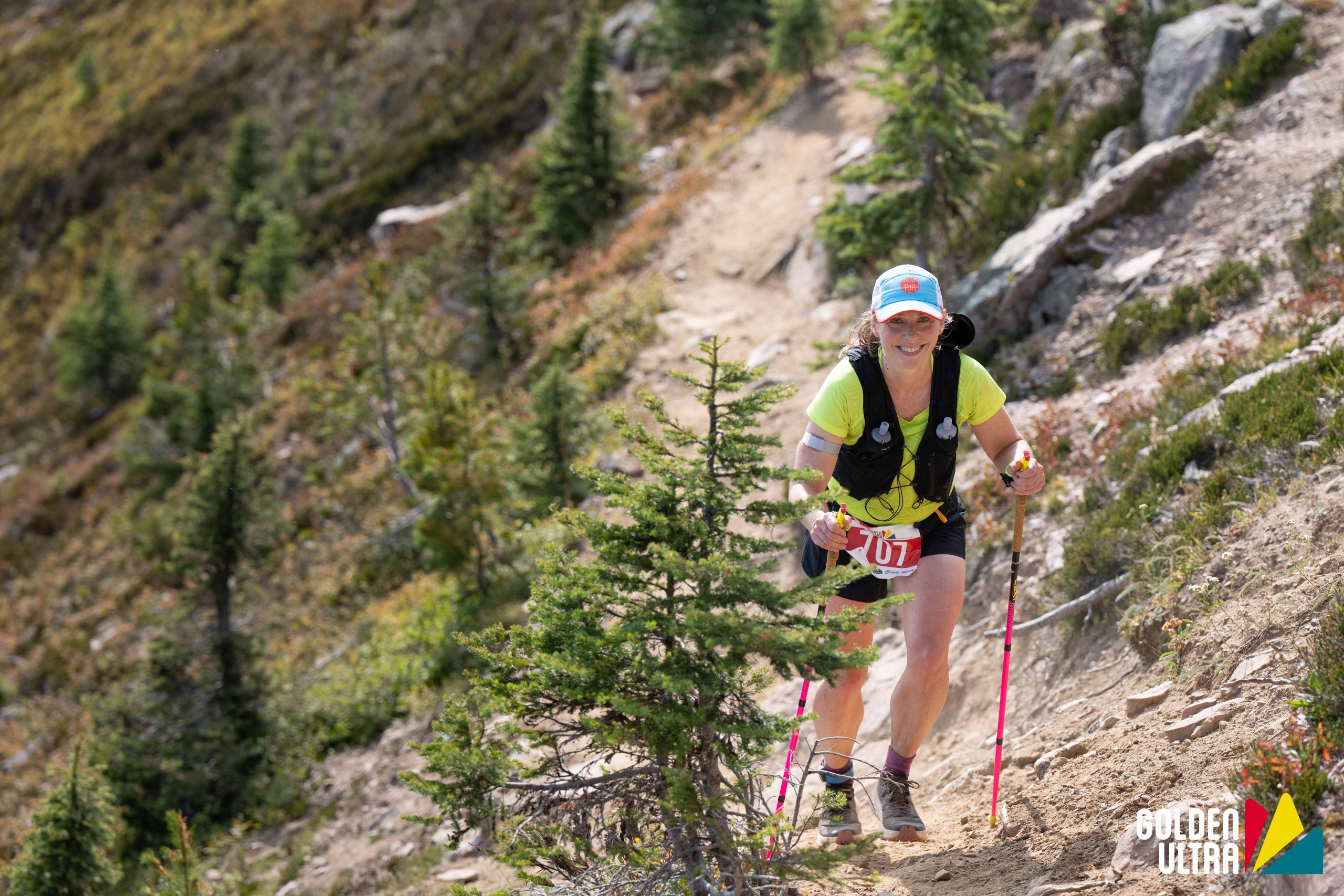
TRR Coach Jennifer Kozak running the Golden Ultra 60K race. PC: Jonathan McLeod
3 Bests – What aspects of the race did you like the most?
The Golden Ultra is a three-day stage race or a one-day ultra running race in Golden, BC, Canada. I chose the one-day, 60K ultra option.
1. Volunteers/Aid stations: This was by far the highlight of the race for me! The aid station volunteers went so above and beyond, it felt like I had crew! I would arrive, and immediately one person was helping me find my drop bag, while two other people were filling my bottles, and a fourth was holding my poles. They put ice in my hat, dumped water down my back, offered me tater tots, bacon, and quesadillas, all while telling me how good I looked, ha! As we approached the summit for the day, we were greeted with a team of dancing men dressed as fairies encouraging us up to the top. All of these amazing people meant I had a smile on my face for most of the day.
2. Flagging: The course was very well marked for the day. The few instances where I was worried that I had taken a wrong turn, I simply had to wait one minute, and the next flag would appear. Any turn was either manned or flagged so well that you knew exactly where to go. Despite some hesitancy that I missed something when I ultimately would zone out for a while, not a single turn was missed.
3. Course: The mountainous course is beautiful and challenging, and you get a little bit of everything: flowy single track through the forest, a technical, steep ridge climb to the top of the Kicking Horse Mountain Resort Gondola, and some quad busting descents.
Not so much – Aspects of the race that didn’t do it for you
1. Timing: From a participant perspective, it seemed like something went awry with the timing. When crossing the finish line, the zone4.ca updated your time automatically based on the chip you are wearing. Then, later in the day, all of the times had between 45 seconds to a couple minutes added to them. We were informed that this was an adjustment for gun time. This would seem fine, except for the fact that even with video evidence of crossing under the timing clock at a certain time, it was still off by nearly a minute. While it might not seem like a big deal, as it did not affect placements, for those of us who were aiming for a certain time and thrilled to squeak in just under, it was frustrating to not have that time be ‘official’. Why did we wear those bulky chips around our ankles then?!
2. Medal mishaps: They forgot to hand out medals for the 60K/30K racers. Oops! They have offered to mail them out though if we want it!
3. No watermelon? All I wanted was watermelon at the aid stations!
4. Drop bags: They only had drop bags available at one aid station (though runners visited it twice), which was at 7.5 miles (11 km) and 29 miles (47 km) into the race. I did utilize it, but it seemed too early/late in the race to need much. I would have preferred one 21 miles (34 km) into the race, at Aid Station 3, especially if I had no crew/supporters on course to help bring things.
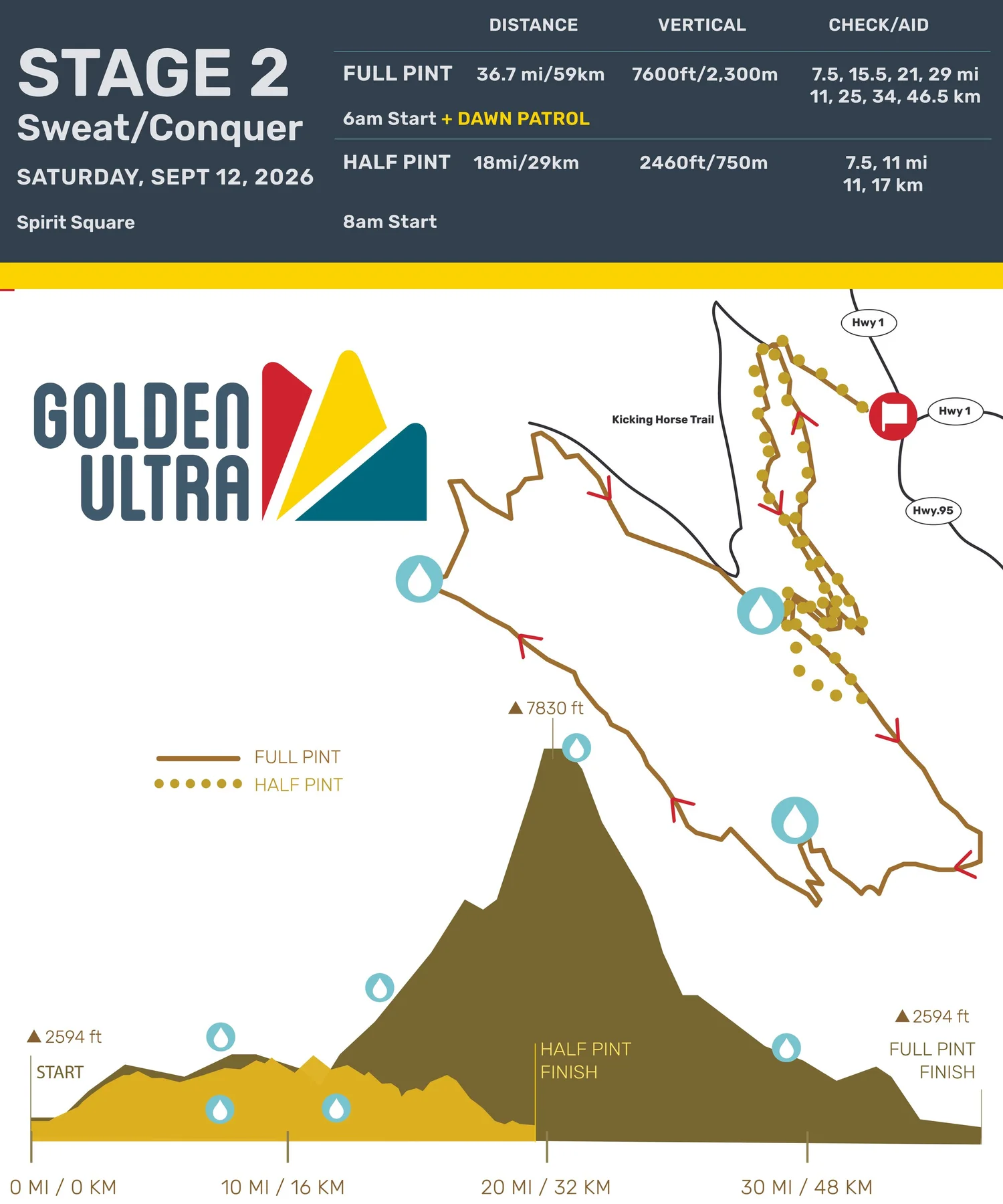
Golden Ultra 60K Stage 2 course profile.
Highlights of your race – What did you do well and enjoy about your race in particular?
Overall pacing: The Golden Ultra 60K was my first ultra, so I wasn’t too sure how exactly to pace for a longer race. In hindsight, I feel like I did go out a bit hot, but felt soooo so good up until the last 12k, when the temps hit 27oC (81oF) and the quads had had enough.
Fueling: I am very happy with how fueling went for the most part. I had practiced hard for this, and it paid off!
Lessons for others – Share your pro-tips on the race to help the next runner
Bring a headlamp! The 6 am start isn’t too early, but it is dark at this time of year until around 7 am. You’ll need a headlamp to feel confident on the forest trails. The headlamp can be dropped at the first aid station if you’ve got a drop bag there.
Lessons you learned that will help you next time around
If I could go back and do it again, I would have slowed down for the first 6 miles. That said, it is very challenging to be on single track, with a group of people behind you, and not push a little more than you intend.
Most important course specific knowledge to know about the race
I think the most challenging part of the Golden Ultra 60K course is the final 12 km (6-7 miles). There are lots of little punchy climbs and descents that feel so challenging after pushing on the main climb/descent earlier on in the race. If you can manage your effort, or build your durability to withstand the last 12 km, you’ll be golden (I had to)!
Aesthetics – Is it a pretty course?
Beautiful! Unfortunately, some wild fire smoke had entered the area for the weekend. That said, it wasn’t too bad as we ascended into the alpine, and it gave the mountains a very moody feel (see picture below). The smoke cleared later in the day, and we were treated to some epic views at the top of the gondola. Running through the lower trails was also really enjoyable.
Difficulty – Is it a tough course?
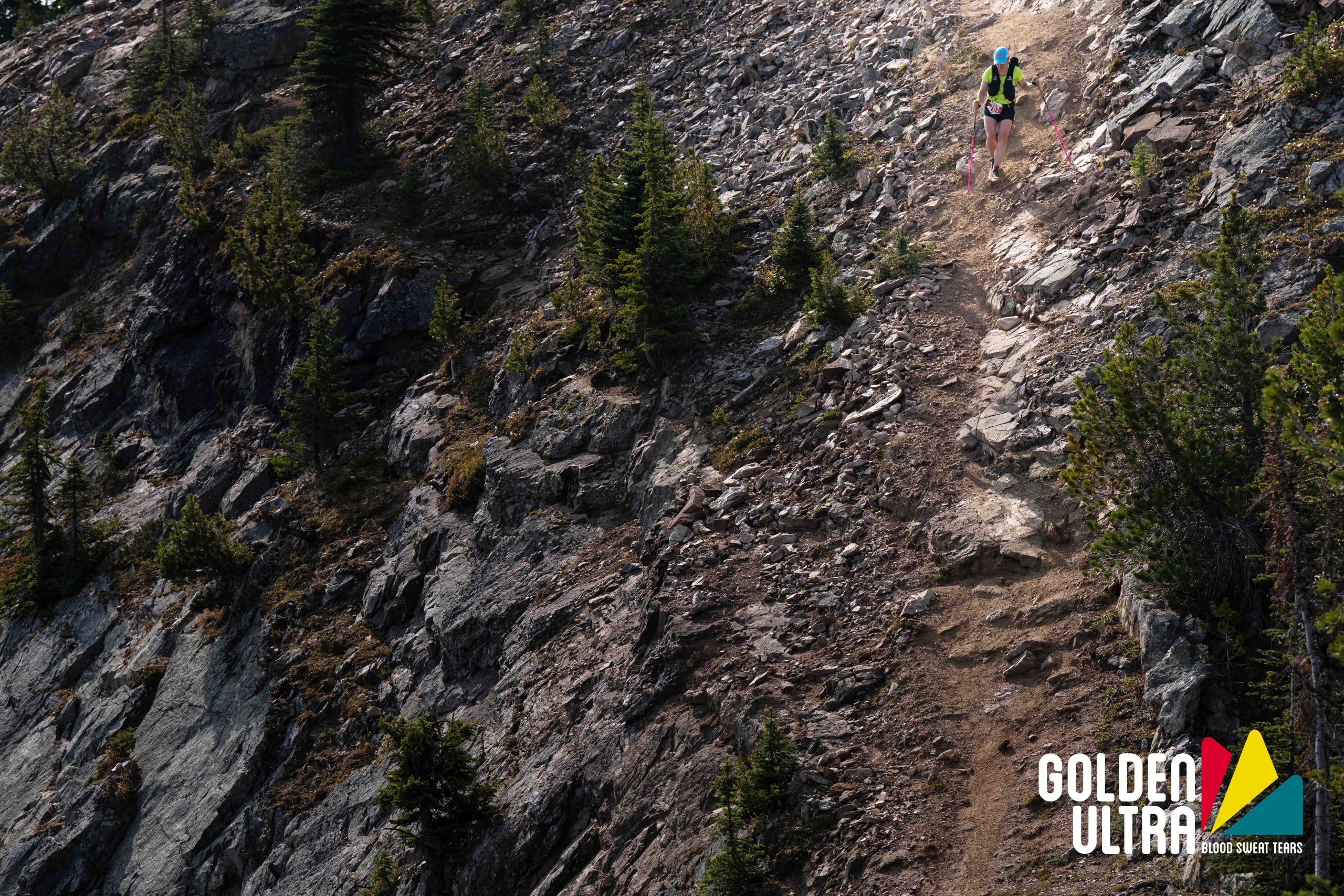
Yes! The Golden Ultra 60K is ~59 km with 2500 m (or around 8200 feet) of vertical gain. The course progresses from rolling trails into one giant climb, followed by one giant descent, and then more rolling trails to the finish. There are a few sections that also require careful footing, such as the approach the aid station at the top of the gondola, and when descending the first section of the ski resort.
Jennifer Kozak descending a steep climb during the Golden Ultra 60K. PC: Jonathan McLeod
Organized and well run – Did it feel like a well-oiled machine or were they flying by the seat of their pants?
Everything (aside from the timing) seemed like a well-oiled machine. Package pick up/drop bag drop off was super smooth. Helpfully, race information was shared quite a few times leading up to the race via email or on the Golden Ultra Facebook forum. As mentioned above, the aid stations were incredible.
Competition – Is there a strong field?
Yes, there are some very strong runners in this race! People travel from all over to attend, but you’ll find the majority from in and around BC/Alberta.
A moody, early morning shot of the major course climbs. PC: Jonathan McLeod
Logistics – Does it require a special handshake, registration a year in advance, hotels all booked? Give us the low down on the nuts and bolts of making the race happen.
They usually have tiered pricing for the Golden Ultra event, so, if you are the first to register, you’ll get a cheaper price than if you book a month after registration opens. Because of this, they had a lot of traffic the first day of registration and it caused a few glitches. They worked hard to remedy this, and fixed any issues people had with their registration. The race itself did not seem to sell out though until a month or two before the actual race start. Accommodation was trickier as the town is quite small. If you stay at the resort (where a lot of the vacation rentals are), be prepared to be trained getting to the start line!
Aid Stations – Standard fare or anything special to know about the aid stations in terms of what’s available or when?
As mentioned above, these were the best aid stations! This was more so for the people than the food itself (which I barely ate any of). They had Xact Bars as their sponsored nutrition and F2C as their electrolyte. I knew neither of these would work for me, so I didn’t partake. And despite their lack of watermelon, they had seemingly everything else: oranges, grapes, cookies, candy, chips, pretzels, tater tots, bacon, quesadillas, and more.
Weather and typical race conditions
Last year, the weather was colder and quite socked in (perfect running temps)! This year, it was hot with a bit of smoke in the air. With it being a higher alpine environment, the weather can change very quickly: expect every type of weather from blazing sun to snow.
Gear – Did you need anything special or is there anything you’d recommend for the next runner?
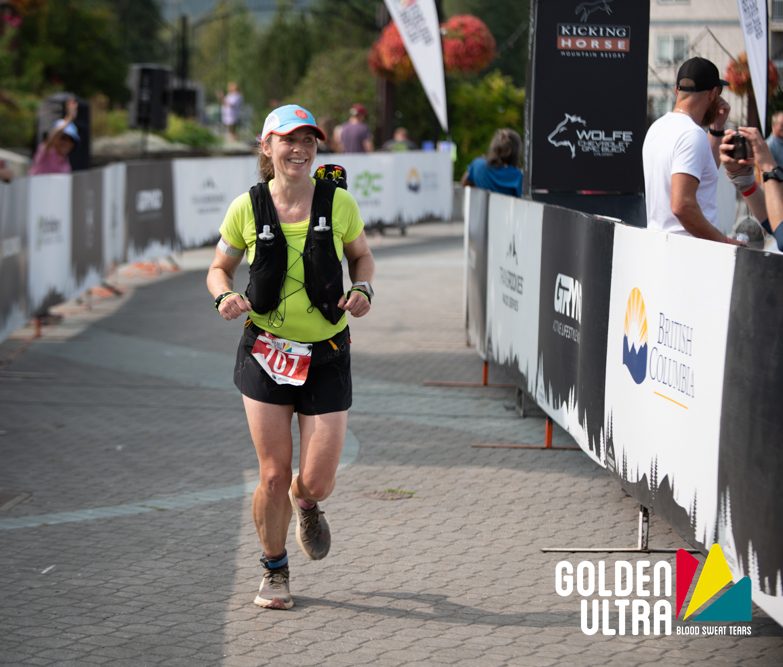
Jennifer Kozak finishing her first ultramarathon. PC: Jonathan McLeod
They have a required gear list for the Golden Ultra 60K: jacket, gloves, toque/beanie, and emergency blanket. Bear spray is optional. Personally, I liked having poles for the major climb and tucked them away for the rest of the race after that. While it’s not on the required list, a headlamp is 100% needed for the first hour or so.
Spectators – Is this a friendly course for your friends?
Yes, there are quite a few spots to view. The first spot would be at the first aid station (I believe you can walk/drive in). The most popular spot would be at the top of the gondola. Spectators would need to buy a sightseeing gondola pass for the day from the resort, and make it up there to see your runner (and the views)! I was able to see my family at the top of the gondola (where they provided aid), at the bottom of the long descent down the ski hill, and again at the finish line.
How’s the Swag?
I loved it! Runners received a T-shirt (non-technical) and a metal cup branded with Golden Ultra at check in. Before the race start, the race director was handing out collapsible cups for use at aid stations during the race (which is great because I had forgotten mine). At the finish, a hard-earned medal (pending…see above) and pint glass await.
The Overall Score – How many stars do you give this race and do you recommend that others run it?
4.5/5! I loved the Golden Ultra 60K and would 100% run it again! My little annoyances of the race pale in comparison to the overall event and weekend, which was nothing but enjoyable. I would highly recommend any runner coming to BC to try one of these events!
Jennifer Kozak is a coach with Team RunRun who knows how to balance training with family, on both the roads and the trails. Jenn works with athlete of all abilities, from those dipping their toes in trail races or tackling new goals on the roads, from the 5k up to the marathon.
I liked that the Grindstone 100 is mostly on single track trails. Also, the 6pm start means everyone has to run through at least one full night, and this adds another challenge to the race.
Not so much – Aspects of the race that didn’t do it for you
The downside to all the single track was that some parts were pretty overgrown, making it harder to stay on pace.
Highlights of your race – What did you do well and enjoy about your race in particular?
The final miles are very smooth and runnable – a nice “treat” after 90+ miles of technical single track! It felt very good to drop the pace and finish the race strong. (Certainly not something you feel at the end of most 100 milers!)
Lessons for others – Share your pro-tips on the race to help the next runner
Above all, take the climbs easy! They are gnarly and long, so you need to measure your energy and effort appropriately.
Most important course specific knowledge to know about the race
The lollipop section (miles 53-66) of the Grindstone 100 course is very gnarly and tough to get through. Oh, and it’s 105.1 miles, not 100.
Aesthetics – Is it a pretty course?
Yes! The course is mostly on single track trails, providing continuous variety that keeps you motivated. And the upside to the gnarly climbs are the beautiful views you’re treated to at the top.
Difficulty – Is it a tough course?
Yes, undoubtedly so!!! Those climbs are tough, and the technical terrain makes it even harder! Plus, you gain 21,000 feet over the 105-mile course! Grindstone 100 is one of the most difficult 100-mile races in the US.
Grindstone 100 elevation map with aid stations and time cutoffs labelled.
Organized and well run – Did it feel like a well-oiled machine or were they flying by the seat of their pants?
Yes! It’s a UTMB race, so it’s very well organized.
Competition – Is there a strong field?
Yes! Again, with it being a UTMB race, it will always attract a strong field of athletes trying to qualify for the UTMB finals in France.
Logistics – Does it require a special handshake, registration a year in advance, hotels all booked? Give us the low down on the nuts and bolts of making the race happen.
No major logistical hurdles, simply go to the website and sign up!
Lukas and his pacer at the finish line.
Note UTMB’s trail stewardship policy: all the Grindstone 100 racers are required to complete 8 hours of trail work prior to race day, which they submit via a Trail Work Form.
Aid Stations – Standard fare or anything special to know about the aid stations in terms of what’s available or when?
There are 15 aid stations throughout the Grindstone 100, 1 about every 6-8 miles, and you can have crew and/or drop bags at 5 of them. The offerings are standard, and Naak is the on-course nutrition and hydration brand. That said, the North River Gap aid station (which is also a crewable aid station) was the best, thanks to the variety of food options available!
Weather and typical race conditions
It was pretty hot and humid on race day this year! Therefore, I’d recommend asking your crew to have ice available at aid stations to stay cool.
Gear – Did you need anything special or is there anything you’d recommend for the next runner?
There is a mandatory gear list but, as far as UTMB races are concerned, it doesn’t list anything you shouldn’t already think to carry.
My #1 recommendation is poles! Bring poles, you won’t regret it!!
Spectators – Is this a friendly course for your friends?
There are a good number of crewed aid stations, meaning crew, friends, and spectators can see and support the runners more often than in a lot of 100-milers. However, trail ultramarathons are never the most spectator-friendly! There is a whole festival setup at the finish line area, perfect for spectators to await finishers.
How’s the Swag?
You get a nice 100-mile finishers belt buckle, race t-shirt, and picture from the park!
The Overall Score – How many stars do you give this race and do you recommend that others run it?
5/5! I would recommend the Grindstone 100 to anyone looking to gain some milestones for UTMB who likes technical and gnarly races.
Lukas Burrer is a coach with Team RunRun originally from Germany, but now based in Atlanta, Georgia. He specializes in trail and ultrarunning, and loves helping athletes take on big challenges!
I just love the racing environment of UTMB. They organize it so well, the energy is amazing, and the setting is absolutely epic. I have run this race three times, and I want to keep coming back!!
I also love that after having been in the trail running community for so many years, I can go to this race and see so many people I know from all around the world!
Not so much – Aspects of the race that didn’t do it for you
The start. I’m just outside of the “elite” category so I don’t get a spot near the front of the race. Two years ago when I raced, I got there more than an hour before the start and sat out in the sun waiting. This year, I got there 30 minutes before and was in the middle of the crowd. It took me 2 minutes to push/get pushed to the start line, and then we walked out of town. I wasn’t feeling super competitive this year, but walking slowly amid tons of runners with selfie-sticks, rather than running this nice flat part of the course was frustrating. I think they need to have corrals based on bib numbers (which are based on UTMB Index ranking).
Weird factor – What’s the weirdest thing about this race?
I’m still a bit in awe at all the deli meat and cheese available at the aid stations. They don’t have gels, and the overall food selection is noticeably different from US ultras. I basically lived on Naak waffles and Naak sports drink for 30 hours!
Highlights of your race – What did you do well and enjoy about your race in particular?
Matt at the finish line of UTMB, greeted by TRR athlete and star crew, Jose Medina!
I got out of trouble. I made a really big error on the climb to Col du Bonhomme: I didn’t layer up for the weather. It was raining, and I had on my rain jacket and rain mitts, but I didn’t put on more layers. By the time it was windy and snowing up high (at 2am!), and I knew I needed to get warm fast, my hands were too cold to function. I couldn’t get my vest off, let alone get it open, in order to get more warm layers out. Thankfully, they had a warming hut open at the top. It looked brutal in there with people shivering, crying, and just in total disarray – I was one of them, shaking violently for 30+ minutes.
I am proud that I eventually regrouped, got warm enough, got my gear on properly, and carried on to finish the race. But there was a brief period before that warming hut (which I didn’t know would be open to us!) where I was scared for my life, more than any other running event I’ve ever been in. But I got out of trouble and UTMB!
Lessons for others – Share your pro-tips on the race to help the next runner
Get good at downhill running. There is so much downhill! Get good at running fast on steep long descents. That is a huge advantage.
Be fit. The stronger a runner you are, the better you’ll do on the climbs and the various runnable sections.
Know your gear. There’s a big required gear list, and while you might think it’s overkill, I needed all (well, almost all!) of it this year. Practice with it, know where it is in your pack, and be quick to use it! In training, simply practicing running with the weight of it all will be a big benefit, even if you never need to get into it!
Relax and smile. It’s a really long race, and it’s really easy to get caught up early in the competition. Slap hands in St. Gervais and Les Contamines, soak in that crazy tunnel of people at the start of the big Col du Bonhomme climb. And then stay focused: it’s a long, long race!
Lessons you learned that will help you next time around
In future, I’ll be way quicker to get my cold gear on at any race where it might be getting cold!
It’s way more fun to be fit! I didn’t train well for UTMB this year. I was able to get by with good power hiking on the long climbs, and good descending skills. But it’s just a better race when you’re well prepared.
UTMB 108.1-mile race course map.
Most important course specific knowledge to know about the race
The last big section from Col des Montets to La Flégère is tough! You’re met with steep, big rocks, an up-and-down and then another long up, before you finally get to the last big up, which is a ski slope. It’s plain tough at this point in the race, so be ready for it!
Also, to me, that climb out of Trient is just a beast! So steep for so long!
Lastly, the rocky climb once you’re out of Champex-Lac is a pain. There are so many big rocks that it’s tough to find a rhythm (plus, I had my own special suffering going on through that section which didn’t help!).
Aesthetics – Is it a pretty course?
UTMB is one of the prettiest courses I know of. I just LOVE racing in Chamonix!
Difficulty – Is it a tough course?
Yes! With a 46.5-hour cutoff to cover 108 miles and over 32,000 feet of vert, it’s an awesomely difficult race!
UTMB elevation chart with the main climbs labelled.
Organized and well run – Did it feel like a well-oiled machine or were they flying by the seat of their pants?
YES! The best in the world. While the buses and the start still need work, UTMB is the best run race out there.
Competition – Is there a strong field?
YES! Again, the best!
Logistics – Does it require a special handshake, registration a year in advance, hotels all booked? Give us the low down on the nuts and bolts of making the race happen.
Matt meeting his crew at an aid station to refuel during UTMB.
Know the game with the UTMB stones and the qualifying system. It’s not that tough to get into (as of 2025) – certainly not as hard as some people make it out to be! I got in with 4 stones via the lottery in my first attempt.
Lodging is expensive in Chamonix now. Be ready to pay up. But it’s such a great town and we love visiting each year!
Aid Stations – Standard fare or anything special to know about the aid stations in terms of what’s available or when?
If you like Euro-style aid stations, you’re good to go. Meat, cheese, bread… But for me (vegan), there isn’t much. I had gels ready at the 5 crew stops, along with Skratch carbohydrate and electrolyte drink. Otherwise, I relied on Naak waffles (cut into 1/4s – I grabbed 4-6 of them each at aid station) and Naak sports drink. I picked up some veggie broth a couple times too, but it was so hot that it took forever to drink, so I didn’t stick with that.
The hype and energy of the aid stations is awesome though!
Be warned: Les Contamines’ aid station is an absolute shit show! It’s so busy and so crazy with people because the race hasn’t spread out yet. It’s hard to find your crew, and they won’t even be allowed into the tent area until they know you’re close. Be ready for chaos there!
Weather and typical race conditions
It can be hot, it can snow, it can be everything in between. They have a hot weather required kit and a cold weather one – I’ve had both activated during my 3 times running this race. Be ready for anything!
Gear – Did you need anything special or is there anything you’d recommend for the next runner?
There is a HUGE required gear list for UTMB. I know it’s expensive, but it’s worth spending time and money to get high quality stuff. Once you have the good gear, make sure you know how to use it! Practice running with the gear in training too. Take the required gear list seriously: they do check it at couple aid stations throughout the race. This year, I had to show my 3 upper layers (cold weather year) and my emergency blanket.
Spectators – Is this a friendly course for your friends?
Yes and no. There are tons of spectators on course and it’s awesome! But it’s tough to get around as a spectator. All crew and spectators had to buy bus passes by early July this year (I didn’t do that!). Fortunately, I was able to secure passes for my crew in the final days before the race, but only for them, no one else. It’s a bit pricey for bus passes too, but my crew had a blast with it all. Summary: there are tons of people on course, but it’s also tough to get around, so plan ahead.
Runners on course during UTMB. PC: Pascal Tournaire/UTMB
How’s the Swag?
It’s lean: finisher vest only, no medals. People come for the race, not the swag. The t-shirt was sized large this year. The men’s small was too big for me. 🙁
The Overall Score – How many stars do you give this race and do you recommend that others run it?
10 out of 10! I love UTMB, and I will want to do it again (even though I said – multiple times – I was done with ultras mid-race!)!!
Matt Urbanski is the founder of Team RunRun, as well as a coach. He enjoys coaching self-motivated runners to optimize training time, push limits, transition to ultras, podium, BQ, and other big challenges!
How well does your sportswear fit? Is it optimized for running economy, efficiency, and performance like the shoes you carefully researched and tested? No? I didn’t think so.
A group of female runners at the track.
When we think about performance in sport, our minds usually go straight to training, nutrition, or the latest piece of high-tech equipment. But one piece of the puzzle rarely gets the same attention — and it should. That piece is what women and girls wear to compete.
For decades, women’s sportswear was an afterthought: a smaller, pinker version of men’s gear. Yet the fit, feel, and design of apparel play a direct role in how athletes perform. Well-designed clothing supports the body’s mechanics, reduces distractions, and boosts confidence. In contrast, poorly designed gear can do the opposite.
Even the biggest brands are waking up to this. In June 2025, the world watched Breaking4, Nike’s high-profile attempt to help Faith Kipyegon become the first woman to break the four-minute mile. Nike poured resources into every detail: pacing formations, weather conditions, super spikes — even Kipyegon’s clothing. The message was clear: marginal gains matter, and apparel is part of the equation.
This isn’t just about elites, though. Girls lining up at their first 5K, college athletes grinding through practice, and women at every level deserve sportswear designed for their bodies and their needs. It’s time to rethink women’s sportswear.
How the Right Fit Impacts the Body
It’s easy to dismiss fit as “just comfort.” But science shows it’s much more. A 2024 study led by Kipp and et al., titled Sports Bra Restriction on Respiratory Mechanics during Exercise, found that the tightness of a sports bra’s underband can actually compromise breathing.
Two different sports bra types and their features.
Nine highly trained female runners performed hard running sessions wearing loose, self-selected, and tight-fitting sports bras. The tighter bras increased the work of breathing, changed breathing patterns (more rapid breaths, smaller tidal volumes), and even raised oxygen cost during steady-state running.
Loosening the underband reduced the energy cost of breathing and allowed deeper, more efficient breaths — essentially improving running economy.
A 2025 follow-up study echoed these findings: women experienced less respiratory muscle fatigue, better ventilation coordination, and lower perceived breathlessness in looser underbands during high-intensity running.
Bottom line: a “supportive” sports bra that feels restrictive may actually be draining your performance.
How the Right Fit Impacts the Mind
Clothing affects not only how our bodies move, but how our minds focus. Research published in Psychonomic Bulletin & Review shows that tight and revealing athletic clothing can shift women’s attention toward their bodies and away from the task at hand.
In that study, women wearing tight and revealing clothes moved more slowly and less consistently on a motor performance task than those in loose, concealing clothes. The researchers suggest that “body monitoring” — being hyper-aware of how you look — diverts mental energy from performance.
This dynamic is especially relevant in sport, where women and girls are often aware of being watched and judged on appearance. Gear that feels comfortable and unobtrusive lets athletes focus on the movement, the skill, the game — not on self-consciousness.
How Paradis Sport are rethinking women’s sportwear, starting with performance underwear.
Why the First Layer Counts
Sports bras usually get the spotlight, but the first layer matters too. Poorly designed underwear can chafe, shift, and distract — especially during high-impact movement.
A brand that’s doing it right here, rethinking women’s sportswear from the ground up, is Paradis Sport. Founded by and for women, Paradis Sport spent three years and 17 prototypes testing with 37 elite and professional athletes to create performance underwear that stays put, resists chafing, and feels invisible. No itchy tags. No harsh chemicals. And absolutely no distractions.
Elite runners and TRR coaches, Ruby Wyles and Hillary Allen, are singing Paradis’ praises. After years of trying brands that fell short — most designed by men or as an afterthought in a big product line — I (Ruby) finally found Paradis Sport. Their underwear performed so well during my runs and races that I barely noticed it was there. That’s the point.
This post is not sponsored by Paradis Sport, but TRR members can save 20% with the code listed on the TRR Community Discounts page.
Time to Raise the Standard
The science is clear: the right apparel can improve breathing efficiency, movement economy, focus, and confidence. However, the wrong apparel can quietly sabotage all of it.
From sports bras that support respiration to underwear that actually stays in place, brands have a chance — and a responsibility — to design gear for women’s bodies, not just shrink down men’s.
Nike’s Breaking4 project showed the world that every detail counts. For millions of women and girls, the right sportwear might not be a marginal gain at all — it might be transformative.
Nike design team custom fitting apparel for Faith Kipyegon’s Breaking 4. PC: Nike
Your Move
As athletes, coaches, parents, and consumers, we can push for change. Support brands that are rethinking women’s sportswear and prioritizing their needs. Share feedback. Celebrate companies leading the way.
Because when apparel fits right, women can focus on what matters: breaking barriers, reaching goals, and enjoying the sports they love.
Ruby Wyles is a coach with Team RunRun based in Ann Arbor, Michigan. She is most fulfilled by helping athletes overcome limiting beliefs with joy. Ruby is also a proud science nerd, and advocate for athletes’ mental and physical health.
Did you know that the 2024 New York City Marathon became the world’s largest marathon ever with 55,646 total finishers? Now you do!
Team RunRun athlete, Laura, after crushing the New York City Marathon!
And with all the intel below, you’re on your way to your own historic NYC finish!
1. Pre-Race Zoom Call
With the New York City (NYC) Marathon coming up soon, we’re bringing veterans and first-timers together to ask questions, share insights and build some excitement heading into race weekend!
We had a great drop-in Zoom call full of NYC Marathon racing insights, information, and tips.
Start: Fort Wadsworth on Staten Island, near the Verrazzano-Narrows Bridge
Finish: Central Park, between West 67th Street and West 68th Street
Course type: Point-to-point; take a look at this page for more course info
Boston Qualifier: Yes
Elevation gain: 810 feet/ 246 meters
Elevation loss: 824 feet/ 251 meters
Temperature:
Average high: 57°F/ 13°C Average low: 36° F/ 2°C
Tips from Coaches
“While crossing the Madison Avenue Bridge (Last Damn Bridge) around mile 21, move to your right for tons of encouragement and goodies to help propel you to the finish!” – Coach Dana Caruso
”The Verrazano is a suspension bridge, so there’s subtle bounce that reduces perceived exertion. Combined with the adrenaline of starting the New York City Marathon, it doesn’t feel as tough — be sure to hold back and not get too excited so early in!” – Coach Martina Nadeau
”The bridges lie and make your GPS go wild. Therefore, pace by effort, not GPS. Splits will be wrong in multiple spots, so do not panic.” – Coach Martina Nadeau
”The first mile is crowded and a lot of folks stop mid-course to take photos – try not to get too frustrated! Instead, be cautious of the runners around you to avoid twisting an ankle or short stopping.” – Coach Martina Nadeau
New York City Marathon elevation map.
3. Race Reports
Want even more intel on the New York City Marathon? Read some of the race reports from Team RunRun coaches:
Team RunRun athlete, Phil, setting a 14-minute PR at the 2023 New York City Marathon.
At Team RunRun, we have 100s of wonderful, experienced coaches ready to help you crush your goals, regardless of your ability, budget, or lifestyle. Specifically, for New York City Marathon race advice, here are some coaches to start with:
This year, Team RunRunner Jason completed his epic goal of running the Hood to Coast Relay in 34 hours! As a part of a small team, Jason ran a total of 9 legs and 50 miles over the two day event. The 2025 Hood to Coast will be remembered for being the hottest edition to date being the hottest one to date, with temperatures soaring over 100 degrees Fahrenheit.
Following the event, he wrote up this wonderful race recap, and shared this: “There’s no way I would have been able to do this, and recover as quickly as I did, without the gradual build up in mileage that TRR Coach Brian Comer has had me doing in preparation for a sub 3-hour marathon. At over 50 years old, I have more endurance now than ever before in my life!”
On the Springwater Trail
I heard a pop, almost like a whistle, before my right foot felt like it was getting pricked every time I ran a step. For sure, I thought I had stepped on a nail. I kept on running anyway, which didn’t work; the nail kept pricking at my foot. I knew I’d have to stop. Sort this out. The problem was that I was running the Hood to Coast Relay and the temperature in Happy Valley, Oregon, was over 100 degrees. I was on the Springwater Corridor, a remote section of the blackest asphalt, and it felt like running on the sun. The last thing I wanted to do was stop and prolong this experience–with no shade. No access for cars. My team couldn’t help. And I was all out of water.
Jason finishing one of his Hood to Coast Relay legs.
Oh, and I had about 44 miles to go in the next few days–because I was running the “The Mother of All Relays” in a team of only three people. I had just run Leg 9 and was now three miles or so into Leg 10, which was essentially the start of the relay for me.
Back to reality…
I already felt laid out.
So I sat down beside the trail, on the dead dry grass, and took off my shoe. I inspected the bottom. It wasn’t a nail. It was a stout little wooden sliver, almost an inch long. No blood. It didn’t pierce my skin, which was nice. Except I couldn’t quite pinch it out of the bottom of my shoe with my finger nails, either. This was a big problem. I tried to bite it out with my teeth, before I realized how this looks to other runners: some shirtless, half-naked man with his short-shorts on, eating his own shoe. They’d think the heat really got to me.
Eventually, after about 20 minutes of fiddling with it, I slowly but surely pushed and wiggled the sliver out. When I stood back up, I almost passed out. I now had 3 miles to go to the next exchange, if I didn’t die.
Heat exhaustion (if not death) was a real concern.
This is certainly an issue when the ambient temperature is over 100 degrees and you are running on asphalt, which absorbs the heat and cooks your feet and body from below. Even my water bottle ended up scalding to my own touch. I could tell how close I was getting to the next exchange from the ambulance sirens getting louder and louder.
Our Hood to Coast (H2C) Team: The Running Yeti Its
H2C teams have a long tradition of creative names and we were the “Running Yeti Its.” I was the main Yeti It (which sounds like “idiot”) because I had decided to run nine legs in what turned out to be the hottest Hood to Coast since the race’s inception in 1982.
Normally, runners ran three legs each for a total of 14-17 miles each over two days, Friday and Saturday. This time, I didn’t want to spend so much time in a van. Since the only other option was running, and someone had dropped out with a broken toe, I was “runners” 4 in Van One, as well as 9 and 10 in Van Two, for a total of close to 50 miles. This meant that I would transfer vans at each major exchange, leaving very little time for sleep. I thought this would be fun and exciting, and it was–until the sun fully came out and I was marooned on the hot asphalt trail eating my own shoe.
We had eight people on our team for a relay that took us 196 miles from almost the top of Mount Hood to the city of Seaside, Oregon. See the picture to the right for us in front of our Air Dancer Yeti It mascot before the event.
From left to right in the picture:
Casey “Who’s Going to Carry the Boats” Carroll
Jessica Bailey, our superstar HR event organizer and Team Captain, my sister, and pregnant but doing this anyway
Aaron Schoknecht, Jessie’s husband, who was tall enough to be an alt Yeti It mascot by throwing up his hands at exchanges so we could always find our people
Jason Hagen (me)
Stephanie Hagen, my other sister and Van Two “mom” with 25 years of experience as an EMT, which made us feel safer
Adria Biasi, our physical therapist who kept Jessica and I running, overcoming niggles and injuries. We couldn’t have done this without her. And her ultramarathon friends (and our new friends) from Seattle:
Jocelyn O’Donnell who had run 80 miles to be the overall winner of the One Step Closer 18 hour ultra in Seattle, WA, the weekend before H2C and had the severe blisters to prove it
Walter Hicks, finisher of the Cascade Crest 100
In the above picture, on my red tank top, it said:
Let’s Wake Up Really Early and Run Super Far.– Psychopaths
Luckily, we could get away with 8 people instead of the recommended 12 because we had three people running 6 legs or more: Adria, Jocelyn, Walter and I (Jason). The four of us made up Van One, while myself and Adria ran in both Van One and Van Two.
Our Hood to Coast Relay team plan, with boxes and the check marks for completed legs.
Running Yeti Its’ Team Strategy
My family has been doing H2C yearly since 2023, and I had run as two people the year before. This time, I wanted to bridge the vans as a runner in both Van One and Van Two. Adria was willing to try this as well. Jocelyn and Walter represented two runners (six legs each) and remained in Van One with us.
Two things changed the game this year when bridging vans: basically no sleep, and then the heat. When you bridge vans, you do not have much time to sleep because you are always just finished running or preparing to run again throughout the day and night. With the heat, you need to slow down to avoid heat exhaustion. This makes pacing, hydration, and calories key to feeling okay (or maybe just blazay) throughout the relay.
Running Multiple Hood to Coast Relay Legs: My Pacing Plan
For pacing, I tried to keep my heart rate below 130 bpm as a general guideline. A simple rule of thumb for estimating your maximum heart rate is to subtract your age from 220. As a 50-year-old man, my estimated max would be roughly 170 beats per minute. I wanted to remain at a solid “zone 1” or “zone 2” pace, staying well below my max effort.
After I was through Friday’s heat wave, however, I had discussed with my awesome Team RunRun Coach, Brian Comer, how it would be all right to pick up the pace on Saturday. So, on Saturday night at around 2am, on some nice downhills with my heart rate hovering around 120 bpm at a pace of around 9-9:30 minutes per mile with a cool breeze, I decided to “send it,” to speed up, to get up and GO–but I didn’t. Physically, I couldn’t. This was odd. My brain and legs struggled to understand each other.
My Brain: Let’s go! Let’s do this. Come on!
My Legs: Go to hell.
My Brain: There’s plenty of bpm room here to speed up and Brian said I could.
My Legs: No. You don’t know me. I know me.
My Brain: Come on, you pussies!
My Legs: You need to run H2C again in a matter of hours, another 16 miles, you idiot.
My Brain: Oh, yeah.
My Legs: Dude. Stop reasoning. I got this.
Fueling The Hood to Coast Relay
I ate like a toddler or an elderly man on hospice (pick your analogy on either side of that spectrum). Immediately after each run, I drank an Ensure Plus for 350 calories after each run. This was usually followed up with grapes, bananas, Pedialyte, and a lot of water, constantly sipping. I still ended up dehydrated.
Solid foods were minimal, mostly consisting of what I called “Yeti It Pizza”: peanut butter, banana slices, and crushed M&Ms sandwiched inside of two tortillas, cut like pizza. The only ‘super solid food’ I ate were bagels with cream cheese that Adria thankfully made for me. While I had to keep the solid food light to keep my stomach in check, I knew the importance of fueling. In order to consume adequate carbohydrates and protein, I set nutrition targets for every hour or two. For protein, I targeted 20-30 grams every two hours. Ultimately, this proved challenging when combined with constantly drinking water and getting in enough total calories
For fueling while running, on shorter legs, I downed a GU, or the equivalent gel, for about 100 calories every 20 minutes. On my longer legs (or when stacking two relay legs back-to-back), I carried a bottle of ice cold Pedialyte and targeted 100 calories every mile, via either GU or Clif Bloks. Additionally, I would meet my team at the exchanges midway throughout the legs for refills of water or Pedialyte.
Back on the Springwater Trail…
When I finally stood up, having removed the splinter from my shoe, fought off the strong inclination to pass out from the sudden head rush of hot blood, I stumbled into a slow jog. I looked off into the distance and saw that most of the runners had been reduced to a slow walk. I could hear ambulance sirens popping off all over Gresham or Sandy or wherever the hell I was.
I reminded myself that my sisters and friends were waiting for me with a cold wash rag, hugs, and congratulations–if I could just make it through this leg without hurting myself. So I played it safe. When my heart rate hit 150 bpm or above, I walked. This happened about every 0.10 miles. I would walk for a minute to lower my bpm to about 130 (which was, alarmingly, as low as it would go) before plodding along again.
1 Mile to Go!
Finally, with about a mile to go, I witnessed a reprieve in the form of a volunteer or some guardian angel neighbor with a water station, handing out cold water bottles–and hoped this wasn’t a mirage. The station saved some lives out there, I’m sure of it. I took three bottles. I downed one on the spot, used another to refill my own water bottle, and used one more to cool off my head and lower my core body temperature.
This enabled me to finish the leg and hand off to our epic family physical therapist, Adria. She proceeded to throw down an unbelievable pace to the next major exchange. Despite her Camelbak vest not working for the water and having only a hand-held bottle, she steamrolled all the way to OMSI and beyond, down the waterfront and through the city of Portland. By her own normal standards, she paced it easy and played it safe, but we’ve never seen anything like it. Although she felt like a “beotchy” hot mess by the end, she was in good form in no time, if only a little more stiff for the rest of the relay.
Our entire team completed all of our legs safely and without incident in a year when many teams ended up not finishing legs due to the heat. Additionally, many teams were asked to skip legs in order to finish on time. So, we’re pretty proud of our little family of Yeti Its.
Team Running Yeti Its at the finish of the Hood to Coast Relay.
Finishing the 2025 Hood to Coast Relay
We finished in 34 hours. Our Team Captain, Jessica, led us through the finish line where we could finally grab our medals, go home, eat cheeseburgers or pizza or whatever we wanted, and finally take some showers!
And then, of course, there was a wonderful welcome waiting for us at our family beach house. See the picture to the left for proof!
Cleared at 6 Weeks Postpartum—But Am I Ready to Run?
Mom of 3 and TRR Coach Amanda Hamilton is documenting her return to running postpartum journey here on the Team RunRun blog. This is journal entry #1 in a multi-part series.
TRR Coach Amanda Hamilton next to a running track with her newborn daughter.
Before we dive in, keep in mind that neither Amanda Hamilton nor the TRR team are medical professionals. There exists a wide range of conflicting advice concerning returning to running, so always consult your own providers. The article below is just meant to share one runner’s experience.
6 Weeks Postpartum (and Beyond)
September 4th marks 6.5 weeks since I gave birth to my third daughter. The topic of returning to running postpartum is on my mind. Typically, your provider (obstetrician or midwife) will see you at the 6-week mark to assess your physical readiness to exercise. Having recently had my 6-week appointment and passing all their checks, I am now “medically cleared” to do any movement/workouts that I feel comfortable with. But what does that really mean for me? Am I ready to run?
Not quite. This will be my third time returning to running after a baby, and I’ve learned a lot from my past two experiences. While recommendations and timelines vary widely, most pelvic floor physical therapists — whom I would consider to be the experts in this area — recommend waiting until the 12-week mark before returning to running.
Pelvic Floor Physical Therapy: A Must for New Moms
In many European countries, pelvic floor physical therapy is the gold standard in postpartum recovery and included in the typical care plan. Unfortunately, in the United States, this care is less common, and a lot of women don’t know they even exists. Once you know, however, you can search for a local provider, and try to prioritize seeing someone in person. For some, you will have to pay out-of-pocket, whereas others take insurance (and you may only have a small co-payment). Fortunately, I found out about pelvic floor physical therapy (PT) after my first baby. As a result, I’ve been seeing a wonderful physical therapist on and off since then.
Expecting and Empowered’s Instagram page with pelvic floor physical therapy resources.
Virtual Pelvic Floor Physical Therapy Resources
If you are unable to get in to see someone in person, here are my favorite evidence-based, pelvic floor resources:
Expecting and Empowered (E&E): “Two sisters on a mission to empower all women to thrive both physically and mentally throughout their pregnancy and postpartum journeys.” One of the sisters/founders is a pelvic floor physical therapist, and applied her expertise to their at-home workout app. The app includes a test that assesses your readiness to return to running. I utilized this test after my first baby and found it very useful. In addition to the app (which you have to pay for, though they do offer a free 7-day trial), E&E has a lot of free resources available on their Instagram account.
Dr. Mae Hughes: Dr. Hughes is a Doctor of Physical Therapy and certified pelvic floor specialist based in Nashville, Tennessee. She is another great follow on Instagram, with a lot of helpful videos, FAQs, etc. Similar to E&E, Dr. Hughes has created her own “Run Readiness Checklist”. She will send it to you via email for free.
As both Expecting & Empowered and Dr. Mae Hughes will frequently remind their followers, clinical expertise and scientific evidence indicate best outcomes for women who wait at least 12 weeks post-baby before returning to running. This 2022 article from the International Journal of Sports Physical Therapy titled “Maximizing Recovery in the Postpartum Period: A Timeline for Rehabilitation from Pregnancy through Return to Sport” is frequently cited by PTs and worth a read in its entirety if you have a deeper interest in this subject area. The article includes helpful tables with week-by-week benchmarks.
Waiting to Run Postpartum: Coping Strategies for Impatient Runners
Coach Amanda and her family at the beach.
If you thought waiting until your 6-week check up to return to running postpartum was long enough, a 12-week wait is going to feel endless. The good news is that no one is advocating for 12 weeks of rest. Everyone is different, but I can share what has been helping me during this period.
Physically, two of the best things for me have been diaphragmatic breathing and walking. I have also prioritized recovery services like massage and sauna. Mentally, the wait to return to running can be even tougher! I have maintained excitement, optimism, and motivation by ensuring I have specific things to look forward to when I return. For me, this has meant planning my upcoming race calendar and signing up for my next few races (a 5K in January, 10K in February, and a half marathon in late April). In addition, I bought some new running apparel that I am holding on to for my return, and I’m looking forward to wearing! Lastly, I’ve been curating a “return to running” Spotify playlist over the past few weeks. (I’m accepting song suggestions if anyone would like to contribute!)
I will be continuing to document my return to running postpartum in these journal entries. Expect more from me around the 12-week mark. Thanks for following along!
Amanda Hamilton is a coach with Team RunRun based near Los Angeles, California. She knows what it’s like balancing a family, returning to running, working and running, and she’s excited to help both beginner and intermediate runners achieve their goals.
Your go-to spot for all things Marine Corps Marathon, one of the largest marathons in the US and the world, nicknamed “The People’s Marathon.” 2025 will mark the event’s 50th anniversary!
1. Pre-Race Zoom Call
With the Marine Corps Marathon coming up soon, we’re bringing veterans and first-timers together to ask questions, share insights and build some excitement heading into race weekend!
Join our drop-in Zoom call on Tuesday, Oct. 14, 2025 at 7:00 pm EST where first-time Marine Corps runners can get answers from athletes and coaches who have run this race before.
If you think you can make it, or want to submit a question in advance, email your host TRR coach Elaina Raponi at [email protected].
Can’t make the call? We’ll record the call and share the link in the following week’s newsletter.
2. Marine Corps Marathon Race Intel
Marine Corps Marathon course map.
Date: Sunday, October 26, 2025
Location: Arlington, Virginia
Start: Arlington, between thePentagon and Arlington National Cemetery
Finish: U.S. Marine Corps War Memorial
Course type: Loop; take a look at this great, interactive course map
Boston Qualifier: Yes
Elevation gain: 699 feet/ 213 meters
Elevation loss: 666 feet/ 203 meters
Temperature:
Average high : 64°F/ 17°C Average low: 46° F/ 7°C
Tips from Coaches
“Miles 20–22 (14th Street Bridge) feel endless. There are no spectators, the pavement is hot and there is little shade – prepare yourself mentally and physically for this tough stretch of the course” – Coach Leah Pan
“The finish at Iwo Jima has a sharp incline. Save a little energy to power up for your strong finish photo!” – Coach Leah Pan
”Mile 20 is tough at every race — at thMarine Corps, there’s a sneaky hill that won’t look like much but you’ll feel it. Because it’s around mile 20, this can lead many runners to think they’re bonking. Push those thoughts aside, push through this tough and quiet section of the course, and you’ll be just fine!” – Coach Nicole Thome
Marine Corps Marathon elevation map. PC: marinecorpsmarathon.com
3. Race Reports
Want even more intel on the marathon? Read some of the race reports from Team RunRun coaches:
Location: Meet in Rosslyn at the Rosslyn Gateway Park. There is street parking, and/or paid parking at nearby Upside on Moore (where you can also grab breakfast and/or coffee after the run).
Shake off the pre-race jitters and meet us for 2.5 miles at a leisurely pace! Complete this short questionnaire if you’re interested in attending so we can plan accordingly.
All paces are welcome and the more the merrier! Feel free to bring a friend, even if they’re not a Team RunRun athlete!
5. Marine Corps Marathon Coaching Info
At Team RunRun, we have 100s of wonderful, experienced coaches ready to help you crush your goals, regardless of your ability, budget, or lifestyle. Specifically, for Marine Corps Marathon race advice, here are some coaches to start with: