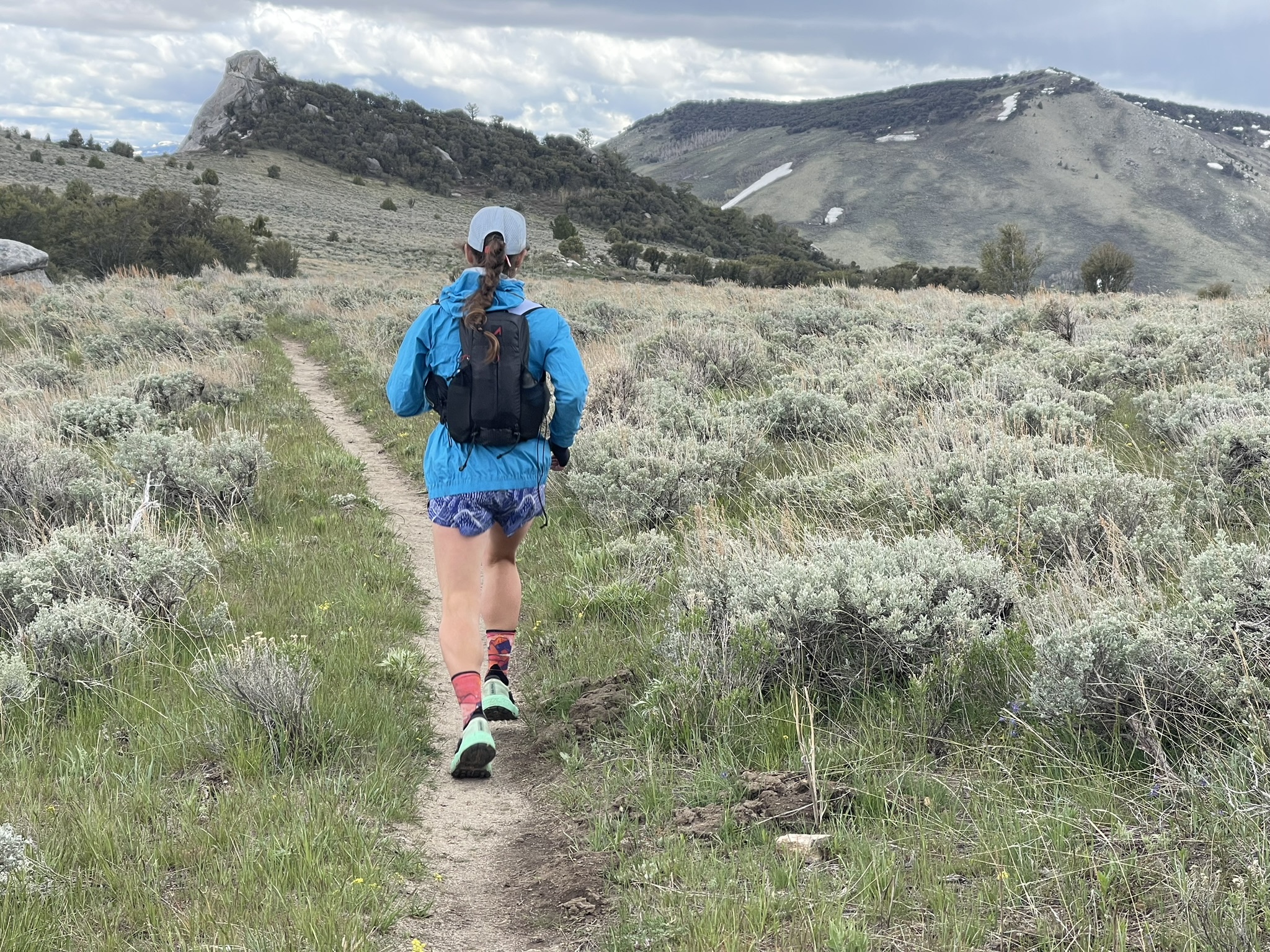
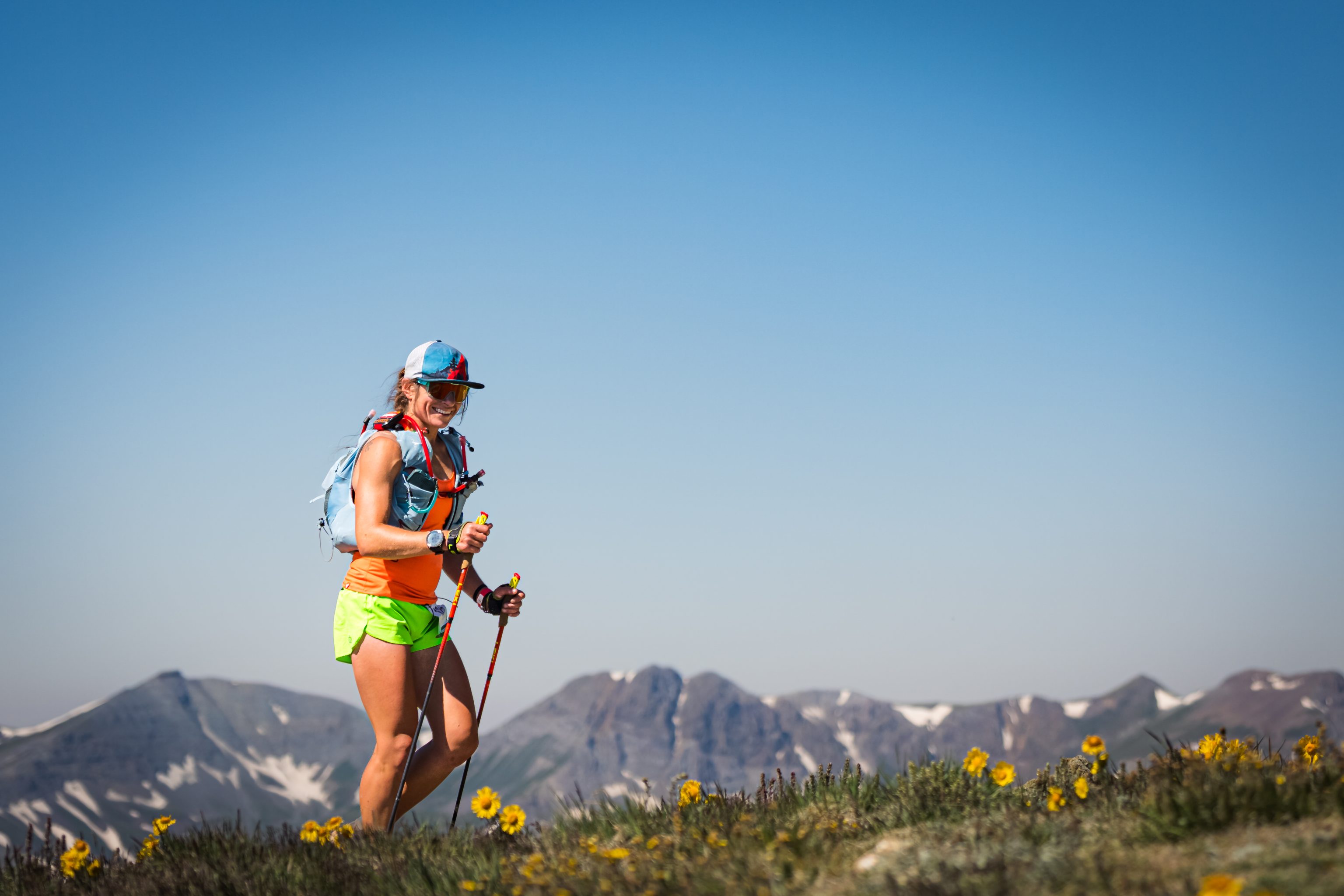
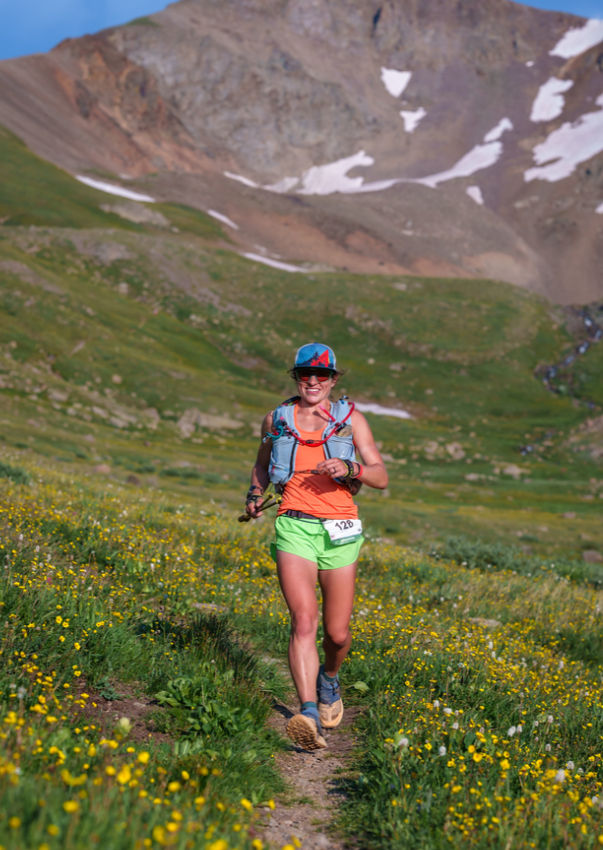
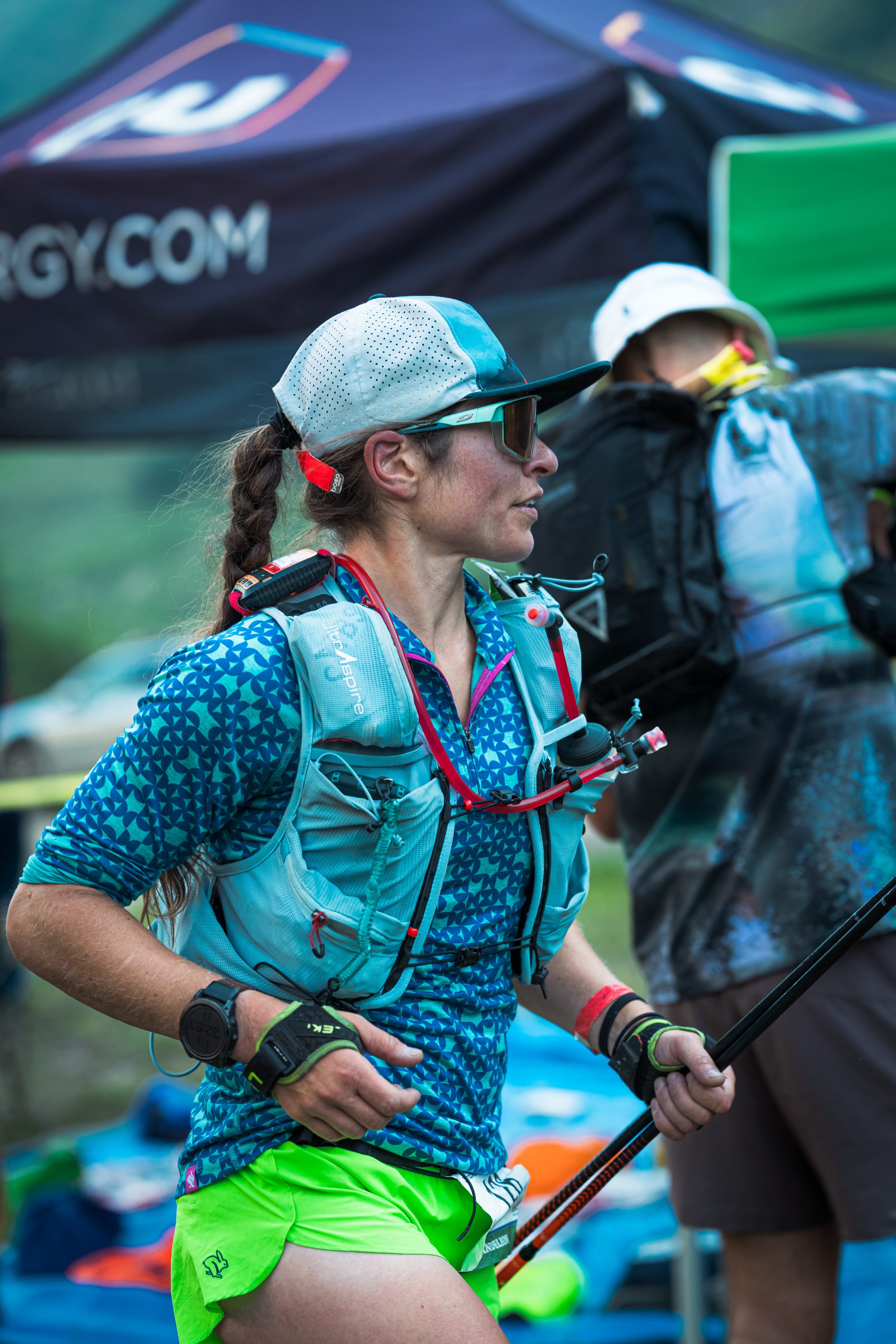
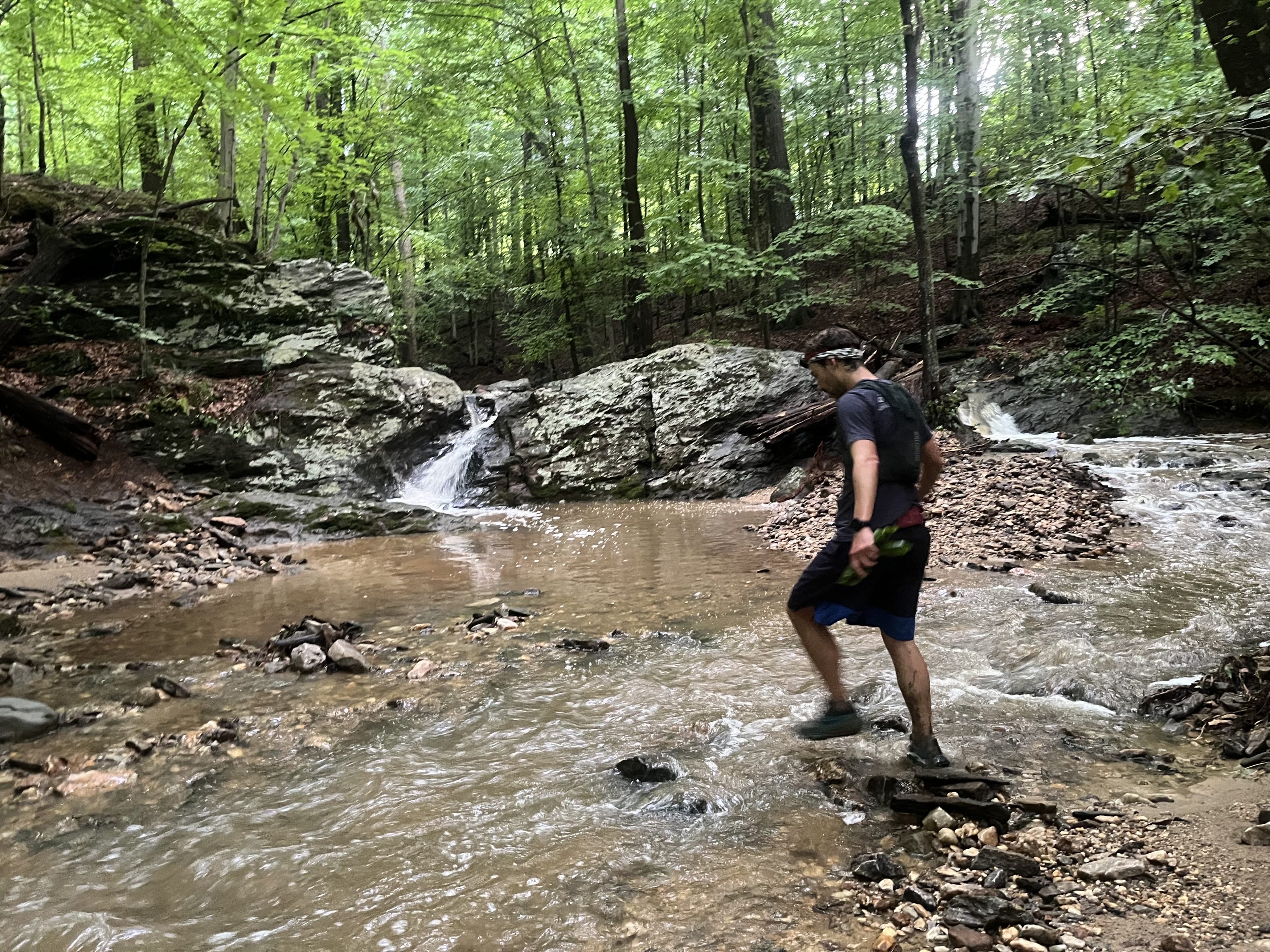
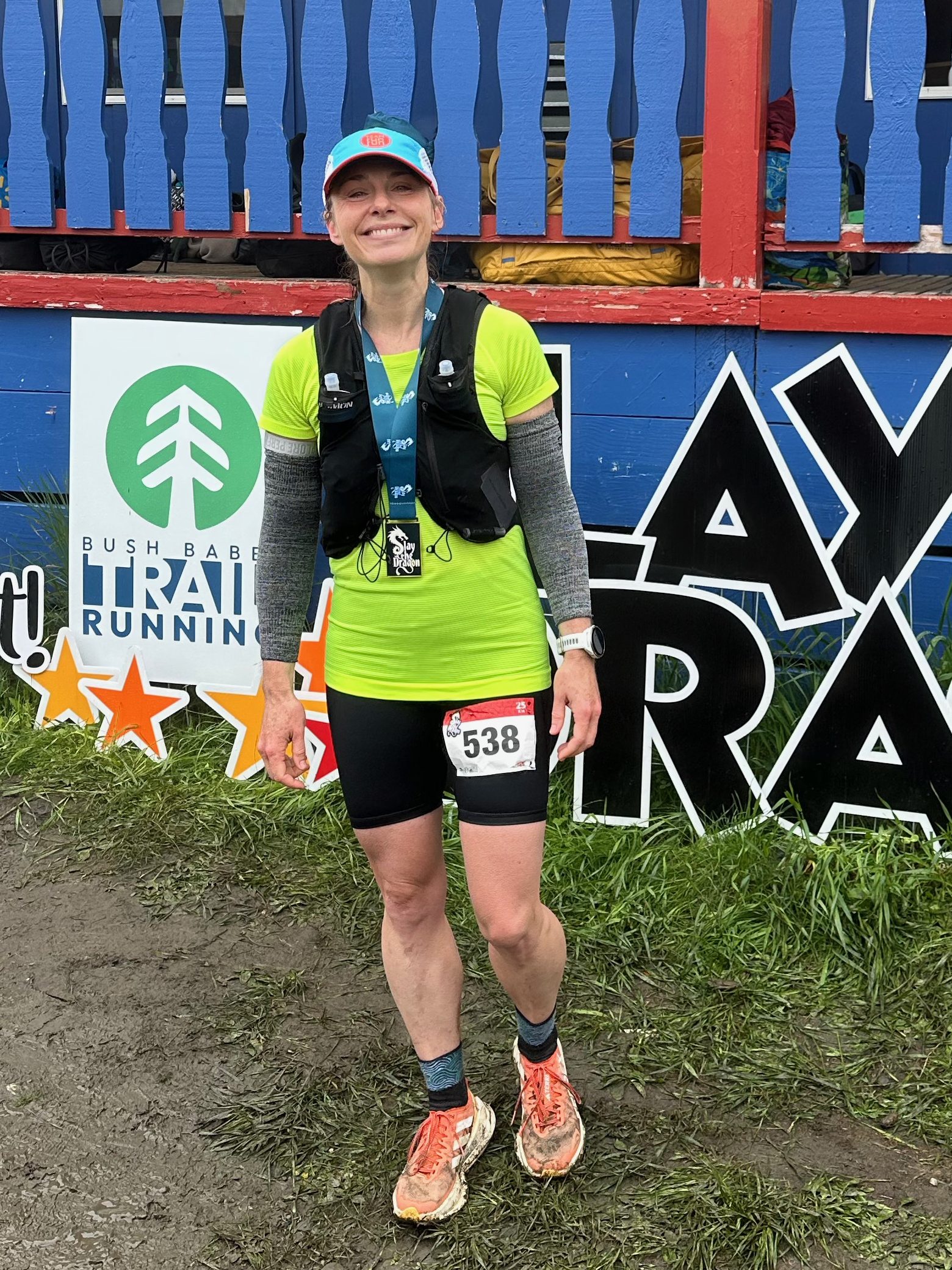
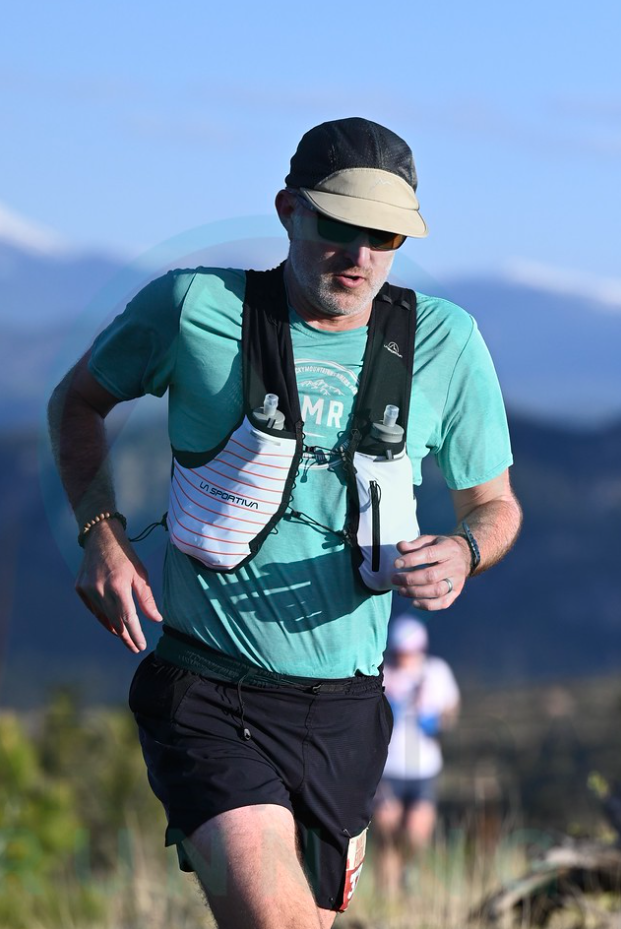
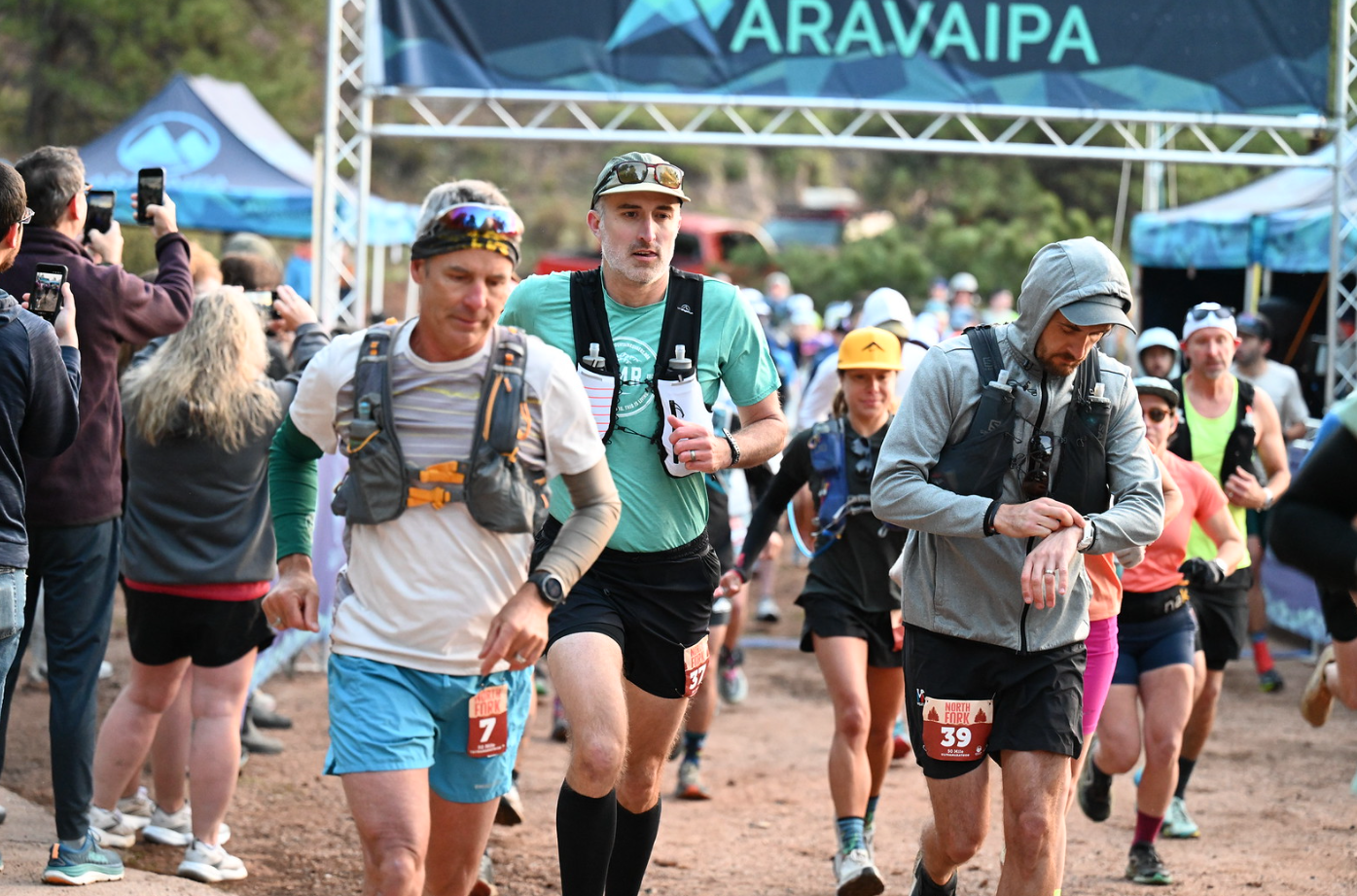
The UltrAspire Legacy 3.0 Race Vest is a great option for road and trail runs of any length. However, I think it really shines in 50+ mile ultra distance events and big adventure days in the mountains. Abundant storage space (10 liters) in both the main compartment and variety of easily accessible pockets make is possible to carry ample fuel, layers and safety gear needed for lengthy remote endeavors. If water is scarce on the route, the vest can accommodate a 2-liter bladder in addition to four bottles in front and two bottles in the back side pockets. With so many storage accommodation options, you can easily customize and configure the vest to best suite your personal needs.
Personal Experiences:
The Legacy 3.0 is my go-to vest for unsupported fast and light missions in the deep alpine. I can always fit everything I need (plus a few extras for safety) in this vest. For example, I venture into grizzly country often and the back side pockets happen to fit my bear spray perfectly. I also love that this vest not only features a traditional shock cord attachment for poles, but an ice axe carry attachment as well. This makes the Legacy 3.0 an ideal companion during early season alpine runs when steep snow travel is likely, or if my chosen route happens to cross a glacier or snowfield.
In the isolated and unforgiving terrain I often adventure in, my fitness and gear is frequently my only lifeline. My vest must, therefore, be as rugged as the landscape I traverse. No matter what the distance or how treacherous the terrain, I feel confident that the Legacy 3.0 will survive the journey with it’s robust build. Rewind to an early season adventure last summer, I returned with my shirt and jacket torn but my vest was completely unscathed. When I travel with the Legacy 3.0, I can focus on my footing and surroundings instead of on shielding my vest (and gear within). For me, these qualities make this vest the ideal choice for big adventures in backcountry.
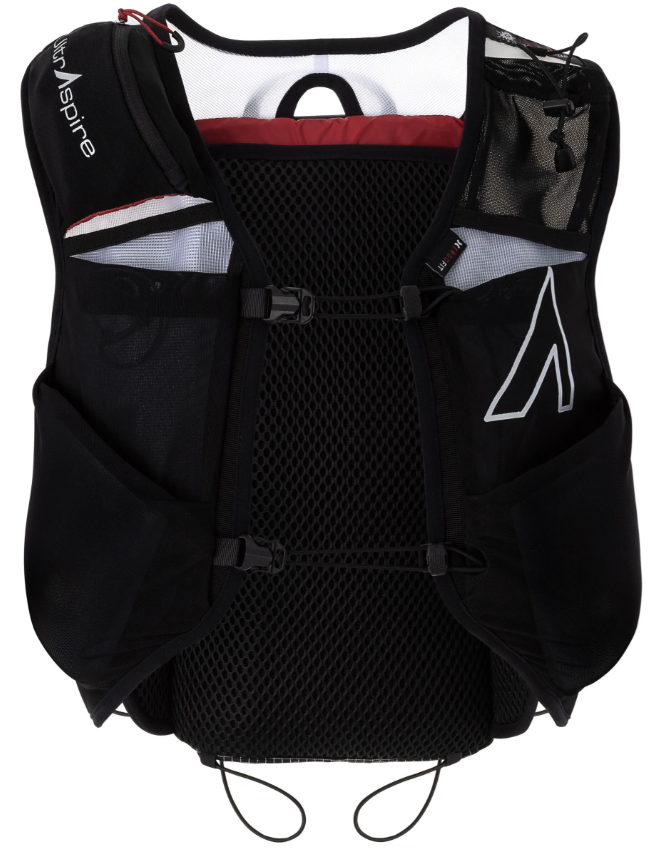
Behind view of the UltrAspire Legacy 3.0 Race Vest.
Sizing:
One size fits most– and they mean it!
Additional Sizing Comments:
As a smaller female, I’m typically hesitant to purchase “one size fits all”. Many products of “one size” will, at worse, fit too loose and, at best, fit awkwardly. Impressively, this is not true of the Legacy 3.0 Race Vest. On me, it fits like it was made specially for my smaller frame. On the other hand, my husband, who is much larger than me, remarks that this same vest fits him like a glove too! It’s truly amazing the wide range of sizes this one vest can accommodate!
Comparison to Previous Models:
The UltrAspire Legacy 3.0 Race Vest has an updated wrap around for improved fit. The reservoir compartment now boasts the insulated UltrAcool sleeve to keep water cold during warm outings. Finally, the upgraded fabrics have durability, breathability, and comfort in mind. More durable, dual adjustable shoulder straps allow for you to run with heavier loads without the vest bouncing.
Comparison to Other Brands:
The Black Diamond Distance 8 is a similar sized adventure vest with durable material. However, I have found their product lacking in pockets and the fabric more abrasive. Salomon carries several vests similar in size too. Unfortunately, Salomon textiles, in my experience, don’t seem to stand the test of time, and the chafing can be unreal. Finally, both of these alternates are not one size fits most.
Durability:
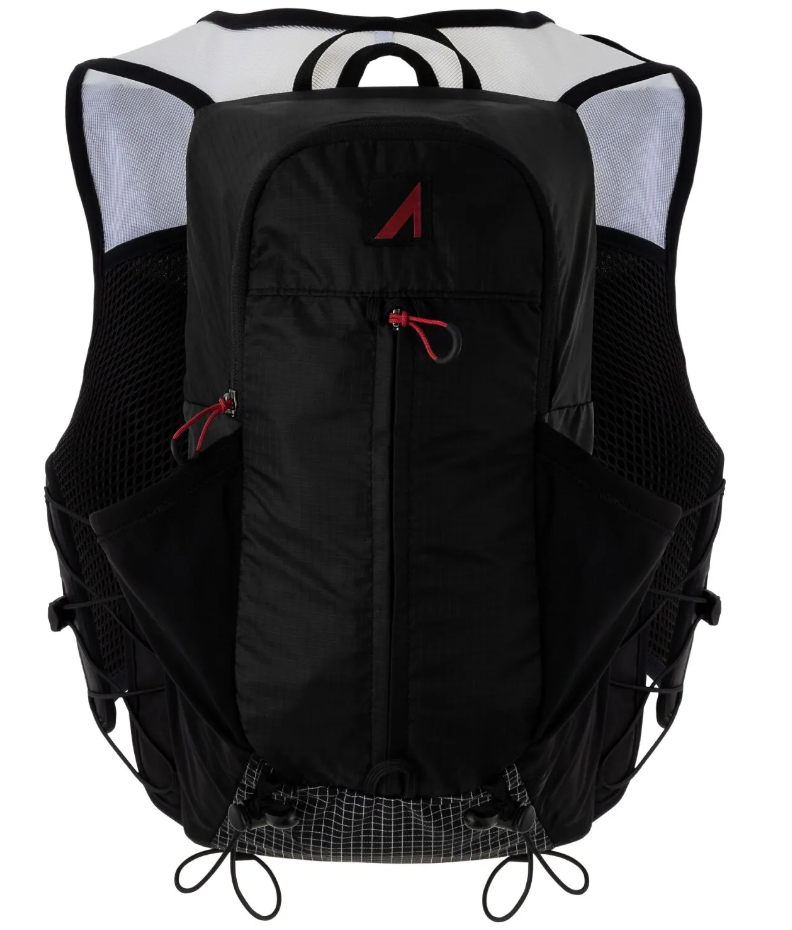
Front view of the UltrAspire Legacy 3.0 Race Vest.
This vest has been with me on 300+ miles of adventures. Some of these outings were traditional trail runs, but most were big mountain outings. The vest scrapped up against rocks while scrambling, and was subjected to thick foliage while bushwhacking. It also carried my ice axe. Safe to say, I’ve put the UltrAspire Legacy 3.0 Race Vest to the test and it’s still like new, without even the slightest hint of fabric deterioration or a single tear.
Changes for the Next Model:
I’d like more color options (currently only available in black).
The True Test – Would You Recommend It?
Yes, I think the UltrAspire Legacy 3.0 Race Vest is an outstanding adventure and race vest that would be a wonderful addition to any athlete’s quiver, especially if they are rough on their gear in the mountains. This is also a handy vest in a household where a vest is shared between several athletes since this one size really does fit most!
Keeping it Honest – Did You Get This Gear for Free?
Full disclosure, I am sponsored by UltrAspire, but used their products well before I had a relationship with the brand. I do not get anything from the company for leaving a positive review. I received this vest for free as a prototype before it was released.
Dandelion Dilluvio-Scott is a multisport outdoor athlete, ultra-runner and certified coach. She is passionate about collaborating with driven athletes who love to explore, train and play outside.
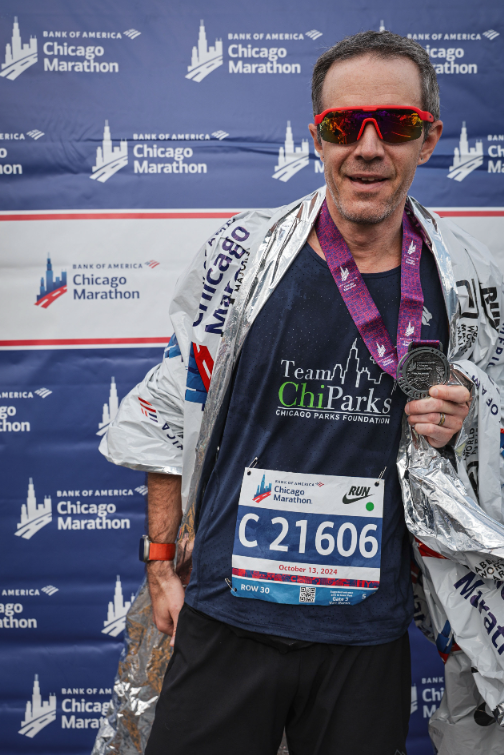
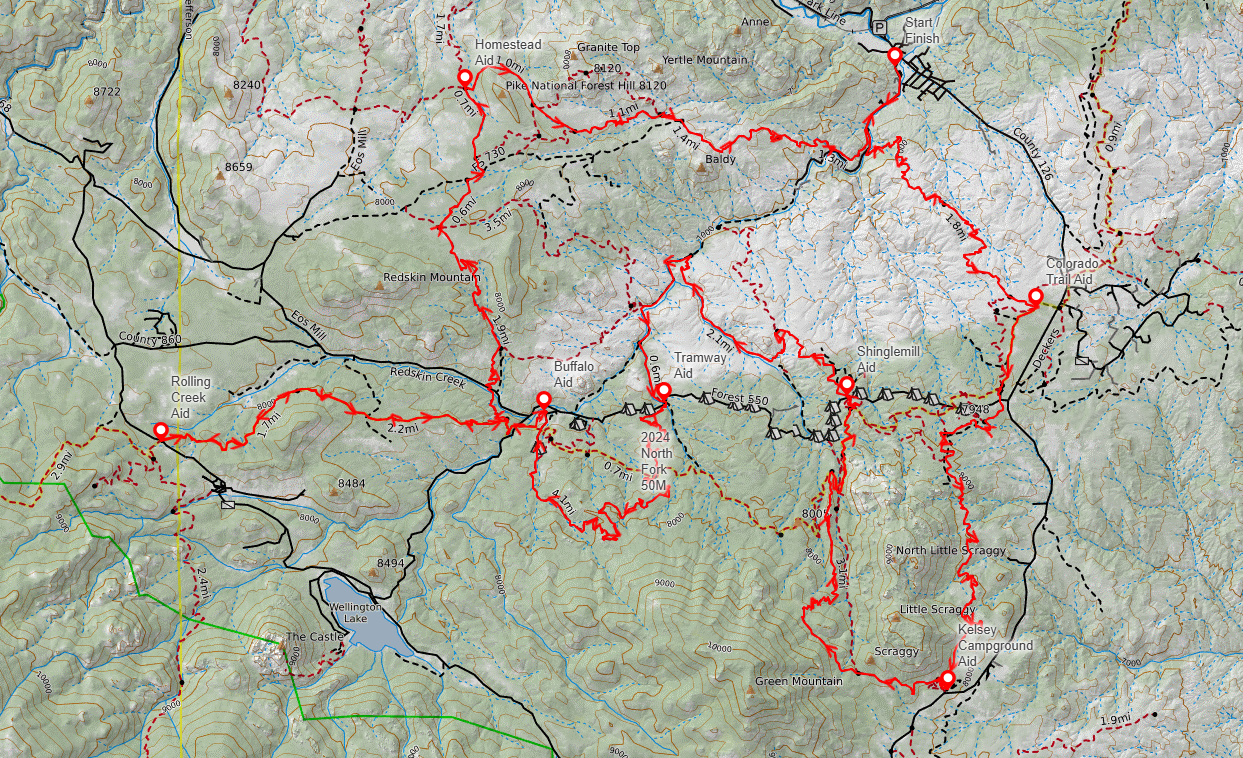
Team RunRunner Michael Norton after finishing the 2024 marathon.
Your go-to spot for all things Bank of America Chicago Marathon, one of the fastest Abbott World Marathon Majors, occurring each October in the United States of America.
1. Pre-Race Zoom Call
With Chicago coming up soon, we brought veterans and first-timers together to ask questions, share insights and build some excitement heading into race weekend!
We had a great drop-in Zoom call full of Chicago Marathon racing info and tips: Catch the replay here!
2. Chicago Marathon Race Intel
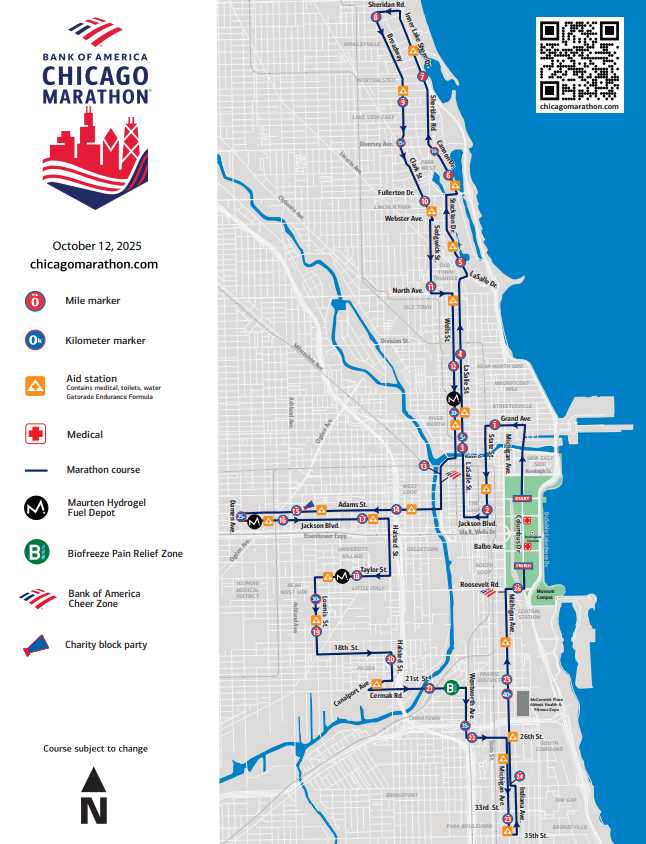
Chicago course map.
Date: Sunday, October 12, 2025
Location: Chicago, USA
Start: Grant Park
Finish: Grant Park
Course type: Loop; undeniably fast and flat!
Boston Qualifier: Yes
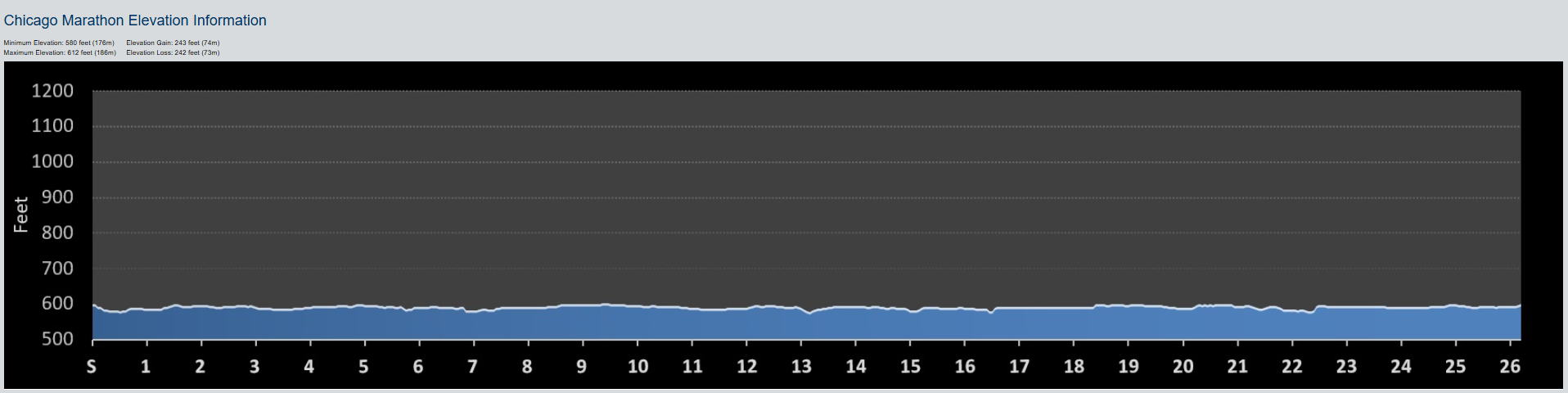
Elevation gain: 243 feet/ 74 meters
Elevation loss: 242 feet/ 73 meters
Temperature:
Average high : 64°F/ 17°C Average low: 46° F/ 7°C
Tips from Coaches
”Enjoy the final stretch down Columbus Drive. In any case, soak it all in!” – Coach Christina Mather
Chicago Marathon elevation map. PC: findmymarathon.com
3. Race Reports
Want even more intel on the marathon? Read some of the race reports from Team RunRun coaches:
Date: Saturday, October 11th Time: 9 am CST (Chicago local time) Location: Millennial Park, Cloud Gate “the Bean”
All paces are welcome and the more the merrier! Feel free to bring a friend, even if they’re not a Team RunRun athlete!
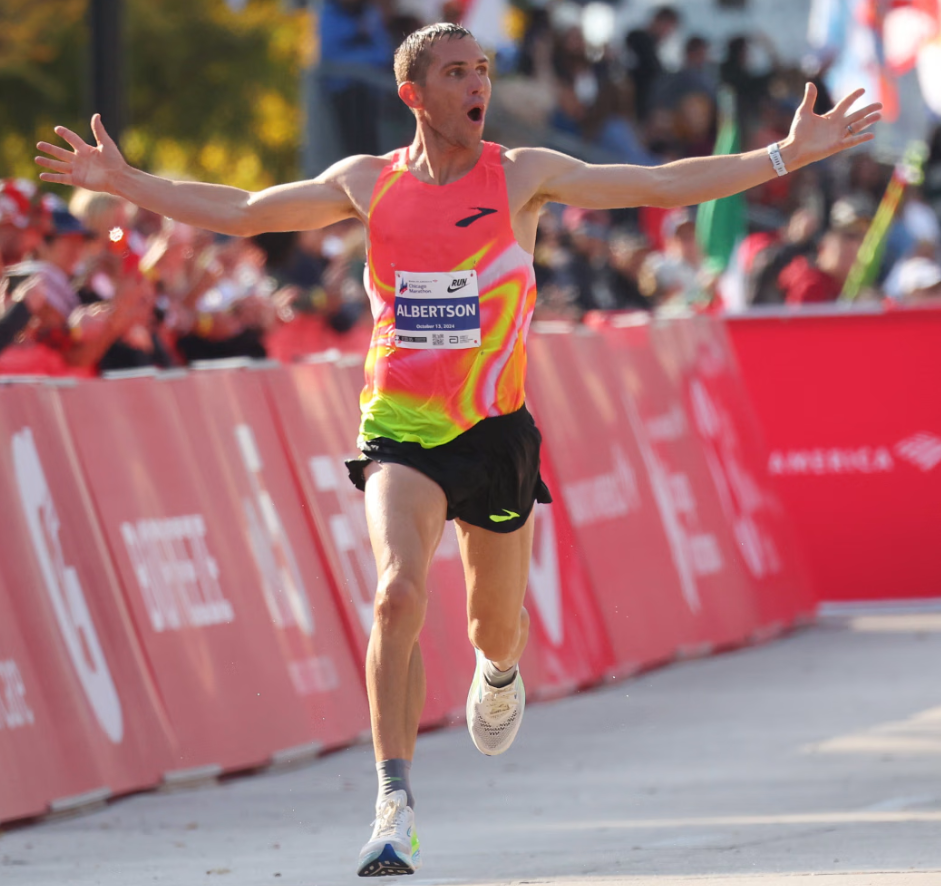
TRR Coach CJ Albertsonfinishing the 2024 Chicago Marathon in 7th overall and 1st American in a time of 2:08:17! PC: Michael Reaves/ Getty Images
5. Chicago Marathon Coaching Info
At Team RunRun, we have 100s of wonderful, experienced coaches ready to help you crush your goals, regardless of your ability, budget, or lifestyle. Specifically, for Chicago race advice, here are some coaches to start with:
There’s lots of things that go into being a better trail runner: training, nutrition, sleep, strategy, and psychology are just a few. When it comes to physical training, running is, of course, the main focus, however cross training and strength training are also important tools in the trail-runner’s tool box.
A group of runners strength training.
As a coach, I believe that every runner, and especially trail runners, should incorporate some form of strength training. And the good news is that you don’t have to be a gym rat or lift super heavy in order to see results. In this article, I’ll go over the benefits of adding strength workouts into your trail running training.
3 Benefits of Strength Training for Trail Runners
1. Agility and multi-planar movements
While road running is primarily a forward motion, trail running often requires movement in multiple planes, recruiting muscles throughout your full body. Depending on the terrain and the distance, you may be making those moves suddenly and with quite a bit of force. Strength training prepares you to be able to make those moves well, without causing injury.
2. Durability and injury prevention
Beyond the obvious muscle strengthening, resistance training strengthens bones by building density. Strength training can also help correct imbalances that can otherwise lead to injury. Being more durable and avoiding injury allows you to train consistently, and consistency is one of the more important tools in becoming a better runner.
3. Upper body strength
While most runners tend to think of run-specific strength training as lower body-focused, trail runners can also benefit from upper body strength. This helps when using poles on the run, carrying hydration packs and bottles, and especially when scrambling or climbing is involved. Upper body strength can also protect you from injuries when the almost-inevitable fall happens.
Concerns of Trail Runners: “I don’t want to bulk up”
Trail runners on an easy run.
One of the biggest concerns for runners, and especially female runners, is that strength training will make them bulk up. This is typically not the case. Firstly, in order to bulk up you need to intentionally eat enough calories. I can speak to this personally as I am also a rugby player, and in rugby season I need to eat a meal every 2-3 hours while awake to get enough calories to maintain weight and muscle mass. When your training is focused on running, it’s hard to maintain that kind of calorie surplus. Bulking also requires a focus on frequent strength training sessions, much more than the recommended 2-3 a week for runners. By continuing to run as normal, alongside a few strength training sessions weekly, you’ll avoid bulking up.
While you don’t want such a large calorie surplus that you bulk, there is the concern of having enough energy to do both lifting and running. This can include making sure you get enough calories to fuel extra workouts, avoiding the heavy legged feeling when lifting and running, and just generally fitting lifting and running into all the things you do. I will address the timing of lifting below, but, in general, you’ll need to plan your workouts well to balance the demands of lifting and running. You also may need to have cycles where you focus more on lifting, then others where you back off and focus more on running to keep that balance.
Timing
As with any kind of training, there is the ideal, and then there is the reality of how you can fit things in based on real life. The suggestions I offer on timing are just that, suggestions. Getting in some lifting with a less than ideal schedule is always better than not lifting at all.
For starters, you want there to be a time separation between running and lifting. This helps you recover between sessions, and makes sure you’re not taxing all of your body’s systems all at once. Especially on your speed or long run days, you shouldn’t lift before you run. I like to keep the hard days hard and the easy days easy; if you do a speed session in the morning, fitting in a strength session in the afternoon or evening is ideal, leaving another day open for easier training or recovery. If you run in the evening, you can always lift the morning after a hard workout.
You don’t need to do focused 30-60 minute sessions in the gym in order to get the benefits of strength training either. 5-10-minute strength training “snacks” after runs can still offer similar benefits. Some of my clients like to do a hybrid: one longer gym session a week, coupled with some shorter bodyweight exercises on other days. Again, the idea is to not let perfect be the enemy of good.
Tapering Strength Training
Just as with your running, you’ll want to taper your strength training before races. I usually don’t assign athletes strength work the week of a race, and for goal races we might remove or lighten strength training a few weeks beforehand. On step-down/ recovery weeks for running, I also prescribe lighter strength training, or maybe just some mobility, to give the body a chance to recover fully. And then after races, I find it’s sometimes good to mix in some light strength training before you’re back to running, but this is by no means a necessity.
Trail runners doing bodyweight strength training.
Final Thoughts on Strength Training for Trail Runners
To summarize, strength training can provide many benefits to trail runners which they can’t get from simply adding more miles. Effective strength training doesn’t require a gym membership or a large time commitment; there are flexible ways to build it into your current training schedule. And, as always, listen to your body, and remember that any strength training is better than none!
Sample Strength Training Plans
I’ve included two sample plans at the end of the article. One is a focused gym session plan, the other is a daily bodyweight plan. It’s a place to start, but if you’re serious about doing strength to improve your trail running, it’s a good idea to meet with a strength coach, or at least a coach with strength training experience who can help get you set up with a plan tailored to your needs. (And don’t forget to tell your run coach if you’re planning to add in or change strength training. It’s normal for your body to feel more sore or tired at first while it adjusts to the change.)
Gym Sessions
A runner doing squats in the gym.
Day 1: Runners Legs
Do 2-3 sets of 5-10 reps of each of the following exercises:
You should use a weight where you can move fairly explosively, if you get to a rep where you are struggling and moving slowly you are done with that set.
Session 2: Plyometrics
Pick 3-5 of the following exercises, and do 3 sets of 10 reps of each:
Achilles Twists: No video for this, but you raise yourself up on your toes, rotate out so the outside of your foot is touching the ground, slowly rock back so your heel is on the ground, and rotate in so the inside of your foot is on the ground.
Core Workout: Complete 30 reps (15 per side) of each of the following:
Des Clarke is a Team RunRun coach based in Phoenix, AZ. She helps a diverse array of athletes with a holistic approach integrate running and racing as part of their lives.
Your go-to spot for all things Berlin Marathon, one of the fastest Abbott World Marathon Majors, occurring each September in Germany.
1. Pre-Race Zoom Call
With the Berlin Marathon coming up soon, we’re bringing Berlin veterans and first-timers together to ask questions, share insights and build some excitement heading into race weekend!
We had a great drop-in Zoom call full of Berlin Marathon racing insights, information, and tips.
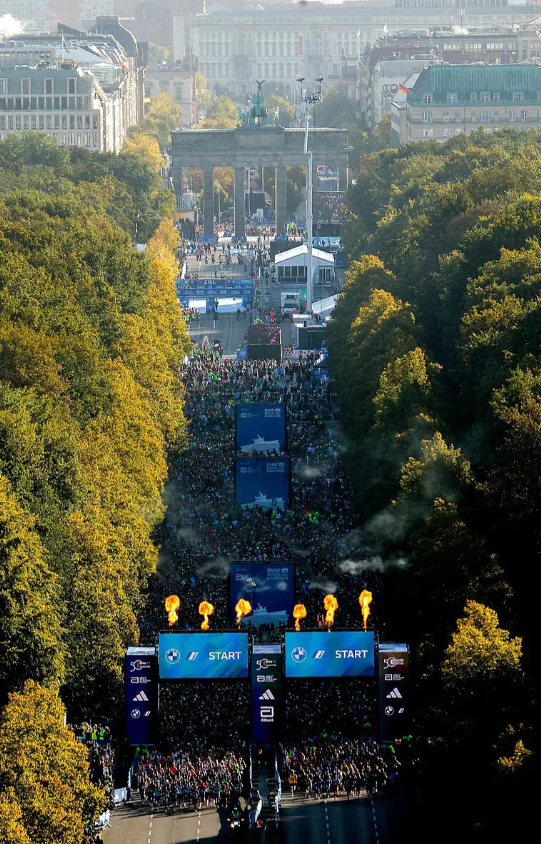
Start: Straße des 17, between the Brandenburg Gate and the “Kleiner Stern”
Finish: Straße des 17, just after the Brandenburg Gate
Course type: Loop; undeniably fast and flat!
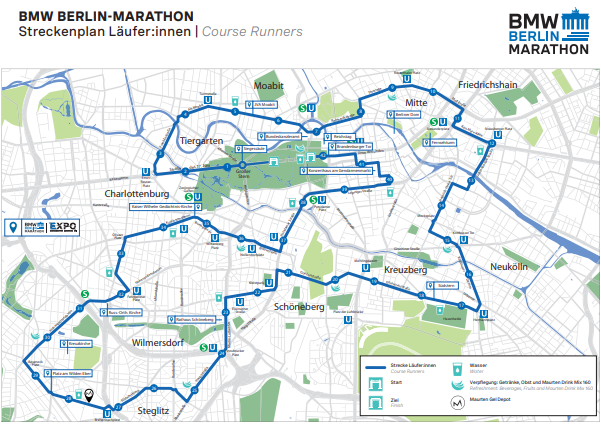
Berlin Marathon course map.
Boston Qualifier: Yes
Elevation gain: 241 feet/ 73 meters
Elevation loss: 260 feet/ 79 meters
Berlin Marathon elevation map.
Temperature:
Average high : 63°F/ 17°C Average low: 47° F/ 8°C
Tips from Coaches:
“Like most Majors, it’s a crowded race. Unlike many Majors, they don’t do a great job of enforcing waves/corrals. For that reason, you’ll want to manage expectations for the first couple of miles. Take it easy, stay calm and know that things will ‘settle in’ after the first 5k or so.” – Coach Nicole Thome
”There is a decent walk from the gate to the start corral, so allow for plenty of time!” – Coach Heather Gutekunst
”Remember, the Berlin Marathon paints a blue line on the road to mark the tangents (the shortest possible route) of the course, so follow that for an “easier” route!” – Coach Vivian Vassall
”You’ll feel the urge to pick up the pace as soon as the Brandenburg Gate comes into your view (and you’ll notice other runners doing so), but know that the actual finish line is 400m past the gate!” – Coach Vivian Vassall
3. Race Reports
Want even more intel on the Berlin Marathon? Read some of the race reports from Team RunRun coaches:
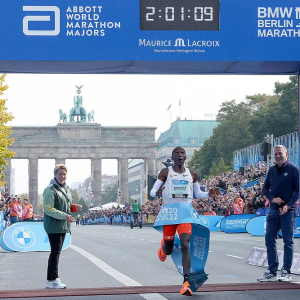
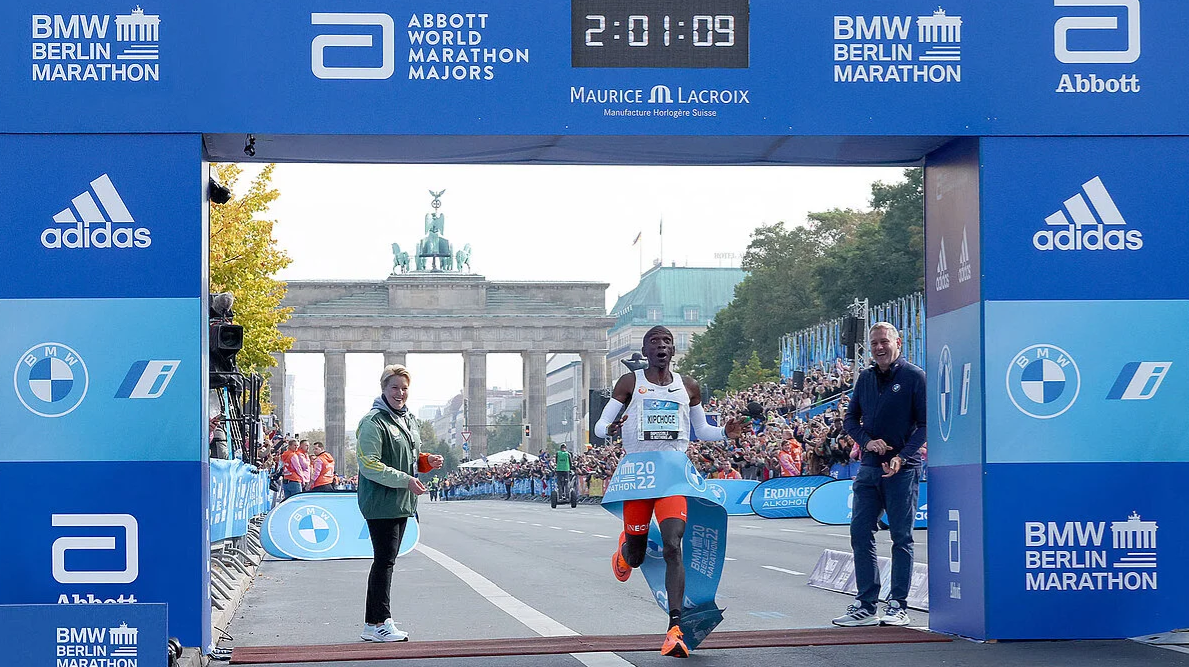
Eliud Kipchoge winning with a new World Record at the 2022 BMW Berlin Marathon! PC: SCC Events
4. Shakeout Run
Date: TBD Time: TBD Location: TBD
All paces are welcome and the more the merrier! Feel free to bring a friend, even if they’re not a Team RunRun athlete!
5. Berlin Marathon Coaching Info
At Team RunRun, we have 100s of wonderful, experienced coaches ready to help you crush your goals, regardless of your ability, budget, or lifestyle. For Berlin Marathon-specific advice, here are some coaches to start with:
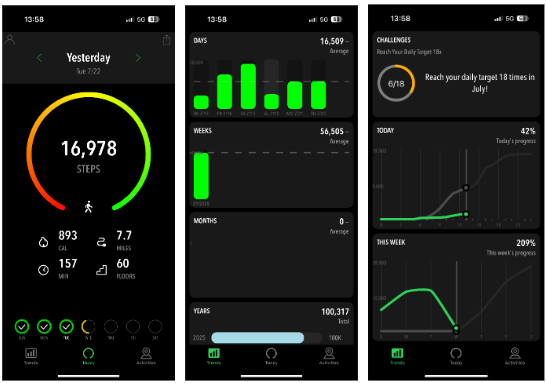
How the ActivityTracker app can help runners stay consistent and connected to their goals.
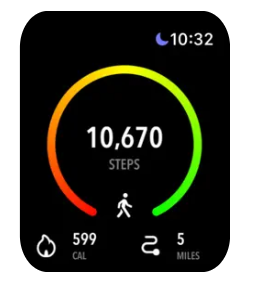
ActivityTracker app screen on an Apple Watch.
We are surrounded by distractions in our day-to-day life that can push fitness goals to the wayside: that’s where the ActivityTracker app comes in! Your personal accountability partner in your pocket, ActivityTracker helps you stay consistent and progressing towards your goals. Here’s how:
1. Real-Time Feedback
ActivityTracker uses your phone or Apple Watch to monitor your steps, distance, active minutes, and heart rate. The real-time feedback from the app can be particularly useful for those just starting out to understand their movement habits. Similarly for coaches, the app allows them to see a wide variety of their athletes’ metrics.
2. Visualizing Progress
Let’s be honest, tracking your progress over time can be motivating. Daily and weekly charts, monthly mileage goals, and habit streaks make fitness more tangible and rewarding. The ActivityTracker app is very user friendly, with a clean interface that makes tracking activities a breeze–even for those who are not very tech savvy!
3. Goal Setting and Accountability
You can set a variety of daily and weekly goals: steps, calorie targets, distance covered, and more. ActivityTracker also offers reminders to help you stay active. Personally, I think this feature is awesome–especially for those who are tied to a desk for work–prompting you to get up and move in order to stay on track with your goals.
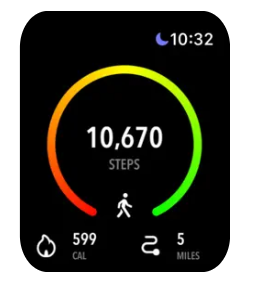
Screenshots from the ActivityTracker app.
4. Workout Tracking
As the name “activity tracker” implies, you’re able to log your walks, runs, hikes, and bike rides with ease. The app seamlessly integrates with Apple Health and Apple Watch, as well as providing its own in-app tracking feature to collect workout data and log your fitness.
5. Injury Prevention Through ActivityTracker Trends
One of the most beneficial parts of the ActivityTracker app is the ability to see your trend data. By evaluating your workout history and trends, you can get a look at whether you might be under or overtraining. For example, you might notice a link between days you strength train and days you don’t hit your step count or distance goals. Or perhaps you see that after a rest day, your daily step count is through the roof!
Not only do you see activity patterns for the past few days and weeks, the app gives you trends over months and years! If you develop an injury, you can easily look back through your workouts and activity trends for the past weeks and months prior, allowing you to identify potential contributing factors. This may include jumps in weekly mileage or step count, additional training sessions, intensity increases, and more.
In addition, the historical trend data is also great for those who want to see their progress, providing a visual representation of where you started and how far you’ve come.
ActivityTracker App: Final Thoughts
To summarize, the ActivityTracker app isn’t about being perfect—it’s about being present. It helps you stay engaged and motivated with your goals, and build momentum one day at a time. Whether you’re a casual walker or an avid runner, using the activity tracker could be the smartest way to stay in motion and keep the motivation to continue chasing big goals!
Jake Eckberg is a coach with Team RunRun based in Pittsburgh, Pennsylvania. He helps runners of all levels train for distances from the 5K to ultra marathon distances, through the pillars of consistency, growth, mental toughness, injury prevention, and recovery.
For a thoughtful, more detailed write-up of Dandelion’s Hardrock 100 Mile race experience, from start to finish, check out “Hardrock 100: TRR Coach Dandelion’s Race Rundown“. You’ll read how her mental and physical strength allowed her to endure a myriad of challenges and still finish smiling!
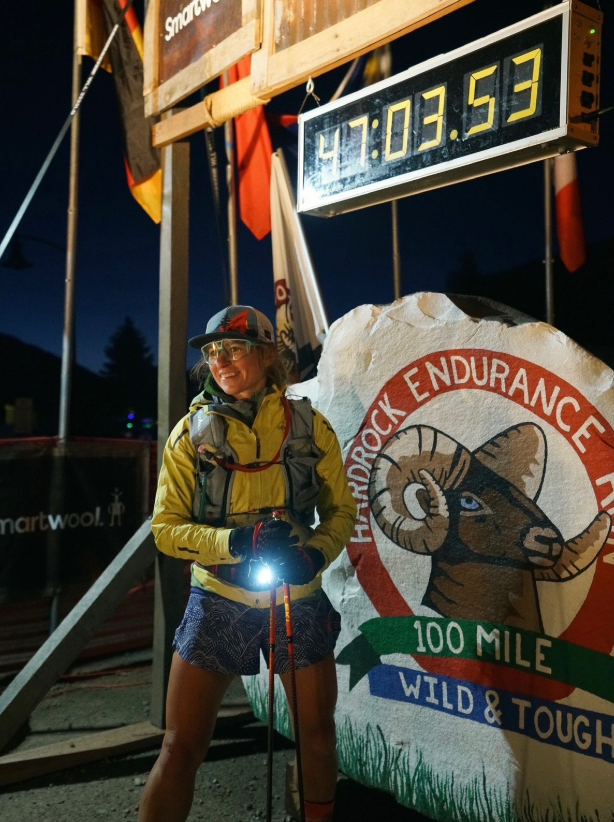
TRR Coach Dandelion Dilluvio-Scott finishing the Hardrock 100 Mile Endurance Run. PC: Andrew Podbielski
3 Bests – What aspects of the race did you like the most?
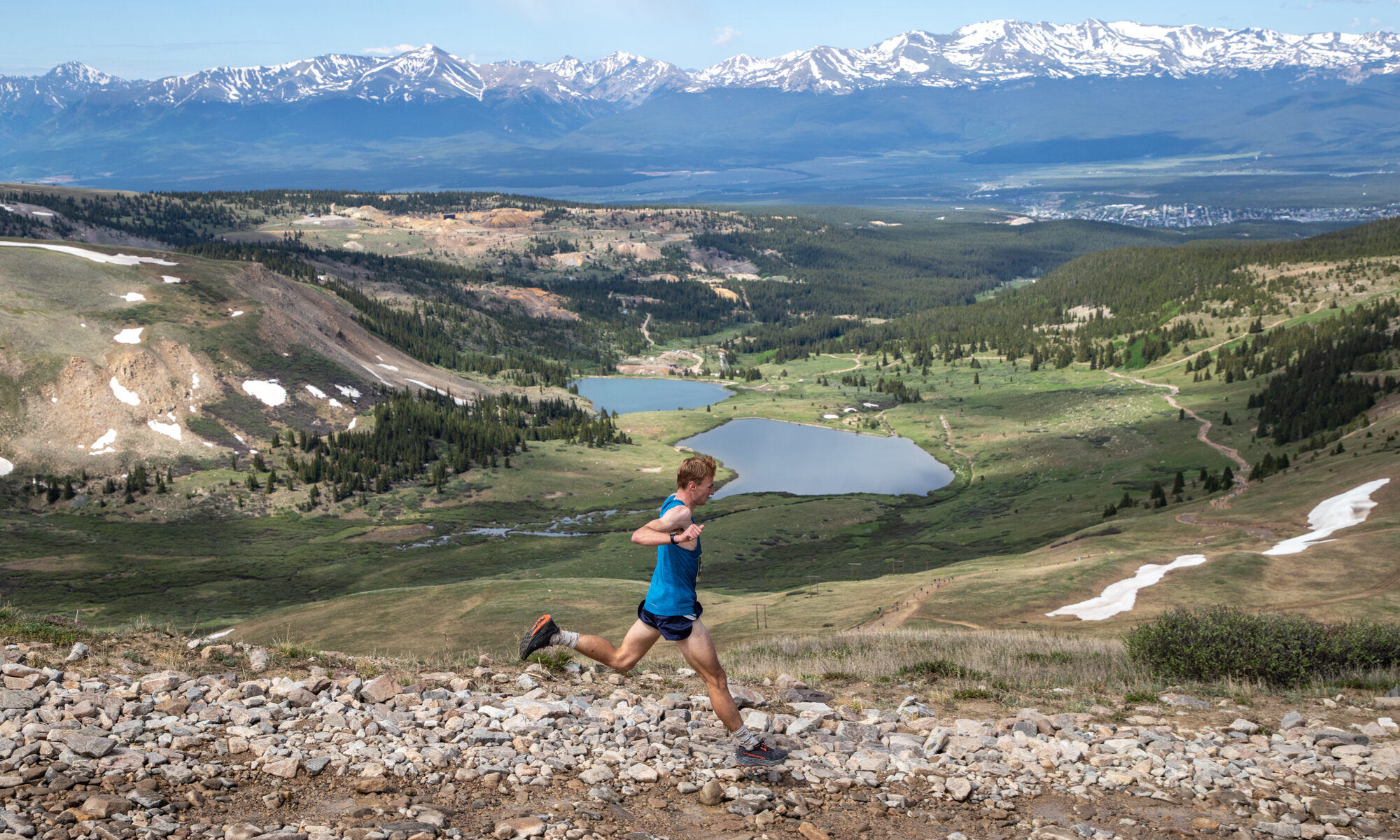
Extreme mountain environment: With a high point of 14,048 feet and an average elevation of 11,000 feet, the Hardrock 100 Mile Endurance Run course is the definition of a high alpine setting. As an athlete who lives in the Wyoming Rockies and trains high, I am fascinated by altitude. I am also highly drawn to races with rough and rugged terrain. One of my favorite puzzles to solve is how to adapt and move with these kinds of mountain environments.
The lure: There is something captivating and pleasantly intimidating about running a race that less than 2,000 people have completed in its 30 runnings!
Handies Peak: Ascending to the summit of a 14’er (a mountain with a peak above 14,000-foot) in the middle of a 100-mile race is so uniquely special!
Not so much – Aspects of the race that didn’t do it for you
Nothing!
Weird factor – What’s the weirdest thing about this race?
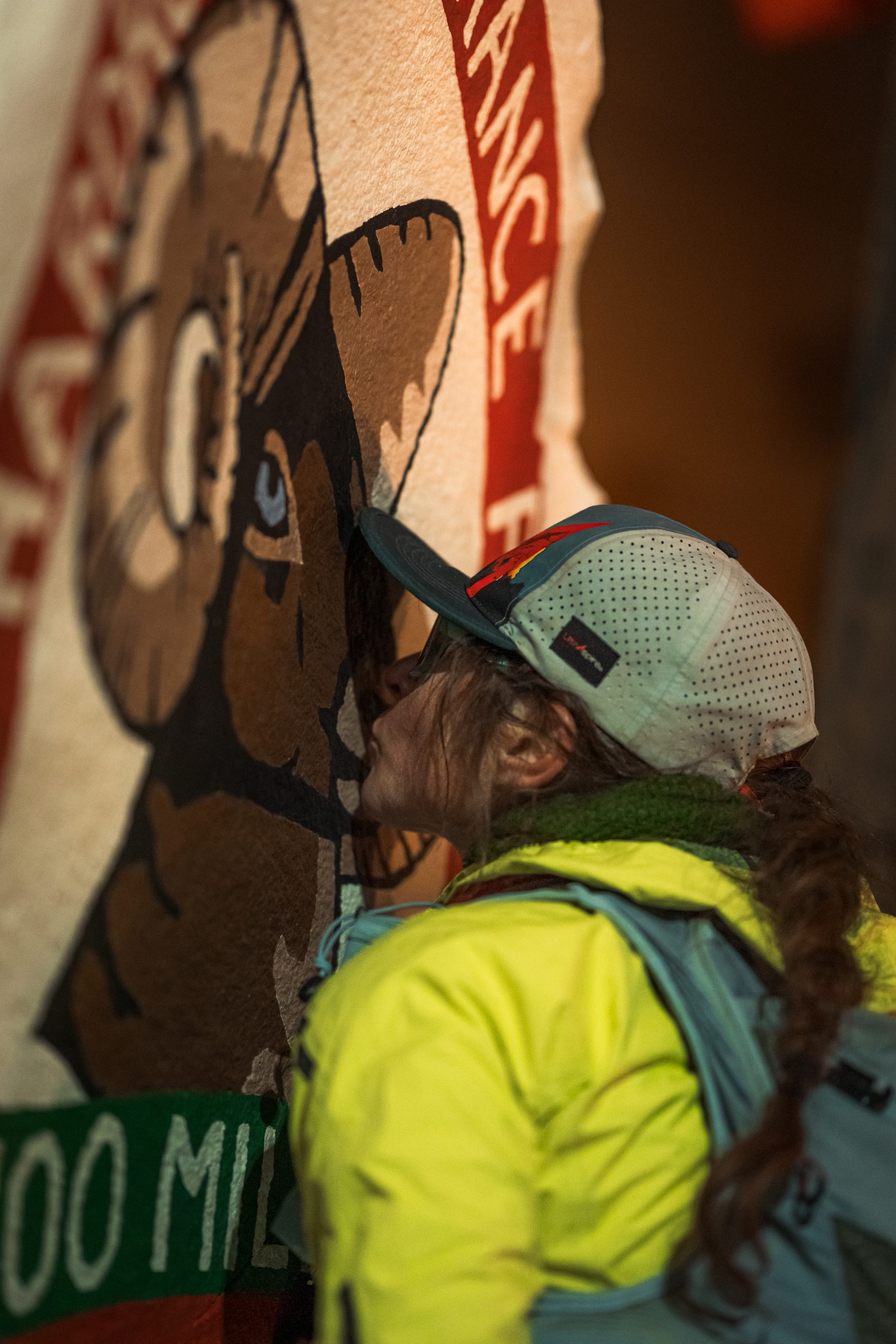
Kissing “the rock” at the finish is likely the most delightfully weird quirk of Hardrock! Another unique factor is that the race alternates between going clockwise and counter-clockwise each year. You’re not a “True Hardrocker” unless you have gone both directions.
Highlights of your race – What did you do well and enjoy about your race in particular?
One of the biggest highlights of Hardrock for me was how strong and smooth the first half felt. I was hitting my paces, my fueling was spot on, and I was genuinely enjoying myself out there. Climbing Handies Peak with a couple of other runners was probably my favorite moment—we worked together really well, and being on top of a 14er mid-race with that view was just unforgettable.
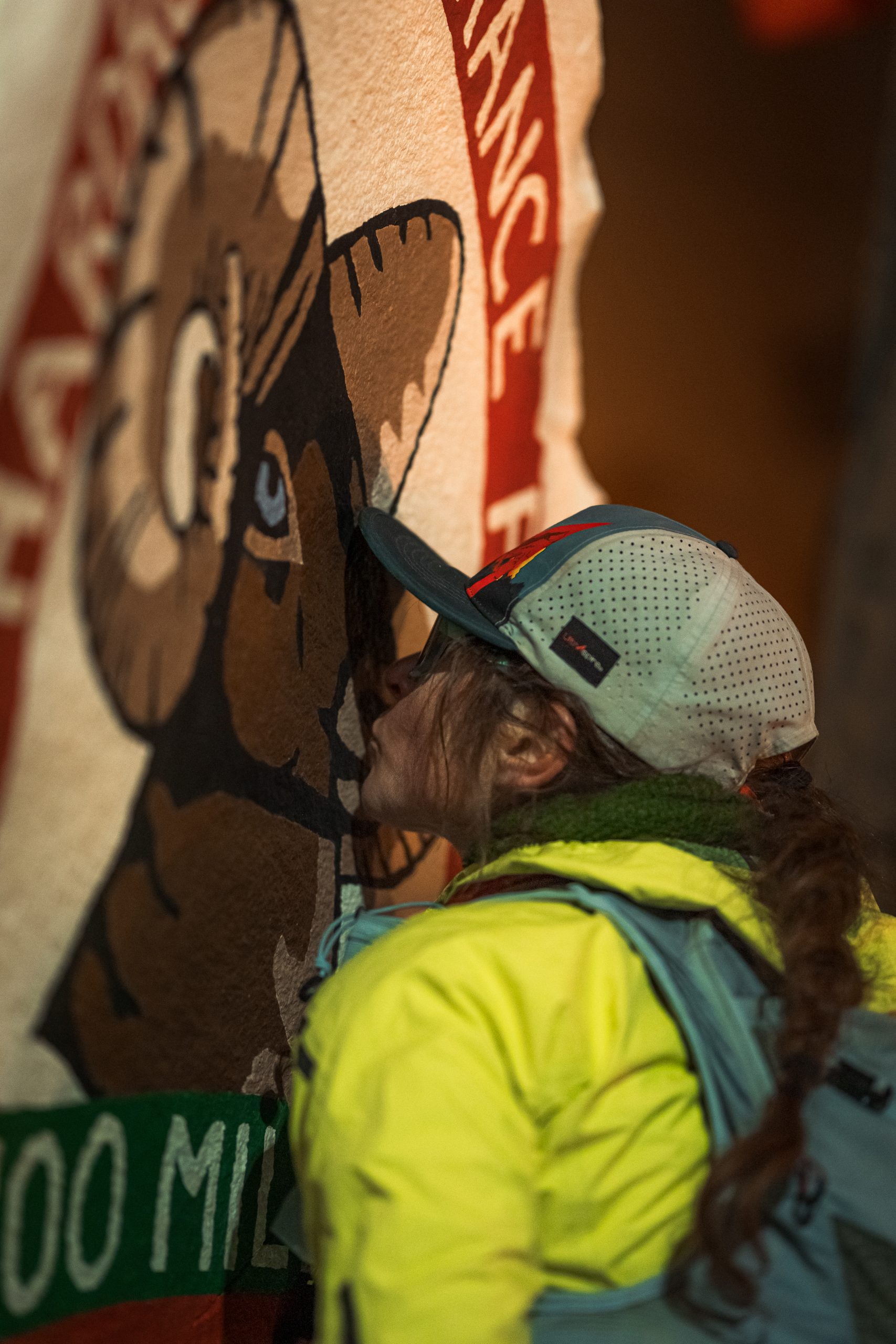
Dandelion kissing the infamous rock at the finish line. PC: Travis McWhorter
What made this race extra special, though, was how much I actually took it in. Usually in races I’m so focused on execution that I barely notice what’s around me. But during Hardrock, I made sure to stop for a second here and there to really appreciate the San Juans—the wildflowers, the ridgelines, the stillness. It felt like I was part of something much bigger.
I also feel proud of how I handled the second half when things got rough. My nutrition fell apart, and the heat and altitude started hitting hard. I had a moment where I broke down crying, but I didn’t let it derail me. My pacers were incredible, and once I got it out of my system, I reset, dug deep, and just kept going. That emotional turnaround—choosing to keep moving forward when it got really hard—is something I’ll carry with me for a long time.
More than anything, I loved the connection I felt: with the mountains, my crew, and even with myself. It was one of those experiences that shifts something inside you.
Lessons for others – Share your pro-tips on the race to help the next runner
Don’t think of each alpine running variable individually (exposure, weather, intensity, attitude, technical terrain, etc.). Instead consider how they might compound. For example, I live at altitude and sleep in an altitude tent, but I still struggled at elevation later in the event because of how the elements combined.
I also recommend working with a team of professionals while training for a rare opportunity event like the Hardrock 100 Mile. I believe that having a coach, in addition to a running specific physical therapist and sports chiropractor, allowed me to stay healthy and endure the massive training load this event required.
Finally, if you are running supported, choose crew and pacers you can 10,000% trust with the right mix of personalities. After I gave my team a pre-race orientation, I never thought about it again. I knew with absolutely certainly that they would carry out my plan and also make the appropriate changes when necessary. You don’t want to wonder if your team will have the right drink mixed for you upon your arrival while you’re climbing Handies!
Lessons you learned that will help you next time around
Be prepared to troubleshoot things that have never happened to you before. I never get GI distress… and yet I did big time at Hardrock!
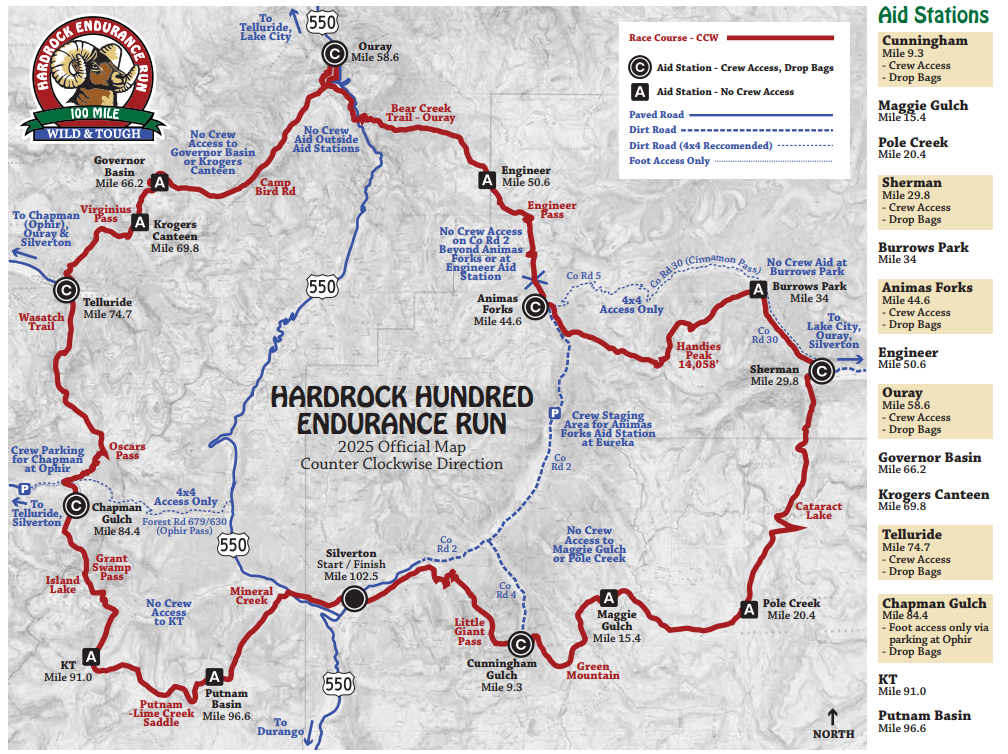
Hardrock 100 course map.
Most important course specific knowledge to know about the race
A lot of focus is on the 33,000ft of uphill…. but you also have to descend the same amount! Practice your downhill technique and train for the eccentric loading.
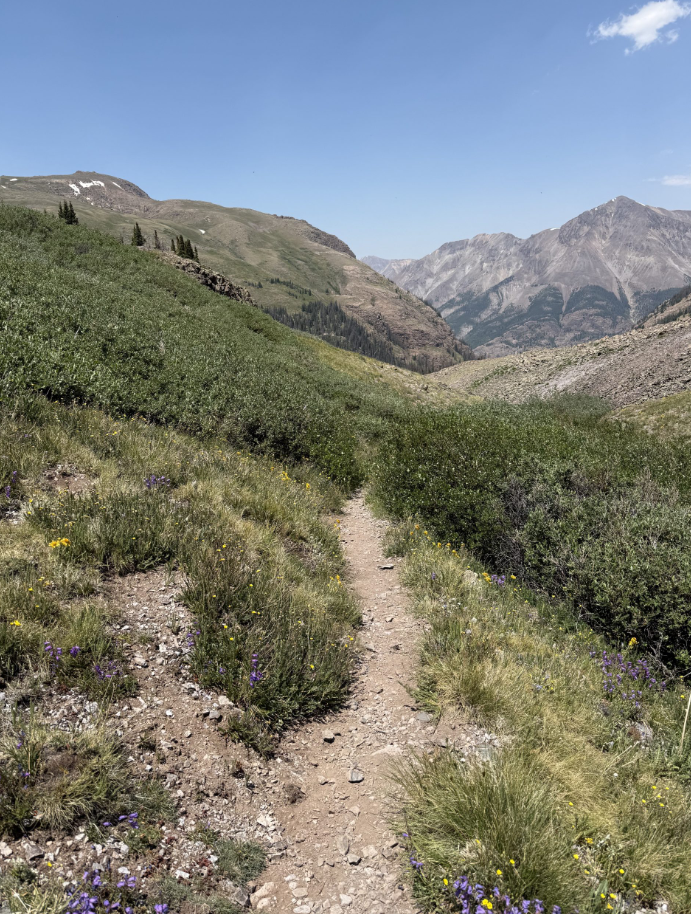
Views of the beautiful Hardrock 100 Mile course.
Aesthetics – Is it a pretty course?
Imagine rugged, snowcapped mountains towering into the sky. Majestic sunsets/rises. Unique and colorful geology. Florescent wildflower meadows. Cascading waterfalls. Shimmering alpine lakes… yep it was pretty!
Difficulty – Is it a tough course?
YES! It was indeed both wild and tough, in addition to being hard and rocky! The terrain, exposure, elements, steep grades, and vert/descent are all huge undertakings on their own! It’s not the individual difficulties, but how they compound throughout 100 miles.
Organized and well run – Did it feel like a well-oiled machine or were they flying by the seat of their pants?
The Hardrock 100 Mile Endurance Run is a tremendously well-oiled machine! The care and attention to detail to ensure this event is a unique and remarkable experience for every runner present was unmatched. The check in process was seamless. Trail marking was exceptional. And, most of all, the volunteers at every aid station were knowledgeable, full of energy, and went above and beyond the call of duty. One thing that stands out is when I arrived at Sherman, I was directed to a volunteer who already had my drop bag items laid out on a table. She then proceeded to take care of anything I needed. My own personal volunteer! I’ve never encountered anything like it before. Mind blowing!
Competition – Is there a strong field?
YES! One of the strongest fields I have ever had the pleasure to race with!
Logistics – Does it require a special handshake, registration a year in advance, hotels all booked? Give us the low down on the nuts and bolts of making the race happen.
The Hardrock 100 Mile Endurance Run is a lottery race and you must run a qualifying race every 2 years to be considered. I was lucky enough to get into the race after only 2 years of applying, but there are folks who wait 10+ years! The process is nuanced, and more in-depth information can be found here.
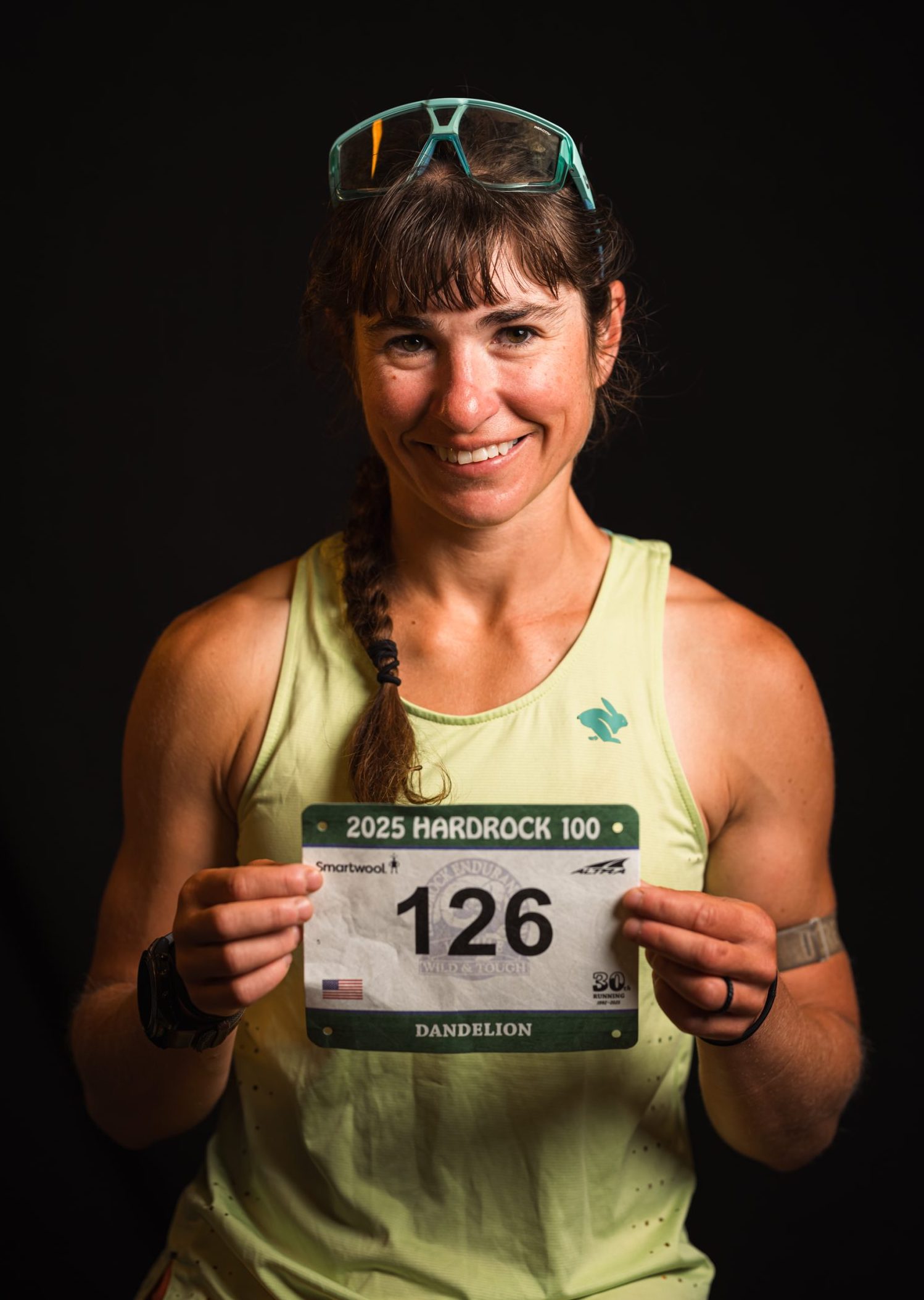
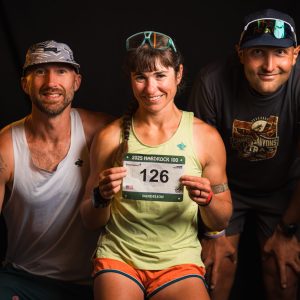
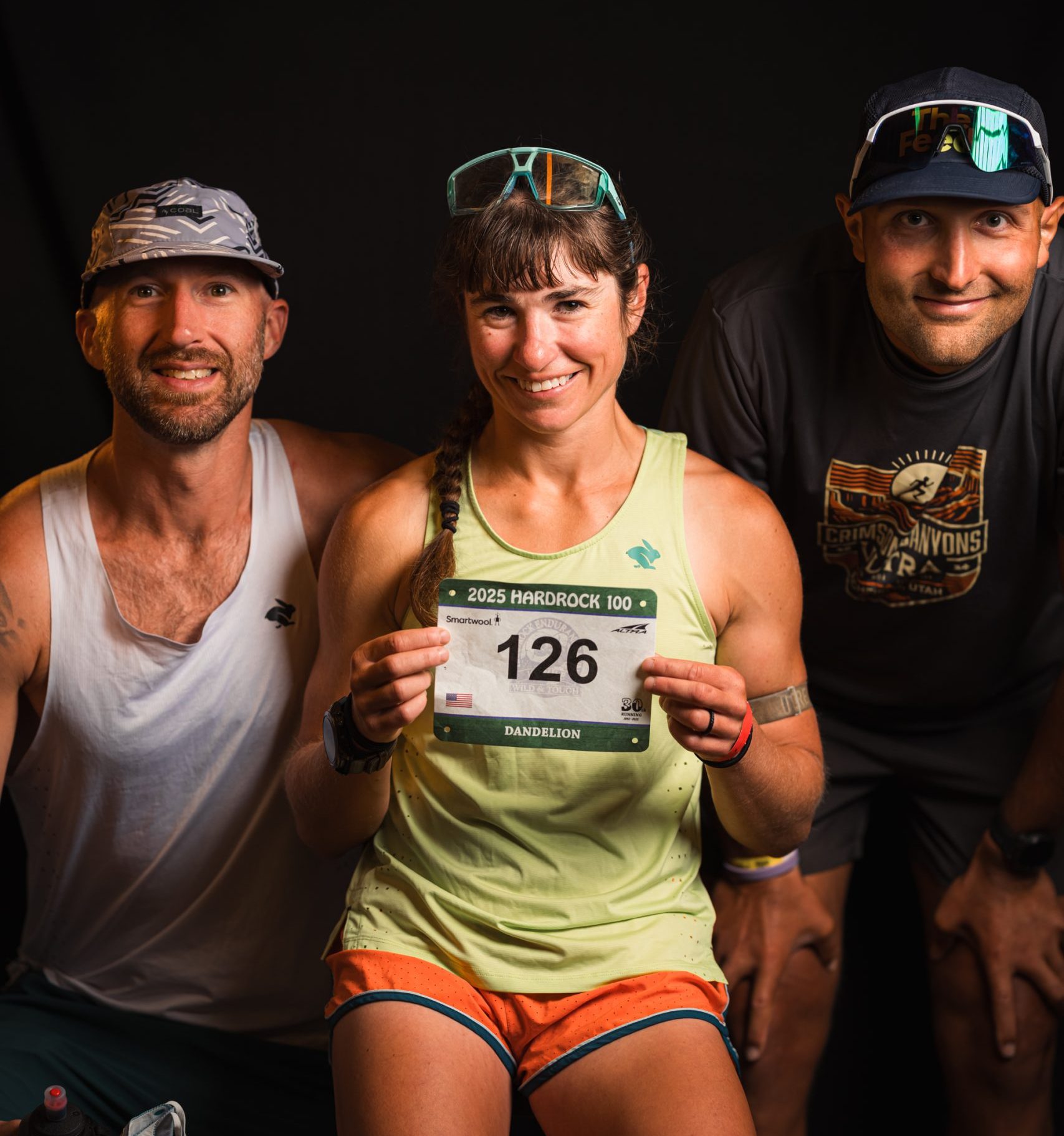
Dandelion pre-race holding her Hardrock 100 bib. PC: Travis McWhorter
Aid Stations – Standard fare or anything special to know about the aid stations in terms of what’s available or when?
The aid stations have the standard fare like PB&J, quesadillas, fruit, chips, cookies, broth, candy, etc. This year, engineered nutrition/hydration was provided by Tailwind and Maurten. Most aid stations also have a “special offering” that is unique to them: pizza, homemade rice krispies, perogies, etc.
Weather and typical race conditions
This is the San Juans! Anything and everything can happen. This year, there was smoke during the beginning of the race that cleared. Then it was hot during the day (70-85F) and mildly chilly at night (40-50F), which was unusual. Most years see some kind of electric event along with rain, hail or snow …or all of it! It is also common to experience very hot days followed by nights below freezing.
Gear – Did you need anything special or is there anything you’d recommend for the next runner?
Poles and backup poles. I would not want to do this race without them! Extra electrolytes come to mind as well, because at altitude you need so much more! Also, sun protection, rain and cold weather gear.
Spectators – Is this a friendly course for your friends?
The course passes though the towns of Silverton, Ouray and Telluride which are all very accessible for spectators. Other aid stations require a 4×4 or ATV.
How’s the Swag?
So much swag! I left check in with three shirts! Additionally, there were tables filled with items for purchase. And, of course, there’s the awesome Hardrock 100 Mile finishers’ buckle!
The Overall Score – How many stars do you give this race and do you recommend that others run it?
10,000 out of 10! This race is custom made for high alpine mountain runners who want to challenge themselves like never before and witness surreal beauty.
Dandelion Dilluvio-Scott is a multisport outdoor athlete, ultra-runner and certified coach. She is passionate about collaborating with driven athletes who love to explore, train and play outside.
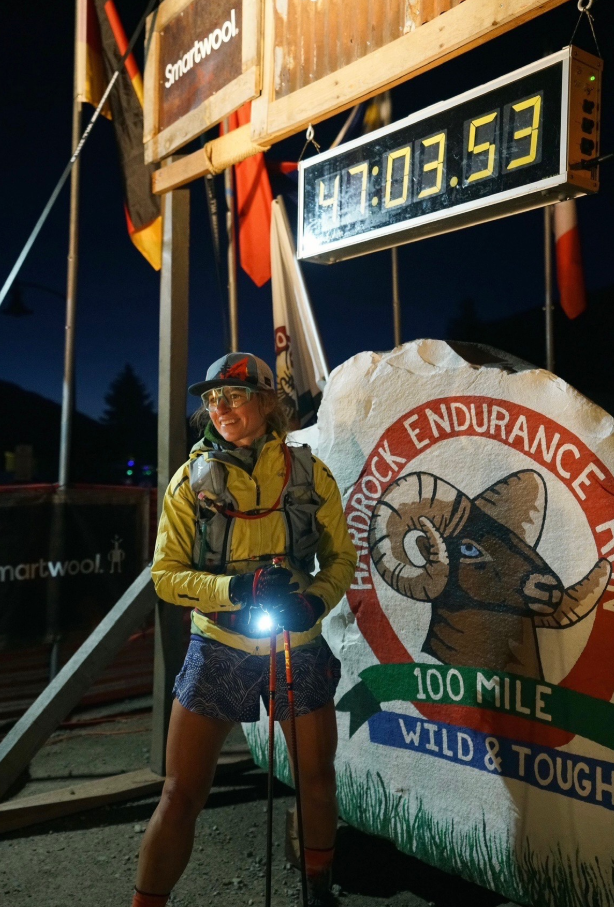
Team RunRun Coach Dandelion Dilluvio-Scott finished the 2025 Hardrock 100 Mile Endurance Run in 47 hours, 3 minutes, and 41 seconds, less than 1 hour under the 48-hour time limit. Far from the 33-hour finish she’d trained for, Dandelion’s mental and physical strength allowed her to endure a myriad of challenges and still finish smiling. Alongside her traditional race recap, which can be found here, Dandelion details her race experience beautifully below.
“It Was The Best of Times; It Was The Worst of Times”
Dandelion at the finish of the Hardrock 100. PC: Andrew Podbielski.
The quote from Charles Dickens’ A Tale of Two Cities perfectly sums up my Hardrock 100 Mile Endurance Run experience: “It was the best of times; it was the worst of times.” But let’s start from the beginning.
Lottery Luck: I’m Racing the Hardrock 100!
On December 1, 2024, I returned from a long desert run to a flood of congratulatory texts. I couldn’t fathom what I’d done to earn so much praise—until I opened my inbox and saw the UltraSignUp receipt. Against all odds, I’d gotten into the Hardrock 100 with only two tickets! In an instant, my 2025 plans were rearranged, and training for high-level mountain running became my mission. It would not be an exaggeration to say that the preparation involved copious amounts of blood, sweat and tears! The volume of running, hiking, strength work, vert, cross-training, and corrective exercises was massive. Countless talks with my coach, visits to my chiropractor, and physical therapy sessions kept me on track and my body tuned for the intense workload. And then, abruptly, it was time to taper.
The Final Countdown
By the time I arrived in Silverton, Colorado, I felt like a caged tiger—I just wanted to GO! Thankfully, my team kept me in check: easy shakeout run, race check-in, gear review, nutrition planning, crew meeting, bedtime.
Surprisingly, I slept well the night before the race. There was a palpable sense of calm and tranquility. I trusted my crew, my training, and my experience with the distance. Yet I also recognized I was stepping into the great unknown—part of what made it so exhilarating—and I deeply respected the course. I felt confident I had done everything I could to prepare. Now it was time to execute the plan, adapt to the inevitable problems, and see what unfolded.
Dandelion pre-race holding her Hardrock 100 bib with her pacers. PC: Travis McWhorter
I trained not just to finish but to perform. I wasn’t under any illusion I’d outrun the elite-level runners on the start list, but if everything went well, I believed I could finish in 33–35 hours. On race morning, Dale Garland called us to the corral, and I found myself lining up right next to legends Katie Schide and Zach Miller, two of the best runners in the world. It was surreal! The countdown began—and we were off, galloping down the road toward the mountains.
And We’re Off on the Hardrock 100!
As expected, everyone shot out hot. We were running Hardrock! I settled into my pacing strategy as the wide streets of Silverton gave way to trails, letting the field spread out. This was not the time to race—this was time to chase, savor the moment, and practice restraint. Meanwhile, smoke from wildfires drifted in overnight, and the air smelled of ash. Thankfully, as we climbed higher, the smoke thinned and finally disappeared, revealing astoundingly beautiful 360-degree views.
At the Cunningham Aid Station, my husband met me and guided me to Luke and Andrew. Vest swap. Food. Protein shake. NASCAR pit crew style—I was out of there. I wouldn’t see my team again for about 50K. (You can better understand the names and layout along the course of the aid stations here.)
50 Miles to Remember (Positively)
Running ultras without crew support is my norm, so the solo 50K felt comfortable. The section to Burrows Aid Station included steep climbs and the most “rolly” terrain of the course. I trotted along, cooling off in creeks and snow patches as midday heat rose, bouncing in and out of a bubble of runners. Sometimes we chatted, other times we ran in shared silence, awestruck by vast wildflower meadows and stunning vistas. In most races, I barely notice scenery, absorbed in execution, but here I made sure to soak in the San Juans before returning to my race strategy. My fueling, salt, and hydration were on point. Everything was going to plan, and I was having a blast playing in the mountains.
After Burrows, the main objective loomed: Handies Peak—the course’s high point at 14,048 feet. I teamed up with two athletes on the ascent, and together we made efficient work of the climb. Between the great company and tagging a 14er summit mid-race, this was easily my favorite section. Nothing compares to standing atop a 14er during Hardrock!
TRR Coach Dandelion Dilluvio-Scott enjoying the beautiful trails and scenery. PC: Travis McWhorter
Steep ascents are followed by steep descents, and this one felt endless but offered incredible scenery. At sunset, I rolled into Animas Forks Aid, reuniting with my crew. Toenail blister lanced, shoes swapped. I tried eating solid food but struggled to swallow—it all felt like sandpaper. Still, I could handle gels and liquids, so I didn’t overthink it.
Night #1: The Unravelling
Luke joined me for pacing duty, and we climbed toward Engineer Pass. Though we were moving efficiently, I observed that my breathing was getting more labored compared to earlier in the day. Then, at the next aid station, I realized solid food was no longer an option, and gels were becoming repulsive. Luke insisted on consistent gel consumption, monitoring each one to ensure I finished it. I was doing my best to keep calories coming in, but I knew I was starting to fall behind. The gorge descending into Ouray was electrifying at night! A narrow and technical trail beside a dark drop-off into nothing. Luckily, my background as an alpinist helped me feel comfortable with the mystery exposure!
Andrew took over pacing from Ouray. The climb out of town—up a dull, washboard road—was my least favorite section. Without Andrew’s engaging stories, those miles would’ve been excruciatingly monotonous. Higher up, the nearly full moon illuminated the craggy peaks, transforming the environment into something magical. By then, I couldn’t eat gels while walking anymore—the simple multitasking spiked my heart rate. Hilariously, consuming one now involved soft whimpers. Even in the moment, I saw the humor in it! Yet, despite everything, I kept drinking fluids (including liquid calories) and electrolytes never feeling dehydrated.
Hardrock Survival Tools: Consistent Training, Muscle Memory, and 5* Crew/Pacers!
Dandelion on course and still smiling during the Hardrock 100. PC: Travis McWhorter
As dawn broke, we climbed steep singletrack. Andrew watched carefully for signs of me sleepwalking off the trail. Though utterly exhausted, I stayed sure-footed. Nearing Kroger’s Canteen aid station, we climbed a 50-degree icy snow slope with a handline for good measure—like boot-packing a glacier with a full backcountry ski pack. Using the “rest step” from mountaineering, I reached Hardrock’s most remote aid station. Andrew remarked how impressed he was that my technical skills were intact after so many miles—a testament to years of ingrained muscle memory, even if I was moving slowly.
A brief stop at Kroger’s brought a few pierogis and broth—solid food was finally tolerable again! We descended into sun-drenched talus, making our way to Telluride. The sun felt revitalizing, but the night had taken a heavy toll. In Telluride, my legs were massaged, and I devoured solid calories, feeling almost normal again.
Andrew, continuing his marathon-long, 10,000 feet-vert pacing shift, set out with me for a remote 10-mile stretch. The first 1,000 feet of climbing went well, but then my body stopped responding. Whether from heat, steepness, or both, my pace collapsed. Concerned about heat illness, Andrew had me pause in the shade regularly and dunk my hat in cold streams. I continued forcing down revolting gels under Andrew’s watchful eye.
A Plan is Great… Until You Get Punched in the (Metaphorical) Face
The low calories overnight had triggered a cascade I couldn’t reverse. Hardrock is unforgiving: without sufficient calories, my body couldn’t regulate itself or cope with heat and altitude as I had the day before. Even though I live and train at altitude, slept in an altitude tent, and did a sauna protocol pre-race, the single issue of being unable to consume fuel overnight dominated. The early wildfire smoke may have also contributed, but it likely wasn’t the main issue.
Negative thoughts crept in, swirling with imposter syndrome. I knew I was slipping behind, and I questioned if I belonged here. When we paused at yet another creek, I burst into tears.
Dandelion moving through an aid station. PC: Travis McWhorter
Andrew calmly put his arm around me and asked, “Are you going to finish this?” “Yes,” I replied through tears.
And just like that, the pity party ended. I needed the emotional release, capped with self-affirmation. I started back up the hill so fast I knocked the wind out of myself—Andrew had to grab my vest to slow me down! Though I couldn’t push hard, my mood soared and determination set in.
Pacer Swap and Into Night #2
After an eternity of climbing, we reached a blustery ridge, then descended a steep talus slope. The San Juans were relentless. At Chapman aid station, I reunited with my crew and serendipitously crossed paths with Kat, a friend from Wy’east Wonder 50M. I ate, got a brief massage, and took a five-minute nap before following Luke up the next wooded trail.
At first, I felt decent, but soon a vague calf tightness escalated into searing pain. Luke, patient but firm, reminded me I had to maintain at least 2 mph on flats and descents to finish. Inside, I thought, Are you crazy? The downs are harder than the ups—and I can’t believe I’m heading into a second night! But I didn’t argue. He was right, and I willed myself to move.
Emerging from the forest, we slogged up ever-steepening talus and scree. I was zoning in and out of consciousness but recognized Grand Swamp Pass—infamously difficult and something I’d looked forward to. I broke the remaining miles into smaller goals: “Just get to the top.” Despite calf pain, I kept moving methodically, drawing on mountaineering experience.
To DNF or Not To DNF the Hardrock 100?
We topped Grand Swamp Pass at sunset, catching the course’s most iconic panorama. One landmark down, next goal: KT Aid Station. I don’t remember much of the descent. At KT, Luke asked what I wanted to do, saying he believed I could finish but would support any choice. The aid station volunteers kindly insisted I still had time. I wasn’t worried about cutoffs—I was evaluating my calf. My personal rule is never to quit because it’s hard or performance isn’t as hoped, but I won’t risk injury that sidelines me for weeks or puts me in danger.
Dandelion kissing the infamous rock at the Hardrock 100 finish line. PC: Travis McWhorter
I recalled my husband mentioning a knot during the earlier leg massage, which reassured me. “Let’s go one more mile,” I said—classic!
We got up and headed out. I knew Luke wouldn’t hesitate to be a drill sergeant, so I decided to not give him a chance to bark orders! Each step was agony and every rock I stubbed a toe on felt like a knife. I didn’t try to push the pain aside anymore. Instead, I embraced it. A mile went by… then another. My calf didn’t get worse so I settled on it being a wicked knot and kept trudging. The truth is, when I left KT Aid Station I had completely committed to making it to the finish. I just couldn’t mentally handle thinking about that monumental task yet. One mile seemed much more attainable.
The Final 5 Miles: Putnam to Kissing the [Hard]Rock!
False summits revealed more headlamps, but I accepted there’d be no reprieve until Silverton and pressed on. At the final aid station, Putnam, we quickly refilled bottles before heading into the last six miles. Normally, I follow my pacer, but in this instance, Luke stayed behind, gently herding me down the trail. Moving urgently, but knowing I’d make it within the time cutoff, we even managed some casual conversation, lightening the mood. The final miles flew by: crossing the river, traversing the hillside, climbing up the road, descending into Silverton, through the chute—and finally, I kissed the rock.
Hardrock 100 Post-Race Reflections
Did the race unfold as I’d hoped? Nope, not at all! But oddly, I’m not upset. It’s almost comical: my best 50 miles ever were in the same event as my worst 50 miles—endless comedic value! More importantly, races that don’t go to plan teach the greatest lessons. The grit, determination, and resilience I needed to finish were unmatched in any event I’ve done—including Cocodona 250. I’ll carry what I learned at Hardrock 100 into every future race and adventure. That holds far more value to me than a podium finish. Performance goals push me beyond perceived limits, but what I truly seek is self-discovery on the wilderness path of endurance—adapting and moving with the environment, building grit, remaining a student of the sport, and having a life-changing adventure. Hardrock delivered all that and more.
Dandelion Dilluvio-Scott is a multisport outdoor athlete, ultra-runner and certified coach. She is passionate about collaborating with driven athletes who love to explore, train and play outside.
Understanding cross country, and how to best support a young runner.
So, your high schooler just signed up for cross country, and now you’re wondering what that even means? Or maybe you know what cross country is and you’re questioning why anyone would ever choose to participate in this sport? Well, you’ve landed in the right place. In this guide, I’m going to share everything a parent needs to know to be supportive of their athlete, alongside why I think this sport is transformative for a high schooler’s growth and character development. (Note, for brevity’s sake I’ve used “high schooler”, but this could easily be replaced with “middle schooler”.)
San Marcos High School girls’ cross country team‘s pre-race huddle.
How to Best Care for Your Young Runner
Top 4 things to know about your young cross country runner:
1. They are going to be HUNGRY!
They are going to be HUNGRY. Parents, be ready to increase your grocery budget, because a cross country runner needs to be fed a lot! Especially a high school runner, as they are exercising more than they have in the past, and at the same time their bodies are growing and continuing to develop.
Eating enough to fuel the work they are doing is more important than what they are eating.That said, well balanced meals are best with plenty of protein, fats, and lots of carbs.
Snacks! Things like granola bars, protein bars, bananas, peanut butter crackers, apples, etc, are easy for your athlete to take with them to school. Let them snack throughout the day in addition to eating their breakfast, lunch, and dinner. A well-fueled athlete is a healthy and happy athlete.
Timing is important here too. A big meal immediately before a workout or race is not ideal, but having a meal 2-3 hours before is a great idea. Then, a lighter, carbohydrate-based snack closer to their workout or race helps to keep their energy up. After a run, it is important to have a high protein snack within 30 minutes (if possible) to kickstart the recovery process.
Young athletes running a hot cross country race.
2. They are going to be SWEATY.
Even though cross country is a fall sport, expect the cross country season to still be a hot season! Especially if your athlete is running through the summer.
Laundry! Parents, prepare to have the washer and dryer running more often this fall! If they don’t already, be sure to teach those teens to take care of their own laundry (you’ll thank me for this later).
Hydrating with electrolytes to replenish sweat losses. I require my high school athlete to bring a 30oz water bottle with them to school and practice. They should be filling that bottle multiple times a day as they stay hydrated. In addition to water, purchase some electrolyte drink mixes or tablets to help them replenish what they’ve lost at practice. You can find some helpful suggestions in “Electrolytes for Runners“.
3. They are going to be TIRED.
Sleep is the number one recovery tool any runner needs to master–easier said than done in high school! Encourage them to be diligent about completing their homework with enough time to wind down and relax before bed. Underscore the importance of sleep–ideally 8-10 hours per night–for performance and injury free running.
4. They are going to be SORE, especially at first!
Being able to distinguish soreness from injury is an important skill to develop. Here is a general rule of thumb that I share with my team: if the feeling is bilateral (both sides of the body) it is likely soreness, but if it is unilateral (one side of the body) it could be an indicator of something worse.
Notes on running shoes for your young runner:
Proper, quality footwear for daily training can reduce the likelihood of young runners developing injuries. I would suggest going to a local run specialty store and getting fitted for a shoe. If there is not a store near you, purchasing shoes from runningwarehouse.com is a great option. Be sure to look for a road running daily trainer (yep, even if they’re running on grass), and replace every 300-400 miles, or approximately every 3 months. When one of my athletes complains of lower leg or foot pain, the first question I ask them is how old are your shoes: old shoes are often a major contributing factor.
Specific racing shoes are not a requirement but they can be fun! Depending on the courses that your runner will compete on, purchasing cross country spikes or flats might be appropriate: ask their coach for recommendations. Racing shoes should be used only for racing or a few key workouts; a supportive daily trainer is still a must-have.
High school runners during a muddy cross country race.
Back to the Basics: Cross Country 101
Now that we’ve gotten the critical information out there, let’s dive into the sport of cross country more deeply. Afterall, understanding your child’s sport is crucial to being able to connect with and support them best.
What is Cross Country?
Cross country is an endurance running sport where teams compete on courses that have varied terrain: grass, dirt, asphalt, gravel, uphill, downhill, and more. For high school cross country, courses are typically 5 kilometers or 3 miles long, while in middle school, athletes run shorter distances, such as 1 mile or 2 kilometers.
Scoring Cross Country as a Team Sport
San Marcos High School girls’ cross country team.
Compared to other forms of distance running, cross country is the closest to a team sport. Generally, a scoring cross country team consists of the team’s first 7 finishers in a given race. The overall finishing places of the top 5 athletes on a team are added up to total the team’s score. The team with the lowest score wins. Athletes finishing 6th and 7th for their team can be thought of as the defense. They add to another team’s score by finishing in front of a runner in their top 5 and are scored in the case of a tie. Athletes who finish 8th and up for their team do not factor in the scoring for that race, even if they finish in front of another team’s 5th runner, and their place will be skipped in the scoring.
Cross Country Conversations with Your Athlete
Every cross country course is different, so when having a conversation with your runner about their race it’s best to ask them open-ended questions like, “how did you feel?”, and “what were you thinking about in the last mile?”. Far too often, athletes get asked, “what was your time?” and that information isn’t really relevant to their performance in a cross country race. And don’t worry, if they ran a personal best time they will let you know without being asked!
Benefits of Cross Country for Young Runners
Inclusivity
I have seen it time and again, students who don’t feel they “fit in” in other sports find their way to cross country and have a transformative experience. Cross country is inherently inclusive as, unlike the majority of other sports, it is often a “no-cuts” sport. All are welcome to join regardless of ability, and all have the opportunity to work hard and improve their running.
Resilience
San Marcos High School boys’ cross country team.
It takes discipline to show up to practice each day with a positive attitude and continue to do a difficult thing.
Athletes develop an ability to recover from difficult practices and still choose to come back the next day.
They are resilient in unity and togetherness, challenging one another to accomplish more as a team than they could alone. The team bonding that happens naturally amazes me every year. Cross country runners make friends for life.
Integrity
Oftentimes, the coach isn’t able to follow each athlete on every run. That is where integrity comes in: choosing to complete the prescribed run without cutting corners, the core routine, strides, stretching, etc. Former cross country runners are some of the most trustworthy people I know: they follow through on their commitments, and hold themselves to a high standard.
Socializing
Cross country is a very social sport. Easy running makes up the majority of a cross country runner’s training, often described by coaches as a “conversational” pace. Put simply, we are encouraging your kids to talk with each other! They have 30-90 minutes of uninterrupted time with their friends, and without their phones in their hands, to talk to each other, ask questions, and tell each other stories. There’s a reason run clubs have become so popular among adults; the cross country team at your local high school already figured that out years ago!
Benefits of Cross Country for Parents
It’s cheap, far cheaper than other sports!
The only equipment needed are high quality running shoes, a watch to time workouts, and a water bottle. Sure, there are other “nice to have” items like specialty running shorts, hats, socks, and those cool looking multi-colored sunglasses. But the basic necessities to participate in cross country are few.
Shared experiences with your child
Your child participating in cross country gives you a great opportunity to step out of your comfort zone, learn about a new sport, and quite frankly get some exercise chasing them around a course to cheer them on. I invite you to buy in. Just as you would like your athlete to be all in on their training and connecting with their teammates, choose to be all in as a parent. Host a team dinner, provide some post-meet snacks, cheer the team on at their meets. The athletes and the coaches will truly appreciate it!
For those without a school cross country team, or young runners looking for alternate training and racing opportunities, check out this list for cross country clubs across the US.
Evan Covell is a coach with Team RunRun based in Santa Barbara, California. He helps runners set and achieve their goals through personalized, science-based training and injury prevention.
3 Bests – What aspects of the race did you like the most?
Outstanding race organization
Supportive spectators and crew
Beautiful and challenging course
Not so much – Aspects of the race that didn’t do it for you
The whole race is at an elevation above 10,000 feet, and this was definitely a factor. Coming from Charlotte, North Carolina (basically sea level), it took about 10–12 miles before my heart rate settled into a manageable rhythm. Even after a few training runs in Colorado in the days leading up to the Silver Rush 50, there were still moments where the thin air made it tough to breathe.
Fueling was also bit tricky (which is common at high altitude). It was warm, and I didn’t feel very hungry during the race. I relied mostly on liquid calories, which worked fine until around mile 40 when I started feeling a little lightheaded. Looking back, I would have worked on eating more solid foods earlier on to help keep things balanced.
The climbs were no joke. Some sections had over 4 miles of steady uphill grades that tested the legs. If I were to do it again, I’d target more specific training spots to better simulate those long, sustained climbs.
Weird factor – What’s the weirdest thing about this race?
The Leadville Silver Rush 50 Run kicks off at the base of a snow tubing hill in downtown Leadville. As the starting gun fires, runners begin with a steep uphill climb. One of the most exciting aspects of this race is that the first male and female to reach the top earn a coveted Leadville 100 Run lottery coin, gaining them entry into that race!
Highlights of your race – What did you do well and enjoy about your race in particular?
The breathtaking views. Running through the mountains at over 10,000 feet offered some of the most stunning scenery I’ve ever experienced. The views around Leadville were truly surreal—there were moments I had to pinch myself to believe it was real. Leadville holds a special place in the ultra-running world, and I felt incredibly fortunate just to be out there running.
My crew—made up of my parents, aunt, and best friend—meant everything to me. They’re my anchor during these long endurance events, and I love sharing the energy, excitement, and sense of accomplishment with them. Being part of a community like this, with their support, is something I’ll never take for granted.
Lessons for others – Share your pro-tips on the race to help the next runner
Advice from a sea-level runner:
Coming from close to sea level, my biggest piece of advice for anyone considering the Silver Rush 50 Run is to train for elevation. If possible, spend time in Colorado—or another high-elevation area—and get in a few long runs to help your body adjust. If that’s not an option, try to arrive a few days before the race to give yourself time to acclimate.
Another important tip: be mindful of your hydration and nutrition. Hyponatremia can be a real issue out there. Not taking in enough calories or overhydrating without proper electrolytes can seriously impact your race—and cost you that strong finish you’ve trained for. Be conscious of what you’re putting into your body and make a fueling plan that works for you. Always practice with your fuel before you race to ensure it sits right in your stomach!
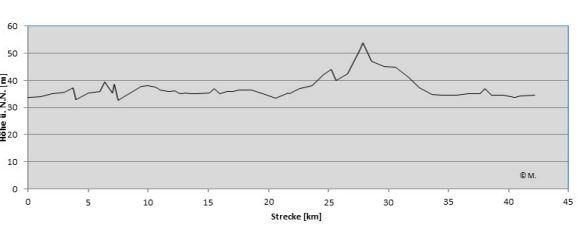
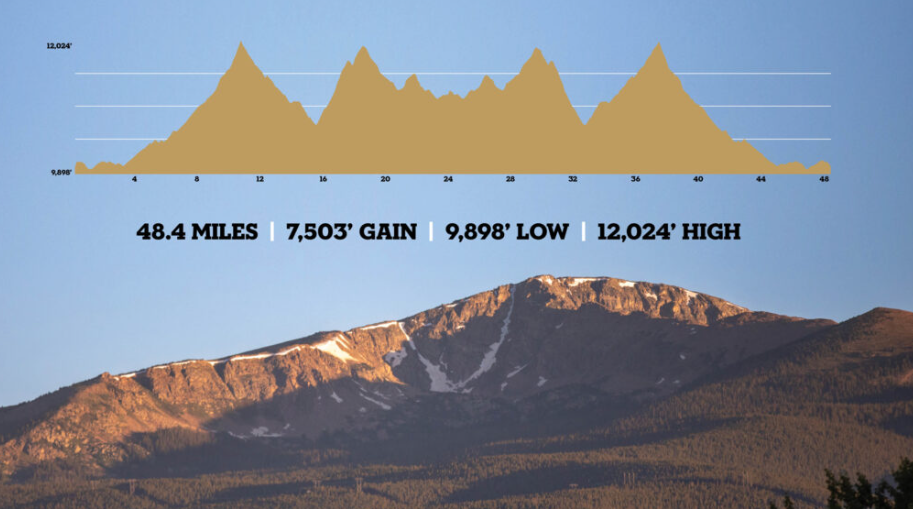
Leadville Silver Rush 50 Run course elevation profile.
Most important course specific knowledge to know about the race
The Silver Rush 50 course features mostly rocky roads rather than single-track trails, with plenty of climbing and power hiking. I recommend training specifically for steep uphill climbs to prepare your body for this event. Prepare to be shocked by the stunning views as well!
Aesthetics – Is it a pretty course?
This course is absolutely stunning! Throughout the race, you’ll pass through historic mining areas—especially as you near the turnaround point—and be treated to breathtaking views of the Rocky Mountains from nearly every angle. The course winds past several majestic 14,000-foot peaks, with vibrant wildflowers lining the trail. You’ll even cross a few small streams, which are perfect for cooling off by dunking your hat when the heat kicks in. I’d give the views a solid 10/10! For many, this might just be the most beautiful course they’ve ever run.
Difficulty – Is it a tough course?
The Silver Rush 50 presents a unique challenge for runners. The trail is scattered with rocks, making footing tricky for anyone who isn’t paying close attention. It’s easy to see how one wrong step could lead to a twisted ankle. Both the climbs and descents are tough and relentless, demanding not just physical stamina but serious mental grit. Because the race is an out-and-back, it can be difficult to stay in the moment—you know exactly what’s waiting for you on the return trip. Mental strength is key here. The best approach is to focus on one mile at a time and stay locked into the present.
Organized and well run – Did it feel like a well-oiled machine or were they flying by the seat of their pants?
Life Time put on outstanding events. Their strong reputation for top-notch race organization really shines throughout the entire day. From the well-stocked aid stations and energetic volunteers, to the smooth award ceremony and exciting LT100 lottery drawing, every detail reflects their passion and dedication. The course is marked with signs and ribbons on the trees, leaving no guesswork for runners. Life Time truly capture the spirit of the trail running community, uplifting the Leadville area, and leaving a lasting impression on everyone involved.
TRR Coach Tanner Amrhien during the Leadville Silver Rush 50 Run. PC: Marathon FOTO
Competition – Is there a strong field?
The Silver Rush 50 Run boasts an exceptionally competitive and stacked field across all categories, including male, female, and non-binary participants. Any Leadville 100 qualifier race will be competitive!
Logistics – Does it require a special handshake, registration a year in advance, hotels all booked? Give us the low down on the nuts and bolts of making the race happen.
Since there aren’t commercial flights into Leadville, most people fly into Denver and then rent a car for the roughly 2 hour and 15 minute drive to the Leadville area. While Leadville has some smaller hotels and motels, my crew and I chose an Airbnb in Twin Lakes, about 23 minutes away. Leadville offers a variety of dining options, but we decided to pick up groceries at a local store and prepare our own meals at the Airbnb. Race registration opens in January, right after the LT100 Run lottery results are announced. I recommend signing up as soon as registration opens, since the race tends to sell out quickly as summer approaches. Likewise, booking your lodging early is a good idea because accommodations fill up fast. The 2025 registration fee was $125: a great value for a top notch 50-mile race.
Aid Stations – Standard fare or anything special to know about the aid stations in terms of what’s available or when?
The aid stations were well-stocked with classic favorites like bananas, M&Ms, and pretzels. They also offered a variety of Skratch Labs carbohydrate mixes, Neversecond C30 gels, and Skratch Labs chews. These options were especially helpful for runners who hadn’t been able to bring all their own nutrition for the race.
Weather and typical race conditions
This year, 2025, the race started at 6 am with a crisp temperature of around 47°F. As the day went on, it warmed up to the low 70s under bright sunshine—pretty typical for Leadville this time of year. Also, it’s not uncommon to have a brief late morning/afternoon rain shower. It does not last very long and will probably feel good if you’re hot!
One key tip: don’t forget your sunscreen. At this high elevation, the sun’s intensity is stronger, so make sure to use a sunscreen that suits your skin and helps keep you cool while you run . Another thing to keep in mind is to bring ice for your crew to give you. You can pat your neck or face with it to help control your body temperature. Personally, I preferred going without a hat throughout the afternoon. I felt extremely hot wearing my hat from miles 31 to 45. If you’re determined to wear a hat the whole time, I recommend investing in a lightweight spandex hat that still provides UV protection and keeps you cool.
Gear – Did you need anything special or is there anything you’d recommend for the next runner?
I highly recommend using poles for the long uphill sections of this race, especially the climb between Stumptown and Printer Boy aid stations. That stretch features several miles of steady uphill, and poles can really help save your legs.
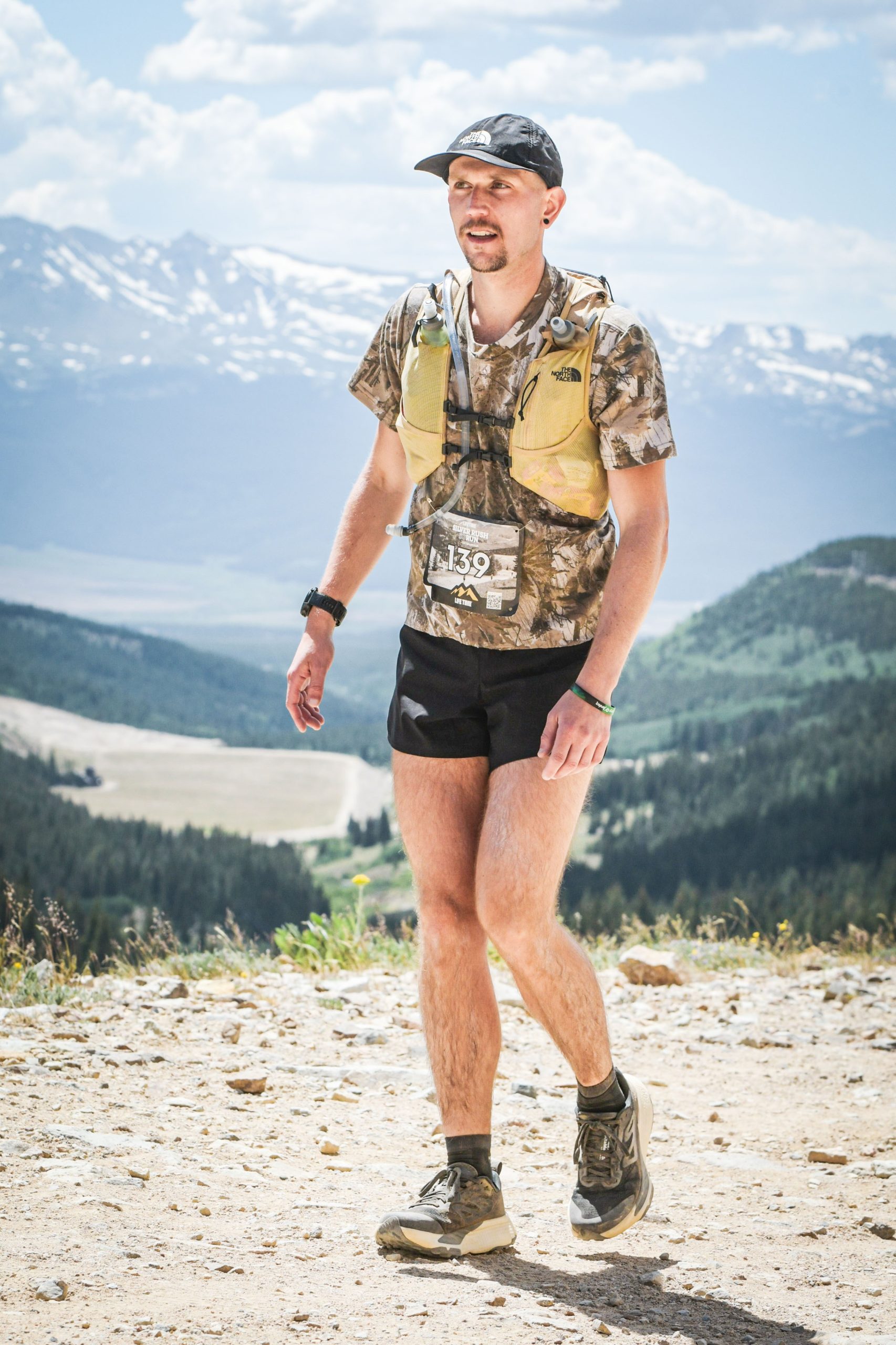
A runner racing on the Leadville trails with beautiful scenery in the background. PC: Life Time
Spectators – Is this a friendly course for your friends?
The aid stations were staffed with high-energy crews who were incredibly encouraging to all runners. There are shuttles available to transport your crew to the aid stations, which can be helpful, but they don’t always guarantee your crew will arrive before you do. According to my crew, getting to the Stumptown aid station (the turnaround point) was a bit tricky, so I’d recommend giving yourself (as crew or spectators) plenty of time to make that drive.
How’s the Swag?
Runners receive a high quality Leadville Silver Rush 50 Run shirt, some snacks, and a set of rubber stretch bands. All finishers are awarded a custom finisher medal and a copper cup engraved with “Leadville Finisher.”
The Overall Score – How many stars do you give this race and do you recommend that others run it?
10/10! I thoroughly enjoyed every part of the Leadville Silver Rush 50 Run—from the infectious positive energy of the runners, event staff, crews, and spectators, to the challenging yet manageable course. I’d highly recommend signing up for this, or another Life Time event!
Tanner Amrhien is a coach with Team RunRun based in Charlotte, North Carolina. He helps athletes improve performance through thoughtful training, science-based nutrition guidance, and injury prevention strategies.
3 Bests – What aspects of the race did you like the most?
Well-organized
Festivities and race atmosphere: The BOLDERBoulder 10K takes place on Memorial Day, and the entire event is a party!!
Something for everyone: Choose your own race experience. You can make it as competitive as you want, or ‘fun run’ it and enjoy all the on course entertainment!
Not so much – Aspects of the race that didn’t do it for you
I always arrive early (~6 am), so this wasn’t an issue for me, but I have heard that parking can be difficult. So I’d recommend arriving early!
Also, you can submit to move up to a higher wave (which is a good thing), but your ‘official’ time won’t appear for WEEKS and doesn’t show up on live tracking. So, depending on how far back you’re placed, it could be worth staying put if real-time results are important to you.
Weird factor – What’s the weirdest thing about this race?
I don’t know if this is a “weird” thing, but the race doesn’t offer finisher’s medals. While that doesn’t bother me personally, I know that’s an expectation for many.
Highlights of your race – What did you do well and enjoy about your race in particular?
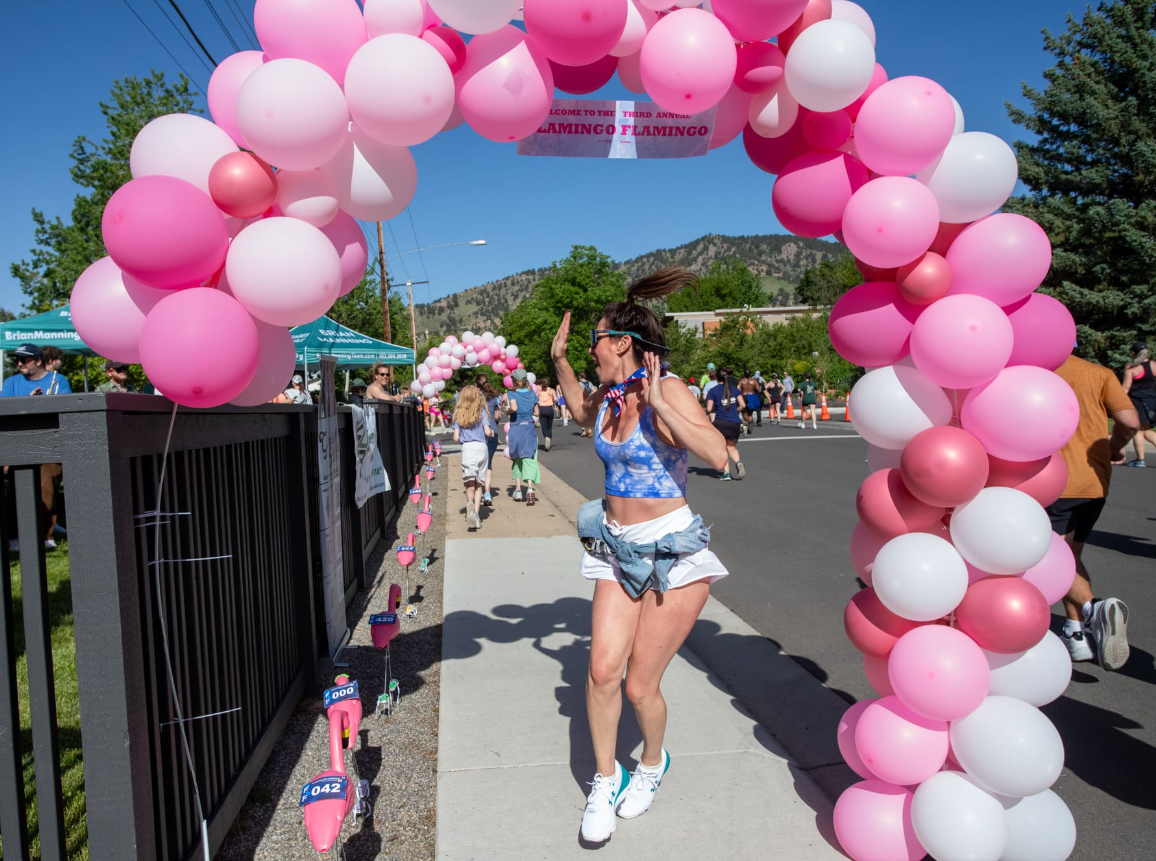
Party vibes on the race course.
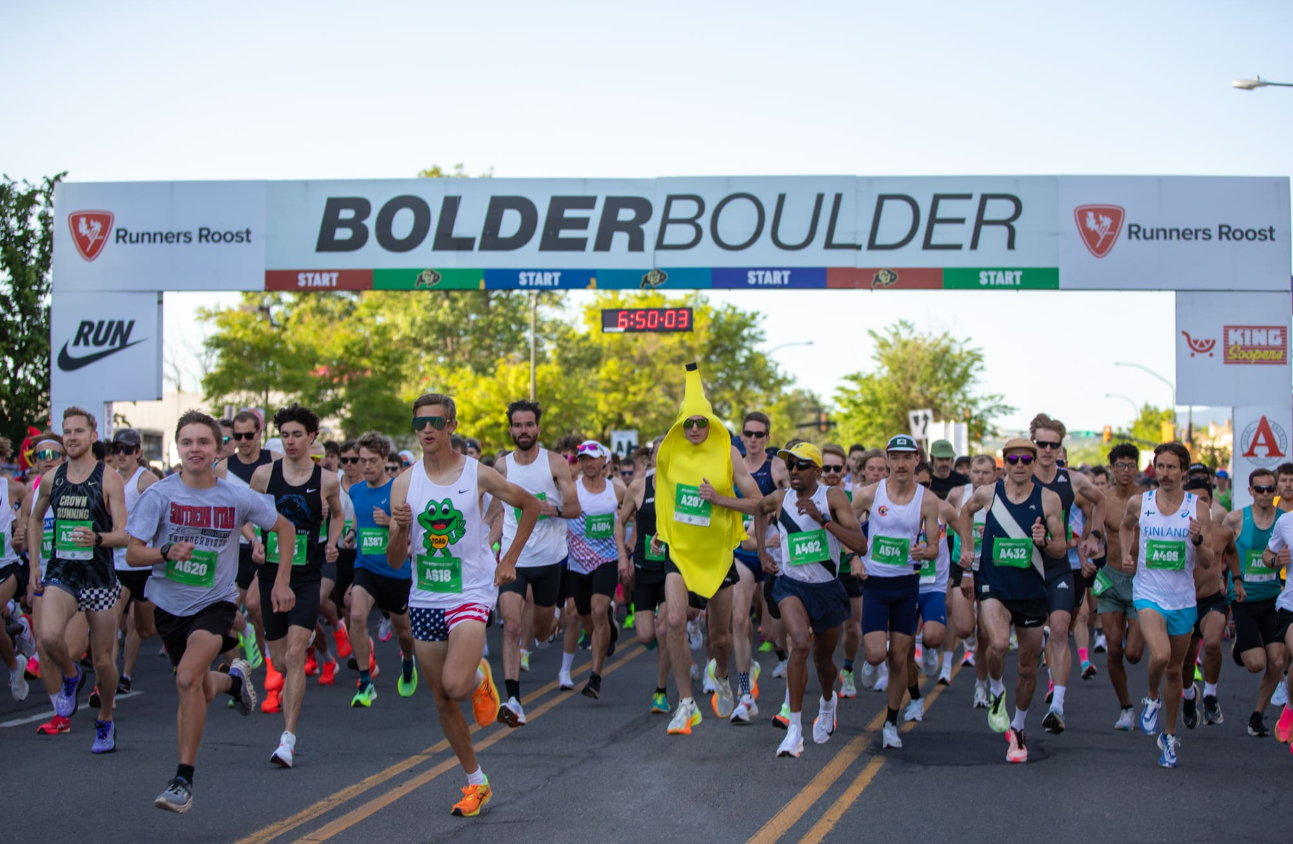
A unique highlight of the BOLDERBoulder 10K is the way the organizers start it; for a race this large (over 2300 finishers!), the waves are very small. This allows you to race it without a lot of human traffic to weave through! The waves are released about 90 seconds apart, and every wave gets its own gun and trumpet start. Very fun!
Lessons for others – Share your pro-tips on the race to help the next runner
I always arrive early (~6 am), so this wasn’t an issue for me, but I have heard that traffic and parking can be difficult, especially if you get there after 7 am. So I’d recommend arriving early! If you have a later wave, have some coffee, warm up, take in the atmosphere, but DON’T WAIT to get there!
If you’re coming from out of town, remember that Boulder is at an altitude of 5,430 feet. This is not considered “high elevation” but will require you to slow down a bit. Your sea-level 10K race pace will feel harder here, especially on the hilly course, so focusing on 10K effort rather than pace is the way to go!
Lessons you learned that will help you next time around
I’ve run this a few times and have it pretty dialed in. As mentioned above, try to avoid parking and traffic issues by arriving early.
The start of the BOLDERBoulder 10K.
Most important course specific knowledge to know about the race
It’s Boulder so… expect hills. The course is over mostly rolling hills, nothing too extreme but pretty consistent. The most significant inclines are halfway in so, on one hand, don’t be afraid to go out a little fast; however, it’s also beneficial to conserve some energy for the middle.
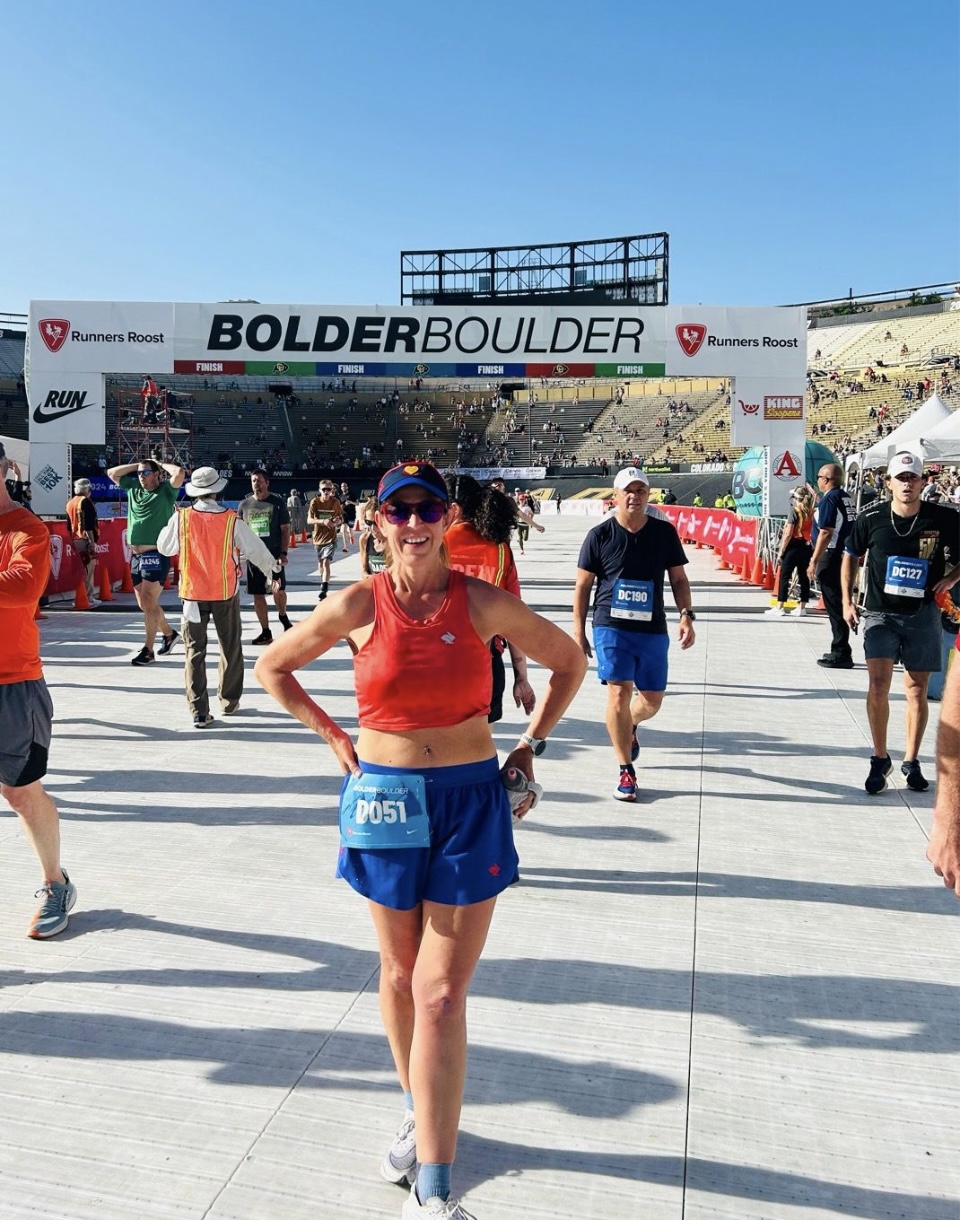
You’re better off racing this one on effort. Once you hit mile 5, it’s a nice downhill to flat… until you hit the big hill into the stadium at the end. The stadium finish is awesome!
Aesthetics – Is it a pretty course?
While you are definitely surrounded by beauty, it isn’t as “pretty” as the surrounding trails, given that the course runs through towns and neighborhoods. Spend any time in Boulder, though, and you’ll see plenty of beautiful scenery!
Difficulty – Is it a tough course?
With rolling hills and elevation, it’s far from the fastest course. However, it’s not impossible to PR (many runners do!) but you definitely have to prepare for the hills (and if from out of town, the altitude!)
Organized and well run – Did it feel like a well-oiled machine or were they flying by the seat of their pants?
The BOLDERBoulder 10K is impressively organized and well run. As one of the biggest road races in the world and 2nd largest 10K in the US, it would be easy for BOLDERBoulder to feel messy: it doesn’t. It’s one of *the* most well-oiled races you’ll ever experience.
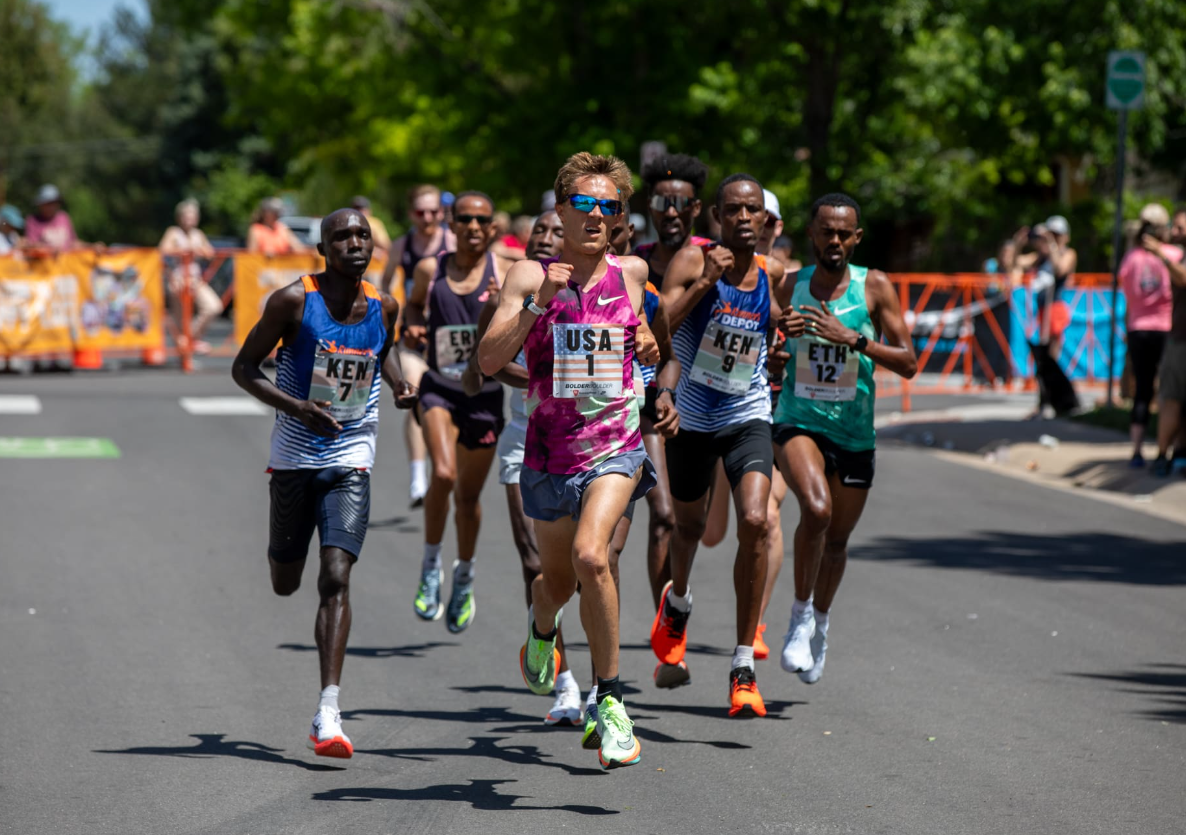
BOLDERBoulder Men’s Pro Race, led by Conner Mantz (bib 1).
Competition – Is there a strong field?
Yes, the earlier start waves and professional races are always stacked! BOLDERBoulder has a history of deep, international competition, and this year, Olympian and American Record holder Connor Mantz showed up to win it for the 3rd year in a row! A cool feature of this event is that (unlike most races) the elites have a later start time, so all of us “regular” runners can sit in the stadium and watch them finish. It’s a lot of fun!
Logistics – Does it require a special handshake, registration a year in advance, hotels all booked? Give us the low down on the nuts and bolts of making the race happen.
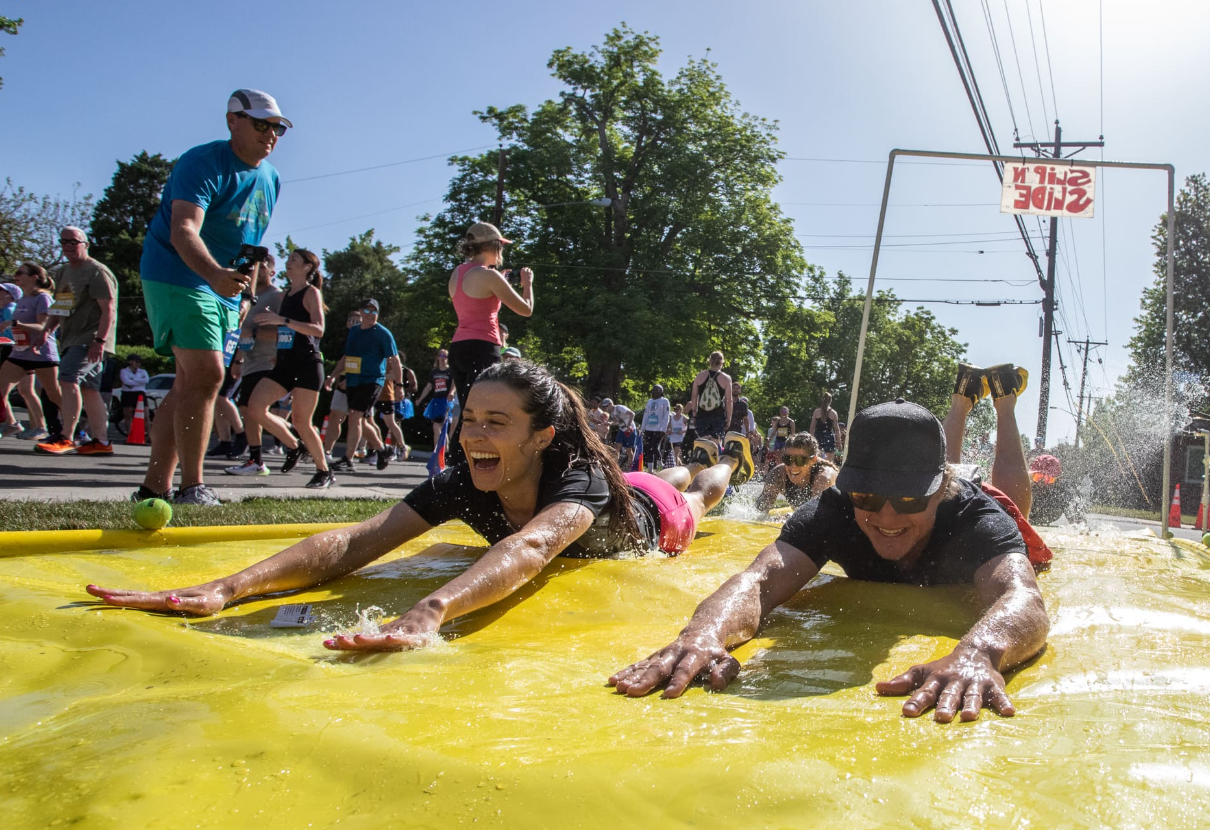
Runners taking a mid-race slip n’ slide!
No special handshake, but BOLDERBoulder is unique in that you can submit a qualifying time that the race uses for seeding into waves. These waves run from ~6:50 am until after 9 am. If you don’t submit a time, you’ll get placed in the mass start (ie, party wave!) after 9 am.
Aid Stations – Standard fare or anything special to know about the aid stations in terms of what’s available or when?
They have the standard aid station fare of water and Gatorade. BUT, the fun stuff is what the local residents and on course spectators provide. Since it’s on Memorial Day, the community comes out in force! There’s all kinds of food (including bacon at mile 3!) and booze if you want it.
Weather and typical race conditions
It’s Colorado, so you never know what you’ll get! It could be 80 degrees and sunny, or cold and raining (which it did this year). Prepare for anything!
Gear – Did you need anything special or is there anything you’d recommend for the next runner?
No.
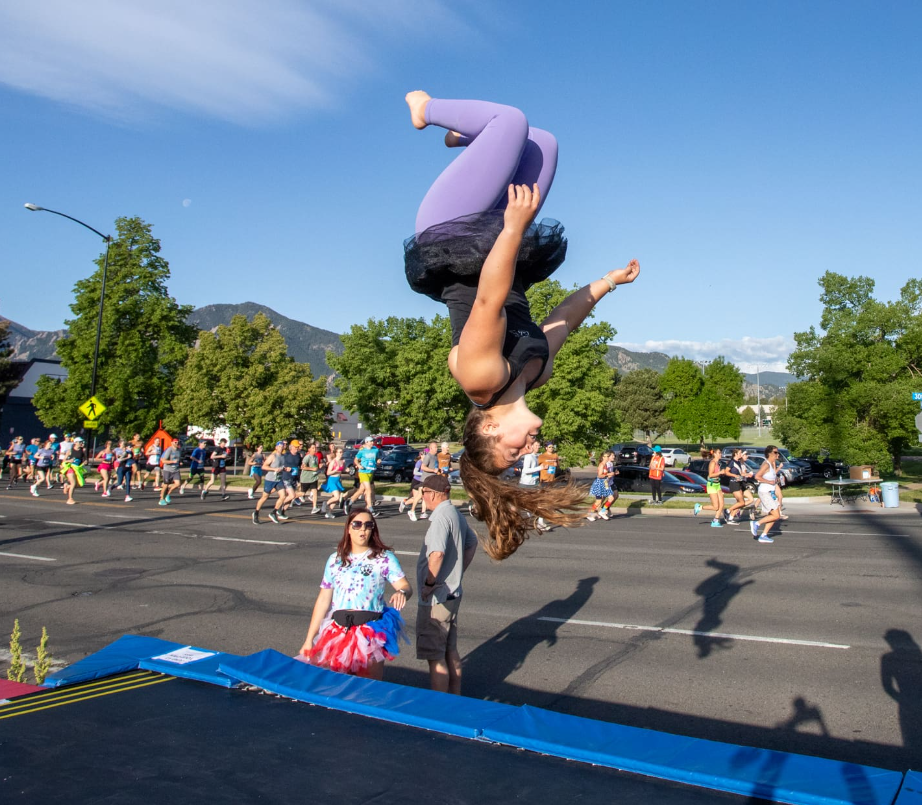
A runner bouncing on a trampoline during the BOLDERBoulder 10K!
Spectators – Is this a friendly course for your friends?
Very much so!!! The course and stadium are lined with spectators cheering everyone on and creating a great race atmosphere!
How’s the Swag?
The race shirts are great! They offer different styles, which you can choose from when you register. While they don’t have finisher medals, they DO offer various prizes, like key chains for the top 15 in each age group, and other cool incentives. If you finish under 40 minutes, you’ll be rewarded with a t-shirt for the “Sub-40” club. And if you run faster than your age in minutes, you’ll receive an “Ageless Wonder” certificate.
After the race, you receive a BOLDERBoulder lunch sack with lots of snacks and a beer from Avery Brewing!
The Overall Score – How many stars do you give this race and do you recommend that others run it?
5 out of 5 stars! I love this race and would recommend it for anyone — whether you want to run it competitively or just for fun! Check out the race website here.
Nicole Thome is a coach with Team RunRun based in Denver, Colorado. She specializes in road races up to the marathon, with a focus on first-time marathoners, female athletes over 40, athletes looking to get into trail running or set new PRs, and runners who have plateaued and need a jumpstart.
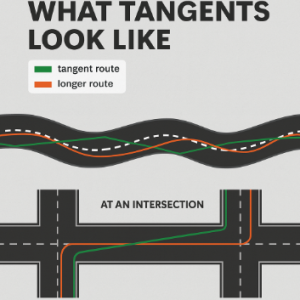
How to save time and distance in races by understanding tangents.
Team RunRun athlete running the tangents at the Chicago Marathon.
Are you Adding Unnecessary Distance (and Time) to your Races?
Ever crossed the finish line of a marathon only to realize your watch reads 26.6 miles instead of 26.2? That extra 0.4 miles might not look like much on paper, but on race day, it can mean minutes tacked onto your time. And if you’re chasing a personal best—or even a Boston-qualifying standard—every second counts.
GPS errors aside, that extra distance often comes down to not running the most efficient line. Maybe you’ve heard the phrase “run the tangents” but didn’t know exactly what it meant: read on, you’re about to learn!
What Does it Mean to Run the Tangents?
Running the tangents simply means following the shortest possible path around a course, especially when it curves or turns. It’s all about minimizing unnecessary distance by taking the most direct line from Point A to Point B, such as the start line to the finish line of a race.
While it sounds simple, it’s something many runners overlook in the excitement of race day—and it can cost them.
Courses are measured along the shortest possible route. That means weaving wide around corners adds distance—just like running around the outside of a track lane instead of staying in lane one.
Think of a road that curves to the left. If you stay on the outside edge of the bend, you’re running farther than someone hugging the inside. Multiply that by dozens of turns over the length of a half or full marathon, and you might run an extra quarter to half of a mile. That’s free distance—and time—you’re giving away.
How to Run the Tangents
Running the tangents doesn’t mean cutting corners or breaking course rules. It means staying mindful and strategic as you move through the course from the start to finish. And for those wondering, it is a perfectly acceptable strategy that the pros harness in every race, and you should too!
Here are a few ways to improve:
In training:
Practice running efficient lines. On your long runs or routes with curves, get used to spotting and running the straightest line possible. Make it second nature.
Before the race:
Study the course map. Identify turns, loops, or sections where you might need to adjust your line.
On race day:
Look ahead. Don’t just react to a curve once you’re in it. Keep your eyes forward so you can anticipate and run the cleanest line.
Avoid drifting with the pack. Runners often spread out and take wide turns—don’t blindly follow.
Chicago Marathon course map.
Go Faster, not Further!
The good news is that running the tangents doesn’t require more fitness or effort—just a little awareness. And that bit of additional awareness can be the difference between almost hitting your goal and crushing it.
Elaina Raponi is a coach with Team RunRun based in Kingston, Ontario. Elaina loves helping athletes of all abilities and experiences achieve their goals, while finding confidence and joy in the process!
This is part 4 of a multipart blog series about one Team RunRunner’s, Vincent Rossi, cancer-filled ultramarathon. Catch up on part 1, part 2, and part 3.
Beyond Me: Running for the Bladder Cancer Advocacy Network (BCAN)
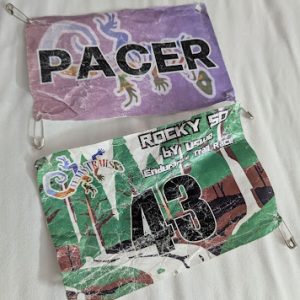
Vincent running the Rocky 50 ultramarathon.
Throughout my cancer journey, the Bladder Cancer Advocacy Network (BCAN) has been a great resource; in particular, their message boards allowed me to connect with other bladder cancer patients and receive valuable advice. As I learned and gained experience, I tried my best to help others facing a new cancer diagnosis too. I made strong connections with patients through BCAN’s resources, some of whom have become real and meaningful friends. So before the race, I contacted the team at BCAN to set up a “DIY fundraising page”, which I began sharing with friends and family.
While I was thankful to see donations come in before the race, this also made me nervous. I wanted to do my part and finish this race—not just to support BCAN, but to achieve this crazy bucket list goal for myself, and to show my family and children what determination and strength look like. In many ways, the cancer community felt a lot like the ultrarunning community, where friendships and strong bonds formed quickly.
The Final Three Miles: Snakes, Surprises, Strength
With three miles to go, my wife and I reached a stretch of flat, open trail from where we could hear music from the finish area. I could not believe it. “Am I really going to do this?” I thought. I was ecstatic, though also delirious.
It was fully dark now. My wife kept the pace while my eyes stayed fixed on the reflective strips on the back of her running shoes, lit by my headlamp. At one point, my focus glued to her feet moving down the trail, I saw her step on something. “A snake!” I yelled. She looked back, before marching on as if this was normal. Still delirious, I later told her that she had stepped on a venomous copperhead. In hindsight, this felt symbolic—my wife leading me through a dark forest, stepping on threats, driving me to the ER, holding my hand as I woke from a surgery that carried, on average, a 10 percent mortality rate. Together, my wife and I have shared this cancer-filled ultramarathon, and the end wasn’t in sight yet. We kept pushing forward.
Amazingly, we passed at least eight runners in the last three miles, each one a source of energy and motivation to keep going. Many were much younger than me, a 51-year old man holding on tightly; I felt both surprised and proud. The finish line was in sight. This was it, the last part. “Holy shit, we are going to do it!” I thought. As we neared the finish line, despite my delirium and exhaustion, I raised my hand, and my wife high-fived me. It was 9:00 pm and, despite the fact that I was among the final finishers, music was blaring, people were cheering, and the finish line vibes were high!
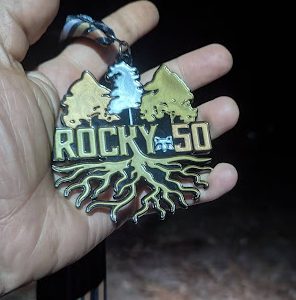
Vincent’s Rocky 50 ultramarathon finisher medal.
I Am An Ultramarathoner! (…and my body knows it!)
I crossed the finish line and high-fived the race director. Humorously, a kind volunteer reminded me to stop my watch: the Strava gods rejoiced! I was presented with a Rocky 50 finisher medal and put it around my neck. I just could not believe it: I had finished, I was an ultramarathoner. Then, with all the energy I could muster, I walked to our crew blanket and collapsed.
My wife, a superhero, packed our rental car with coolers, food, and race supplies as I laid on the ground totally exhausted. We picked up our drop bags and drove back to the hotel. Getting out of the car and limping to our hotel room felt like another ultramarathon, this one rewarded with a long, hot bath.
Post Race Reflections
That night, in the bathtub, I thought about the day’s events. I thought about the last four years of this difficult journey. I was filled with gratitude for my wife, the rock of our family, who kept me going. She made sure dinners were ready while I recovered from chemo, surgery, the difficult treatments, and the side effects of cancer.
The phrase “run the mile that you are in” became a deep understanding. Beyond what I had done during the race, it was what I had done through my entire cancer journey. It was what my wife was doing every day, coping with the constant stress of this horrible disease. It was what all my cancer friends were doing. Despite tough and awful situations, each of us was running the mile we were in: that was all any of us can do when facing seemingly impossible challenges. Over time, the miles–literally and metaphorically–carve a path through the dark forest of doubt and hopelessness. Tears ran down my face as I lay in the tub with sore and bleeding legs, this deep understanding washing over me.
Waffles at the hotel post race.
Our Cancer-Filled Ultramarathon
On Sunday, waiting for our flight back to D.C., I wrote a race report thanking everyone who donated to my Bladder Cancer Advocacy Network fundraiser. I was incredibly grateful for both their donations to BCAN, and the encouragement and belief they showed me. When the race seemed impossible, I persevered through the heat, pain, and endless miles to reach the finish line, fueled by their support.
I was also very thankful for this new ultrarunning community I found. From the aid station crews who encouraged me and opened my Skratch electrolyte packets when my fingers were too swollen, to Chris’s kindness in traveling to Huntsville to meet a stranger and race with him, and of course, my wife, who paced me. I know I would not have finished if she had not been there.
Final Thoughts and Transferable Takeaways
As I get ready for my next surgery and the continuation of my cancer-filled ultramarathon, I will remember this mantra. I will remember the support from the ultramarathon community and the Bladder Cancer Advocacy Network. And I suggest that when things get hard, when they feel impossible and you cannot take another step, you do your best, put one foot in front of the other, and run the mile you are in.
About Vincent
Vincent Rossi is a father, husband, cancer survivor, and newly minted ultramarathoner! Check out Vincent’s website and Instagram @gnocchi_dinner. He continues to fundraise for the Bladder Cancer Advocacy Network (BCAN). Take a look at Vincent’s BCAN fundraising page here.
This is part 3 of a multipart blog series about one Team RunRunner’s, Vincent Rossi, cancer-filled ultramarathon. Catch up on part 1 and part 2.
The physical startline of Vincent’s cancer-filled ultramarathon at the Rocky 50. PC: Let’s Wander Photography
The First Lap: A Challenge From Step One
Right from the start, this race was hard. My training leading up to the Rocky 50 had been entirely on the flat streets of Washington, D.C., and I had almost no trail running experience. Running with Chris the first five miles was invaluable. He taught me the power hike method for hills that I had read about, but never practiced.
Immediately, the hills took their toll, as did the heat. As a total newcomer to trail running, the most challenging part was the uneven ground and the tree roots. Oh, the tree roots. The Rocky Raccoon races are known for large pine tree roots on the trail: traps for tired runners. About 10 miles in, I tripped on a root and landed hard. The wind was knocked out of me. “Holy shit,” I thought. “Ok, my first fall.” I told myself iIt was part of the race, and then got up, brushed myself off, and started running again. It must have looked bad because runners around me stopped to check on me. “I’m good!” I yelled, stunned but not hurt.
Blood, Sweat, and Pee
Later in loop one, I stopped to pee and saw I was already peeing blood. It was a lot—my urine was dark red and thick. This blood was not from running; it began before the race: a sign that the cancer had spread to my kidneys. This, plus my abbreviated training build to this race, made understanding my fluid losses and hydration needs impossible. My right kidney ached: my cancer-filled ultramarathon continued. That was the area surgeons would soon inspect, and then possibly remove. I put thoughts of cancer aside and kept running.
Runner navigating lots of tree roots on the Rocky 50 ultramarathon course.
At the end of the first loop, I had run 16.7 miles. In training, 16 miles was normal for me. I had been running about 50 miles per week. But this was different. The heat, hills, and uneven ground left me completely exhausted. “Oh fuck,” I thought. Finishing felt impossible after that first lap. I had promised myself I would not quit. I would push myself as far as possible, no matter what.
Before the race, Chris, who seemed worried he had gotten me into a dangerous situation, said, “Hey man, if you feel like you are hurting yourself, it’s just not worth it.” With my cancer history and new diagnosis, I knew today was my only chance. My future was uncertain, so I would push hard. I thought, “Hell, to die during an ultra would be more badass than dying on fentanyl in a hospital bed.” I smiled at Chris and said, “I think I am ready to do hard things.” Chris smiled nervously back. Two more 16.7-mile loops to go.
Lap Two: “Run the Mile You Are In”
Lap two was brutal. I had told my coach I wanted to suffer, and there’s no doubt my wish was granted! Despite refilling my ice bandana at each aid station, the Texas heat meant it quickly became a wet rag. I fell two more times, each time so suddenly and hard I did not even catch myself. One moment I was running, the next I was on the ground.
I chose not to show my mileage on my running watch; ultramarathon math would not help me right now! I feared that constantly seeing how much distance was left—like 40, 30, or 20 miles to go—would make me lose the mental battle, which I knew was key to staying in the race.
On the flight to Texas, I listened to an ultrarunning audiobook. The author warned about the dangers of ultrarunning math, instead advising runners to simply “run the mile that you are in.” Thinking about running another 30 miles could have broken me easily. During the second lap, this advice came to mind and became my race mantra. I felt a large blister on my right foot from sand in my shoe, but I was too tired to stop and empty it. “Run the mile that you are in,” I thought. My quad muscles began to shake with intense pain. For a moment, I thought, “How can I keep going for another 30 miles?” The mantra returned: “Run the mile you are in.”
Cancer, Caution, and Crew Stations
By the end of the second lap, I reached my crew station where my wife had my race vest ready and waiting. She had packed it with gels, trail mix, salt tablets, and hydration powder for my final lap. The first two laps were so hot that I had opted to run with a belt instead of a vest.
As I approached, my wife immediately saw I was in trouble. Due to cancer treatments, I had lost the ability to sweat and control my body temperature. For me, 83 degrees Fahrenheit felt like 120! I walked up to the five-gallon ice bucket my wife had also prepared, and put my arms in the ice water, trying to recover from near heat stroke. Chris was there and decided to stop after two laps and about 55 miles, since his main race, the Umstead 100, was coming up. Wisely, he did not want to hurt his performance.
Rocky 50 ultramarathon aid station.
I was a zombie. Chris talked to me and gave advice, but I do not think I heard anything he said. I struggled to stand. From what I had read about ultras, I knew sitting down was not a good idea. Finishing the second lap meant I had officially run an ultramarathon–beyond the 26.2 mile (42K) marathon distance. But my goal was 50 miles, not 33.4.
As if Rocky 50 wasn’t already challenging enough, then the nausea hit. I removed a handful of gels from my vest, knowing that if I ate one more, I would throw up. From then on, I would only drink water. I managed to give Chris what might have looked like a smile, unable to speak, and a fist bump on my way out.
Rocky 50 race bibs: “43” for Vincent, “pacer” for his wife.
The Final Lap
The third lap started. I had no idea how I would get through the next 16.7 miles. As we began, some of the 50K finishers clapped as I went back on the course. Race rules allowed a pacer for the last lap, and my wife joined me—she was my savior. She did the ultramarathon math for me and tried her best to keep me moving at a pace to finish. Before the race, our plan was for me to speed up on the last lap, maybe run a 9:30-minute mile. Now in real time, the thought of running that fast would have been funny if I was not so scared. My wife ran far ahead, then looked back to see me limping. “Oh man, I am in trouble,” I thought.
At one point, I sat to tie my shoe. An abdominal muscle cramped so badly the pain was unbearable. I screamed, surprising myself. My wife looked at me, very worried, but I got up and kept going. She knew the plan: keep me moving no matter what. “Run the mile that you are in,” I thought again.
It’s Me Against the Clock
Near the end of the last lap, with four miles to go, I started to believe I could finish this cancer-filled ultramarathon. But I did not want to get too confident. If my pace slowed or I fell again, I could miss the cutoff time. As we walked up a steep hill, my wife checked her watch. She turned to me and said, “Okay, we need to pick it up now.” Her tone scared me, though not as much as the thought of a DNF (did not finish). I had come so far, endured so much: it was now or never.
I dug deep, trying my best to keep up with my wife. She was jogging at a slow 12-minute mile pace, but for me, it felt like a sprint. My legs were completely raw, and both my feet were bleeding. But for a moment, the thought of crossing that finish line gave me goosebumps. Despite the pain, I felt a fleeting giddiness. I smiled through this new kind of pain.
About Vincent
Vincent Rossi is a father, husband, cancer survivor, and newly minted ultramarathoner! Check out Vincent’s website and Instagram @gnocchi_dinner. He continues to fundraise for the Bladder Cancer Advocacy Network (BCAN). Take a look at Vincent’s BCAN fundraising page here.
Part 4 of My Cancer-Filled Ultramarathon will be released soon.
This is part 2 of a multipart blog series about one Team Runner’s, Vincent Rossi, cancer-filled ultramarathon. Catch up on part 1 here.
Vincent Rossi (white shirt) beginning the Rocky 50.
An Unexpected Turn
Only two weeks after my Philadelphia Marathon finish, and already planning to run 50 miles, I received unexpected news from a medical test. The result read: “Suspicious for high-grade urothelial carcinoma.” Despite being used to cancer stress by now, I felt awful. Surgery to check my kidneys for cancer was quickly scheduled.
This was a major setback, but after several dark days, I decided to rally. I texted my TRR Coach, Brant Stachel, to explain the situation, but mostly to ask how soon I could realistically attempt to finish an ultramarathon. He said I needed at least 12 weeks of specific, more intense training, the high [injury] risk, high reward type. I started training right away.
My original goal had been to complete the Crested Butte Ultra 50 mile in Colorado; a race taking place in September of 2025. However, with surgery on the horizon, I needed a race sooner, much sooner.
From Reddit to Rocky 50
Waiting until after the kidney surgery, or ureteroscopy, was not an option because I knew how fast things could get worse depending on the results. At that time, I had a false diagnosis of Stage 4 colorectal cancer, later found to be a return of my bladder cancer in the kidneys.
So, on impulse, I posted on the r/ultramarathon subreddit for help finding a suitable race. I wrote about my cancer’s return and my ultramarathon goal. As a first time poster, albeit a long-time consumer, I was surprised my Reddit post received the attention it did. Soon, I had over 100 responses from Redditors suggesting races across the U.S. and worldwide. I was amazed by the supportive messages, including several Redditors offering to race or pace with me. After reading many ultra stories, I thought, “This community is amazing.” A Redditor in San Antonio, Texas, recommended the Rocky 50-mile race taking place in Texas in February, 2025.
Rocky 50 course map.
Rocky 50: The Build-Up
My new Redditor friend, Chris from San Antonio, offered to do the race with me. “LFG go!” I replied on the r/ultramarathon thread. The plan was set for my cancer-filled ultramarathon: I would race the Rocky 50.
Rocky 50 was a course good for beginners: non-technical and, by trail running standards, pretty flat with only ~2,700 feet of elevation gain and equal loss. The course consisted of three identical 16.7-mile loops around a large lake in Huntsville, Texas, with a time cutoff of 14 hours and 30 minutes. My wife would crew me on every loop. I had no prior trail running, or trail aid station, experience, so frequent access to her crew station would be very helpful.
Past weather data for February in Huntsville predicted temperatures between 40-50 degrees Fahrenheit: perfect, I thought. My cancer treatments have made me very sensitive to heat, thus the cooler weather was a big reason I chose this event. Unfortunately, as the race date got closer, bad news came; weather reports predicted 83 degrees! I remembered running the Georgetown Half Marathon in 75-degree weather a few months before and almost passing out at the finish. “How can I run in 83-degree weather?” I thought. “And run 50 miles?!” All I could do was hope and pray that the weather would change at the last minute, but, alas, the forecasts held.
Chris texted that with this unusual heat, I might want to find another race. But my plane tickets were bought, hotel rooms booked, and the course researched. For me, this race was happening. With my surgery date scheduled, there was no Plan B. 83-degree temperatures or not, Rocky 50 was my race.
Vincent’s Rocky 50 drop bags.
Rocky 50: Race Day!
Fast forward to February 8th and race day was here! Having flown into San Antonio the day before, my wife and I prepared as well as we could within the confines of our hotel room. We carefully packed drop bags with gels, salt tablets, ice packs, ginger chews for nausea, and body lube. Early on race morning, we dropped these bags at the three aid stations and headed to the start.
It was 6:30 am and the temperature was already 73 degrees! My brow was sweating simply standing around, well before the race began. As we set up a small beach blanket, a cooler with ice, and a folding chair for my wife, I met Chris for the first time. We shook hands and introduced ourselves face-to-face. It was good to meet him. He was friendly and had gone to the effort of driving four hours from his home to the race venue. Through calls and texts, I knew Chris had been preparing. Now, in person, he gave me some last minute advice. “You ran a 4:18 marathon. You can finish this race,” Chris said. I was not so sure. The heat was already affecting me, and, as a result, I was very nervous.
About Vincent
Vincent Rossi is a father, husband, cancer survivor, and newly minted ultramarathoner! Check out Vincent’s website and Instagram @gnocchi_dinner. He continues to fundraise for the Bladder Cancer Advocacy Network (BCAN). Take a look at Vincent’s BCAN fundraising page here.
Part 3 of My Cancer-Filled Ultramarathon will be released soon.
6 weeks, 1 self-experiment, 0 planned rest days—here’s what happened.
As a coach, I believe in prescribing rest days. Adaptation happens during rest. Your body needs a break and you come back stronger. I believe this. However, when Team RunRun Editor-in-Chief, Ruby Wyles, asked me to write a piece on rest days, I got a facetious smirk on my face and decided to do some self-experimentation. I’m an ultrarunner so, of course, I’m going to push the limits and reevaluate beliefs of what is possible and what is best.
What would happen if I just didn’t have any rest days? How would my body feel? Would I get stronger and faster, or would I break down? How long would it take me to adapt? I’m not training for any specific race or adventure right now, so let’s just have fun and see. I mean, I love running and moving. It sounded amazing to do it every day.
Sample training plan with rest days removed.
Disclaimer: This is an experiment of one. I do not encourage my athletes to do this. I give them rest days. At least one if not two per week. I also give them two or three rest days after peak training efforts (e.g. a 50 miler while training for a 100 miler). I’m just having fun here, seeing what happens and reporting back.
Setting Up the “No Days Off” Experiment
I’m more a “send it and see what happens” type of athlete, but for this I thought I should have some expectations set up. This is what my brainstorm sheet of paper says:
Take a rest day when you need it but make it floating (i.e. not having a set rest day or structure to when to take one).
You don’t need to run every day. Cross training works too.
Give yourself some time to adapt to the experiment.
Do this for 6 weeks and reevaluate.
How are you going to measure your success or adaptation?
Sign up for a race?
Strava segment over and over again?
Personal narrative?
TRR Coach Ryan Williams running on trails.
No Days Off: Weeks 1 & 2
I stretched myself during this time. Week 1 started with four days in a row of running, and just having a floating rest day based on how I was feeling. I felt like this really gave me a lot of control. Previously, I’ve had rest days where I am beat up and need it, but I’ve also had days where I felt like I could go back out there.
During these first two weeks, I had a particularly challenging back-to-back weekend of running but, surprisingly, on Monday I felt great! So, I got back out there again and pushed the rest day to Tuesday. That said, I did notice during this block that I was feeling really tired. I needed more sleep than usual, but mentally I was always ready to get out and run. I also didn’t notice a big change in my need to fuel. My legs were tired, but I just kept that floating rest day every four to five days. It didn’t feel sustainable right away, but it was fine for the purpose of this experiment. And we’re just getting started, right? No need to be concerned. Onwards and upwards!
No Days Off: Weeks 3 & 4
Bring on the bike; active recovery here we go! Introducing mountain biking, riding the indoor bike trainer, and road cycling has been a game changer for me. If my legs are tired, cycling helps flush out whatever fatigue is there so I can show up stronger for running the next day. Basically, on active recovery days, I’m just doing whatever I feel like that day.
Over the past ten days, I’ve mixed in trail and road running with indoor and road cycling, mountain biking, uphill treadmill hikes and runs, fatiguing hill repeats, easy aerobic days, tempo runs and more! I feel like Courtney Dauwalter out there (other than the massive talent differential between us) because I’m just doing what I feel like in the moment, whatever brings me joy. It feels really freeing and I’m moving for at least an hour every day. Now my body is craving it.
The one rest day I tried to take in this block did not start off so well. I felt super tired and irritable. I’ll admit, I could resist going out in the afternoon to reset, and afterwards my energy came flooding back. During this period, I certainly wasn’t getting as much sleep as I’d like–or is optimal–( I also have a three-year-old daughter so…) but when I hit the pillow, I am out hard. Nutrition wise, I ate a lot, but it felt appropriate for the work I put in. Overall, my legs were a bit tired, but they also just felt so strong at the same time.
No Days Off: Weeks 5 & 6
I decided to do a longer, adventure run on a local trail loop as a pseudo test: the Reservoir Run Test, and I didn’t plan a rest day leading up to it. I was coming to the end of my experiment, so I thought I’d simply throw it in the mix and see what happened. However, if I felt that I needed to rest beforehand, I’d do it, but otherwise the plan was to just cruise right into it.
TRR Coach Ryan Williams running the reservoir loop.
At this point, I was still floating rest days while mixing in cross training and other forms of active recovery. On average, I was probably going six days straight without a break. Unfortunately, I began to question whether I could trust myself with rest. Afterall, I’m an ultrarunner, I’m used to pushing into areas of discomfort. Can I be trusted with making responsible decisions about my need for rest? Or have I told my internal governor to “take a hike” so many times that it’s hesitant to even check in with me about needing a rest?
No Days Off: Reservoir Run Test
The reservoir loop is about 25 miles with 5000 feet of vert on overgrown bridle trails and fire roads. It’s hard and there are no refuel options, requiring you to carry all of your fuel from the start. Traversing these unmaintained trails is a true adventure run. In the end, I took a rest day before, but that was preceded by days of trail running prior.
I started the loop in the dark. I did not feel rested, and far from fresh. Then, around mile 20, I started to get some unfamiliar fatigue in my feet. My body just didn’t feel like it should have. While this is a hard loop, I still didn’t feel adequately prepped for the run. My volume had been there, but I sensed my legs were pretty beat up, and I started to get some pain in my right foot.
I finished, but not in a very happy way. This loop was way too hard, far harder than it should’ve been. While I got away with stacking shorter runs day after day, when I stepped up to the longer, more intense effort–one I had previously been used to–my body just wasn’t there the way I had hoped and expected it to be; I felt like I was pushing my body too much.
Takeaways and What I Learned
In the month since my experiment, I’ve just been mountain biking and running a few days a week; nothing too serious. Unfortunately, my right foot is still sensitive, so I’m prioritizing rehab and recovery in order to prepare for a big fall racing season. So, I have planned rest days now.
TRR Editor-in-Chief, Ruby Wyles, embracing a rest day on the couch!
My personality loves being free and untethered. Floating rest days were very freeing, and I felt like I had a sense of control over where things were going. But upon reflection, I just don’t think I can trust myself to make the best decisions about my rest and recovery needs.
I wasn’t coached during this experiment, and I feel like I needed someone to tell me to take a break. My ultrarunning background is just going to keep me pushing forward until I really need a rest–forced through injuries or illness. I don’t think the floating rest days (or lack thereof) caused me to show up at my best, nor set me up for longevity moving forward. Since one of my main goals for me and my athletes is longevity in the sport, I’ve learned that I need something or someone to hold me accountable for giving my body permission to rest.
After reflecting on this experiment, I’m not confident in my ability to control my own rest days. I need to have them scheduled and then strictly adhere to the plan, or I need a coach to evaluate how I’m doing and be in charge of the floating rest days for me.
If you find yourself resonating here, it might be time to get a coach. Check out Team RunRun here, they have a coach for every runner, no matter your age, ability, budget, or goals.
Final Thoughts on Rest Days
Rest days are a great topic to discuss with your coach. This article from Running Warehouse details why they are powerful tools. They most certainly aren’t a step backwards. Hold yourself accountable to taking care of your body and your mind, and realize that, like me, you might think you know best, but we all have blind spots.
Albert Einstein wisely said “we cannot solve problems with the same thinking we used when we created them.”
Happy trails and happy rest days!
Ryan Williams is a parent, proud dog dad, athlete and coach who believes running is a metaphor for life. He specializes in forming positive bonds with runners of all ages, distances, and abilities from couch-to-5k to ultramarathon.
3 Bests – What aspects of the race did you like the most?
The Slay the Dragon 25K race, put on by Bush Babes Trail Running, is a trail race on Silver Star Mountain Resort just outside of Vernon, British Columbia. You can choose from a 50K, 25K, 13.6K distance, or an epic Slay the Baby Dragon Kids Race. The second day also features a Dragon King/Queen Vertical Climb.
Organization and information: The Bush Babes Trail Running company does a fantastic job of putting on events! From the informational emails leading up to the race, to a well written event guide, smooth waiver signing and package pick up, to logistics of race day, everything seemed to go relatively smoothly from a participant standpoint! The race director even went through a thorough play by play of what to expect on each route on social media a week before race day. It was much appreciated.
On course flagging/volunteers: If you look at the route map, you’ll notice what looks like a spaghetti network of trails all intersecting! I was a little concerned about getting lost or taking a wrong turn. I didn’t need to be worried. Everything was very well marked and volunteers out on course had us going in the correct direction.
Runnability: This might not seem like a big deal, but trail races in BC can be quite gnarly with lots of vertical gain and descent. With snow still lingering in the alpine, it can be hard to train for these bigger races early in the year. I appreciated having a faster trail race somewhat close to home to start the season.
Not so much – Aspects of the race that didn’t do it for you
The only thing I could have done without is the colder temperatures! It started at 37 Fahrenheit/ 3 Celsius and was moody and drizzly for the majority of the run. As one friend running said “at least I don’t have to be distracted by nice views”.
TRR Coach Jenn Kozak during the Slay the Dragon 25K race. PC: Vanessa Garrison Photography
Weird factor – What’s the weirdest thing about this race?
I’m not sure this is actually weird, but they had massage students giving out free massages to runners post-run to get some hands massage training hours. It seems like a great idea to me!
Highlights of your race – What did you do well and enjoy about your race in particular?
I really enjoyed the Slay the Dragon 25K; you got a little bit of everything. From starting on a paved path, to flowing single track, to a very runnable climb, and a moderately technical descent, it seemed to have it all. A highlight of my race personally was managing my energy (and fueling/hydration) well so that I did not fade super hard at the end of the race.
Lessons for others – Share your pro-tips on the race to help the next runner
1. It is very easy to go out hot on this course as it is a paved road. Save some juice for the undulating trails in the last miles of the race! 2. Book accommodations early if you plan on staying at the resort. 3. Think about what you want to eat the night before and plan on if you’ll be heading the 30 mins into town or not. The food options were limited (no pasta anywhere!) at the resort and I ended up eating something unplanned for dinner. 4. Line up early for the post race burger! The line got long, and the wait was substantial, but the burgers were delicious. 5. Race photographers! Keep your eyes out for them. I was so focused and they were hiding around corners so I don’t remember seeing any of them at all. No smiling photos from me!
Lessons you learned that will help you next time around
Next time I will NOT put my hydration vest OVER my jacket. After the first two miles, despite the rain and cold, I got very very warm and had to pull aside on the single track to remove the vest and jacket before continuing on. While not always the best advice, we have a saying that would certainly have been appropriate today: be bold, start cold!
Slay the Dragon 25K elevation profile chart.
Most important course specific knowledge to know about the race
I would recommend knowing where the big climb and big descent are during your race (the timing of them is different for the 50K course) so that you can manage your energy for the final miles. The last half mile is one fairly punchy climb back up to the finish line! Also, this is fairly high in elevation for BC. The race starts at around 5200 ft and gets up over 6000 ft before coming back down. It’s certainly something to be aware of if you’re coming from sea level.
Aesthetics – Is it a pretty course?
I imagine on clear day the views would have been lovely. From the top of the resort you can see down to Kal Lake (I’ve heard). Today, the course was pretty in the sense that you were running through moody forest which, at certain points, seemed quite dense. The course itself is fully run on a ski resort and is a mix of cat tracks and mountain biking trails.
Difficulty – Is it a tough course?
No, this is not a tough course. If you were new to trail running, you might find some of the descent technical due to rock slabs that make up “stairs” here and there, but otherwise it was mostly fast and flowy. Much of the climb was actually done on a cat track/dirt road.
Organized and well run – Did it feel like a well-oiled machine or were they flying by the seat of their pants?
The Slay the Dragon 25K (and all the races) were very well organized and well run. As I mentioned above, I really appreciated all of the information that was provided without prompting ahead of time. Bush Babes runs a tight ship!
Slay the Dragon 25K race course map.
Competition – Is there a strong field?
There are always very strong people that come out of the woodwork for local races in BC! So, yes, the competition is tough, though perhaps not on the global scale.
Logistics – Does it require a special handshake, registration a year in advance, hotels all booked? Give us the low down on the nuts and bolts of making the race happen.
It was very easy to register for the Slay the Dragon 25K. They did end up selling out about a week before the race, but opened up a few more spots in the final week. The only thing that made it slightly difficult was that the race itself is done on a resort about 30 minutes away from the city of Vernon. There are hotels at the resort, but they are few unless you are looking for a fancier lodge or a longer stay.
Aid Stations – Standard fare or anything special to know about the aid stations in terms of what’s available or when?
I did not stop to ponder the wares at the aid stations for too long. They did seem to have all the usual aid station goods: watermelon, chips, gels, Tailwind nutrition and hydration, water, Coca Cola, candy, potatoes, cookies, and more. I certainly wasn’t left wanting!
Jenn facing sub-optimal weather conditions while running this trail race. PC: Vanessa Garrison Photography
Weather and typical race conditions
The weather can be unpredictable. BC had just finished a heat wave the week before the race that saw temperatures in the 90’s F/30’s C. The temperatures then plummeted somewhat unexpectedly for race day. A few days out, there was snow in the forecast. Luckily, this changed to light rain and a lot of fog for race day. The bottom line, expect any and all weather conditions!
Gear – Did you need anything special or is there anything you’d recommend for the next runner?
This is a very runnable course. For the Slay the Dragon 25K distance, I did not feel that poles were necessary at any point, and might even be more of a hindrance when entering the final miles on flowy single track with close trees all around you. All you really needed was nutrition, hydration, appropriate clothes for the weather, and definitely trail shoes.
Spectators – Is this a friendly course for your friends?
The start and finish line are in the same location, making it easy for spectators to see people off and then climb their way back to the finish line. There are locations along the course if you’re willing to hike/bike in, or buy a ticket to go up the gondola. With the weather being so abysmal on race day, the only spectators we saw were volunteers.
How’s the Swag?
Great for a smaller local race! In the welcome bag we got a locally made chocolate bar, bar of soap, and some coupons. We also received a casual T-shirt, and, of course, a finishers medal.
The Overall Score – How many stars do you give this race and do you recommend that others run it?
8 out of 10!! I have nothing bad to say about the race organization, and, as mentioned, it was nice to have a fast, runnable course close to home (2 hours away – things are spread far and wide in BC). I would dock a star or two as the course is a bit uninspiring, being done on a ski hill with cat track and MTB trails. Then again, maybe I just couldn’t see anything through the fog.
Jennifer Kozak is a coach with Team RunRun who knows how to balance training with family, on both the roads and the trails. Jenn works with athlete of all abilities, from those dipping their toes in trail races or tackling new goals on the roads, from the 5k up to the marathon.
This is part 1 of a multipart blog series about one Team Runner’s, Vincent Rossi, cancer-filled ultramarathon.
Vincent Rossi running the Philadelphia Marathon in 2024.
Setting the Stage: Not Your Typical Ultrarunner
I awoke to the sound of my cell phone’s alarm going off. I picked up my phone, and with blurry eyes, I saw that it was 4:00 a.m. As I slowly rose, I looked around the hotel room and reoriented myself. I was filled with excitement but also a huge amount of trepidation. “How do I get myself into these situations?” I thought to myself. I walked to the restroom, hopeful that I could take a dump. Emptying the bowels was essential to a successful race.
This particular morning, I was preparing to run the Rocky Raccoon 50-mile race. I had originally planned to take a full 12 months to train for an ultramarathon, but now found myself lining up to race far ahead of schedule. In November of 2024, I completed the Philadelphia Marathon in 4 hours and 18 minutes, and it was not long ago that this achievement would have been unthinkable in and of itself.
Far from your typical ultrarunner, my running journey did not begin until fairly recently, when I was 48 years old. My wife took up running during the pandemic, and I, mostly out of boredom, followed suit. If I am honest, the idea of me running felt novel and even a little absurd. Also absurd, at the time, would have been the thought that I had both colorectal and urothelial cancers.
When Running Met Cancer
During my first Bacillus Calmette-Guérin (BCG) treatment for bladder cancer—which involved having immunotherapy solution pumped into my bladder through a catheter while I was wide awake—my nurse had a picture of herself running the Rock ‘n’ Roll Washington DC Half Marathon hanging on her office wall. “Wow,” I thought, “running 13.1 miles, that seems impossible.” I then nervously braced for my first catheterization and bladder cancer treatment, not knowing there would be many more to come.
As with most runners, it started with several 5K races, then a few 10-milers, culminating in my wife and I running a half marathon in Colorado, as well as the Rock ‘n’ Roll DC Half Marathon. A full circle moment, inspired by my kind nurse at Sibley Memorial Hospital.
Coping with Cancer
From 2020 to 2024, I faced many surgeries. These included a right hemicolectomy for colon cancer. I also had multiple Transurethral Resection of Bladder Tumor (TURBT) surgeries and neobladder surgery, where my bladder was removed and replaced with a pouch of small intestine. Following four cases of sepsis, caused by scar tissue at the neobladder neck that stopped me from voiding, I had corrective surgery. Additionally, I received immunotherapy and three types of chemotherapy. I also dealt with small intestinal blockages from scar tissue. Despite countless days in the hospital, I kept running between and sometimes during treatments. Often, I could only do short distances, but I stayed consistent. Running became a form of meditation for me. It was my therapy and my coping mechanism for the constant challenges cancer brought.
Hiring a Running Coach and Joining Team RunRun
In 2024, having run 2:04:26 at the Rock ‘n’ Roll Washington DC Half Marathon that March, I prepared for my first full marathon. I had never run more than 16 miles. Years of not taking care of my body prior to starting running, alongside my cancer battles, had left me injury prone. I needed guidance, so I hired a running coach: TRR Coach Brant Stachel.
When we started working together, I was skeptical. I could not understand how I could run 26.2 miles when my longest run to date was only 16 miles. My coach asked me to trust his training plan, and, nervously, I followed.
Philadelphia Marathon 2024 finisher’s medal.
Fast forward to marathon race day, almost four years since my double cancer diagnosis, and I did it! Crossing the finish line of the Philadelphia Marathon in 4 hours and 18 minutes, an average pace of ~9:50 minutes per mile, was overwhelming. I was surprised my aging, formerly cancer-ridden body could do this. Through working with Brant and trusting his training, in only 6 months I had basically run my half marathon pace for a full marathon!
A Coach’s Perspective
Here’s what his TRR Coach Brant Stachel had to say: “Vincent is a rockstar! While nervous at first, he bought into the training and asked questions. As his coach, I could tell from the start that he was keen to explore his limits, or so I thought. I later learned that Vincent is one of the few athletes I’ve met who almost doesn’t believe in limits. What he has gone through with cancer, while maintaining his running routine, alongside his dedication to his family and everything else he navigates in life is truly remarkable. As you’ll read, the Philadelphia Marathon was merely a stepping stone to an even bigger, and better accomplishment!”
Beyond the Marathon
After the marathon, I began to believe the cancer was behind me. I was a marathoner. My wife, my running partner, ran nearly every race with me. Together, we then aimed for a new goal I never thought possible: an ultramarathon, specifically, the Crested Butte Ultra 50 mile race in the Colorado mountains. My coach, Brant, made the training plan, which would take most of a year to complete. Little did I know, this was only the beginning of my cancer-filled ultramarathon.
About Vincent
Vincent Rossi is a father, husband, cancer survivor, and newly minted ultramarathoner! Check out Vincent’s website and Instagram @gnocchi_dinner. He continues to fundraise for the Bladder Cancer Advocacy Network (BCAN). Take a look at Vincent’s BCAN fundraising page here.
Part 2 of My Cancer-Filled Ultramarathon will be released soon.
Team RunRunner Stephan Zajac is on a quest to run a marathon on each of the seven continents. On June 1, he ticked off Oceania, running the Brisbane Marathon in a PR time of 3:47! However, as you’ll read, the PR is only a tiny fraction of what this race meant to him. These are Stephan’s words:
Far Beyond the Finish Time
Team RunRunner Stephan Zajac completing the Brisbane Marathon, appreciating how much more there is to life than running.
At the heart of what I do, I’m a storyteller. Numbers alone — without context to scaffold and shape a narrative around them — don’t say much about what really happened from Point A to Point B. If I told you that I trained 6 months with TRR Coach Mike Sheehy only to shave a minute off my PR, you might not be very impressed. You might not think that flying all the way to Australia to run the Brisbane Marathon was worth the time or money I’d invested.
Well, there was a point when I thought earlier this year, even earlier this month, that I was never going to make it to Brisbane at all. Throughout this entire training season, I’ve had to really channel my inner resilience and strengthen my mindset to overcome a series of obstacles. But that is life. And, as Eliud Kipchoge says, “Marathon is life.”
Injury Lows and Learnings
Having incurred a series of ankle tendon injuries earlier this season, I feared my 2025 marathon journey might be over before it had even begun. It was an excruciatingly painful experience, both physically and mentally, that tested my resilience. Instead of quitting, I met with an amazing PT who taught me a whole new set of ways to better protect myself. Slowly and surely — through dedication to various stretches, lacrosse balls (a favorite on the calves), targeted foam rolling, posterior chain strengthening exercises, and other mobility work — I came back stronger, faster, and better prepared for the future than I was before. What I thought was a failure turned into a skill asset for not just this marathon season, but for seasons to come.
No Two Marathons Are Alike
From a geographical perspective, this race taught me that no two marathons are alike. My previous marathon was in Napa, California, during March. It was very cool, crisp, and overcast: perfect running conditions. There were no sharp twists or turns with hard banks. It was also a net downhill course: perfect for running fast.
Brisbane, on the other hand, was very challenging. My watch informed me that I trudged through nearly 6,000 feet of elevation gain. Numerous hills, cliffs, and bridge climbs made the views of this subtropical city so beautiful, but much more physically demanding to attain. Add to that heat, humidity, and the sun beating down on you after mile 20 while climbing uphill over and over again. Needless to say, the Brisbane Marathon was not conducive for setting PRs, but great for building mental strength!
There’s More to Life Than Running
Finally, this has been a very difficult year for our family. In late January, my partner’s dad, Greg, was diagnosed with pancreatic cancer. It has been a heartbreaking journey since. He passed away two weeks before the Brisbane Marathon, fighting strong until the very last minute. We were back in Iowa to celebrate a graduation, when the very next morning he quickly and unexpectedly passed in his home surrounded by loved ones.
I never thought I would be the one to perform CPR on someone I loved and cared about so deeply as we shared the last moments of his life together. It was a traumatic experience and one I will never forget. I truly didn’t imagine I would make it to Brisbane to see this through. That just wasn’t my priority at the time, there’s more to life than running, but his family encouraged me to see this through.
A Marathon With Greg
The purple wristband Stephan ran with to honor Greg during the marathon.
Greg was an important part of my journey, and he was always everyone’s biggest cheerleader. I was lucky just to be at any table with him, surrounded by his love. A runner himself when he was younger, Greg followed my training, excited to hear about my race in Australia. Before travelling, I remembered that my partner’s sister always wore a personalized purple wristband in support of their dad during his pancreatic cancer journey. I wanted to honor Greg by running with this wristband during the marathon.
And, when I crossed that finish line in Brisbane, Greg was with me. He was with me the whole time. I could hear his calming voice in my head telling me, “You’ve got this,” or, “You can’t quit now.” I cannot explain it. He was with me during the most challenging moments of the race, and he helped me to push through. And eventually it also became my voice. The power of [spoken] self-affirmation is extraordinary. I was not only running this race for me, but also for Greg. It was so very healing for me.
… and a Run for Many More
I was also running this marathon for The Stroke Foundation. With the generous support of so many loving friends, relatives, coworkers, teammates, and more, together we raised over $1,800 to help stroke survivors, and their caretakers, navigate the challenges of life after a stroke and connect them with critical resources for care. I lost my beautiful grandmother, who raised me with so much love and care in her own home, to a stroke 8 years ago: I ran this race for her too. I thank everyone who donated so generously to this cause.
Stephan’s Brisbane Marathon race bib.
“Marathon Is Life.” – Eliud Kipchoge
So, long story short, I shaved 1 minute off of my prior marathon personal best. But there’s more to life than running. The real achievement was in completing such a challenging race during the most trying time of my life. It taught me invaluable lessons that I’ll always carry with me. I’m stronger today because of this journey I’ve been on. I look forward ahead to more marathon [life] journeys ahead.
3 Bests – What aspects of the race did you like the most?
Super smooth, runnable trails: A wide variety of runnable trails, all with tons of views: in and out of pines, burn scar, mountain bike rollers and more.
Location: It’s not too far from the Front Range. It took 1 hour and 15 minutes to drive from Boulder on race morning.
Scenery: Wildflowers were popping along the trails!
Not so much – Aspects of the race that didn’t do it for you
Well, I did run an extra eight miles because the out-and-back wasn’t marked very well. About a dozen of us missed the turn, and proceeded to run about 4 past the turnaround before realizing our mistake. Only 4 of us actually went back and completed the course. So, we got 8 bonus miles for free!
Weird factor – What’s the weirdest thing about this race?
The aforementioned out-and-back was kind of weird, because then you had to run “back” to the previous aid station and then “back” again past the out-and-back point. In previous years, they marked bibs and color-coded the signs to make this clearer, but not this year. The takeaway… don’t be like me! Instead, remember to study the North Fork 50 course map before race day!
Highlights of your race – What did you do well and enjoy about your race in particular?
I really enjoyed the running trails. With only ~6500 feet of climbing in the standard 50-mile route, you can get into a good groove and practice chugging along. Also, I’m proud of my mindset when I realized I’d run off course. I chose to focus on the positives: logging more miles on great trails, getting better value for my race entry fee, and finishing 1st in what I termed the North Fork XL!
TRR Coach Kyle Fulmer at the start of the North Fork 50. PC: Liberty Pro Imaging
Lessons for others – Share your pro-tips on the race to help the next runner
Be prepared for a variety of weather conditions. It can get hot, though you reach pretty high elevations, above 8000 feet at points, so that makes it a bit cooler. We did get hailed on pretty good, and had a brief but intense thunderstorm. Also, remember to study the map and know when to expect the out-and-back!
Lessons you learned that will help you next time around
I now know where the confusing out-and-back is, and the right way to navigate the course!
North Fork 50 mile course map with the out-and-back at Rolling Creek Aid.
Most important course specific knowledge to know about the race
You’ve guessed it: the darn out-and-back!
Aesthetics – Is it a pretty course?
The North Fork 50 is a very pretty course! You can expect stunning views of the surrounding mountains, snow-capped peaks, tons of wildflowers and aspen sections. You could see all the way to Pikes Peak and beyond!
Difficulty – Is it a tough course?
Not especially tough, but the runnable trails will test your running fitness!
Organized and well run – Did it feel like a well-oiled machine or were they flying by the seat of their pants?
The North Fork 50 is organized by Aravaipa Running, one of the best trail race organizers out there, so you can trust it will be well-run. This race was no exception: it was dialed, especially the aid stations. And with free burgers at the finish line, Aravaipa did well!
TRR Coach Kyle Fulmer crossing the finish line. PC: Liberty Pro Imaging
Competition – Is there a strong field?
Any race in Colorado is always going to have strong local runners in the field. This year, the men’s and women’s champions were particularly strong, both setting new course records!
Logistics – Does it require a special handshake, registration a year in advance, hotels all booked? Give us the low down on the nuts and bolts of making the race happen.
Very easy logistically. The North Fork 50 was easy to enter and didn’t sell out. Parking at the start was also hassle free.
Aid Stations – Standard fare or anything special to know about the aid stations in terms of what’s available or when?
Kyle running the North Fork 50 mile race. PC: Silke Koester
Really good aid stations, 8 in total. You were allowed crew at 4 of the aid stations, but crew wasn’t necessary. There were great offerings at the aid stations, including avocado and bean burritos, which I loved!
Weather and typical race conditions
As noted above, be prepared for anything! It can get toasty, but a sizable thunderstorm also rolled in on us!
Gear – Did you need anything special or is there anything you’d recommend for the next runner?
Not really. It was a little cold at the start at 6:00am, but warmed up quickly, so avoid overdressing.
Spectators – Is this a friendly course for your friends?
Average for a trail race. There were 4 aid stations with spectators and crew access.
How’s the Swag?
Solid. We got a pint glass and a casual t-shirt.
The Overall Score – How many stars do you give this race and do you recommend that others run it?
8.5 out of 10!! I would rate the North Fork 50 higher except for the course marking issue. My bad, but still a little more detail there would have been appreciated. Instead, I finished first in the “North Fork XL” (almost 100K)!
Kyle Fulmer is a coach with Team RunRun and our social media manager extraordinaire. He is an experienced trail and ultra coach and athlete based in Boulder, Colorado.
3 Bests – What aspects of the race did you like the most?
Crowd support and race atmosphere: The city of Philadelphia always shows out for the big races and with almost 40,000 runners, there was a ton of support and a contagious sense of excitement for the race.
Course: It is a straight shot with a net downhill grade, allowing you to open up your stride and run fast!
“After party”: Once you’re done, there is a lot of variety for post-race fueling and you are able to walk right over and cheer on other runners as they finish!
Not so much – Aspects of the race that didn’t do it for you
To get to the start of the Broad Street Run, most take the Broad Street Line from the Sports Complex in South Philly. These trains are packed like sardines for the 30-40 minute long ride. Then, when you finish in the Naval Yard, you need to walk back to the Sport Complex which is at least three quarters of a mile from the finish.
The expo was a letdown. It use to be better 10 years ago, and I always enjoyed looking around and seeing what “freebies” and “samples” they may be giving away. But in recent years, minus a vendor or two, the expo did not feel welcoming and I had a “This is it?” feeling for such a big race.
The start of the race can be hectic with so many runners. Racers are split up in 7+ corrals that go off 5 minutes apart. The back corrals tend to have the most runners, so you are running very tightly for the first half (if not most) of the race.
Weird factor – What’s the weirdest thing about this race?
Runners can take the Broad Street Line train to the race area free of charge when you show your race bib at the station. Unfortunately, our train had mechanical issues and we were forced to walk/jog over a mile to the start line. Luckily, we had enough time before the race started.
Broad Street Run course.
Highlights of your race – What did you do well and enjoy about your race in particular?
My plan was to go sub-60 minutes, but the weather had other ideas. Despite needing to adjust my plan midrace due to the heat, I did not let the negativity take over. I was proud to gut it out and mentally push through the last few miles when it got really tough.
Lessons for others – Share your pro-tips on the race to help the next runner
Pro tip: If you park at the Sports Complex, use the porto-potties before getting on the train. They are usually open. Otherwise it’s a 30-40 minute train ride to the start and lines are ridiculously long if you need to use the restroom there.
Lessons you learned that will help you next time around
No matter what a race may throw at you, stay calm and positive. Accept the challenge that appears and adjust accordingly. If you do, it will still make for a great race!
Most important course specific knowledge to know about the race
The Broad Street Run course is a straight shot for the 10 miles (minus the City Hall go around) and is as wide as 7 lanes. Try to stay on one side of the road and avoid weaving in and out of other runners, as this will only add distance (and time) to your race. Personally, I always line up on the right and only drift by a lane because that is the direction you turn to go around City Hall.
Aesthetics – Is it a pretty course?
The crowd support and hype around this race is top notch. From the Temple Band, to the Philadelphians that show up in droves to support the runners. The Broad Street Run is a 10 mile party!
Difficulty – Is it a tough course?
A very easy course. The first half is a downhill grade with a couple “bumps” that mainly go unnoticed, then a flat second half from City Hall to the finish.
Broad Street Run course elevation profile.
Organized and well run – Did it feel like a well-oiled machine or were they flying by the seat of their pants?
Yes, well put together. Just expect to be surrounded by swarms of other runners for restrooms, as well as before, during, and after the race.
Competition – Is there a strong field?
Runners of all abilities are welcome. You get the fastest of the fast for a 10 miler, alongside many who come to enjoy the fun, party atmosphere of the Broad Street Run.
Logistics – Does it require a special handshake, registration a year in advance, hotels all booked? Give us the low down on the nuts and bolts of making the race happen.
You must enter your name in the lottery between February 1st to February 15th of that race year. This is the only time window to register for the Broad Street Run.
On race day, arrive early! The start is at 7:00 am, so aim for a Broad Street Line train (EXPRESS) before 5:30 am. The earlier trains will not be as crowded and you’ll have time for potty stops with shorter lines.
Aid Stations – Standard fare or anything special to know about the aid stations in terms of what’s available or when?
Standard road race aids stations with water and Gatorade every 2 miles, then each mile from Mile 7 to finish.
Weather and typical race conditions
The weather this year was warm and humid: 67 degrees Fahrenheit with humidity levels at 95% at the start of the race. It started cloudy, but when the sun came out, it became more of a challenge!
Typically, the race temperature is between 45-55 degrees. Weather is hit or miss on this day in Philly. I have run in beautiful sunny conditions (2022) and monsoonal rains (2023).
Gear – Did you need anything special or is there anything you’d recommend for the next runner?
Maybe an obvious points, but fueling makes a big difference, even in a 10 mile race. I had two gels, one before the start and another at halfway. They definitely helped get me through the second half strong.
Spectators – Is this a friendly course for your friends?
It really is! Depending on the runner’s pace, you can view them in the first couple miles, then take the Broad Street Line to watch them finish!
How’s the Swag?
Their tech shirts are always comfy and the medal is decent.
The Overall Score – How many stars do you give this race and do you recommend that others run it?
4.5 out of 5 stars! The race itself is a blast, and the after party in the Naval Yard is also a great time, but getting to the start line has proved to be a challenge at times. This might be more on the Southeastern Pennsylvania Transportation Authority (SEPTA) and not necessarily the race organizers though.
Jonathan Gooch is a coach with Team RunRun based in Philadelphia, PA. He blends science, strategy, and support to help runners train smart, stay consistent, and believe in themselves.