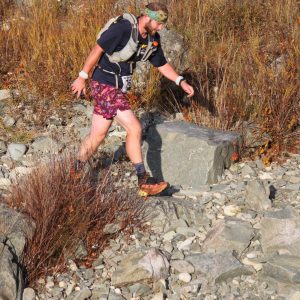
As a result of training consistently, Team RunRunner Alayna crushed multiple races!
Consistency is key. Period. Consistently caring for yourself by doing the small things to keep your mind and body happy will pay huge dividends come race day.
Practical Tip:
Prepare your environment the night before your training session to eliminate any barriers to getting out the door. Lay out your clothes, shoes, fill your bottles, have your gels on the kitchen table, etc.
Consistency is Key.
If you’re like me at all you’ve probably heard this phrase all over your social feeds in the last few months. The algorithm figured out that you’re training for a race. Now it’s bombarding you with messages telling you to get out the door for your run. No. Matter. What.
I agree that consistency is probably the most important factor in endurance training. But it extends well beyond forcing yourself out the door and ignoring any potential signals your body might be sending. Being consistent across the board is what we’re striving for here. Get out for your scheduled run, yes, but also be sure to warm up properly, refuel after your workout, do your strength and mobility training, sleep plenty, and actually take your rest days.
Now you might be saying, “Evan, you just told me to do even MORE things!”. Well…yes, showing up each day for yourself over these next 6 weeks will pay off tremendously. But only IF that consistency is about consistently caring for yourself. Doing all the small things to keep your body happy, while taking some time away from training to keep your mind happy, will lead to a successful trip around Oakland on race day. And my guess is about 2 hours after you cross that finish line, you’ll be searching for your next race to train for.
What’s Next?
If you want more structure and guidance, consider hiring a running coach! At Team RunRun, we have a coach for every athlete. Check out the training page on the Oakland Marathon website for a selection of coaches who are here to help.
Evan Covell is a coach with Team RunRun based in Santa Barbara, California. He helps runners set and achieve their goals through personalized, science-based training and injury prevention (oh, and consistency!).
Psssttt…wanna know a secret for running? Wanna know the real “hack”? Running isn’t just about fitness—it’s about patience. And if you don’t learn patience, running will teach you the same lesson—over and over.
It’s in training, when workouts don’t click, when your legs feel sluggish, when you’re putting in the work but the numbers won’t budge. It’s on race day, when every instinct tells you to go, but you have to hold back, when you’re deep in the pain and wondering if you can hold on. And it’s especially in injury, when progress is out of your hands, when you’re forced to sit still while everything in you wants to push.
Two runners embracing the secret for running: training with patience and consistency.
We’re a society that has shifted (quickly and without thought) to instant gratification, unreasonable timelines, and expectations that don’t match reality or human capabilities. And we’re unhappy. We want guarantees and crave results now. We want to skip the part where things are hard. But running doesn’t work like that. Progress takes time, setbacks are inevitable, and the finish line isn’t handed to you—it’s earned, one patient step at a time. That’s a secret for running—or, at least, it was secret.
Runner slowing down and taking the time to stretch.
Patience is uncomfortable because it forces us to accept a hard truth—we are only in control of two things: showing up and our reaction. But we crave a clear cause-and-effect relationship: put in the work, see the results. It doesn’t always work that way. Progress is often invisible until it isn’t. The body adapts on its own timeline, not the one we set. And sometimes, setbacks aren’t detours but part of the path itself.
Patience is frustrating, especially when we equate improvement with effort, and effort with action. But patience isn’t about doing nothing. It’s about knowing when to act and when to wait. It’s about trusting the work, even when the outcome isn’t immediate. And it’s about understanding that adaptation takes time—whether we like it or not.
Running isn’t a straight path forward. It’s filled with plateaus, setbacks, and moments that test your resolve. Some days, you fly. Some days, you fight for every step. But if you stay patient—if you keep showing up even when it doesn’t seem to be working—you’ll find yourself standing in a place you once thought impossible.
And here’s the thing—running teaches patience the way life does. It reminds us that we can slow down, we can trust the process, and we can let things unfold as they should. The more we learn this lesson in running, the more we can apply it elsewhere.
So when things aren’t going your way, when frustration tempts you to force what isn’t ready—just breathe.
This message was brought to you by a human and a current student of Patience.
Corey Turnbull is a Team RunRun Coach based in Ottawa. He works with beginners just starting out or with seasoned runners looking for a breakthrough. Corey helps athletes maximize the limited training time they have, prioritizing consistency, focus and fun.
The aforementioned proposal during the TARCtic Frozen Yeti 30-hour Ultra. PC: Chris Manwaring
Runner: Chris Manwaring
Race Date: 02/01/2025
Location: Hale Education Center, Westwood, MA
Result: 90 miles completed within the 30-hour race cutoff (95 miles ran total) placing 5th overall!
3 Bests – What aspects of the race did you like the most?
The course: Three 5-mile loops, each with their own personality- red, white, and blue. The red loop was the most technical. The white loop covered the mountain bike trail section of the course, and had the steepest climbs. The blue loop was the flattest one with lots of time running right beside the water, which also meant it received the most wind.
The food: So many great food options offered throughout the whole time, both hot and cold.
Witnessing a proposal! Friends Patrick and Kim got engaged on the first loop, a year after they first met at this race in 2024!
Highlights of your race – What did you do well and enjoy about your race in particular?
I really enjoyed the views throughout the TARCtic Frozen Yeti 30-hour Ultra course! (Makes all the difference when you’re running it for 30 hours!) The red loop had a really nice high point that I reached at sunset, making for a special experience. I felt like I managed my layers well throughout the night, managing to stay warm but sweat minimally.
Lessons for others – Share your pro-tips on the race to help the next runner
Definitely experiment and practice with a variety of layers in training! Go for runs with the intention of under-layering to see what it feels like to be cold, as well as intentionally over-layer to see what too warm feels like. This will help during the race when the temperatures drop so that you can identify when to start adding different layers to keep body temperature equilibrium. Also, it will help you better identify when you are too warm and sweaty out there, so that you can shed a layer when needed before soaking your clothes (and getting chilled).
Chris (right) during the TARCtic Frozen Yeti 30-hour Ultra. PC: Chris Manwaring
Lessons you learned that will help you next time around
Something I learned from this race was the importance of consuming extra calories for body heat production. There were a couple times I came into the aid station feeling a little chillier than I should’ve, and what really helped me out was putting down an extra few hundred calories.
Most important course specific knowledge to know about the race
The warmth of the lodge is so tempting! It is really easy to lose time in there, especially since you see it every 5 miles. I made a mantra for myself “I can be warm when I’m done” which helped minimize my thaw time inside.
Aesthetics – Is it a pretty course?
It is a really great course for scenery, with each loop having their own highlights! The red loop has a great high point that is perfect for catching sunrise and/or sunset! The white loop takes on some of the mountain biking trails, and the blue loop had lots of lakeside beach running!
Chris smiling ahead of running over 90 miles at the TARCtic Frozen Yeti 30-hour Ultra. PC: Chris Manwaring
Difficulty – Is it a tough course?
It’s definitely New England trail running, and 100 miles of the TARCtic Frozen Yeti 30-hour Ultra course will net you over 12,000 feet of vert! An added challenge is the winter conditions, which can make the course turn into an ice rink, or a snow drift, or a mud pit… you get the idea.
Organized and well run – Did it feel like a well-oiled machine or were they flying by the seat of their pants?
The race directors were good with communication between pre-race emails and Facebook group posts. The course marking crew gave a few trail condition updates in the days and hours leading up the race which was super helpful!
Chris enjoying the warmth of the aid station lodge mid-race.
Competition – Is there a strong field?
The field is decent in my opinion. Only 100 entrants are allowed to start the TARCtic Frozen Yeti 30-hour Ultra, and not everybody is there to go for a buckle which is okay! There were lots of folks having great times going for their own different distance and time goals. I believe only about 12 of us were still on the course come sunrise, so expect nighttime to get lonely!
Logistics – Does it require a special handshake, registration a year in advance, hotels all booked? Give us the low down on the nuts and bolts of making the race happen.
Registration opens less than six months in advance, and with the limited field size, generally fills up within the first few days. The waitlist does move along though, so patience is key! Folks that are from out of town, there are hotels and lodging in the general area.
Aid Stations – Standard fare or anything special to know about the aid stations in terms of what’s available or when?
There is a single aid station inside the lodge accessible after each 5 mile loop. There were so so many food options, both hot and cold. My favorite hot options were the grilled pickle and cheese sandwiches, as well as the chocolate peanut butter stuffed waffles! My favorite cold options were the moon pies and PB&J sandwiches!
Weather and typical race conditions
Historically, the weather has been all over the place… the TARCtic Frozen Yeti 30-hour Ultra handbook says it best: “Historically, February in Westwood has an average low of 20°F and high of 39°F, but this is New England and anything can happen so BE PREPARED FOR THE WORST! In 2023, it was about -20 degrees (about -30 degrees with the wind chill) at the start and 40 degrees by the end of the race. In 2022, Old Man Winter dropped 2 feet of snow on us race weekend. We postponed the race to the following weekend, and then experienced slush storms in the days leading up to the race (our poor course marking crew…), which then froze into an ice rink on race day. In 2019 and 2024, we had crisp winter weekends, with little to no snow on the ground. Anything can happen.”
Chris’ race swag, including the coveted “kiss me” rock!PC: Chris Manwaring
Gear – Did you need anything special or is there anything you’d recommend for the next runner?
Traction needs to be prioritized! There are lots of different traction options out there, be sure to practice beforehand and bring extra pairs! I saw lots of broken/snapped/destroyed traction devices were out there. Also, bring as much warm clothing and layers as you can! The night is long and cold, and a variety of options are the key to success!
Spectators – Is this a friendly course for your friends?
Only race volunteers are allowed inside the lodge, but there is field space right across the street for tents and such. There was a bonfire going all day Saturday until about 2 am Sunday morning, so either invite your really hardy friends or just ask them to volunteer instead! 🙂
How’s the Swag?
Swag was cool! Finishing a minimum of 30 miles earns you a finisher medal cookie, beanie, and sticker. As “Last Horse in the Barn” I also received a small yeti and the white loop’s “kiss me” rock.
The Overall Score – How many stars do you give this race and do you recommend that others run it?
5 out of 5 stars!
For an unpredictable, wintry, icy, “choose your own adventure” ultra, this race nailed it! This event is quite a unique experience, and if it appeals to you as you read this, I highly recommend the TARCtic Frozen Yeti 30-hour Ultra! (Remember, you don’t have to go for the full 30 hours).
Hi! Meet Toula. An eight year old, highly independent, active, and joyful soft-coated Wheaten Terrier.
Toula has been running long distance with me since she was about 14 months old. She’s run off leash, on leash, tethered, not-tethered, and wild and free through big pastures and open fields. There have been times where she’s been so muddy from a run that I worried if I would be able to get the mud out of her long, thick, fluffy hair.
One time after running in snow that was so clumpy (you know the kind you make snowballs and snowmen out of) her legs looked like the Michelin Man’s arms. This particular adventure ended with me carrying her home from the woods. Her legs were so heavy with all the snow packed in her hair, that she kept falling over when she was running. Toula is my adventure buddy, my companion on long outings in the woods, and someone who reminds me that running is supposed to be fun and joyful.
Ryan and his best training buddy, Toula. PC: Ryan Williams
Read on for the top things I’ve learned from running with Toula. There are a lot of articles out there that cover the basic steps to train your dog. I’ll leave that to the dog trainers. This is just my experience.
Lesson #1 – Sweat is a human superpower. Dogs do not cool down like humans.
To be totally honest, I’ve had many battles with Toula while running. It usually starts when I tell my wife and daughter something like: “I’ll meet you guys there and run with Toula. That way she’s exercised and I get my training in!”. Sounds like a great idea until you realize you’re on a time schedule. “Okay, I’ve got 25 minutes to move this dog along this 5 km run to meet my wife and daughter at the lake.” And it’s also July in Maryland.
One mile in, Toula decides she’s done running. With Toula lying on the trail, I decide (regretfully) I’m going to dig my heels in and battle this defiant terrier. I try reminding Toula that we have a family to meet. It’s only 3 miles, Toula, you’ve got this, and so have I! We’re not running that fast. What’s the problem?
Well, it took me some time to realize that, unlike humans, dogs cannot sweat through their skin to cool themselves. Sweating is the human superpower. Dogs rely on panting to regulate their body temperatures. Put simply, they just cannot keep on powering through in the hot temperatures. They need to stop and cool down. So when you’re running with your dog, know you’re in for a stop-start adventure.
Since this revelation, I’ve spent many runs apologizing to Toula for my ignorance and respecting that she’s more of a three season endurance runner. So, like most of us, she also doesn’t enjoy running in the swamp that is Maryland summers. Summer is her off-season, and she spends it laying under shaded trees in the backyard.
Lesson #2 – Learn your dog’s limits and respect their cues.
Toula’s longest run to date is 12 miles. It was a few Februarys ago and she was wiped afterwards. Since then, she’s still been running with me pretty consistently, averaging about 10-20 miles most weeks.
Toula showing off her speed. PC: Ryan Williams
Well, she’s eight now. As I’ve been evolving as a dog owner and runner, I’m learning to listen to my body as well as hers. Each run, I pay attention to her non-verbal communication and recognize when it’s just too much for her. She’s more of a 5-6 mile doggie nowadays. Similarly, I’ve also had to rethink my own running: how can I get my training in but still keep some miles with my training buddy?
I’ve realized that if I want Toula to run with me, I have to adjust my expectations, routes, paces, and work within her comfort area. Short, easy runs close to home are my “Toula-time”. If she’s feeling spunky, she’ll even join me for a 30-40 minute tempo run.
It’s also worth mentioning that younger dogs, especially those under 1 year, are not supposed to run very far. Always check with your vet for what they recommend. For Toula, my vet has affirmed me as a good observer of her limits. Thanks Dr. Jones, you’ve made me feel like a quality coach for humans and animals!
Lesson 3 – Have a variety of leash options.
Maybe it’s just living with an independently-minded terrier, but every month I have some new leash I’m using for Toula. I have a leather leash, a lighter pink leash, one that’s extendable, and, at one point, had another tethered leash. (Side note, the tethered leash proved a miserable experience for both Toula and me) Not that I ever talk about it with bike friends, but I liken my smorgasbord of leashes to a cycle enthusiast’s garage; they have a bike for touring, a bike for climbing, one for gravel, technical singletrack, flowing singletrack, etc. You get the picture!
For no obvious rhyme or reason, Toula takes well to the leather leash for running on the road. I can’t complain either: it’s durable, snaps tight, not too heavy, and, most importantly, I know the hook isn’t going to break.
The pink leash is my everyday leash that’s also really great if I’m going to let Toula off-leash in the woods. It’s super lightweight and easily carried in my vest or belt when she’s roaming free.
Lastly, the extendable leash. While it’s ideal for running on trails where I think I’ll encounter other people frequently, it’s slightly less ideal when it’s constantly getting caught on trees. Toula has a particular knack for darting to the left of the tree after I’ve gone to the right, and vice versa. Hopefully your life will be simple and you’ll only need the one for running with your dog. If you have a terrier, probably not.
A muddy Toula and the aforementioned pink leash. PC: Ryan Williams
Lesson 4 – Be wary of off-leash and always carry treats.
If Toula is going to go off-leash I always use a whistle/clicker combo. I’ve trained her extensively with this, and it shows. She responds to it like a border collie at a herding competition.
Not to give my dog training ability too much credit, Toula’s acutely aware that I’m running with rotisserie chicken in my vest and, if she comes back, a piece is hers. But, it took me a long time to train this. We practiced for hours at local high school baseball fields we knew were enclosed areas. I’m now confident Toula will respond and return 99.9999% of the time, again, mainly because of the chicken.
If you aren’t confident in your training, or your dog’s ability to recall, definitely avoid letting your dog off-leash. Sure, it sounds glamorous and romantic to have your dog running wild and free, but if they don’t recall, you’re in for a stressful, scary run that can put you and your dog in some dangerous situations. Also, make sure you check your local laws for restrictions on off-leash dogs.
Lesson 5 – Dogs need to fuel and hydrate too!
Just like we need to fuel our efforts, so do our canine pals. Let them join in the fueling fun and bring along their favorite treat–unless it is peanut butter because that is going to get messy, especially if your dog has a beard. You like pierogies at an ultra aid station? I’m sure your four-legged friend would be happy to indulge too! so extend the same joy to your doggie. I roll with the chicken or beef sticks and, especially in summer, always have water. With so many excellent collapsible bowl options that can easily fit into a vest or dog harness, it’s not hard to set them up for hydration success.
Lesson 5 – Set your expectations and have fun running with your dog!
Running with your dog is an amazing bonding experience. If it’s something you’re drawn to as well, here’s a reminder to just enjoy being in that space. Don’t set yourself up for stress or disappointment if you’re not hitting your paces or distances. Go out and have fun knowing that you are giving your dog some amazing exercise and a truly exciting adventure. Toula doesn’t join me for speed workout days, and I drop her off at home before I do strides. I mean, what dog wants to do 6X45 seconds hill strides? I can hear her now: “Why are we running up and down this inclined neighborhood road? There are smelly woods over there to explore. Or, better yet, an air conditioned room, comfy sofa and another episode on Animal Planet!”
Ryan Williams is a parent, proud dog dad, athlete and coach who believes running is a metaphor for life. He specializes in forming positive bonds with runners of all ages, distances, and abilities from couch-to-5k to ultramarathon.
Athletes are always in search of wearables that will provide more data! However, metrics mean little if they aren’t accurate. Wrist monitors on today’s watches have come a long way, but there are still large inaccuracies and anomalies that can occur. For example, when I grip a trekking pole, my watch will often read a low heart rate (HR) regardless of intensity level. Chest straps have long been the standard option for athletes who desire the most accurate HR data. Often they can be paired with a watch to make the real time HR readings accessible in action. That said, some folks, myself included, find wearing a chest strap to be uncomfortable at best or, at the worse, a recipe for chaffing. Additionally, chest monitors can interfere with avalanche beacon signals. This makes them risky for both skimo athletes and runners who enjoy high alpine adventures in the snow.
How?
The COROS Heart Rate Monitor provides a more accurate reading than wrist monitors while avoiding the shortcomings of the chest strap outlined above. This low profile heart rate monitor (HRM) is mounted on a soft elastic band and fits comfortably around the bicep of the user. Yes, the bicep! The HRM activates automatically once on the athlete’s arm. Then, after the initial set up, syncs to most watch brands and devices via Bluetooth (it doesn’t have to be another COROS product). The location on the bicep makes the device hardly noticeable to the user, decreases chafe probability and mitigates the interference issue with an avalanche beacon.
When?Where?
The COROS Heart Rate Monitor can be used in any situation where an accurate HR reading is desired. This includes roads, trails, long runs, races, training, etc. The only scenario I can think of where this monitor might not be a good fit is in a 200+ mile race due to the limit of 38 hours of active battery life. However, this is a highly specific situation and 38 hours is plentiful for most users. While the HRM is perfectly fine in rainy, wet conditions, it’s not suitable for swimming with as Bluetooth signals don’t carry underwater.
TRR Coach Dandelion running with her COROS Heart Rate Monitor on her left bicep. PC: Damien Scott
Sizing:
True to size.
Additional Sizing Comments:
The standard band is easy to adjust and fits a large variety of arms. There is also a large size band for athletes who require more volume. In either case, I suggest first adjusting the band snuggly, but not too tight, with your arm bent as though you were doing an arm swing while running. Micro adjustments can then be made from this point. I have found that sizing the band with your arm straight does not account for the increase in bicep size when the arm is bent. Therefore, it can end up being too tight.
Comparison to Previous Models and Other Brands:
Arm band heart rate monitors are relatively new developments. This COROS Heart Rate Monitor is the first, and most popular, model available. Other options include the Wahoo Tickr Fit and Polar Verity Sense, though I haven’t tested or heard much about them. All three come in at a similar price range of $79 to $99.
Durability and Accessibility:
I have been using the COROS Heart Rate Monitor for about 9 months during both training and ultra distance races. It has accompanied me in temperatures ranging from -20F to 102F (that’s -29C to 39C) and performed without issue within that range. It was subject rain, hail, dust and a variety of other harsh environmental factors. Aside from the elastic band getting dirty there is no noticeable wear on the device itself. (The band can be easily washed with soap and water.) A new band can be purchased for $25 in a different color if desired or if the elastic wears out over time, though this hasn’t happened to mine.
Changes for the Next Model:
A battery indicator on the device would be handy, but it is certainly not imperative. My watch does give me an alert when the heart rate monitor battery is very low. But it would be nice to know before it is “mission critical.”
The True Test – Would You Recommend It?
Yes, absolutely! I often recommend the COROS Heart Rate Monitor to the athletes I coach and to friends who are looking for a more accurate heart rate monitor and/or do not care for chest straps.
Keeping it Honest – Did You Get This Gear for Free?
I did not get this device for free nor do I currently receive any compensation for recommending/reviewing this product.
Dandelion Dilluvio-Scott is a multisport outdoor athlete, ultra-runner and certified coach. She is passionate about collaborating with driven athletes who love to explore, train and play outside.
Historically, the term pedestrian referred to anyone traveling by foot, either walking or running. It was not uncommon for even Olympic level runners to be referred to as pedestrians. Now we tend to utilize this term as an insult. Like many things in our culture, we often confuse basic simplicity for lacking depth. This irony should not be lost on runners and endurance athletes.
Those of us who run and walk for exercise know deeply the level of knowledge, respect, study, and appreciation a person has to possess to truly accomplish the title, “Pedestrian.” It was upon hearing someone insult someone else’s idea as pedestrian that my lovely wife, Holly, pointed out the need to reclaim this term. She pointed out that we have dedicated our lives as spouses, friends, therapists, and spiritual seekers to the simple and everyday. The foundation of our lives together is rooted in a form of ordinary living. We are pridefully pedestrian.
Reclaiming the Pedestrian
My spiritual life is the one thing which influences every aspect of my identity. I am a Buddhist practitioner as a husband, friend, therapist and athlete. This dedication to living a life as a seeker has inevitably found its way to my study of movement. I always want to be able to find the mystery in any movement and a way to live the questions created by this embodiment. To deepen this process, I dedicated myself to developing the idea of the pedestrian mystic. Reclaiming the Pedestrian requires you to be a seeker of movement, connoisseur of cadence, and a practitioner of the novel.
Here, we are not only attempting to reclaim the pedestrian as any of us moving our feet. We will also access pedestrian mysticism as a way to find the profound in the mundane. Anyone with a background in endurance knows the divine connection found in the repetition of one foot in front of another. In this way, pedestrian mysticism becomes our dedication to learning and maintaining a beginner’s mind.
Simple but not easy
We can take the simplicity of running and turn it into our Zen practice, our contemplative prayer, and our offering to mother nature. We create our own rituals and creations that honor the universe both inside of us and outside of us. Pedestrian mysticism teaches us that movement reduces duality. We become one with everything around us by simply committing to the pedestrian.
I implore you to look at the austere parables of Zen Buddhism, among other wisdom traditions, which teach us to stay curious and still while connecting to our embodied experience. Fear not if you are unfamiliar with these traditions. Finding yourself in the discussion of having a body is forever deeper than finding yourself in the traditions. For your intuition, connection to experience, and exploratory nature which led you to a pedestrian mystic life will forever show you more than anything outside of you ever could. I am thankful to seek alongside you.
by long-term Team RunRunner Chaz Franke. In his words: “I know more about being a Buddhist and being a therapist than I do about being a runner, but I love looking for overlap between spirituality and movement.” Stay tuned for more of his writing.
Team RunRunner Laura after finishing the NYC Marathon, a common New Year’s resolution for many.
January 1 is just another day.
I’m not a fan of New Year’s resolutions. There’s something about them that feels forced. It’s as if we’re declaring that January 1 is the day we suddenly become a different person, make massive life changes, or erase all the habits we’ve built over the years. The problem is, in most cases, change just doesn’t work that way.
Understanding Change
Change isn’t an event; it’s a process. As Steve Magness reminded us recently, everything that occurs is a delayed reaction to the hours, days, months, and years that preceded it. Whether we’re talking about physical fitness, relationships, career growth, or personal habits, the outcomes we see today are the result of countless small decisions we’ve made along the way.
The Case Against New Year’s Resolutions
The caution with New Year’s resolutions is that they can create the illusion that transformation is instantaneous or tied to a specific date. We start to feel like failures if we stumble a few weeks in because the resolution wasn’t about the journey—it was about the outcome.
But what if we shifted our perspective? What if we focused on the small, steady steps we can take each day? What if we recognized that every decision we make, no matter how small, is shaping the person we’re becoming? This approach acknowledges that growth isn’t linear and that setbacks are part of the process. It also removes the pressure of an arbitrary start date, giving us the freedom to begin—or continue—whenever we’re ready.
This shift in mindset isn’t just about avoiding New Year’s resolutions—it’s about embracing actions that align with our goals and values, one step at a time.
Team RunRunner Shane Winzar enjoying the process of running rather than obsessing over the race outcome. PC: Shane Winzar
An Alternative to New Year’s Resolutions
Here are three small, actionable changes to work on in 2025:
Be Honest with Yourself About Your Goals and Commitments:
Your goals and your level of commitment should align. If you’re unsure, ask your coach! We love these discussions and can help you clarify your path.
Don’t Give Yourself an Excuse in Training:
Avoid falling back on phrases like “That’s good enough for today” if it becomes a habit. Push through when possible, and if you find this mindset creeping in often, revisit your goals.
Replace “I’ll try…” with “I’ll hold on as long as I can.” These subtle word changes can shift your mindset and approach.
Journal Your Workouts and Races:
Start journaling consistently. You might uncover patterns or recognize issues you’ve been ignoring, like those small “niggles” that you keep brushing aside.
Every day offers an opportunity to grow and improve. January 1st is just another day—but today, and every day after, can be the start of something meaningful.
Corey Turnbull is a Team RunRun Coach based in Ottawa. He works with beginners just starting out or with seasoned runners looking for a breakthrough. Corey helps athletes maximize the limited training time they have, prioritizing consistency, focus and fun.
Running headphones have certainly evolved quickly in recent years, look no further than Suunto Wing headphones. We’ve gone from running with giant, over-the-ear Sony Walkman headsets, to the tangled cords of your iPod Shuffle, and earbuds that fall out from one drop of sweat. Today, the newest iteration of running headphone tech takes listening to audio as you workout to a new level! While bone conduction headphones have been on the market for a few years now, they are still finding their place in the market. For this review, TRR Coach Kyle Fulmer took a look at (and ran hundreds of miles with) the new Suunto Wing Open-Ear Headphones.
TRR coach and social media master Kyle Fulmer running with Suunto Wing headphones. PC: Kyle Fulmer.
Key features:
Tough and Weatherproof: These headphones are fully waterproof and dustproof (IP67 rated), making them perfect for sweaty workouts, rainy runs, or even dusty trails. The build quality feels robust, ready to handle rugged use.
Open-Ear Bone Conduction Technology: Instead of blocking your ears like traditional headphones, they rest on your jawbone, leaving your ear canals open so you can stay aware of passing cars, wildlife, or the sounds of nature around you.
Safety Features: Built-in red LED lights provide visibility for night runs or cycling. While the lights are a thoughtful touch, they could be brighter, so are not a substitute for headlamps and reflective gear.
Battery Life: You get up to 10 hours of playback, plus an extra 20 hours from the included power bank. Quick charging is another bonus—just 10 minutes gives you about 3 hours of playtime.
Comfort and Fit: At 33 grams, they’re lightweight but might not fit snugly on smaller heads. We had no issues with the fit.
Hands-free: Forget fumbling for buttons—just nod your head to answer a call or shake it to skip a track. Suunto Wing’s hands-free operation free up your hands for activity.
Usability: Control your audio with multi-function buttons that allow you to play/ pause tunes, adjust volume, skip and rewind tracks. You can also answer and hang up phone calls, turn on and off the lights too.
What do we like about Suunto Wing most?
Suunto Wing headphones are ultra lightweight, fit snugly, and can even be worn with glasses: a must for anyone running with sunglasses or prescription eyewear. Most importantly, the sound quality is amazing, all while still allowing outside noises to be heard.
Kyle’s little one also put these headphones to the test, proving that one-size really does fit all! PC: Kyle Fulmer
From personal experience, the 10 hours of battery life advertised seemed to be about right. I have run several times, chatted on the phone during walks, and listened to some podcasts while doing chores, all before needing to recharge the Wing! And with the powerbank included, you can get an extra 20 hours on the go! This makes Suunto Wing headphones a great option for runners doing the longest ultras and multiday adventures without access a power outlet.
What don’t we like about Suunto Wing headphones?
Not much, except the cost! At $199, they’re an investment (but, in my opinion, a worthwhile one). The price is easy to get over when you can change songs by just shaking your head, answer phone calls by nodding yes, and have headphones with such outstanding durability and battery life!
Additionally, it takes a few tries to memorize the functions, such as changing songs or answering a call by simply moving your head! Other buttons allow you to manage calls and adjust your audio and volume. As with any new tech, it takes a bit of time to remember all the actions but, just as they did with your phone or iPod of the past, soon all the functions become second nature!
Pro runner and TRR Coach Genevieve Harrison running with Suunto Wing headphones. PC: Genevieve Harrison
What are the best uses for the headphones?
Running, of course! Add to that listening to tunes whilst walking the dog, vacuuming, doing the dishes, and basically during any other activity you’d like audio for. Forget being able to hear traffic when running or riding, the open-ear bone conduction technology comes in clutch when you’re parenting and want to listen to a podcast while still being able to hear when the baby wakes up!
What do the Pros say?
ON-sponsored professional trail runner and TRR Coach Genevieve Harrison also put Suunto Wing headphones to the test. Here’s what she had to say:
“For ears like mine, they’re a game-changer! Suunto Wing rest comfortably around your neck when not in use, making them super handy at aid stations. Plus, they let you stay tuned into nature while on the trail—perfect for me since I often encounter mountain bikers where I run so need to be able to hear them coming. These headphones are definitely worth a try! They’d also make an incredible gift for the runner in your life who loves staying connected to their surroundings.”
Kyle Fulmer is a coach with Team RunRun and our social media manager extraordinaire. He is an experienced trail and ultra coach and athlete based in Boulder, Colorado.
Finding the right gift for a runner can be tricky, but Team RunRun has got you covered with this 2024 holiday gift guide! Whether it’s for training and racing, recovery, safety, nutrition or hydration, our coaches shared their favorite gifts for the runner in your life.
Two runners wearing Noxgear’s Tracer2 LED Vest, an item on our 2024 holiday gift guide. PC: Noxgear
Noxgear Tracer2 LED Vest Help your runner stay safe and visible during early morning or nighttime runs. This lightweight LED vest is super bright, customizable, and a total game-changer for dark runs.
Suunto Wing Headphones Premium bone conduction headphones that let runners enjoy music or podcasts while staying aware of their surroundings. Bonus: they come with LED lights for visibility and a power bank for charging on the go! (Full gear review coming soon!)
Recover Like a Pro
Curved muscle scraping tool from Sidekick. PC: Sidekick
Scraping Tool Recovery Set This handy tool helps ease sore muscles after long runs or tough workouts. It’s portable enough for adventures and pairs perfectly with Squirrel’s Nut Butter for a smoother glide.
90-Minute Sports Massage A gift that screams, “You deserve this!” Sports massages don’t just relax muscles—they help runners bounce back stronger. Perfect for after a race or during intense training weeks.
Air Relax Compression Boots These compression boots boost recovery by improving circulation and reducing soreness. A budget-friendly favorite for runners who train hard.
Higher Dose Sauna Blanket Running in the cold? This cozy sauna blanket helps runners warm up, relax, and recover after those frosty winter miles.
Brooks mittens. PC: TRR Coach Jessica Hadley.
Winter Essentials
Brooks Mittens or Carhartt Insulated Mittens Runners can never have too many gloves! These mittens keep hands warm and are perfect for freezing runs. Bonus: throw in a pack of hand warmers for extra thoughtfulness.
PC: HydraPak
Hydration & Nutrition
HydraPak SkyFlask Speed 500ml A lightweight, collapsible water bottle that fits in almost any pocket. Great for carrying hydration on long runs and folds up small once empty (see left image).
Run Fast, Eat Slow Cookbook Co-authored by Olympian Shalane Flanagan, this cookbook is full of delicious, runner-friendly recipes. The Recovery Quinoa Salad is a must-try!
Top-Tier Gear
Nike AlphaFly Next% 3 Shoes The ultimate marathon and half-marathon racing shoe. If your runner loves to chase PRs, this is the gift they’ll be talking about for years.
Garmin Running Watch (Fenix Series) Whether tracking miles, heart rate, or advanced performance metrics, a Garmin watch takes any runner’s training to the next level.
Resistance bands. PC: Amazon
Strength & Recovery Tools
Resistance Bands These simple, travel-friendly bands are perfect for pre-run warmups or strength training. Great for staying injury-free and building power.
Heated Bamboo Massage Sticks An amazing tool for soothing sore muscles, especially tight hamstrings. They provide a heated massage experience that feels luxurious but gets the job done.
Stocking Stuffers & Small Surprises
Feetures women’s core run and relief six pack of socks. PC: Feetures
Feetures Running Socks These cushioned, blister-free socks make every run more comfortable. They’re a splurge most runners wouldn’t buy for themselves, which makes them a perfect gift.
Collapsible Water Bottles Lightweight and easy to stash, these are a runner’s best friend for staying hydrated on the go.
Hand Warmers A winter running staple. Toss in a pack or two for those subzero training days.
Use our 2024 holiday gift guide to find something for your a runner in your life that they will love and actually use this Christmas! Whether they’re training for their first 5K or their next PR marathon, these thoughtful picks will keep them inspired, comfortable, and ready to hit the pavement.
The links provided are so you can see what we suggest; they are not affiliate links and Team RunRun does not benefit from any purchases.
Coach Corey showing that fitness can take you far beyond the race course.
“So, what are you going to do with all that fitness?”
At the time, the question from my coach stopped me short. I didn’t understand. It had never occurred to me to do anything beyond race.
“Umm… I don’t know,” I replied, confused.
“Well, think on it,” he said. “You’ve spent the last eight months training for triathlons and a marathon. It’d be a shame to let it go to waste.”
Years later, I realize just how profound that single question was and how far ahead of his time my coach might have been.
Lost in Training Cycles
Too often, we get lost in the rhythm of training cycles with our sights locked solely on the next race. The pattern becomes predictable—train, taper, race, recover, repeat. Unfortunately, this can blind us to the broader potential of our fitness and the deeper rewards it can offer.
Coach Corey finding a reason for running beyond racing running across the Presidential Traverse in New Hampshire.
Beyond Racing
It’s worth thinking about a goal that isn’t tied to a race, especially in the off-season. Branching out gives us a mental break, allows for new perspectives, and can reward us with something far greater. Racing is part of what we do, but there is something more if we look a bit deeper.
Health as a Gift
Being healthy is a gift—one that opens doors to experiences many never get to have. Fitness isn’t just about races; it’s about being capable, resilient, and ready to embrace life’s adventures. It’s about being in places most people aren’t, not for a podium finish but for yourself.
Answering the Question:
So, What Are You Going to Do with All That Fitness?
Fast forward to 2016. Four friends and I found ourselves running across the Presidential Traverse in New Hampshire. Known for its volatile weather, that day gifted us with clear skies and stunning views that stretched for miles. As we moved across the peaks, I thought back to my coach’s question. In that moment, it seemed very relevant.
“This,” I thought. “This is what I am going to do with all that fitness, Richard.”
It wasn’t about a finish line or a time goal. It was about standing on top of the world, feeling alive, connected to the earth, and grateful for what my body could do. That day, the answer finally clicked: fitness isn’t just for racing; it’s for living.
Corey Turnbull is a Team RunRun Coach based in Ottawa. He works with beginners just starting out or with seasoned runners looking for a breakthrough. Corey helps athletes maximize the limited training time they have, prioritizing consistency, focus and fun.
If you enjoyed this article, check out “The Gift of Running” also by Corey Turnbull.
Whether runners should use rate of perceived exertion (RPE) or heart rate monitors is the question. At best, this is a heavily debated topic of which approach is best, with an incredible amount of nuance within each modality. As an athlete and coach, my experiences have ranged from receiving many questions around this topic, to meeting others with strong opinions one way or another. I come in with my own biases, but hopefully this article, although not comprehensive by any means, will shine a light on the pros and cons of each tool and how/when to integrate them both simultaneously.
What is Rate of Perceived Exertion (RPE)?
RPE is a subjective measure of the perceived intensity level when doing a workout. RPE was created by Dr. Gunnar Borg, a Swedish psychologist, who created 2 different RPE scales. For the sake of this article, we’ll be using the Modified Borg CR Scale 1-10 RPE rating.
Referring to the Modified Borg CR Scale 0-10, this is how I typically outline workouts according to RPE:
0 – at rest
1-3 (walking) very easy to breathe
4 (recovery run) easy to breathe
5-6 (endurance run) conversational pace run; breathing is not labored
7 (steady state run) labored breathing; able to speak a couple sentences
8-9 (tempo run) elevated deep & labored breathing; able to say several words
10 (intervals at VO2 max) maximum intensity; short and rapid breathing; barely able to say 1-2 words
Obviously, this is highly subjective as it’s based upon one’s perception of intensity. A “talk test” is often used to cross-check the assessment if the athlete is actually within the specified range. What might be an RPE of 6 for you could be a 9 for your friend.
RPE or heart rate? Here’s Coach Kelsey using RPE to race Hood Hundred.
PC: James Holk
Benefits of RPE
This is a subjective measurement that is highly individualized. Specifically with trail- or ultra-running, there are often so many moving variables (elevation change, altitude, terrain, temperature changes, core temperature fluctuations, caffeine intake, emotional responses, dehydration, etc.) that to prescribe a specific HR range to maintain can sometimes be a wildly moving target. For instance, if you aim to maintain a specific heart rate when descending a steep climb, it could lead to injury due to excessive impact especially if you haven’t trained adequately on descents. Thus, using RPE allows the athlete to maintain a self-assessment of their effort and adjust according to subjective data (e.g. breath, intensity, etc.).
Additionally, using RPE on days when you’re feeling “bleh” can avoid the chance of perpetuating overtraining or fatigue. Some might call this as a way to do “feel-based” training.
Drawbacks of RPE
Since this is a subjective measurement, the actual RPE can become skewed when muscles become fatigued. You might feel as if you’re going at a 8/10 RPE but your heart-rate is indicating otherwise. Having an objective measurement (i.e. HR monitor) for longer-duration events can be a helpful indicator to press harder.
Coach Kelsey wears the Coros armband HR monitor (see left arm) while running the Three Finger Jack Loop in Oregon. PC: Kaysen Brennan
What are Heart Rate (HR) monitors?
Heart rate monitors offer objective data from a workout (i.e. staying within a particular “zone”). There are a number of HR monitors that exist today: a wrist watch, armband, and chest strap. The validity behind each of these will look different (e.g. a wristwatch will often display inaccurate data). Obviously, watches are very useful for other data but utilizing a wrist-based heart monitor will often give you glitches so it may be worth investing in a separate device (e.g. armband or chest strap) to give more accuracy and spare the frustration.
“Zones” is a term that often gets thrown around when athletes are aiming to stay within a HR range. To further complicate matters, a range of zone models exist which differ from another –the most common being the 3-zone and 5-zone models– so be sure to take a closer dive into which model you intend to use.
Benefits of HR monitors
Imagine you’re several hours into a race and the fatigue is starting to build but your HR monitor is showing a lower HR than preferred. This can indicate that you can pick up the pace because fatigue is starting to cloud your overall perception of effort. It feels like you’re working a lot harder, but in actuality your cardiovascular system isn’t matching your high RPE.
Alternatively, if you’re given an easy/conversational-pace day, using a HR monitor can keep you accountable from going too fast. Think of HR as a speed limit for these easy/conversational run days.
HR monitors can be a very useful tool for cross-training days especially if you’re wanting to stay within a certain zone to maintain cardiovascular benefits.
Assessing HR at rest can be useful to gauge how the body is recovering after a race or during peak training block. Typically as an athlete builds more fitness, the resting HR will lower and this indicates the heart’s stroke volume is increasing. It is important to recognize that if your resting heart rate is substantially low or high, this might be an indicator of overtraining syndrome and/or fatigue.
Lastly, another benefit of utilizing HR is to assess the HR when doing your workout. If you’re reaching the targeted HR zone during a run (after accounting for cardiac lag, as described below), take note. Your depressed HR might be due to a lack of recovery. Similarly, your HR not lowering to your normal resting HR after a workout may also indicate under recovery.
Drawbacks of HR monitors
For starters, I strongly recommend not using a wrist-based HR monitor as a valid measurement of HR. Several variables can significantly impact wrist-based readings like interference with the sensor, placement of watch, temperature, skin tone and more.
Secondly, you will need to recalculate your zones as your fitness changes to keep them accurate. This article won’t go into zone calculating: go read Matt Fitzgerald’s 80/20 Rule if that’s your jam.
Most notably, if you find yourself becoming obsessed with numbers to an unhelpful degree (e.g. constantly checking your watch) and it’s taking away from the enjoyment from running rather than adding to it, this can be a slippery slope. Additionally, this over-fixation on HR can lead to stress which will also impact your HR – a real double whammy. So, RPE or heart rate? In this case, I would highly recommend only looking at HR data after your runs and consider sticking with RPE.
Cardiovascular lag (not cardiovascular drift) occurs when you start exercising and your heart-rate isn’t in the desired range. This happens to just about every one of us. It’ll often display more accurate readings after 25-30 minutes of steady movement.
Cardiovascular drift is the gradual increase of HR over a workout. This accounts for the rise in core temperature and decrease in heart stroke volume. A runner may notice that their heart rate continues to increase during a longer, steady-state run but their respiration rate and effort level feel the same. Staying within a specific HR range may result in underperforming if you slow down unnecessarily to stay within the zone.
How should I use RPE and HR? Can I use both?
You absolutely can! Knowing when to use RPE or heart rate depends on the context of when and how to use it. Obviously, running on trails vs. road vs. track is very different so take that into consideration. My recommendation is when doing your conversational/easy-paced runs (RPE 5-6) or moderate-intensity (RPE 7-9) runs, allow yourself to use RPE for the first 30 mins to maintain the desired intensity. Thereafter, check your HR even now and then to see where it’s at, but still maintain a close gauge on your RPE. Obviously, this might show a wide HR range depending on the many variables (especially if you’re running on trails), but over time you might find some trends that correspond to both HR and RPE.
For high-intensity runs, start with your desired RPE (e.g. 10). Perhaps you also consider aiming for a specific pace to target rather than aiming for HR. You can take HR into account, but keep in mind that cardiac lag will occur and very short intervals (1-3mins) don’t allow ample time for the HR to reflect accurately.
Kelsey McGill is a UESCA-Certified Ultrarunning Coach with Team RunRun. She has 10+ years of experience in coaching all levels and ages of runners, specializing in trail running and ultrarunning.
3 Bests – What aspects of the race did you like the most?
Taking in the views: Sunrise hits at about the time that you reach the first ocean cliffs and it lights up the course beautifully.
Challenge: This is very typically a lot of people’s (including myself) last ultra for the season. The year has been long and the generalized fatigue is real. The mental well isn’t quite as deep as it was back in May. It is an objectively challenging course as it is, but made even harder by its timing when overall burnout is at its highest.
Volunteers: So many folks turn out to make the Bold Coast Bash 50K happen and they are the best!
Highlights of your race – What did you do well and enjoy about your race in particular?
I did well balancing my running and hiking ratios. I knew I could string together longer running sections (~15-20 strides each) on the inland single track, and made sure to take advantage of that before having the break it up with a half dozen hiking strides to navigate a technical section. Then I’d hit another more runnable section and repeat this sequence. This was an area I identified last year as needing improvement, as I was more apt to just straight hike those sections, which led to me timing out at mile 22 and DNFing.
Lessons for others – Share your pro-tips on the race to help the next runner
The Bold Coast Bash 50K is a 3 lap course with time limits for each. Racers have 6.5 hours to finish their first two laps, for an average of 3.25 hour laps. The total time cut off is 10.5 hours, so if you come in around 6.5 hours for the first 2 laps, you have 4 hours to complete the final one.
Lessons you learned that will help you next time around
Being confident with starting out my race feeling a little cold was a big lesson this race. With the temps starting at ~30 degrees and projected to climb into the 40s before I would finish my first lap, I knew if I started warm and comfortable, I’d be too sweaty and hot midway through the lap. I ended up starting with shorts, a t-shirt, light gloves and sun sleeves on, and although I was cold for the first 20 minutes, the next two and a half hours I was moving and keeping a comfortable temperature.
Most important course specific knowledge to know about the race
It is classic New England technical terrain. Generally folks move faster on the single track inland versus on the rocks and cliffs along the water. The course follows a figure-8 pattern so it’ll end up alternating single track/cliff sections.
Aesthetics – Is it a pretty course?
Without a doubt! I think one of the biggest draws of this course is just how beautiful it is. The single track trail winds through some wonderful woods, and the coastal route takes you inches from the edge of steep cliffs with endless ocean views. On the southern end of the course, the buoy moored offshore from a nearby lighthouse can be heard clanging in the distance. The waves crashing against the rocks and cliffs become familiar sounds, fading into just a soft rush as you run along the stony beaches. It is a remote and gorgeous place that I’ve heard described as a “wilder, quieter Acadia”.
Difficulty – Is it a tough course?
The Bold Coast Bash 50K course is deceptively tough. There is about 1700 ft of elevation per 10.5 mile lap. It is constant PUDs (pointless ups and downs) with lots and lots of roots and rocks like any New England technical trail would have. With such variation in the ground underfoot, it is difficult to fall into a cadence or rhythm. This race has a decent DNF rate for its distance for a reason!
Organized and well run – Did it feel like a well-oiled machine or were they flying by the seat of their pants?
The race is extremely well run. Eric, the race director (RD), does a really great job of ensuring efficient infrastructure around the start/finish line and aid station and recruits countless volunteers to help out. Course marking is fantastic: it’s reassuringly difficult to get lost and wander off a cliff!
Gorgeous views Chris saw during the Bold Coast Bash 50K.
Competition – Is there a strong field?
The competitive field is pretty good for a race in northern Maine! The Bold Coast Bash 50K attracts plenty of fast local runners as well as folks from farther away.
Logistics – Does it require a special handshake, registration a year in advance, hotels all booked? Give us the low down on the nuts and bolts of making the race happen.
This is a high demand race with limited spots! Registration generally opens August 1st on UltraSignup: the 10.5 mile fun run option generally sells out within a few hours, and the 50K distance generally sells out within a few days. Waitlists are long but can also move quickly! In terms of lodging, the race offers a limited number of racers to camp about 600 ft up the road from the start/finish line which is a blast! I would recommend bringing extra blankets and hoping for a clear sky because the stars pop out there! It is usually split with some folks out in tents (like me!) and others in vans and things like that. The closest Airbnbs are about a half hour away from the start/finish line in either Machias or Lubec if one prefers!
Aid Stations – Standard fare or anything special to know about the aid stations in terms of what’s available or when?
There is a single aid station located at the start/finish line accessible between laps. It is well stocked with plenty of options, including gluten free and vegan item. That said, generally hot food isn’t ready until after one finishes their second lap. Runners are encouraged to bring a food item for the aid station to share with fellow competitors. Electrolytes this year were packets of LMNT that the aid station volunteers were great about mixing in my flask for me. My personal favorite offering this year was the venison chili, although it was almost as good as the bear meat chili featured at last year’s race.
Weather and typical race conditions
It’s November in northern Maine… expect basically anything. This year the race started off at about 30 degrees and rising up to the mid 40s, but dry! Prior years have seen snow and ice, lots of mud, and summer conditions.
Gear – Did you need anything special or is there anything you’d recommend for the next runner?
If particularly cold conditions present themselves on race day, additional items are added to the required gear list. Otherwise, a strong pair of trail runners that performs well in/on mud, ice, and wet rock are essential!
Chris midway through the Bold Coast Bash 50K.
Spectators – Is this a friendly course for your friends?
The start/finish line (and aid station) is the best spot to see runners coming in on laps. The course is also open to the public during the race, so spectators could hike part of the course to try and see their runner.
How’s the Swag?
Swag is great! Eric, the RD, does a really great job finding cool non-t-shirt swag and mixes it up every year! This year we received reflective vests, last year quarter zips, and the year prior fleece blankets!
The Overall Score – How many stars do you give this race and do you recommend that others run it?
5 out of 5 stars for an unparalleled course in terms of scenery, a challenging technical day, and with lots of friendly Mainers volunteering!
Team RunRun CoachesSarah Forman, Rob Gomez, Kate Marden, Sam Renikoff joined Kyle Fulmer for a Talk With the Experts discussion all about off season training and winter running tips. I highly recommend you check out the full replay here. This article zooms in on the second half of the conversation: winter running.
Running in winter can be an adventure—invigorating, challenging, and yes, sometimes a bit daunting. With the right gear, mindset, and strategies, you can embrace the cold and keep your training on track. Here are some practical tips from our four coaches to make your winter runs more comfortable, and advise you on when it’s safer to skip the run or take your workout indoors.
Gear Up for the Cold
The key to winter running is dressing smart. It’s all about layers! Start with a base layer, add a mid-layer like a three-quarter zip, and top it off with a breathable, hooded jacket. TRR Coach Rob Gomez swears by his “Patagonia Houdini for a quick, reliable, packable outer layer”. For your legs, invest in thermal tights—TRR Coach Sarah Forman highly recommends Sugoi Subzero and Janji Fleece tights. Don’t forget mittens and a warm hat or ear warmer. Sarah recommends Smartwool’s windproof convertible mittens and hats—they make a huge difference.
Again from Coach Sarah, if it’s snowing or bitterly cold, her advice is to consider adding a balaclava or neck warmer to protect your face. Remember, all your layers should be breathable to prevent sweat from making you colder. TRR Coach Kate Marden’s top tip for this is dressing for temperatures about 10°F warmer than the actual temperature, but she adds that it might take some experimenting to find what works best for you.
For those who struggle with cold fingers or toes (hello, Raynaud’s Syndrome sufferers), hand and toe warmers are a lifesaver. Keeping your extremities warm can be the difference between loving your winter run and cutting it short.
Lastly, if you’re running on snow or ice, traction devices like Yaktrax are game-changers. They strap onto your shoes and give you the grip you need to run confidently.
Coach Rob Gomez highlighted the “dressmyrun” website designed to answer exactly this question: how to dress for your run!
Running on Snowy or Icy Paths
Safety should always come first in winter conditions. If you’re running on snowy or icy paths, here’s how to make it safer and more enjoyable:
Safety First: No run is worth the health risk that running in extreme conditions may pose. It’s far better off taking a few unplanned rest days than weeks or months off running after a bad fall on the ice or respiratory infection.
Coach Kate Marden: “I personally won’t run on icy paths – just not worth the risk. In those cases, I strongly recommend either hitting up the treadmill or opting for another indoor workout.”
Traction Matters: Trail shoes or traction aids like Yaktrax and other microspikes can help prevent slips and falls.
Take It Slow: Forget about pace goals on slippery days. Slow down and focus on effort instead of speed. Running by feel ensures you’re staying safe while still getting a good workout.
Run When It’s Light: Whenever possible, run during daylight hours so you can see icy patches or uneven surfaces. If you have to run in the dark, invest in a good headlamp—it’ll light your way and make you visible to drivers.
Be Prepared: If you’re running on unfamiliar routes, check out Strava or a running app beforehand. Familiarity with the path makes a big difference.
A tip from TRR Coach Sam Renikoff: “If you run with your phone, put your phone in a pocket and not in your hands. That way if you fall, you are still able to properly brace yourself.”
Ruby Wyles and friends racing on a cold and muddy winter day.
How Cold Is Too Cold?
All our coaches are in agreement here, as well as on most of these winter running tips and tricks: it depends on you. Some runners love the chill and can layer up to handle sub-zero temps, while others draw the line at 10°F. Here are a few guidelines:
If cold air hurts your throat or lungs, or your fingers and toes go numb despite good gear, it might be too cold.
Ice is often the dealbreaker for many runners. Black ice or poor visibility makes running outdoors risky.
Wind chill can turn a manageable temperature into a painful experience. If it’s sub-zero with wind, consider an indoor workout instead.
Here’s what Coach Sam Renikoff had to say about this: “When it’s that cold, it can be hard to breathe deeply and can hurt your throat, which is not only dangerous, but it inhibits the quality of the workout.”
One point from Coach Rob Gomez brings me back to my British “toughen up” upbringing: “Any cold weather is too cold if you don’t have the right gear. Gear up first and then determine what weather your gear will allow you to safely exercise in.”
Ultimately, listen to your body. And a note on the aforementioned “toughness”; You are not “tougher” for unnecessarily suffering through a painful, and potentially dangerous, outside run. If the weather feels unsafe or miserable, it’s okay to take your run indoors or reschedule.
Adjusting Your Pace and Effort
Winter running isn’t about hitting perfect splits. Snow, ice, and heavy layers mean your pace won’t always reflect your effort—and that’s okay! Focus on how you feel:
Run by Effort: Instead of aiming for a specific pace, think about your perceived exertion. For example, if your goal is half-marathon effort, know that it might be slower than your usual race pace, and that’s totally fine.
Coach Kate Marden makes an excellent point about how additional cognitive demands, like staying safe, can make winter running feel even harder: “I find it’s more stressful and taxing on my body to run outside if I have to dodge icy patches!”
Stay Flexible: Some days, conditions won’t allow for speed work. Swap it out for an easy run, hill repeats, or a treadmill workout.
Coach Rob Gomez: “ Never plan on doing speed or interval work on snow or ice, the risk of a fall or strain/pull is not worth the potential benefits.”
Think Big Picture: Winter running is about consistency, not perfection. Treat tough weather days as “bonus miles” and don’t sweat the numbers.
TL:DR on Winter Running
Key takeaway: If conditions are too risky, don’t be afraid to swap your run for a treadmill session or another indoor workout. No run is worth a serious injury, illness or infection.
Winter running has its challenges, but with a little preparation and flexibility, it can also be incredibly rewarding. Invest in the right gear, listen to your body, and prioritize safety. Before you know it, spring will be here, and you’ll appreciate the warmer temperatures more than before!
Running is often portrayed as a test of endurance or a path to physical fitness. But for those of us who lace up our shoes day after day, it’s much more.
It’s a gift—a simple, basic set of movements that carry us toward freedom, personal growth, and the self reflection that recalibrates our entire being.
Simple, Basic, Rhythm.
In its purest form, running is the ultimate anarchist in a complex world. No fancy equipment, no crowded agendas, no barriers other than the ones we place on ourselves. All it takes is a pair of shoes and an open space—a road, a trail, even a sandy stretch along the water. Once you start, the world feels wide open. There’s freedom in the rhythm of feet meeting the ground, freedom in the ability to move forward at your own pace and freedom to explore without limits.
TRR Coach Corey Turnbull celebrating the gift of running with a smile!
Running strips life down to the essentials—breath, movement, presence. Every run is an invitation to escape the noise of modern life and reconnect with something far simpler. Out there, it’s just you and that is enough.
Growth Through the Journey
Growth doesn’t come from staying comfortable. The act of running teaches patience and persistence, asking us to show up even when motivation wavers. On those days, you learn to lean into the process, trusting that the effort you put in today will show up tomorrow.
Each run becomes a reflection of life. There are moments of exhilaration and moments of struggle, but every step is forward. You come to realize that growth isn’t just about the physical strength you gain but the mental toughness you develop. Running teaches you to embrace discomfort—not as something to be feared but as a manageable stepping stone on a longer path.
Every run is progress, even when it doesn’t feel like it. This is the gift of running.
Time to Reconnect
Running is a gift because it gives you time. Time away from the noise, the screens, the endless demands of life. Out there, it’s just you—no meetings, no to-do lists, no one else demanding your time or attention. Running offers a space where your thoughts can flow freely, where problems untangle themselves, and where you can simply be.
I’ve lost count of how many times I’ve left the house living in one world and returned in another. Running is an act of recalibration, a way to align the mind and body so they’re working in harmony. It’s in those quiet miles that clarity emerges—a new perspective on a challenge, a fresh burst of creativity, or maybe just the footfall on the road.
Running doesn’t demand much of us, but it gives back endlessly.
The Gift We Carry Forward
We often think of gifts as something external, something given to us. But running is a gift we carry within ourselves. It’s the freedom to move, the opportunity to grow, and the time to reconnect with who we are. It doesn’t just shape us as runners; it shapes us as people.
Out there on the road or the trail, we find a kind of honesty that’s rare in today’s world. We learn to appreciate the simple joys, to embrace the hard moments, and to cherish the quiet time we spend with ourselves.
Running is a gift, not because of where it takes us but because of what it allows us to find along the way.
Corey Turnbull is a Team RunRun Coach based in Ottawa. He works with beginners just starting out or with seasoned runners looking for a breakthrough. Corey helps athletes maximize the limited training time they have, prioritizing consistency, focus and fun.
A review and comparison of UltrAspire’s Lumen 600 4.0, Lumen 850 Duo and Lumen 800 Solstice waist lights.
The three UltrAspire waist lights reviewed in this article: Lumen 600 4.0, 850 Duo and 800 Solstice.
This article goes on to explore why waist lights are becoming increasingly in vogue in place of a traditional headlamp. One of the brands lighting up the way here is UltrAspire, offering a wide variety of lights at a range of price points. The best waist light, or any light or that matter, for the individual athlete depends on the desired features and intended use. Below Team RunRun Coach Dandelion Dilluvio-Scott shares what sets three of UltrAspire’s most popular waist lights apart.
The headlamp was once a runner’s go-to illumination choice for nighttime training, lengthy adventures and ultra distance races. However, head mounted light systems have their flaws: they don’t cast shadows or provide definition in the darkness. With blotted-out headlamp lit surroundings, athletes are often forced to slow down, needing more time to decipher the terrain.
The introduction of UltrAspire’s 3D waist light systems resolved this issue. Mounting a light lower on the body allows the casting of shadows, creating 3D-like imagines at night. This allows athletes to read the landscape with the same or similar efficiency as daytime. Observing the increasing number of waist lights at every race I participate, it’s clear runners of all levels are beginning to recognize their benefit.
Best use? What did you use this piece of gear for most? Roads, track, trails, long runs, post-run, workouts, racing?
I personally utilize three lumen waist lights in the UltrAspire line up: the Lumen 600 4.0, 850 Duo and 800 Solstice. The waist light I select depends on the application and type of light beam I require. That said, purchasing a separate light for every situation is not at all required. Having a single one of these options in your night kit would be sufficient.
All of these lumens perform excellent on all terrains -both trails and road- and for outings of any length. In addition to running and hiking, I also use these lights for climbing, mountaineering and skiing. Meticulously thought-out features make using UltrAspire’s lumens intuitive and convenient. The battery life of each model is stellar (see below descriptions for specifics). Plus, a color-coded light on the side of the product indicates battery level, removing the need to guess when a fresh battery might soon be needed.
Basic features and brightness of UltrAspire waist lights
The large on/off/toggle button allows ease of use even while wearing thick winter gloves… or when your fine motor skills have been lost at mile 80! To prevent accidentally turning on the light, I loosen the screw on battery compartment cap about 2-3mm. Protective cases are also available to prevent an unintentional turn on and/or shield your investment in the chaos of drop bag transport.
The standard brightness settings on each model are: low, medium, high and blinking. I normally keep the light level to medium and still feel like a lighthouse! Regardless of brightness level, each selection broadcasts an outstanding amount of light across the running surface and surrounding terrain.
This is an absolute must on the highly technical local trails I train on. There are also a variety of large and sometimes aggressive wildlife in my region, and with any UltrAspire Lumen, I feel confident I will see their glowing eyes well in advance of getting too close to lions, grizzlies, moose, etc. Note, I do sometimes pair my waist light with a Lumen 800 Catalyst Headlamp. I don’t need it for extra brightness and keep it on low or off. However, having a headlamp option does allow me to illuminate the sides of the trails by rotating my head instead of my body. In my opinion, this is any waist light’s only limitation.
UltrAspire Lumen 600 4.0 view.
UltrAspire Lumen 850 Duo view.
UltrAspire Lumen 800 Solstice view.
Sizing Comments:
UltraAspire Lumen waist lights fit a wide range of waist sizes from 26-38 inches. The soft and flexible band is secure, comfortable and provides enough stretch to allow for deep breathing during high aerobic output activities. It can be worn on the waist as intended or situated on the chest or low waist/hips if desired without fit issues. The buckle is fatigue free and allows for easy on/off with gloves or when everything is a challenge later in an ultra. The light itself is also adjustable to achieve the preferred angle for your personal line of sight.
Durability:
As an athlete, I relish running, climbing and skiing in extreme environments. The durably and reliability of my gear is of utmost importance in the rugged environments I move through. I am not at all gentle with my equipment. In the name of efficiency, I don’t have time to treat items delicately. My UltrAspire waist lights have been subject almost every condition thinkable, from -20F to 90F temperatures, sand, mud, altitude, snow, rain, wind, getting bashed on rocks while climbing and more. They all (even my oldest) work like new and the waistbands, despite some fading on my oldest version, still hold all their integrity. These products are built to last and withstand hostile mountain/desert conditions. As such, the upfront investment in UltrAspire’s durable and reliable lights will actually save you money in the future!
Any problems with UltrAspire waist lights?
The one odd issue I had was with my Lumen 600 4.0 during its first use. The protective glass over the bulb shattered for an unknown reason while I was wearing it in completely open terrain. The bulb was still functional and performed fine on its own during the run. I just wrapped the light in a mid-layer after sunrise for protection and it survived the next 40 miles without further damage. After contacting customer service, I was promptly sent a replacement part. The problem has never happened again, so I put this issue down to a rare factory defect.
Changes for the next model:
While I can’t think of anything, I’m sure their research and development team will come out with exciting new innovations!
The true test:
If your friend were looking for a piece of gear in this category, would you recommend they buy it and/or would you give this as a gift to that friend because you like it so much? Would there be something else you recommend they get instead because this gear doesn’t fit their needs?
I highly recommend any of UltrAspire’s waist light lumens to anyone who recreates in the dark, whether I coach them or not. I view a waist light is a non-negotiable part of a nighttime running kit.
Coach Dandelion adventuring at night with an UltrAspire waist light.
Keeping it honest:
While I am currently an UltrAspire sponsored athlete, I was using the Lumen 600 3.0 several years prior to joining the team. I purchased the 850 Duo myself, won the 600 4.0 in a raffle and received the 800 Solstice as a prototype. I wrote this article independent of my relationship with the brand and received no benefits for this review.
Dandelion Dilluvio-Scott is a multisport outdoor athlete, ultra-runner and certified coach. She is passionate about collaborating with driven athletes who love to explore, train and play outside.
Everyone who is training seriously, or even not so seriously, seems to be obsessed with recovery. Every time I open my phone, I’m bombarded with TikToks, Instagram reels and targeted ads featuring people touting all sorts of hacks or tools to help you recover faster and live longer. One of the most popular ones is cold therapy. From cold plunges and cryotherapy, to something called a RecoveryTherm Cube, there is no shortage of options to freeze fatigue away, hoping to get you ready for your next workout faster. Here’s the thing though, none of it really works, certainly not to the extent all these influencers advertising the latest ice pack or vibrating gizmo want you to believe. In fact, there is basically no situation where an amateur runner should be freezing themselves!
Runner in an ice barrel debating whether the pain of icing is worth it.
This piece is going to focus on ice baths which at best do nothing, and at worst may inhibit adaptations. But before attempting to debunk the “magic” of ice baths, know that I am not a doctor. And, if a doctor does prescribe ice therapy for an acute injury, their 8+ years of schooling should supersede anything that I, or anyone for that matter, write in a blog on the old interwebs.
Ok, onto the part you all came to read.
Icing and ice baths came into vogue as a recovery technique decades ago. Seemingly harmless, they’re touted as benign ways to reduce soreness and pain, especially after high intensity exercise. When you expose your body to cold, the blood vessels narrow and blood supply decreases. The result of this is less inflammation, which provides relief.
We all know inflammation is bad… right?
Recently, particularly in the health and wellness arenas, inflammation has become the bogey man and cause of all ills. Hence the rise in popularity of ways to reduce inflammation, a la cold therapy. Ironically, this is the exact opposite thing that we want if we are trying to get fitter. Inflammation is your body’s natural response to exercise, and only with inflammation do we get adaptation. Exercise damages your muscles and your body uses this as information to adapt to the workout that caused it. This inflammation-adaptation cycle runs true whether you have sore quads after a long run with a lot of downhill, calves that feel like they’re being gripped by boa constrictors following being spiked up for a speed workout, or even the day after you try to do push-ups for the first time in 6 months and it feels like your pecs just went through a cheese grater. Your body responds to the stimulus you provide it, better preparing you for the next time you do that activity. Put simply, you improve and adapt from the exercise-induced inflammation.
Breaking down the science (briefly!)
Runners ice bathing between two races on the same day.
I’ll save you from all the super science-y details because I too glazed over in organic chemistry class. But study after study finds that ice baths blunt adaptations to training. Research reports ice exposure leading to decreased protein synthesis–how your body repairs muscle damage, as well as decreases in anabolic signaling–your body’s message to get stronger. The results are decreases in long term gains in muscle mass and strength. Relatedly, adjacent studies have found that taking anti-inflammatory drugs have similar effects. All of this evidence tells us that, despite it being uncomfortable, we want the inflammation. We want DOMS (delayed onset muscle soreness). This is where the gains come from!
An exception to every rule
Now pay attention, because I am going to do a little writer trick where I tell you about an exception to my thesis but then flip it at the bottom to actually make the exception support my argument. The time when research supports ice bathing as a useful tool is when athletes are competing, or exercising, at a high intensity repeatedly over a short timespan. Examples include athletes’ running multiple events at NCAA conference or national meets, or preliminary and final races hours apart. In these cases, taking an ice bath may provide some relief and get you ready to race again sooner. (A note for fellow running sickos: that does not mean that it is a good idea to cram sessions close together just because you CAN get through them with the help from a cold tub!)
As highlighted above, I don’t imagine this being a situation that many of you reading this will find yourselves in. Therefore I refer you back to my original point: there’s really no reason for the average runner to ice bathe!
Pleading the case for ice baths
The one benefit of ice baths that I will ride for is the psychological (*read placebo*) boost it can convey. It feels good to be doing something for recovery, especially if you’re doing it with others. I think back to the ice baths I took with my college teammates in the training room and I do think that we all benefited from those sessions, even though I don’t think that benefit came from sitting balls deep in 50-degree water. Rather, I think the benefit we got was from hanging out together and joking and thinking we were doing something good for ourselves. Not to mention, if you are taking an ice bath, you’re likely sitting down for a period of time. How often do you take time to do that each day?
TL:DR on ice baths
If you’re one of those recovery inclined individuals who gets confidence from feeling like they are doing a little extra to make sure they’re ready to go for the next session, or if you and your running buddies enjoy love hopping in a lake or river after a long run, I hear you, I see you. I don’t want to yuck your yum, but consider grabbing a burrito together and 30 minutes of extra sleep instead!
References
Fröhlich, M., Faude, O., Klein, M., Pieter, A., Emrich, E., & Meyer, T. (2014). Strength training adaptations after cold-water immersion. Journal of Strength and Conditioning Research, 28(9), 2628–2633. https://doi.org/10.1519/JSC.0000000000000434
Lateef F. (2010). Post exercise ice water immersion: Is it a form of active recovery? Journal of Emergencies, Trauma, and Shock, 3(3), 302. https://doi.org/10.4103/0974-2700.66570
Roberts, L. A., Raastad, T., Markworth, J. F., Figueiredo, V. C., Egner, I. M., Shield, A., Cameron-Smith, D., Coombes, J. S., & Peake, J. M. (2015). Post-exercise cold water immersion attenuates acute anabolic signalling and long-term adaptations in muscle to strength training. The Journal of Physiology, 593(18), 4285–4301. https://doi.org/10.1113/JP270570
Professional runner (with a 2:08 marathon PR) Scott Fauble has joined the Team RunRun coaching roster! Scott has multiple top 10 finishes in marathon majors such as Boston and NYC, along with 3 Olympic Marathon Trial races. He is ready to help athletes take their training to the next level.
Result: 5 hours and 15 minutes (including a 35 minute 50K PB en route!)
3 Bests – What aspects of the race did you like the most?
1. Race feel: Friendly events team and well-organized.
2. Scenery: Gorgeous sights throughout (even when the weather wasn’t playing ball!)
3. Beginner friendly: Glen Ogle 33 would be a great first ultra or for someone trying to push quite hard. There is some elevation, but not what you’d call ‘hilly’.
Not so much – Aspects of the race that didn’t do it for you
For my liking, there was a little bit too much tarmac as I have been used to running a lot more trails. At the same time, the tarmac and lack of technical trails probably makes this race really good for people as their first ultra.
Weird factor – What’s the weirdest thing about this race?
The squirrel (or beaver) that helps you cross the road on the way to pick up your drop bag is pretty unique (and weird)! With the event being around Halloween, there are always a few folk that are fully dressed up, making for a fun and memorable atmosphere.
Highlights of your race – What did you do well and enjoy about your race in particular?
Having transitioned to running much longer races, I liked the shorter duration (only” 33 miles!) and actually enjoyed being challenged by some speed work! While there was still 3000ft of climbing, it was much flatter and more runnable than I’m used to. As it was my last ‘official’ race of the year, I decided to try and go at it as hard as I could, which included running all of the first (four-mile) hill!
Lessons for others – Share your pro-tips on the race to help the next runner
Even if it is colder, ensure your hydration is still on point. I probably didn’t take quite enough, which may have led to some cramping.
Tempo work is important to do in training! Very runnable races (just like this) might have you running at relatively high intensities for quite a long time: you need to train for this!
Go for it! I wanted to push hard, and while I probably pushed even harder than that, resulting in some cramping later, it meant that I now know exactly where I am at and what I need to work on next. I recommend using this experience and you performance as data for understanding what you can then improve on.
Lessons you learned that will help you next time around
1. Speed and tempo work are important when training for shorter ultras. 2. Keep up hydration as if it were a warm day; the extra effort on race day makes fluid loss greater. 3. Strength work is also important; stronger muscles means less relative strain on them. 4. Hill work is ace in training, making any hill in races easy (well, easier)!
Most important course specific knowledge to know about the race
Shoe choice is important! The Glen Ogle 33 race course favors more of a road shoe than a trail shoe. In fact, a lot of the people did wear road shoes, while I went for a super cushioned trail shoe.
Aesthetics – Is it a pretty course?
Very! The course makes its way up a glen with lots of colorful autumn leaves. The photos tell the story. This is of course unless the weather closes in, which it very well could at this time of the year.
Some of the very runnable trails throughout Glen Ogle 33.
Difficulty – Is it a tough course?
Hard to answer – but I would say not really. The elevation is moderate (about 3000 ft) and most of the course is quite runnable with no technical terrain. That said, for a first ultra it is in the “tough enough” bracket!
Organized and well run – Did it feel like a well-oiled machine or were they flying by the seat of their pants?
Glen Ogle 33 is very well organized by Rocket Events. They put on a lot of events in Scotland: it’s not their first rodeo!
David Taylor before racing the Glen Ogle 33.
Competition – Is there a strong field?
The field has a big mix of running abilities, but at the sharp end it looked pretty competitive with the first finisher finishing the 33-mile course in 3 hours and 36 minutes. The final finisher ran just under 9 hours, while the rest of the ~300 racers crossed the finish in between.
Logistics – Does it require a special handshake, registration a year in advance, hotels all booked? Give us the low down on the nuts and bolts of making the race happen.
I didn’t enter Glen Ogle 33 till a couple of months before the event and there were still plenty of spaces remaining. The race is withing driving distance of both Glasgow and Edinburgh, and there is quite a lot of accommodation available nearby.
Aid Stations – Standard fare or anything special to know about the aid stations in terms of what’s available or when?
There were 5 aid stations in total with one of them including a drop bag at around the halfway point.
Weather and typical race conditions
It was cool, between 7-11 degrees Celsius (45-52 degrees Fahrenheit) and dry for my race = pretty much perfect conditions. That said, for future years it could be much different – it’s November in Scotland after all!
David Taylor smiling his way through the 33-mile race.
Gear – Did you need anything special or is there anything you’d recommend for the next runner?
There was only a fairly basic kit list. Only thing I’d recommend would be wearing the most comfortable shoes that you can (rather than an especially grippy and hard core trail shoe) as there is a decent amount of tarmac throughout Glen Ogle 33.
Spectators – Is this a friendly course for your friends?
Unfortunately, not really. Spectators can catch up with you around the halfway point and at the end.
How’s the Swag?
Pretty good! Finishers received a t-shirt, finishers medal and a goody bag with juice, chips, sweets and the very awesome Rockets Events beer!
The Overall Score – How many stars do you give this race and do you recommend that others run it?
5/5 for a relatively short, beginner-friendly, well organized ultra!
Team RunRun Coach David Taylor is based in Glasgow, UK. He specializes in trails and ultras for both beginner and intermediate runners, whether you’re just bumping up in distance or looking to improve your next trail race,
Matt Anthony completing the Pumpkin Butt 50K with his pumpkin in hand!
3 Bests – What aspects of the race did you like the most?
Race size and feel: The Pumpkin Butt 50K was a small race with really wonderful people, which made it feel more like a fancy group run.
The difficulty: This course was hard! Going 5 times up and over the top of the mountain, with super rocky, “stair-step” trails, required me to dig deep early on not to drop out when I had the chance at the end of each loop!
It was weird! You were required to carry a pumpkin on one lap, spinning a “wheel of misfortune” at the aid station.
Not so much – Aspects of the race that didn’t do it for you
None – the “bad” parts were well advertised!
Weird factor – What’s the weirdest thing about this race?
Carrying the pumpkin? Or for folks not from around here, all the cannon and signs commemorating this civil war battle would’ve seemed pretty strange!
Highlights of your race – What did you do well and enjoy about your race in particular?
I managed my fueling well, taking in about 1900 calories between aid station food (grilled cheese, quesadilla, PB&J), gels (Huma and Veloforte coffee gels) and my secret weapon, those two packs of mini pancakes from Costco! Mentally, I was also pretty strong: the uphills got challenging and it was truly a one-foot-in-front-of-the-other situation.
Lessons for others – Share your pro-tips on the race to help the next runner
The Pumpkin Butt 50K is a “quad killer”, so practice running road downhills hard! Each loop, there is a 1.5 mile road downhill, as well as gnarly, rocky downhills, lots of not-designed-for-running super rocky trails, and by the end each “step” was a killer.
Most important course specific knowledge to know about the race
Be aware of the rockiness and vert of 1/3 of the route.
Putting the pumpkins in the Pumpkin Butt 50K!
Aesthetics – Is it a pretty course?
Yes! You can see Atlanta in the distance while running through trees in a forest.
Difficulty – Is it a tough course?
I’d say!
Organized and well run – Did it feel like a well-oiled machine or were they flying by the seat of their pants?
For sure, it’s organized and well-run. This was the Pumpkin Butt 50K’s 20th year, so they have know how to put on a great event!
Competition – Is there a strong field?
I was 14 out of 17, so I’m not sure that this question applies to me!
Logistics – Does it require a special handshake, registration a year in advance, hotels all booked? Give us the low down on the nuts and bolts of making the race happen.
To run the Pumpkin Butt 50K, you have to be a member of GUTS, the Georgia Ultra Trail Association, but if you are, it’s free! Yep, the Pumpkin Butt 50K is a FREE RACE!
Aid Stations – Standard fare or anything special to know about the aid stations in terms of what’s available or when?
There was tons of food with lots of variety: clearly planned by an ultrarunner!
Weather and typical race conditions
A bit hotter than usual, probably a low of 60 degrees and a high of 75. It was foggy and overcast most of the day; when the sun did break out, it was blazing.
Gear – Did you need anything special or is there anything you’d recommend for the next runner?
A (small) pumpkin!
Spectators – Is this a friendly course for your friends?
Yes, you share the trail with lots of other runners, walkers, etc, so people can see you and join you anywhere on the course. At the aid station at the start/finish of each loop, there was a bit of a party that would be fun for spectators to hang out at too.
How’s the Swag?
It’s a FREE RACE! So there was no swag, but I did win an nice GUTS t-shirt for completing my pumpkin lap!
The Overall Score – How many stars do you give this race and do you recommend that others run it?
5 out of 5! I definitely recommend the Pumpkin Butt 50K!
Matt Anthony is a Team RunRun-coached athlete. If you’re looking for a coach, check out our directory of excellent TRR coaches here! You can browse by budget, goals, location, or level. For each coach, read real runner reviews plus learn more about the coach’s history, philosophy, and publications.
Two time top 10 finisher and Team RunRun Coach Scott Fauble breaks down the NYC Marathon Course and shares his pro tips to run your best marathon ever this November in New York.
The hay is in the barn and the time to build fitness is over. That doesn’t mean you can’t still get faster! Commit to a smart taper, proper carb load, then plan your race strategy like a pro. To help you do just that, I’ll walk you through the NYC Marathon course section by section and discuss what the best way to attack each part is. Read on for my personal NYC Marathon pro tips to conquer your race this Fall!
Professional runner and TRR Coach Scott Fauble finishing 9th at the 2022 NYC Marathon. PC: Mac Fleet
The Start to Mile 2
The gun fires and you run up and over the giant Verrazano Bridge that connects Staten Island to Brooklyn. As you can imagine, this section goes from being super uphill to super downhill, with the added bonus being that you’re going to be crammed into a sea of runners all moving the same way.
Pro tip: Don’t stress, just get yourself going, find some space and get yourself over to Brooklyn.
Mile 2 to Mile 12
At around 2 miles you get off the bridge and enter Brooklyn. The mass of runners begins to spread out and you should have enough space to start to settle into your unique rhythm and flow.
Pro tip: For the next 10 miles, focus on running as smoothly and effortlessly as possible. Let the crowd noise carry you (but not so much that you get carried away) and allow the race to come to you. Marathon pace should feel too easy throughout these miles.
Mile 12 to Mile 14
NYC Marathon course map. PC: NYRR
At 12.5 miles you head up the next bridge, leaving Brooklyn behind and entering Queens. I always found this to be one of the more challenging parts of the course as fatigue starts to creep in and you can’t smell the finish line yet. Add to that, the crowds let up as you move onto the bridge and it can be a little eerie going from the cacophony of Brooklyn to a relatively quiet stretch.
Pro tip: Use this as a chance to check in with your body and smile as you’re about to hit the half-way mark. Relax up the hill and then use the downhill on the other side to get your pace back. As you enter Queens, reconnect with your “marathon rhythm” for the next few miles before you turn on the next bridge.
Mile 14 to Mile 16
The first half of the Queensboro bridge is probably the hardest part of the race so far.
Pro tip: Don’t stress and don’t push the half mile up to the top. Now is the time to demonstrate your mental strength. One mental exercise I like to use to distract myself is going through the colors of the rainbow and searching for each color on the course. When you crest the bridge at the 25km mark, take 10 hard steps to get your pace back and then just let your legs go as you cruise down the other side.
Mile 16 to Mile 19
You’re entering Manhattan for the first time and turning onto 1st Ave. This is the opposite of mile 12 where you go from loud to quiet. Now you are going from the silence of the bridge to the loudest part of the course. Once you get onto 1st Ave you have one of the most fun parts of the course. The road is rolling and the crowds are awesome.
Pro tip: Use the energy of the crowd and the downhill, but stay in check! It’s easy to let your pace spike and lose control with all the excitement. As the road rolls on, keep your eyes up and effort dialed, remembering to enjoy yourself too!
Mile 19 to Mile 21
At 19 miles you hit another bridge and exit Manhattan. I always found this to be one of the hardest parts of the course. While the hill isn’t long, it’s steep enough to break your rhythm.
Pro tip: As you get to the top of this punchy climb, make a little push to get your pace back and really focus on staying strong through this mile.
Mile 21 to Mile 23
Now as you turn and head back into Manhattan, shift your focus: it’s time to start RACING! You have a couple of flat miles before you climb into the park.
Pro tip: Use these miles to switch into killer mode and start picking people (and time) off.
Scott Fauble racing to a 7th place finish at the 2019 NYC Marathon!
Mile 23 to Mile 24
Warning: huge hill approaching as you run next to Central Park! But what goes up, must (thankfully!) go down.
Pro tip: Keep your focus on racing and OFF your watch. Your pace is going to slip but you can still run aggressively. Try to catch 5 people before you take the right turn into the park. After this turn, make another little push to get you out of that slump and then relax as you cruise downhill.
Mile 24 to the Finish
You’ve taken on board all the prior NYC Marathon pro tips, now you are just pushing the whole way! The watch doesn’t matter anymore, all that matters is cultivating positive vibes and staying strong mentally.
Pro tip: Try to smile as you turn out of the park and start heading up 59th. This is the toughest part of any marathon and you have to figure out a way to look forward to it. Maybe it is remembering all the work you’ve done to get here, maybe it’s thinking about family, maybe it’s just trying to beat as many people as possible or get to that post-race party as fast as possible!
You’ve finished the New York City Marathon! Congratulations!
Grab a banana and something to drink, and be proud of what you just accomplished. No matter your time or finishing position, you just ran 26.2 miles!
Professional runner (with a 2:08 marathon PR) Scott Fauble has joined the Team RunRun coaching roster! Scott has multiple top 10 finishes in marathon majors such as Boston and NYC, along with 3 Olympic Marathon Trial races, and is ready to help athletes take their training to the next level.
Result: 4:45:44; 7th place in age category, 8th woman overall
Jennifer scrambling down one of the Stoked Scramble 25K climbs. PC: Bruno Long
3 Bests – What aspects of the race did you like the most?
Scenery: This being my hometown, I have nothing but amazing things to say about the mountains around Revelstoke. The views, most often, are just incredible! Unfortunately, on this particular day, the weather did not cooperate. While there were certainly beautiful vistas to be seen during the run (though moody), it wasn’t as spectacular if it were a clear day. However, I did enjoy the different perspective!
Adventure: The title of this race, Stoked Scramble, alludes to some of the terrain that you might encounter (i.e., a scramble). This was a no fall zone and they had RMR patrol there to assist in helping runners navigate the section. The race also included a rope assisted descent where you felt like you were in Mission Impossible running down the side of a skyscraper.
Community (volunteers/runners/staff): Since much of this course is in the alpine, it was not accessible for most spectators (especially on a bad weather day like we had). The other runners and the volunteers made up for it. Everyone seemed so stoked and completely in awe of the adventure we were having!
*4. The race directors really care about and listen to the runners! In previous years, there were some issues with the rope descent. In 2025, the rope descent is no longer! RD Jacob Puzey put together a team of volunteers earlier this summer and (with the blessing of Revelstoke Mountain Resort), was able to build a series of switchbacks down the hillside to remove the necessity for a rope assisted descent (and the resulting bottleneck of the previous year). Reports from runners of this year’s race (2025) were that they were amazing and 100% runnable. Revelstoke is lucky to have a local race where the RD and team care about creating the best possible experience for athletes.
Not so much – Aspects of the race that didn’t do it for you
Some of the bests listed above are also the other side of the coin to some non-ideal situations. While some people love it, I myself am not super comfortable with exposure when scrambling. We were running along a ridge and looking over the edge that definitely brought on some vertigo. Other runners were running along the ridges and down the scramble sections like they were on a flat trail. As mentioned, there was a definite “no fall zone” that had a lot of runners terrified.
Weird factor – What’s the weirdest thing about this race?
Snow in August?! On this day, that is exactly what we got. That’s mountain running for you! Pounding snow, hail, wind, rain, and finally…sun. The Stoked Scramble fell on day 2 of the stage race. On day 1, the weather was so hot runners ended up getting heat stroke. A wild contrast!
Highlights of your race – What did you do well and enjoy about your race in particular?
I did not really have a goal going into this race except to have a good, hard effort in a race environment.
The First Climb:
The beginning of the Stoked Scramble 25K is the climb up the non-technical cat track road before you arrive at Kokanee Ridge. My goal was to power-hike most of this section to save my legs for later in the race, but also getting my HR up since this was the shorter of the races and I knew I wouldn’t be out there all day. Despite not knowing if I wanted to start with poles until 5 seconds before the race went off, this section was uneventful. I was able to chat with other runners heading up, and it was just a good feeling beginning to the race.
The Scramble/Ridge:
My mantra for this section, being uncomfortable with exposure/heights, was “forward motion”. If I didn’t stop, and didn’t look down, it’d be over before I knew it. This was exactly how it went and while I didn’t love this part, I was proud of myself for getting it done quickly. I actually loved the ridge section for the community aspect. It was an out and back area so we were crossing paths with other runners heading back and we were able to give high 5’s and cheer each other on.
The Rope Descent:
Despite the negative of waiting 20+ mins in line at this section, I LOVED IT! It was so fun to be running down a suuuuuper steep grade without worrying about falling. You could really lean into it.
Sub-Peak Loop:
This is when the snow was at its worst. Even though the ground was clear, it felt like the depths of winter. Again, I actually kind of loved it. After climbing out of Kokanee Bowl, my HR got up again and I began to warm up. Running through the snow made me feel like I could manage the effort.
Jennifer descending Mackenzie Ridge during the Stoked Scramble 25K. PC: Bruno Long
The Descent:
After climbing out of the bowl and during sub-peak loop, I noticed that there was another female runner right behind me. This lit a bit of a fire (I’m much better as the prey than the predator). I knew the mountain bike trails heading to the finish line pretty well, and the plan was to just let loose as much as I could on the descent and hopefully not have the runner right behind me pass.
Basically, I ran scared to the end of the Stoked Scramble 25K. The sun came out and I was still in my jacket and starting to sweat at this point. I really did not want to stop just to lose my spot. So for the last 4 miles to the finish, I ran as hard as I could! I was very happy with this finish: not only did she not pass me, I widened the gap and passed 4 other runners on the descent.
Non-Race Highlights:
I love this race. I have been a volunteer both last year, and this year (on the non-running days), and it is such a joy to be a part of it. Jacob is a race director who really cares about all the staff/volunteers/runners, and is very generous to everyone. He truly wants this race to be an adventure and to have runners build life-long memories and friendships here.
Lessons for others – Share your pro-tips on the race to help the next runner
Pack everything that is suggested in the race guide/at the pre-race briefing! Many runners got too cold and could not continue. You can’t anticipate everything, so it is better to be prepared.
Have a plan for your poles, if you decide to use them, and practice it before hand! I stowed my poles in a quiver over the scramble section but on my way back, the start of the scramble looked like a pole graveyard as people just left them behind to do the out and back.
Bring gloves regardless of temperatures! The rope is so much easier to use if you aren’t worried about rope burn.
Lessons you learned that will help you next time around
Watch the promotional videos before-hand (or search for race reports)! I didn’t quite understand what the terrain would be like until a day or two before the race. Not ideal!
Most important course specific knowledge to know about the race
The most important thing is knowing you are going into an alpine environment, and the things that you can expect: sudden changes in weather, bears and other wildlife, etc.
Aesthetics – Is it a pretty course?
Gorgeous! It is running through the remote alpine of the Selkirks, both on and adjacent to the Revelstoke Mountain Resort ski hill, a hill that boasts the longest vertical descent of any ski hill in North America. While the views weren’t exactly clear on the Saturday, they were still stunning.
Sights of the remote alpine Selkirks during the Stoked Scramble 25K.
Difficulty – Is it a tough course?
Yes and no. By the numbers, the Stoked Scramble 25K does not look that uninviting. It is 25K (15.5 miles), with around 1650m (~5400 ft) of elevation gain/descent.
The first 3 miles of the course is a climb up a cat-track road. The grade is fairly gentle and undulating with ups and downs. Around 3.5 miles you turn off onto a narrower trail to climb up to the ridge. Here it gets much steeper, and much rockier, but not overly technical. Approaching Kokanee ridge is where the challenging terrain begins, with the aforementioned scramble section. Once you complete the scramble, you are running out-and-back along the ridge. This was harder than it seemed. There is no set trail in this section, so you ended up running across “meadows” that were anything but flat. This was actually where I found to be at greatest risk of an ankle roll.
Once you complete this out-and-back, you retrace your steps over the scramble section, and then make your way to the rope assisted descent. Some people struggled with the rope, others flew down it, but it is very steep. Once at the bottle, you travel across more trail-less meadows and then climb right back up the other side. This was again, very steep with either poles, or hands and feet climbing. Following this section you head over the McKenzie Ridge where the a well-developed trail system is in place. After a bit more mild exposure on the sub-peak loop, it is nothing but buttery mountain bike trails heading down to the finish.
Organized and well run – Did it feel like a well-oiled machine or were they flying by the seat of their pants?
The Transelkirks Run is an event run by the company TransRockies Race Series, who are well practiced in putting on races. The RD, Jacob Puzey, and his team do an amazing job of putting on this logistically challenging race. This was the first year that day two had four separate races happening at once (the half and full 3-day stage race event, the Stoked Scramble 25K, and the Stoked Ultra). Having many more people this year navigating the rope section caused the bottle-neck that I don’t think could have been predicted. Despite this hiccup, everything else was run very smoothly.
Competition – Is there a strong field?
Absolutely. While there aren’t any names that would be recognized globally, there are silent crushers who threw down astonishing times.
Logistics – Does it require a special handshake, registration a year in advance, hotels all booked? Give us the low down on the nuts and bolts of making the race happen.
There isn’t much to do here but go and sign up for the Stoked Scramble 25K here! They have tiered pricing so you save by committing earlier. When it gets closer to the race, it will more than likely sell out. If you want the easiest access lodging, book the resort hotel and then just roll out of bed to the start line. One thing to be aware of is that there will often be other tournaments in town that weekend, so while there should be enough space for everyone, you might not get your first choice if you book later.
Aid Stations – Standard fare or anything special to know about the aid stations in terms of what’s available or when?
The aid stations are top notch and the volunteers are amazing! Especially the station at the top of the chair-lift exposed to the pounding snow and rain. There is the usual fare at the aid stations: chips, pretzels, watermelon, pickles, PB&J sandwiches, oranges, gummy candy, M&Ms, soda, electrolyte, water, Xact nutrition bars, cookies, etc. On Day 1 we also had Tater Boost join at an aid station to make samples for the runners. Oh, and Fireball!
Weather and typical race conditions
It could be gorgeous and sunny. It could be snowing. We had it all this year. Mountain conditions can change at the drop of a hat, so these swings might even occur on the same day. Typically, weather in mid-August is lovely.
Gear – Did you need anything special or is there anything you’d recommend for the next runner?
I was happy to have poles for this event, even though it was only 25K. I felt like it helped save my legs for the downhill. Bring a pair of cheap, throwaway gloves if the rope descent is a part of the course in future years.
Jennifer’s Stoked Scramble 25K wooden medal.
Spectators – Is this a friendly course for your friends?
Unfortunately, no. The start and finish line are at the top of the gondola, so family/friends could make their way up there to cheer you on as you depart and as you cross the finish line. They could certainly do some hiking to get to other areas to cheer, which would be beautiful, but not easily accessible.
How’s the Swag?
Wonderful! Entrants received an Adidas Terrex long sleeved zip up T-shirt, a very pretty wooden medal and dinner that evening at the resort.
The Overall Score – How many stars do you give this race and do you recommend that others run it?
For this year, I’d probably give the Stoked Scramble 25K an 8/10 simply due to the bottle-neck incident. If it had been smooth sailing, this race deserves a 10 for sure!
As a side note: The TransRockies 6-day stage race will have its final event in 2025, while more effort will be put into Transelkirks and The Golden Ultra. If you are looking for a North American stage race, come check it out!
Jennifer Kozak is a coach with Team RunRun who knows how to balance training with family, on both the roads and the trails. Jenn works with athlete of all abilities, from those dipping their toes in trail races or tackling new goals on the roads, from the 5k up to the marathon.